📐 "First 50 Enterprise Queries Get Custom 3D Warehouse Design" Plan


In the complex ecosystem of modern logistics, the warehouse is the central nervous system. Its efficiency, or lack thereof, ripples through the entire supply chain, impacting everything from order fulfillment speed to overall profitability. At the very core of this operational efficiency lies a critical, yet often underestimated, component: high-capacity steel shelf racking. This guide moves beyond basic product specifications to deliver a masterclass in strategic storage investment.
It is designed for logistics managers, operations directors, and business owners who view their warehouse not as a cost center, but as a strategic asset ripe for optimization. The following sections will provide a comprehensive exploration of how the right steel shelf racking system can transform storage capacity, enhance operational workflows, and deliver a substantial return on investment.

Deconstructing “High-Capacity”: More Than Just a Weight Rating
The term “high-capacity” in the context of steel shelf racking is frequently misunderstood as a simple metric of weight. While static load capacity is a fundamental specification, a truly high-performance steel shelf racking system is defined by a triad of interdependent factors.
The Three Pillars of True Capacity
Weight Capacity: This is the most straightforward metric, denoting the maximum permissible load per beam level and overall per upright frame. It is the non-negotiable starting point for any industrial steel shelf racking design.
Cubic Capacity: This refers to the total volumetric storage potential of the system. A common mistake is selecting a steel shelf racking system with excellent weight ratings but poor vertical utilization, leaving valuable air space unused. Maximizing the cube is essential for warehouse storage efficiency.
Accessibility Capacity: This is the often-overlooked dimension of capacity. It measures the speed and ease with which inventory can be stored and retrieved. A steel shelf racking system that holds 5,000 pallets but requires cumbersome maneuvering to access any single one has a low effective capacity. The design must facilitate smooth material flow.
The Science of Steel: Metallurgy and Fabrication Integrity
The durability and reliability of any steel shelf racking system are inextricably linked to the quality of its raw materials and manufacturing processes. Not all steel is suitable for high-capacity steel shelf racking applications.
Material Grade: High-strength, low-alloy (HSLA) steels are often employed in superior steel shelf racking systems. They provide a superior strength-to-weight ratio, allowing for components that are both strong and relatively lightweight, which simplifies installation and reduces the dead load on the warehouse floor.
Fabrication Precision: The quality of manufacturing is what turns raw steel into a reliable steel shelf racking system. Look for consistent, clean welds, a uniform protective coating, and precise punching for connectors. Inconsistencies in the fabrication of steel shelf racking components are the primary origins of future failures and safety hazards.
An Exhaustive Analysis of High-Capacity Steel Shelf Racking Systems
Selecting the appropriate type of steel shelf racking is a strategic decision that will dictate operational workflows for years to come. The following systems represent the core of modern warehouse storage solutions.
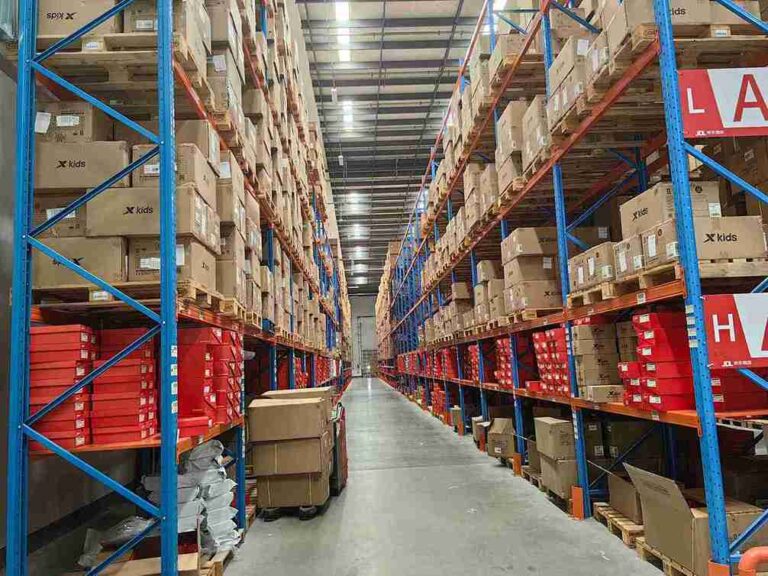
Selective Pallet Racking: The Unparalleled Access Leader
Selective pallet racking remains the most ubiquitous form of steel shelf racking globally, and for good reason. It offers direct, unimpeded access to every single pallet location.
Ideal Application Profile: This type of steel shelf racking is perfect for warehouses with a high SKU count and fast inventory turnover, where every pallet must be accessible at any time.
Maximizing Capacity with Selective Racking: The key to unlocking the full potential of selective pallet racking lies in a meticulous analysis of pallet dimensions and weights. Customizing beam lengths and vertical beam spacing to create a near-perfect fit for your specific pallets eliminates wasted space, a common inefficiency in off-the-shelf steel shelf racking solutions.
Operational Considerations: The primary trade-off with this form of steel shelf racking is its lower storage density compared to more consolidated systems. Aisles must be wide enough to accommodate the turning radius of the material handling equipment, typically requiring 10 to 13 feet for standard counterbalance forklifts.
Double-Deep Racking: The First Step Toward Density
For operations requiring a balance between accessibility and density, double-deep racking presents a compelling upgrade from standard selective pallet racking.
System Mechanics: This configuration places two rows of steel shelf racking back-to-back, effectively halving the number of aisles required. This directly increases storage density within the same footprint.
Equipment Dependency: Implementing double-deep racking necessitates specialized equipment, such as narrow-aisle forklifts equipped with telescoping forks to reach the second pallet position.
Inventory Management Implications: This system operates on a Last-In, First-Out (LIFO) basis. It is ideally suited for storing multiple pallets of the same SKU, where accessing the most recently stored pallet first is acceptable.
Drive-In and Drive-Thru Racking: The High-Density Workhorses
When storage density for large quantities of similar product is the paramount objective, drive-in and drive-thru racking systems represent a highly effective form of steel shelf racking.
Structural Design: Unlike conventional steel shelf racking, these systems eliminate individual beam levels for each pallet. Instead, they create a continuous rail structure within a bay, allowing a forklift to drive directly into the steel shelf racking structure to place or retrieve a load.
Drive-In (LIFO) vs. Drive-Thru (FIFO): Drive-in racking is typically configured for LIFO access, with loading and unloading occurring from the same aisle. Drive-thru racking allows for FIFO access, with entry and exit from opposite ends of the steel shelf racking bay.
Application Scope: This type of steel shelf racking is exceptionally well-suited for cold storage facilities (where minimizing expensive cooled aisle space is critical) or for storing slow-moving, high-volume products like raw materials or seasonal items.
Push-Back Racking: The Dynamic Density Solution
Push-back racking is a sophisticated pallet flow system that offers a superb balance between high density and superior accessibility compared to drive-in systems.
Operational Principle: Pallets are stored on nested carts that ride on inclined rails within the steel shelf racking structure. When a new pallet is loaded, it pushes the previously stored pallets back. When retrieving a pallet, the next one automatically rolls forward to the pick-off position.
Key Advantages: This steel shelf racking system typically offers 2 to 5 pallets of depth per lane and operates on a LIFO basis. It provides faster access to multiple SKUs than drive-in systems and is a popular choice for warehouses requiring a mix of density and selectivity.
Ideal Use Cases: Push-back racking is often the steel shelf racking of choice for beverage distributors, food service companies, and any operation with a need for multiple pallet depth storage without the accessibility limitations of drive-in systems.
Pallet Flow Racking: The Ultimate FIFO System
For high-throughput environments dealing with time-sensitive products, pallet flow racking represents the pinnacle of high-density, dynamic steel shelf racking.
Gravity-Powered Efficiency: This system uses a combination of gravity and low-friction roller or wheel tracks within the steel shelf racking structure. Pallets are loaded from the rear at a high level and glide smoothly to the front pick-face.
Unmatched FIFO Performance: Pallet flow racking is the definitive First-In, First-Out system. It ensures perfect stock rotation, making it indispensable for perishable goods, products with expiration dates, or items with strict lot control.
Throughput and Safety: By consolidating pick faces, this steel shelf racking system dramatically reduces order-picking travel time. Integrated speed controllers and braking systems ensure pallets move safely and predictably within the steel shelf racking lane.
The Critical Role of Professional Planning and Engineering
The installation of a high-capacity steel shelf racking system is a structural engineering undertaking, not a simple assembly task. Proper planning is the single greatest determinant of long-term success and safety.
Load Calculations and Regulatory Compliance: A Non-Negotiable Foundation
Structural Load Analysis: Professional engineers differentiate between dead loads (the weight of the steel shelf racking itself) and live loads (the weight of the inventory, pallets, and ancillary equipment). The entire steel shelf racking system must be calculated to withstand the combined stress.
Seismic and Dynamic Forces: In many jurisdictions, steel shelf racking structures are legally required to be designed to withstand seismic activity. Furthermore, engineering must account for the dynamic forces imposed by forklift impacts and the constant vibration of a busy warehouse, which far exceed static load considerations.
Mastering the Vertical Cube: A Blueprint for Maximizing Storage
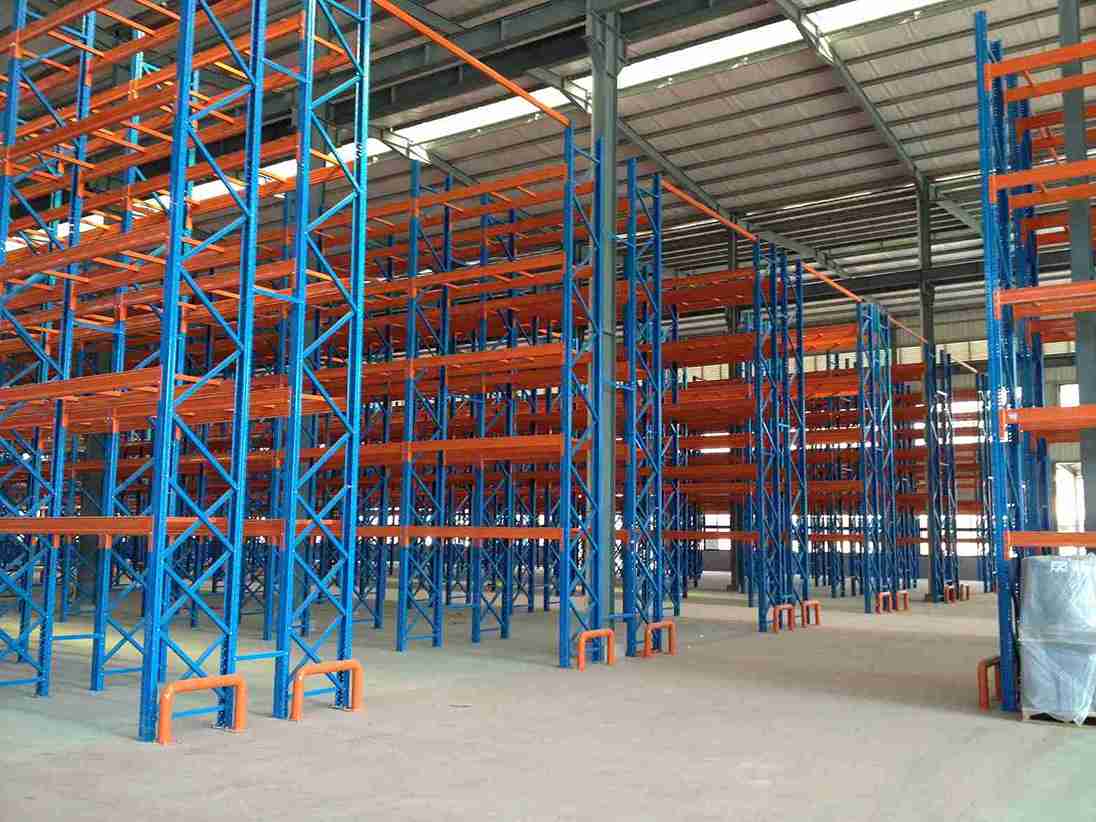
The most frequently wasted asset in warehouses is vertical space. Optimizing this “air rights” is a primary function of well-designed steel shelf racking.
Comprehensive Space Audit: Before designing a steel shelf racking layout, precise measurements must be taken from the finished floor to the very lowest overhead obstruction, including sprinklers, lights, trusses, and HVAC ducting.
Equipment Compatibility: The mast height of the forklifts or narrow-aisle trucks must be carefully matched to the proposed steel shelf racking height. A critical calculation is: *Required Forklift Mast Height = Top Beam Height + Pallet Load Height + 12-24 inches of Operational Clearance*.
Upright Frame Specification: To truly maximize cube, the upright frames of the steel shelf racking should be specified to within 6 inches of the maximum clear height. Leaving a larger gap constitutes a significant and costly waste of potential storage volume.
Component-Level Excellence: What Separates Superior Steel Shelf Racking
The integrity of any steel shelf racking system is dependent on the quality and design of its individual components.
Upright Frames: The Vertical Backbone
Column Design and Gauge: The load-bearing capacity of steel shelf racking is primarily determined by the thickness (gauge) and cross-sectional design of the upright columns. Robust, box-like designs offer superior strength and resistance to impact compared to lighter C-channel profiles.
Footplate Engineering: The footplates are the critical interface between the steel shelf racking and the concrete floor. Larger, thicker footplates distribute the immense point loads over a wider area, which is essential for both system stability and floor protection.
Beams and Connectors: The Critical Link
Beam Structural Capacity: The load capacity of a beam is a function of its steel gauge, vertical height, and the design of its end-connectors. A taller beam profile universally indicates a higher capacity beam for the steel shelf racking system.
Connector Technology: The connection point between the beam and the upright frame is a potential weak point. Common teardrop connectors can be sufficient for lighter duties, but for true high-capacity steel shelf racking, structural connectors that bolt or mechanically lock the beam directly into the upright frame offer vastly superior strength and rigidity, enhancing the overall safety and durability of the steel shelf racking.
The Foundation of It All: Warehouse Floor Integrity
Even the most robust steel shelf racking system is critically dependent on the quality and condition of the concrete slab it rests upon.
Slab Flatness Tolerance (F<sub>F</sub>/F<sub>L</sub>): For narrow-aisle and very-narrow-aisle (VNA) forklifts to operate safely and efficiently alongside steel shelf racking, a high degree of slab flatness is required. Super-flat floors are often a prerequisite for automated systems.
Compressive Strength: The concrete must have a sufficiently high compressive strength (measured in PSI) to withstand the concentrated loads transferred through the steel shelf racking footplates. Core tests are frequently necessary for older buildings.
Anchor System Selection: The choice of concrete anchors—whether mechanical wedge, drop-in, or chemical epoxy—is a critical engineering decision based on the slab’s condition and the required pull-out strength for the steel shelf racking. This is an area where professional guidance is essential.
Integration with Warehouse Automation: The Future of Steel Shelf Racking
Modern steel shelf racking is no longer a passive storage structure. It is the physical platform upon which the digital, automated warehouse is built.
Racking Designed for Robotic Collaboration
The integration of Automated Guided Vehicles (AGVs) and autonomous forklifts imposes new, stricter requirements on steel shelf racking systems.
Precision and Tolerance: The alignment and levelness of steel shelf racking beams must be perfect. Even minor deviations can cause a robotic vehicle to miscalculate, leading to failed pickups or collisions.
System Interface: The steel shelf racking structure itself may need to incorporate guidance features, fiducial markers, or inductive loops to facilitate precise navigation and positioning by the automated equipment.
Racking as Part of the Machine: The ASRS Paradigm
In an Automated Storage and Retrieval System (ASRS), the steel shelf racking is an integral component of the machine itself. The tolerances are engineering-grade.
Integrated Guide Rails: The steel shelf racking structure includes precision rails that serve as the runway for the retrieval crane or shuttle.
Perfect Alignment: Every beam and upright in the ASRS steel shelf racking must be perfectly aligned to allow the robotic shuttles to travel and transfer loads without jamming. In this context, the steel shelf racking is a co-engineered, mission-critical element.
Safety, Maintenance, and the Total Cost of Ownership
A steel shelf racking system is a safe investment until it is not. A proactive, disciplined approach to safety and maintenance is non-negotiable.
Implementing a Proactive Inspection Regime
A formal, documented inspection schedule is the best defense against steel shelf racking failure.
Operator-Level Visual Checks: Forklift operators should be trained to perform daily visual inspections for any obvious damage, such as beam deflection or impacts on uprights.
Scheduled Formal Inspections: A designated safety officer should perform a detailed quarterly walk-through of the entire steel shelf racking system, using a checklist to document any issues.
Annual Professional Audit: An annual inspection conducted by a certified racking inspector or the original steel shelf racking supplier provides a deep, expert-level assessment of the system’s health.
Essential Protective Equipment
Column Guards and Protectors: Installing sturdy steel guards around upright frames is one of the most cost-effective ways to prevent catastrophic failure from a forklift impact, protecting both the steel shelf racking and the personnel.
End-of-Aisle Guards: These protect the most vulnerable parts of the steel shelf racking system—the end frames and their connections.
Pallet Safety Nets and Mesh: These prevent items from falling through the steel shelf racking beams, protecting workers and inventory below from damage.
Evaluating the True Investment: Total Cost of Ownership
Evaluating steel shelf racking options based solely on the initial purchase price is a profound and costly mistake. A sophisticated analysis considers the Total Cost of Ownership (TCO).
Initial Capital Outlay: This includes the cost of the steel shelf racking, freight, and professional installation.
Operational Costs: This encompasses the impact on labor efficiency, picking speed, energy consumption (e.g., lighting in aisles), and inventory accuracy. A more efficient steel shelf racking layout pays dividends daily.
Flexibility and Reconfiguration Cost: How easily can the steel shelf racking system be adapted to changing business needs? A modular, well-designed system offers long-term savings.
Residual Value: High-quality steel shelf racking often retains significant resale value, a factor rarely considered in initial budgeting.
A slightly higher initial investment in a superior steel shelf racking system almost always results in a lower TCO over its operational lifespan.
A Strategic Procurement Roadmap
Conduct a Thorough Internal Audit: Document every SKU’s dimensions, weight, and turnover velocity (ABC analysis).
Engage Expert Partners Early: Consult with a reputable steel shelf racking supplier during the planning phase. Their expertise can help interpret data and suggest optimal solutions.
Insist on a Detailed CAD Layout and Simulation: A professional layout is essential. Leading providers can use simulation software to model throughput and identify bottlenecks in the proposed steel shelf racking layout before installation.
Review and Approve Engineering Drawings: Never proceed with a steel shelf racking project without reviewing stamped, professional engineering drawings that comply with all local codes and RMI standards.
Verify Certifications and Warranties: Ensure the steel shelf racking supplier provides proof of quality standards compliance and clear warranty terms.
Plan the Installation Phasing: Work with the supplier to create a detailed installation plan that minimizes disruption to ongoing warehouse operations.
Conclusion: Engineering a Foundation for Operational Excellence
The selection, engineering, and implementation of a high-capacity steel shelf racking system is one of the most consequential strategic decisions a logistics or operations leader can make. It is a capital investment that directly shapes the efficiency, safety, and scalability of the entire supply chain.
By moving beyond a commodity mindset and embracing the engineering principles, strategic planning, and integration potential of modern steel shelf racking solutions, businesses can transform their warehouse storage from a static liability into a dynamic, profit-driving asset. The right steel shelf racking system does not just store goods; it orchestrates their flow, maximizes valuable space, and builds a resilient foundation for future growth.
Frequently Asked Questions (FAQs)
1. What is the realistic lead time for a custom-engineered, high-capacity steel shelf racking system from design to delivery?
Lead times are project-dependent but typically range from 8 to 16 weeks for a complex, custom steel shelf racking system. This timeline encompasses detailed design engineering, material procurement, fabrication, coating, and preparation for shipment. Projects involving integration with ASRS or other automation will naturally reside on the longer end of this spectrum.
2. Is it feasible and advisable to mix different types of steel shelf racking within a single warehouse facility?
Yes, and this hybrid approach is often the hallmark of a highly optimized warehouse. A common strategy is to use selective pallet racking for high-turnover SKUs, push-back racking for medium-velocity goods, and pallet flow racking for high-density, time-sensitive products. A professional storage analysis will determine the optimal mix of steel shelf racking types for a specific inventory profile.
3. How can we determine if our existing concrete slab is capable of supporting a new high-capacity steel shelf racking system?
A professional site assessment is mandatory. This involves conducting core tests to ascertain the concrete’s precise compressive strength and using specialized laser equipment to measure the floor’s flatness (F<sub>F</sub>/F<sub>L</sub> values). This critical data is then used by structural engineers to ensure the steel shelf racking design is safe and compliant for your specific site conditions.
4. What are the primary operational differences between roll-formed and structural steel shelf racking?
Roll-formed steel shelf racking is manufactured by bending continuous sheets of steel. It is cost-effective and suitable for many standard applications. Structural steel shelf racking is fabricated from hot-rolled steel sections that are cut, drilled, and welded. It offers superior strength and rigidity, making it the preferred choice for the most demanding high-capacity applications, high-seismic zones, and facilities utilizing heavy automation where precision and durability are paramount.
5. Our business experiences significant seasonal peaks and evolving inventory. Which type of steel shelf racking offers the greatest long-term flexibility?
Selective pallet racking is inherently the most flexible type of steel shelf racking, as its beams can be easily repositioned with minimal tooling to accommodate changing pallet sizes and SKU profiles. Its open architecture allows for the greatest adaptability. When future flexibility is a primary concern, it should be a central design criterion for the steel shelf racking system from the outset.
Welcome to contact us, if you need warehouse rack CAD drawings. We can provide you with warehouse rack planning and design for free. Our email address is: jili@geelyracks.com