📐 "First 50 Enterprise Queries Get Custom 3D Warehouse Design" Plan
















For professionals managing the modern food supply chain, the warehouse is the operational heart. Within this critical space, the selection and implementation of shelf racking for food storage is a strategic decision with profound implications. This isn’t merely about storing pallets; it’s about engineering an environment that actively protects product integrity, ensures unwavering regulatory compliance, and drives operational efficiency.
The wrong shelf racking for food storage system can become a liability, harboring contaminants, impeding workflows, and failing under audit scrutiny. In contrast, a properly designed system acts as a robust framework for quality and safety. This definitive guide delves into the five foundational design secrets that define world-class shelf racking for food storage installations, providing a blueprint for facilities that aim to exceed industry standards and outperform competitors.

H2: The High-Stakes World of Food Logistics: Why Standard Racking Falls Short
In the food industry, storage infrastructure is a primary control point for safety. A standard industrial shelving unit, designed for a dry warehouse storing auto parts, is catastrophically unfit for food storage shelf racking applications. The unique demands of food products—from temperature sensitivity to stringent hygiene protocols—require a specialized approach. Every aspect of the shelf racking for food storage must be meticulously considered to mitigate risk and enhance performance.
H3: Navigating the Regulatory Maze: FDA, USDA, and Global Standards
Compliance isn’t a suggestion; it’s the law. The design of any shelf racking for food storage system must be grounded in a deep understanding of the relevant regulations. Key governing bodies and standards directly influence the configuration of shelf racking for food storage:
FDA Food Safety Modernization Act (FSMA): This legislation emphasizes preventive controls. The shelf racking for food storage must be designed to be cleanable, to prevent pest harborage, and to protect against contamination of any kind. The open, cleanable designs mandated for shelf racking for food storage are a direct response to FSMA requirements.
USDA Guidelines: For meat, poultry, and egg products, USDA standards provide specific material specifications for shelf racking for food storage. These guidelines demand non-absorbent, corrosion-resistant, and durable materials capable of withstanding rigorous sanitation processes.
GFSI-Benchmarked Standards (SQF, BRC, IFS): These globally recognized standards are often required by major retailers. They include detailed criteria for facility and equipment hygiene, making the specification of certified shelf racking for food storage a prerequisite for doing business in many markets.
H3: The True Cost of a Non-Compliant Racking System
Opting for inferior or inappropriate shelf racking for food storage is a catastrophic false economy. The hidden costs of a poor system are immense and cumulative:
Product Contamination and Loss: Flaking paint, rust, or bacterial growth in the crevices of poorly designed shelf racking for food storage can lead to the destruction of entire product lots, resulting in direct financial loss and supply chain disruption.
Audit Failures and Operational Shutdowns: A single audit can halt operations if the shelf racking for food storage is deemed unsanitary or unsafe. The resulting downtime, coupled with the cost of corrective actions and potential fines, can be devastating.
Inefficient Labor Utilization: Poorly configured shelf racking for food storage forces employees to spend extra time on cleaning, searching for items, or navigating poorly planned aisles. This accumulated labor inefficiency represents a significant, ongoing operational cost.
Premature System Failure: Shelf racking for food storage not engineered for harsh environments will degrade rapidly, requiring costly replacement long before its expected lifecycle is complete.
H2: Design Secret #1: The Material Foundation – Selecting the Right Substance
The core material of the shelf racking for food storage is the first and most critical line of defense. It dictates the system’s longevity, cleanability, and structural integrity when faced with constant moisture, temperature cycles, and chemical cleaning agents.
H3: High-Grade Galvanized Steel: The Industry Workhorse
For the vast majority of shelf racking for food storage applications, particularly in dry, cooler, and freezer environments, high-grade galvanized steel is the undisputed champion. The hot-dip galvanizing process coats the steel in a thick, metallurgically bonded layer of zinc, providing superior corrosion resistance. This surface is exceptionally hard, scratch-resistant, and non-porous, creating a barrier that moisture and bacteria cannot penetrate. Unlike painted surfaces, the coating on this type of shelf racking for food storage will not chip, flake, or peel, thereby eliminating a major source of physical contamination. For a reliable and long-lasting shelf racking for food storage solution, galvanized steel offers an unparalleled balance of performance and value.
H3: The Specifics of Powder Coating for Food Environments
While galvanized steel is often the optimal choice, powder coating is specified for aesthetic reasons or in specific areas of a facility. However, a food-grade powder coat is a precise science. A proper finish for shelf racking for food storage involves a multi-step, meticulous process:
Robust Pre-Treatment: The steel must undergo a multi-stage chemical wash and phosphate treatment to create a perfectly clean, reactive surface for adhesion. This step is non-negotiable for the longevity of the shelf racking for food storage.
High-Performance Coatings: Tough, chemical-resistant epoxy-polyester hybrid powders are recommended for shelf racking for food storage. These formulations offer far greater durability and resistance to chipping than standard polyester coatings.
FDA-Compliant Formulations: The pigments and resins used in the powder must be FDA-compliant for indirect food contact, a critical specification for any shelf racking for food storage.
Flawless Finish: The final coat must be a smooth, non-porous finish entirely free of pinholes or thin spots where corrosion can initiate and compromise the shelf racking for food storage.
H3: Stainless Steel: The Premium Solution for Extreme Conditions
Stainless steel represents the premium tier for shelf racking for food storage, reserved for the most aggressive environments. In areas with high-acidity food processing, constant high-pressure washdowns, or pharmaceutical-grade storage requirements, stainless steel’s unparalleled corrosion resistance justifies its higher initial investment. Over a 30-year lifespan in these conditions, stainless steel shelf racking for food storage often proves to be the most economical choice due to its minimal maintenance and exceptional durability. It is frequently specified for critical support columns or in processing areas that integrate directly with storage.
H2: Design Secret #2: Sanitary Design and Structural Geometry – Eliminating Hazards
The physical shape and configuration of the shelf racking for food storage are paramount to its cleanability and safety. The objective is to systematically eliminate every potential pocket, crevice, and ledge where soil, moisture, and microbes can accumulate.
H3: The Imperative of Open-Access Design
A strict “open-access” philosophy should govern the design of any shelf racking for food storage. This principle manifests in several key features:
Tubular Uprights: Upright frames should feature tubular or rounded-off profiles. Traditional C-channel columns have inward-facing lips that act as dirt traps and are virtually impossible to clean effectively, making them unsuitable for modern shelf racking for food storage.
Open-Back Beams: Selecting rack beams with an open design at the rear is crucial. This prevents the accumulation of dust and debris on the top surface of the beam, a common and hidden sanitation issue in box-beam designs for shelf racking for food storage.
Minimized Horizontal Surfaces: Every horizontal surface is a potential shelf for dust. Designs for shelf racking for food storage should incorporate sloped surfaces on step-beams and connector plates to encourage runoff and discourage the accumulation of debris.
H3: Precision Fabrication: Slopes, Welds, and Corners
The devil is in the details. The fabrication quality of the shelf racking for food storage is what separates a truly sanitary system from a mediocre one. Key details include:
Sloped Top Beams: The top surface of horizontal beams should be sloped at a minimum of 15 degrees. This simple design feature prevents dust and spilled product from settling on the shelf racking for food storage, making routine cleaning quick and effective.
Continuous and Smooth Welding: All welds on the shelf racking for food storage must be continuous, ground smooth, and polished. Tack welds or porous welds create microscopic crevices that are breeding grounds for bacteria and are impossible to sanitize properly.
Coved Corners: At joints and connections, specifying coved (rounded) corners instead of sharp 90-degree angles is essential for the cleanability of the shelf racking for food storage, as these rounded edges do not trap soil and are easy to wipe clean.
H2: Design Secret #3: Strategic Configuration for Airflow and Operational Flow
The spatial arrangement of the shelf racking for food storage within the warehouse has a profound impact on both food safety, through temperature control, and operational efficiency, through material flow.
H3: Engineering for Optimal Airflow in Temperature-Controlled Storage
In cooler and freezer applications, the layout of the shelf racking for food storage is a primary determinant of temperature uniformity. Poor layouts create hot spots and stratification, which can spoil product and overwork refrigeration systems. Best practices for configuring shelf racking for food storage in cold environments include:
Adequate Clearance from Walls: Racks must be positioned at least 18-24 inches away from walls to allow air from evaporator units to circulate freely behind the structure of the shelf racking for food storage.
Aisles as Air Channels: Aisle widths should be designed not only for equipment access but also for air movement. Aligning aisles with the direction of air discharge from unit coolers ensures cold air penetrates deep into the mass of the shelf racking for food storage.
Promoting Under-Pallet Airflow: Using pallet support bars instead of solid decks allows cold air to circulate underneath the pallet, a critical factor in ensuring the product at the bottom of the pallet is kept at the same temperature as the product at the top. This is a vital function of well-designed shelf racking for food storage.
H3: Synchronizing Racking with Material Handling Systems
The shelf racking for food storage cannot be an isolated island; it must be perfectly synchronized with material handling equipment. This integration is where the design of the shelf racking for food storage becomes a force multiplier for efficiency.
AS/RS Integration: For narrow aisle racking or pallet shuttle systems, the shelf racking for food storage itself becomes part of the automation. The tolerances are incredibly tight, and the racking is engineered to serve as the guide rail and support structure for the machinery. The integrity of the shelf racking for food storage is paramount to the performance of the entire automated system.
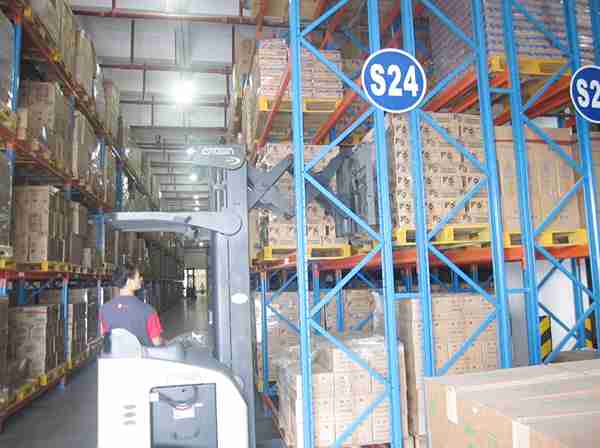
AGV and Forklift Compatibility: The layout of the shelf racking for food storage must be calculated based on the exact turning radius and mast movement of the forklifts or AGV forklifts that will service it. Precise planning eliminates costly damage to both the racks and the equipment, a common and expensive problem in facilities where the shelf racking for food storage was not designed with the vehicle in mind.
H2: Design Secret #4: Engineering for Real-World Dynamics and Load Management
The static load capacity listed on a spec sheet is only a starting point. In a live warehouse, the shelf racking for food storage is subject to dynamic forces from forklift impacts, seismic activity, and the constant stress of loading and unloading.
H3: Calculating for Impacts and Seismic Events
Professional engineering for shelf racking for food storage goes far beyond basic capacity charts. A comprehensive structural analysis includes:
Impact Load Factors: The design must account for the inevitable minor impacts from forklifts. Incorporating appropriate safety factors ensures the shelf racking for food storage system’s overall integrity isn’t compromised by routine operational contact.
Seismic Design per RMI and IBC: In active seismic zones, the shelf racking for food storage must be designed and certified according to the latest Rack Manufacturers Institute (RMI) and International Building Code (IBC) specifications. This involves detailed calculations for base plates, anchor bolts, and bracing to withstand lateral forces, ensuring the shelf racking for food storage will perform as intended during an seismic event.
H3: The Critical Role of Professional Installation and Anchoring
The most perfectly engineered shelf racking for food storage in the world is a liability if improperly installed. Installation is a critical phase that demands professional execution.
Precision Anchoring: Uprights must be anchored to the concrete floor with specific, high-strength anchors torqued to a precise specification. Installers must use calibrated torque wrenches to ensure the shelf racking for food storage is securely fastened to the substrate.
Plumb and Alignment: The entire structure of the shelf racking for food storage must be installed plumb and square. A rack that is out of plumb has a significantly reduced load capacity and is more susceptible to collapse or failure.
Final Inspection and Certification: Upon completion, a final inspection, often including anchor pull-testing, should be conducted to certify that the shelf racking for food storage system is installed correctly and ready for safe operation.
H2: Design Secret #5: Future-Proofing with Modularity and Scalability
A warehouse is a dynamic, growing entity. The shelf racking for food storage system must be able to adapt and scale with the business without requiring a complete and costly overhaul.
H3: The Teardrop Advantage and System Adjustability
The industry-standard teardrop-shaped hole in rack uprights is a key feature for adaptable shelf racking for food storage. It allows for infinite adjustability of beam heights without tools, which provides crucial flexibility:
SKU Adaptability: The configuration of the shelf racking for food storage can be easily reconfigured to accommodate new product lines or different pallet sizes, responding to changing market demands.
Seamless Expansion: Adding onto an existing system is straightforward, as new components are designed to integrate perfectly with the existing shelf racking for food storage.
Relocation Potential: A well-designed bolted shelf racking for food storage system can often be disassembled and reinstalled in a new location, protecting the capital investment and providing long-term value.
H2: Beyond the Rack: Creating a Cohesive and Compliant Storage Ecosystem
The shelf racking for food storage is the skeleton of the warehouse, but the surrounding systems and processes are the muscles and nerves. A holistic approach is essential for unlocking maximum performance and compliance.
H3: The Critical Role of Pallet Decking and Wire Grids
The choice of decking for the shelf racking for food storage has major implications for sanitation, airflow, and safety.
Wire Mesh Decking: This is the preferred choice for most shelf racking for food storage applications. It allows for light and air penetration, facilitates cleaning from above, and prevents the buildup of debris. The welds must be robust and the wire gauge sufficient to support the load without sagging over time.
Solid Decking with Drainage: In certain carton picking applications, solid decking may be used. In these cases, it must be equipped with drainage holes and a slight pitch to handle spillage and washdown, maintaining the hygiene of the shelf racking for food storage.
Pallet Support Bars: In many pallet racking applications, a set of robust support bars is preferable to a full deck, as it maximizes airflow and minimizes surfaces for dust collection, enhancing the performance of the shelf racking for food storage.
H2: Conclusion: Elevating Racking from a Commodity to a Strategic Asset
Viewing shelf racking for food storage as a simple commodity purchase is a significant strategic error. It is, in fact, a foundational asset that directly enables food safety, regulatory compliance, and operational excellence. By mastering these five design secrets—selecting the right materials, insisting on sanitary geometry, strategically configuring for environment and flow, engineering for real-world dynamics, and building in modularity for the future—organizations can transform their warehouse from a cost center into a powerful competitive advantage. A professionally designed and implemented shelf racking for food storage system is not an expense; it is an investment in brand protection, operational resilience, and long-term profitability.
H2: Frequently Asked Questions (FAQs)
FAQ 1: What is the typical lead time for a custom-designed food storage racking system?
Lead times can vary significantly based on the project’s scale, material selection (galvanized vs. powder coat), and current market demand. A standard system might take 6-10 weeks from final sign-off to delivery, while a large, complex, or highly customized project involving integration with automated storage and retrieval systems (AS/RS) could take 14-20 weeks. We provide detailed project timelines upfront and maintain transparent communication throughout the manufacturing process.
FAQ 2: How do you prevent rust in high-humidity environments if a powder-coated option is chosen for aesthetic reasons?
This is a critical question. If powder coating is specified for branding in a high-humidity area, the underlying steel must be protected first. Our protocol involves a multi-stage pre-treatment, including a zinc phosphate coating, which acts as a sacrificial layer. If the powder coat is ever scratched, the zinc sacrificially corrodes to protect the steel, significantly slowing rust formation compared to a standard painted surface over bare steel.
FAQ 3: Can existing standard industrial racking be retrofitted or upgraded to meet food-grade standards?
Generally, no. Standard racking typically uses C-channel uprights, has porous welds, and lacks the sloped surfaces and cleanable design of true food-grade racking. It is very difficult to make an unsanitary design sanitary after the fact. The most reliable and cost-effective long-term solution is almost always to replace the system with one designed from the ground up for food storage, as retrofitting often creates more problems than it solves and may not satisfy a rigorous auditor.
FAQ 4: What are the key differences between roll-formed and structural racking for food storage, and which is better?
Roll-formed rack is made from coiled steel that is cold-formed into shape (like the common “teardrop” style). Structural rack is made from heavier, hot-rolled steel shapes that are welded together. Roll-formed is typically more than adequate for the vast majority of pallet racking applications, is highly adjustable, and is cost-effective. Structural rack is used for much heavier loads, in seismic zones, or as the backbone for heavy-duty AS/RS. The “better” choice depends entirely on the application’s load, dynamic forces, and height. We perform the engineering analysis to specify the correct type for your needs.
FAQ 5: How does the design process for food storage racking work from start to finish?
Our process is collaborative and thorough:
Discovery & Data Collection: We conduct a site survey (or work from detailed plans) to understand your space, product profiles, flow, and equipment.
Conceptual Design & Engineering: We create a preliminary layout and perform the structural calculations.
Proposal & Refinement: We present a detailed proposal, including 3D renderings, and refine it based on your feedback.
Final Engineering & Manufacturing: Once approved, final shop drawings are produced, and the system is manufactured to exact specifications.
Professional Installation & Certification: Our trained crews install the system, and we provide a final inspection report and load certification, ensuring a complete, turnkey solution.
Welcome to contact us, if you need warehouse rack CAD drawings. We can provide you with warehouse rack planning and design for free. Our email address is: jili@geelyracks.com