📐 "First 50 Enterprise Queries Get Custom 3D Warehouse Design" Plan
















In the high-stakes world of automotive supply chains, the warehouse is the central nervous system. Its performance dictates everything from same-day delivery capabilities to overall profitability. For distributors and manufacturers wrestling with the immense complexity of automotive components, finding the right shelf racking for automotive parts is not merely a procurement decision; it is a fundamental strategic imperative. This comprehensive guide delves deep into the engineering, configuration, and integration of heavy-duty shelf racking systems specifically designed to bring order, efficiency, and speed to automotive parts storage.
It explores how a meticulously planned approach to shelf racking for automotive parts directly translates to faster picking, reduced operational costs, and a显著提升的 bottom line. The following sections will provide a masterclass in transforming a chaotic storage area into a high-throughput, optimized logistics hub, with a relentless focus on the critical role of specialized shelf racking for automotive parts.

<h2>Navigating the Complex Landscape of Automotive Parts Storage</h2>
The unique challenges of storing automotive components demand a solution that is equally specialized. Standard warehouse storage principles often fall short when applied to the vast diversity of the automotive aftermarket and OEM supply chain. A deep understanding of these challenges is the first step in specifying the correct shelf racking for automotive parts.
<h3>The Extreme Diversity of Product Profiles</h3>
The term “automotive parts” encompasses one of the widest arrays of physical characteristics in any industry. A single facility must safely and efficiently house items ranging from dense, high-mass objects like engine blocks and axle assemblies, which can weigh hundreds of kilograms, to delicate, high-value electronic control units (ECUs) and intricate wiring harnesses.
This extreme variance necessitates a shelf racking for automotive parts system that is not a single, monolithic solution, but a flexible, hybrid ecosystem. The system must offer the brute strength of heavy-duty shelf racking for the heaviest components while also providing organized, accessible, and secure locations for the most sensitive items. Selecting the appropriate shelf racking for automotive parts requires a complete item master data analysis, focusing on dimensions, weight, turnover rate, and handling requirements.
<h3>The Critical Imperative of Picking Speed and Accuracy</h3>
In the automotive industry, downtime is revenue lost. A service garage waiting for a critical part means a vehicle occupying a valuable service bay, leading to frustrated customers and strained business relationships. Consequently, the pressure on the parts distributor to fulfill orders with lightning speed and perfect accuracy is immense.
The layout and design of the shelf racking for automotive parts are the primary determinants of order cycle time. Inefficient layouts force pickers to spend an inordinate amount of their shift simply traveling between locations. Therefore, the quest for faster picking is intrinsically linked to the intelligent design of the shelf racking for automotive parts system, minimizing travel and search time while maximizing access and ergonomics.
<h3>Inventory Control and Space Utilization Challenges</h3>
Without a logical, systematic storage philosophy underpinned by a robust shelf racking for automotive parts system, inventory management descends into chaos. Misplaced SKUs, inaccurate cycle counts, and frustrating stock-outs become commonplace. This operational disarray erodes customer trust and inflates costs through expedited shipping and manual reconciliation efforts. The physical storage system must be seamlessly integrated with inventory management protocols.
Every location within the shelf racking for automotive parts system must be uniquely identified, and the logic behind slotting—why a part is located where it is—must be data-driven and consistently applied. Furthermore, the high value and diverse size of many automotive parts make security and damage prevention key considerations for any shelf racking for automotive parts solution.
<h2>Heavy-Duty Shelf Racking: The Engineered Foundation for Automotive Logistics</h2>
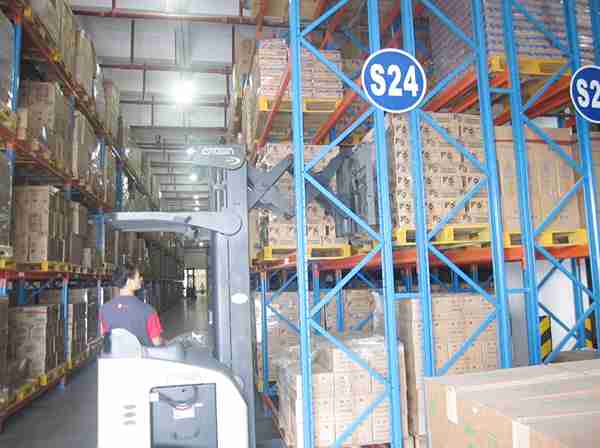
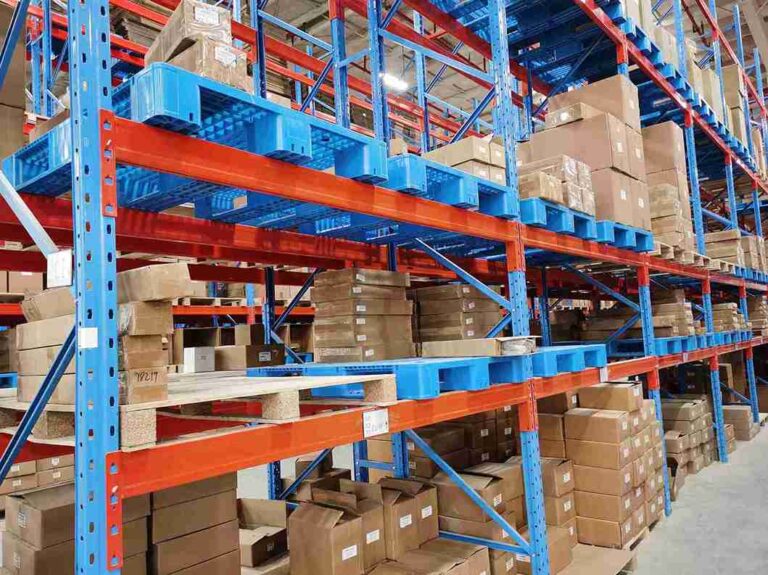
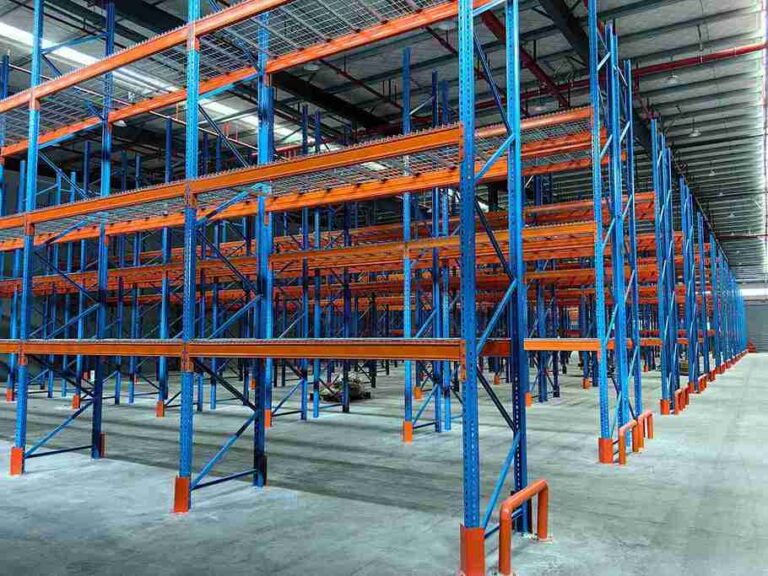
The phrase “heavy-duty shelf racking” signifies a class of professionally engineered storage systems designed for superior load-bearing capacity, impact resistance, and long-term durability. This is a far cry from light-duty retail shelving or boltless kits. For demanding automotive parts storage environments, this category of shelf racking for automotive parts forms the non-negotiable, structural backbone of the entire operation.
<h3>Deconstructing the Components of a Heavy-Duty System</h3>
A thorough understanding of the components that constitute a heavy-duty shelf racking system reveals the engineering behind its performance. When evaluating options for shelf racking for automotive parts, one must scrutinize each element:
Upright Frames: These are the vertical columns, typically fabricated from high-tensile, cold-rolled steel. They feature a precision pattern of teardrop or keyhole slots for beam connection. The load capacity of an upright frame is a function of its steel gauge (thickness), column depth, and the specific alloy used. For the most demanding automotive parts storage applications, reinforced uprights are often specified.
Beams: These horizontal members are the workhorses of the system, directly supporting the shelving decks and their contents. Beams are rated for specific Uniformly Distributed Loads (UDL), and their capacity increases with their section height and material gauge. A robust shelf racking for automotive parts system will often feature beams with a step-design for added strength and secure connection.
Decking: The choice of decking is a critical operational decision for any shelf racking for automotive parts installation. The right choice depends on the nature of the items stored:
Punched Steel or Wire Mesh: Excellent for permitting air circulation, light penetration, and sprinkler system water flow, thereby enhancing fire safety. This is ideal for items that do not require a solid surface and where dust accumulation is a concern.
Particle Board or Plywood: A cost-effective solid decking for boxed or smaller items that might otherwise fall through mesh decking. However, it lacks the longevity and strength of steel.
Solid Steel Plate: The ultimate choice for the heaviest loads in automotive parts storage, such as cylinder heads, brake drums, and transmission assemblies. It provides an unwavering, solid surface capable of supporting immense point loads.
Integral Safety Systems: This includes critical accessories like positive-locking beam safety clips, which prevent beams from being accidentally dislodged by forklift impact, and row spacers that maintain aisle integrity. These are not optional extras; they are essential components of a safe shelf racking for automotive parts installation.
<h3>The Operational Necessity of Heavy-Duty Capacity</h3>
The “heavy-duty” specification is a functional requirement, not a marketing hyperbole. While standard shelving may be rated for a few hundred pounds per shelf, true heavy-duty shelf racking for automotive parts storage is engineered to handle several thousand pounds per level. This immense capacity allows warehouse managers to safely consolidate the heaviest engine and chassis components, dramatically improving space utilization—the all-important “cube”—while guaranteeing structural integrity. This makes the investment in proper heavy-duty shelf racking a cornerstone of both safety and long-term operational performance in any facility dealing with shelf racking for automotive parts.
<h2>Strategic Layout Design: Orchestrating Flow for Faster Picking</h2>
Installing robust shelf racking for automotive parts is a crucial first step, but its spatial configuration is what unlocks the transformative potential for faster picking. Leading logistics experts employ several proven design principles to turn a static storage structure into a dynamic, efficient picking environment.
<h3>Exploiting the Golden Zone for Ergonomic Efficiency</h3>
The “golden zone” or “power zone” is the area between a picker’s knees and shoulders where items can be accessed most comfortably, quickly, and safely without stretching, bending, or using a step stool. The fundamental rule for achieving faster picking is to ensure that the highest-turnover, fastest-moving automotive parts—common filters, spark plugs, bulbs, and brake pads—are exclusively slotted within this prime real estate across the shelf racking for automotive parts system.
Slower-moving items, such as specific model-year body panels or classic car components, should be relegated to higher or lower storage locations. This simple yet powerful principle, when applied consistently to a shelf racking for automotive parts layout, can reduce picking time per item by over 50%.
<h3>Implementing Data-Driven ABC Analysis for Slotting</h3>
This analytical approach brings scientific rigor to the organization of a shelf racking for automotive parts system. By analyzing sales or pick data, SKUs are categorized into three groups:
A-Items: The top 15-20% of SKUs that typically account for 70-80% of all picking activity. These must occupy the most accessible locations within the golden zone of the shelf racking for automotive parts.
B-Items: Medium-velocity parts that make up the next 30% of SKUs and account for about 15% of picks. These are placed just above or below the golden zone, or in slightly less accessible areas of the racking.
C-Items: The long-tail of slow-movers, often 50% of the SKUs, which account for only 5-10% of picks. These are stored in the highest or lowest pallet locations within the shelf racking for automotive parts system, or even in a separate high-density bulk zone.
Structuring a shelf racking for automotive parts layout according to this ABC analysis dramatically reduces the average travel distance per pick order, which is the single most effective way to achieve faster picking across the board.
<h3>Functional Zoning: Creating a Logical Operational Geography</h3>
Creating distinct zones within the warehouse based on part type, size, or handling characteristics streamlines the entire operation. A well-designed shelf racking for automotive parts facility will often feature:
Fast-Mover Carton Flow Zone: Dedicated area with dynamic flow racks for the very highest velocity A-items.
Bulky & Pallet-Rack Zone: Utilizes the strongest heavy-duty shelf racking for large, heavy items like bumper covers, fenders, and exhaust systems stored on pallets.
Small Parts & Bin Shelving Zone: Features high-density shelving with binning systems for nuts, bolts, electrical connectors, and other small components.
Kitting & Assembly Zone: Where common service kit components are pre-assembled near the shipping area.
This zoning strategy, facilitated by a tailored shelf racking for automotive parts layout, allows pickers to specialize, reduces cross-traffic, and creates a more logical, efficient flow from receiving to shipping.
<h2>Advanced Configurations for Specialized Automotive Storage Challenges</h2>
Beyond standard selective pallet racking, several advanced storage configurations can be integrated into a shelf racking for automotive parts ecosystem to solve specific, high-cost problems. These systems represent the next evolution in automotive parts storage efficiency.
<h3>Carton Flow Racking: The Ultimate Solution for High-Velocity SKUs</h3>
For high-turnover, case-level items, integrating carton flow systems into the shelf racking for automotive parts layout is a proven game-changer for faster picking. These systems use inclined roller or wheel tracks within the shelving bay. Full cases are loaded from the replenishment side (typically a rear aisle), and gravity pulls them forward to the pick face.
This ensures perfect First-In, First-Out (FIFO) stock rotation—critical for dated items like certain chemicals—and dramatically reduces pick times. The picker remains stationary at the face of the shelf racking for automotive parts, and the next item is always presented directly to them, eliminating reaching and searching. This is ideal for motor oils, coolants, common filters, and aerosols.
<h3>Multi-Tier Mezzanine Systems: Vertically Expanding Usable Capacity</h3>
When floor space is exhausted, the most cost-effective solution is often to utilize the unused vertical cube above the operating area. A mezzanine is a raised platform installed between the floor and the ceiling, effectively creating a second or third story within the existing warehouse footprint. Professionally designed systems use the heavy-duty shelf racking structure itself as the primary support for these platforms.
This approach to shelf racking for automotive parts is an ideal solution for housing slower-moving C-items, corporate archives, or even office space, thereby freeing up invaluable ground-level space for high-activity picking and receiving. This strategic use of shelf racking for automotive parts can double or even triple the effective storage capacity without the need for expensive facility expansion.
<h3>Mobile Pallet Racking: Maximizing Density in Footprint-Constrained Facilities</h3>
For facilities with exceptionally high storage volumes but a severely limited footprint, mobile racking systems represent the pinnacle of storage density. In this configuration, the rows of shelf racking for automotive parts are mounted on motorized bases that move on embedded rails. Instead of having permanent, fixed aisles between every row, only one aisle is opened at a time, directly where the picker or forklift operator needs access.
By eliminating multiple access aisles, this form of shelf racking for automotive parts can increase storage density by up to 100% compared to traditional static systems. It is perfectly suited for storing seasonal inventory, a vast range of body panels, or other lower-turnover items that still require pallet-level storage.
<h2>Integrating Automation and Technology for a Future-Proof Warehouse</h2>
While optimally configured shelf racking for automotive parts provides the physical foundation, integrating smart technology is the key to achieving a quantum leap in productivity and accuracy. This synergy creates a dynamic, responsive automotive parts storage environment.
<h3>AGVs and AMRs: The Automated Material Handlers</h3>
Automated Guided Vehicles (AGVs) and the more advanced Autonomous Mobile Robots (AMRs) are revolutionizing material handling within warehouses configured with shelf racking for automotive parts. These robots can be deployed for “goods-to-person” (G2P) picking, a paradigm shift from traditional methods. In a G2P system, instead of a human walking to a location within the shelf racking for automotive parts, the robot autonomously navigates to the specific bay, retrieves the entire shelf unit or a specific tote containing the required part, and brings it to a stationary picker at a workstation.
This eliminates picker travel time entirely, representing the ultimate expression of faster picking. These robots are designed to operate seamlessly within the aisles defined by the shelf racking for automotive parts infrastructure, making them a viable upgrade for many existing facilities.
<h3>The Central Nervous System: Warehouse Management Systems (WMS)</h3>
The physical storage system and the digital management system must operate in perfect lockstep. A robust Warehouse Management System (WMS) is the brain that brings the shelf racking for automotive parts to life. A modern WMS does far more than track inventory; it actively optimizes operations by:
Generating Optimized Pick Paths: The WMS software creates the most efficient pick path for each order or batch of orders, intelligently routing pickers or robots through the various zones of the shelf racking for automotive parts in a logical sequence.
Providing Real-Time Locator Data: By maintaining a precise digital twin of the warehouse, the WMS instantly directs personnel to the exact location of any SKU within the shelf racking for automotive parts system.
Managing Dynamic Slotting: The WMS can continuously analyze pick frequency and velocity data, automatically suggesting or even directing the relocation of SKUs within the shelf racking for automotive parts for perpetual efficiency gains.
<h2>Safety, Maintenance, and Protecting the Storage Asset</h2>
A high-performance warehouse must, above all, be a safe warehouse. Heavy-duty shelf racking is engineered for strength, but its integrity must be protected through rigorous procedures and disciplined use.
<h3>Implementing a Proactive Inspection and Audit Regime</h3>
A comprehensive safety protocol for shelf racking for automotive parts is non-negotiable. This should be a multi-tiered approach:
Operator-Level Visual Checks: Forklift operators and warehouse staff should be trained to perform daily visual checks for any obvious new damage, such as dents or bends in uprights or beams.
Supervisory Weekly/Monthly Inspections: A designated safety officer should conduct a more formal walk-through, checking for issues like beam connector deformation, upright plumb, and loose decking.
Annual Professional Structural Audit: At least once a year, an external specialist or a certified internal engineer should perform a detailed structural survey and load capacity audit. This ensures that the shelf racking for automotive parts system has not been compromised and that no sections are being overloaded beyond their rated capacity.
<h4>Adherence to Load Ratings and Safety Protocols</h4>
The stated load capacities for beams and upright frames are absolute maximums, not suggestions. It is critical to never exceed these ratings and to ensure that weight is evenly distributed across the shelf surface. Furthermore, the use of safety locks on every single beam connection is a simple yet vital practice that prevents a catastrophic dislodgement in the event of a forklift impact, safeguarding both the inventory and personnel working around the shelf racking for automotive parts.
<h2>Case in Point: Transforming a Regional Auto Parts Distributor</h2>
A concrete example illustrates the transformative power of a well-executed shelf racking for automotive parts project. A mid-sized regional distributor was struggling with an average order cycle time of 45 minutes and an unacceptable picking error rate of 3%. Their existing storage was a disorganized mix of outdated shelving, leading to excessive walking, frequent mis-picks, and high labor costs.
The Engineered Solution:
A logistics consultancy performed a full SKU velocity analysis and designed a holistic solution centered on a new shelf racking for automotive parts system:
They installed high-throughput carton flow racking for the top 150 fastest-moving SKUs.
They implemented a robust heavy-duty selective pallet racking system with clearly defined zones for bulky items, tires, and medium-velocity goods.
A multi-tier mezzanine, structurally supported by the new racking, was introduced to house all slow-moving and obsolete inventory, clearing vast amounts of prime floor space.
The system was integrated with a new tier-1 WMS that provided optimized pick paths and introduced barcode scanning for all put-away and picking activities.
The Quantifiable Outcome:
Within one quarter of full implementation, the distributor’s average order cycle time was slashed from 45 minutes to under 12 minutes. The picking error rate plummeted to a remarkable 0.1%. Furthermore, the new shelf racking for automotive parts layout and mezzanine reclaimed over 35% of usable floor space, providing ample room for future growth without the need for a costly facility move or expansion.
<h2>Conclusion: Building a Strategic Logistics Asset</h2>
Optimizing an automotive parts storage facility is a strategic investment with a clear and compelling return. The journey begins with a foundation of properly engineered, intelligently configured shelf racking for automotive parts. This system must be designed from the outset to enable faster picking, enhance inventory accuracy, promote safety, and maximize space utilization.
By embracing proven methodologies like golden zone slotting, ABC analysis, and functional zoning—and by being ready to integrate advanced technologies like AMRs and a sophisticated WMS—a parts distributor can transform their warehouse from a passive cost center into a powerful, competitive weapon. The selection, design, and implementation of the right shelf racking for automotive parts is, therefore, one of the most critical business decisions a logistics or operations manager can make.
Frequently Asked Questions (FAQs)
Q1: How is the required load capacity for a new shelf racking for automotive parts system accurately determined?
A: Determining the load capacity requires a meticulous audit of the entire inventory. Engineers must identify both the single heaviest item that will be stored on any given shelf and the maximum total weight of a fully loaded shelf. It is a critical error to use average weights; planning must be based on worst-case scenarios. Reputable providers of shelf racking for automotive parts will always incorporate a significant safety factor—typically 15-25%—above the calculated maximum load to account for dynamic forces and potential overloading. This engineering analysis is a standard and essential part of a professional design process.
Q2: What is a realistic timeline from design to full operational readiness for a professional shelf racking for automotive parts installation?
A: For a standard warehouse retrofit of moderate complexity, a typical timeline ranges from 10 to 14 weeks from final design approval to full commissioning. This period encompasses detailed engineering, manufacturing and shipping of the shelf racking for automotive parts components, and the on-site installation by certified technicians. Larger projects or those involving complex automation integration, such as AGV systems or extensive mezzanine work, will naturally require a longer timeline, often extending to 20 weeks or more.
Q3: Can an existing concrete warehouse slab typically support the concentrated loads of a heavy-duty mezzanine system integrated with shelf racking for automotive parts?
A: Not automatically. Existing concrete slabs have defined load-bearing capacities, and a mezzanine significantly increases the point loads on the floor. A fundamental part of the feasibility study for any shelf racking for automotive parts project involving a mezzanine is a structural review of the existing slab. In many cases, the slab is sufficient, but engineers may need to design the mezzanine and its supporting shelf racking for automotive parts structure to distribute loads over a wider area. In instances where the slab is inadequate, targeted reinforcement may be necessary.
Q4: Beyond FIFO, what are other operational advantages of using carton flow racking within a shelf racking for automotive parts system?
A: Beyond guaranteeing perfect stock rotation, carton flow racking offers several other key benefits. It dramatically reduces the risk of product damage caused by manual handling during replenishment, as cases slide smoothly rather than being shoved. It also improves safety by eliminating the need for pickers to reach deep into shelves, reducing ergonomic strain. Furthermore, it provides a highly visual indicator of inventory levels at the pick face, making restocking triggers obvious and simplifying visual management.
Q5: What are the most important due diligence questions to ask when selecting a partner to design and install a new shelf racking for automotive parts system?
A: Beyond initial cost, discerning clients should ask probing questions to assess a partner’s expertise and reliability:
Can you provide a detailed CAD layout and a stamped structural load analysis for the proposed shelf racking for automotive parts system?
Do you have specific case studies or client references from businesses with a similar automotive parts storage profile to ours?
What is your detailed process for ensuring the physical shelf racking for automotive parts system integrates seamlessly with our existing or new WMS and operational workflows?
Are your installation teams certified by the racking manufacturers and fully insured? What does your post-installation service, support, and spare parts availability look like?
How do you design for scalability, ensuring our shelf racking for automotive parts investment can adapt cost-effectively to our future growth and changing product mix?
Welcome to contact us, if you need warehouse rack CAD drawings. We can provide you with warehouse rack planning and design for free. Our email address is: jili@geelyracks.com