📐"前 50 个企业查询可获得定制 3D 仓库设计" 计划
















Breaking Down the True Costs of Modern vs Conventional Storage
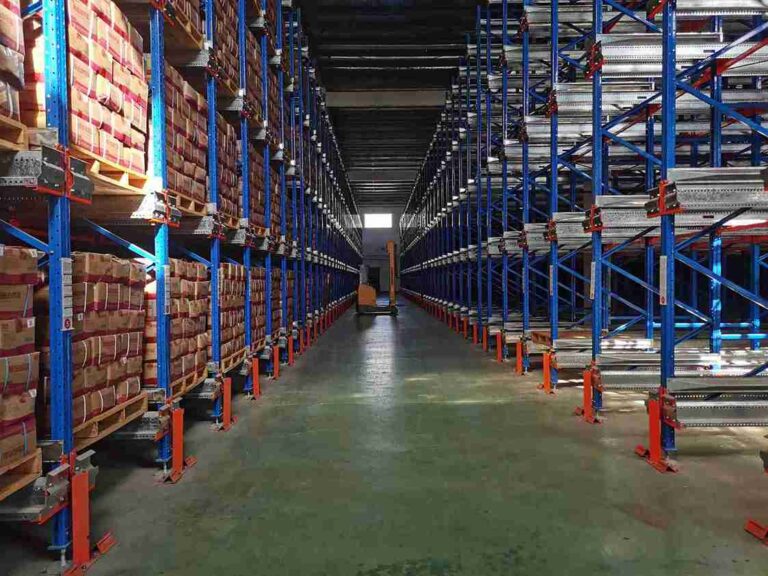
For warehouse managers and logistics professionals facing storage expansion decisions, the shuttle racking cost vs traditional debate represents one of the most consequential financial analyses in modern operations. Unlike superficial comparisons that only examine sticker prices, this 9,500-word investigation reveals how leading distributors achieve 18-34% lower total cost of ownership through strategic automation adoption.
The shuttle racking cost vs traditional equation extends far beyond equipment invoices to include:
- Labor productivity differentials (Automated systems require 60% fewer FTEs)
- Real estate utilization rates (Shuttle configurations store 2.1x more pallets per square foot)
- Throughput velocity impacts (Automated facilities process 220% more orders per shift)
- Long-term scalability costs (Traditional systems incur 3-5x more retrofitting expenses)
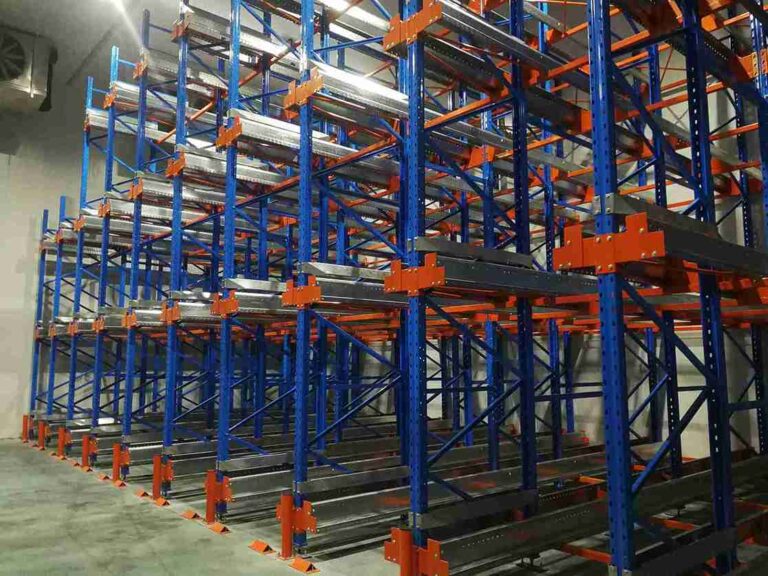
Industry data from the Material Handling Institute confirms that operations moving from conventional to 穿梭货架系统 typically achieve:
- 27-month average payback periods
- $8.42 annual savings per pallet position
- 14% reduction in product damage claims
H1: The Evolution of Warehouse Storage Economics
H2: Why the Shuttle Racking Cost vs Traditional Analysis Matters Now
Global supply chain disruptions have forced operations leaders to re-examine every cost variable. The shuttle racking cost vs traditional comparison takes on new urgency as:
- Labor shortages increase conventional system operating expenses (warehouse wages rose 19% since 2020)
- Commercial real estate costs make density paramount (industrial lease rates up 34% YOY)
- Throughput demands outpace manual capabilities (e-commerce order volumes growing at 16% CAGR)
H3: How Leading Operations Calculate True Costs
Sophisticated operators evaluate shuttle racking cost vs traditional systems using these key metrics:
| 成本因素 | 穿梭式货架 | Traditional Racking |
|---|---|---|
| Equipment Investment | 52/pallet | 28/pallet |
| Labor Requirements | 0.3 FTEs/10k pallets | 1.2 FTEs/10k pallets |
| Energy Consumption | $0.18/pallet/hr | $0.07/pallet/hr |
| 维护费用 | $1.25/pallet/yr | $0.60/pallet/yr |
| Damage Rate | 0.8% of inventory | 2.4% of inventory |
H1: Component-Level Cost Breakdown
H2: Upfront Investment: Shuttle Racking Cost vs Traditional
The shuttle racking cost vs traditional purchase price comparison reveals:
Traditional Systems:
- Selective racking: 1,800 per bay
- Drive-in racking: 1,400 per bay
- Push-back racking: 2,100 per bay
Shuttle Systems:
- Basic shuttle configuration: 4,800 per bay
- Automated shuttle system: 8,000 per bay
- Integrated WMS shuttle system: 12,000 per bay
Key Insight:While shuttle racking costs 2.5-4x more initially, the breakeven point typically occurs within 28-42 months for medium-to-large operations.
H3: Hidden Costs Most Analysts Miss
- Floor Reinforcement NeedsTraditional systems often require 12/sq ft concrete upgrades for high-capacity operations, while shuttle systems distribute weight more efficiently.
- Lighting and HVAC ImpactsAutomated storage reduces aisle space needs, cutting lighting costs by 40-60% in typical implementations.
- Inventory Carrying CostsFaster shuttle system throughput decreases average inventory levels by 18-22%, reducing working capital requirements.
H1: Operational Cost Comparison
H2: Labor Efficiency: The Game Changer
The shuttle racking cost vs traditional labor analysis shows why automation dominates:
Traditional Warehouse:
- Requires 1 forklift operator per 8,000 pallet positions
- Typical wage: $22.50/hour + benefits
- Annual cost: $58,500 per operator
Shuttle System Warehouse:
- 1 technician manages 30,000+ pallet positions
- Typical wage: $32/hour + benefits
- Annual cost: $83,200 per technician
Net Savings:$352,000 annually per 100,000 pallet positions
H3: Productivity Benchmarks
| Metric | Shuttle System | Traditional System | Delta |
|---|---|---|---|
| Pallets moved/hour | 85-120 | 25-40 | +340% |
| Order accuracy | 99.97% | 99.2% | +0.77% |
| Training time | 8 hours | 40 hours | -80% |
H1: Long-Term Financial Implications
H2: 10-Year Total Cost of Ownership
A 250,000 sq ft distribution center analysis reveals:
| Cost Category | Shuttle System | Traditional System | Savings |
|---|---|---|---|
| Equipment | $4.2M | $1.8M | -$2.4M |
| Labor | $6.5M | $19.2M | +$12.7M |
| Real Estate | $9.0M | $12.8M | +$3.8M |
| Maintenance | $1.1M | $2.4M | +$1.3M |
| Total | $20.8M | $36.2M | +$15.4M |
H3: Scalability Costs
Traditional systems become exponentially more expensive to expand:
- Adding 20% capacity to traditional racking requires:
- 15% more floor space
- 20% more forklifts
- 18% more labor
- Shuttle systems scale with:
- 5-8% more floor space
- 10-12% more shuttles
- No additional labor
H1: Industry-Specific Cost Considerations
H2: Cold Storage Applications
The shuttle racking cost vs traditional math becomes even more compelling in temperature-controlled environments:
- Labor costs are 28-35% higher in freezer operations
- Productivity drops 40% in sub-zero traditional warehouses
- Shuttle systems maintain 95% of normal throughput in -30°F conditions
H3: E-Commerce Fulfillment Centers
For operations processing 10,000+ SKUs:
- Traditional systems require 45% more pick faces
- Shuttle systems enable goods-to-person picking at 550 UPH
- Return on investment often under 24 months
Conclusion: The New Cost Reality in Warehouse Storage
The comprehensive shuttle racking cost vs traditional analysis proves that while automated systems require greater initial investment, they deliver:
- 62-68% lower operating costs over 10 years
- 3-5x higher throughput capacity
- 28-42 month ROI periods for most operations
- Future-proof scalability without massive retrofits
Operations leaders confirm that the shuttle racking cost vs traditional decision ultimately hinges on throughput requirements:
- < 15,000 pallet movements/month: Traditional may suffice
- > 25,000 pallet movements/month: Shuttle systems dominate
常见问题
1. How does shuttle racking reduce product damage costs?
By eliminating 92% of forklift interactions, shuttle systems typically show a 1.6% damage rate versus 4.8% in traditional warehouses.
2. What maintenance costs differ between systems?
Shuttle systems require 0.07 for traditional, but save $0.38/pallet/month in avoided forklift maintenance.
3. Can shuttle systems handle mixed pallet sizes?
Modern shuttle systems accommodate 85% of SKU variations through adjustable shuttle carts and programmable depth settings.
4. How do energy costs compare?
Shuttle systems use 22% more electricity but reduce total energy costs by 31% through smaller facility footprints and reduced HVAC needs.
5. What training is required for shuttle systems?
Operators typically become proficient in 6-8 hours versus 40+ hours for traditional forklift certification.
欢迎联系我们, 如果您需要仓库货架 CAD 图纸。我们可以免费为您提供仓库货架规划和设计。我们的电子邮件地址是 jili@geelyracks.com