📐"前 50 个企业查询可获得定制 3D 仓库设计" 计划















The Ultimate Resource for High Density Pallet Shuttle System for Logistics Warehouses – Boost Storage Capacity by 50% + Reduce Labor Costs (Wholesale Price for Asia/Africa/Middle East)
Warehouse operators across Southeast Asia, Sub-Saharan Africa, the Middle East, and Latin America face the same painful squeeze every day. Land values continue climbing. Skilled forklift operators become harder to find. Inventory levels keep rising, yet budgets remain frozen. The old solution of simply adding more square footage is no longer viable. A smarter approach is here. That smarter approach is shifting to high-density automation, and at the heart of that shift sits the high density pallet shuttle system.
This comprehensive resource walks through exactly why a high density pallet shuttle system is becoming a non-negotiable asset for modern warehouses, particularly for logistics providers, pharmaceutical distributors, and third‑party logistics companies operating in emerging markets. The discussion covers how this technology transforms existing footprints, how it guarantees a 50 percent increase in storage capacity, and how it drastically cuts dependence on manual labor. The conversation is not just about racking components. It is about delivering a high density pallet shuttle system that offers wholesale pricing, rapid deployment schedules, and a return on investment that redefines operational budgets.
Get ready for deep technical detail. Get ready for real financial modeling. Most importantly, get ready to prepare any warehouse for the next decade of logistics.
H1: The Definitive Guide to High Density Pallet Shuttle System for Logistics and Pharma Warehouses
Warehouse space remains one of the largest single operational costs in the global supply chain today. The pressure is most acute in rapidly industrializing nations across Asia, Africa, and the Middle East, where logistics infrastructure struggles to keep pace with surging e‑commerce volumes and manufacturing output. The classic selective pallet racking system, while widely available, leaves huge volumes of cubic air space unused and requires wide aisles that consume valuable floor area. A high density pallet shuttle system solves this problem by bridging the gap between completely static shelving and fully automated ASRS. It delivers semi‑automated precision without the astronomical capital expenditure of a mini‑load crane system.
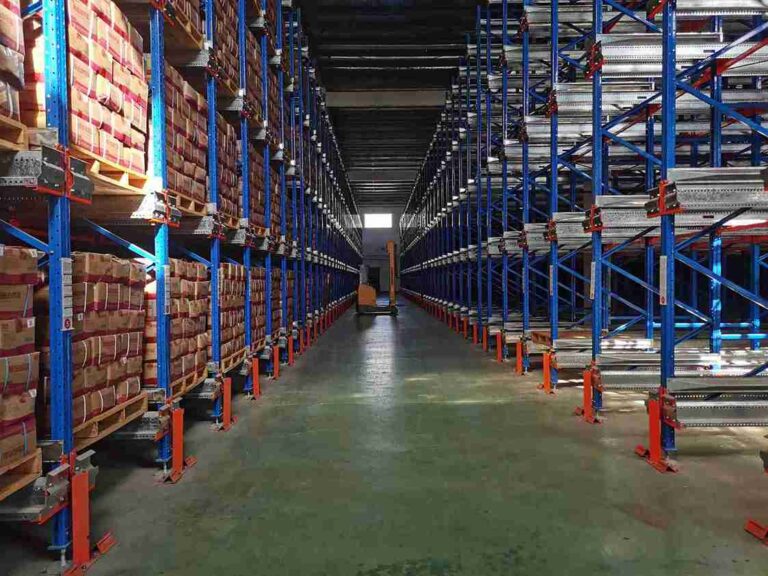
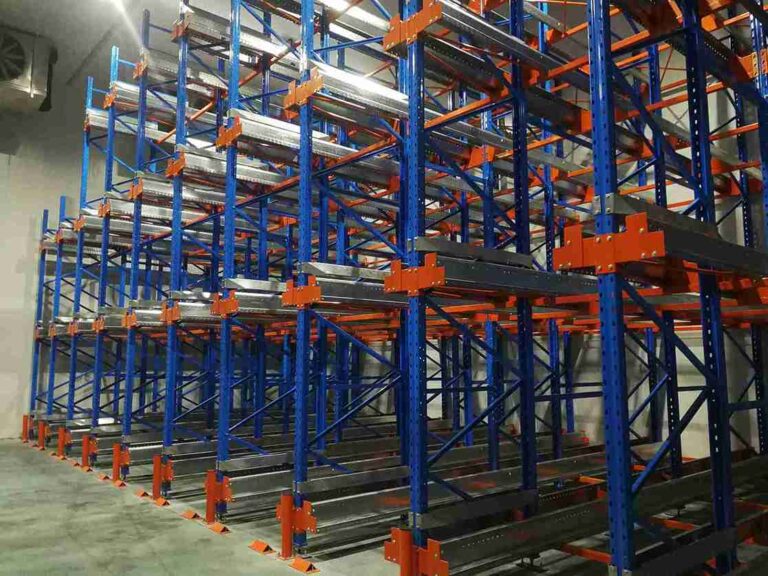
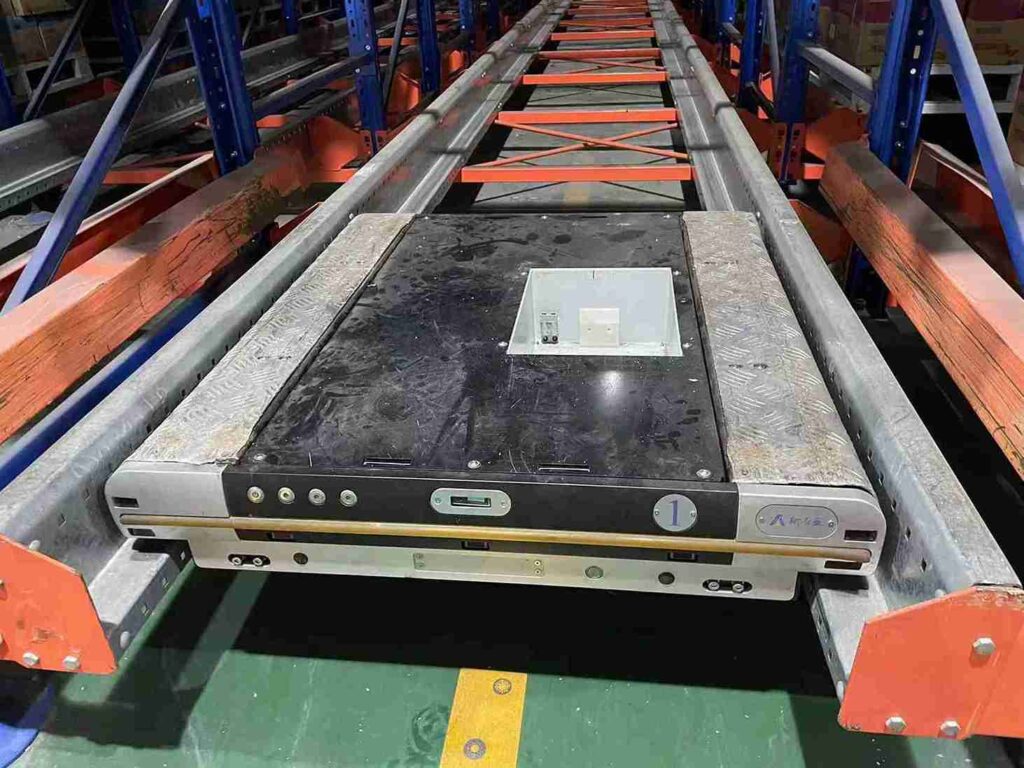
A high density pallet shuttle system is a semi‑automated storage solution where a battery‑powered shuttle vehicle runs along dedicated rails inside specially designed racking channels. The system is engineered for deep‑lane storage, allowing pallets to be stored 20, 30, or even 40 positions deep without requiring any forklift to enter the aisle. The operator uses a standard forklift only at the front face of the rack. The shuttle does every movement inside the tunnel, carrying each pallet to the first available location, compacting inventory automatically, and returning for the next load. The entire operation is controlled through a WiFi‑connected tablet or integrated into a higher‑level warehouse management system.
Decision‑makers across the logistics and pharmaceutical industries have witnessed firsthand how a properly deployed high density pallet shuttle system for logistics pharma warehouse wholesale distribution can transform a struggling distribution center into a profit center. The technology is no longer experimental. It is proven, scalable, and increasingly affordable, especially when purchased through wholesale channels that serve Asia, Africa, and the Middle East.
H2: Defining the High Density Pallet Shuttle System – Core Components and Engineering
Before diving into financials and operational layouts, a clear technical baseline must be established. A high density pallet shuttle system is not simply a set of racks with a moving cart. It is an integrated electro‑mechanical system built from several precisely engineered components that must work in perfect harmony.
Global industry analysis indicates that the shuttle pallet racking system market is projected to reach a valuation of USD 5.8 billion by 2033, growing at a compound annual growth rate of 7.2 percent from 2025 to 2033, driven largely by increasing demand for optimized storage solutions across food and beverage, retail, and logistics sectors. This growth trajectory underscores that a high density pallet shuttle system is no longer a luxury. It is a competitive necessity.
H3: The Rack Structure – High‑Tensile Steel Engineered for Automation
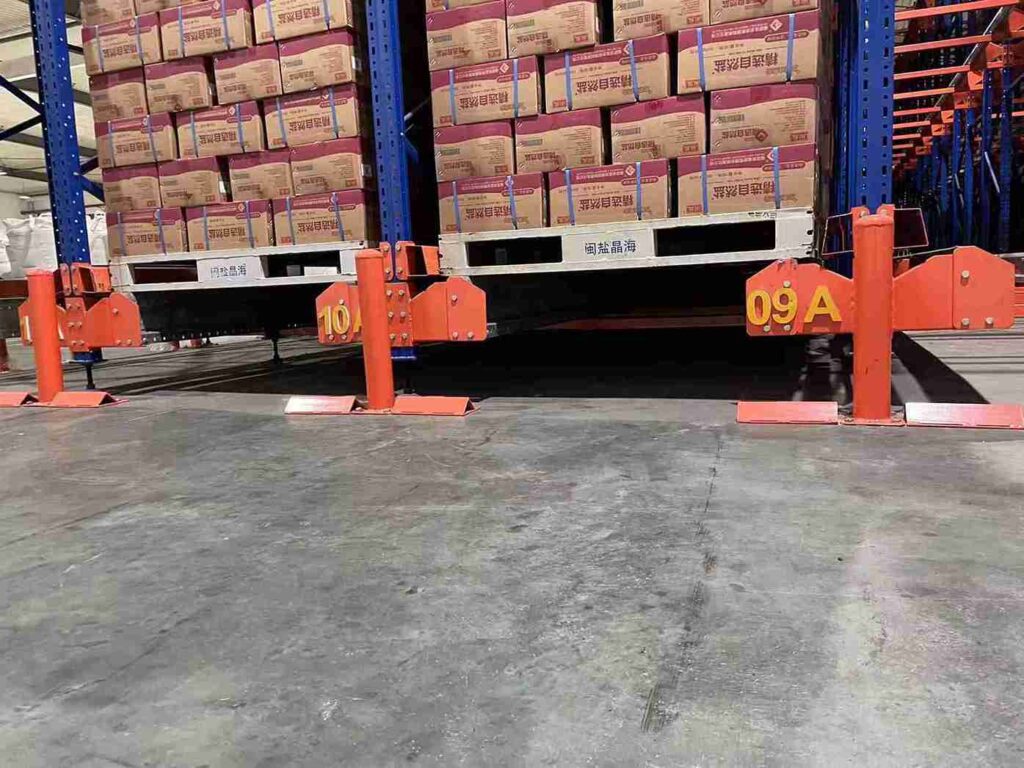
The rack structure of any high density pallet shuttle system must withstand significantly higher dynamic loads than conventional selective racking. Unlike static storage where pallets remain motionless until retrieved by a forklift, a shuttle‑based system generates braking forces, acceleration forces, and vibration from the shuttle vehicle running along the rails. These dynamic forces can be roughly 1.4 times the static pallet weight.
racking must therefore be fabricated from high‑tensile steel, typically grade S355MC or equivalent. S355MC is a European standard structural steel delivered in a thermomechanically rolled condition, specifically designed for cold forming, cold drawing, and cold bending while maintaining high yield strength and weldability. This material ensures that the racking can endure years of continuous shuttle operation without fatigue failure or excessive deflection.
The load‑bearing capacity of heavy‑duty racking forming the backbone of any high density pallet shuttle system is calculated according to EN 15512 and Eurocode 3, taking into account safety factors including a material factor of 1.1 instead of 1.0 as well as buckling and tilting stability. The height‑to‑depth ratio is also critical. For freestanding racks in non‑seismic zones, a ratio of approximately six to one applies.
In seismic zones, the ratio is often reduced to four to one, requiring additional bracing, larger base plates, or coupled rack rows to maintain structural integrity. Deflection limits are equally important. Beams must deflect minimally so that pallets sit securely and automation systems run smoothly. Typical deflection limits are about L/200, roughly 10 to 15 millimeters, and in high‑bay warehouses with automated systems, the limits are often stricter at around L/300.
H3: The Rail Guidance System – Precision Track for Smooth Shuttle Movement
Rails are arguably the most overlooked yet most critical component of any high density pallet shuttle system. Shuttle rails must be manufactured from hardened steel, typically achieving a Rockwell hardness of HRC 50 to 55. The rails are precisely bolted to beam faces with alignment tolerances measured in fractions of a millimeter. Rail straightness is certified to ISO 1101:2017, a dimensional and geometrical tolerancing standard that ensures the shuttle can travel smoothly without binding or excessive wear.
Any deviation in rail alignment directly impacts shuttle battery life, operational speed, and long‑term reliability. Therefore, professional installation of a high density pallet shuttle system requires laser‑leveling of each rail section and verification of track parallelism across the entire lane length. In automated four‑way configurations, beam length tolerance must be controlled within 0.5 millimeters per section, and column total length deviation must be maintained within 2 millimeters to guarantee smooth shuttle operation and long‑term structural reliability.
H3: The Shuttle Vehicle – The Intelligent Brain of the Operation
The shuttle vehicle itself is the brain of any high density pallet shuttle system. Modern shuttle cars are powered by lithium‑ion battery packs that support full‑day operation with opportunity charging during idle periods. Key features include built‑in sensors for load detection, position verification, anti‑collision, and obstacle avoidance. Some advanced models are equipped with radar devices on all four sides for real‑time obstacle detection, along with mechanical anti‑collision and emergency stop protection devices.
Load capacities typically range from 1000 kilograms to 1500 kilograms per pallet. Travelling speeds can reach 148 feet per minute when loaded, ensuring rapid movement even in the deepest lanes. Control options range from a simple handheld tablet for semi‑automated operations to full integration with a warehouse control system for fully automated material flow.
Swisslog recently introduced AgileStore, a four‑way roaming pallet shuttle for high‑density pallet storage that seamlessly transitions across aisles and levels via integrated lift systems. The system supports operations in both ambient and temperature‑controlled environments, including deep‑freeze conditions down to minus 30 degrees Celsius. This level of capability demonstrates how far the high density pallet shuttle system has evolved from simple two‑way deep‑lane storage into a fully flexible automation platform.
H3: The Control Software – Orchestrating Shuttle Traffic
Software is the invisible backbone of every modern high density pallet shuttle system. At the most basic level, a ruggedized tablet connects to the shuttle via WiFi, allowing the operator to send commands for single storage, single retrieval, batch retrieval, or full‑lane compaction. At the advanced end, the high density pallet shuttle system integrates with a warehouse management system (WMS) or a warehouse execution system (WES) that dynamically allocates storage locations, balances shuttle traffic across multiple lanes, and provides real‑time inventory visibility.
Some configurations incorporate a robot control system (RCS) that coordinates movement across dozens of shuttles simultaneously. The control software also manages battery charging cycles, bringing shuttles to charging stations automatically when battery levels drop below preset thresholds. This software layer transforms a high density pallet shuttle system from a simple mechanical solution into an intelligent warehouse asset that continuously optimizes its own performance.
H2: How a High Density Pallet Shuttle System Works – Step‑by‑Step Operational Workflow
Understanding the motion and workflow is essential for justifying the investment in a high density pallet shuttle system. The old way involved chaos. Forklifts drove into dark, narrow rack tunnels, risking collisions with uprights, damaging pallets, and wasting operator time. The new way is fundamentally different.
Step 1 – Load Pallet onto Shuttle: The operator positions a standard counterbalance forklift at the entry of a dedicated storage channel within the high density pallet shuttle system. The shuttle vehicle sits waiting at the front face of the lane, having been positioned there either manually or automatically. The forklift places a pallet onto the shuttle’s load bed. Sensors confirm correct positioning.
Step 2 – Shuttle Transports Pallet: The operator commands the shuttle to store the pallet using the tablet interface. The shuttle raises the pallet slightly, lifting it off the rails, then accelerates into the lane. It travels precisely to the first available storage position, guided by position sensors that read barcodes or magnets along the rail. This positioning accuracy is typically within plus or minus 2 millimeters.
Step 3 – Shuttle Deposits and Returns: Upon reaching the target position, the shuttle lowers the pallet onto the rails and retracts its lifting mechanism. The pallet now rests securely on the rails. The shuttle then returns to the front of the lane at speed, ready for the next task. The entire cycle takes roughly 30 to 45 seconds depending on lane depth and shuttle speed. The forklift operator never entered the lane, never risked a collision, and never wasted travel time.
Step 4 – Retrieval: When a pallet needs to be retrieved, the operator commands the shuttle to enter the lane again, travel to the target pallet position, lift the designated pallet, and bring it back to the front face of the lane. The forklift then removes the pallet for further processing. For FIFO operations where the oldest pallet must be retrieved first, the shuttle can be programmed to travel past the front pallets to retrieve the deepest pallet in the lane, requiring that the front pallets be temporarily relocated. For LIFO operations, the shuttle simply retrieves the pallet closest to the aisle entrance, delivering maximum throughput speed.
Comparison: Traditional Selective Racking Versus High Density Pallet Shuttle System
| 特点 | Traditional Selective Racking | High Density Pallet Shuttle System |
|---|---|---|
| Aisle Space Required | Large aisles needed for forklift turning radius | No aisles in deep storage zones |
| Forklift Entry | Forklift enters deep lanes, time‑consuming and risky | Forklift stops only at front face |
| Depth of Storage | Limited to 1–2 pallets deep | Up to 40+ pallets deep |
| Labor Required | High, driver spends significant time traveling | Low, shuttle does all internal travel |
| Upfront Capital Cost | Lower initial investment | Higher initial investment but rapid payback |
| Product Damage Rate | Higher due to forklift‑to‑rack collisions | Very low, no forklift entry into structure |
| Control System | None or minimal | WiFi tablet or full WMS/WCS integration |
In a real‑world case study, a processing facility in Nebraska retrofitted its existing equipment with a fully automated shuttle system that reduced labor costs and eliminated redundant forklift tasks. The new system runs autonomously, reducing labor costs and product damage while dramatically increasing storage density. The investment delivered a USD 692,462 return on investment at the end of year two.
To put this in perspective, consider an existing 100,000 square foot warehouse with selective racking storing approximately 10,000 pallet positions. After implementing a high density pallet shuttle system with 30‑pallet‑deep lanes, the same building can typically accommodate 15,000 to 18,000 pallet positions without adding any new square footage. That capacity increase alone often justifies the capital investment within eighteen to thirty months.
H2: Understanding FIFO versus LIFO Configurations in a High Density Pallet Shuttle System
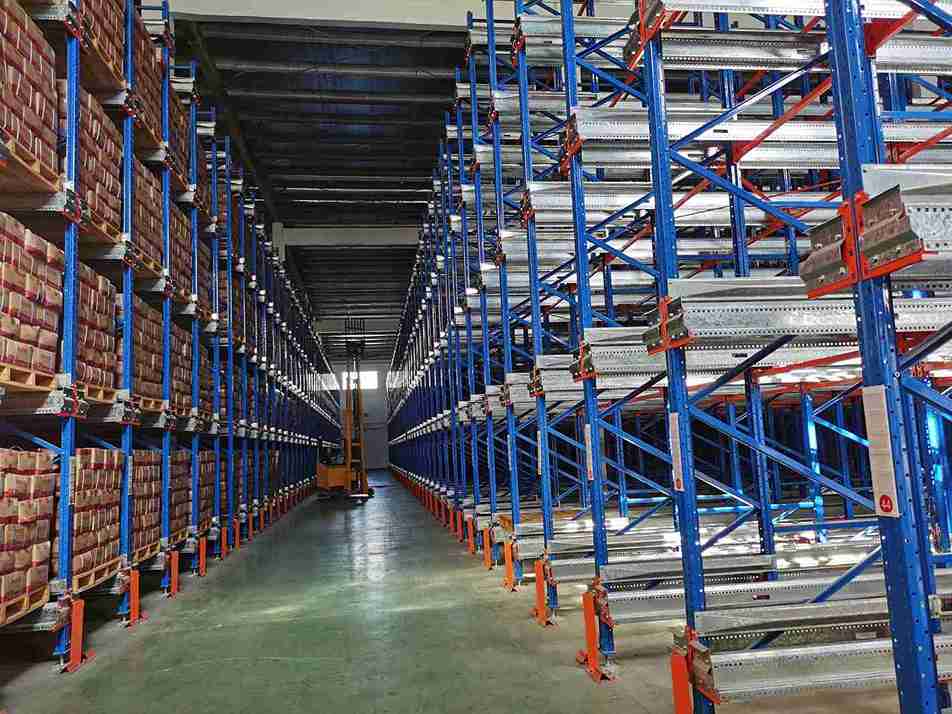
A common misconception is that deep storage locks any high density pallet shuttle system into a single inventory rotation model. In reality, modern shuttle systems offer remarkable flexibility, allowing warehouses to operate under FIFO, LIFO, or hybrid models depending on product characteristics and regulatory requirements.
FIFO (First‑In, First‑Out): FIFO storage ensures that the oldest pallet stored is the first pallet retrieved. This rotation model is often required in food, beverage, pharmaceutical, and other time‑sensitive distribution environments where product expiration dates must be strictly controlled. In a high density pallet shuttle system configured for FIFO, the warehouse is accessible from both ends of the channel, often referred to as a drive‑through configuration. Pallets are loaded on one side of the aisle and retrieved from the opposite side.
The shuttle travels the full depth of the lane to retrieve the oldest pallet, which requires that newer pallets be temporarily repositioned. This process is fully automated by the shuttle control software but does reduce throughput speed compared to LIFO. However, for regulated industries like pharmaceuticals, FIFO is non‑negotiable. FIFO systems provide better inventory control for regulated goods, while LIFO systems often deliver the highest mechanical storage density. FIFO layouts prioritize inventory rotation compliance while still supporting increased storage density.
LIFO (Last‑In, First‑Out): LIFO storage means the most recently stored pallet is the first pallet retrieved. This is the most space‑efficient configuration for a high density pallet shuttle system because access is required from only a single aisle. The shuttle retrieves the pallet closest to the aisle entrance, making retrieval extremely fast. LIFO is ideal for raw materials, non‑perishable goods, or any application where inventory age is not critical. In high‑density warehouse environments where expansion avoidance is a priority, LIFO‑configured pallet racking systems often provide the strongest cost‑per‑pallet advantage.
FEFO (First‑Expired, First‑Out): Pharmaceutical and food warehouses increasingly require FEFO rotation, where products with the earliest expiration date are retrieved first regardless of when they were stored. Regulatory compliance demands FEFO to ensure adherence to stringent GMP/GDP regulations that mandate the use of products before they expire. LIFO is generally not compliant with GMP/GDP guidelines due to its inability to ensure proper control of product expiration.
现代 high density pallet shuttle system software can support FEFO by tracking batch numbers and expiration dates in the WMS, then instructing the shuttle to retrieve the expiring pallet regardless of its position in the lane. This capability is essential for any pharmaceutical warehouse looking to implement a high density pallet shuttle system for logistics pharma warehouse wholesale operations.
H2: Achieving 50 Percent Plus Storage Capacity Gain Without Expanding the Building
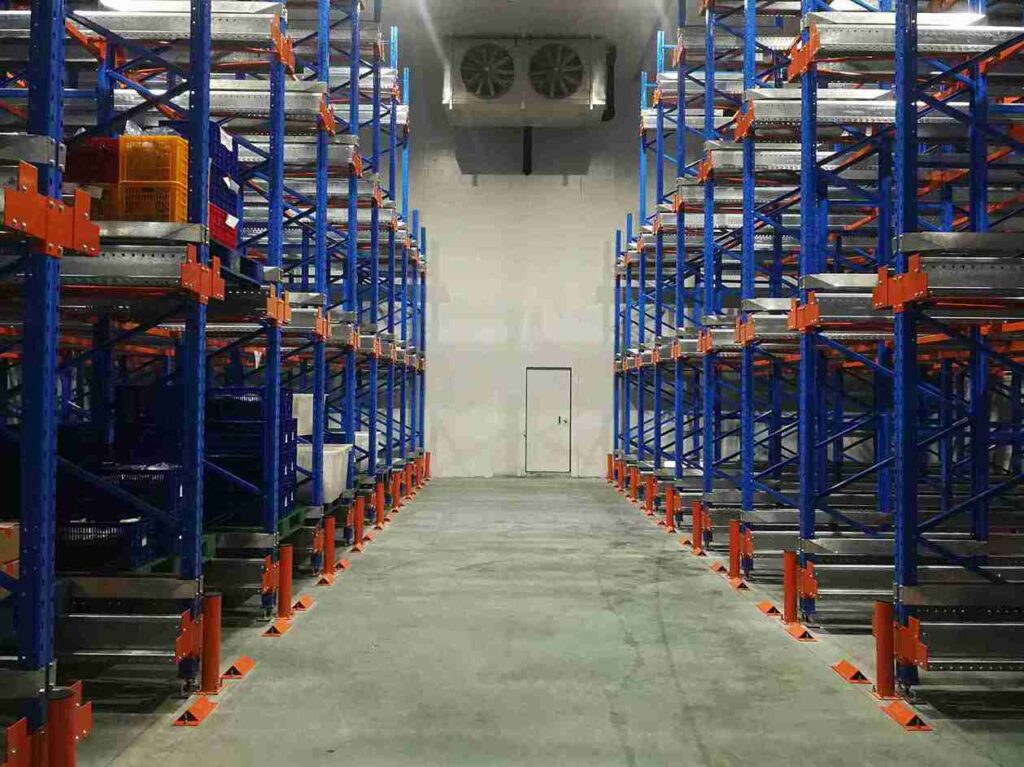
The headline benefit of a high density pallet shuttle system is dramatic storage capacity gain, often exceeding 50 percent, without requiring any new building construction. This is what makes the technology so compelling for warehouse operators in land‑constrained cities across Southeast Asia, the Middle East, and Africa. Global warehousing markets continue to expand, but real estate costs are rising even faster. The solution is not to build out horizontally. The solution is to build up vertically and dig deep horizontally.
A high density pallet shuttle system achieves capacity gains through three mechanisms:
First, replacing wide access aisles with dense storage lanes dramatically reduces wasted floor space. In a traditional selective racking layout, aisles consume roughly 40 to 50 percent of the total warehouse floor area. Forklifts need wide aisles to turn and maneuver. With a high density pallet shuttle system, aisles are eliminated entirely in the deep storage zones. The only aisle required is the front face where forklifts place and remove pallets. This immediately frees up massive amounts of floor area for additional racking.
Second, deep‑lane storage allows pallets to be stored exceptionally deep without requiring any forklift travel inside the lane. Deep lanes of 20, 30, or even 40 pallets create far more positions per linear foot of racking than traditional systems. A lane that is 40 pallets deep holds 40 pallets in the same footprint that would typically hold only two pallets in selective racking. This is the density multiplier that drives the 50 percent plus capacity gain.
Third, vertical space is fully utilized. A high density pallet shuttle system can store pallets at heights of 10 meters or more, limited only by the building ceiling height and local seismic codes. Shuttles are not affected by operator visibility constraints that limit the height of operator‑driven forklifts. As a result, warehouses can stack pallets to the ceiling, dramatically increasing positions per square meter of floor area.
Real‑world numbers validate these claims. In a case study of a 40,000 square foot facility, pallet positions increased from 1,400 to 4,088 after implementing a four‑way shuttle automation solution, adding 2,688 pallet locations and delivering an uplift of over 190 percent. Compared with an equivalent adjustable pallet racking layout, the high density pallet shuttle system provided a 200 percent plus improvement in storage density. Another installation increased warehouse storage capacity by 50 percent while maintaining high flexibility for diverse pallet types, all without building a single additional square meter.
H2: Reducing Labor Costs – The Hard Financial Case for Automation
Labor reduction is often the second‑largest financial justification for a high density pallet shuttle system, after storage capacity gains. The acute shortage of skilled labor in logistics is now at crisis levels across all emerging markets. In sophisticated logistics markets, 45 percent of warehouse operators reported that their operations were hampered by a lack of staff in recent quarters. There are only 72 applicants for every 100 open apprenticeship positions in warehouse logistics. Forecasts predict a global skills shortage of over 85 percent for supply chains by 2030. Under these conditions, automation is becoming not merely an advantage but a necessity for survival.
A high density pallet shuttle system reduces labor requirements in three ways:
First, forklift operator time spent on putaway and retrieval is dramatically reduced. In a traditional warehouse, an operator might spend 45 seconds driving to the back of a 30‑meter lane, 15 seconds depositing the pallet, and another 45 seconds driving back out. That is nearly two minutes per pallet just in travel time. With a high density pallet shuttle system, the operator places the pallet on the shuttle at the front face, perhaps 15 seconds total, then moves immediately to the next task. The shuttle does the deep lane travel autonomously while the operator handles another pallet. This concurrent operation can increase forklift productivity by 60 percent or more.
Second, fewer total forklifts are required. Because each forklift can handle more pallet movements per hour, the fleet size can often be reduced by 30 to 50 percent. This reduction directly translates into lower capital expenditure on forklifts, lower maintenance costs, lower fuel or electricity costs, and lower operator training requirements.
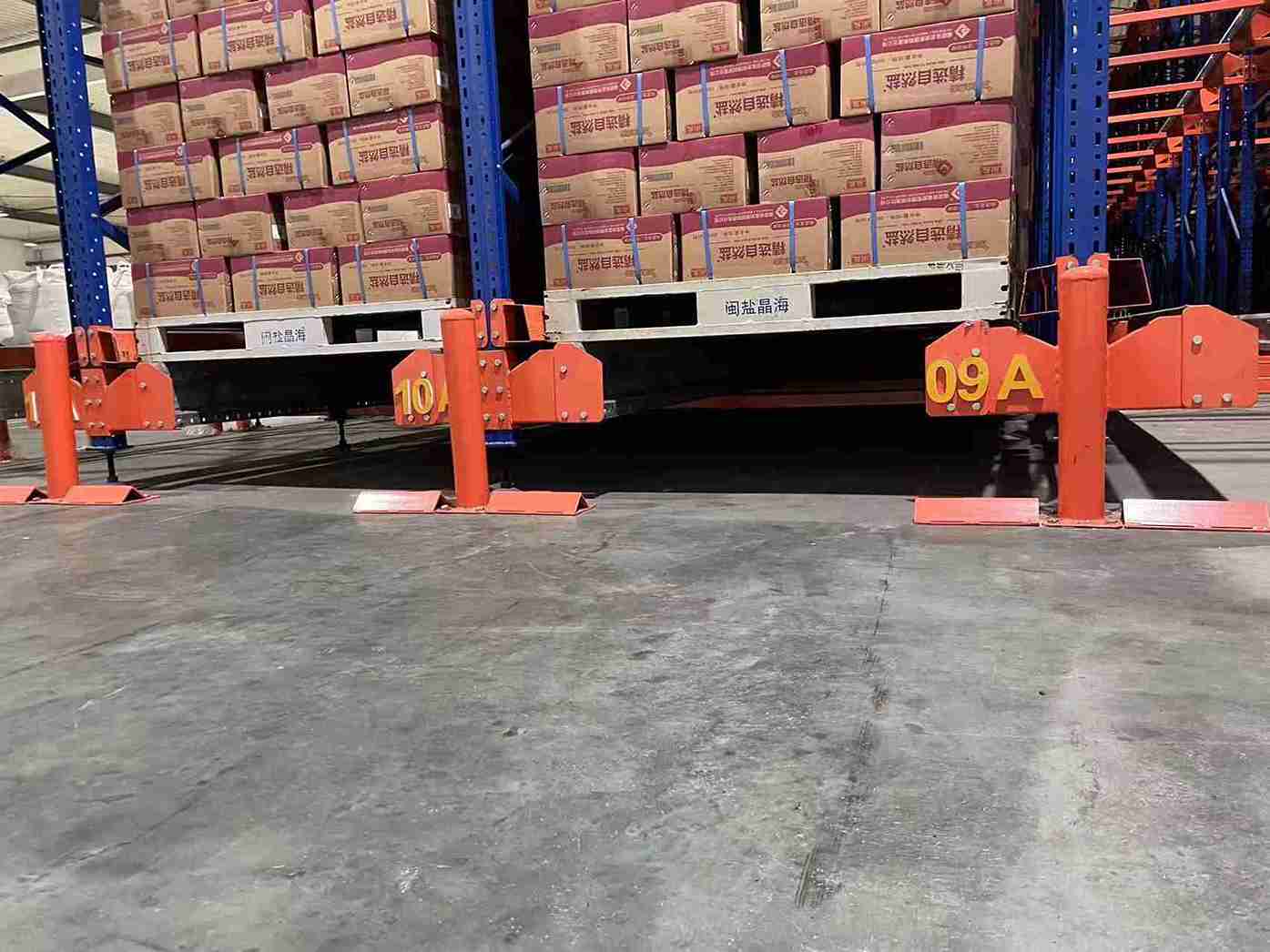
Third, error rates and product damage drop significantly. Forklift operators inevitably misplace pallets, leading to inventory inaccuracies and search time. They also collide with racking, with drive‑in racks suffering from bent uprights, smashed pallets, and product loss because forklift masts hit the structure. A high density pallet shuttle system eliminates the forklift from entering the steel structure entirely, so collision damage becomes essentially zero. This not only saves money on rack repairs but also protects high‑value inventory from damage.
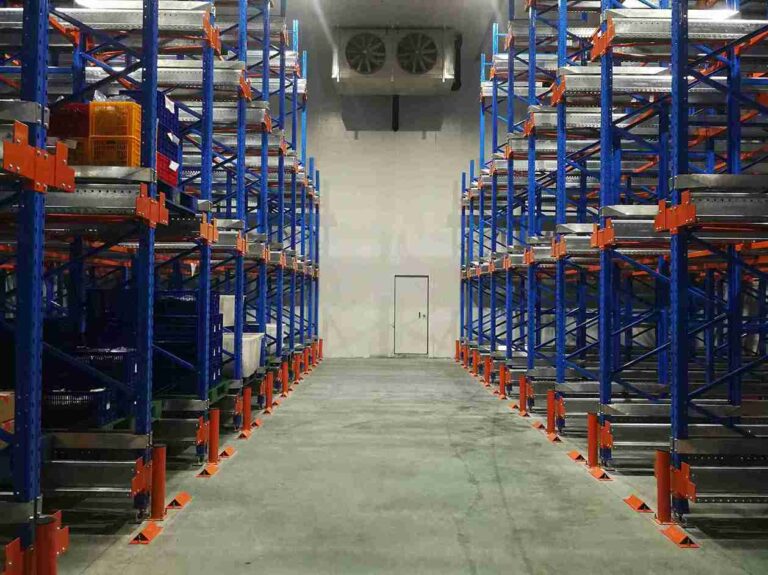
Energy savings are another significant factor, especially in cold storage applications. Refrigeration is enormously expensive. Every cubic meter of refrigerated space costs money to cool and maintain. By increasing storage density, a high density pallet shuttle system reduces the refrigerated volume required to store a given quantity of inventory. Less volume to cool means lower utility bills. Some cold storage facilities have reduced energy consumption by 20 to 30 percent after implementing high‑density shuttle storage.
The financial math is straightforward. In the Nebraska case study, the customer saw a substantial reduction in labor costs at their existing location and a reduction of 50 percent of their projected labor costs at a new facility. The investment delivered USD 692,462 in ROI at the end of year two. For many warehouses, the payback period for a high density pallet shuttle system ranges from 18 to 36 months, after which the system generates pure operational savings year after year.
H2: Pharmaceutical Warehouse Solutions – GDP Compliance, Cold Chain, and Traceability
The pharmaceutical industry operates under a different set of rules than general logistics. Product integrity is not a quality aspiration. It is a regulatory obligation. Temperature excursions, documentation gaps, and chain‑of‑custody failures do not just create operational problems. They create patient safety risks, regulatory enforcement exposure, and potential product recalls. A high density pallet shuttle system for logistics pharma warehouse wholesale operations must be designed from the ground up to meet Good Distribution Practice (GDP) requirements while delivering the density and labor savings that make shuttle technology attractive in the first place.
GDP Compliance Requirements: GDP is the set of guidelines and regulations that govern how medicinal products must be distributed throughout the supply chain. For logistics operations handling medicinal products, GDP compliance requires a formal Quality Management System with documented procedures and controlled documents, personnel who are appropriately trained with documented training records, premises and equipment that are qualified and validated for the products handled, temperature monitoring systems with documented evidence of performance, a documented process for handling temperature excursions, and an audit trail for every movement and handling of product. Any organization handling GDP‑regulated product must demonstrate GDP compliance through its own quality management systems and support pharmaceutical clients in demonstrating supply chain compliance during regulatory inspections.
Cold Chain Capabilities: Many pharmaceutical products, including vaccines, biologics, and insulin, require strict temperature control throughout the storage and distribution process. A high density pallet shuttle system must therefore operate reliably in cold environments. Swisslog’s AgileStore pallet shuttle, for example, supports operations in both ambient and temperature‑controlled environments, including deep‑freeze conditions down to minus 30 degrees Celsius. The Cruiser 360 four‑way pallet shuttle operates in temperatures from minus 25 degrees Celsius to plus 45 degrees Celsius. This thermal resilience is non‑negotiable for pharmaceutical applications.
Batch Traceability and FEFO: Pharmaceutical warehouses must track each batch of product with serialization and lot numbers. The high density pallet shuttle system must integrate with the WMS to know which specific pallet in a lane contains which batch and when that batch expires. The shuttle then must retrieve the appropriate pallet based on FEFO logic, not simply based on storage position. This requires sophisticated software integration between the shuttle control system and the pharmaceutical warehouse’s ERP or WMS. The system must also maintain a complete audit trail showing when each pallet was stored, when it was retrieved, and who authorized the movement.
Cold Chain Energy Efficiency: In cold storage pharmaceutical warehouses, energy efficiency becomes a primary ROI driver. A high density pallet shuttle system increases storage density, which reduces the refrigerated volume required for the same pallet count. Less volume means lower refrigeration costs. Additionally, because the shuttle reduces the need for personnel to enter the cold zone, the system can also reduce airlock cycling and temperature fluctuations caused by door openings. Some GDP‑compliant cold chain facilities have reported energy savings of 25 percent or more after transitioning from selective racking to high‑density shuttle storage.
H3: Meeting Temperature‑Controlled Pharmaceutical Logistics Standards
Pharmaceutical cold chain logistics means implementing controlled processes, systems, and documentation to ensure temperature‑sensitive pharmaceutical products are stored and transported within approved conditions throughout the supply chain. A high density pallet shuttle system deployed in a pharma warehouse must meet these stringent standards. The shuttle itself must be rated for continuous operation in cold environments without component failure. The racking must be designed to maintain structural integrity at low temperatures where steel can become more brittle.
The control system must provide real‑time temperature monitoring and logging. Any temperature excursion must trigger an alarm and be recorded for GDP audit purposes. These requirements add complexity and cost to a pharmaceutical shuttle implementation, but they are not optional. For warehouse operators serving pharmaceutical clients, a GDP‑compliant high density pallet shuttle system for logistics pharma warehouse wholesale is the only acceptable solution.
H2: Emerging Markets Focus – Asia, Africa, Middle East, and Latin America
Why focus specifically on Southeast Asia, Africa, the Middle East, and Latin America? Because these regions are where warehouse automation demand is growing fastest, where land constraints are most acute, and where labor markets are under the greatest pressure. Global capital is flowing into these regions to build modern logistics infrastructure, but the legacy of manual warehouses cannot keep pace with e‑commerce growth and international trade expansion.
东南亚: The ASEAN Warehousing and Distribution Logistics Market size in 2026 is estimated at USD 32.95 billion, growing from 2025 value of USD 31.31 billion with 2031 projections showing USD 42.52 billion, growing at a 5.23 percent CAGR over 2026‑2031. The region’s rapid e‑commerce growth, large‑scale infrastructure programs, and expanding trade pacts combine to make ASEAN one of the most attractive supply‑chain opportunities worldwide.
East Asia continues to dominate the pallet shuttle market, but Southeast Asia is catching up fast as major logistics providers establish regional headquarters in Singapore, Malaysia, and Thailand. In 2025, 3PL and contract logistics were estimated to account for 28 percent of the ASEAN warehouse automation market, followed by retail and e‑commerce at 18 percent, with another 18 percent coming from automotive, electronics, semiconductors, and chemicals.
Middle East: The Middle East logistics sector is witnessing staggering growth with significant investments in modern warehousing infrastructure to support expanding trade activities. Dubai, Abu Dhabi, Riyadh, and Doha are becoming major logistics hubs, with world‑class facilities designed to handle high‑volume pallet storage. Middle Eastern distributors increasingly demand automation to remain competitive. Swisslog’s recent launch of the AgileStore pallet shuttle system specifically targets facilities requiring higher storage density, reduced manual handling, and consistent pallet flow under variable demand conditions. The Middle East is no longer a follower in warehouse automation; it is a leader.
非洲: Sub‑Saharan Africa presents unique challenges and opportunities. Warehousing infrastructure is generally less developed than in Asia or the Middle East, which means there is huge potential for leapfrogging directly to automated solutions rather than building out legacy manual warehouses. The African Continental Free Trade Area (AfCFTA) is driving increased cross‑border trade, which in turn increases demand for efficient warehousing and distribution infrastructure. South Africa, Kenya, Nigeria, and Ghana are leading the charge, with logistics providers in these countries seeking high‑density storage solutions that can operate reliably in challenging conditions. PBSA, for example, has introduced the Cruiser 360 four‑way pallet shuttle in sub‑Saharan Africa, backed by expert installation and maintenance services tailored to the region.
拉丁美洲: Brazil, Mexico, Argentina, and Colombia are seeing rapid growth in automated warehousing, driven by e‑commerce expansion and manufacturing reshoring. A recent case study in Argentina involved a manufacturing client facing limited warehouse space, nearly 1,000 pallet positions required, and dozens of SKUs of chemical products. Conventional racking systems were unable to meet the operational demands. A customized four‑way shuttle racking solution was proposed, with four‑way shuttle vehicles moving both horizontally and vertically across aisles and levels. The solution increased storage capacity by approximately two‑thirds and delivered up to 90 percent floor space utilization.
For warehouses in these regions, three pain points are consistent:
Rapid Urbanization and Land Scarcity: Land near major ports and urban centers in Jakarta, Ho Chi Minh City, Bangkok, Nairobi, Lagos, Dubai, and São Paulo is incredibly expensive and increasingly scarce. The cost of building a new warehouse in these prime locations can exceed the cost of retrofitting an existing facility with a high density pallet shuttle system by a factor of two or three.
Labor Market Shifts: Finding, training, and retaining skilled forklift operators is becoming increasingly difficult across all emerging markets. Young workers increasingly prefer technology‑oriented jobs over manual material handling. A high density pallet shuttle system reduces the number of operators required and makes the remaining jobs more skill‑based and less physically demanding, which helps with recruitment and retention.
Investment Capital Efficiency: Businesses in emerging markets cannot afford to tie up capital in large new building projects when the same capital could be deployed into automation that generates ROI within three years. A high density pallet shuttle system can often be installed in an existing building without major structural modifications, allowing businesses to scale capacity without scaling real estate.
A high density pallet shuttle system is the ideal bridge technology for these markets. It offers the automation benefits of high‑density storage without the astronomical cost of a fully automated mini‑load ASRS. It can be deployed incrementally, starting with a single block of racking and a few shuttles, then expanded as volume grows. It works with existing forklifts and operator skill sets. And it delivers rapid payback through labor reduction and capacity gains.
H2: The Financial Model – ROI, Depreciation, and Wholesale Value for Emerging Markets
The financial case for a high density pallet shuttle system must be compelling because the upfront capital investment is significant. However, when properly calculated, the return on investment is excellent for most logistics and pharmaceutical warehouses.
Labor Savings: Consider a warehouse employing 20 forklift operators at an average fully‑loaded cost of USD 30,000 per year each, including wages, benefits, training, and supervision. That is USD 600,000 annually in forklift labor costs. A well‑implemented high density pallet shuttle system can typically reduce forklift operator requirements by 30 to 50 percent. At 40 percent reduction, that saves USD 240,000 per year in labor costs. Over five years, that is USD 1.2 million in labor savings alone.
Storage Cost Avoidance: Suppose the alternative to implementing a high density pallet shuttle system is leasing additional warehouse space at USD 6 per square foot per year. The warehouse needs an additional 50,000 square feet to accommodate projected inventory growth. That is USD 300,000 per year in additional lease costs. The shuttle system avoids this cost entirely by increasing density within the existing building. Over five years, that is USD 1.5 million in cost avoidance.
Throughput Increase: A high density pallet shuttle system typically increases pallet movements per hour because the shuttle handles deep lane travel while the operator handles another pallet. Throughput increases of 30 percent are common. For a distribution center processing 5,000 pallets per day, increasing throughput by 30 percent is equivalent to adding capacity for 1,500 more pallets per day without adding headcount. That throughput increase directly enables revenue growth.
Damage Reduction: Product damage in traditional drive‑in racking can run 1 to 3 percent of inventory value annually. For a facility with USD 10 million in inventory, that is USD 100,000 to USD 300,000 in annual product write‑offs. A high density pallet shuttle system reduces damage to near zero because forklifts never enter the rack structure. That saving alone can pay for a significant portion of the system.
Energy Savings: For cold storage warehouses, energy savings are also substantial. A high density pallet shuttle system increases storage density, which reduces the refrigerated volume required for the same inventory. Energy savings of 20 to 30 percent are realistic. For a cold storage facility with monthly utility bills of USD 30,000, that is USD 6,000 to USD 9,000 per month saved, or USD 72,000 to USD 108,000 annually.
Wholesale Pricing Advantage: We offer wholesale pricing specifically designed for emerging market customers where currency fluctuation and cash flow management are critical concerns. Wholesale pricing reduces the initial capital outlay, which directly improves the ROI calculation. Additionally, we provide free layout design and continuous tech support to ensure successful implementation and operation. The wholesale model is built on volume manufacturing and direct supply relationships, eliminating middleman markups that typically add 20 to 30 percent to project costs.
Example ROI Calculation: Consider a USD 500,000 investment in a high density pallet shuttle system for a warehouse. Labor savings USD 240,000 per year. Lease cost avoidance USD 150,000 per year (assuming moderate density gain). Damage reduction USD 100,000 per year. Total annual savings USD 490,000. Payback period 500,000 divided by 490,000 equals approximately 13 months. After payback, the system generates nearly USD 500,000 per year in pure operational savings. This is not theoretical. This is what customers are achieving today.
The Nebraska case study showed a USD 692,462 ROI at the end of year two on a fully automated retrieval system. That is a real number from a real installation. The ROI argument for a high density pallet shuttle system is strong, and it gets stronger with every year that labor costs rise and warehouse space becomes more expensive.
H2: Implementation and Installation – Minimal Downtime, Rapid Commissioning
The fear of operational disruption is often the biggest barrier to warehouse automation. Warehouse managers worry that installing a high density pallet shuttle system will require shutting down operations for weeks or months while racking is installed and shuttles are commissioned. In reality, modern shuttle systems are designed for rapid implementation with minimal operational impact.
Modular, Incremental Installation: The racking for a high density pallet shuttle system is modular. Installers can erect one block of racking at a time while existing operations continue in other parts of the warehouse. There is no requirement to clear the entire building. The shuttles are typically commissioned after the racking is installed, again on a block‑by‑block basis. This incremental approach allows the warehouse to phase in automation while still processing orders.
Short Installation Timelines: In a recent case study, a complete high density pallet shuttle system was installed and operational in just eight weeks. That timeline included site preparation, racking installation, shuttle commissioning, and staff training. For a warehouse that can tolerate a phased approach, the disruption can be even less. Some installations can be completed over a weekend if the system is pre‑engineered and the racking is pre‑fabricated.
No Structural Building Modifications Required: One of the advantages of a high density pallet shuttle system is that it is retrofittable into most existing warehouses. The system does not require building modifications such as new floors, new roof structures, or seismic upgrades beyond what would be required for any high‑bay racking. The floor must be level and strong enough to support the loaded racking, but that is true for any pallet racking system. If the building already has concrete floors that meet standard warehouse specifications, it is generally ready for shuttle installation.
Commissioning and Training: The shuttle control system is designed to be intuitive. Operators typically require two to four hours of hands‑on training to become proficient with the tablet interface. Maintenance staff require additional training on battery management, sensor calibration, and basic troubleshooting. Most suppliers provide on‑site commissioning and training as part of the system purchase. For wholesale customers in emerging markets, ongoing technical support is available remotely or through local service partners.
H2: AGV Integration and Full Warehouse Automation – Extending the Shuttle Ecosystem
"(《世界人权宣言》) high density pallet shuttle system does not have to stand alone. It can be integrated with automatic guided vehicles (AGVs), autonomous mobile robots (AMRs), conveyor systems, and vertical reciprocating conveyors to create a fully automated inbound‑to‑outbound material flow. This ability to scale from semi‑automated to fully automated is a key advantage of shuttle technology.
Shuttle‑to‑AGV Integration: In a fully automated configuration, AGVs or AMRs bring pallets to the inbound dock of the high density pallet shuttle system. Industrial vision systems identify each pallet and verify its dimensions and condition. Pallet roller conveyors then move the pallet to a vertical reciprocating conveyor, which lifts it to the correct storage level. The shuttle then takes over, transporting the pallet into the deep lane for storage. The outbound process works in reverse. The shuttle retrieves the pallet, the vertical conveyor lowers it, and an AGV takes it to the shipping dock or to a picking station. This end‑to‑end automation eliminates all manual forklift movement, reducing labor costs to near zero for the storage function.
Four‑Way Shuttle Systems for Maximum Flexibility: Traditional two‑way shuttles move only forward and backward within a single lane. Four‑way shuttle systems, by contrast, can move both horizontally and vertically across aisles and levels, significantly enhancing storage density and operational flexibility. The Wayzim Pallet Four‑way Shuttle AS/RS is a highly collaborative and intelligent operation system that enables shuttles to move flexibly within a dense grid of racks, eliminating the fixed aisles required by traditional AS/RS. A more compact rack layout becomes possible, increasing storage density by over 20 percent.
Software Orchestration: Modern shuttle systems connect to warehouse control systems (WCS) and warehouse execution systems (WES) that coordinate shuttle traffic, lift movements, AGV dispatch, and order picking. The WES generates and issues robot tasks through an orchestration layer, coordinating the shuttle fleet in line with live demand. This software orchestration allows the high density pallet shuttle system to operate as a fully integrated node in a broader Industry 4.0 environment, receiving real‑time instructions from the enterprise resource planning (ERP) system and reporting back inventory status automatically.
For warehouses in emerging markets, the ability to start with a semi‑automated high density pallet shuttle system and later expand to AGV integration is a major advantage. The initial investment is manageable, and the future automation path is clear. The racking, rails, and shuttles purchased today will work with AGVs and conveyors added next year or the year after. This scalability protects the capital investment and allows the warehouse to grow automation as volume grows and as the ROI from the initial phase justifies further investment.
H2:结论
The warehousing industry is evolving from manual labor into strategic automation at a pace that would have seemed impossible a decade ago. For warehouse operators in Southeast Asia, Africa, the Middle East, and Latin America, the choice is no longer whether to automate but when and how much. The high density pallet shuttle system stands out as the most practical, scalable, and financially sound solution for logistics and pharmaceutical warehouses facing the space and labor constraints of modern supply chains.
A properly designed high density pallet shuttle system delivers storage capacity gains of 50 percent or more within the existing building footprint. It reduces forklift labor requirements by 30 to 50 percent, cutting operational costs immediately. It eliminates product damage caused by forklift‑to‑rack collisions, protecting inventory value and reducing rack maintenance expenses. For pharmaceutical warehouses, it provides the GDP compliance, cold chain capability, and FEFO inventory rotation required by regulators. For warehouses in emerging markets, it offers a bridge between manual operations and full automation, with modular scalability that allows investment to grow with business volume.
Industry projections place the global shuttle pallet racking system market at USD 5.8 billion by 2033, growing at 7.2 percent annually. The Asia‑Pacific region is anticipated to be the fastest‑growing region, with a compound annual growth rate of 8.5 percent during the forecast period. These numbers reflect a fundamental shift in how warehouses are designed and operated. The era of the purely manual warehouse is drawing to a close.
We offer wholesale pricing specifically structured for logistics providers and pharmaceutical distributors in emerging markets. We provide free layout design services to optimize the high density pallet shuttle system for each unique facility. We back every installation with ongoing technical support to ensure long‑term reliability and performance. The goal is not just to sell equipment. The goal is to help warehouses unlock the full potential of their existing buildings and their existing teams through intelligent automation.
Do not build a bigger warehouse. Build a smarter one. Contact our team today to discuss how a high density pallet shuttle system for logistics warehouses can transform your operation, boost your storage capacity by 50 percent, and reduce your labor costs starting from day one.
H2: Frequently Asked Questions (FAQ)
Q1: Can a high density pallet shuttle system handle irregular or damaged pallets without jamming?
Yes, modern shuttles are equipped with intelligent sensors that detect pallet integrity before movement begins. If a pallet is warped, has broken deck boards, or exceeds dimensional tolerances, the shuttle’s safety protocols will halt movement automatically to prevent jams or lane blockages. The shuttle will then report the exception to the operator via the tablet interface, allowing manual intervention. For standard operations, it is recommended to screen incoming pallets for damage before they enter the shuttle system, but the shuttle’s onboard detection provides a second layer of protection.
Q2: What happens if a shuttle loses power or gets stuck deep inside a lane?
Every shuttle is designed with a manual rescue mechanism that allows a second shuttle or a manual extraction tool to retrieve a stalled unit. The lane rails include engineered access points where maintenance personnel can insert tools to disengage the shuttle’s brakes and manually roll it out. Additionally, modern shuttles transmit battery status and operational diagnostics in real time, so the control system can alert operators before a shuttle becomes fully discharged. If a shuttle does stall deep in a lane, the rescue procedure typically takes 15 to 30 minutes and requires only one or two maintenance staff.
Q3: How does a high density pallet shuttle system integrate with an existing warehouse management system (WMS)?
Integration is achieved through a middleware layer, typically a warehouse control system (WCS) or a robot control system (RCS), that translates WMS commands into shuttle instructions. The WMS sends pallet‑level instructions indicating which pallet should be stored in which lane. The WCS then assigns the task to a specific shuttle, directs the shuttle to the appropriate lane and depth position, and confirms completion back to the WMS. For pharmaceutical applications requiring batch traceability, the integration must include serial number and expiration date tracking so that the WMS knows exactly which pallet occupies which lane position. Most shuttle suppliers provide pre‑built integration modules for popular WMS platforms, reducing integration time and risk.
Q4: Is wholesale pricing available for smaller warehouses, or only for large multi‑facility deployments?
Wholesale pricing is available for warehouses of all sizes. The wholesale model is based on volume manufacturing and direct supply relationships, not on customer size. A small warehouse purchasing a single block of racking and two shuttles receives the same per‑unit wholesale pricing as a large logistics provider purchasing multiple blocks. The only minimum order requirement is typically the purchase of at least one complete racking block, including rails, beams, uprights, and at least one shuttle. This makes wholesale pricing accessible to medium‑sized warehouses as well as large enterprises.
Q5: How often do shuttles require maintenance, and what is the typical service cost per year?
Shuttle maintenance intervals depend on usage levels, but typical schedules call for inspection every 500 to 1,000 operating hours. This includes checking wheel wear, cleaning rail surfaces, verifying sensor alignment, and testing battery health. Annual maintenance costs generally range from 3 to 5 percent of the shuttle’s original purchase price. For a USD 15,000 shuttle, that is USD 450 to USD 750 per year. Batteries typically need replacement every three to five years, depending on charging cycles.
The racking structure requires only periodic visual inspection for damage or loose connections, with no moving parts to maintain. Compared to a fleet of forklifts, which require frequent tire replacement, brake service, hydraulic repairs, and engine or battery maintenance, a high density pallet shuttle system is significantly less expensive to maintain on a per‑pallet‑move basis.
如果您需要完美的 CAD 图纸和仓库货架报价、, 请联系我们. 我们可以为您提供免费的仓库货架规划、设计服务和报价。我们的电子邮件地址是 jili@geelyracks.com