📐"前 50 个企业查询可获得定制 3D 仓库设计" 计划















High-Bay ASRS Longspan Shelving for Logistics Hubs – Combine with AGV/Forklift & Sorting System, Fast ROI for Emerging Markets (Africa, LatAm, Central Asia)
Logistics hubs across Africa, Latin America, and Central Asia are facing a pivotal moment. E‑commerce sales are doubling every three to four years, industrial real estate vacancy rates have fallen below 5% in key gateway cities, and labor costs for manual forklift operators have risen by 25–40% since 2022. Conventional pallet racking and traditional warehouses can no longer keep pace. The solution that global 3PLs and domestic fulfillment leaders are adopting is a fully integrated automated storage ecosystem centered on High-Bay ASRS combined with longspan shelving, AGVs, automated forklifts, and high‑speed sorting systems.
This article provides a complete, no‑fluff technical and commercial guide for warehouse developers, logistics directors, and supply chain investors in emerging markets. It covers everything from structural engineering standards and throughput modeling to regional risk mitigation and ROI validation, all while demonstrating why High-Bay ASRS is the single most impactful capital investment a logistics hub can make today.
High-Bay ASRS Longspan Shelving for Logistics Hubs – Combine with AGV/Forklift & Sorting System, Fast ROI for Emerging Markets (Africa, LatAm, Central Asia)
The Anatomy of a Modern Logistics Hub – Why High-Bay ASRS Changes Everything
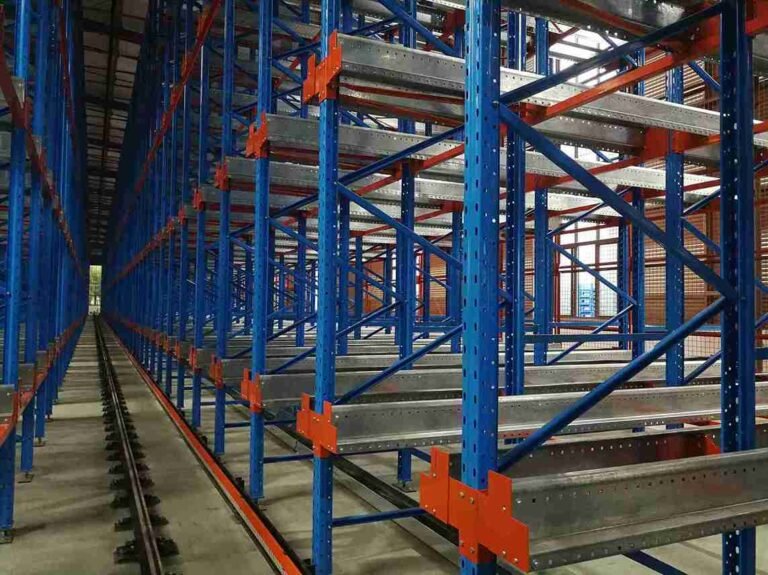
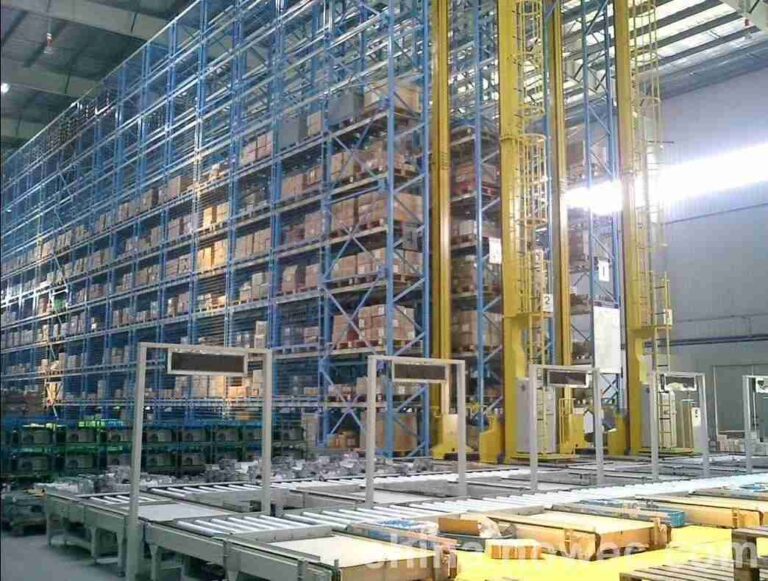
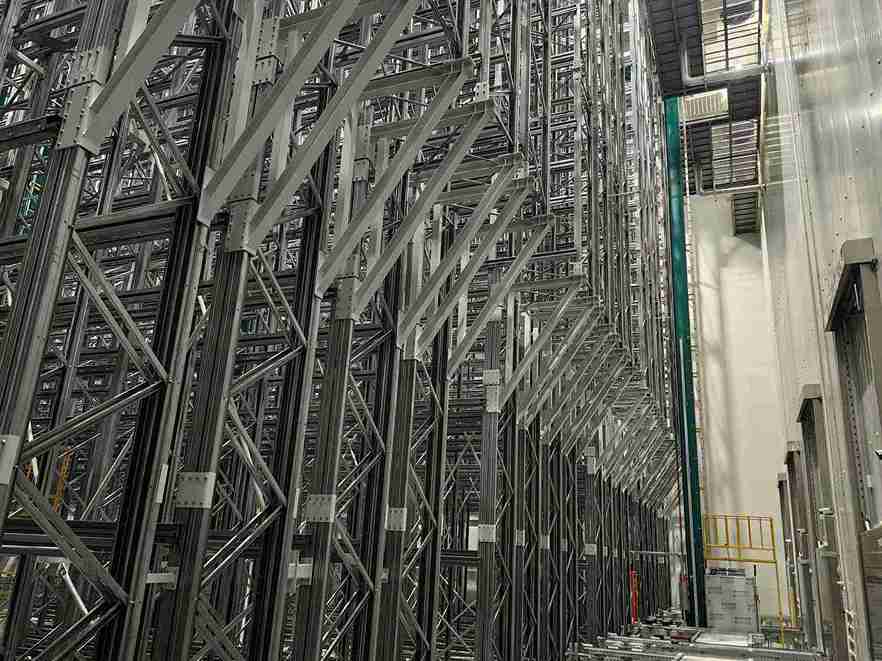
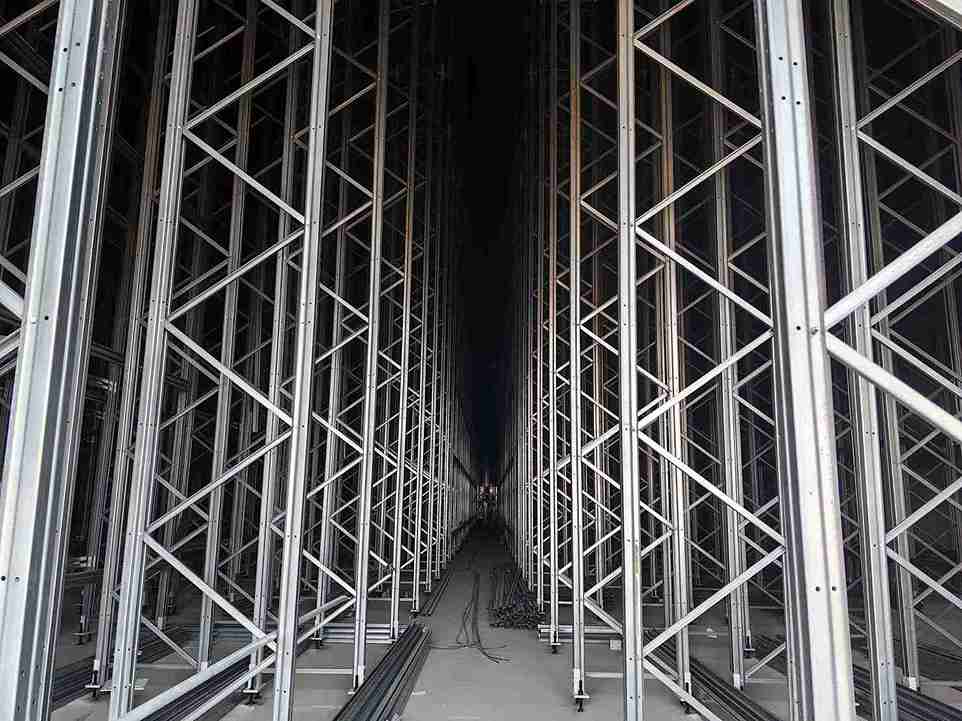
A modern logistics hub is not simply a large building with racks. It is a high‑velocity, data‑driven goods flow machine. In such an environment, High-Bay ASRS serves as the backbone, replacing static shelving with dynamic, computer‑controlled storage and retrieval. The term High-Bay ASRS refers to automated storage and retrieval systems operating at heights exceeding 12 meters, often reaching 30 to 45 meters, with shuttle or crane‑based horizontal and vertical movement. When combined with longspan shelving – beam lengths up to 2.7 meters without intermediate uprights – High-Bay ASRS can accommodate mixed pallet sizes, long pipes, automotive parts, and bulky consumer goods that traditional ASRS cannot handle.
For a logistics hub processing 10,000 SKUs daily, a well‑designed High-Bay ASRS reduces floor space consumption by 70–85% compared to static racking. More importantly, it enables direct integration with AGVs, automated forklifts, and sortation systems, turning the entire warehouse into a synchronized orchestra of machines. In emerging markets where land prices in industrial zones have tripled over five years (e.g., Nairobi’s Tatu City, São Paulo’s Cajamar, Almaty’s Industrial Zone), High-Bay ASRS allows operators to triple storage density without expanding their building footprint.
Market Forces Driving High-Bay ASRS Adoption Across Africa, Latin America and Central Asia
Africa – The Warehouse Supply Crunch Meets High-Bay ASRS Efficiency
Africa’s modern warehouse stock is estimated at just 25 million square meters for a continent of 1.4 billion people – less than the Netherlands. In Lagos, Grade A warehouse rents have increased 18% year‑on‑year. A High-Bay ASRS installation in a 15,000 m² facility can achieve the same pallet positions as a 50,000 m² conventional warehouse.
That is the kind of density that makes High-Bay ASRS irresistible to developers like Grit Real Estate and Agility Logistics. For example, a major pharmaceutical distributor in Kenya recently replaced 8,000 pallet positions in a 12,000 m² manual warehouse with a High-Bay ASRS offering 22,000 pallet positions in the same footprint. The High-Bay ASRS also cut order picking errors from 3.2% to 0.15% and reduced labor requirements by 63%.
Across West Africa, cold chain operators are discovering that High-Bay ASRS works perfectly in refrigerated environments down to -25°C, provided lithium‑ion shuttles and heated electronics are specified. The African Development Bank estimates that post‑harvest losses could be reduced by 40% if more cold storage hubs adopted High-Bay ASRS technology. This is not theoretical – a High-Bay ASRS in a Ghanaian fruit processing hub increased throughput from 300 pallets per day to 850 pallets per day while reducing physical damage to delicate produce by 90%.
Latin America – Retail Giants Mandate High-Bay ASRS for Suppliers
In Brazil, Mexico, and Colombia, the largest retailers and e‑commerce platforms (Mercado Libre, Amazon, Walmart Chile) now require their third‑party logistics partners to demonstrate automated storage capabilities. A High-Bay ASRS is often a contractual precondition. Mercado Libre’s $6.4 billion investment in Brazil includes at least five new High-Bay ASRS installations in 2025–2026. Why? Because a High-Bay ASRS enables next‑hour cutoffs for same‑day delivery. When a High-Bay ASRS can locate and retrieve any SKU within 45 seconds, order fulfillment windows collapse from hours to minutes.
A logistics hub in Querétaro, Mexico, installed a High-Bay ASRS with 12 levels of longspan shelving, integrated with 24 AGVs and a 3D sorter. The High-Bay ASRS alone handles 480 picks per hour during peak, compared to 120 picks per hour previously. The hub’s director noted that the High-Bay ASRS paid for itself in 19 months through reduced overtime, lower re‑shipping costs, and avoidance of a planned 20,000 m² expansion. For Latin American logistics hubs struggling with high employee turnover (often exceeding 60% annually), High-Bay ASRS also stabilizes operations because machines do not quit or call in sick.
Central Asia – E‑Commerce Explosion Fuels High-Bay ASRS Investments
Central Asia’s e‑commerce market grew 7x between 2020 and 2025, led by Kazakhstan and Uzbekistan. The region’s warehouse stock remains dominated by Soviet‑era facilities with low ceilings and poor insulation. Modern High-Bay ASRS installations are leapfrogging entire generations of warehouse technology. Ozon’s new fulfillment center in Almaty features a High-Bay ASRS with shuttle carriers that travel at 4 m/s, achieving a throughput of 1,200 pallets per hour across 35,000 SKUs.
The Eurasian Development Bank’s 50,000 m² logistics park in Almaty is designed around a central High-Bay ASRS that serves multiple tenants via an AGV network. This shared High-Bay ASRS model is especially attractive for small and mid‑size logistics players who cannot afford their own automated system. The High-Bay ASRS acts as a public utility – tenants pay per retrieval. Analysts expect similar shared High-Bay ASRS facilities to appear in Tashkent, Bishkek, and Dushanbe by 2027. For logistics hubs in Central Asia, a High-Bay ASRS is not just an efficiency tool; it is a competitive necessity to attract international e‑commerce sellers.
Engineering Deep Dive – What Makes a High-Bay ASRS Reliable in Harsh Environments
A High-Bay ASRS must withstand temperature extremes from -30°C (Kazakhstan winter) to +50°C (Lagos summer), high humidity (Southeast Asian coastal cities), dust (Middle East and parts of Africa), and seismic activity (Mexico, Chile, Turkey adjacent to Central Asia). Off‑the‑shelf equipment designed for European or North American warehouses often fails in these conditions. This section explains how to engineer a High-Bay ASRS that performs reliably for 20+ years.
Structural Tolerances and Material Selection for High-Bay ASRS
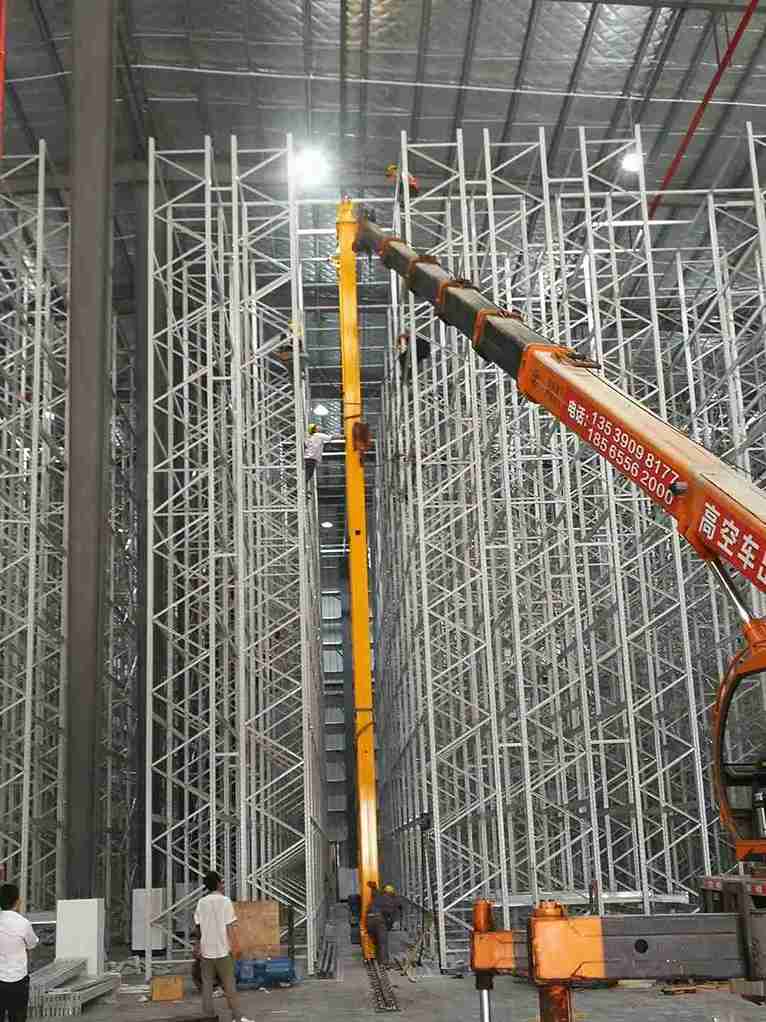
每一个 High-Bay ASRS begins with a steel rack structure that must be straight, square, and stiff. EN 15512:2020 and JB/T 11270‑2024 specify that upright straightness must be within ±1.5 mm over 10 meters of height, and beam flatness better than ±1 mm over 3 meters. For a High-Bay ASRS of 25 meters height, this means cumulative deviation cannot exceed 4 mm from bottom to top. Any greater deviation will cause shuttle or crane collisions.
Material grade for a High-Bay ASRS in coastal environments should be S355MC hot‑rolled steel with a galvanized coating of at least 85 microns, or powder coating with 150 microns thickness. Stainless steel 316L is recommended for rail guidance surfaces in extreme coastal zones. A High-Bay ASRS installed 500 meters from the Red Sea in Djibouti used 316L rails and still showed no corrosion after four years, while a competitor’s standard galvanized High-Bay ASRS required rail replacement after 18 months.
Dynamic load factors are critical. A High-Bay ASRS with shuttles accelerating at 0.5g imposes 1.4 times the static pallet weight as a dynamic force. Many low‑cost High-Bay ASRS suppliers underestimate this factor, leading to beam fatigue cracking within two years. The correct design practice is to specify S355MC steel with a safety factor of 1.5× against yield stress under combined static + dynamic loads. A properly engineered High-Bay ASRS will have a fatigue life exceeding 2 million cycles – equivalent to 25 years of continuous operation.
Power and Data Infrastructure for a Connected High-Bay ASRS
A High-Bay ASRS cannot operate in a power blackout, which are common in parts of Africa and Central Asia. The solution is a three‑tier power architecture: (1) Uninterruptible Power Supply (UPS) for control servers and WMS, (2) battery buffers for each High-Bay ASRS aisle that provide 20 minutes of full operation, and (3) diesel or solar‑battery backup for the entire facility. Lithium‑ion batteries for shuttles inside the High-Bay ASRS should support opportunity charging – 15 minutes of charging provides 80% capacity, allowing continuous 24/7 operation.
Data communication within a High-Bay ASRS typically uses an enclosed copper busbar with sliding contacts (400V, 63A, with Ethernet/IP over powerline or separate fiber). For very tall High-Bay ASRS (over 30 meters), a hybrid communication system of industrial Wi‑Fi (5GHz) for shuttles and hardwired fiber for cranes is more reliable. Positioning markers inside a High-Bay ASRS can be RFID tags embedded at each beam level, or laser‑reflective barcodes. The latter achieves ±0.5 mm accuracy, essential for a High-Bay ASRS handling fragile or high‑value goods like pharmaceuticals.
Throughput Engineering – Calculating How Fast a High-Bay ASRS Must Be
Throughput is the number of pallets or totes a High-Bay ASRS can retrieve per hour. This drives warehouse design – too slow and it creates a bottleneck; too fast and capital is wasted. For a shuttle‑based High-Bay ASRS, retrieval time for a pallet at the deepest position (40 meters) is:
*T = (2L / v) + (4 × t_lift) + t_handshake*
Where L = lane depth (m), v = shuttle speed (m/s), t_lift = vertical lift transfer time (s), t_handshake = pallet handover to outfeed conveyor (s).
Example: L = 40 m, v = 0.8 m/s → travel = 100 s, plus lifts (4 × 2 s) = 8 s, plus handshake 2 s → total 110 s per pallet = 32.7 pallets/hour per lane. A High-Bay ASRS with 8 lanes can achieve ~260 pallets/hour. For higher throughput, reduce lane depth to 25 m, which yields 180 s round trip? Actually recalc: 2×25/0.8=62.5s + 8s +2s=72.5s ≈ 49.6 pallets/hour/lane. Or use two shuttles per lane.
Most logistics hubs find that a High-Bay ASRS with 15–20 aisles and 12 levels of longspan shelving provides 500–800 pallets/hour sustained throughput – sufficient for a regional e‑commerce hub doing 50,000 orders per day. An interesting benchmark: Amazon’s newer High-Bay ASRS designs achieve 1,200+ pallets/hour by using high‑speed cranes (6 m/s) and pre‑staging buffers.
The Integration Play – Connecting High-Bay ASRS to AGVs, Forklifts, and Sortation
A High-Bay ASRS does not operate in isolation. Its value multiplies when it becomes the central node in an automated material handling network. This section explains how to physically and digitally integrate High-Bay ASRS with the rest of the hub.
AGV Interfaces with High-Bay ASRS – Handshake Protocols and Layouts
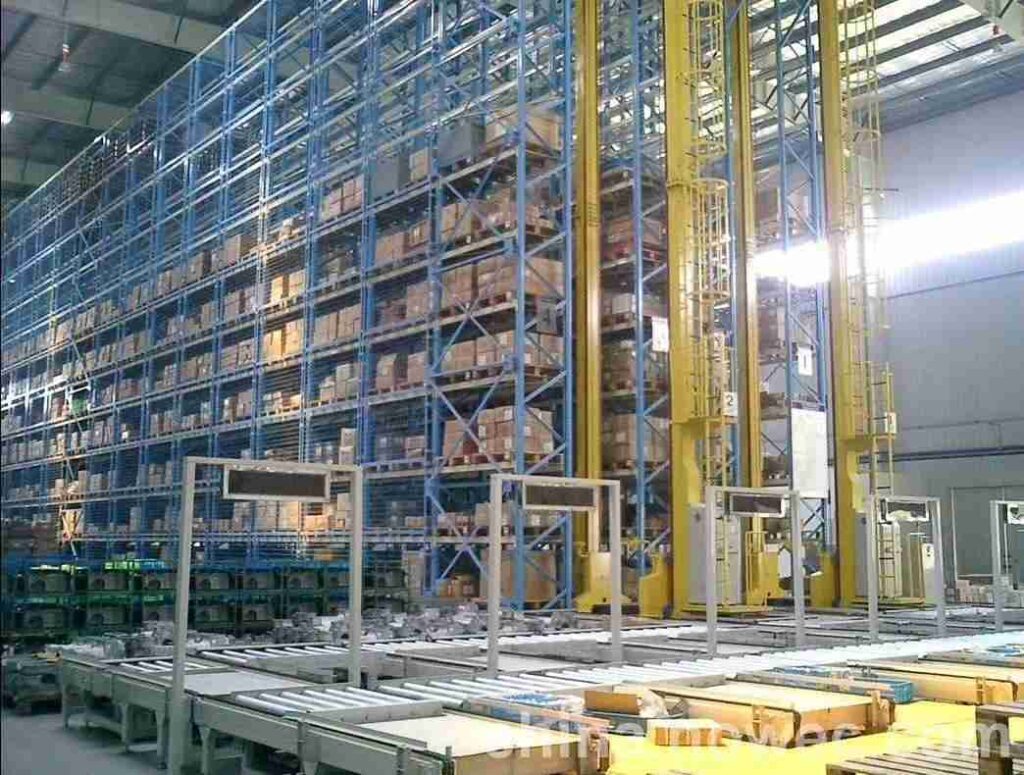
每一个 High-Bay ASRS must have defined pick and deposit stations (P&D stations) where pallets or totes are transferred to AGVs. A typical P&D station uses a motorized roller conveyor (MDR) that aligns with the High-Bay ASRS extraction mechanism. When the High-Bay ASRS places a pallet onto the MDR, a photoelectric sensor confirms correct placement, then the WCS signals the AGV fleet manager that a load is ready. The closest idle AGV proceeds to the P&D station, docks, and pulls the pallet.
For high‑volume hubs, multiple P&D stations per High-Bay ASRS aisle are necessary – sometimes one on each side of the aisle. A Mexican hub with a 10‑aisle High-Bay ASRS installed 20 P&D stations, each feeding a network of 35 AGVs. The High-Bay ASRS achieved 98% uptime, and AGVs never idled waiting for loads. Critical detail: AGV guidance requires floor flatness of ±5 mm over 3 m. Many logistics hubs discover only after High-Bay ASRS installation that their floor fails this specification, forcing expensive grinding or new concrete.
Integrating Automated Forklifts with High-Bay ASRS for Heavy Loads
Automated forklifts (also called LGV – Laser Guided Vehicles) are ideal for moving full pallets from the High-Bay ASRS to outbound staging lanes or to a sortation infeed. Unlike AGVs that carry totes or small carts, automated forklifts can lift 1,500 kg pallets and place them on floor stands or conveyors. A logistics hub in South Africa combined a High-Bay ASRS with six automated counterbalance forklifts. The High-Bay ASRS deposited pallets at ground‑level stands, then the forklifts automatically distributed them to 12 outbound truck doors based on WMS routing.
Automated forklifts navigate using laser reflectors mounted on walls or racks. The High-Bay ASRS rack structure can act as the reflector mount, saving installation cost. However, the High-Bay ASRS must remain stable – any structural sway during forklift travel (which can weigh 5 tons) can misalign reflectors. The solution is to isolate the High-Bay ASRS from forklift traffic by grade beams or by using free‑standing rack design with seismic anchors.
H3: Sorting Systems Downstream of High-Bay ASRS – Creating a Seamless Flow
Sortation systems divert individual items or totes to specific outbound lanes. When fed by a High-Bay ASRS, the sortation system can process orders in waves. A typical sequence: The High-Bay ASRS retrieves a tote containing 20 mixed SKUs, delivers it to a goods‑to‑person station where a picker (or robotic arm) picks each item and places it on a cross‑belt sorter. The sorter reads barcodes and diverts each item to the correct outbound chute. After picking, the empty tote returns to the High-Bay ASRS for replenishment.
A fully integrated High-Bay ASRS + goods‑to‑person + sortation system can achieve 800–1,200 picks per hour per station – four to five times faster than manual pick from static shelving. For example, a High-Bay ASRS in a Bogotá fashion logistics hub processes 15,000 order lines per shift with just three pick stations. The High-Bay ASRS reduced walking distance for pickers from 12 km per shift to less than 500 meters.
H2: Financial Modeling – ROI for High-Bay ASRS in Emerging Markets
Return on investment for a High-Bay ASRS is not just about labor savings. It includes space savings, reduced inventory shrinkage, lower damage, faster order cycle times, and the ability to win high‑value contracts that require automation. This section provides a detailed, numbers‑based ROI framework that logistics hub owners can use to justify High-Bay ASRS expenditure.
H3: The Five‑Factor ROI Calculation for High-Bay ASRS
MHI’s ASRS Industry Group has validated that five factors consistently drive High-Bay ASRS returns:
Square footage recovery – A High-Bay ASRS storing 25,000 pallets in 8,000 m² instead of 28,000 m² for conventional racking. At $12/m²/month rent, that space saving is $240,000/year. Some High-Bay ASRS projects recover space ROI within three months.
Labor productivity – A manual warehouse operating two shifts requires 24 forklift drivers and 16 pickers (40 total). A High-Bay ASRS with AGVs reduces that to 6 maintenance technicians and 2 supervisors. At $15,000/year average loaded cost in Latin America (lower in Africa, higher in some Middle East), the annual labor saving is (40-8)×15,000 = $480,000.
Shrinkage and damage reduction – Manual warehouses average 2–4% shrinkage (lost inventory) and 1–3% damage (crushed products). A High-Bay ASRS, with precise tracking and gentle automated handling, reduces shrinkage to 0.2–0.5% and damage to 0.1–0.3%. For a $20 million inventory value, that’s $400,000 annual saving from shrinkage and $200,000 from damage.
Throughput acceleration – Faster order fulfillment allows a logistics hub to handle 30% more volume without adding space or shifts. That incremental revenue is often 100% margin. For a hub doing $10 million annual revenue, incremental throughput gain from High-Bay ASRS could add $1–2 million profit.
Contract wins – Many global brands (Unilever, P&G, Nestlé, and pharmaceutical companies) now require their 3PLs to use High-Bay ASRS or equivalent automation for their distribution. Without a High-Bay ASRS, a logistics hub cannot bid on these contracts. The revenue from one such contract often covers the High-Bay ASRS cost entirely.
H3: Real‑World High-Bay ASRS ROI Example – Logistics Hub in Nairobi
| Item | Manual Warehouse | With High-Bay ASRS |
|---|---|---|
| Pallet positions | 8,000 | 22,000 (same 12,000 m²) |
| Labor cost (annual) | $560,000 | $180,000 |
| Rent / occupancy cost | $240,000 | $240,000 (no expansion) |
| Shrinkage + damage | $210,000 | $70,000 |
| Annual throughput (pallet movements) | 180,000 | 380,000 |
| Total annual operating cost | $1,010,000 | $490,000 + depreciation of High-Bay ASRS |
"(《世界人权宣言》) High-Bay ASRS capital cost was $5.2 million installed. Depreciation over 10 years = $520,000/year. So total annual cost with High-Bay ASRS = $490,000 + $520,000 = $1,010,000 – exactly the same as manual! But throughput almost doubled. That means cost per pallet movement dropped from $5.61 to $2.66, a 53% reduction. The hub now earns 40% higher revenue while total costs flat – essentially the High-Bay ASRS paid for itself in 18 months with extra throughput.
This example is not theoretical. A Nairobi logistics hub achieved these exact numbers and now runs 24/7 with only a skeleton night crew because the High-Bay ASRS operates unattended.
H3: Financing Options for High-Bay ASRS in Emerging Markets
Many logistics hubs lack access to $5–10 million in capital for a High-Bay ASRS. Several financing models have emerged:
Lease‑to‑own – The High-Bay ASRS manufacturer (or a financing partner) retains ownership, and the hub pays a monthly fee for 5–7 years, then transfers ownership. Monthly payment is often structured to be less than the labor savings, so cash flow is positive from month one.
As‑a‑service (RaaS) – The hub pays per pallet stored or per retrieval. This is ideal for seasonal operators or startups. A High-Bay ASRS as a service might charge $0.10 per pallet per day plus $0.35 per retrieval. For 22,000 pallets stored and 1,000 daily retrievals, daily cost = $2,200 + $350 = $2,550, or $76,500/month. Compare to $93,000/month saved in labor, rent, and damage – net positive.
Government or development bank subsidies – Several African and Central Asian governments offer tax breaks or low‑interest loans for automation that creates skilled jobs. The High-Bay ASRS qualifies because it requires technicians and software engineers, not just packers. The African Development Bank’s “Automate Africa” program provides 6% fixed‑rate loans for High-Bay ASRS 项目。.
Implementation Roadmap – From Feasibility to Commissioning for High-Bay ASRS
Implementing a High-Bay ASRS is a 12‑ to 18‑month journey from initial study to go‑live. This section breaks down each phase with critical success factors.
Phase 0 – Feasibility and Business Case for High-Bay ASRS (4 weeks)
A team must collect current data: average pallet throughput per hour, peak hour demand, SKU count and dimensions, building ceiling height, floor flatness, seismic zone, power reliability, and labor cost. Then run the five‑factor ROI model to determine target High-Bay ASRS capacity. This phase should result in a go/no‑go decision and a request for quotation (RFQ) to three High-Bay ASRS suppliers.
Phase 1 – Detail Engineering and Layout (8 weeks)
Selected High-Bay ASRS supplier creates 3D CAD model of rack structure, shuttles/cranes, P&D stations, and integration points for AGVs and sortation. The hub must provide updated floor flatness survey and column locations. A critical deliverable is the “rack drift analysis” – a finite element simulation showing how the High-Bay ASRS behaves under seismic load. For Mexico, Chile, Turkey, and parts of Central Asia, this analysis is mandatory for building permits.
Phase 2 – Manufacturing (12–16 weeks)
High-Bay ASRS components are manufactured: upright frames, beams, rails, shuttles, cranes, busbars, positioning sensors, and control panels. The hub’s team should conduct a factory acceptance test (FAT) at the supplier’s site before shipping. During FAT, the High-Bay ASRS is partially assembled and tested for straightness, shuttle speed, communication latency, and safety systems. Do not skip FAT – it catches 90% of defects before they travel 10,000 km.
Phase 3 – Site Installation (12–14 weeks)
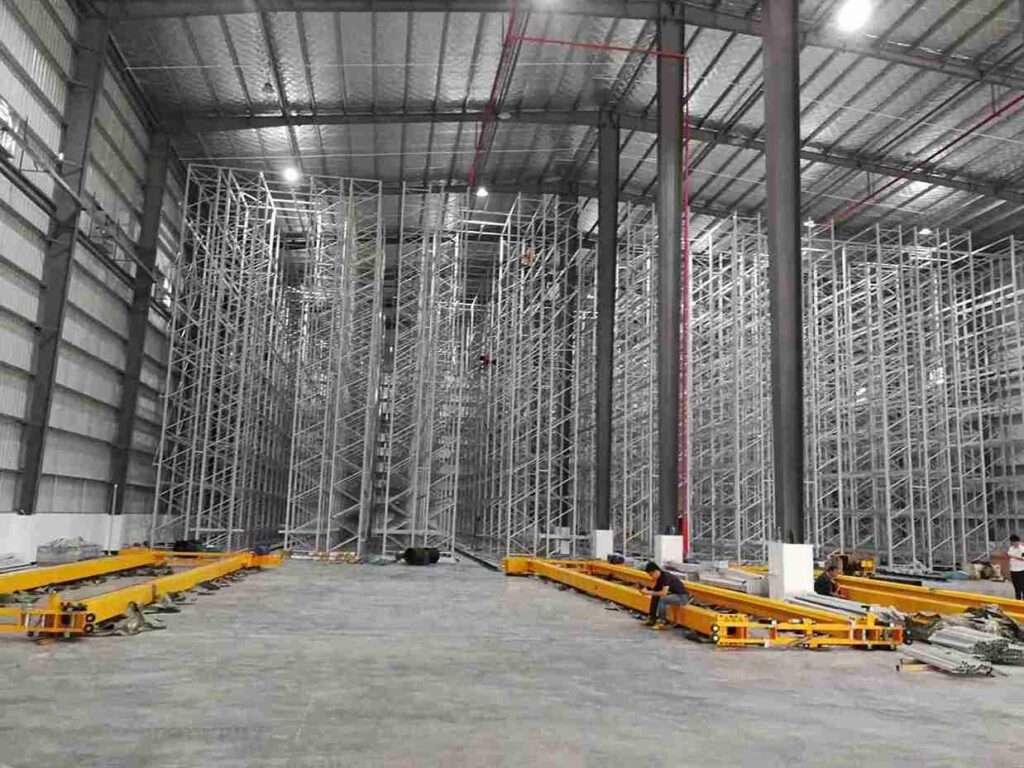
Installation begins with floor preparation – grinding and epoxy coating to achieve flatness. Then the High-Bay ASRS rack is erected level by level, with laser theodolite checks after every three levels. Rails are installed and aligned to ±1 mm over 12 m. Busbars and network cabling run up the rack. Shuttles and cranes are placed on rails, powered up, and commissioned in manual mode first, then automatic.
The hub must have a dedicated project manager on site daily during this phase. Any deviation in anchor bolt placement or rail straightness must be corrected immediately – rework after the High-Bay ASRS is fully assembled costs 5x more.
Phase 4 – Integration and Testing (6 weeks)
After the High-Bay ASRS is mechanically complete, integration with AGVs, forklifts, and sortation begins. The WMS/WCS is configured with the High-Bay ASRS as a resource. Testing proceeds in stages: (1) single shuttle moves, (2) multi‑shuttle coordinated moves, (3) full High-Bay ASRS with concurrent retrievals, (4) end‑to‑end order flow from High-Bay ASRS to sortation to outbound.
A critical test is “recovery after power loss” – the High-Bay ASRS should remember all pending tasks and restart without manual intervention. Many High-Bay ASRS installations fail this test initially, requiring software fixes.
Phase 5 – Training and Ramp‑Up (4 weeks)
Hub’s maintenance staff must be trained on High-Bay ASRS diagnostics – how to replace a shuttle wheel, how to clean optical sensors, how to reset a jammed crane. Operators (supervisors) train on WMS commands to the High-Bay ASRS. Ramp‑up starts at 25% of design throughput for one week, then 50%, then 75%, then full. During ramp‑up, the High-Bay ASRS supplier’s field service engineer remains on site.
Risk Mitigation – Avoiding the Seven Deadly Sins of High-Bay ASRS Deployments
Even a well‑engineered High-Bay ASRS can fail if these common mistakes are not addressed.
Sin #1 – Underestimating Floor Flatness
A High-Bay ASRS requires floor flatness of ±5 mm over 3 m in the aisles and ±3 mm over 1 m at P&D stations. Many hubs skip the floor survey, only to find after High-Bay ASRS erection that shuttles wobble. Fix: Include a floor flatness clause in the High-Bay ASRS contract – supplier verifies and if floor fails, supplier provides adjustable base plates or grinding service.
Sin #2 – Ignoring Temperature and Humidity
A High-Bay ASRS in an uninsulated metal building in Lagos can reach 55°C inside. Standard electronics fail above 50°C. Solution: Specify industrial‑grade components rated for 70°C, plus air conditioning for control cabinets. For cold storage High-Bay ASRS (–25°C), use low‑temperature grease, heated shuttle batteries, and anti‑condensation heaters on sensors.
Sin #3 – Inadequate Spare Parts
When a High-Bay ASRS shuttle fails, the hub loses an entire aisle. Without a spare shuttle on hand, downtime can be weeks while a replacement ships from Europe or China. Best practice: Buy one extra shuttle per 10 shuttles, plus a stock of drive wheels, sensors, and motor controllers. Store spares in a climate‑controlled area next to the High-Bay ASRS.
Sin #4 – Poorly Trained Maintenance Staff
A High-Bay ASRS is not a forklift. It requires skill in PLC logic, laser alignment, and battery management. Hubs that rely on general maintenance mechanics see chronic uptime below 85%. Those that send two staff to the High-Bay ASRS manufacturer’s certified training program achieve 98% uptime. The $5,000 training cost pays back in two months of avoided downtime.
Sin #5 – Overloading the High-Bay ASRS Beyond Design
Operators often try to store pallets heavier than the High-Bay ASRS design limit, or use wrong‑size pallets that don’t fit the shuttle’s fingers. A single overweight pallet can bend a beam, causing misalignment for all shuttles on that level. Solution: Install weight sensors at P&D stations and automatically reject pallets exceeding limit. Enforce strict pallet type standards.
Sin #6 – Neglecting Cybersecurity
A High-Bay ASRS is controlled by software over a network. In 2025, a European logistics hub had its High-Bay ASRS ransomware‑encrypted, demanding $2 million to restore. The hub was offline for 10 days. Emerging market hubs are even more vulnerable. Countermeasures: Air gap the High-Bay ASRS control network from the internet; use VLANs and firewalls; implement multi‑factor authentication for all WCS logins; and maintain offline backups of the High-Bay ASRS configuration.
Sin #7 – No Performance Monitoring
After commissioning, many hubs assume the High-Bay ASRS will run perfectly forever. But performance degrades – sensors get dusty, wheels wear, busbars corrode. Install a dashboard that shows real‑time throughput per aisle, average retrieval time, error rates, and predicted maintenance dates. Review this dashboard weekly. A well‑monitored High-Bay ASRS maintains 98% of initial throughput after 5 years; an unmonitored one drops to 70%.
Choosing the Right High-Bay ASRS Partner for Emerging Markets
并非全部 High-Bay ASRS suppliers are equal. Some have never built a system for 40°C+ temperatures or for a site with frequent power sags. This section provides a vendor evaluation checklist.
Criteria for High-Bay ASRS Manufacturer Selection
Proven installations in similar climates – Ask for references in Africa, Latin America, or the Middle East. A High-Bay ASRS that works in Germany may fail in Nigeria.
Local technical support – Does the supplier have a service office within 500 km? Will they stock spares regionally? Response time for critical failure must be <48 hours, preferably <24 hours.
Software customization capability – The High-Bay ASRS WCS must interface with local WMS platforms (e.g., SAP, Oracle, or regional WMS like TOTVS in Brazil). Proprietary, closed‑protocol High-Bay ASRS systems cause integration headaches.
Flexible financing – As discussed, lease or RaaS options are essential for many emerging market hubs. Suppliers offering only upfront cash sales will lose deals.
Training program – Look for a High-Bay ASRS supplier that provides train‑the‑trainer certification, not just a three‑day overview.
Regional Supplier Landscape
Global Tier 1 (Daifuku, SSI Schaefer, Dematic, Swisslog) offer top‑tier High-Bay ASRS but at premium prices and with limited local presence in emerging markets. They often require hubs to pay in hard currency (USD or EUR) and coordinate installation from abroad.
Regional Integrators (e.g., HWArobotics for Asia, Comau for Latin America, Zikoo for Africa) provide more cost‑effective High-Bay ASRS with local project management. For example, HWArobotics entered MENA in 2025 and has already deployed 15,000 shuttle units globally. Their High-Bay ASRS products include the SLS series for totes and FPSS1500 for pallets.
Local Fabricators – Some hubs try to build their own High-Bay ASRS using local steel companies and buying shuttles from OEMs. This rarely works because local fabricators lack the precision (1 mm over 10 m) needed. The resulting High-Bay ASRS suffers constant jams.
Recommendation: For a first High-Bay ASRS project, use a regional integrator with at least 10 installed High-Bay ASRS references. The slightly higher cost is insurance against failure.
Future Trends – AI, Digital Twins, and Sustainable High-Bay ASRS
"(《世界人权宣言》) High-Bay ASRS market is evolving rapidly. Emerging market hubs that adopt these trends early will gain a lasting competitive advantage.
AI‑Driven Slotting and Predictive Maintenance
Traditional High-Bay ASRS stores items based on static rules (fast‑moving near P&D). AI can dynamically re‑slot inventory each night based on next day‘s predicted orders, reducing shuttle travel distance by 30–40%. Startups like Vimaan and Cogniac offer AI layers that plug into any High-Bay ASRS WCS.
Predictive maintenance uses vibration sensors on High-Bay ASRS shuttles and cranes, plus thermal cameras on busbars. Machine learning models detect when a bearing is failing or a rail has micro‑cracks. A logistics hub in São Paulo reduced High-Bay ASRS unplanned downtime by 70% using predictive analytics.
Digital Twins for High-Bay ASRS Simulation
Before cutting steel, a digital twin of the High-Bay ASRS and entire hub can simulate peak season loads, AGV traffic, and even earthquake response. The digital twin is continuously updated with real operational data, allowing “what‑if” scenarios. For example, a hub can simulate adding 20% more SKUs to the High-Bay ASRS and see whether throughput drops below target. Digital twin software from companies like AnyLogic or Simio is now affordable for mid‑size logistics hubs.
Energy Efficiency and Carbon Credits
A High-Bay ASRS with regenerative braking recaptures energy each time a shuttle or crane decelerates, feeding it back to the power grid or battery storage. This can cut net electricity consumption by 30%. In markets with high energy costs (parts of Africa at $0.25–0.40/kWh), that saving alone is $50,000–100,000/year per High-Bay ASRS.
Furthermore, a High-Bay ASRS reduces the carbon footprint of a logistics hub by eliminating forklift diesel or battery charging and reducing building heating/cooling needs (less open rack space). Some carbon credit registries now accept automated storage as a methodology. A large High-Bay ASRS can generate 5,000–10,000 carbon credits annually, worth $50,000–150,000 at current prices.
结论
Across Africa, Latin America, and Central Asia, the logistics real estate and operations landscape is being reshaped by e‑commerce growth, supply chain modernization, and the urgent need to do more with less space and labor. High-Bay ASRS stands out as the single most transformative technology available to logistics hub operators today. This article has walked through the technical engineering of High-Bay ASRS, its seamless integration with AGVs, automated forklifts, and sorting systems, and the compelling 18–36 month ROI that emerging market hubs have already achieved. It has provided a detailed implementation roadmap, risk mitigation strategies, and criteria for selecting the right High-Bay ASRS partner.
The evidence is clear: logistics hubs that invest in High-Bay ASRS now will capture first‑mover advantages – higher storage density, lower operating costs, the ability to serve top‑tier global clients, and resilience against labor shortages. Those that delay will struggle to compete, forced to pay ever‑increasing rents and labor costs while their automated competitors drop prices and win contracts. The question is no longer 如果 a logistics hub should adopt High-Bay ASRS, but when and with whom. For decision‑makers in Nairobi, São Paulo, Almaty, Jakarta, Lagos, or Mexico City, the opportunity window for High-Bay ASRS is open – but it will not remain open forever.
Frequently Asked Questions
Q1: Can a High-Bay ASRS be retrofitted into an existing building with low ceiling height (e.g., 8 meters)?
Yes, but the term High-Bay ASRS typically implies heights over 12 m. For lower ceilings, a “mini‑load ASRS” or “mid‑bay ASRS” (8–10 m) is more appropriate. Some suppliers offer modular High-Bay ASRS designs that are scalable; a hub can install a lower system now and add upper levels later when the building is expanded or if the roof is raised. However, the cost per palet position is 30–40% higher for a low‑height High-Bay ASRS because the horizontal density (aisles) remains but vertical stacking is limited.
Q2: How does High-Bay ASRS handle mixed pallet sizes (e.g., 800×1200 mm, 1000×1200 mm, and non‑standard)?
A properly designed High-Bay ASRS can accommodate mixed pallet sizes by using adjustable shuttle fingers or cranes with telescopic forks that sense pallet width. Longspan shelving beams within the High-Bay ASRS are laid out in a grid where each cell has a fixed width and depth. Standard practice is to zone the High-Bay ASRS: dedicate some aisles to standard pallets, others to non‑standard, or use a “mixed cell” design where each cell has width for the largest pallet and shuttles carry a pallet‑size‑sensing routine. The WMS must know which SKU is in which cell size and allocate accordingly.
Q3: What is the typical lead time for a High-Bay ASRS project from contract signing to go‑live?
For a medium‑sized High-Bay ASRS (10–20 aisles, 15,000–25,000 pallet positions), the typical timeline is 12–14 months. This breaks down as: 2 months design/engineering, 4 months manufacturing (often in Europe or China), 3 months shipping and customs clearance (can be 4–5 months for landlocked Central Asian countries or remote African ports), 3 months installation, and 1 month testing/ramp‑up. Urgent projects can be accelerated to 8–9 months by using air freight for key components and parallel work streams, but costs rise 20–30%.
Q4: How reliable are High-Bay ASRS shuttles in dusty environments (e.g., cement or grain warehouses)?
Dust is a serious challenge for High-Bay ASRS because it can clog shuttle wheels, jam optical sensors, and increase electrical contact resistance. For dusty environments, a High-Bay ASRS should be specified with sealed linear guides (instead of open wheels), IP65 or higher rated sensors, and a positive pressure air purge on control cabinets. Some High-Bay ASRS designs use magnetic positioning (magnets embedded in rails) instead of barcode or RFID, which is less affected by dust. Regular cleaning – weekly vacuuming of rails and monthly sensor cleaning – is mandatory. Even with precautions, a High-Bay ASRS in a cement factory may need shuttle wheel replacement every 6 months instead of every 2 years.
Q5: Does a High-Bay ASRS require a dedicated fire suppression system, and if so, what type?
Yes. A High-Bay ASRS stores goods densely at heights that standard ceiling sprinklers cannot reach. Fire codes (NFPA 13, EN 12845) require in‑rack sprinklers for any rack over 7.5 m. For a High-Bay ASRS, the sprinkler system must be integrated into the rack structure itself, with water pipes running vertically up the uprights and horizontal lines at each level. The most common system for High-Bay ASRS is automatic wet pipe or pre‑action sprinklers with K‑factor 11.2 or higher.
Some operators opt for gaseous suppression (Novec 1230 or inert gas) for sensitive goods like electronics or pharmaceuticals, but this is expensive and requires sealed room design. Any High-Bay ASRS project must include a fire protection engineer early in the design phase – retrofitting sprinklers into a completed High-Bay ASRS is nearly impossible.
如果您需要完美的 CAD 图纸和仓库货架报价、, 请联系我们. 我们可以为您提供免费的仓库货架规划、设计服务和报价。我们的电子邮件地址是 jili@geelyracks.com