📐"前 50 个企业查询可获得定制 3D 仓库设计" 计划















Custom High-Density Drive-in Racking for Logistics Centers: Get Factory-Direct Pricing and Layout Design
Executive Summary: As global supply chains face unprecedented pressure, the transition toward high-density storage has become a non-negotiable strategy for modern logistics distribution centers. This comprehensive guide explores the multifaceted world of high-density drive-in racking, a solution that maximizes cubic space while minimizing operational overhead. We delve into why high-density configurations are the backbone of efficient warehouses in Southeast Asia, the Middle East, and beyond.
By integrating high-density engineering with factory-direct pricing and advanced layout design, businesses can achieve a “stereo” (3D) storage efficiency that traditional methods simply cannot match. From AGV compatibility to seismic-resilient high-density structures, this article serves as the ultimate roadmap for logistics professionals seeking to optimize their footprint and ROI.
The Global Shift Toward High-Density Warehousing Paradigms
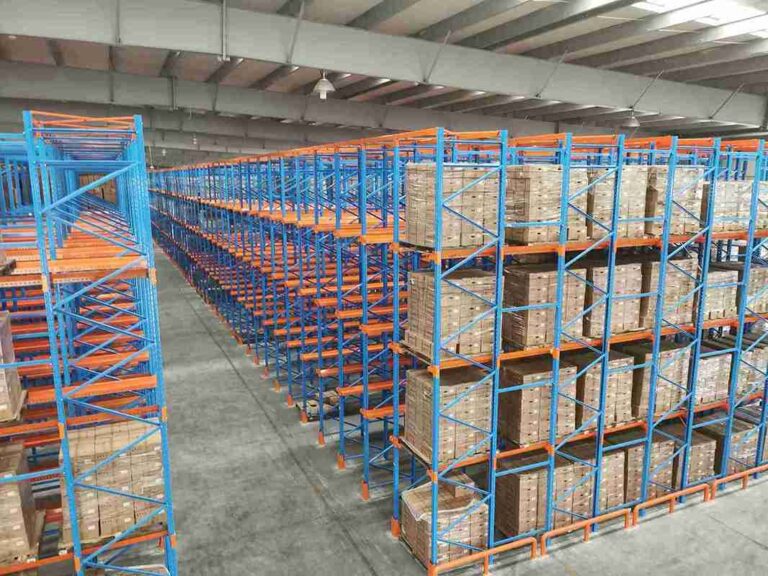
In the current industrial era, the cost of industrial land has reached record highs in logistics hubs like Singapore, Dubai, and São Paulo. Consequently, the demand for high-density storage systems has transitioned from a luxury to a fundamental requirement. A high-density warehouse is no longer just about stacking pallets; it is about the strategic orchestration of space, equipment, and workflow. When a logistics center implements a high-density drive-in racking system, it effectively reclaims up to 70% of the floor space previously lost to access aisles.
The core philosophy behind high-density engineering is the elimination of the “aisle-to-rack” ratio that plagues selective systems. In a high-density environment, the storage medium itself becomes the infrastructure for movement. This “stereo” approach to warehousing allows for a massive increase in pallet positions, which is particularly critical for businesses dealing with high-volume, low-SKU inventories. By adopting high-density logic, a distribution center can double its capacity without expanding its physical footprint.
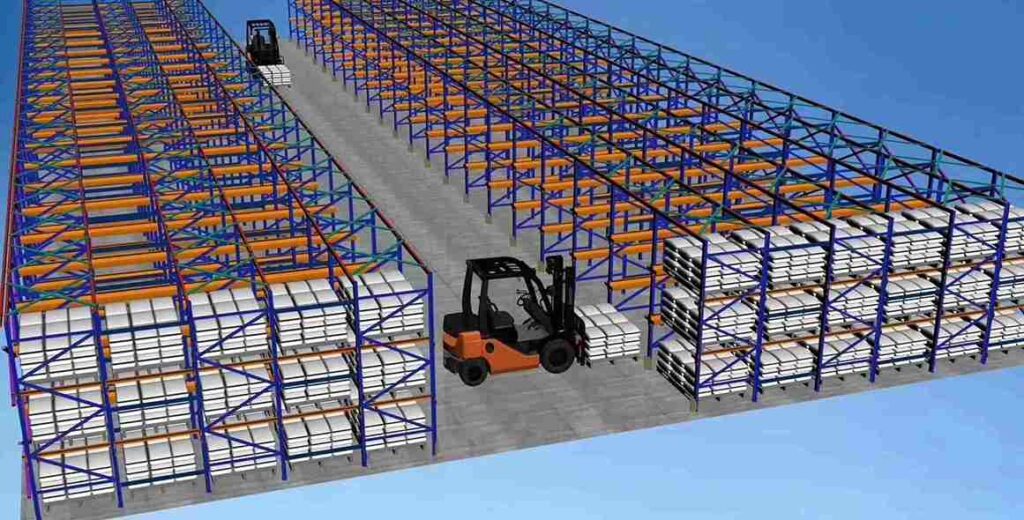
The Structural Integrity of High-Density Drive-in Racking
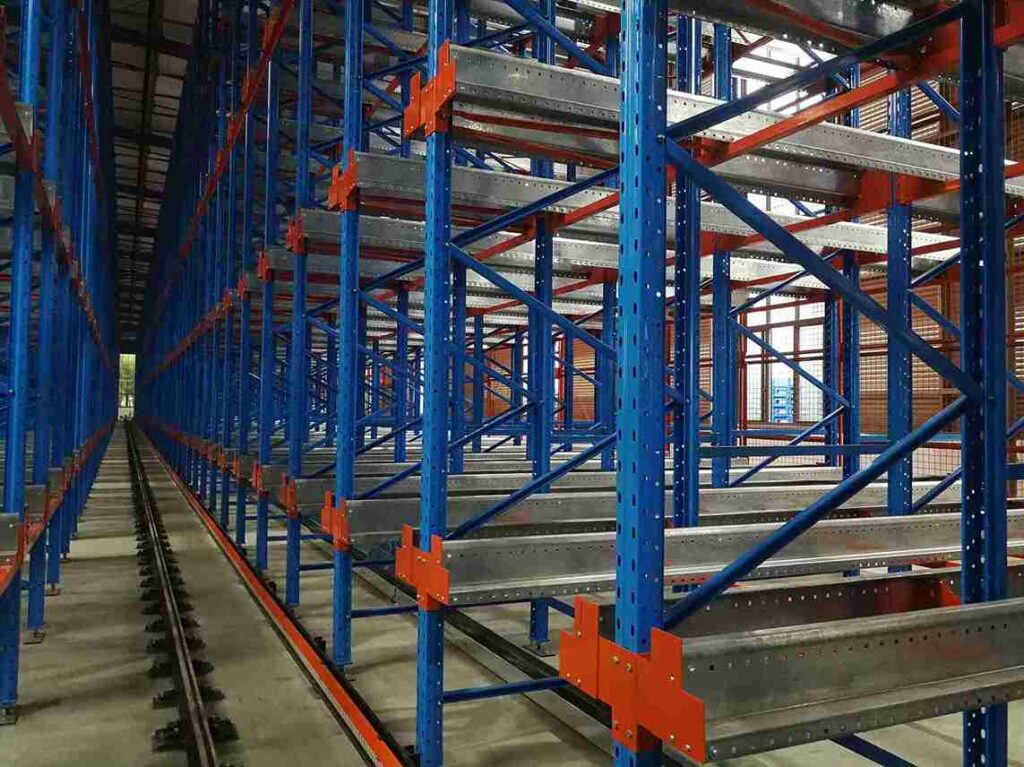
The physical construction of a high-density system requires a higher grade of engineering than standard racking. Because the forklift must operate within the high-density structure, the risk of accidental impact is statistically higher. Therefore, a robust high-density design must incorporate specialized safety features.
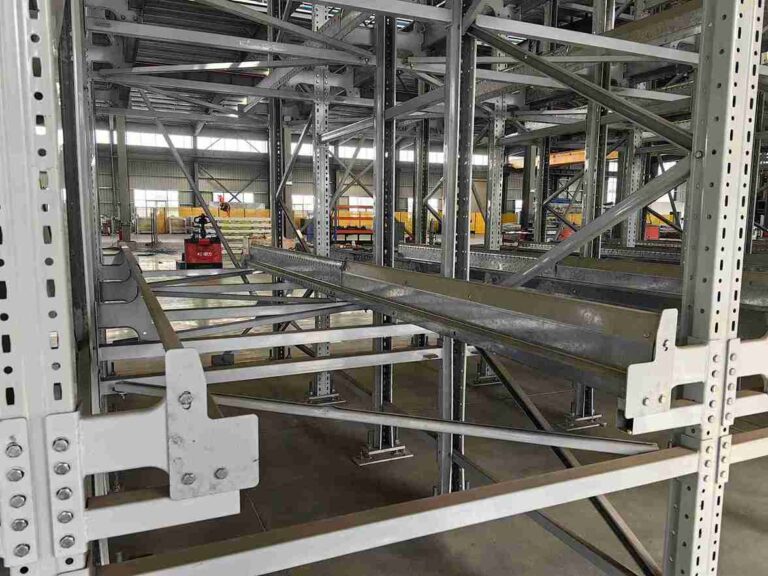
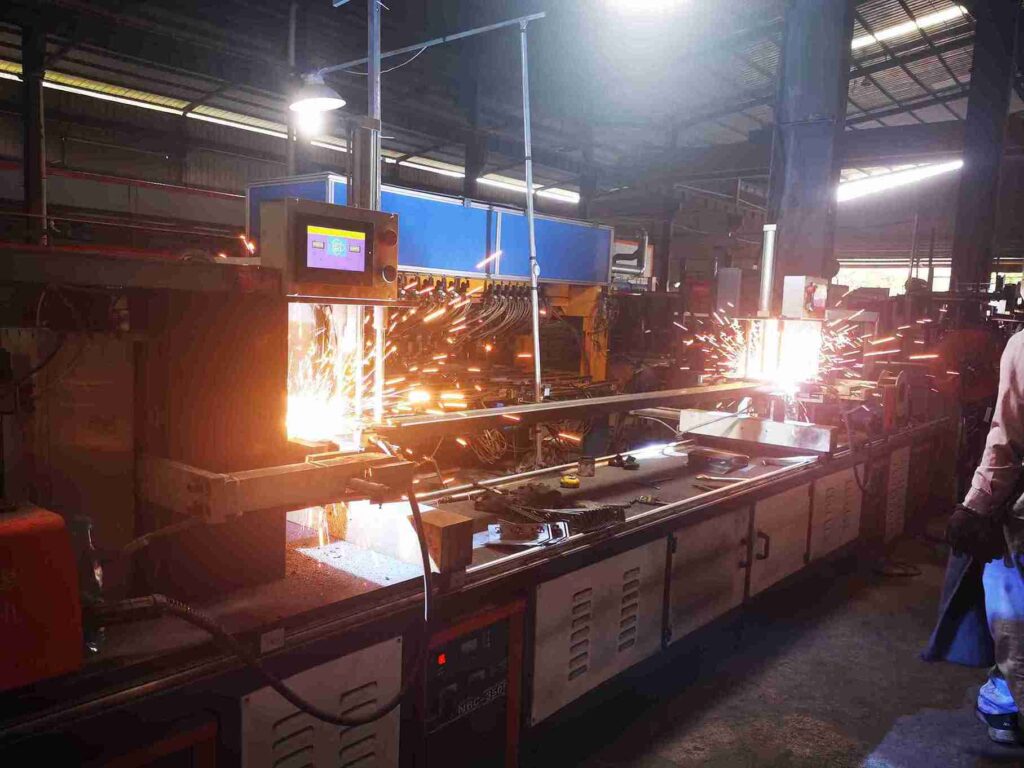
我们的 high-density uprights are manufactured from premium, high-tensile cold-rolled steel. The thickness of these high-density components is calculated based on the total vertical load and the frequency of pallet movement. In a high-density drive-in setup, the rails that support the pallets must be perfectly aligned to ensure smooth transition and prevent pallet “drops.” This level of high-density precision is what separates a world-class system from a mediocre one. Furthermore, the use of reinforced base plates and heavy-duty floor anchors ensures that the high-density racking remains stable even under the most rigorous daily operations.
Economic Analysis: Factory-Direct Pricing for High-Density Systems
One of the most significant barriers to upgrading to a high-density storage solution is the initial capital expenditure. However, by leveraging factory-direct pricing, logistics centers can significantly reduce their CAPEX. Buying high-density equipment directly from the manufacturer eliminates the layers of distributor markups that often inflate costs by 20% or more.
When we provide factory-direct pricing for a high-density project, we are offering a transparent cost structure. This includes the raw material costs for the high-density steel, the engineering labor for the high-density layout, and the logistics of delivering the high-density components to the site. For large-scale logistics centers in Central Asia or Africa, this direct relationship ensures that the high-density solution is not only high-performing but also economically viable. The ROI on a high-density drive-in system is typically realized within 18 to 24 months, primarily through reduced land-use costs and increased throughput.
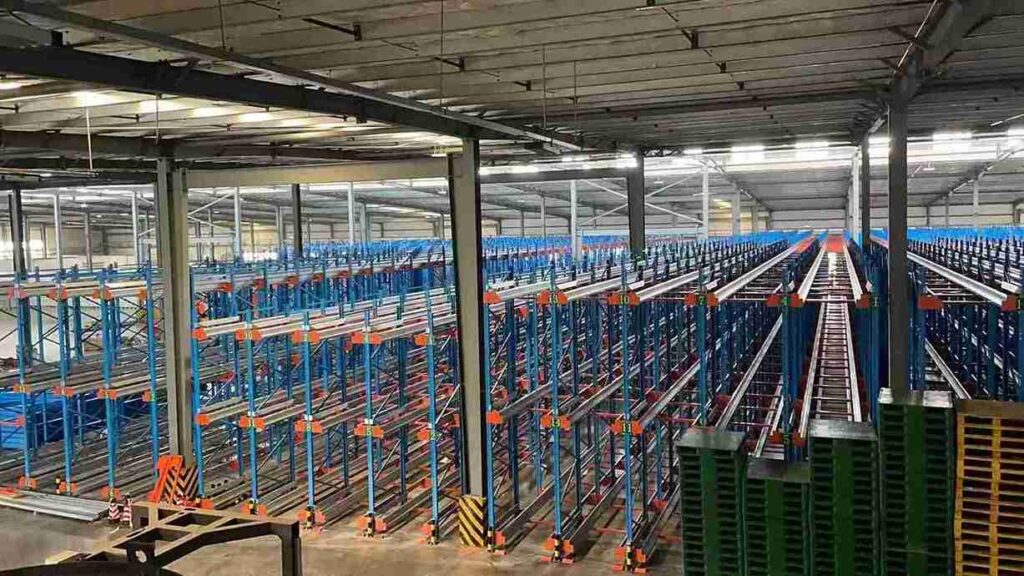
Custom High-Density Layout Design: The Role of 3D Modeling
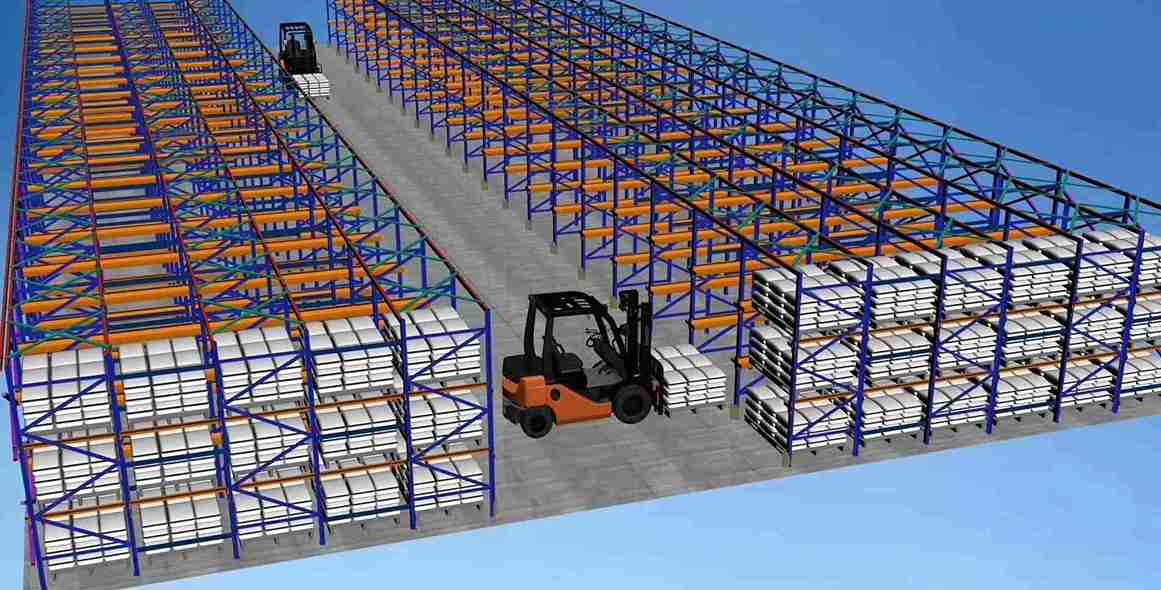
A high-density system is only as effective as the layout that guides it. We utilize advanced CAD and 3D “stereo” modeling to visualize the high-density environment before manufacturing begins. This phase of high-density planning is crucial for identifying potential bottlenecks in the logistics center.
During the high-density design process, our engineers consider factors such as forklift turning radii, pallet dimensions, and the required throughput speed. A well-designed high-density layout ensures that while the storage is “dense,” the movement remains “fluid.” For example, in a high-density drive-in configuration, the depth of the lanes must be balanced against the retrieval speed to avoid internal congestion. By optimizing the high-density layout, we help logistics managers maximize their “stereo” storage capacity while maintaining high levels of operational agility.
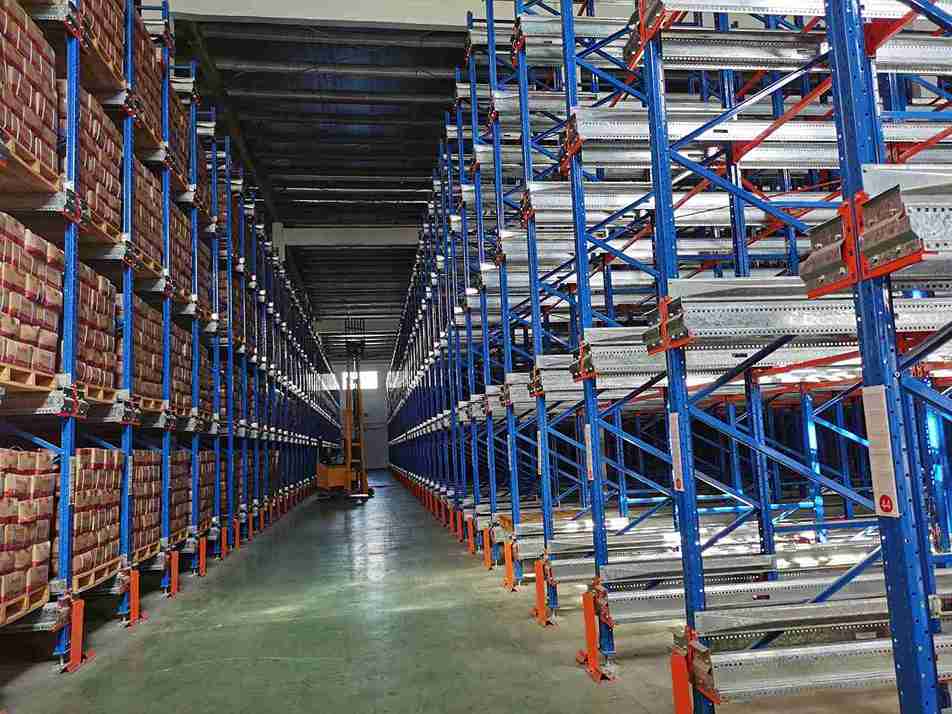
High-Density Storage in the Era of Automation: AGVs and Unmanned Forklifts
未来的 high-density warehousing is undeniably linked to automation. As labor costs rise and the need for precision increases, more logistics centers are integrating high-density racking with AGVs (Automated Guided Vehicles) and unmanned forklifts.
A high-density system designed for automation requires even tighter tolerances than a manual one. AGVs rely on sensors to navigate high-density lanes, meaning the rails and uprights must be positioned with millimeter accuracy. Our high-density solutions are “automation-ready,” providing a scalable path for warehouses to transition from manual high-density storage to fully automated high-density hubs. This integration of high-density racking with robotic technology creates a “stereo” warehouse effect where the vertical space is utilized with 99.9% accuracy, virtually eliminating human error in the high-density retrieval process.
Regional Considerations for High-Density Racking Implementation
The application of high-density technology varies significantly across different global markets. In Southeast Asia, for instance, the focus of high-density storage is often on cold chain logistics. Cold storage is inherently expensive to operate, making high-density racking the ideal choice for minimizing the volume of air that needs to be cooled.
In the Middle East, the focus of high-density systems is often on scale and speed. Large distribution centers in Saudi Arabia or the UAE require high-density solutions that can withstand high ambient temperatures and handle massive transshipment volumes. Meanwhile, in Latin America, high-density racking is often deployed in seismic zones, requiring specialized engineering to ensure the high-density structure can absorb and dissipate energy during an earthquake. Our experience in these diverse markets allows us to tailor every high-density project to the specific environmental and economic conditions of the region.
The “Stereo” Advantage: Moving Beyond 2D Storage
The term “stereo” in modern warehousing refers to the utilization of the third dimension—height. A high-density stereo warehouse is a complex, multi-tiered environment where every cubic meter is a revenue-generating asset. Traditional warehouses often waste the top 30-40% of their building’s height. In contrast, a high-density stereo system, often integrated with AS/RS (Automated Storage and Retrieval Systems), utilizes the full clear height of the facility.
This high-density stereo approach is particularly effective for e-commerce fulfillment centers. By using high-density racking as the framework for high-speed shuttles and cranes, these facilities can process thousands of orders per hour. The transition to high-density stereo warehousing represents the pinnacle of modern logistics engineering, combining the strength of high-density steel with the intelligence of modern software.
Safety Protocols in High-Density Environments
Safety is the paramount concern in any high-density storage operation. Because of the “enclosed” nature of drive-in racking, visibility for forklift operators can be limited. Therefore, a high-quality high-density system must include integrated safety features.
We equip our high-density lanes with floor-mounted guide rails that act as a “track” for the forklift, preventing it from colliding with the high-density uprights. Additionally, we install high-density rack protectors at every entry point. These components are designed to absorb impact energy, protecting the structural integrity of the high-density system. Regular audits and maintenance of these high-density structures are essential to ensure long-term safety and compliance with international standards like FEM and RMI. A commitment to high-density safety not only protects personnel but also safeguards the significant investment made in the high-density infrastructure.
Optimizing Throughput with High-Density Sorting Systems
A common misconception is that high-density storage is slow. While it is true that high-density drive-in racking is traditionally slower than selective racking for individual pallet access, this can be mitigated by integrating high-density storage with automated sorting systems.
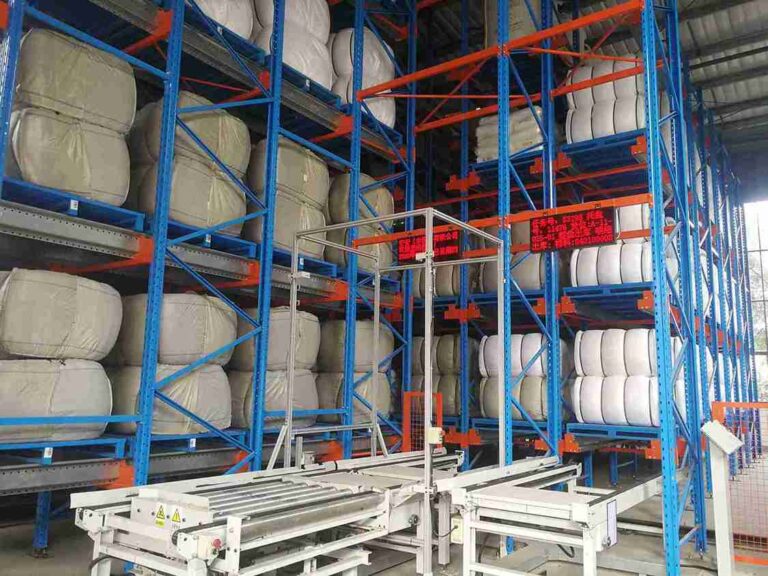
In a modern distribution center, the high-density racking serves as the “bulk” storage area, while the sorting system handles the “flow.” By strategically positioning the high-density zones near automated conveyors, a warehouse can achieve a perfect balance of high-density volume and high-speed throughput. This hybrid approach allows the logistics center to benefit from the space-saving advantages of high-density design without sacrificing the delivery speed required by today’s consumers.
Durability and Finish: Protecting Your High-Density Investment
The longevity of a high-density racking system is largely determined by its surface finish and material quality. For high-density systems located in humid or corrosive environments, we recommend a hot-dip galvanized finish. This ensures that the high-density steel remains rust-free for decades. For standard high-density applications, our high-durability powder coating provides a scratch-resistant surface that can withstand the daily wear and tear of a busy high-density logistics hub.
每一个 high-density component we produce undergoes rigorous quality control testing. From weld integrity to load-bearing capacity, we ensure that every piece of the high-density puzzle meets our exacting standards. When you choose a high-density solution from a factory-direct source, you are guaranteed a level of quality that resellers simply cannot match.
Frequently Asked Questions (FAQ) regarding High-Density Systems
1. Is high-density drive-in racking suitable for FIFO (First-In, First-Out) operations?
Standard high-density drive-in racking is designed for LIFO. However, if your logistics center requires FIFO, we can design a high-density drive-through system. This allows for loading on one side and retrieval on the other, maintaining the high-density advantage while supporting strict inventory rotation.
2. How much can I expect to save with factory-direct pricing on a high-density project?
On average, our clients see a 15% to 25% reduction in total project costs by opting for factory-direct high-density procurement. This savings comes from the elimination of intermediary margins and the optimization of high-density manufacturing processes tailored to your specific order.
3. What is the maximum height for a high-density stereo warehouse?
While the height of a high-density system is often limited by the building’s clear height, our engineering can support high-density structures exceeding 30 meters when integrated with AS/RS technology. This creates a truly massive high-density storage capacity in a very small footprint.
4. Can I upgrade my manual high-density racking to an AGV system later?
Yes, provided the initial high-density layout was designed with automation in mind. We specialize in “future-proof” high-density designs that include the necessary tolerances and rail configurations to support a seamless transition to high-density automation in the future.
5. How does a high-density system handle different pallet sizes?
我们的 high-density layouts are fully customizable. During the design phase, we adjust the width and rail height of the high-density lanes to accommodate the specific pallet dimensions used in your logistics center, ensuring a secure and efficient high-density fit.
Conclusion: The Future of Logistics is High-Density
In conclusion, the evolution of the logistics distribution center is inextricably linked to the advancement of high-density storage technology. By combining the structural power of high-density drive-in racking with the precision of custom layout design and the cost-efficiency of factory-direct pricing, businesses can overcome the challenges of rising land costs and increasing operational complexity. A high-density approach is not merely about “more pallets”; it is about a smarter, more resilient, and more profitable way of doing business.
Whether it is a manual high-density setup or a cutting-edge high-density stereo warehouse with AGV integration, the core objective remains the same: to maximize every cubic centimeter of space. As we continue to serve markets across Southeast Asia, the Middle East, and beyond, our commitment to high-density excellence remains the driving force behind the success of our clients’ logistics hubs. Investing in high-density today is the surest way to secure the competitive advantage of tomorrow.
如果您需要完美的 CAD 图纸和仓库货架报价、, 请联系我们. 我们可以为您提供免费的仓库货架规划、设计服务和报价。我们的电子邮件地址是 jili@geelyracks.com