📐 "First 50 Enterprise Queries Get Custom 3D Warehouse Design" Plan


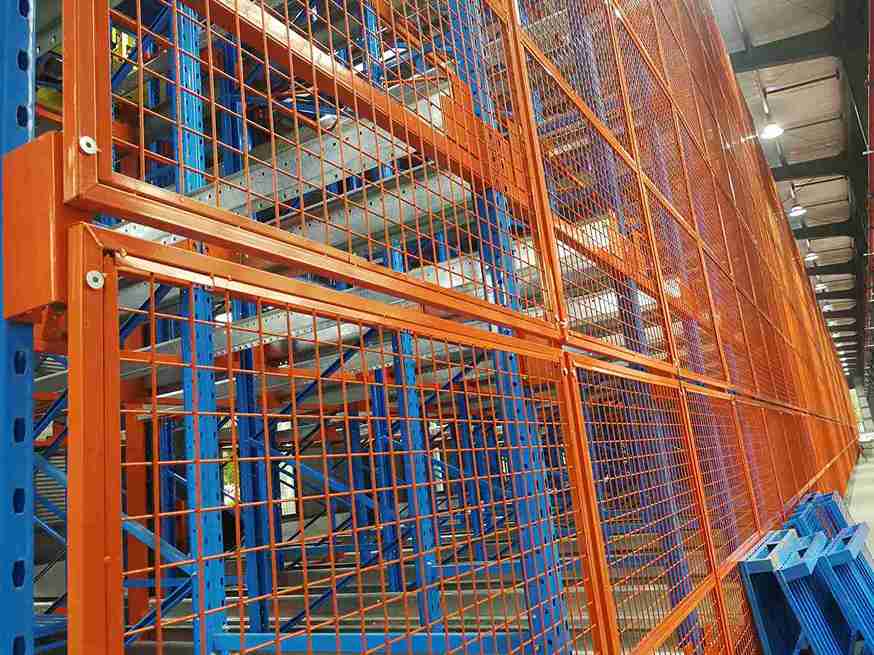
In the high-stakes environment of modern logistics and warehousing, operational integrity hinges on two non-negotiable pillars: safety and efficiency. A single point of failure can cascade into catastrophic losses, both human and financial. Among the most prevalent and underestimated threats is the peril of falling items from storage systems. This guide provides a deep, engineering-focused exploration of how custom shelf racking safety nets serve as a critical, strategic defense mechanism.
It moves beyond basic concepts to detail how a meticulously designed shelf racking safety net system integrates seamlessly with advanced automation, fortifies compliance postures, and delivers a measurable return on investment. For any operation relying on AGVs, unmanned forklifts, or high-density automated storage and retrieval systems (AS/RS), understanding the application of shelf racking safety nets is fundamental to achieving true operational resilience.
H2: The High Cost of Complacency: Why Falling Items Are a Systemic Failure
Viewing a fallen box as a simple cleanup task is a dangerous miscalculation. In reality, it is a symptom of a systemic vulnerability that impacts every facet of a warehouse’s performance. The true cost of not implementing a robust shelf racking safety net solution extends far beyond the immediate incident.
H3: The Ripple Effect of Financial Losses
The direct financial impact begins with the damaged product itself, which must be written off or sold as a loss. For operations storing high-value electronics, pharmaceuticals, or fragile goods, the loss per incident is substantial. However, the indirect costs are often more severe. The labor required for cleanup, investigation, and system resets pulls personnel from productive tasks like order picking, directly impacting throughput.
If a falling pallet or item strikes and damages an automated conveyor or an AGV, the repair costs and operational downtime can paralyze a distribution center for hours or even days. The cumulative financial drain from repeated minor incidents, even without serious injury, can be staggering over a fiscal year.
H3: The Human Element: Morale, Retention, and Liability
The most critical consequence of falling items is the risk to human safety. A warehouse employee struck by a falling object, regardless of its size, can suffer life-altering injuries. This creates a human tragedy and triggers a complex web of workers’ compensation claims, soaring insurance premiums, and potential litigation.
Beyond the tangible liabilities, a workplace perceived as unsafe suffers from plummeting employee morale, higher turnover rates, and significant challenges in recruiting and retaining a skilled workforce. A comprehensive shelf racking safety net program is a tangible demonstration to employees that their safety is the highest priority, fostering a culture of trust and care that pays dividends in loyalty and productivity.
H3: Navigating the Regulatory Minefield
Regulatory bodies, particularly OSHA, enforce stringent standards for material storage and falling object protection. An inspection that reveals unsecured inventory on high shelf racking can result in severe financial penalties and, in egregious cases, a complete operational shutdown until violations are rectified. Proactively installing OSHA-compliant shelf racking safety nets is not just about avoiding fines; it is about building a verifiable record of due diligence and a commitment to exceeding minimum safety standards, which strengthens a company’s standing during audits and insurance assessments.
H2: The Engineering Behind Superior Containment: Deconstructing Shelf Racking Safety Nets
A true industrial-grade shelf racking safety net is a feat of precision engineering, not a generic commodity. Its effectiveness is determined by the synergy of its materials, design, and installation methodology.
H3: Material Composition: Building for Decades of Service
The best shelf racking safety nets are fabricated from high-tenacity, UV-stabilized, and knotted polyethylene. This specific material selection is critical. Polyethylene offers exceptional tensile strength and high impact absorption, essential for catching heavy loads.
UV stabilization prevents molecular degradation from prolonged exposure to warehouse lighting, ensuring the material does not become brittle and fail over time. The knotted construction is paramount for shelf racking safety nets as it provides superior dimensional stability and resistance to progressive tearing compared to knotless varieties. Each knot acts as a stop-gap, preventing a small tear from compromising the entire shelf racking safety net.
H3: The Science of Load Calculation and Mesh Geometry
Engineering a shelf racking safety net system requires precise calculations. Specialists assess the potential energy of a falling object, which is a function of its mass and the height from which it could fall. This determines the required load capacity and impact absorption characteristics of the shelf racking safety net.
The mesh size is not arbitrary; it is selected to be small enough to contain the smallest commonly stored item, yet large enough to minimize weight and air resistance. The border rope, a critical component often overlooked, is a heavy-duty polypropylene cord with a breaking strength that far exceeds the anticipated dynamic loads, ensuring the shelf racking safety net remains securely anchored at its periphery.
H3: Installation Integrity: The Final Link in the Safety Chain
The performance of a shelf racking safety net is entirely dependent on its installation. Professional installers achieve a specific tension—taut enough to prevent excessive deflection and “bounce-out,” but with enough give to absorb impact energy elastically. Over-tensioning a shelf racking safety net places undue stress on the netting and attachment points, potentially leading to premature failure.
Under-tensioning creates a sagging net that is ineffective. The attachment hardware—industrial-grade zinc-plated or stainless-steel carabiners, turnbuckles, and span wires—is selected for its corrosion resistance and mechanical strength, forming a failsafe connection between the shelf racking safety net and the racking structure.
H2: The Power of Customization: Tailoring Shelf Racking Safety Nets to Your Unique Footprint
The term “custom” is the cornerstone of an effective shelf racking safety net solution. Warehouses are dynamic ecosystems with unique layouts, racking types, and operational flows. A bespoke shelf racking safety net system is designed to conform perfectly to this environment.
H3: Configurations for Every Racking Profile
A one-size-fits-all shelf racking safety net does not exist. Expert providers design and fabricate shelf racking safety nets for a vast array of configurations:
Selective Pallet Racking: Shelf racking safety nets are installed on the back and side profiles to prevent items from being dislodged and falling into adjacent aisles.
Narrow Aisle Racking: Custom-shaped shelf racking safety nets are essential for these tall, space-efficient structures, often requiring specialized access equipment for proper installation.
Cantilever Racking: For long, non-palletized goods, shelf racking safety nets are designed to contain items from the sides, a critical safety measure for irregular loads.
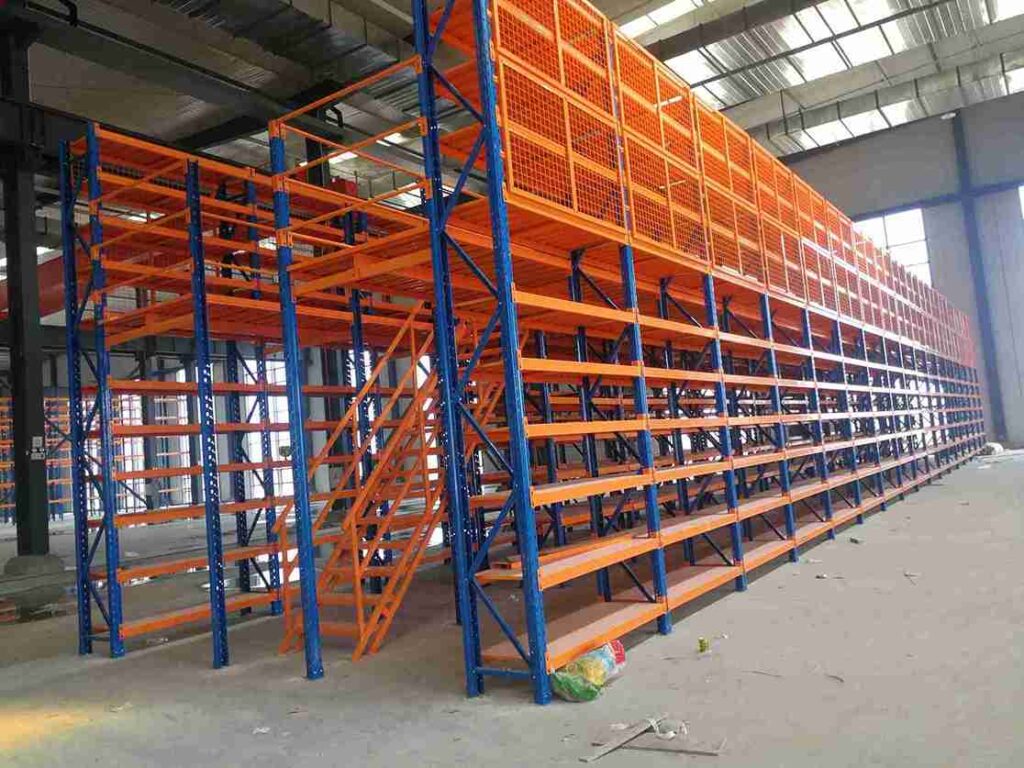
Mezzanine and Multi-Tier Systems: Shelf racking safety nets are deployed as protective barriers to catch any items that may fall from upper-level walkways or storage areas.
Automated Storage and Retrieval Systems (AS/RS): The shelf racking safety nets used in these environments are engineered for minimal interference with the robotics and retrieval machinery, often featuring quick-release mechanisms for maintenance access.
H3: Specialized Netting for Niche Hazard Mitigation
Beyond standard pallet containment, the versatility of shelf racking safety nets extends to specialized applications:
Debris Containment Nets: Used during facility maintenance or construction, these shelf racking safety nets prevent tools, hardware, and debris from falling onto workers, equipment, or active inventory below.
Personnel Safety Nets: Installed as a fall-arrest system for technicians required to work at significant heights on the racking structures themselves.
Containment Curtains: Heavy-duty shelf racking safety nets used to partition zones within a warehouse, containing spills, dust, or specific processes.
H2: Synergy with Automation: How Shelf Racking Safety Nets Protect High-Tech Investments
In an automated warehouse, the shelf racking safety net evolves from a passive safety device into an active reliability component. The integration of shelf racking safety nets is a critical consideration for the flawless operation of automated systems.
H3: Ensuring Uninterrupted AGV and Robotic Workflow
The navigation paths for AGVs and unmanned forklifts are precisely mapped. The installation of shelf racking safety nets must be planned to ensure zero encroachment on these critical pathways. Furthermore, the high-visibility colors often available for shelf racking safety nets (such as orange or green) enhance their detectability by the sensors of automated vehicles, preventing navigation errors or collisions. A well-planned shelf racking safety net system acts as an invisible guardrail, protecting both the inventory and the expensive automated fleet.
H3: Shielding Mission-Critical Automation Assets
The capital investment in an automated sortation system or a fleet of unmanned forklifts is immense. A single falling pallet can cause catastrophic damage to this equipment. Strategically placed shelf racking safety nets act as a protective shield, particularly at the end of aisles, near transfer points, and around the perimeters of automated zones. This proactive use of shelf racking safety nets directly safeguards the ROI of the automation itself, ensuring that a minor storage incident does not escalate into a six-figure equipment repair and prolonged operational halt.
H2: A Blueprint for Implementation: The Professional Process for Deploying Shelf Racking Safety Nets
Deploying a facility-wide shelf racking safety net system is a methodical process that ensures optimal performance and minimal operational disruption.
H3: Phase 1: Comprehensive On-Site Audit and Risk Analysis
The process is initiated by a collaborative walk-through involving the safety net provider’s engineers and the client’s operations and safety managers. This audit maps the entire facility, identifying high-risk zones, analyzing inventory profiles, reviewing historical incident data, and assessing the structural condition of the existing shelf racking.
H3: Phase 2: Engineered Design and Transparent Proposal
Leveraging data from the audit, engineering teams use CAD software to create precise drawings for every shelf racking safety net required. The proposal is a detailed document specifying material grades, load ratings, attachment methods, and a full cost-benefit analysis that quantifies the risk mitigation provided by the shelf racking safety net system.
H3: Phase 3: Expert Installation and Knowledge Transfer
Certified installation crews, trained in height safety and racking systems, execute the plan efficiently. A hallmark of a superior provider is the “knowledge transfer” to the client’s maintenance team, training them on how to conduct basic visual inspections and perform minor adjustments to the shelf racking safety nets.
H3: Phase 4: Establishing a Long-Term Integrity Management Program
A shelf racking safety net system requires ongoing stewardship. Providers should help the client establish a formal inspection schedule—typically a quarterly visual check by in-house staff and an annual detailed inspection by a certified technician—to ensure the long-term integrity and reliability of every shelf racking safety net.
H2: The Tangible ROI of Proactive Protection: Justifying the Investment in Shelf Racking Safety Nets
The decision to invest in a custom shelf racking safety net system is a financial one, with a clear and compelling return on investment that transcends mere accident prevention.
H3: Total Cost of Ownership vs. Catastrophic Single-Event Cost
The one-time, fixed cost of a professionally installed shelf racking safety net system is a predictable capital expenditure. Contrast this with the open-ended, unpredictable cost of a single major incident involving injury, equipment damage, and regulatory fines. When the potential costs of a worst-case scenario are modeled, the investment in a comprehensive shelf racking safety net system is revealed as a prudent and financially astute risk mitigation strategy.
H3: The Insurance and Risk Management Dividend
Facilities that can demonstrate a proactive investment in certified safety systems, such as engineered shelf racking safety nets, are often viewed more favorably by commercial insurance providers. This can lead to tangible reductions in annual insurance premiums. The shelf racking safety net system, in this context, becomes a revenue-protecting asset, with the savings on insurance helping to offset the initial implementation cost over a few years.
H2: An Integrated Safety Ecosystem: Shelf Racking Safety Nets as Part of a Broader Strategy
While immensely effective, shelf racking safety nets deliver maximum value when integrated into a holistic warehouse safety and maintenance program.
H3: The Foundation of Structural Racking Integrity
Shelf racking safety nets are designed to contain falling items, but they rely on a sound racking structure. A formal racking inspection program, conducted quarterly or semi-annually to RMI standards, is a complementary necessity. This ensures that the uprights, beams, and connectors to which the shelf racking safety nets are attached are themselves in a safe and load-bearing condition.
H3: Complementary Protective Technologies
Shelf racking safety nets work in concert with other protective devices to create a layered defense:
Column Guards: Protect racking uprights from impacts by unmanned forklifts, preserving the structural points where shelf racking safety nets are anchored.
Aisle-End Protectors: Prevent over-rotated pallets from striking end-frames and dislodging inventory, reducing the potential strain on the shelf racking safety nets.
Clear Signage and Floor Marking: Define zones and reinforce the safety protocols that the shelf racking safety net system physically supports.
H2: The Critical Flaws of Makeshift Alternatives to Professional Shelf Racking Safety Nets
Many facilities attempt to use inadequate substitutes for a professionally engineered shelf racking safety net, creating a false and dangerous sense of security.
Strapping can degrade under UV light and snap under dynamic load. Thin wire mesh can corrode, develop sharp burrs, and is difficult to secure properly across large, irregular spans. Plywood or wooden boards are rigid, lack impact absorption, can splinter, and add significant dead weight to the racking. These DIY solutions universally lack the engineered load capacity, material science, and certified installation protocols of a true industrial shelf racking safety net system. Relying on them is a significant gamble with safety and operational continuity.
H2: Conclusion: The Indispensable Role of Custom Shelf Racking Safety Nets in Modern Warehousing
In the final analysis, the question for warehouse and logistics managers is not whether they can afford to implement a custom shelf racking safety net system, but whether they can afford the escalating and potentially catastrophic costs of operating without one. A professionally engineered shelf racking safety net system is a fundamental component of a modern, efficient, and ethically managed warehouse.
It is a strategic investment that directly protects human capital, safeguards physical assets, ensures regulatory compliance, and enhances the reliability of high-cost automation. By choosing to install a custom shelf racking safety net solution, operations leaders are making a definitive statement about their commitment to building a resilient, productive, and truly safe future for their business.
H2: Frequently Asked Questions (FAQs)
H3: 1. What is the realistic service life expectancy for a set of industrial shelf racking safety nets?
With proper installation and in a standard warehouse environment, a high-quality polyethylene shelf racking safety net system can have a service life exceeding 10 to 15 years. The UV stabilization is a key factor in achieving this longevity. The hardware may require inspection and replacement sooner, depending on environmental conditions.
H3: 2. Can shelf racking safety nets be effectively cleaned, and if so, how?
Yes, maintaining clean shelf racking safety nets is important for visibility and material health. They can be cleaned using low-pressure water and a mild detergent. High-pressure washers should be avoided as they can force moisture into the knots and potentially damage the fibers. A soft brush can be used for stubborn grime.
H3: 3. How do we handle the installation of shelf racking safety nets in a live, 24/7 operation?
Professional installers are accustomed to working in live environments. They will develop a phased installation plan in coordination with your operations team, often working during off-peak hours or temporarily zoning off small sections of the warehouse at a time to minimize any disruption to workflow while the shelf racking safety nets are being installed.
H3: 4. Are there color options for shelf racking safety nets, and does color impact performance?
While standard colors are typically black or green, many providers offer high-visibility colors like orange or yellow. The color does not significantly impact the mechanical performance of the shelf racking safety net, but a high-visibility color can enhance safety by making the protected zones more obvious to personnel and automated systems.
H3: 5. What specific documentation should we receive from the provider after the shelf racking safety net installation?
A reputable provider will supply a comprehensive package including “as-built” installation drawings, material certification for the netting and hardware, load capacity ratings for each installed shelf racking safety net, and a detailed manual for in-house inspection and maintenance. This documentation is crucial for compliance audits and insurance purposes.
Welcome to contact us, if you need warehouse rack CAD drawings. We can provide you with warehouse rack planning and design for free. Our email address is: jili@geelyracks.com