📐 "First 50 Enterprise Queries Get Custom 3D Warehouse Design" Plan


For logistics managers, warehouse directors, and financial controllers, pinpointing the exact <b>shelf racking cost per unit</b> remains one of the most critical yet elusive figures in operational planning. The search for a clear, dependable number often leads to a maze of conflicting quotes and oversimplified estimates that fail to reflect the complex reality of a modern storage facility. This guide, drawing upon decades of engineering and project management experience, dismantles the common myths and provides a transparent, detailed framework for understanding and calculating this essential metric.
The central thesis is this: an accurate <b>shelf racking cost per unit</b> is not a static price pulled from a catalog; it is a dynamic value engineered from a deep analysis of a client’s unique operational DNA. While a sophisticated <b>Free Shelf Racking Cost Calculator & Custom Proposal</b> tool offers a direct path to a precise figure, this comprehensive resource will first equip decision-makers with the foundational knowledge to understand what they are truly investing in, ensuring that the final <b>shelf racking cost per unit</b> represents not just an expense, but a strategic investment in efficiency, safety, and scalability.
The Critical Flaw in Generic “Price per Unit” Quotes
The industry is rife with suppliers who readily provide a ballpark <b>shelf racking cost per unit</b> over the phone or through a basic online form. This approach, while seemingly convenient, is fundamentally misleading and poses a significant financial and operational risk. A quotation that reduces a complex structural system to a single, decontextualized number invariably leads to one of several unfavorable outcomes.
The operation may end up with an under-engineered system, where the quoted <b>shelf racking cost per unit</b> was achieved by using lighter-gauge steel or simplified bracing, compromising the system’s safety and load-bearing integrity. Conversely, a business might overpay for a system that is over-specified for its needs, with capacities and features that will never be utilized, thereby inflating the final <b>shelf racking cost per unit</b> without delivering corresponding value.
Furthermore, these simplistic quotes almost always conceal hidden costs that emerge during the installation phase. Unexpected requirements for floor leveling, seismic bracing, or specialized installation equipment can drastically alter the project’s total financial outlay, making the initially attractive <b>shelf racking cost per unit</b> a distant memory. Ultimately, a system selected based on a low initial <b>shelf racking cost per unit</b> often results in long-term operational inefficiency—a layout that fails to optimize pick paths or integrate with material handling equipment, incurring perpetual labor costs that dwarf any initial savings. The pursuit of the lowest apparent <b>shelf racking cost per unit</b> is, therefore, often the most expensive path a company can take.
<h2><b>Deconstructing the Variables: The Engineering Behind Your Custom Quote</b></h2>
A professionally calculated <b>shelf racking cost per unit</b> is the output of a sophisticated analysis that synthesizes a wide array of project-specific variables. Understanding these factors is crucial for any stakeholder looking to make an informed capital expenditure decision. The following sections provide a detailed breakdown of the primary elements that directly influence the final <b>shelf racking cost per unit</b>.
<h3><b>1. Foundational Inputs: Unit Load and Storage Volume Analysis</b></h3>
The very definition of a “unit” must be standardized before any meaningful calculation of the <b>shelf racking cost per unit</b> can begin. This foundational stage involves precise data collection. The physical dimensions and type of pallet—be it a standard 48″x40″ GMA, a Euro pallet, or a custom plastic container—directly dictate the required beam lengths and the overall footprint of the racking system, thereby influencing the <b>shelf racking cost per unit</b>. More critically, the maximum weight of the fully loaded unit is the paramount factor in determining the structural design.
Heavier loads necessitate the use of high-tensile steel, thicker column gauges, and more robust beam profiles, all of which contribute to a higher material <b>shelf racking cost per unit</b>. Finally, the total number of storage locations impacts the <b>shelf racking cost per unit</b> through economies of scale; larger projects typically see a reduced per-unit cost for manufacturing and installation.
<h3><b>2. System Configuration: The Primary Driver of Cost and Efficiency</b></h3>
The choice of racking system type is arguably the most significant determinant of the overall <b>shelf racking cost per unit</b>. Each system offers a different balance of density, accessibility, and complexity, which is directly reflected in its price point.
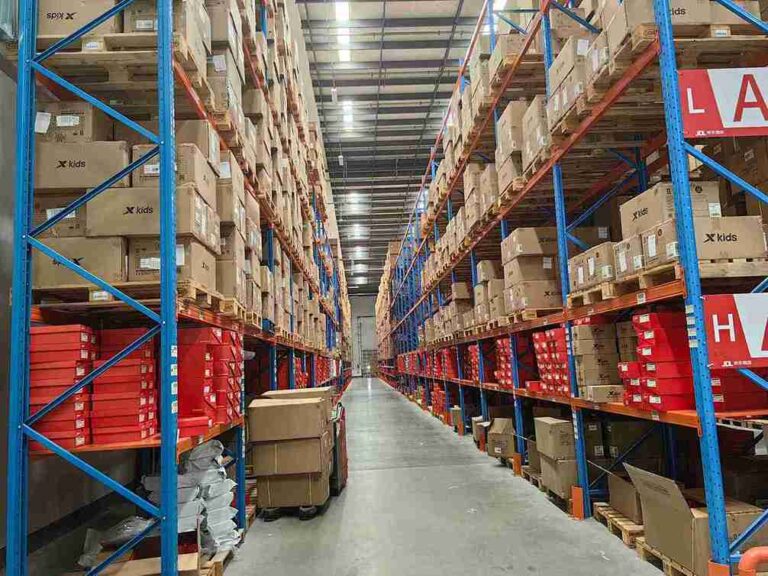
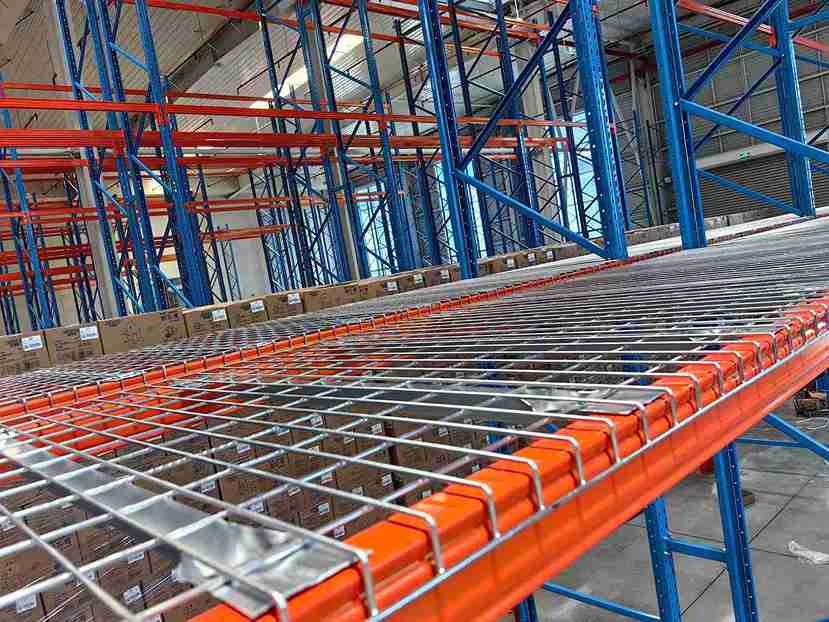
Selective Pallet Racking: As the industry workhorse, this system offers direct access to every pallet location. Its relative simplicity in design and installation results in a more accessible initial <b>shelf racking cost per unit</b>. However, it provides the lowest storage density, meaning the cost per square foot of warehouse space utilized may be higher than other options.
Drive-In/Drive-Through Racking: This high-density solution sacrifices selectivity for space utilization. By allowing forklifts to drive into the rack structure, it eliminates aisles, storing more pallets in a smaller area. The increased structural complexity and heavier-duty components required lead to a higher <b>shelf racking cost per unit</b> for the hardware, but this can be justified by a dramatically lower cost per cubic foot of stored goods.
Push Back Racking: Operating on a Last-In, First-Out (LIFO) principle, Push Back Racking features pallets stored on nested carts on inclined rails. It offers a compelling mix of good density and selectivity. The incorporation of these mechanical carts and the reinforced structure required increases the <b>shelf racking cost per unit</b> compared to selective racking, but it often boosts productivity enough to deliver a strong return on investment.
Pallet Flow Racking: This is a high-throughput, First-In, First-Out (FIFO) system that uses gravity rollers on a slight incline. It is ideal for perishable goods or high-volume SKUs. The integration of flow rails, braking systems, and specialized carts makes it a premium solution with a correspondingly higher <b>shelf racking cost per unit</b>. The justification lies in its unparalleled efficiency gains and reduction in labor costs.
Custom Multi-Tier and Mezzanine Systems: When floor space is at a premium, building vertically is the most effective strategy. Integrating racking with a structural mezzanine significantly increases the <b>shelf racking cost per unit</b> due to the added engineering, steel decking, and staircases. However, by doubling or tripling the usable storage area within the same building footprint, the effective <b>shelf racking cost per unit</b> when measured against total operational capacity often becomes highly advantageous.
<h3><b>3. Material Integrity and Manufacturing Precision</b></h3>
The quality of materials and construction is a non-negotiable element that directly impacts the safety, longevity, and ultimately, the true <b>shelf racking cost per unit</b>.
Steel Grade and Specifications: Reputable manufacturers use commercially certified, high-tensile steel. The thickness (gauge) of the upright columns and the profile of the beam are not arbitrary; they are the result of precise structural calculations based on the applied loads. Opting for inferior steel to achieve a lower <b>shelf racking cost per unit</b> is a grave safety risk.
Corrosion Protection: The operating environment dictates the required finish. A standard powder-coat finish may suffice for a dry, ambient warehouse. However, for cold storage, food processing, or chemical storage facilities, a high-grade epoxy or hot-dip galvanized finish is essential. This specialized protection adds to the <b>shelf racking cost per unit</b> but is critical for preventing premature failure and ensuring asset longevity.
Manufacturing Tolerances and Quality Control: Precision in the punching of connector holes and the consistency of welds are what separate industrial-grade racking from inferior products. Components that fit together seamlessly ensure a faster, safer installation and a more stable final structure, protecting the long-term value of the investment and justifying a fair <b>shelf racking cost per unit</b>.
<h3><b>4. Site-Specific Engineering and Installation Complexities</b></h3>
The environment where the racking will be installed is a major, and often underestimated, variable in the final <b>shelf racking cost per unit</b>. A professional site assessment is vital to capture these factors.
Floor Flatness and Condition: The warehouse floor must be within strict tolerances to ensure the racking is plumb and stable. A floor that is out of specification can require extensive shimming or even diamond grinding, adding significant unforeseen costs that inflate the planned <b>shelf racking cost per unit</b>.
Building Clear Height and Obstructions: Maximizing a facility’s vertical cube is key to reducing the overall <b>shelf racking cost per unit</b>. However, higher installations may require specialized installation equipment like scissor lifts or boom lifts. Existing building columns, sprinkler systems, and lighting can complicate the layout and installation process.
Seismic and Wind Load Considerations: For facilities located in regions with seismic activity or those in buildings susceptible to high wind loads (e.g., certain coastal areas), the racking design must include significant additional bracing and reinforcement. This seismic engineering is mandatory for compliance and safety, and it materially increases the <b>shelf racking cost per unit</b> due to the extra steel and engineering hours required.
Installation Logistics: An empty warehouse offers the simplest and most cost-effective installation scenario. Conversely, a “live” installation, where operations must continue alongside the project, requires complex phasing, heightened safety protocols, and slower work progress, all of which increase labor costs and, by extension, the final <b>shelf racking cost per unit</b>.
<h2><b>The Strategic Perspective: Total Cost of Ownership vs. Initial Price</b></h2>
A myopic focus on minimizing the initial <b>shelf racking cost per unit</b> is a strategic error. Astute financial planners and operations leaders evaluate storage investments through the lens of Total Cost of Ownership (TCO), which provides a holistic view of the investment over its entire lifecycle.
Operational Efficiency as a Cost-Saver: A well-engineered racking system, even with a higher initial <b>shelf racking cost per unit</b>, can generate massive operational savings. By optimizing travel paths for order pickers, reducing product damage through better clearances and alignment, and facilitating faster inventory rotation, the labor savings alone can often justify the premium investment within a surprisingly short period. Studies from organizations like the <a href=”https://www.mhi.org/”>Material Handling Institute (MHI)</a> consistently demonstrate that efficiency gains from a optimized layout can yield a return on investment that makes the effective <b>shelf racking cost per unit</b> negative when viewed over a five-year horizon.
The Immense Cost of Safety Failures: Compromising on the quality of racking or its installation to secure a lower <b>shelf racking cost per unit</b> is a gamble with catastrophic potential. A racking collapse can lead to total inventory loss, damage to forklifts and other capital equipment, work stoppages, severe injury or loss of life, and monumental liability claims. Investing in a professionally engineered, RMI-compliant system from a reputable supplier is the most effective risk mitigation strategy available, making a fair <b>shelf racking cost per unit</b> a wise insurance policy.
The Value of Scalability and Flexibility: Business is dynamic. A racking system that can be easily reconfigured, expanded, or adapted to new inventory profiles provides immense strategic value. While a modular, scalable design might carry a slightly higher initial <b>shelf racking cost per unit</b>, it protects the business from the exorbitant cost of a complete system replacement down the line. This future-proofing is a critical component of the TCO calculation.
<h2><b>A Practical Tool for Precision: The Free Cost Calculator & Proposal Engine</b></h2>
Recognizing the industry’s need for clarity and speed, the company has developed a advanced, user-driven tool designed to replace guesswork with data-driven precision. This is not a simple multiplier; it is the front-end of a comprehensive project engineering process.
<h3><b>The Step-by-Step Process to Your Custom Quote</b></h3>
The path to a definitive <b>shelf racking cost per unit</b> is structured and collaborative.
Detailed Requirement Input: Users are guided through a series of detailed fields to input their specific pallet data, load weights, desired capacity, and facility characteristics. The quality of the output <b>shelf racking cost per unit</b> is directly proportional to the accuracy of these inputs.
Operational Philosophy Integration: The tool goes beyond physical specs to capture operational goals. Users define throughput needs, access requirements (FIFO/LIFO), and future growth projections, ensuring the proposed system is not just physically adequate but operationally superior.
Algorithmic System Recommendation: Leveraging a database of thousands of project profiles, the proprietary algorithm analyzes the inputs against performance and cost parameters to recommend the optimal racking type that delivers the best value <b>shelf racking cost per unit</b> for the application.
Generation of a Data-Backed Proposal: The final output is not a single number, but a comprehensive, preliminary proposal. This document outlines the recommended system, includes a conceptual layout diagram, and provides a transparent breakdown of the estimated <b>shelf racking cost per unit</b>, alongside a projected project timeline.
<h3><b>What to Expect in Your Personalized Proposal Document</b></h3>
The custom proposal provided is a professional document that serves as a foundational blueprint for decision-making. It typically includes a conceptual layout diagram showing the proposed system’s footprint, an itemized cost breakdown separating hardware, installation, and ancillary services to provide complete transparency into the final <b>shelf racking cost per unit</b>, a summary of load capacities and engineering certifications confirming compliance with RMI and OSHA standards, and a total cost of ownership analysis projecting the long-term efficiency gains and operational savings that contextualize the initial <b>shelf racking cost per unit</b> investment.
<h2><b>Case Study: Optimizing the True Shelf Racking Cost Per Unit for a 3PL Provider</b></h2>
A third-party logistics (3PL) provider was planning an expansion for a new client’s account. They had received a competing bid for a standard selective racking system, quoting a <b>shelf racking cost per unit</b> of $172. Under pressure to minimize capital outlay, they engaged this company for a second opinion. Instead of simply matching the price, the team conducted a thorough analysis of the client’s inventory velocity and SKU profile.
The analysis revealed that 40% of the stored goods were slow-moving, while the remaining 60% were high-turnover items. The proposed solution was a hybrid system: standard selective racking for the slow-movers and a two-deep push back racking system for the high-velocity products. While the push back system had a higher individual <b>shelf racking cost per unit</b>, its implementation reduced the total aisle count by 30%, increasing overall storage capacity within the same warehouse footprint. The subsequent gains in picking density and reduced travel time led to a 28% reduction in labor hours for order fulfillment.
When these operational savings were factored in over a three-year period, the effective, all-in <b>shelf racking cost per unit</b> for the hybrid system dropped to $142. The client not only saved on the initial layout but also secured a long-term competitive advantage through lower operating costs, demonstrating that the real <b>shelf racking cost per unit</b> is measured in total business impact, not just initial invoice amount.
<h2><b>Frequently Asked Questions (FAQs)
1. Does the quoted shelf racking cost per unit include delivery and professional installation?
Yes, a comprehensive custom proposal will include clear line items for both delivery to your site and professional installation by certified and insured technicians. The integrity of the final structure is dependent on correct installation, which is why the company includes it in the overall project <b>shelf racking cost per unit</b>. DIY installation is strongly discouraged due to the severe safety and warranty implications.
2. What is the typical project timeline from the initial quote to a fully operational system?
For a standard selective racking system, the typical lead time is 6-8 weeks from order confirmation to project completion. This encompasses final engineering, manufacturing, shipping, and installation. More complex projects involving high-density systems or mezzanines can extend this timeline to 10-12 weeks. A firm schedule is always provided with the final proposal, ensuring the <b>shelf racking cost per unit is aligned with a reliable timeline.
3. What kind of ongoing support and maintenance is offered after installation?
The company provides extensive post-installation support to protect the client’s investment. This includes scheduled annual safety inspections, readily available component replacements, and system reconfiguration services. This support ensures the racking continues to operate safely and efficiently, preserving the long-term value of the initial <b>shelf racking cost per unit</b> expenditure.
4. How does the company ensure compliance with industry safety standards?</b></h4> All systems are designed, manufactured, and installed in strict compliance with the standards set by the <a href=”https://www.mhi.org/rima”>Rack Manufacturers Institute (RMI)</a> and relevant OSHA regulations. The company’s engineering team produces drawings that are stamped by a licensed professional engineer (P.E.), providing a certified guarantee that the system as designed will safely support the intended loads, a critical factor that justifies a fair <b>shelf racking cost per unit
5. Can the racking systems be designed to integrate with automated guided vehicles (AGVs) or autonomous mobile robots (AMRs)?
Absolutely. As a full-service provider of both static storage and <a href=”/solutions/warehouse-automation”>warehouse automation</a> solutions, the company possesses unique expertise in designing racking interfaces for automation. This ensures that the <b>shelf racking cost per unit</b> accounts for the precise tolerances, clearances, and structural interfaces required for seamless interaction with AGVs, AMRs, and other automated storage and retrieval systems (AS/RS), future-proofing the client’s investment.<h2><b>Conclusion: From Ambiguous Search to Actionable Investment Clarity
The journey to determine an accurate and justifiable <b>shelf racking cost per unit</b> is a complex but navigable process. It requires moving beyond simplistic pricing models and embracing a holistic view that integrates structural engineering, operational logistics, and strategic financial planning. The true <b>shelf racking cost per unit</b> is a carefully calibrated figure that balances immediate budget constraints with long-term operational performance and risk mitigation.
By leveraging the detailed knowledge contained in this guide and utilizing the sophisticated <b>Free Shelf Racking Cost Calculator & Custom Proposal</b> tool, businesses can transform an ambiguous online search into a confident, data-driven investment decision. The goal is to arrive at a final <b>shelf racking cost per unit</b> that is not merely a price, but a testament to intelligent design, quality craftsmanship, and a partnership dedicated to operational excellence.
Welcome to contact us, if you need warehouse rack CAD drawings. We can provide you with warehouse rack planning and design for free. Our email address is: jili@geelyracks.com