📐 "First 50 Enterprise Queries Get Custom 3D Warehouse Design" Plan


The Complete Racking Installation Cost Guide for 2026: What Warehouse Owners Must Know Before Investing
Understanding the true financial commitment behind warehouse storage systems. For logistics directors, supply chain managers, and business owners across Southeast Asia, the Middle East, Africa, and Latin America, the question of racking installation cost is rarely straightforward. A simple inquiry about steel prices often leads to budget overruns, delayed timelines, and operational headaches that could have been avoided with proper planning.
This comprehensive racking installation cost guide serves as your definitive resource for understanding every component that contributes to the final invoice. Drawing from decades of industry experience across emerging markets, we will dissect the anatomy of warehouse racking installation cost, exploring everything from site preparation and engineering requirements to the hidden expenses that catch even experienced operators off guard.
Whether you are planning a selective pallet racking system for a modest warehouse in Bangkok or a high-density automated storage solution for a distribution center in Dubai, this racking installation cost guide provides the transparency and insights necessary to budget accurately, negotiate effectively, and achieve the highest possible return on your storage infrastructure investment. We will explore how different racking types—from pallet flow to drive-in systems—carry distinct cost profiles, and why a seemingly higher initial racking installation cost often delivers superior long-term value through enhanced durability, safety, and operational efficiency.

Why a Comprehensive Racking Installation Cost Guide Matters for Your Warehouse Project
The journey toward an optimized warehouse begins with a single, deceptively simple question: What will this cost? Yet the answer, as any seasoned professional knows, is layered with complexity. A true racking installation cost guide does not merely quote a price per pallet position; it illuminates the entire ecosystem of expenses that transform an empty concrete shell into a high-functioning storage asset. In emerging markets, where supply chains are expanding rapidly and operational demands are evolving daily, understanding the full scope of racking system installation cost is not just a matter of financial prudence—it is a competitive necessity.
Many warehouse owners make the mistake of treating racking as a commodity purchase. They compare per-kilogram steel prices, seek the lowest upfront bid, and discover only after contracts are signed that the racking installation cost they approved covered little more than the raw materials. The forklifts they planned to use cannot navigate the aisles because floor flatness was never assessed. The fire suppression system, designed for a previous generation of storage, fails to meet code for the new taller racking. The installation crew, flown in from overseas, encounters unexpected delays because local building permits were never secured. Each of these scenarios represents a failure of the racking installation cost guide to account for the full picture.
This document exists to prevent precisely such outcomes. By treating racking installation cost as a multi-dimensional investment rather than a simple line item, we empower decision-makers to ask the right questions, challenge incomplete proposals, and build storage solutions that perform reliably for decades. The principles outlined here apply equally to a 500-pallet position expansion in Nairobi and a 50,000-pallet position automated warehouse in São Paulo. Geography changes the numbers, but the structure of a complete racking installation cost guide remains universal .
Deconstructing the Racking Installation Cost: Core Components You Cannot Ignore
When procurement teams receive their first quotation for warehouse racking, the document typically lists the steel components—upright frames, beams, safety locks, and perhaps row spacers. While these items form the physical backbone of the system, they represent only a fraction of the true racking installation cost. A professional racking installation cost guide must expand the aperture to include every element required to move from concept to fully operational storage.
The Steel Itself: Material Grades, Coatings, and Sourcing Implications
The foundation of any racking installation cost calculation begins with the raw materials. Not all steel is created equal, and the specifications chosen today will determine the system’s performance for the next twenty-five years. High-quality structural steel, typically S235 or S355 grade depending on regional standards, forms the basis for uprights and beams. The gauge of steel—the thickness of the material—directly influences load capacity and cost. Heavier gauges increase the racking installation cost but provide greater safety margins and resistance to impact damage from material handling equipment.
Surface treatment represents another critical variable in the racking installation cost equation. Hot-dip galvanizing, while more expensive than standard powder coating, offers superior corrosion resistance for facilities in coastal environments or cold storage applications. Powder coating, available in virtually any color, provides excellent protection for indoor installations at a moderate cost. Some suppliers offer pre-galvanized steel, which sits between these options in both price and performance. The choice among these treatments should reflect the specific environmental conditions of your facility, not merely the desire to minimize upfront racking installation cost .
For automated warehouses where precision tolerances are paramount, the racking installation cost may include additional quality control measures during steel fabrication. Laser-cut components ensure perfect alignment during assembly, reducing installation time and eliminating the need for field modifications. While these precision manufacturing steps add to the initial racking installation cost, they pay dividends in reduced installation labor and long-term operational reliability.
Engineering and Design: The Non-Negotiable Investment in Safety and Compliance
No responsible racking installation cost guide would omit the engineering fees required to transform a warehouse layout into a safe, code-compliant structure. Professional structural engineering is not an optional add-on; it is the mechanism by which generic steel components become a customized solution capable of withstanding seismic events, wind loads, and the daily rigors of material handling.
The engineering component of your racking installation cost begins with a thorough site assessment. Structural engineers must evaluate the existing concrete slab, analyzing its thickness, reinforcement, and load-bearing capacity. They must consider the building’s column spacing, roof structure, and fire protection systems. In regions prone to seismic activity—including parts of Southeast Asia, the Middle East, and Latin America—the racking installation cost must accommodate specialized seismic calculations that determine bracing requirements, base plate specifications, and connection details .
Beyond structural integrity, engineering fees within your racking installation cost cover the creation of detailed shop drawings. These documents guide the fabrication process and serve as the installation team’s roadmap. They specify exact dimensions, bolt torque requirements, and assembly sequences. Without professionally produced shop drawings, the risk of installation errors multiplies, potentially compromising safety and extending project timelines.
Third-party peer review, while sometimes viewed as an unnecessary expense, represents a prudent addition to any racking installation cost budget. Independent engineers review the design calculations and shop drawings, providing an additional layer of quality assurance. Many insurance carriers now require such reviews before underwriting policies for warehouses with high-bay racking systems, making this cost a practical necessity rather than an optional luxury.
Site Preparation: The Hidden Half of Your Racking Installation Cost
Experienced warehouse professionals know that the condition of the building before racking arrives determines half the success of any installation. Site preparation activities, when properly accounted for in the racking installation cost, transform problematic spaces into ideal environments for high-density storage.
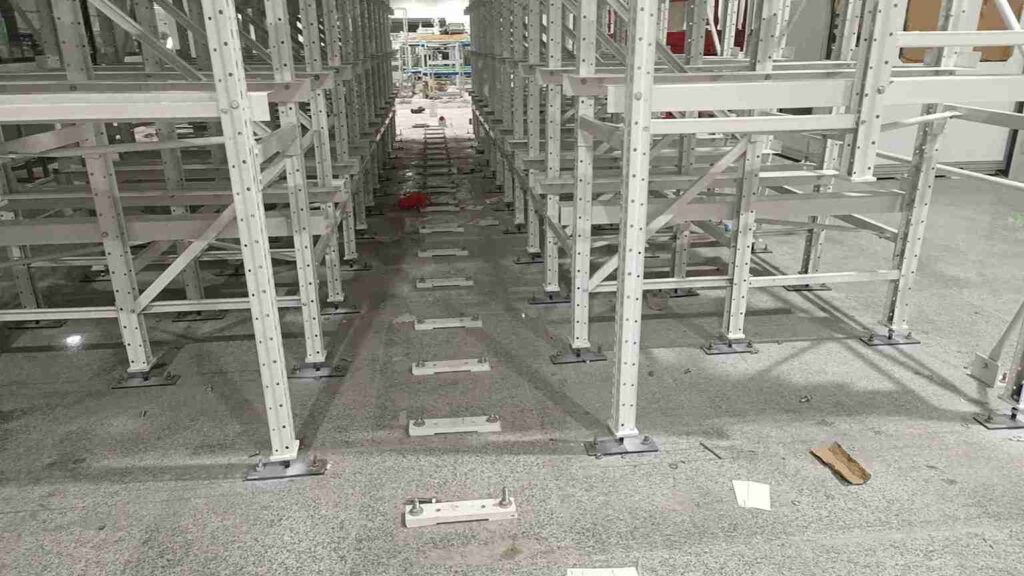
Floor flatness stands as the single most critical site factor affecting racking installation cost. Standard industrial concrete slabs, poured to typical construction tolerances, may be perfectly adequate for general warehousing activities. However, when narrow aisle racking systems or automated storage and retrieval equipment enter the picture, floor flatness requirements become dramatically more stringent. A comprehensive racking installation cost guide will include provisions for floor flatness testing using specialized equipment that produces FF/FL numbers. If the existing slab falls short of requirements—and it often does—the budget must accommodate grinding, leveling compounds, or in extreme cases, slab replacement .
Building modifications represent another significant component of site-related racking installation cost. New racking layouts frequently conflict with existing building services. Sprinkler heads positioned for a previous storage configuration may sit directly above proposed aisles, requiring relocation at considerable expense. Lighting fixtures, originally spaced for open floor areas, may need repositioning to illuminate new aisles effectively. Electrical conduits running through proposed racking footprints must be rerouted. Each of these modifications adds to the total racking installation cost, and failing to identify them early leads to disruptive change orders during installation.
For facilities in tropical climates common across Southeast Asia and parts of Latin America, ventilation and humidity control may factor into the racking installation cost. High humidity accelerates corrosion, particularly in uncoated steel components. Dehumidification systems, while not always necessary, may prove worthwhile investments for facilities storing sensitive goods. The decision to include such systems should be informed by a realistic assessment of local climate conditions and product requirements.
Installation Labor: The Craftsmanship Behind the Structure
The physical act of erecting racking requires specialized skills and equipment that must be properly valued in any accurate racking installation cost. While the steel components arrive at your dock as discrete items, transforming them into a stable, level, and safe structure demands experienced hands and careful coordination.
Installation crews specializing in warehouse racking bring expertise that general construction laborers simply do not possess. They understand the nuances of plumbness tolerances, the importance of proper shimming, and the sequence of assembly that ensures structural stability throughout the erection process. The racking installation cost must reflect the value of this specialized knowledge, as attempting to cut corners with unskilled labor inevitably leads to misaligned frames, unsafe connections, and compromised load capacity .
Equipment requirements further influence the installation labor portion of your racking installation cost. Tall racking systems require boom lifts, scissor lifts, or even telehandlers to place beams at upper levels safely. The rental and operation of this equipment, along with the trained personnel required to run it, should appear as explicit line items in any complete racking installation cost guide.
Project management and supervision, while sometimes buried within general labor costs, deserve separate consideration in your racking installation cost analysis. An experienced site supervisor coordinates deliveries, manages safety protocols, resolves unexpected challenges, and maintains quality standards. This oversight function, typically provided by the installing company, ensures that the project progresses smoothly and that the final installation meets all specifications.
Safety and Compliance: Protecting People and Assets
Safety equipment and compliance activities contribute meaningfully to the total racking installation cost, but they represent investments that pay dividends in accident prevention and liability reduction. A professional racking installation cost guide will itemize these components rather than burying them in general contingencies.
Column protectors, also known as rack guards, shield upright frames from impact damage by forklifts and other material handling equipment. These heavy-duty steel or polyurethane components wrap around the base of each column, absorbing impacts that would otherwise compromise structural integrity. While they add to the upfront racking installation cost, column protectors dramatically extend the useful life of racking systems and prevent catastrophic failures caused by cumulative impact damage.
End-of-aisle protection, including guard rails and bollards, creates physical barriers between travel lanes and racking structures. These safety elements, properly accounted for in the racking installation cost, prevent errant vehicles from entering racking aisles and causing widespread damage. In facilities with significant forklift traffic, the absence of such protection represents an unacceptable risk.
Fire safety integration represents a critical compliance component of any racking installation cost. The presence of racking affects sprinkler coverage, potentially creating shadow areas where water cannot reach. Engineering solutions—whether in-rack sprinklers, increased water density, or specialized fire barriers—must be developed in consultation with fire protection engineers and approved by local authorities. The cost of these solutions, along with any required modifications to existing fire alarm and suppression systems, belongs in the comprehensive racking installation cost .
Racking Installation Cost by System Type: Matching Investment to Application
Not all warehouse operations require the same storage solution, and the racking installation cost varies dramatically based on the system selected. Understanding these differences allows decision-makers to match their investment to their specific operational requirements, avoiding both underspending that limits capacity and overspending on features the operation does not need.
Selective Pallet Racking: The Baseline for Racking Installation Cost
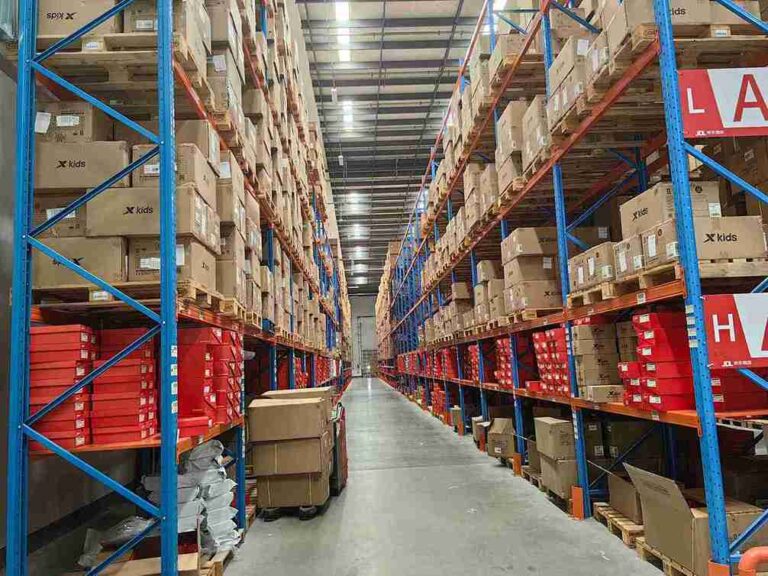
Selective pallet racking, offering direct access to every pallet position, represents the most common storage solution and the logical starting point for any discussion of racking installation cost. For basic selective systems, businesses might expect to pay anywhere from $50 to $150 per pallet position, depending on factors including height, load capacity, and finish quality . This wide range reflects the variability inherent in racking installation cost even for relatively straightforward systems.
The lower end of this spectrum typically applies to standard-duty systems in modest heights with powder-coated finishes. As heights increase beyond eight meters, as load capacities exceed one ton per pallet position, or as seismic engineering requirements enter the picture, the racking installation cost per position climbs toward the upper range. Facilities requiring hot-dip galvanizing for corrosion resistance should expect racking installation cost at the higher end of the selective range or beyond.
Installation labor for selective racking, while significant, generally represents a smaller proportion of total racking installation cost than for more complex systems. The straightforward geometry and repetitive nature of selective racking allows installation crews to work efficiently once they establish their rhythm. However, facilities with unusual column spacing, irregular floor layouts, or limited access may experience higher installation labor costs despite the system’s inherent simplicity.
Drive-In and Drive-Through Racking: Cost Implications of High Density
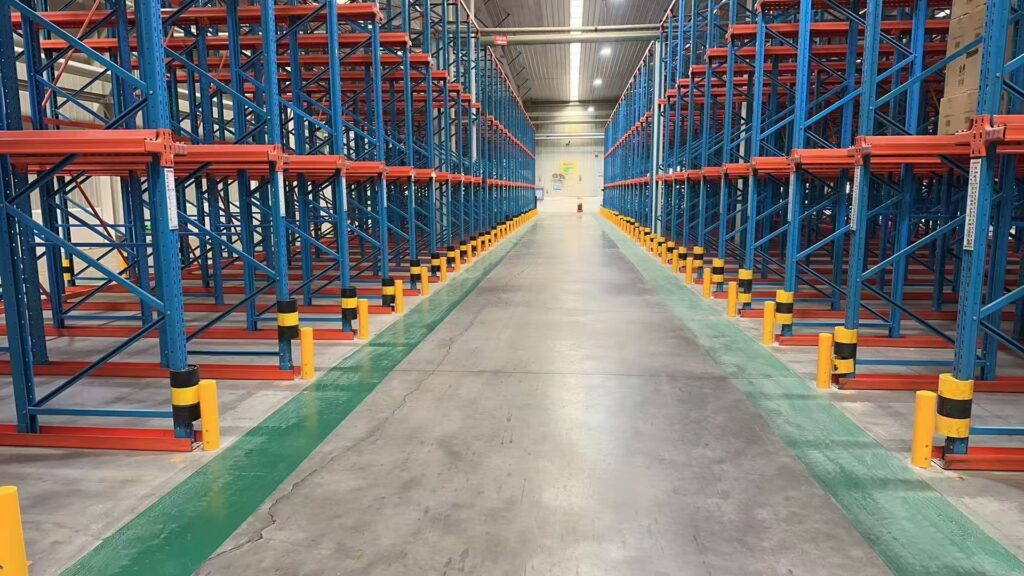
Drive-in racking, designed for last-in, first-out storage of homogeneous products, carries a different cost structure than selective systems. The racking installation cost for drive-in configurations typically ranges from $150 to $250 per pallet position . This higher per-position cost reflects the additional structural requirements of systems designed to support pallets while allowing forklifts to enter the storage structure itself.
The engineering complexity of drive-in racking contributes significantly to its racking installation cost. Unlike selective systems where loads transfer directly to the floor through upright frames, drive-in systems must distribute loads through continuous rails and bracing systems. The structural analysis required to ensure stability under dynamic loading conditions—forklifts entering and exiting, braking forces, and impact loads—adds engineering hours that increase the total racking installation cost.
Installation of drive-in racking demands greater precision than selective systems, further influencing racking installation cost. The rails that support pallets must maintain exact elevations and alignments to ensure smooth pallet movement. Misalignments that would be merely cosmetic in selective systems become functional failures in drive-in configurations, causing pallets to hang up or become stuck. This precision requirement extends installation timelines and requires more skilled labor, both of which contribute to higher racking installation cost.
Pallet Flow (Gravity Flow) Racking: Precision Mechanics at a Premium
Pallet flow racking, which uses gravity to move pallets from a loading face to a picking face, represents a significant step upward in both functionality and racking installation cost. These systems, ideal for high-throughput applications with fast-moving SKUs, incorporate sophisticated mechanical components that selective and drive-in systems lack entirely .
The rollers, brakes, and separation devices that enable controlled pallet movement constitute a major portion of the pallet flow racking installation cost. Each lane requires a carefully calibrated braking system that adjusts to pallet weight and desired travel speed. High-quality components, sourced from specialized manufacturers, ensure reliable operation over millions of cycles. While lower-cost alternatives exist, they typically deliver shorter service lives and higher maintenance requirements, ultimately increasing total cost of ownership despite lower initial racking installation cost.
Installation of pallet flow systems requires exceptional attention to slope and alignment. The precise incline that enables gravity flow varies by pallet weight, roller characteristics, and environmental conditions. Achieving this slope consistently across dozens or hundreds of lanes demands laser-guided installation techniques and continuous verification. The specialized labor required for this work contributes meaningfully to the overall racking installation cost but proves essential to system performance.
Lane configuration choices further influence pallet flow racking installation cost. Single-wide lanes, accommodating one pallet width, represent the standard configuration. However, some operations benefit from double-wide lanes that accept two pallets side by side. While this configuration increases storage density, it also increases the racking installation cost per lane due to wider rollers, heavier structural requirements, and more complex braking systems.
Push-Back Racking: Cost Considerations for Medium-Density Storage
Push-back racking, offering medium-density storage with slightly less complexity than full pallet flow systems, occupies a middle ground in the racking installation cost spectrum. These systems typically cost between $150 and $250 per pallet position , comparable to drive-in systems but with different operational characteristics.
The nested cart design of push-back racking introduces mechanical components that influence racking installation cost. Each lane contains a series of carts that ride on rails, with pallets placed on the carts and pushed back as additional pallets are loaded. The carts, rails, and guidance systems must be manufactured to precise tolerances to ensure smooth operation under load. Quality variations among these components directly affect both initial racking installation cost and long-term reliability.
Installation complexity for push-back racking falls between selective systems and full pallet flow configurations. While less demanding than gravity flow installations, push-back systems still require careful leveling and alignment to ensure carts move freely. The racking installation cost should reflect this intermediate level of precision requirement.
Automated Racking Systems: When Racking Installation Cost Reaches New Heights
The integration of automation transforms racking installation cost from a significant investment into a transformative capital project. Automated storage and retrieval systems (ASRS), whether unit-load systems for pallets or mini-load systems for totes, represent the upper echelon of racking installation cost, often exceeding $500 per pallet position and climbing substantially higher based on system sophistication .
The racking structure itself, while still a cost component, becomes secondary to the automation equipment in these systems. Stacker cranes, shuttle vehicles, and conveyance systems typically represent the majority of total investment. However, the racking installation cost for automated systems remains significant due to the precision requirements and specialized interfaces between steel structures and moving equipment .
Tolerances for automated racking systems far exceed those for manual systems, directly impacting racking installation cost. Where manual systems might tolerate variations measured in centimeters, automated systems require millimeter-level precision. Achieving these tolerances demands higher-quality fabrication, more rigorous quality control, and installation processes that verify alignment at every step. The additional labor and materials required to meet these standards increase the racking installation cost substantially.
Software integration, while not always categorized under racking installation cost, must be included in any complete financial analysis. The warehouse control system that orchestrates automated equipment, the warehouse management system that directs inventory placement, and the integration layers connecting these systems all contribute to total project investment. For automated facilities, the software component of racking installation cost can approach or exceed the hardware component .
The Geographic Variable: How Location Shapes Your Racking Installation Cost
For companies operating across Southeast Asia, the Middle East, Africa, and Latin America, the racking installation cost for identical equipment can vary dramatically based on location. Understanding these geographic factors allows for more accurate budgeting and realistic project planning.
Import Duties, Taxes, and Customs Clearance
The movement of steel components across international borders introduces cost elements that significantly affect racking installation cost in emerging markets. Import duties, calculated as percentages of shipped value, vary widely by country and product classification. Some nations classify racking components under machinery tariffs, while others apply rates more typical of construction materials. A comprehensive racking installation cost guide must include research into applicable duty rates for each destination country.
Customs clearance processes, while not directly adding to material costs, affect racking installation cost through timeline impacts and brokerage fees. Delays at ports, inspections that damage packaging, and administrative holds can extend project schedules and increase carrying costs. Experienced suppliers factor these risks into their racking installation cost projections, building contingencies that reflect local conditions.
Value-added tax (VAT) or goods and services tax (GST) treatment further influences racking installation cost in many markets. While these taxes may be recoverable for registered businesses, they represent cash flow impacts that must be considered in project budgeting. Some jurisdictions require upfront payment of these taxes with refund processes extending months or years, creating working capital demands that affect overall racking installation cost.
Transportation and Logistics: Getting Steel to Site
The journey from manufacturing facility to your warehouse represents a significant portion of racking installation cost for projects in remote locations or regions with underdeveloped transportation infrastructure. Ocean freight, while economical per ton, requires careful consolidation and staging to minimize shipping costs. Air freight, while faster, adds dramatically to racking installation cost and remains impractical for full racking projects.
Inland transportation from port to site introduces additional variables affecting racking installation cost. Road conditions, bridge weight limits, and clearance restrictions may require specialized trucks or multiple smaller deliveries. For projects in Southeast Asian islands or African nations with limited road networks, barge or rail transport may prove necessary, each adding complexity and cost to the logistics portion of racking installation cost.
Local Labor Rates and Installation Expertise
The availability and cost of skilled installation labor directly affects the on-site portion of your racking installation cost. In mature markets with established racking industries, trained installers command predictable rates and work according to established practices. In emerging markets, where racking installations may be less common, finding qualified crews may require importing labor from other regions, substantially increasing racking installation cost.
Training requirements, when local crews lack experience with specific racking types, add to racking installation cost through extended learning curves and potential rework. Responsible suppliers account for these factors in their proposals, either by providing experienced supervisors who guide local crews or by conducting formal training programs before installation begins. Either approach adds to racking installation cost but proves essential to achieving quality results.
Climate and Environmental Adaptation
Regional climate conditions influence racking installation cost through material selection and design requirements. Facilities in coastal Southeast Asia, exposed to salt-laden air and high humidity, may require enhanced corrosion protection that increases racking installation cost compared to inland installations. Hot, arid environments common in the Middle East may affect lubricants, electrical components, and material properties, requiring specialized specifications that carry cost premiums .
Seismic design requirements, mandatory in many parts of Latin America, Southeast Asia, and the Middle East, add engineering and material costs to racking installation cost. These requirements, while non-negotiable for safety, vary in stringency based on local building codes and seismic zone classifications. A proper racking installation cost guide will include provisions for seismic engineering tailored to the specific project location .
The Hidden Cost Catalog: What Incomplete Quotes Miss
Even experienced warehouse professionals occasionally fall victim to incomplete racking installation cost proposals that omit critical elements. Understanding what commonly gets excluded—whether through oversight or intentional omission—enables buyers to identify gaps and request complete pricing before committing to a supplier.
Floor Flatness Remediation
Perhaps the most frequently omitted item from incomplete racking installation cost quotes, floor flatness work can add tens of thousands to project budgets when discovered after contracts are signed. Standard industrial concrete, poured to typical construction tolerances, rarely meets the requirements for narrow aisle racking or automated systems. The laser grinding, self-leveling toppings, or slab replacements required to achieve acceptable flatness represent major expenses that belong in any complete racking installation cost .
Building Service Modifications
Sprinkler system adjustments, lighting repositioning, and electrical upgrades frequently appear as afterthoughts in racking installation cost proposals. Yet these modifications, required to accommodate new racking layouts, can represent significant investments. Fire protection engineering, in particular, adds both design fees and construction costs that should appear explicitly in racking installation cost calculations .
Professional Services Beyond Basic Installation
Project management, engineering, and commissioning services sometimes disappear from racking installation cost quotes when suppliers compete primarily on price. Yet these services, while not physically tangible, prove essential to project success. A complete racking installation cost includes adequate allowances for the professional oversight that ensures quality outcomes.
Post-Installation Testing and Certification
Load testing, seismic certification, and formal commissioning represent final verification steps that some racking installation cost proposals neglect. These activities, while occurring after installation, require budget allocation within the overall project. Insurance carriers and regulatory authorities increasingly require documented testing and certification, making these costs unavoidable components of complete racking installation cost.
Building Your Racking Installation Cost Model: A Practical Framework
Armed with understanding of the components that constitute true racking installation cost, decision-makers can construct comprehensive budget models that support informed investment decisions.
Phase 1: Discovery and Assessment Costs
The discovery phase, while sometimes viewed as preliminary, represents a legitimate component of racking installation cost. Professional site surveys, floor flatness testing, and structural assessments provide the data necessary for accurate engineering. Investing adequately in discovery reduces risk throughout subsequent phases and prevents costly surprises.
Phase 2: Engineering and Design Costs
Structural engineering, seismic calculations, and shop drawing production constitute the design phase of racking installation cost. These costs, typically calculated as percentages of total project value or as fixed fees based on scope, transform generic requirements into buildable specifications.
Phase 3: Material Procurement Costs
Steel fabrication, surface treatment, and quality control represent the material component of racking installation cost. This phase includes the physical racking components along with any specialized items such as pallet flow rollers, push-back carts, or automated system interfaces.
Phase 4: Site Preparation Costs
Floor remediation, building modifications, and utility upgrades occur during the site preparation phase of racking installation cost. These activities prepare the physical environment to receive the new racking system and typically require coordination with multiple contractors.
Phase 5: Installation and Commissioning Costs
Crew mobilization, equipment rental, and installation labor dominate the on-site phase of racking installation cost. Commissioning activities, including load testing and system verification, conclude this phase and provide the documentation necessary for operational release.
Phase 6: Ongoing Support and Maintenance Costs
While not always included in initial racking installation cost discussions, provisions for ongoing support deserve consideration. Spare parts inventories, preventive maintenance contracts, and periodic inspections represent costs that extend throughout the system’s life and should factor into total cost of ownership analyses .
Conclusion
The journey from warehouse concept to operational reality requires navigating countless decisions, each with implications for racking installation cost. By approaching this journey with eyes fully open to the complexity of true racking installation cost, warehouse owners position themselves to make choices that serve their operations effectively for decades. The lowest initial quote rarely delivers the lowest total cost of ownership, while investments in quality engineering, proper site preparation, and professional installation yield returns through enhanced safety, reduced maintenance, and extended system life.
For decision-makers across Southeast Asia, the Middle East, Africa, and Latin America, the principles outlined in this racking installation cost guide provide a framework for evaluating proposals, challenging assumptions, and building storage solutions that support business growth. The questions raised here—about floor flatness, seismic engineering, installation expertise, and long-term support—deserve answers before contracts are signed, not after problems emerge. A complete racking installation cost analysis, conducted with professional guidance and realistic assumptions, transforms the budgeting process from a source of anxiety into a foundation for confidence.
The warehouse of tomorrow demands more than storage space; it demands strategic capability. That capability begins with a racking system designed, engineered, and installed to standards that reflect both current needs and future ambitions. And that system begins with a racking installation cost that accounts for everything required to deliver lasting value.
Frequently Asked Questions
1. What is the average cost per pallet position for warehouse racking in 2026?
For basic selective pallet racking, businesses should expect to pay between $50 and $150 per pallet position in 2026. More advanced systems like drive-in or push-back racking typically range from $150 to $250 per pallet position. Automated storage systems can exceed $500 per pallet position, with costs rising substantially based on system complexity and integration requirements. These ranges reflect material costs only and do not include installation, engineering, or site preparation, which can add 30-50% to the total racking installation cost .
2. How long does a typical racking installation take from delivery to completion?
Installation duration varies significantly based on system size and complexity. A modest selective racking installation of 500 pallet positions might require one to two weeks with a skilled crew. Larger installations of 5,000 positions or more can extend to eight to twelve weeks. Automated systems require additional time for software configuration and testing, often adding four to eight weeks beyond mechanical installation. These timelines assume proper site preparation and material availability, both of which depend on accurate racking installation cost planning and project management .
3. Can I install warehouse racking myself to save on labor costs?
While technically possible for very small systems, self-installation of commercial racking is strongly discouraged. Professional installation ensures compliance with engineering specifications, proper torque of all connections, and verification of plumbness and alignment. Mistakes in installation can compromise structural integrity, creating safety hazards and potential liability issues. The labor savings from DIY installation rarely justify the risks, particularly when considering that improper installation may void manufacturer warranties and fail to meet insurance requirements. A complete racking installation cost should always include professional installation by experienced crews .
4. What certifications should I look for when evaluating racking suppliers?
Reputable racking suppliers should provide certifications including ISO 9001 for quality management, evidence of compliance with applicable racking design standards (such as RMI ANSI MH16.1 in North America or FEM standards in Europe), and third-party verification of engineering calculations. For facilities in seismic zones, suppliers should demonstrate specific experience with seismic design and provide calculations stamped by qualified structural engineers. Material certifications documenting steel grade and coating specifications should be available upon request. These certifications, while adding to racking installation cost through compliance activities, provide essential assurance of quality and safety.
5. How often should warehouse racking be inspected after installation?
Industry best practices recommend formal racking inspections at least annually, with more frequent inspections in facilities with heavy forklift traffic or challenging operating conditions. Many insurance carriers require annual inspections by qualified professionals. Additionally, operators should conduct visual inspections weekly, watching for signs of impact damage, bent components, or missing safety locks. Any significant impact event should trigger an immediate inspection, regardless of scheduled intervals. These ongoing inspection costs, while separate from initial racking installation cost, represent essential investments in maintaining safety and extending system life.
6. What is the typical lifespan of a well-maintained warehouse racking system?
With proper design, professional installation, and regular maintenance, warehouse racking systems typically last twenty to thirty years. Facilities with light duty cycles and minimal impact damage may achieve even longer service lives. However, changes in operational requirements—different pallet sizes, increased load weights, or automation integration—may necessitate system modifications or replacement before structural end-of-life. The durability of quality racking makes the initial racking installation cost a long-term investment in operational capability, with annualized costs often proving highly favorable compared to alternatives .
If you require perfect CAD drawings and quotes for warehouse racking, please contact us. We can provide you with free warehouse racking planning and design services and quotes. Our email address is: jili@geelyracks.com