📐 "First 50 Enterprise Queries Get Custom 3D Warehouse Design" Plan


The Strategic Imperative: Securing Warehouse Assets with Pallet Racking Safety Accessories
Introduction: Redefining Warehouse Economics Through Proactive Protection
In the dynamic landscape of global logistics, where supply chain resilience is paramount, warehouse managers face a critical equation: how to maximize operational throughput while minimizing risk and cost. The solution, often overlooked in favor of more glamorous technological investments, lies in the fundamental infrastructure itself—specifically, in the strategic deployment of pallet racking safety accessories.
These components are not mere add-ons; they are essential engineering controls that transform passive storage structures into active partners in asset protection and cost containment. For operations spanning the humid climates of Southeast Asia, the dusty environs of the Middle East, the growing industrial hubs of Africa, and the diverse facilities of Latin America, the universal language is one of reliability and return on investment.
A warehouse’s racking system is its skeletal framework, bearing the weight of its most valuable asset: inventory. Every forklift turn, every pallet retrieval, every instance of human or automated equipment movement presents a potential point of failure. The consequences of neglect are quantifiable and severe—catastrophic inventory loss, prolonged operational downtime, crippling liability claims, and irreversible brand damage.
Conversely, a systematic approach to integrating pallet racking safety accessories represents one of the most judicious capital allocations a facility can make. This comprehensive analysis delves beyond catalog specifications, exploring the tactical application, financial rationale, and operational synergies created by these critical components. It positions pallet racking safety accessories as the cornerstone of a modern, responsible, and profit-focused warehouse strategy.

The Financial Anatomy of a Warehouse Incident: Justifying the Investment
To understand the value of prevention, one must first comprehend the staggering cost of failure. A single compromised racking bay can trigger a cascade of financial liabilities that far exceeds the annual budget for facility maintenance and safety combined.
Direct and Indirect Costs of Racking Failure
The immediate aftermath of a collapse or significant impact is just the beginning. Direct costs include the total loss of stored goods, which may represent weeks of production or irreplaceable materials. The physical repair or replacement of bent uprights, shattered beams, and damaged sprinkler systems is a costly and time-consuming endeavor, often requiring specialized labor. Concurrently, the affected zone becomes a dead zone, disrupting picking paths, delaying order fulfillment, and compromising service level agreements.
Indirect costs, however, are more insidious and longer-lasting. Insurance premiums inevitably rise following a claim. Regulatory bodies may levy significant fines for safety violations, particularly in regions with evolving compliance landscapes. Workforce morale and productivity plummet in an environment perceived as hazardous, potentially increasing turnover.
Most damagingly, a company’s reputation as a reliable link in the supply chain can be tarnished, affecting future business opportunities. When evaluated holistically, the total cost of a single major incident can reach six or even seven figures, a burden that could cripple small and medium-sized operations.
The Proactive Calculus of Pallet Racking Safety Accessories
In contrast, the investment in pallet racking safety accessories is predictable, manageable, and finite. These engineered solutions act as sacrificial components or preventive barriers, designed to absorb energy, contain loads, and reinforce integrity. The financial argument is compellingly simple: the aggregate cost of outfitting a facility with comprehensive pallet racking safety accessories is typically a mere fraction—often less than 5%—of the potential cost of one unmitigated disaster.
This calculation establishes a clear and positive return on investment (ROI). Furthermore, many pallet racking safety accessories contribute to ongoing operational savings by reducing product damage from fall-through, minimizing minor repair downtime, and even qualifying facilities for lower insurance premiums through demonstrable risk mitigation. Thus, these components shift safety from the ledger of pure expense to the column of strategic asset protection.
A Tactical Inventory of Essential Pallet Racking Safety Accessories
Implementing an effective strategy requires a detailed understanding of the available tools. Each type of pallet racking safety accessory serves a distinct function, addressing specific failure modes within the warehouse ecosystem.
Structural Guardians: Column and Upright Protectors
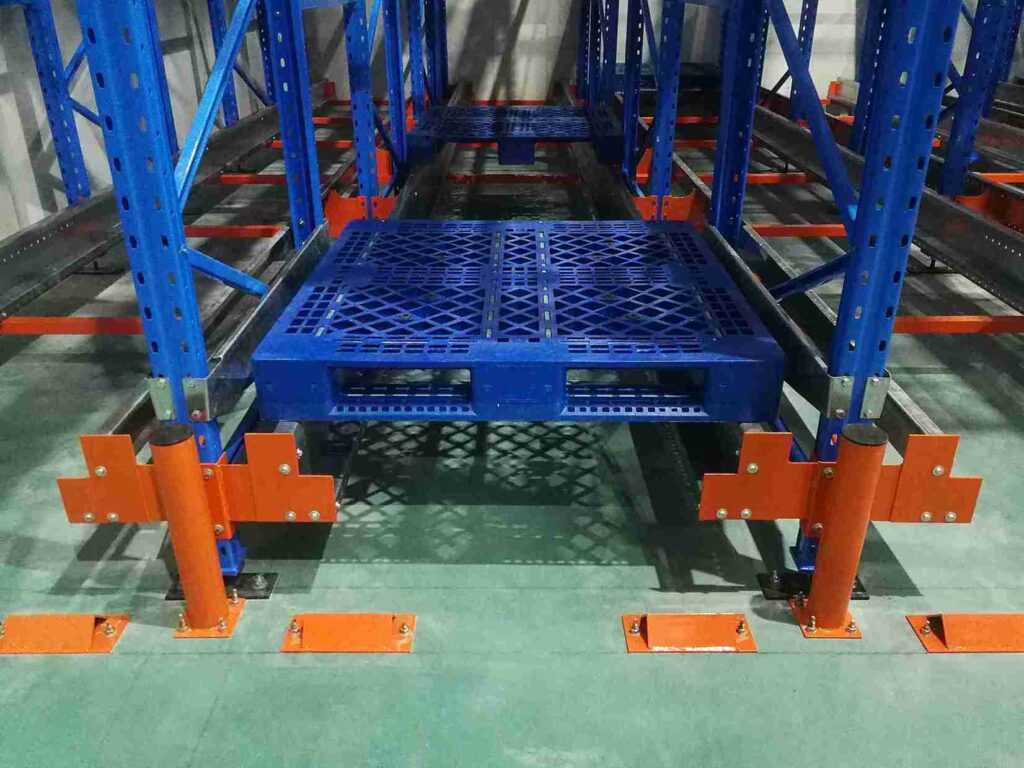
The upright frame is the primary load-bearing element of any racking system. A direct forklift impact to an upright can compromise its structural integrity, necessitating immediate offloading and replacement—an operation that is both expensive and disruptive. Column protectors, typically constructed from robust steel channels or high-density polyethylene, are bolted directly to the face of the upright. They serve as a sacrificial shield, absorbing and distributing the force of an impact.
By deforming themselves, they prevent the critical upright from bending. For facilities with very narrow aisles (VNA) or high-traffic corridors, specifying these pallet racking safety accessories is non-negotiable. Their installation is a prime example of spending hundreds to save thousands in potential upright replacement costs and lost operational hours.
Containment and Stabilization Solutions: Wire Mesh Decking and Panel Backing
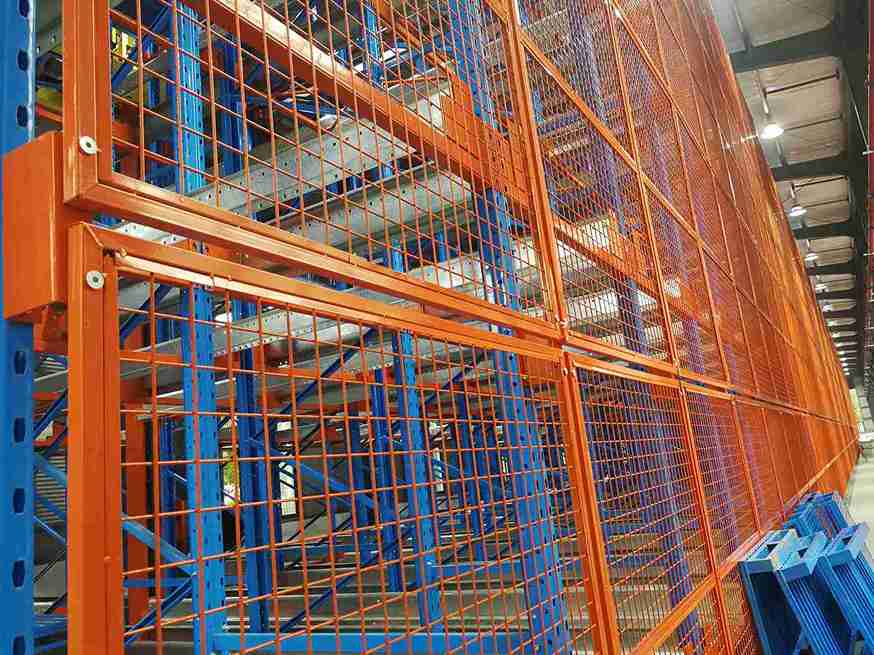
Load fall-through is a constant source of inventory shrinkage, housekeeping labor, and floor-level safety hazards. Solid decking can impede sprinkler effectiveness and airflow. The optimal solution lies in welded wire mesh decking and back panels. These pallet racking safety accessories provide a secure platform for pallets while allowing for fire suppression penetration and visibility. They prevent boxes, bags, or loose items from falling to the floor, thereby directly protecting your inventory.
Back panels, installed on the rear of selective racking, add lateral stability to the structure and prevent products from being pushed through the opposite side. When selecting these pallet racking safety accessories, gauge thickness and mesh size must be matched to the load profile; finer mesh is essential for small-parts storage. Their role in maintaining order and preventing loss makes them invaluable assets in any inventory accuracy program.
Critical Connection Security: Beam Locks and Safety Pins
The connection between the beam end connector and the upright column is a potential failure point, susceptible to dislodgement if a pallet or forklift mast lifts the beam from below. Standard drop-in tabs offer minimal resistance to upward force. Upgrading to mechanical beam locks or safety pins is one of the most cost-effective interventions available. These pallet racking safety accessories positively lock the beam into the upright, requiring a deliberate manual action to release.
This is especially crucial in environments utilizing automated storage and retrieval systems (ASRS), robotic palletizers, or even manual pallet jacks that can snag on beam undersides. A facility-wide retrofit of these pallet racking safety accessories dramatically reduces the risk of a beam collapse cascade, ensuring that the storage levels remain securely in place.
Advanced Integration: Safety Accessories in Automated and High-Density Environments
The rise of automation and space-maximizing configurations places new, demanding requirements on racking integrity. Pallet racking safety accessories must evolve from passive protectors to integrated system components.
Synergy with AGVs and Robotic Forklifts
Automated Guided Vehicles (AGV小车) and unmanned forklifts operate with precision but without human situational awareness. Their interaction with racking must be flawlessly predictable. Pallet racking safety accessories in these environments serve a dual purpose: protecting the racking from the machine and safeguarding the machine from the racking. Column protectors should be specified with high-visibility, reflective surfaces to enhance LiDAR and camera detection. Aisle end guards become mandatory physical and visual markers, defining no-go zones for robotic pathways.
Furthermore, the absolute certainty provided by beam locks is critical, as automated systems apply consistent, repetitive forces at identical points. Any weakness will be systematically exploited, leading to failure. Therefore, selecting and installing the correct pallet racking safety accessories is a foundational step in any automation project, protecting both the inventory and the capital-intensive robotic assets.
Demands of Drive-In, Push-Back, and Pallet Flow Systems
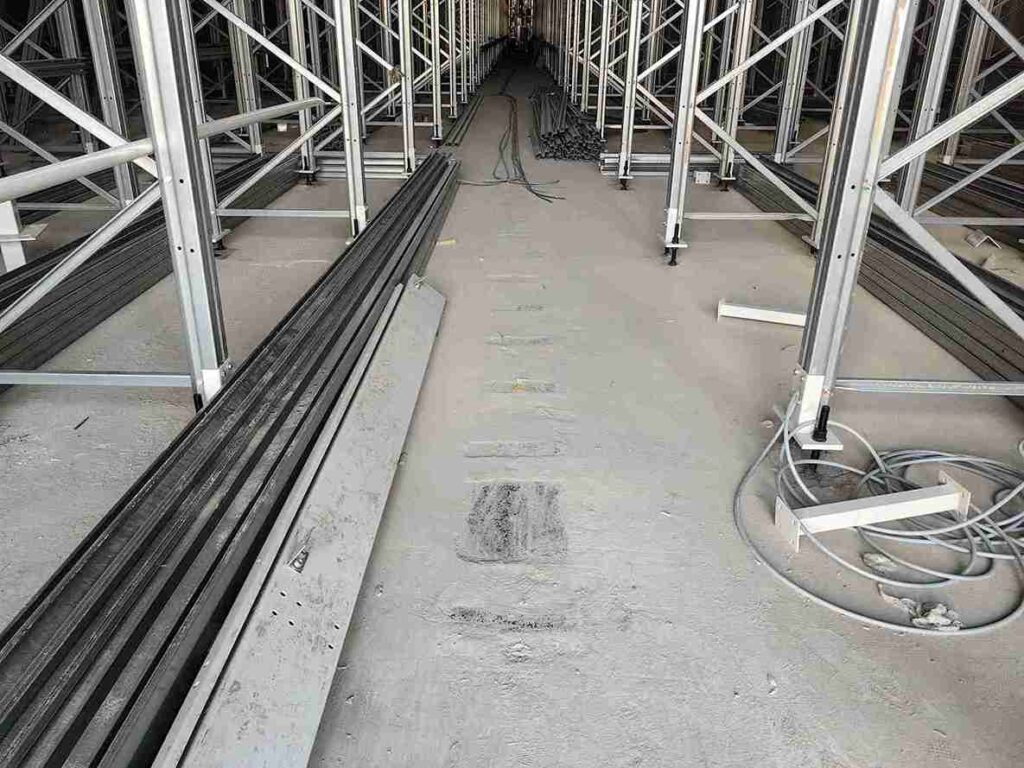
High-density storage systems present unique challenges. In drive-in racking, the guide rails themselves are constantly subjected to impact and require reinforcement—a specialized category of pallet racking safety accessories. For push-back and pallet flow systems, containing loads within the dynamic carriage structure is vital to prevent jams and collapses.
Specialized side guides and end stops, designed as integral pallet racking safety accessories for these systems, ensure smooth operation and load containment. Retrofitting standard selective racking with safety accessories is straightforward, but for high-density systems, safety must be designed in from the outset, with accessories chosen as part of the initial system specification.
The Implementation Framework: A Phased and Audited Approach
A haphazard approach to safety yields haphazard results. A systematic, phased methodology ensures that every dollar spent on pallet racking safety accessories delivers maximum risk reduction.
Phase 1: Assessment and Baseline Establishment
The process begins with a comprehensive racking inspection, ideally conducted by a qualified professional. This audit maps the facility, identifying all damage (from minor dents to significant bends), traffic patterns, high-risk zones (corners, ends of aisles, receiving areas), and existing safety measures. This report becomes the strategic blueprint, prioritizing interventions based on risk severity. It also establishes a baseline for measuring improvement and justifying the investment in pallet racking safety accessories to stakeholders.
Phase 2: Critical Intervention and High-Impact Retrofits
With priorities established, Phase 2 addresses the most severe risks. This always includes repairing or replacing any critically damaged uprights or beams. Concurrently, the first wave of pallet racking safety accessories is deployed:
Installing beam locks on all beam connections in high-traffic and automated zones.
Bolting column protectors onto every upright at aisle ends, corners, and along main thoroughfares.
Securing all racking frames to the concrete floor with appropriate anchors if not already done.
This phase delivers an immediate and dramatic increase in facility safety for a manageable investment.
H3: Phase 3: Systemic Enhancement and Containment
Once critical structural risks are mitigated, Phase 3 focuses on inventory protection and comprehensive coverage. This involves:
Fitting wire mesh decking on all levels, starting with the lower, most accessible ones, to virtually eliminate fall-through.
Installing wire mesh back panels on selective racking.
Placing aisle end guards and corner protectors at all relevant intersections.
Adding load beam deflectors to guide pallets and prevent fork snagging.
This phase systematically deploys pallet racking safety accessories across the facility, creating a unified defensive network.
Phase 4: Institutionalization and Continuous Monitoring
The final phase embeds safety into operational culture. This involves establishing a formal, documented inspection schedule—quarterly visual checks by staff and an annual professional audit. A maintenance log for all pallet racking safety accessories is created, noting any impacts or damage. Furthermore, training programs ensure that forklift operators and floor managers understand the function of each pallet racking safety accessory and can identify signs of wear or impact. Safety thus becomes a living, breathing component of daily operations, maintained and respected by all personnel.
Regional Adaptations: Tailoring Safety Accessories to Local Challenges
The core engineering principles of pallet racking safety accessories are universal, but environmental and operational factors demand localized adaptation.
High-Humidity Corridors (Southeast Asia, Coastal Africa): Corrosion is the primary enemy. Pallet racking safety accessories in these regions must be specified with superior corrosion resistance. Hot-dip galvanized steel or powder-coated finishes with appropriate pre-treatment are essential. Polymer-based protectors can also be excellent choices, as they are inherently rust-proof.
Arid and Dusty Environments (Middle East, Central Asia): Dust accumulation can hide damage and reduce the visibility of safety markings. Wire mesh decking and panels, while containing debris, may require scheduled cleaning protocols. Accessories should have simple, smooth designs that do not trap sand or dust. Sealed bearing mechanisms for any moving parts in flow systems are critical.
Seismically Active Zones (Parts of Latin America, Asia-Pacific): Beyond standard pallet racking safety accessories, seismic-specific engineering is required. This may include increased anchor specifications, specialized cross-bracing, and seismic pallet locking devices that prevent loads from bouncing off shelves during an event. Compliance with local building codes is not optional but a legal and moral imperative.
Markets with Rapid Growth (Africa, South Asia): Facilities here often experience rapid changes in inventory mix and operational scale. Versatility is key. Selecting modular, adaptable pallet racking safety accessories that can be reconfigured or expanded as the warehouse evolves provides long-term value and protects ongoing investments.
Beyond Compliance: The Ethical and Commercial Imperative
While regulatory compliance provides a baseline, leading warehouse operators view the comprehensive use of pallet racking safety accessories through a broader lens: one of ethical responsibility and commercial intelligence.
The Human Factor: Protecting the Workforce
A warehouse is, above all, a workplace. Ensuring the physical safety of employees is a fundamental ethical duty. Every column protector that prevents an upright from snapping, every beam lock that secures a load beam, and every wire mesh panel that contains falling debris contributes directly to a safer work environment. This commitment reduces the risk of life-altering injuries, fosters a culture of care, and enhances employee retention and morale. A workforce that feels safe is a workforce that is more engaged, focused, and productive.
Building a Brand of Reliability
In today’s interconnected supply chain, a company’s operational resilience is a core component of its brand value. Clients and partners need to trust that their goods are stored securely. A demonstrable investment in state-of-the-art pallet racking safety accessories sends a powerful message about a company’s professionalism, foresight, and commitment to continuity. It becomes a competitive differentiator in bids and partnerships, particularly for storing high-value, sensitive, or time-critical inventory. This transforms safety from a hidden cost into a visible brand asset.
Conclusion: The Indispensable Foundation of Modern Warehousing
The journey through the world of pallet racking safety accessories reveals a clear and unequivocal truth: these components are not optional extras, but the indispensable foundation of a secure, efficient, and profitable warehouse. They represent the critical intersection where sound engineering, financial prudence, and ethical management converge. From the basic column guard to the integrated safety pin, each pallet racking safety accessory plays a deliberate role in a larger system of asset preservation.
For decision-makers navigating the complexities of global supply chains, the question is no longer whether to invest in pallet racking safety accessories, but how strategically and comprehensively to deploy them. The phased, audit-driven approach outlined here provides a roadmap. It begins with acknowledging that the true cost of safety is measured not in the price of bolts and steel, but in the catastrophic losses and liabilities avoided.
By methodically integrating these essential pallet racking safety accessories, warehouse operators do more than protect inventory and reduce costs—they build resilient, responsible, and future-ready operations capable of supporting growth and weathering uncertainty. In the final analysis, a warehouse fortified with the right pallet racking safety accessories is a warehouse built to last.
Frequently Asked Questions (FAQs)
FAQ 1: What is the expected service life of quality pallet racking safety accessories, and how do we maintain them?
The service life of pallet racking safety accessories varies by type and environment. Heavy-duty steel column protectors and beam locks, if properly coated against corrosion, can last the entire lifespan of the racking system itself—often 20+ years. Polymer protectors may have a shorter lifespan but offer excellent corrosion resistance. Wire mesh may last 10-15 years depending on load cycles. Maintenance is minimal but crucial: a visual inspection during regular racking audits to check for severe deformation, loose bolts, or rust penetration. Damaged accessories should be replaced immediately to maintain their protective value.
FAQ 2: Can safety accessories be retrofitted to any brand or type of pallet racking?
In most cases, yes. Reputable manufacturers design pallet racking safety accessories for broad compatibility. Column protectors often feature universal mounting holes or adjustable brackets. Beam locks are typically designed to fit the standardized punch patterns of major racking brands. Wire mesh decking is usually sized to standard beam lengths and depths. However, for proprietary systems or very old racking, it is essential to consult with a specialist or the racking original manufacturer to ensure compatibility and avoid voiding any structural warranties.
FAQ 3: How do we train our staff, especially forklift operators, on the purpose of these new accessories?
Effective training is key to adoption. Operators should understand that pallet racking safety accessories are there to protect them and make their jobs easier by preventing catastrophic accidents. Training should cover:
Identification: What each accessory is (guard, lock, mesh).
Function: How it works (absorbs impact, secures beams, contains loads).
Inspection: What to look for (new dents on protectors, missing locks).
Reporting: The clear procedure for reporting any damage to a safety accessory immediately.
Framing pallet racking safety accessories as essential tools for a safe and efficient shift fosters a sense of shared responsibility.
FAQ 4: Are there specific load capacity considerations when adding decking or other accessories?
Yes, this is a critical technical point. The addition of wire mesh decking or solid decking adds a permanent, distributed dead load to the beam. This load must be accounted for in the beam’s overall capacity rating. A qualified person must ensure that the existing beam capacity, minus the weight of the decking and its clips, still exceeds the weight of the intended palletized load. Never assume decking has no weight impact. Professional installers of pallet racking safety accessories will always perform this calculation.
FAQ 5: Our warehouse is tight on space and budget. What is the absolute minimum set of safety accessories we should start with?
If resources are extremely constrained, focus on the “Hierarchy of Risk”:
Anchorage: Ensure every frame is positively anchored to the floor. This is non-negotiable.
Beam Security: Install beam locks or safety pins on every beam connection. This is the lowest-cost, highest-impact upgrade to prevent cascading failure.
Critical Impact Zones: Install column protectors on the first upright at every aisle end and main traffic corner.
This minimum package addresses the most catastrophic failure modes. It should be viewed strictly as a first step, with a plan to expand to include decking, full column protection, and end guards as soon as financially possible.
If you require perfect CAD drawings and quotes for warehouse racking, please contact us. We can provide you with free warehouse racking planning and design services and quotes. Our email address is: jili@geelyracks.com