📐 "First 50 Enterprise Queries Get Custom 3D Warehouse Design" Plan


The Strategic Imperative: Unlocking Maximum Warehouse Density with Pallet Racking Row Spacers
In the bustling logistics hubs of Jakarta, the manufacturing centers of Vietnam, the commodity depots of Nigeria, and the distribution networks of Colombia, a silent revolution in space optimization is underway. At its core is an unassuming yet profoundly impactful component: the pallet racking row spacer. For growth-focused businesses across Southeast Asia, Africa, the Middle East, Latin America, and Central Asia, capital efficiency is paramount.
The warehouse, often the most significant physical asset after the production line itself, must evolve from a static cost center into a dynamic, revenue-enabling engine. This transformation hinges on one fundamental metric: storage density per square meter. While advanced automation captures headlines, the most immediate and substantial gains are frequently achieved through mastering the fundamentals of existing storage geometry.
This definitive guide explores how the strategic specification and deployment of pallet racking row spacers serve as the cornerstone for building a warehouse that is not only denser and safer but inherently more scalable and profitable—a critical advantage in the fast-paced commercial landscapes of emerging markets.

Decoding the Geometry of Waste: The Case for Engineered Spacing
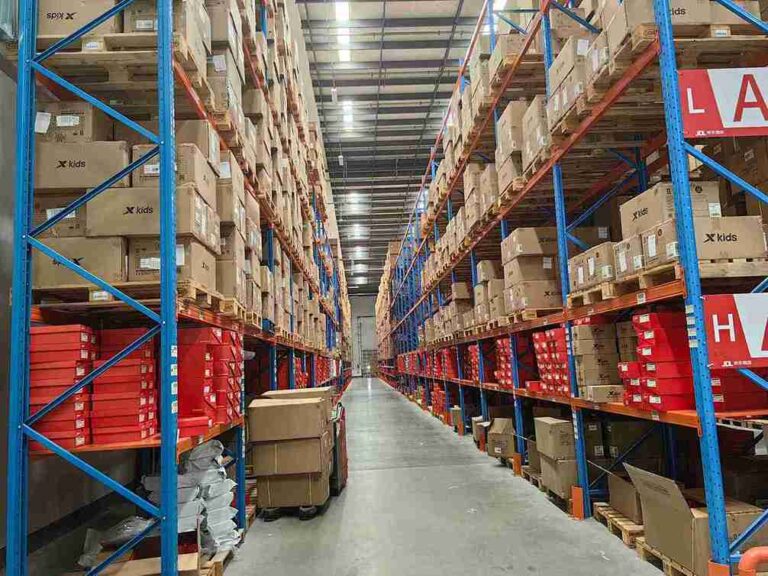
A walk through a typical warehouse reveals a universal, yet often overlooked, inefficiency. Rows of selective pallet racking stand back-to-back, separated by an ambiguous void. This gap, typically ranging from 300mm to over 600mm, is a legacy of installation convenience and a misunderstanding of structural requirements. It is not merely empty space; it is a recurring financial drain, consuming premium floor area that contributes nothing to storage capacity. This interstitial wasteland exists because, without a defined structural link, racking rows require physical separation to prevent load interference and to allow for frame alignment tolerances.
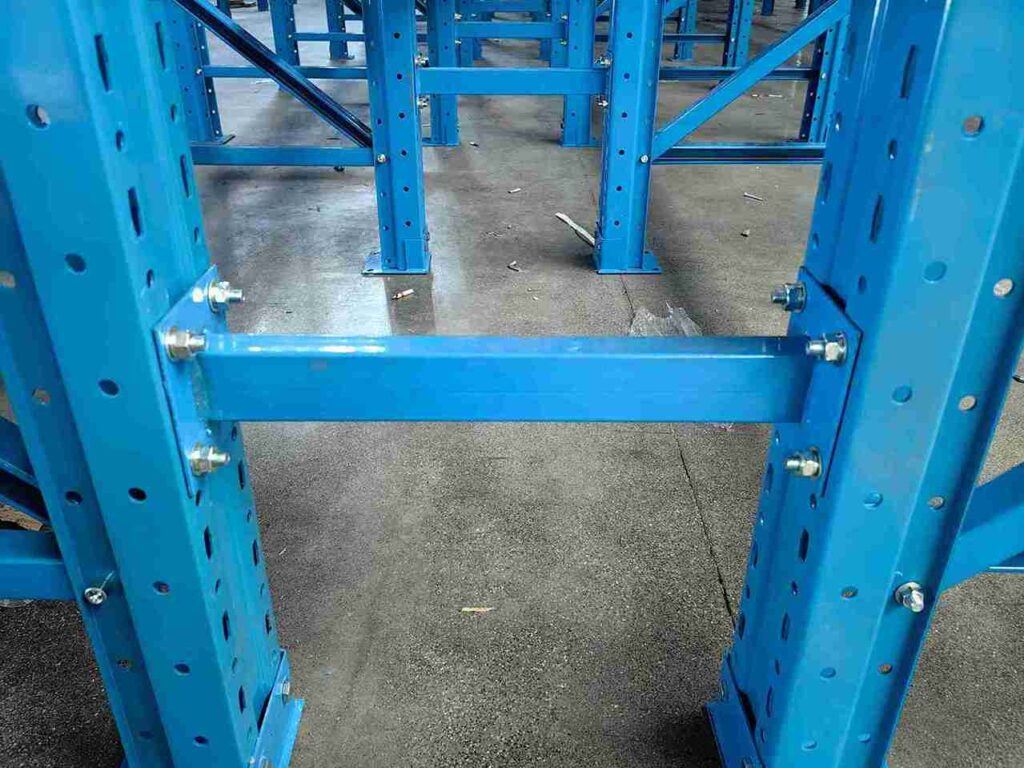
The introduction of pallet racking row spacers redefines this geometry. These are not generic metal tubes but precision-engineered structural members designed to create and maintain a fixed, optimal gap—often as little as 75mm to 150mm—between parallel racking rows. By physically connecting the upright frames of back-to-back rows, these pallet racking row spacers transform two independent storage runs into a single, unified structural block. This simple act of connection is the foundational principle of cost-effective, high-density storage, turning wasted negative space into accountable, revenue-generating cubic volume. The strategic use of pallet racking row spacers effectively reclaims every centimeter of that lost aisle-within-an-aisle.
The Structural Alchemy: From Individual Racks to a Unified Storage Block
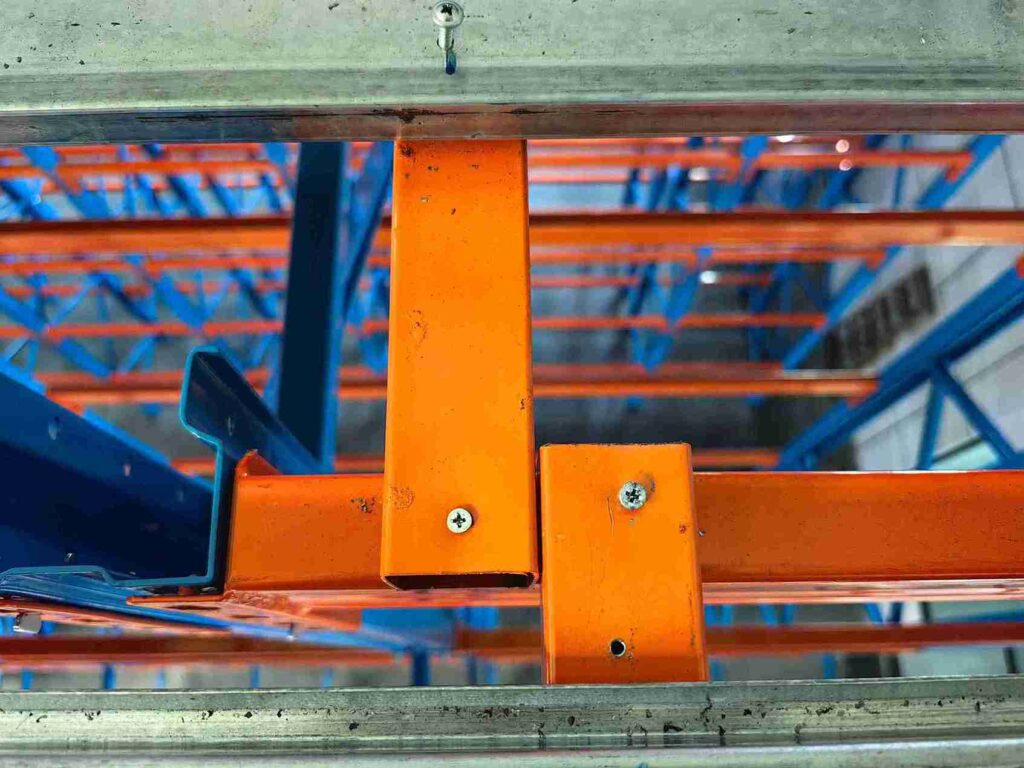
Understanding the mechanics is crucial. Standalone pallet racking relies on its upright frames and base plates to resist vertical and lateral forces. When rows are placed close together without being tied, they remain individual entities, vulnerable to independent movement. The primary function of pallet racking row spacers is to perform structural alchemy: they create a rigid, triangulated connection between these rows. This connection facilitates the transfer of lateral loads—from seismic activity, forklift impacts, or even the dynamic forces of loading and unloading—across the entire assembly.
This system of interconnected pallet racking row spacers essentially creates a large, three-dimensional truss. The loads that would cause a single row to sway or buckle are now dissipated and resisted by the mass and rigidity of the entire block. Consequently, the gap enforced by these pallet racking row spacers is no longer a safety buffer against collision; it becomes a meticulously calculated engineering feature, ensuring just enough clearance for beam connections, pallet settlement, and air circulation, but not a millimeter more. This is the intelligent discipline that pallet racking row spacers impose on the storage layout.
The Compounding Economics of Reclaimed Space: An ROI Blueprint
The financial argument for integrating pallet racking row spacers is compelling and quantifiable. For a business in Manila or Nairobi facing rising real estate costs, the return on investment (ROI) is measured in reclaimed square meters and deferred capital expenditure.
H3: Performing the Space Audit: A Practical Calculation
Consider a distribution center in Bangkok with 15 rows of back-to-back racking, each 40 meters in length. The unoptimized, “as-installed” gap averages 0.5 meters.
Wasted Floor Space: 15 rows * 0.5m * 40m = 300 square meters of purely wasted floor area.
Opportunity Cost: In a premium logistics park, this space could represent a monthly rental cost of several thousand dollars, perpetually paid for zero storage utility.
By implementing a system of pallet racking row spacers to enforce a disciplined 0.1-meter gap, the operation recovers 0.4 meters per row.
Recovered Area: 15 rows * 0.4m * 40m = 240 square meters of instantly usable space.
New Capacity: This reclaimed area can accommodate 4-5 additional full racking rows, potentially adding 150+ pallet positions without expanding the building’s footprint.
The cost of the pallet racking row spacers, their installation, and any ancillary hardware is typically a fraction of the cost of constructing or leasing equivalent new space. The payback period is frequently measured in months. This calculation alone makes the case for pallet racking row spacers in capital-conscious emerging markets.
The Ripple Effect: Operational and Hidden Savings
The benefits cascade beyond direct space recovery:
Enhanced Labor Productivity: A denser storage block often leads to condensed pick paths. Order pickers and forklift operators travel shorter distances between locations, directly reducing labor hours per order and increasing throughput.
Energy Efficiency: A consolidated storage footprint reduces the volume of air that requires lighting and, in climate-controlled environments, cooling or dehumidification. The savings on utility bills, especially in regions with high energy costs, can be significant over time.
Inventory Management Gains: Higher density encourages better inventory profiling and slotting practices. Fast-moving SKUs can be positioned more strategically within the dense block, further accelerating workflow.
The strategic implementation of pallet racking row spacers is, therefore, a lever that optimizes not just space, but multiple operational cost lines simultaneously.
The Safety Synergy: How Spacers Fortify Warehouse Integrity
In regions where regulatory enforcement may be evolving, leading businesses distinguish themselves through demonstrably superior safety standards. Properly specified pallet racking row spacers are integral to a proactive safety culture, addressing several critical risks inherent in warehouse operations.
Mitigating Progressive Collapse: The Load Creep and Impact Scenarios
One of the most pernicious dangers in back-to-back racking is “load creep.” Over time, pallets can be inadvertently pushed deeper into a bay, potentially causing loads from opposing rows to make contact. This creates unpredictable point loads on beams and can instigate a progressive collapse. Pallet racking row spacers act as a physical boundary, definitively preventing this dangerous interaction and maintaining the designed clearances.
Furthermore, forklift impact is a leading cause of racking failure globally. A standalone rack hit by a 3-ton forklift can buckle and collapse like a house of cards. However, a block of racking unified with robust pallet racking row spacers behaves differently. The impact energy is absorbed and distributed across multiple upright frames connected by these pallet racking row spacers. This often localizes damage to a single upright, preventing a catastrophic domino effect and protecting both personnel and inventory. This inherent resilience is a direct result of the systemic strength provided by the network of pallet racking row spacers.
Seismic and Dynamic Load Management
For facilities in seismically active zones or those subject to vibrations from heavy machinery, the role of pallet racking row spacers becomes even more critical. They are a key component in creating a racking system that can resist lateral forces. When combined with appropriate floor anchors and wall ties, the grid formed by the pallet racking row spacers allows the entire storage structure to move as a single, rigid unit during an earthquake, drastically reducing the risk of tipping or cascading failure. Engineering analysis, often referencing standards from bodies like the Rack Manufacturers Institute (RMI), specifically models the contribution of pallet racking row spacers to a system’s overall lateral stability.
Tailoring the Solution: Spacer Systems for Diverse Market Challenges
The true power of pallet racking row spacers lies in their adaptability to the unique challenges and opportunities present in different emerging economies. A one-size-fits-all approach fails; successful implementation requires contextual intelligence.
Scalability for Volatile Growth Curves
Businesses in these markets often experience non-linear growth. Investing in massive, fixed automation can be premature and financially risky. A system built around pallet racking row spacers offers modular scalability. A company can start with a single high-density block for its core SKUs and add additional blocks row-by-row as demand increases. This phased investment, enabled by the flexible design of pallet racking row spacers, aligns perfectly with the uncertain but optimistic growth trajectories common in these regions.
Optimizing for Mixed Fleet Operations
While automation adoption is growing, most warehouses in Africa, Southeast Asia, and Latin America operate with a mixed fleet of counterbalance forklifts, reach trucks, and manual handling equipment. The density achieved with pallet racking row spacers often allows for significant storage gains without an immediate, costly shift to Very Narrow Aisle (VNA) equipment. It maximizes the utility of existing assets. Moreover, the clear, consistent aisles created by a layout defined by pallet racking row spacers simplify operator training and reduce the cognitive load for drivers, enhancing safety in busy environments.
Compatibility with Local Infrastructure Realities
Warehouse buildings in emerging markets can vary from state-of-the-art clear-height facilities to repurposed industrial sheds with low ceilings and irregular column grids. Pallet racking row spacers are uniquely suited for retrofitting into these diverse environments. Because they work with the ubiquitous selective pallet racking system, they can be adapted to work around columns and under low ceilings to maximize every possible cubic meter. This makes pallet racking row spacers a versatile tool for optimizing both modern and legacy facilities.
The Specification Deep Dive: Engineering Your Spacer System
Selecting the correct pallet racking row spacers is a technical process, not a commodity purchase. Mis-specification can compromise the entire system’s integrity.
Critical Design Parameters
Every set of pallet racking row spacers must be engineered for its specific application. Key variables include:
Material and Section Properties: Spacers are typically manufactured from high-tensile steel tubing (round or square). The diameter, wall thickness, and steel grade are calculated based on the required load transfer and moment resistance.
Connection Methodology: The design must match the racking upright profile. For tear-drop style racking, spacers often feature a hook-and-bolt configuration. For structural racking, a bolted clamp or direct-attach plate is common. The connection must be as strong as the spacer itself.
Load Profile and Configuration: The design must account for the maximum potential load per bay, the height of the racking, and the intended loading pattern (e.g., evenly distributed or concentrated). The placement and quantity of pallet racking row spacers (e.g., at one-third and two-thirds of the rack height) are determined by these factors.
A professional storage design engineer will perform these calculations, ensuring the proposed pallet racking row spacers are not merely fittings but integral structural components.
The Holistic System: Integration with Ancillaries
Pallet racking row spacers are part of an ecosystem. Their effectiveness is amplified when integrated with complementary components:
Heavy-Duty Beam Connectors: In a spacer-connected block, beams experience different stress profiles. Upgraded connectors may be necessary to handle the load transfer facilitated by the pallet racking row spacers.
Mandatory Floor Anchoring: The consolidated mass of a dense block has a higher center of gravity. Robust, correctly specified floor anchors are non-negotiable to prevent any potential for base slippage or tipping. The design of the pallet racking row spacers system is incomplete without a certified anchoring plan.
Decking and Containment: Mesh decking or solid plywood decks work seamlessly within a spacer-defined layout, preventing small items from falling into the maintained gap. For bulk storage, side-guard meshing can be integrated, with the pallet racking row spacers providing the foundational stability for such attachments.
Implementation Excellence: From Blueprint to Operational Reality
The best-designed system can fail due to poor execution. A meticulous approach to installing pallet racking row spacers is paramount for achieving the promised performance and safety.
A Phased Installation Methodology
Pre-Installation Audit: Verify the warehouse floor slab for levelness and load-bearing capacity. Confirm all racking components and the pallet racking row spacers are to specification.
Precise Layout Marking: Using the engineering drawings, mark the exact positions of all upright bases and anchor points on the floor. Accuracy here is critical for the alignment of the pallet racking row spacers.
Build the Block, Not the Row: The revolutionary step. Erect the first two opposing uprights. Before final tightening, install the first set of pallet racking row spacers at their designated heights. This “locks” the pair together. Continue down the line, adding upright pairs and connecting them immediately with the pallet racking row spacers, constructing the entire block as a single unit.
Anchor and Level: Once the block frame is assembled and squared using the pallet racking row spacers as a guide, install and torque all floor anchors to the specified values.
Beam Installation: With a stable, unified frame in place, install the beams. This sequence, governed by the initial placement of the pallet racking row spacers, ensures perfect alignment and eliminates the cumulative error seen in row-by-row construction.
Lifecycle Management: Inspection and Compliance
A system with pallet racking row spacers requires a tailored inspection regimen. Beyond standard racking checks, inspectors should specifically examine:
Spacer Integrity: Look for signs of bending, cracking, or corrosion on all pallet racking row spacers. Check that all connecting bolts are present and torqued to specification.
Gap Consistency: Measure the enforced gap at multiple points to ensure no deformation has occurred and that the pallet racking row spacers are maintaining their designated spacing.
Load Encroachment: Verify that no pallets or loads are protruding into the spacer-maintained channel, which would indicate misuse or damage.
Documented, periodic inspections of the pallet racking row spacers and the overall block structure are a best practice that extends equipment life, ensures safety, and satisfies due diligence requirements.
Contextual Applications: Spacer Solutions in Action
The versatility of pallet racking row spacers is best illustrated through hypothetical but technically accurate scenarios from key target markets.
Scenario 1: E-Commerce Fluidity in Malaysia. A Kuala Lumpur-based online retailer faced chaotic peak-season surges. By using pallet racking row spacers to create ultra-dense blocks for best-selling items, they increased forward-pick capacity by 30%. The reclaimed space from installing these pallet racking row spacers was used to create a dedicated packing and staging zone, streamlining order fulfillment within the same warehouse envelope.
Scenario 2: Commodity Buffer Storage in Kenya. A agricultural supplier in Mombasa needed to hold larger buffer stocks of fertilizer due to protracted shipping delays. Retrofitting pallet racking row spacers into their existing yard racking allowed them to increase on-site storage density by 25%. This investment in pallet racking row spacers provided supply chain resilience at a fraction of the cost of building new silos or covered storage.
Scenario 3: High-Value Storage in the UAE. A free-zone logistics company in Dubai storing high-value pharmaceuticals required uncompromising stability for their 14-meter-high racking to meet insurer mandates. The engineered system of pallet racking row spacers, combined with seismic bracing, created a monolithic structure that passed rigorous stability analysis, enabling them to maximize their valuable clear-height building and secure lucrative client contracts.
Scenario 4: Manufacturing Efficiency in Mexico. An automotive parts manufacturer in Monterrey implemented a lean manufacturing cell. They used pallet racking row spacers to build compact, dedicated raw material racks directly adjacent to assembly lines. The tight, consistent aisles created by the pallet racking row spacers allowed for efficient restocking by small electric forklifts, reducing material handling time by 40% and supporting a true Just-In-Time (JIT) operation.
Navigating Pitfalls: Expert Insights on Common Failures
Three decades of field experience reveal consistent patterns in failed implementations of pallet racking row spacers. Awareness of these pitfalls is the first step toward avoidance.
Pitfall 1: The “Generic Fit” Fallacy. Assuming all racking and all pallet racking row spacers are alike is a critical error. Using spacers not explicitly engineered and tested for the specific brand and model of racking can create weak points. The connection between the pallet racking row spacers and the upright is a designed interface, not a universal one.
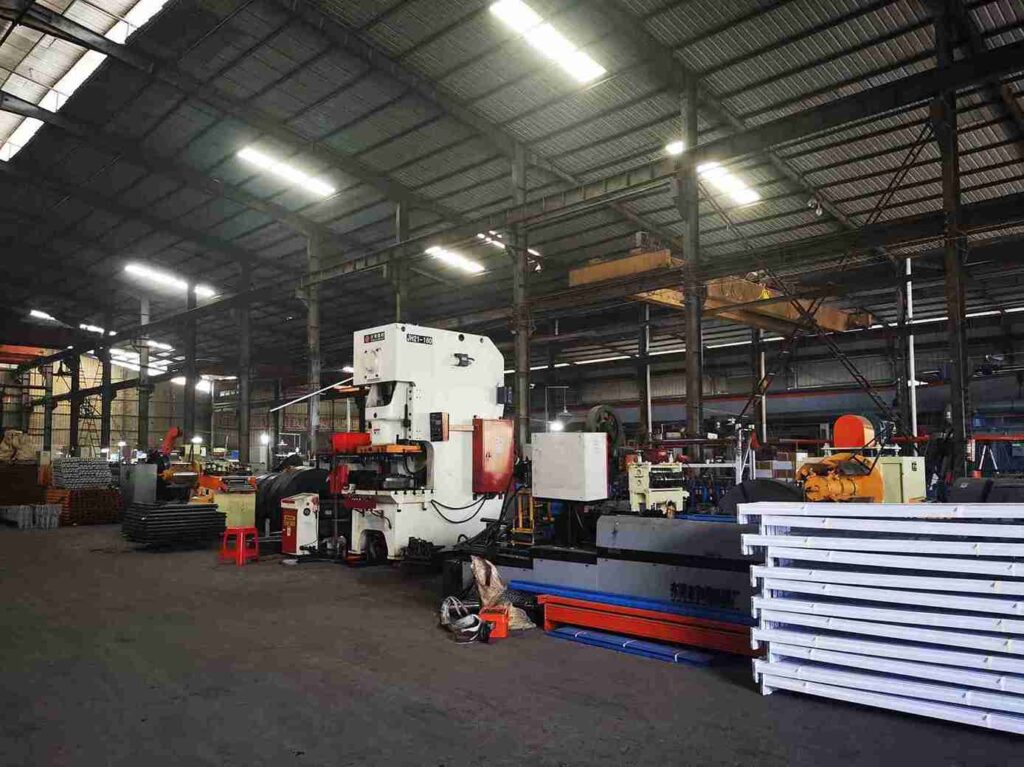
Pitfall 2: Prioritizing First Cost Over Total Cost. Selecting the cheapest pallet racking row spacers often means accepting inferior steel quality, inadequate corrosion protection (e.g., poor powder-coating versus hot-dip galvanizing for humid climates), or non-standard connection hardware. These savings are dwarfed by the cost of premature failure or a major incident.
Pitfall 3: Neglecting the Foundation. Installing a high-density block of racking connected with pallet racking row spacers on an insufficient or cracked floor slab is a fundamental engineering error. A slab analysis should precede the design of the pallet racking row spacers system to ensure it can handle the concentrated point loads.
Pitfall 4: Inadequate Training and Communication. Warehouse staff must understand the “why.” The narrow gap maintained by the pallet racking row spacers is intentional. Training must emphasize that pallets must be placed neatly within the beam boundaries and not forced. Simple visual markers on the floor and beams can reinforce the rules established by the pallet racking row spacers.
The Future-Proof Foundation: Spacers in an Automated Landscape
Investing in a warehouse density strategy centered on pallet racking row spacers is not a dead-end solution; it is a future-proofing exercise. The discipline of high-density storage, enforced by pallet racking row spacers, cultivates the operational rigor required for more advanced systems. The data generated from managing a dense block—exact slot dimensions, precise inventory coordinates, defined traffic lanes—is the very data needed to seamlessly integrate Warehouse Management System (WMS) software or to design pathways for Automated Guided Vehicles (AGVs).
When the business case for automation matures, the underlying racking block, already consolidated and stabilized by pallet racking row spacers, can often be adapted. The spacer-defined grid provides the physical predictability that automation software requires. Thus, the strategic deployment of pallet racking row spacers today builds the foundational intelligence and physical order necessary for the automated warehouse of tomorrow.
Conclusion
In the competitive crucibles of the world’s most dynamic emerging markets, operational sophistication is the differentiator between thriving and merely surviving. The journey toward a world-class warehouse begins with a mastery of fundamentals, where the greatest gains are frequently hidden in plain sight.
The systematic integration of pallet racking row spacers represents a paradigm shift from viewing storage as a passive arrangement of shelves to understanding it as an active, engineered system. By mandating precise geometry, enabling unprecedented density, and delivering inherent structural fortification, pallet racking row spacers are the unsung heroes of logistics optimization. They offer a low-capital, high-impact strategy to transform static storage space into a dynamic, scalable, and resilient asset.
For the ambitious enterprise in Jakarta or Accra, in Riyadh or Santiago, the decision to specify and implement a professional pallet racking row spacers system is more than a procurement choice; it is a declaration of intent to build a logistics operation that is lean, safe, and relentlessly efficient—a true engine for growth in an era defined by supply chain excellence.
Frequently Asked Questions (FAQs)
1: Can pallet racking row spacers be used with all types of pallet racking, including drive-in or push-back systems?
A: The application of pallet racking row spacers is primarily for selective pallet racking systems arranged in back-to-back configurations. Drive-in, drive-through, and push-back racking systems have fundamentally different structural designs and load dynamics. These systems are already high-density by nature and use the racking itself as the guide rails for pallets, so external pallet racking row spacers are not applicable or necessary. For standard selective racking, however, pallet racking row spacers are the key to achieving similar density gains without sacrificing selectivity.
2: How does the presence of pallet racking row spacers affect sprinkler system coverage and fire code compliance in our region?
A: This is a paramount safety consideration that must be addressed with local authorities. Increasing storage density by using pallet racking row spacers changes the commodity classification and “fire load” per square meter. While the gaps maintained by the pallet racking row spacers can aid in air circulation, they do not substitute for proper fire protection engineering. A qualified fire protection engineer must review the final layout, including the spacing created by the pallet racking row spacers, to determine if existing sprinkler head density, type (e.g., ESFR), and placement are still adequate. Non-compliance can invalidate insurance and is a severe safety risk.
3: What is the typical corrosion protection required for pallet racking row spacers in humid coastal climates like those in Southeast Asia or the Gulf?
A: In corrosive environments—coastal areas, regions with high humidity, or facilities storing chemicals—standard powder coating on pallet racking row spacers may be insufficient. For long-term durability and structural integrity, hot-dip galvanizing (HDG) is the recommended corrosion protection for pallet racking row spacers. HDG provides a sacrificial zinc layer that offers superior resistance to rust, ensuring the pallet racking row spacers maintain their strength and functionality for decades, even in challenging conditions. This specification should be non-negotiable in such climates.
4: During an inspection, what specific damage should we look for on the pallet racking row spacers themselves?
A: Inspectors should conduct a hands-on, visual check of each accessible pallet racking row spacer. Key signs of damage include:
Visible Deformation: Any bending, bowing, or twisting of the spacer tube.
Corrosion: Significant rust, especially at the ends or around bolt holes, which can weaken the metal.
Connection Failures: Cracks in the welded areas where end-plates or connectors are attached to the spacer tube. Also, check for elongated bolt holes, missing bolts, or bolts that are loose.
Paint Damage: Deep scratches or chips that expose bare metal, which can be starting points for corrosion. Any damaged pallet racking row spacer should be flagged for immediate evaluation and potential replacement by a qualified engineer.
5: We are planning a new warehouse. Should we design our layout with pallet racking row spacers from the outset, or is it better to add them later?
A: Without question, designing with pallet racking row spacers from the outset is the optimal approach. This allows for:
Maximum Efficiency: The floor plan can be designed for the densest possible layout from day one, optimizing the building’s footprint.
Integrated Engineering: The racking system, including the pallet racking row spacers, floor anchors, and bracing, can be engineered as a single, cohesive system, ensuring optimal performance and safety.
Lower Total Cost: It is more cost-effective to install pallet racking row spacers during the initial erection than to retrofit them later, which may require partial disassembly, re-anchoring, and re-leveling of existing racking.
Proactive design incorporating pallet racking row spacers demonstrates foresight and maximizes the lifetime value of the storage investment.
If you require perfect CAD drawings and quotes for warehouse racking, please contact us. We can provide you with free warehouse racking planning and design services and quotes. Our email address is: jili@geelyracks.com