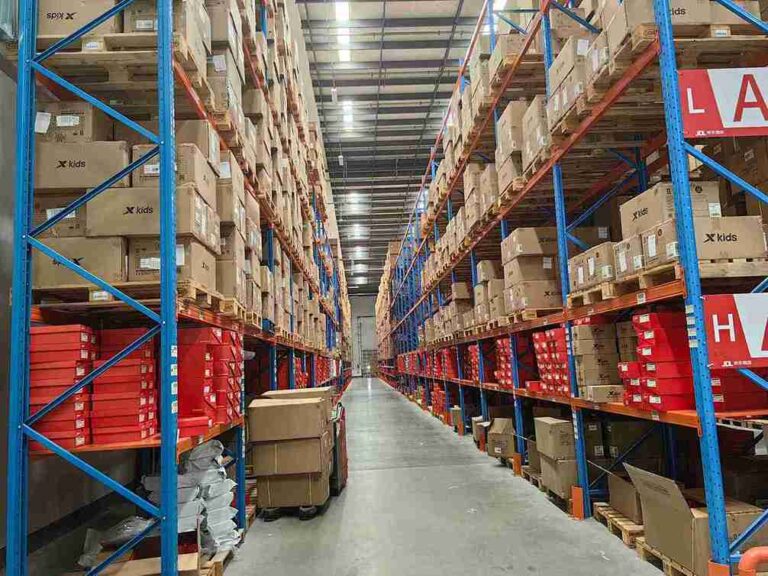
📐 "First 50 Enterprise Queries Get Custom 3D Warehouse Design" Plan


Mastering the Science of Pallet Racking Layout Planning: A Comprehensive Blueprint for Warehouse Optimization
In the intricate ecosystem of global logistics, the efficiency of a warehouse is predicated on a foundational, yet often underestimated, discipline: professional pallet racking layout planning. This intricate process transcends the simple act of placing storage structures on a concrete slab; it represents a strategic synthesis of engineering principles, operational workflow analysis, and forward-looking technological integration.
For businesses operating in high-growth, cost-sensitive regions such as Southeast Asia, the Middle East, Africa, and Latin America, investing in expert pallet racking layout planning is not an operational expense—it is a capital investment in scalability, safety, and sustained competitive advantage. This definitive guide delves into the multifaceted layers of creating a warehouse layout that does not merely store inventory but actively propels the supply chain forward, ensuring that every square foot contributes directly to throughput and profitability.
The ultimate goal of a meticulously executed pallet racking layout planning project is to unlock latent capacity, often quantified as a 30% or greater increase in effective storage space, while simultaneously enhancing workflow velocity and reducing operational overhead.

The Foundational Imperative: Why Pallet Racking Layout Planning is the Cornerstone of Warehouse Design
Consider two warehouses of identical dimensions. One is a labyrinth of congestion, characterized by extended pick paths, forklift traffic jams, and underutilized vertical space. The other operates with the precision of a well-rehearsed symphony, where materials flow seamlessly from receiving to dispatch. The chasm between these two realities is bridged solely by the quality of the initial pallet racking layout planning.
This planning phase is the master blueprint that dictates every subsequent operational outcome. Inadequate planning leads to systemic inefficiencies: excessive travel time that inflates labor costs, congested aisles that elevate safety risks and damage rates, and poor space utilization that prematurely forces costly expansion or relocation. Conversely, a layout born from rigorous pallet racking layout planning aligns physical storage with business logic.
It embeds efficiency into the very fabric of the facility, creating a resilient infrastructure capable of adapting to market fluctuations and technological evolution. For companies in emerging markets, where agility and cost-control are paramount, this planning discipline is the critical first step in building a logistics operation that can outpace competitors.

Deconstructing the Core Tenets of Effective Pallet Racking Layout Planning
Successful pallet racking layout planning is governed by immutable principles that serve as the project’s North Star. Ignoring these tenets during the planning stage inevitably results in a suboptimal, and often problematic, final installation.
Principle 1: Layout as a Derivative of Inventory and Order Profile.
- The most profound error in pallet racking layout planning is designing the storage system in isolation from the inventory it must hold. The layout is not an architectural afterthought; it is a dynamic, three-dimensional manifestation of the company’s SKU velocity, cube, and order patterns. Effective planning begins with a forensic analysis of historical data to classify inventory (using ABC analysis based on turnover) and understand pick-face requirements.
- A facility designed for full-pallet shipping of bulk commodities will have a fundamentally different layout—prioritizing high-density storage and straightforward access—than an e-commerce fulfillment center requiring rapid single-item picking from thousands of SKUs. Thus, the pallet racking layout planning process must be deeply integrated with Warehouse Management System (WMS) data and sales forecasts to ensure the physical structure serves the operational reality.
Principle 2: Uncompromising Focus on Material Flow.
A warehouse is a dynamic system in constant motion. The core objective of pallet racking layout planning is to orchestrate this motion into a smooth, logical, and efficient flow. The planner must chart the journey of a product from the moment it arrives at the receiving dock to its departure from shipping, minimizing backtracking, cross-traffic, and congestion. This often involves establishing a clear U-shaped or straight-through flow pattern, positioning fast-moving (A) items in easily accessible “golden zones” close to packing stations, and designing wider primary aisles for main traffic arteries while utilizing narrower aisles for storage access.
When the pallet racking layout planning integrates flow simulation, potential bottlenecks—such as contention points near high-activity pick faces or receiving bays—can be identified and eliminated in the virtual stage, saving significant capital and operational headache post-implementation.
Principle 3: Engineering Safety into the Blueprint.
In world-class pallet racking layout planning, safety is not a compliance checklist to be appended later; it is a non-negotiable design parameter engineered into every aspect of the plan. This encompasses precise calculations for aisle widths that account for the turning radius of material handling equipment (MHE) plus a safe operational margin. It involves creating clear sightlines at aisle intersections, designing dedicated pedestrian walkways separated from MHE traffic, and planning for adequate clearance around electrical panels, fire exits, and sprinkler systems.
Furthermore, the pallet racking layout planning must specify the correct use of protective equipment like column guards, end-of-aisle protectors, and pallet backstops based on the projected traffic and operator behavior patterns observed in the target region.
Principle 4: The Pursuit of Cubic Efficiency.
Floor space is a finite and expensive resource; cubic airspace represents the primary frontier for expansion. Superior pallet racking layout planning aggressively targets the maximization of the storage cube—the volume from the floor to the ceiling sprinklers. This involves the strategic selection of racking systems that safely exploit vertical space. While selective pallet racking might be suitable up to 12 meters, the integration of Narrow-Aisle (NA) or Very-Narrow-Aisle (VNA) solutions within the pallet racking layout planning can safely extend storage heights further.
The planning process must perform a detailed cost-benefit analysis, weighing the investment in taller racking and specialized MHE (like turret trucks) against the dramatic gains in storage positions. The mantra of cubic efficiency guides every decision, from beam level spacing to the choice between selective and high-density systems.
The Systematic Methodology: A Phased Approach to Pallet Racking Layout Planning
Executing a flawless warehouse design requires a disciplined, phased methodology. The following framework outlines the comprehensive steps involved in professional pallet racking layout planning.
Phase 1: Discovery and Data Acquisition. The bedrock of all successful pallet racking layout planning is incontrovertible data. This phase involves a collaborative deep-dive to gather:
Inventory Characteristics: A complete SKU analysis including dimensions, weight, packaging type, pallet specification (e.g., Euro, GMA, CHEP), and annual throughput volume.
Operational Metrics: Analysis of order profiles (full pallet, case pick, each pick), peak season volumes, daily receiving/shipping cycles, and current productivity metrics.
Resource Audit: Cataloging all existing Material Handling Equipment (forklifts, reach trucks, pallet jacks) with detailed specifications (lift height, capacity, turning radius).
Facility Constraints: Obtaining accurate architectural drawings with column locations, ceiling height (noting obstructions like lights, HVAC, and sprinklers), door and dock positions, floor load capacity, and slab condition.
Phase 2: Defining Strategic Objectives and KPIs. Before a single line is drawn, the pallet racking layout planning team must align with stakeholders on quantifiable goals. These Key Performance Indicators (KPIs) become the benchmark for success and may include: Target storage capacity increase (e.g., +35% pallet positions), reduction in average order picking time (e.g., -40%), specific space utilization percentage, or a definitive improvement in safety incident rates. Clear objectives ensure the pallet racking layout planning process remains focused on delivering tangible business value.
Phase 3: Conceptual Block Planning and Flow Mapping. This high-level stage transforms data into a strategic spatial plan. The warehouse footprint is divided into logical functional blocks: Receiving & Staging, Bulk Storage, Case Picking, Piece Picking, Value-Added Services (kitting, labeling), Packing, and Shipping. The pallet racking layout planning expert then maps the primary, secondary, and tertiary material flows between these zones, ensuring a coherent sequence that supports the operational workflow. This block plan is the crucial bridge between abstract data and physical design.
Phase 4: Detailed Racking System Design and Configuration. Here, the pallet racking layout planning becomes granular. Based on the inventory analysis from Phase 1, specific racking types are selected and configured for each zone:
Selective Pallet Racking: Beam levels are calculated based on load heights, and bay depths are determined (single-deep, double-deep via push-back, etc.).
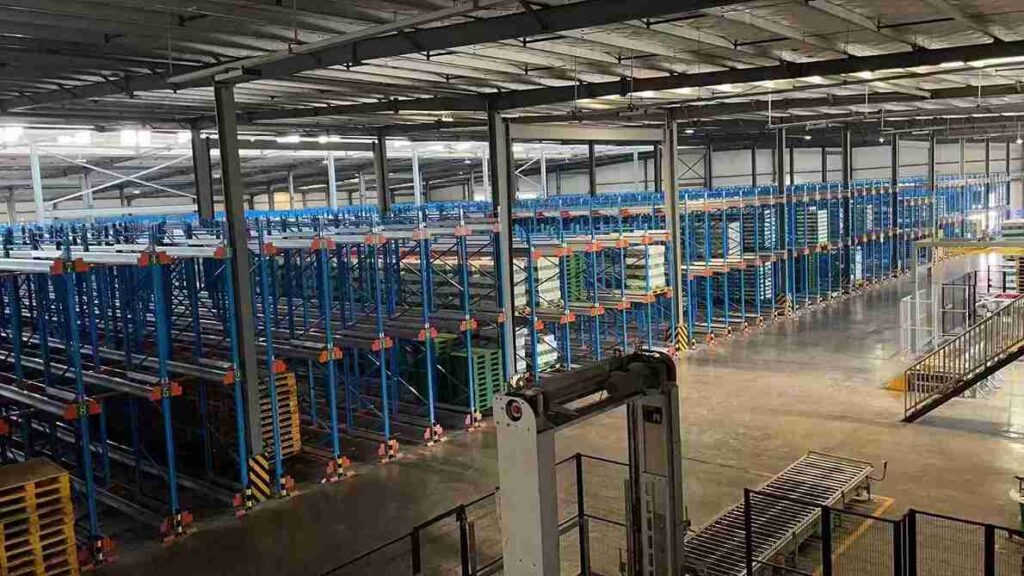
High-Density Solutions: For appropriate SKUs, the plan may incorporate drive-in racking, pallet flow racking, or mobile racking systems, with precise calculations for lane depth and flow rail pitch.
Aisle Specification: Aisle widths are definitively calculated based on the MHE selected (e.g., 3.5 meters for a reach truck, 1.6 meters for a VNA turret truck on guidance).
Integration Points: Locations for future or immediate integration with automation—such as pickup/drop-off (P&D) stations for AGVs, conveyor interfaces, or mezzanine structures—are precisely designated within the layout.
Phase 5: Validation Through Advanced Modeling and Simulation. Modern pallet racking layout planning leverages sophisticated software to de-risk the investment. 3D CAD models provide a photorealistic walkthrough of the proposed warehouse, allowing stakeholders to visualize the space. More advanced discrete-event simulation software takes this a step further by digitally stress-testing the layout using historical order data. It can model weeks of operation in minutes, identifying potential queue points, equipment utilization rates, and throughput limits. This phase transforms the pallet racking layout planning from a static drawing into a proven, dynamic system model.
Phase 6: Phased Implementation and Project Roadmapping. A brilliant plan requires an executable rollout strategy. This phase of pallet racking layout planning develops a detailed phasing schedule to minimize disruption to ongoing operations. It includes sequenced installation steps, temporary operational plans, and comprehensive construction documents (including anchoring plans and load application & rack design calculations) for the installation team.
Phase 7: Performance Auditing and Continuous Optimization. Post-implementation, the role of pallet racking layout planning evolves into performance management. The actual warehouse performance is measured against the KPIs established in Phase 2. Using WMS data and floor feedback, fine-tuning adjustments to slotting and processes are made. This commitment to continuous improvement ensures the layout remains optimized as business needs evolve.
Advanced Techniques in Pallet Racking Layout Planning for Maximum ROI
To consistently achieve dramatic space savings and efficiency gains, experts employ advanced techniques within the pallet racking layout planning process.
Vertical Intensity and Aisle Navigation Technology. The most significant gains in storage density come from utilizing vertical space paired with aisle-narrowing technology. The pallet racking layout planning must assess the “maximum usable height” by deducting required clearances for building systems. Subsequently, the plan may specify VNA configurations with guided turret trucks or shuttle systems, which can operate in aisles as narrow as 1.5 meters. This aspect of pallet racking layout planning requires close collaboration with MHE suppliers to ensure perfect compatibility between rack tolerances and equipment capabilities.
Dynamic Slotting and Inventory Profiling. Static storage leads to gradual efficiency decay. Intelligent pallet racking layout planning incorporates a strategy for dynamic slotting—the periodic reassignment of SKUs to optimal locations based on changing velocity, seasonality, or promotional activity. This can be governed by WMS logic but is enabled by a flexible layout design that accommodates frequent reassignments without major physical changes.
Designing for Automation and Industry 4.0. The modern pallet racking layout planning exercise must consider automation not as a future possibility but as a design constraint from the outset. This has profound implications:
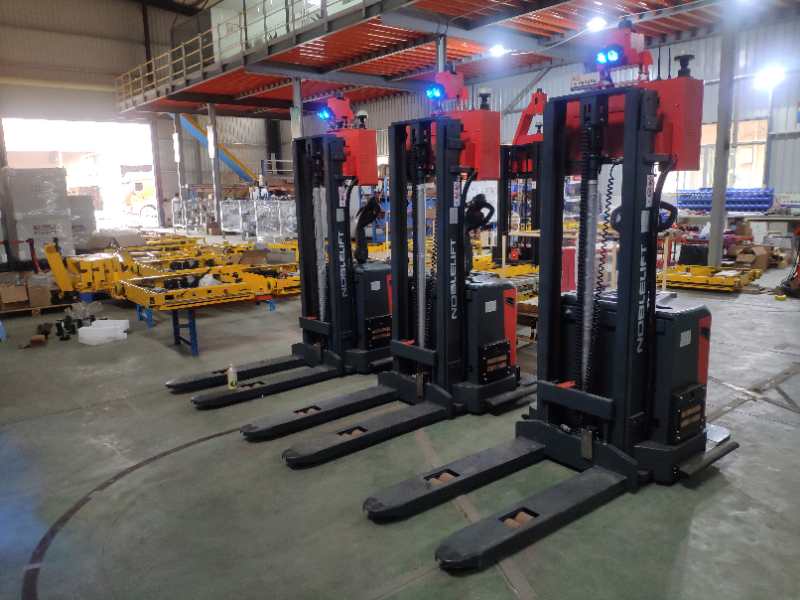
For AGV/AMR Integration: The layout must provide consistent, predictable pathways with precise tolerances. The planning must include locations for navigation infrastructure (magnetic tape, QR codes, LiDAR landmarks), charging stations, and traffic management protocols within the vehicle control software.
For Automated Storage and Retrieval Systems (AS/RS): Whether a mini-load system for small parts or a unit-load system for pallets, the pallet racking layout planning must allocate space for the AS/RS structure, its maintenance aisles, and the conveyor or shuttle interfaces that connect it to manual workstations. The floor load capacity and levelness requirements are significantly higher and must be confirmed during the planning phase.
For Goods-to-Person (G2P) Systems: Layouts designed around G2P principles, such as vertical lift modules (VLMs) or robotic cube storage, focus on compact, ultra-dense storage blocks that feed items to ergonomic, stationary picking stations. This radically different paradigm requires a unique approach to pallet racking layout planning centered on workstation design and replenishment flows.
Regional Adaptations in Global Pallet Racking Layout Planning
A one-size-fits-all approach fails in global logistics. Expert pallet racking layout planning must account for regional specifics:
Seismic Considerations: In active zones like parts of Southeast Asia, Chile, or Japan, the pallet racking layout planning is governed by stringent seismic codes (e.g., FEM 10.2.08, RMI). This affects upright frame design, bracing, anchor type, and may necessitate lower overall heights or wider aisles to manage seismic forces, directly influencing storage density calculations.
Climatic and Environmental Factors: In the humid climates of coastal Africa or Southeast Asia, pallet racking layout planning may specify hot-dip galvanized steel over standard paint to combat corrosion. In the extreme heat of the Middle East, material specifications and potential thermal expansion are considered.
Local Standards and Operational Practices: The prevalent pallet sizes (Euro vs. GMA), the typical skill level of forklift operators, and local safety culture directly influence planning decisions. Layouts in regions with developing logistics practices might incorporate more protective features and simpler, more robust flow patterns.
Scalability for High-Growth Markets: In regions like Africa or India, where business growth can be explosive, the pallet racking layout planning must prioritize modularity and easy expansion. Designs often feature clear extension paths and use racking systems that can be easily reconfigured or added onto without a complete redesign.
Conclusion: The Strategic Dividend of Expert Pallet Racking Layout Planning
In the final analysis, the warehouse is a kinetic asset, and its performance is inextricably linked to the quality of its foundational design. Comprehensive, data-driven pallet racking layout planning is the single most influential factor in determining that performance. It is a multidisciplinary endeavor that synthesizes logistics engineering, architectural constraints, human factors, and technological trends into a cohesive, operational blueprint.
The promised outcome—a 30% or greater savings in warehouse space—is merely the most visible metric; the true dividends are paid in accelerated order cycles, reduced operational costs, enhanced safety records, and the creation of an agile infrastructure poised for future growth. For businesses seeking to optimize their logistics footprint in the dynamic markets of the world, partnering with experts for professional pallet racking layout planning is the definitive first move toward building a resilient, efficient, and future-proof supply chain operation. The journey toward warehouse excellence begins not with procurement, but with a plan.
Frequently Asked Questions (FAQs)
1. How does pallet racking layout planning address the challenges of a multi-client or third-party logistics (3PL) warehouse with vastly different client requirements?
Expert pallet racking layout planning for a 3PL environment focuses on creating flexible, modular zones rather than a monolithic layout. The plan will segment the warehouse into dedicated areas that can be configured with different racking systems (selective, carton flow, shelving) tailored to specific client contracts. Key to this planning is implementing a unified, location-based WMS and designing wide primary aisles that allow isolated traffic flow to each client zone. The pallet racking layout planning must prioritize adaptability, allowing for the periodic reconfiguration of zones with minimal downtime as client portfolios change.
2. What role does lighting design play in effective pallet racking layout planning, especially for facilities operating multiple shifts?
Lighting is a critical, yet often overlooked, component of pallet racking layout planning. A poor lighting plan leads to shadows in deep racking, creating safety hazards and picking errors. Professional planning coordinates the placement of racking rows with the building’s lighting grid to ensure uniform, shadow-free illumination in all aisles and pick faces. This often involves specifying high-efficiency LED lighting with appropriate color rendering and strategically placing fixtures in the flue spaces above racking rows. For facilities using VNA or AS/RS, the lighting plan may be tailored to specific task areas, improving energy efficiency.
3. During pallet racking layout planning, how is the impact on fire protection systems assessed and integrated?
This is a non-negotiable aspect of professional pallet racking layout planning. The proposed layout must be reviewed in conjunction with the facility’s fire protection engineer. Key considerations include:
Sprinkler Protection: The layout must comply with codes (e.g., NFDA, FM Global) regarding maximum allowable storage height beneath sprinkler heads, required clearances, and the potential need for in-rack sprinklers if storage height or commodity classification necessitates it. The planning process may require adjusting beam levels or aisle widths to meet these standards.
Fire Department Access: The layout must maintain clear access paths for firefighting personnel and equipment as required by local building codes.
Smoke Ventilation: High-bay warehouses may require engineered smoke ventilation systems, and the racking layout must not obstruct their operation.
4. For a facility with a significant portion of non-palletized, long or bulky items (e.g., timber, piping, furniture), how is pallet racking layout planning adapted?
While termed pallet racking layout planning, the discipline encompasses all storage media. For non-palletized loads, the planning process integrates specialized storage systems into the overall layout. Cantilever racking is the primary solution for long goods. The planning involves designating specific aisles or zones for cantilever arms, calculating arm lengths and column heights based on load dimensions, and ensuring these zones are positioned for efficient loading/unloading, often near shipping doors for bulky items. The flow planning must account for the different MHE (like sideloaders) that may be used in these zones.
5. How does pallet racking layout planning account for future changes in inventory profile or business direction?
Sophisticated pallet racking layout planning incorporates “design for change” principles. This involves:
Modular Design: Using racking components that allow for easy reconfiguration of beam levels and bay depths.
Over-Specification of Footings: Designing upright base plates and floor anchors to handle potential future increases in load capacity or seismic requirements.
Scalable Flow Patterns: Creating a primary aisle structure that can accommodate future expansion in certain directions or the addition of new functional zones (e.g., a new returns processing area).
Documentation: Delivering a comprehensive “as-built” layout plan and load capacity drawing that serves as a baseline for all future modifications, ensuring any changes continue to meet engineering and safety standards. This forward-looking perspective protects the client’s initial investment.
If you require perfect CAD drawings and quotes for warehouse racking, please contact us. We can provide you with free warehouse racking planning and design services and quotes. Our email address is: jili@geelyracks.com