📐 "First 50 Enterprise Queries Get Custom 3D Warehouse Design" Plan


The Ultimate Pallet Racking Installation Guide for Extreme Climates: Engineering Resilience for Southeast Asian & African Warehouses
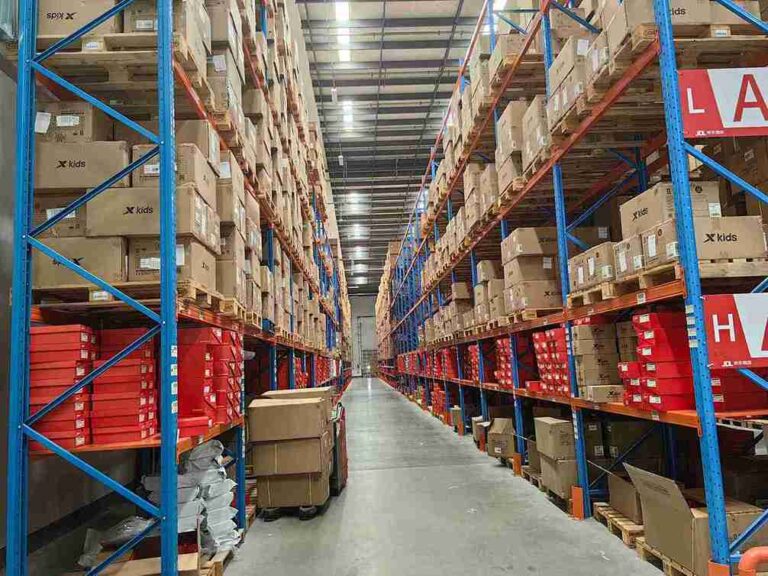
Logistics professionals across Southeast Asia and Africa face a universal challenge: building storage infrastructure that withstands nature’s relentless forces. This comprehensive pallet racking installation guide addresses that challenge head-on, serving as an essential resource for warehouse managers, facility engineers, and supply chain strategists. Unlike generic manuals, this guide delves into the intricate relationship between environmental stressors and structural integrity, offering a roadmap for installing racking systems that endure high humidity, salt aerosols, torrential rains, and scorching heat.
It synthesizes decades of field expertise from corrosion engineers and automation specialists, providing actionable insights for transforming a simple storage installation into a resilient logistics asset. By following this pallet racking installation guide, organizations can avoid the catastrophic costs of premature failure, optimize operational uptime, and lay a robust foundation for automated logistics. The subsequent sections unfold a meticulous, phase-driven approach, ensuring every stakeholder—from project planners to installation crews—grasps the critical nuances of deploying racking in the world’s most demanding climates.

Why Standard Installation Protocols Fail in Southeast Asia and Africa: A Climate Reality Check
Conventional pallet racking installation guide documents often originate from temperate regions, where environmental pressures are moderate and predictable. Applying such protocols in Southeast Asia or Africa is akin to using a city map for jungle navigation—it leads to rapid disorientation and systemic failure. The core issue lies in underestimating the cumulative impact of climatic factors on storage systems.
For instance, a standard guide might specify galvanization but omit the required coating thickness for coastal Ghana or the Mekong Delta, where salt-laden air accelerates corrosion exponentially. Similarly, typical bolt-tightening torque values fail to account for the thermal expansion common in Saudi Arabia’s desert heat or Malaysia’s humid warmth, leading to joint loosening within months.
This pallet racking installation guide rectifies those omissions by contextualizing every procedure within the framework of environmental corrosivity and thermal dynamics. It emphasizes that a successful installation is not merely about assembling components but about creating a system inherently resistant to localised decay forces. Warehouse operators who treat installation as a climate-adaptation project, rather than a mechanical task, report significantly longer system lifespans and lower maintenance overheads.
The Quadruple Threat: Decoding Humidity, Rainfall, Salinity, and Heat
High Humidity & Condensation Warfare: In regions like Jakarta or Lagos, relative humidity consistently exceeds 80%, creating a perpetual moisture film on metal surfaces. This invisible layer initiates electrochemical corrosion, targeting the zinc coating of galvanized racking. A robust pallet racking installation guide must instruct teams to monitor dew point differentials within the warehouse, as condensation often forms on rack surfaces before it’s visible to the naked eye. Installation protocols should include strategies like ensuring air circulation gaps between rack backs and walls and specifying desiccant plugs for sealed upright columns to combat internal corrosion.
Torrential Rainfall & Hydrostatic Pressure: Monsoon rains in Bangladesh or typhoon-induced downpours in the Philippines can inundate warehouse perimeters. Standard guides rarely address water ingress prevention during installation. This pallet racking installation guide mandates a pre-installation drainage audit, instructing crews to elevate baseplates using corrosion-resistant shims or curbing if floor flooding is probable. It also details the installation of drip channels and splash guards on rack uprights adjacent to loading docks.
Coastal Salt Aerosols: The Silent Accelerant: For facilities in Mombasa, Dubai, or Ho Chi Minh City, airborne salt particles penetrate microscopic pores in protective coatings. A superior pallet racking installation guide will specify ASTM A123 or equivalent hot-dip galvanizing standards with a minimum zinc coating mass of 600 g/m² for such environments, coupled with a post-galvanization chromate passivation to seal the surface. Installation crews must be trained to handle these coated components with care, as scratches during installation become future corrosion epicenters.
Intense UV Radiation & Polymer Degradation: The relentless sun in Nairobi or Bangkok degrades polymer safety locks and wire mesh decking coatings. This guide advises installing UV-resistant polyurethane caps on column tops and selecting rack components with additives like carbon black or HALS (Hindered Amine Light Stabilizers) during material procurement—a step often missing from standard installation checklists.
Pre-Installation: The Critical Site & Climate Audit – Laying the Groundwork for Resilience
A meticulous site audit separates a durable installation from a flawed one. This phase of the pallet racking installation guide transforms subjective assessments into data-driven decisions. It involves collating meteorological data, soil salinity reports, and historical flood levels from local authorities—a practice seldom emphasized in generic manuals. For example, in Vietnam’s industrial zones, groundwater salinity maps can predict corrosion hotspots, guiding the installation team to apply additional cathodic protection or select stainless steel anchors in high-risk zones.
This pallet racking installation guide advocates for a multidisciplinary audit team, including a corrosion engineer and a civil engineer, to evaluate the synergy between the warehouse slab and the racking system. Their collective analysis ensures that the installation plan accommodates not just today’s climate but projected shifts, such as increased rainfall intensity or sea-level rise affecting coastal facilities.
Comprehensive Site Assessment Checklist: Beyond the Basics
Floor Moisture Profiling Using Quantitative Meters: Instead of visual checks, this guide recommends using calcium chloride tests or in-situ relative humidity probes embedded in the slab to measure moisture vapor emission rates (MVER). Readings above 3 lbs/1000ft²/24h necessitate installing a moisture-blocking epoxy screed before racking installation commences—a critical step for warehouses in humid Thailand or rainy Sri Lanka.
Microclimate Mapping Within the Warehouse: Using thermal imaging and hygrometers, installers should identify zones of stagnant air, condensation drip lines from roofs, or areas near cooling units. This pallet racking installation guide provides a template for mapping these microclimates, allowing for differentiated installation strategies, such as specifying extra corrosion protection for racks under roof leaks or ensuring wider aisles for dehumidifier access in critical storage lanes.
Structural Load Analysis for Climate-Added Stresses: The guide details how to calculate additional dead loads from potential water absorption in stored goods (e.g., textiles, raw grains) and wind loads from ventilation openings—factors that alter the load distribution and anchoring requirements of the racking system. It references FEM 10.2.02 standards for dynamic load considerations in seismic-active regions like Indonesia or the Philippines.
Corrosivity Categorization Per ISO 12944-2: This international standard classifies environments from C1 (very low) to C5 (very high). This pallet racking installation guide includes a field kit method for on-site categorization, using calibrated corrosion coupons. For instance, a warehouse in coastal Kenya might classify as C5, directly dictating the use of 120μm zinc coating and alkaloid-epoxy topcoats, a specification that must be locked in before installation materials are ordered.
Material Selection: Building a Climate-Defiant Racking System – The Procurement Imperative
Selecting materials based solely on price is a recipe for disaster in harsh climates. This pallet racking installation guide positions material selection as a strategic procurement function. It advises creating a technical data sheet for suppliers that mandates:
Galvanization Certificates with Batch Testing: Demand mill certificates showing coating thickness per piece, not just generic compliance. For projects in salt-prone Oman or humid Malaysia, specify “triple-spangle” galvanization for a denser zinc layer.
Fastener Compatibility Doctrine: All bolts, nuts, and shims must match or exceed the corrosion resistance of the main structure. This guide recommends using stainless steel A4-80 grade fasteners for coastal installations, coupled with nylon-insert locknuts to combat vibration loosening—a detail overlooked in many installation guides.
Polymer Specifications for UV and Mold Resistance: For plastic components like pallet supports or safety pins, specify materials with UV stabilizers and anti-fungal additives, crucial for preventing degradation in the constant warmth of Singapore or Ghana.
Phase-Wise Installation Protocol for Harsh Environments – A Step-by-Step Field Manual
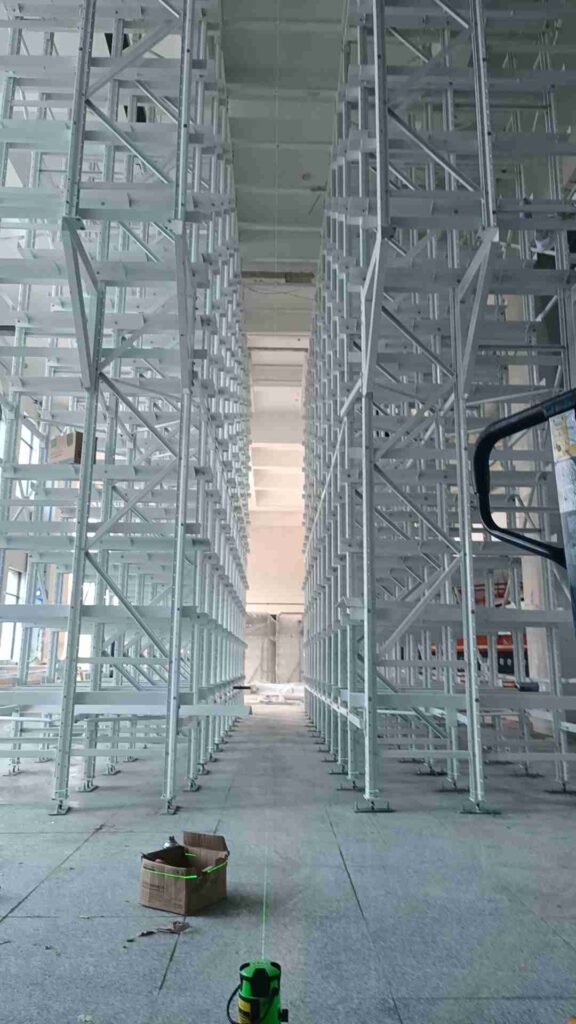
This section transforms the pallet racking installation guide into a actionable field document, sequenced to mitigate climate risks at every turn. It assumes a trained crew but includes “climate watchpoints” at each step—a novel addition that elevates this guide above standard manuals. For example, during the unloading of materials in Mombasa’s port, the guide instructs using breathable tarps to prevent condensation buildup under plastic wraps, a simple yet often ignored step that prevents pre-installation corrosion.
Stage 1: Foundation & Anchor Integrity in Moisture-Prone Floors – The Non-Negotiables
Surface Preparation Rituals: Before anchor drilling, the concrete must be cleaned of laitance and tested for compressive strength using a Schmidt hammer. This pallet racking installation guide emphasizes diamond-core drilling over percussion drilling to avoid micro-cracks that can channel moisture to the anchor shaft. Post-drilling, holes must be blown clean with oil-free air and brushed to remove dust, ensuring full adhesive anchor bond—a critical step in the humid climates of Laos or Cambodia where moisture compromises chemical anchors.
Anchor Selection and Installation Precision: The guide provides a decision tree for anchor selection: mechanical expansion anchors for dry, stable concrete; chemical resin anchors for flooded or cracked slabs common in older African warehouses. It specifies using a calibrated torque wrench and a “click” audit system, where a second technician verifies each tightened anchor. For flood-prone areas like Bangladesh, it recommends installing anchors with extended sleeves to elevate the baseplate above typical waterline levels.
Climate-Specific Anchor Curing Protocols
In high-humidity settings, chemical anchors require extended curing times. This pallet racking installation guide includes a curing time multiplier chart based on ambient temperature and relative humidity, advising crews in the Philippines to wait 50% longer than standard before loading anchors.
It also introduces the practice of “anchor witness samples”—installing extra anchors in a non-critical area and performing pull-out tests after 72 hours to validate the installation methodology before proceeding with the full rack assembly.
Stage 2: Upright Frame Assembly – Mitigating Corrosion from Day One
In-Place Assembly Protocol: To prevent moisture trapping, this guide advocates assembling upright frames vertically in their final position, using alignment jigs and spirit levels with humidity-compensated bubbles. For large, prefabricated frames, it specifies using padded cradles if ground assembly is unavoidable, preventing coating damage from rough surfaces.
Internal Corrosion Prevention Tactics: For closed-section columns, the pallet racking installation guide details the procedure for injecting vapor-phase corrosion inhibitors (VpCIs) through pre-drilled ports. These compounds, widely used in marine logistics, create a protective monolayer on internal steel surfaces, a crucial defense against condensation in non-conditioned warehouses across Africa.
Bracing Installation in High-Wind Zones: In regions prone to cyclones, like Eastern India or Madagascar, diagonal braces must be installed with pre-tensioning to dampen wind-induced oscillation. The guide includes a formula for calculating pre-tension based on local wind speed data, ensuring the racking system acts as a cohesive unit during storms.
Stage 3: Beam & Decking Installation – Ensuring Lasting Connection Integrity
Connector Engagement Verification with Gauges: Instead of relying on visual checks, this pallet racking installation guide recommends using a “beam connector engagement gauge”—a simple tool that confirms the locking tab is fully seated. It also instructs applying a thin layer of lithium-based grease on beam connectors in high-salinity environments to prevent galvanic corrosion between dissimilar metals, a pro-tip from offshore oil rig maintenance applied to warehouse racking.
Decking Installation for Ventilation and Load Distribution: In humid climates, solid decking can trap moisture and promote mold on wooden pallets. This guide advocates for installing wire mesh decking with a minimum 85% open area and specifying a PVC or epoxy coating for added corrosion resistance. It includes a load-span table for various decking types, ensuring proper support spacing to prevent sagging under heavy loads in high-temperature settings where metal fatigue is accelerated.
Thermal Expansion Joint Implementation
In desert climates like Saudi Arabia or Sudan, daily temperature swings can exceed 20°C, causing significant thermal movement. This pallet racking installation guide instructs installing expansion joints in long rack runs (every 30 meters) using slotted bolt holes and spring washers, allowing the structure to “breathe” without stress accumulation.
Integration with Automated Logistics Systems (AGVs/AMRs) – The Synergy Installation
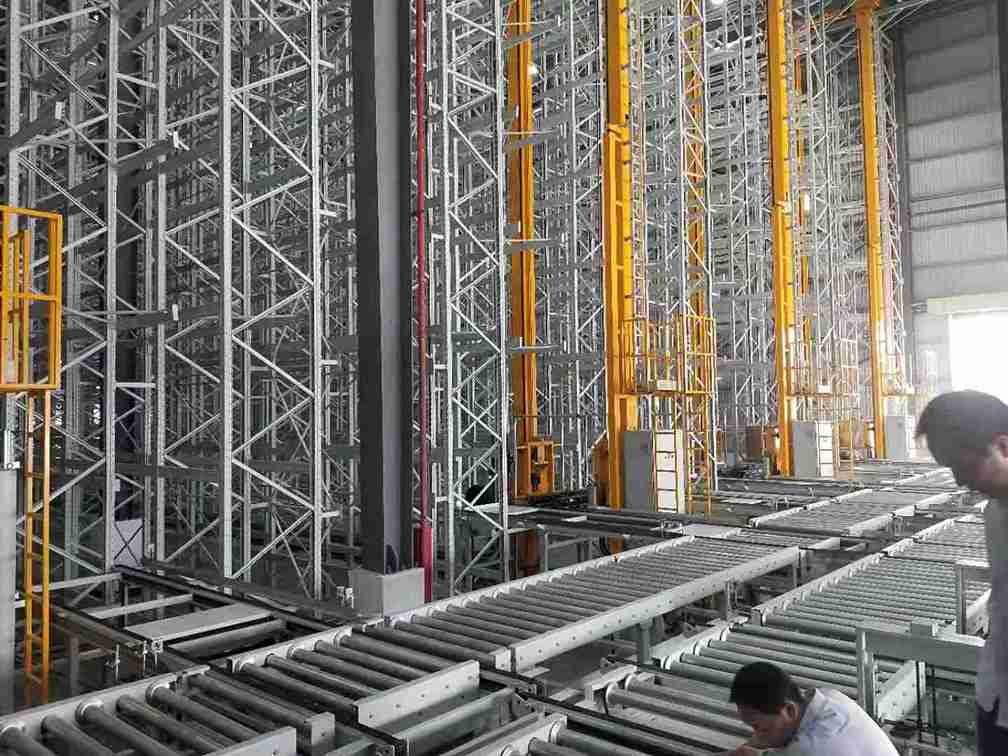
Modern warehouses are evolving into cyber-physical systems. This pallet racking installation guide extends into the digital realm, detailing how racking installation underpins automation efficiency. It posits that improperly installed racking—even if structurally sound—can cripple AGV navigation through misalignment, causing costly system halts. Therefore, the installation process must achieve machining-level precision, a concept foreign to traditional manuals.
Precision Layout for Automated Navigation – Millimeter Matters
Laser-Guided Alignment for Rack Runs: Using rotating laser levels, installation teams must ensure rack rows are parallel within a 3mm tolerance over 100 meters—a standard derived from automated high-bay warehouses in Singapore. This pallet racking installation guide includes a calibration routine for lasers in high-humidity air, where refraction can cause measurement drift.
AGV Path Integration from Day One: The guide insists on co-installing the AGV magnetic tape or QR code markers simultaneously with rack anchoring. This ensures path geometry accounts for rack leg positions, avoiding last-minute rerouting. For laser-guided AGVs, reflective targets are installed on rack end-frames at specified heights, with precise coordinates logged into the warehouse management system (WMS)—a process this guide terms “geotagging the storage matrix.”
Infrastructure Synergy: Racking as Part of the Automated Ecosystem
Cable Management Integration: This pallet racking installation guide details installing J-hooks or conduit along the back of upright frames during initial assembly, housing cables for rack-mounted sensors, lights, and communication lines. This protects infrastructure from forklift damage and condensation, a common issue in cool-storage facilities in Kenya’s flower logistics hubs.
Charging Station and Sensor Mounting Prep: The installation plan must reserve reinforced anchor points on designated rack bays for AGV charging stations and LiDAR sensors, with pre-run conduits for power and data. This foresight eliminates costly retrofitting and ensures seamless automation scalability.
Post-Installation: Climate-Specific Commissioning & Handover – The Seal of Durability
Commissioning is the final verification that the pallet racking installation guide has been correctly executed. This phase involves rigorous testing beyond standard load checks.
Environmental Stress Testing & Documentation – Proof of Performance
Salt Spray Simulation Test: Using handheld saline misters, technicians spray critical joints and weld points, then inspect after 24 hours for early rust signs—a rapid field test inspired by ASTM B117 standards.
Drainage Verification Flood Test: Simulating a heavy rain event, water is poured around rack perimeters to verify drainage away from baseplates. This is critical for warehouses in flood-prone areas like Thailand’s industrial estates.
As-Built Documentation Package: The handover includes not just drawings but a digital twin file (e.g., .IFC format) containing precise rack coordinates, coating specifications, and anchor torque logs. This becomes a living document for facility management, referenced in every future maintenance action.
The Proactive Maintenance Regime for Harsh Climates – Preserving the Installation Investment
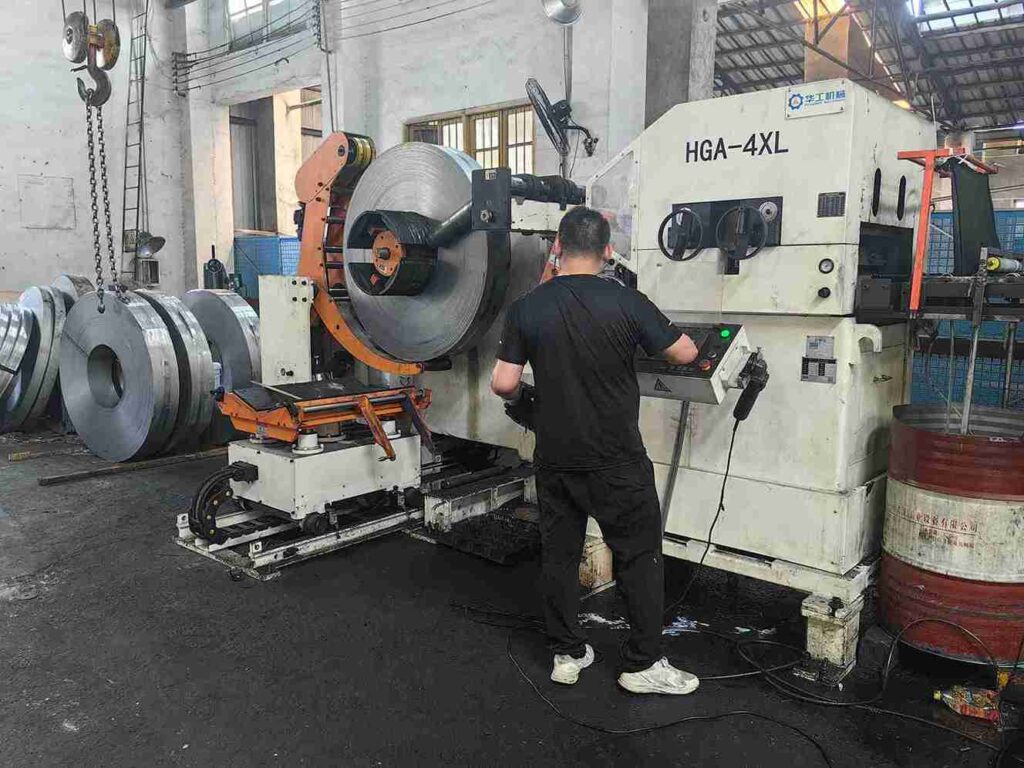
A pallet racking installation guide is incomplete without a robust maintenance protocol. This section provides a calendar-based action plan, recognizing that inspection frequencies must increase in corrosive environments.
Quarterly & Biannual Inspection Checklists – The Defender’s Manual
Corrosion Mapping Using Digital Imaging: Technicians use smartphones with macro lenses to photograph predefined inspection points, uploading images to a cloud platform that uses AI to compare corrosion progression over time. This pallet racking installation guide includes a QR code system for tagging each rack bay, streamlining data collection in vast African warehouses.
Bolt Tightness Audit with Ultrasonic Torque Monitoring: Instead of manual wrenches, this guide recommends using ultrasonic bolt tension monitors biannually, especially after the rainy season in Vietnam or the dry-heat period in Sudan, when thermal cycling is most extreme.
Long-Term Corrosion Management Strategy – Beyond Touch-Ups
Cathodic Protection for Critical Zones: For racking in constant contact with damp floors, this guide outlines installing sacrificial zinc anodes at baseplate level, a technique borrowed from pipeline engineering, to divert corrosion from the main structure.
Environmental Control Recommendations: Based on the installed racking layout, the guide advises on strategic dehumidifier placement or passive ventilation scoops to reduce ambient humidity around high-value storage zones, effectively extending the racking system’s service life.
Conclusion: Installation as the Foundation of Resilient Logistics – The Strategic Imperative
This exhaustive pallet racking installation guide transcends a mere technical manual; it is a strategic blueprint for supply chain resilience in climatologically challenging regions. It demonstrates that the installation process is the most critical determinant of a racking system’s lifespan and performance. By adhering to its climate-adapted protocols—from ISO-standardized material selection to automation-aware precision alignment—organizations across Southeast Asia and Africa can transform their storage infrastructure from a cost center into a competitive advantage.
The guide underscores that every decision, from the anchor type to the bolt-torquing sequence, either contributes to or detracts from systemic durability. In an era where logistics continuity is paramount, following a specialized pallet racking installation guide tailored for harsh climates is not an option but a necessity for any enterprise aiming to thrive in the dynamic markets of these regions. The return on investment is measured not just in years of service but in avoided downtime, protected inventory, and seamless automation integration—a testament to the power of installation excellence.
Frequently Asked Questions (FAQs) – Extended Expert Insights
1: How does soil pH near our warehouse in an industrial zone affect the pallet racking installation guide recommendations?
Soil acidity or alkalinity can influence ground-borne moisture corrosivity. This pallet racking installation guide recommends conducting a soil pH test during the site audit. In acidic soils (pH < 5.5) common near mining areas, concrete slabs can leach aggressive ions, necessitating the use of vinyl ester-based grouts for anchor bedding and extra-thick polyethylene baseplate pads to isolate the steel from floor contact.
2: For a mixed storage facility in the Philippines storing both dry goods and frozen items, how should the pallet racking installation guide address condensation from temperature differentials?
This scenario requires a zoned installation approach. The guide advises creating a thermal break between zones using insulated rack partitions and installing condensation drain channels on racks in the frozen aisle that lead to floor drains. Additionally, upright frames in the chill zone should be specified with low-thermal-conductivity composite shims to reduce cold bridging and condensation formation.
3: What pallet racking installation guide modifications are needed for areas with high seismic activity, such as Indonesia, combined with high humidity?
Seismic zones require moment-resistant frames and specialized bracing. This guide details using slotted hole connections with belleville washers that allow controlled movement during tremors while maintaining tension. In humid conditions, these connections must be coated with dry-film lubricants containing corrosion inhibitors to prevent seizing, ensuring they function as designed during an seismic event.
4: How can this pallet racking installation guide help in reducing energy costs for warehouse cooling in hot climates like the Middle East?
By specifying and installing reflective, light-colored rack coatings (e.g., high-albedo white epoxy), the guide helps reduce radiant heat absorption, lowering ambient warehouse temperature. It also recommends strategic rack placement to facilitate cross-ventilation from prevailing winds, reducing reliance on mechanical cooling—a cost-saving consideration integrated into the installation layout phase.
5: When installing racking for automated systems in dusty environments like construction material warehouses in Africa, what does this pallet racking installation guide prescribe to protect AGV navigation sensors?
The guide includes installing positive-pressure air curtains at rack aisle entrances and mounting LiDAR sensors on vibration-isolated brackets with clear, wipeable protective shrouds. It also specifies sealing cable entries into rack-mounted sensor boxes using IP67-rated glands during installation to prevent dust ingress, ensuring automation reliability despite particulate-heavy air.
If you require perfect CAD drawings and quotes for warehouse racking, please contact us. We can provide you with free warehouse racking planning and design services and quotes. Our email address is: jili@geelyracks.com