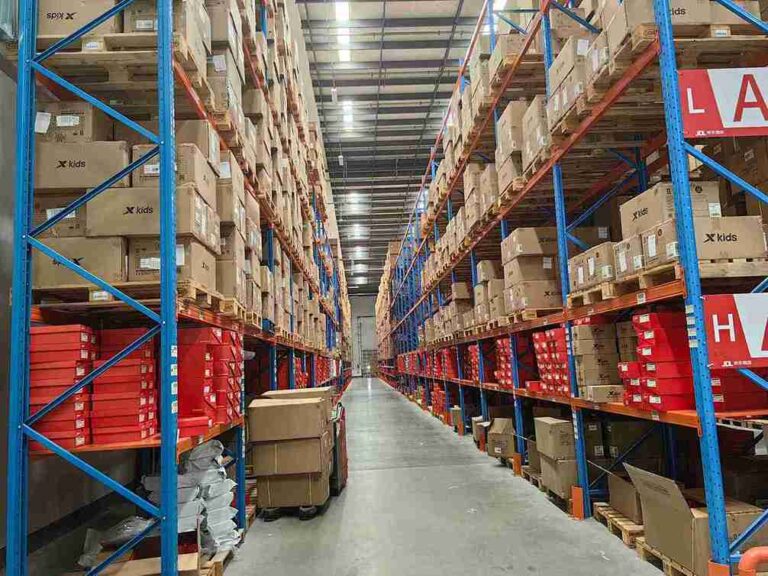
📐 "First 50 Enterprise Queries Get Custom 3D Warehouse Design" Plan


The Definitive Guide: Mastering Your Pallet Racking Installation Checklist for Success in Vietnam
For warehouse project managers navigating the dynamic industrial landscape of Vietnam, the moment of installing a new pallet racking system represents a critical inflection point. This process, far more than a simple assembly task, is the foundational act that will determine operational safety, efficiency, and scalability for the next decade or more. A haphazard approach to the pallet racking installation checklist invites risk, while a meticulous, Vietnam-specific strategy builds resilience and profit.
This exhaustive guide serves as the ultimate field manual, transcending generic advice to deliver a granular, phase-by-phase pallet racking installation checklist engineered for the unique conditions of Vietnamese logistics hubs, from Binh Duong to Hai Phong. Its goal is to transform project managers from passive supervisors into informed custodians of a major capital asset.

The High Stakes: Why a Meticulous Pallet Racking Installation Checklist is Your Primary Risk Management Tool
In the rush to meet operational deadlines, the depth of a pallet racking installation checklist is often the first casualty. The consequences are rarely immediate but are invariably costly. A missed step can lead to latent structural weakness, undetected non-compliance, or a layout that cripples future automation ambitions.
In Vietnam, where supply chain growth is explosive, the cost of retrofitting or completely reinstalling racking due to an early oversight is measured not just in dollars but in weeks of disrupted operations. Therefore, this pallet racking installation checklist is not merely a list of tasks; it is a comprehensive validation protocol.
It ensures that every kilogram of steel erected is done so with precision, that every international standard is adapted to local realities, and that the installed system is not just safe for today but is poised for tomorrow’s demands. Project managers who wield a robust pallet racking installation checklist command the project timeline, mitigate liability, and safeguard their company’s most valuable assets: inventory, personnel, and operational continuity.
Phase 1: The Foundational Blueprint – Pre-Installation Planning and Site Readiness
This initial phase consumes the majority of the planning effort and is where the most critical decisions are locked in. A superior pallet racking installation checklist for this stage is exhaustive and leaves no assumption unverified.
1.1 The “As-Built” Reality Check: Survey Beyond the Drawings
The provided architectural drawings are a starting point, not gospel. The first action item on any professional pallet racking installation checklist is a forensic-level site survey.
Laser Scanning for Digital Twins: For large or complex projects, investing in a 3D laser scan creates a digital “as-built” model. This model allows designers to clash-check the racking layout against every pipe, conduit, and structural element long before the first component arrives on site.
The Floor Flatness Imperative (FF/FL): This is arguably the most overlooked yet critical metric, especially for systems destined for narrow-aisle (VNA) or automated operations. A proper pallet racking installation checklist must specify measuring floor flatness (to FEM or DIN standards) across the entire footprint. In Vietnam, variations in concrete curing due to high humidity or sub-base preparation can lead to significant deviations. Tolerances that are acceptable for standard forklifts become hazardous for 12-meter-high reach trucks. Documenting this early allows for budgeting potential floor grinding—a far cheaper pre-installation fix than a post-installation corrective.
Grid & Column Verification: Physically measure the precise location, plumb, and size of all columns. A column that encroaches 75mm into a planned aisle can collapse a carefully designed picking path. The pallet racking installation checklist should include a tolerance threshold (e.g., +/- 25mm from plan) that triggers a design review.
1.2 Design Cross-Validation and Local Compliance
With accurate site data in hand, the next step in the pallet racking installation checklist is to reconcile the supplier’s racking design with the real world.
Certification Scrutiny: Demand and review the full design calculation package and certification. For Vietnam, ensure the design accounts for relevant local wind load codes and any specific seismic considerations for the region. The pallet racking installation checklist must confirm that the design seal is from a registered professional engineer.
Material Traceability: The checklist should require mill certificates for the steel used in upright frames and beams, verifying grade (e.g., S350GD+Z) and yield strength. This is not pedantry; it is due diligence for structural integrity and warranty validation.
Local Code Interface: A Vietnam-optimized pallet racking installation checklist prompts the project manager to consult with local authorities or a consultant on any interface with fire codes (e.g., sprinkler head clearance, flue space requirements) and building permits, ensuring the racking design does not inadvertently violate a local regulation.
1.3 Military-Grade Logistics and Component Staging
The delivery day is a pivotal event. A chaotic offload can lead to damaged components, lost parts, and immediate schedule slippage.
Staging Area Protocol: The pallet racking installation checklist must detail the staging area requirements: a hard, level, and drained surface, protected from the elements. In Southern Vietnam’s rainy season, tarpaulins are not enough; a temporary covered structure may be necessary to prevent rust formation on pre-galvanized components.
Digital Inventory & Damage Audit: Upon delivery, the checklist should guide a systematic, photographed inventory. Each bundle of uprights, beams, and boxes of hardware is checked against the packing list. Any damage—from a chipped paint chip to a bent connector—must be documented on a joint inspection report (signed by the receiver and the trucking company representative) before the truck leaves. This step in the pallet racking installation checklist is crucial for claim resolution and prevents “he said, she said” disputes later.
Just-in-Time Sequencing: For large sites, work with the installer to sequence component delivery to match the installation flow. Having all the beam locks for Bay 50 delivered on Day 1 just creates clutter. A sophisticated pallet racking installation checklist includes a delivery schedule tied to the installation sequence plan.
Phase 2: The Engine of Precision – Execution and Supervised Installation
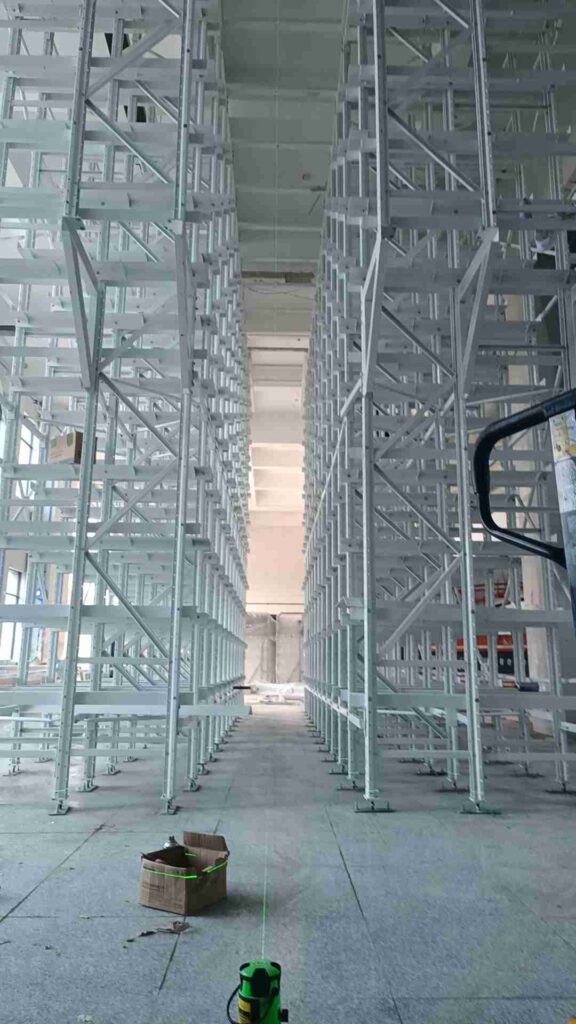
With the site prepared and components verified, the physical installation begins. Here, the pallet racking installation checklist becomes a daily work document for the site foreman and the supervising project manager.
2.1 Establishing the Golden Bay: Anchor Bolt and First Upright Protocol
The first bay sets the geometric standard for the entire installation. Every subsequent bay will be measured against it.
Template-Driven Drilling: The checklist must forbid freehand marking. It should mandate the use of a physical base plate or a certified drilling template to mark every anchor hole position. Even a 5-degree misalignment in the drill can cause the anchor to sit incorrectly.
The Science of Anchoring: A top-tier pallet racking installation checklist delves into the specifics of the anchor type (e.g., chemical epoxy, mechanical wedge). For chemical anchors, it specifies: drill bit size, hole cleaning method (brush and vacuum, not just air), epoxy cartridge type, injection procedure (from the bottom up to avoid air pockets), and—critically—the full cure time based on ambient temperature and humidity. Rushing this step is the single greatest cause of anchor failure.
Plumb and Alignment Ritual: The first upright must be set using a high-quality digital spirit level, secured temporarily with braces, and its plumb verified in two perpendicular directions. The pallet racking installation checklist should record the measured deviations. This is the “zero point.”
2.2 Systematic Bay Assembly: The March of Quality
Installation should proceed in a logical, bay-by-bay pattern, with continuous in-process verification.
Torque as a Spec, Not a Suggestion: Every critical connection has a specified torque value. The pallet racking installation checklist must require the use of calibrated torque wrenches for all splice bolts, base plate bolts, and any other structural connections. Impact wrenches are for speed; torque wrenches are for certainty. The checklist should mandate a log of torque settings used.
The Beam Lock Ritual: As each beam end is placed onto the upright connector, an audible “click” or a visual confirmation tab must be verified. The project manager’s pallet racking installation checklist should include a simple but powerful instruction: “For every beam, physically attempt to dislodge it with a specialized beam lock tool or a calibrated tap from a rubber mallet after installation.” This positive confirmation test is irreplaceable.
Aisle Width Control: Using a laser distance measurer, aisle widths should be checked at the top and bottom of the bay at regular intervals. For a VNA system requiring a 1600mm aisle, a tolerance of +/-10mm might be allowed. The pallet racking installation checklist is the tool for recording these measurements and triggering corrective action before ten consecutive bays are out of alignment.
2.3 Integrated Safety System Installation
Safety components are not add-ons; they are integral to the system’s design and must be installed concurrently.
Column Guards and Protectors: These should be installed as the installation proceeds down the aisle, not tacked on at the end. The pallet racking installation checklist should verify their mounting height and impact rating, ensuring they are correctly bolted to the floor or the racking upright itself.
Decking and Mesh Installation: If wire mesh or solid decking is specified, the checklist should confirm it is the correct gauge, properly supported by beams and retainers, and that all fasteners are secure. A sagging deck is a load-rated hazard.
Row Spacers and Horizontal Braces: The checklist must include a verification point that all cross-braces and row spacers are installed, tight, and not interfering with planned pallet overhang.
Phase 3: The Crucible of Verification – Post-Installation Audit and Commissioning
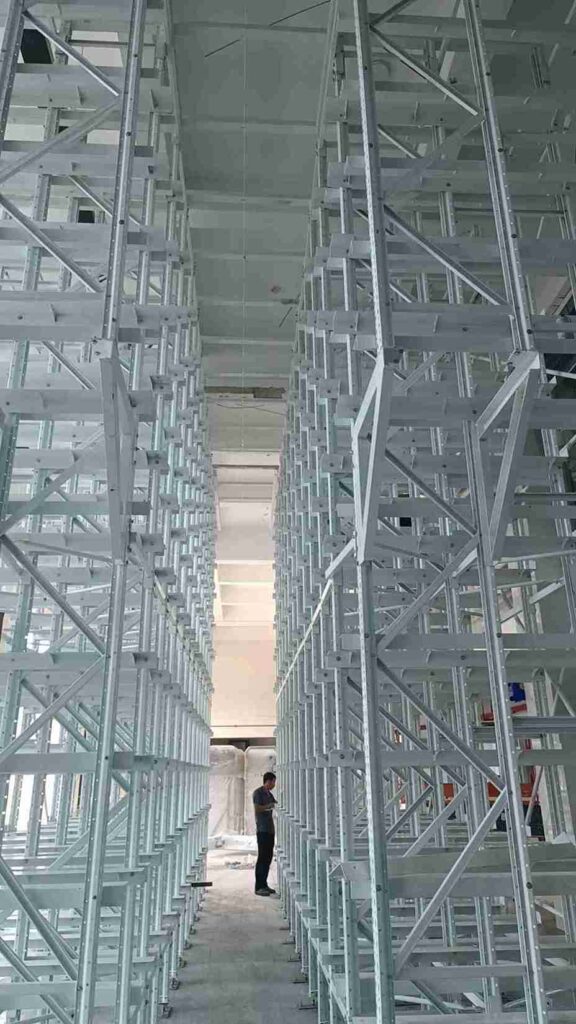
The physical installation is complete when the last bolt is tightened. The system is ready only after it has passed a rigorous, documented audit. This phase of the pallet racking installation checklist is the final gatekeeper.
3.1 The 100% Completion Walk-Down Audit
Before a single pallet is placed, a senior supervisor (not the installation foreman) must conduct an independent audit using a fresh copy of the pallet racking installation checklist.
Statistical Torque Audit: A minimum of 20% of all critical bolts (anchors, splices) should be spot-checked with a calibrated torque wrench. Any failure requires a 100% re-torque of all similar connections in that zone.
Plumb Line and Alignment Final Verification: Using string lines or a transit, check the overall alignment of long racking runs. The pallet racking installation checklist should have final acceptance tolerances clearly stated.
Comprehensive Safety Lock Confirmation: A visual and physical check of every single beam lock in the system. This is tedious but non-negotiable.
Final Damage Report: Document any and all damage incurred during installation—scratches, dents, bent safety locks. Categorize them as cosmetic or structural, and agree with the installer on a remediation plan.
3.2 Load Testing and the Formal Handover
The proof of the system is in its ability to bear load safely.
Proof Load Testing Strategy: While loading every position to capacity is impractical, a strategic proof load test is a hallmark of a professional project. The pallet racking installation checklist should define the test protocol: selecting critical bays (highest beam level, end of runs), applying the specified unit load (using water ballast or known-weight dummy loads), maintaining the load for a set period (e.g., 24 hours), and monitoring for any deflection or settlement.
The Documentation Portfolio Handover: The project is not complete until a defined set of documents is transferred. The ultimate pallet racking installation checklist includes a handover manifest:
Final “As-Built” Drawings, signed and stamped.
Load Application and Configuration Drawings (LACD), the legal document specifying permissible loads.
Original Design Certificates and Mill Certificates.
Complete Maintenance, Inspection, and Operation Manuals, translated into Vietnamese for operational staff.
Warranty Certificates with clear start dates and terms.
The Completed Installation Audit Checklist, signed by both the installer and the client’s project manager.
Phase 4: The Strategic Horizon – Beyond the Basic Pallet Racking Installation Checklist
A world-class project manager uses the pallet racking installation checklist not just to complete a task, but to build a strategic asset. This phase integrates forward-thinking into the validation process.
4.1 Designing for an Automated Future (From Day One)
Even if the initial purchase order is for static racking, the installation must not preclude automation.
Aisle Width as a Sacred Dimension: If AGVs or autonomous forklifts are a possibility in the 5-year plan, the aisle width tolerance shrinks from centimeters to millimeters. The pallet racking installation checklist must reference the future equipment spec sheet, not just today’s forklifts.
Floor Flatness Revisited for Robotics: The FL/FF rating required for automated guided vehicles is exponentially stricter. The pre-installation floor survey data, captured in the pallet racking installation checklist, becomes the baseline for justifying any advanced floor preparation investment now, avoiding catastrophic operational disruption later.
Structural Interfaces for Conveyors and AS/RS: The checklist should prompt questions: Are uprights reinforced at potential future conveyor feed points? Is the racking layout and orientation compatible with a potential future Automated Storage and Retrieval System (AS/RS) aisle? Documenting these considerations in the pallet racking installation checklist proves strategic foresight.
4.2 Knowledge Transfer and Operational Training
The best-installed system is dangerous in untrained hands. The handover process in the pallet racking installation checklist must include a training component.
Formal Operator and Supervisor Training: Require the installation contractor to conduct hands-on training sessions. Focus on: how to conduct a visual inspection, how to identify the six most common types of racking damage, the absolute imperative of reporting any impact immediately, and a clear understanding of the posted Load Notices.
Local-Language Resources: Ensure the key outcomes of the pallet racking installation checklist—specifically load limits and critical inspection points—are translated into simple Vietnamese visual guides posted at the warehouse entrance.
4.3 Instituting the Perpetual Inspection Cycle
The final act of the installation project is to launch its ongoing maintenance regime.
Embedding the Checklist Culture: The project manager’s master pallet racking installation checklist should spawn three derivative documents: a Weekly Visual Inspection Checklist for floor staff, a Quarterly Formal Inspection Checklist for the warehouse manager, and an Annual Professional Audit Checklist for external experts.
Digital Record-Keeping: Advise the use of simple digital tools (tablet-based forms, cloud photos) linked to each racking bay’s ID. This creates a historical record, turning the static pallet racking installation checklist into a living system health log.
Conclusion: The Checklist as a Testament to Professional Mastery
For the warehouse project manager in Vietnam, the journey of a pallet racking installation checklist from a blank document to a fully archived project dossier is the journey of professional mastery. It is a tangible record of due diligence, of respect for engineering, and of a commitment to the safety of people and the integrity of the supply chain. In a market growing as fast as Vietnam’s, the temptation to cut corners is immense.
The disciplined application of a world-class, locally-adapted pallet racking installation checklist is the definitive differentiator between a costly liability and a high-performing asset. It is the blueprint that ensures the steel rising from the warehouse floor is not merely storage, but the robust, efficient, and intelligent backbone of the enterprise. The ultimate return on investment from a perfect pallet racking installation checklist is not just a safe racking system today, but the unlocked potential for automation, density, and efficiency tomorrow.
Advanced FAQs Beyond Standard Checklists
1. How does temperature variation affect installation torque values?
- Critical factor: Most pallet racking installation checklist guides omit that torque specs change 1% per 10°F variation from standard conditions
2. What’s the true cost of skipping laser alignment?
- Hidden impact: Just 1/2″ misalignment reduces system capacity by 18% – a fact missing from most pallet racking installation checklist protocols
3. Why do professional installers use three-stage anchor tightening?
- Engineering secret: Prevents concrete micro-fractures that standard pallet racking installation checklist procedures often cause
4. How often should seismic bracing be re-certified?
- Regulatory insight: Annual inspections are mandatory, yet only 23% of pallet racking installation checklist programs include this
5. What’s the industry standard for load test documentation?
- Compliance must: ASTM E74 calibration certificates for all test equipment – a requirement absent from basic pallet racking installation checklist templates
If you require perfect CAD drawings and quotes for warehouse racking, please contact us. We can provide you with free warehouse racking planning and design services and quotes. Our email address is: jili@geelyracks.com