📐 "First 50 Enterprise Queries Get Custom 3D Warehouse Design" Plan


The Definitive Guide to Pallet Rack Safety Guidelines: Moving Beyond the Checklist to Engineered Confidence
Abstract:
For warehouse and logistics managers across Southeast Asia, the Middle East, Africa, and Latin America, finding generic pallet rack safety guidelines is easy. Implementing them effectively is the real challenge. This comprehensive resource transcends basic advice, delivering a masterclass in applied warehouse structural integrity. It dissects why universal pallet rack safety guidelines often fall short in real-world conditions, provides a deep-dive, professional-grade inspection framework, and details the critical transition from identifying risks to executing engineered solutions.
The ultimate aim is to equip operational leaders with the knowledge to not just follow pallet rack safety guidelines, but to build a culture of proactive safety, culminating in actionable, customized reinforcement strategies that ensure long-term asset protection and personnel safety. True safety is not found in a document, but in a disciplined, expert-informed process.

Introduction: The Universal Search and the Unique Reality
A logistics manager in Manila, a warehouse supervisor in Dubai, and a plant owner in Lagos all share a common concern: the structural integrity of their storage systems. Their search often begins with a simple query: “pallet rack safety guidelines.” The internet offers a plethora of PDFs, blog posts, and one-page lists promising clarity. These resources serve a purpose, introducing core concepts like damage inspection and load limits. However, they represent the theoretical map, not the complex, shifting terrain of an active warehouse.
The fundamental flaw in most generic pallet rack safety guidelines is their assumption of a static, ideal environment. They rarely account for the monsoon humidity warping unprotected steel in Vietnam, the abrasive dust of Saudi Arabia compromising floor anchors, the aggressive freeze-thaw cycles in parts of Central Asia, or the seismic tremors felt in Chile and Indonesia. Furthermore, they cannot anticipate the unique operational pressures of a third-party logistics (3PL) facility in Brazil versus a manufacturing plant’s raw material store in Egypt.
This guide addresses that gap. It is built not from theory alone, but from decades of field experience implementing and auditing storage systems across the globe. It understands that effective pallet rack safety guidelines must be a living framework—a starting point for a continuous process of assessment, action, and improvement. Here, the term pallet rack safety guidelines evolves from a simple set of rules into a holistic philosophy of warehouse stewardship, integrating engineering principles, operational discipline, and environmental awareness to create a truly resilient storage ecosystem.
Chapter 1: The High Cost of Complacency – Why “Good Enough” Guidelines Are Not Enough
Merely having a posted set of pallet rack safety guidelines provides a false sense of security if the underlying culture and expertise are absent. The consequences of treating rack safety as a passive, box-ticking exercise are severe and multifaceted, impacting far more than just the immediate damage zone.
The Catastrophic Cascade of a Failure
When a rack section fails, it triggers a domino effect of operational and financial disaster. The initial collapse is just the beginning. Immediately, there is the paramount risk of serious injury or fatality—a human cost that is incalculable. Concurrently, high-value inventory is crushed, leading to direct asset loss often in the hundreds of thousands of dollars. The affected aisle and likely several adjacent zones become a condemned crime scene, halting all order fulfillment, stalling production lines waiting for components, and breaching customer delivery contracts with cascading penalty clauses.
In the aftermath, regulatory bodies will descend. Whether it’s the Ministry of Manpower in Singapore, the Saudi Arabian General Organization for Social Insurance (GOSI), or OSHA-aligned authorities in Latin America, the investigations are thorough, and the fines are punitive. Facilities can be shuttered indefinitely until a full audit and remediation are completed. Beyond government penalties, insurance premiums will skyrocket, or coverage may be withdrawn entirely.
The reputational damage—news of a collapse spreads quickly through industry circles—can lead to a loss of client trust and future business. Therefore, robust pallet rack safety guidelines are not an operational cost but a fundamental risk mitigation and business continuity strategy.
The Silent, Progressive Threats Generic Guides Miss
Catastrophic failures are rarely sudden. They are typically the climax of a long-running, undetected drama of progressive damage. Basic pallet rack safety guidelines might prompt a look for a major dent, but they often miss the subtle killers:
Metal Fatigue in Beam Connectors: The small, critical tabs that hold beams to uprights undergo constant stress. Over thousands of loading cycles, microscopic cracks form and propagate—a process undetectable without detailed inspection. This fatigue can lead to a sudden, brittle fracture.
Progressive Column Yielding: A 10mm dent from a forklift mast might not seem critical. However, that dent permanently reorients the steel’s grain structure, creating a focal point for stress concentration. Under repeated heavy loads, this spot can begin to yield and slowly buckle inward, a process that accelerates over time.
Foundation Settlement and Rack Interaction: In regions with unstable soil or on new industrial estates, concrete slabs can settle unevenly. This causes the rack structure to twist out of plumb, placing entire frames into a permanent state of bending stress. Most generic pallet rack safety guidelines do not detail how to measure or correct for slab-induced rack distortion.
Cyclical Loading Beyond Design: Racks are engineered for specific maximum weights. However, in fast-paced environments, the occasional overload becomes routine. A system rated for 1,500 kg per level regularly holding 1,600 kg is being pushed beyond its engineered safety factor every single day, dramatically shortening its fatigue life.
This chapter underscores that meaningful pallet rack safety guidelines must account for these slow, insidious threats. They must provide the tools and thresholds to identify not just the obvious damage, but the early warning signs of systemic degradation.
Chapter 2: Deconstructing and Enhancing Standard Pallet Rack Safety Guidelines
To build a superior system, one must first understand the standard components. This chapter takes the common elements found in most pallet rack safety guidelines and amplifies them with professional-grade detail and context.
2.1 Upright Integrity: The Backbone’s Health Check
Standard Guideline: “Inspect uprights for damage.”
Enhanced Professional Protocol:
Uprights are the primary load-bearing columns. Their inspection is a precise science, not a casual glance.
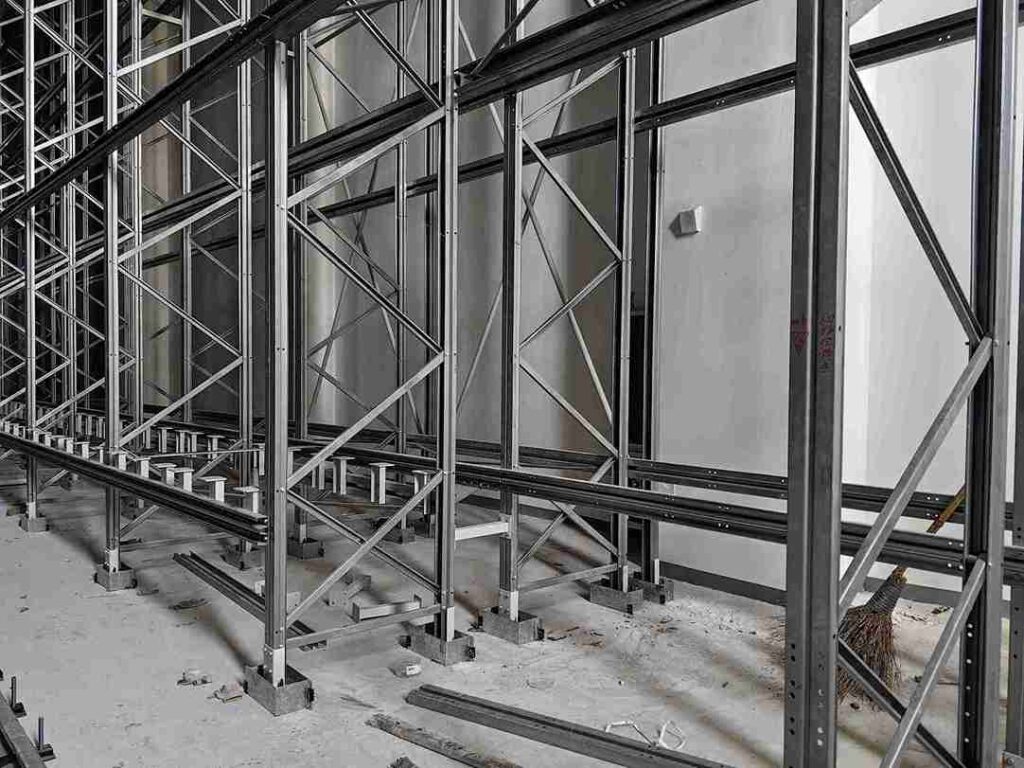
Plumb and Alignment Measurement: Using a high-quality laser level is non-negotiable. Measurements must be taken in two planes: perpendicular to the aisle (front-to-back lean) and parallel to the aisle (side-to-side lean). The tolerance is strict: typically no more than 6mm of deviation per meter of height (1/8 inch per 3 feet). In seismic zones, this tolerance is often halved. Any misalignment beyond this indicates foundation issues, previous impact, or installation error, and immediately invalidates the rack’s load rating. This is a core, non-negotiable tenet of advanced pallet rack safety guidelines.
Damage Assessment – The Dent Gauge Rule: Visual inspection is step one. Step two is quantification. Professional inspectors use a dent gauge. The critical rule, often omitted from basic pallet rack safety guidelines, is the Depth-to-Thickness Rule. A dent with a depth exceeding 10% of the upright’s cross-sectional dimension (e.g., a 20mm dent on a 200mm deep column) or a depth greater than 19mm (3/4 inch) in any location is considered a critical failure point. The affected bay must be immediately unloaded. Furthermore, the location of the dent is crucial. Damage in the middle third of the column’s height is far more dangerous than damage near the top or bottom, due to higher bending moments.
Base Plate and Anchor Inspection: The connection to the earth is vital. Inspectors must check for cracked concrete around anchor bolts, signs of rust-jacking (where rusting bolts expand and crack the floor), and ensure all specified anchor positions are filled and torqued to the manufacturer’s specification. In coastal environments in Africa or the Gulf, checking for corrosion at the base is a mandatory part of any region-specific pallet rack safety guidelines.
2.2 Beam and Connector Integrity: The Critical Link
Standard Guideline: “Ensure beams are properly seated and undamaged.”
Enhanced Professional Protocol:
Beams distribute the load; connectors are the literal lifeline. Their failure is the most common cause of collapse.
Connector Engagement Test: It is not enough to look. One must test. After ensuring the beam is seated on the connector (teardrop, tab, or bolt), a physical upward pull test must be performed. There must be absolutely zero vertical movement. Any lift-off indicates a deformed connector, a worn teardrop, or a misaligned locking device. This simple test, frequently overlooked in rudimentary pallet rack safety guidelines, is one of the most powerful diagnostic tools available.
Beam End and Connector Forensic Inspection: Using a strong flashlight and magnifying glass, inspectors examine the beam end, particularly the top flange where it hooks into the connector. They look for:
Stress Whitening: A light, chalky appearance on the painted steel, indicating plastic deformation.
Hairline Cracks: Especially radiating from the weld points of the connector to the beam.
Twisting or Tearing: Of the beam end itself.
Any of these signs necessitate immediate beam replacement. Furthermore, understanding the connector type is key. Bolted connections offer higher resistance to dislodgement than tab-style connectors and may be recommended as an upgrade in any revised pallet rack safety guidelines for high-traffic facilities.
2.3 Load Management: The Operational Discipline Cornerstone
Standard Guideline: “Do not exceed load capacity.”
Enhanced Professional Protocol:
The Rack Load Application and Rack Design (RALD) plaque is the legal and engineering bible for each rack configuration. Advanced pallet rack safety guidelines mandate that this plaque is legible, present on every unique configuration, and treated as an immutable law.
Dynamic vs. Static Load Considerations: The RALD plaque typically states a maximum static load per level. However, the dynamic force imposed by a forklift placing or retrieving a pallet can be significantly higher. Therefore, a safety margin must be maintained. A best practice is to keep actual loads at least 10-15% below the stated maximum to account for this dynamic effect.
Pallet and Load Integrity: Guidelines must specify that damaged, bowed, or broken pallets are prohibited from use in racking, as they fail to distribute load evenly across the beam. Furthermore, loads must be stable, shrink-wrapped or banded to prevent product shift, and centered on the pallet. Overhang must be strictly controlled to a maximum of 75mm (3 inches) on any side to prevent lever-arm effects.
Load Audit Process: Effective pallet rack safety guidelines include a process for random load audits. Supervisors should periodically use floor scales to verify that pallet weights match the WMS data and the RALD plaque limits. This bridges the gap between the digital plan and physical reality.
Chapter 3: Adapting Pallet Rack Safety Guidelines for Global Operational Environments
A one-size-fits-all approach is the antithesis of safety. Truly robust pallet rack safety guidelines must be adaptable, containing specific annexes or considerations for different climatic and geological challenges.
3.1 Guidelines for High-Humidity and Coastal Regions (Southeast Asia, Coastal Africa, Gulf States)
Corrosion is the silent thief of structural strength. Pallet rack safety guidelines for these regions must mandate:
Enhanced Galvanization Specifications: Recommending a minimum of Z600 (600 grams of zinc per square meter) hot-dip galvanization for all steel components, not just the basic Z275 often used in temperate climates.
Regular Inspection for Corrosion: Focusing on base plates, anchor bolts, and the lower sections of uprights. Pitting corrosion—localized, penetrating rust—is a critical defect requiring immediate action.
Connection Point Maintenance: Specifying periodic lubrication of locking mechanisms with a non-attracting, corrosion-inhibiting grease to prevent seizure and ensure proper engagement.
3.2 Guidelines for Seismic Zones (Chile, Indonesia, Philippines, Parts of Central Asia)
In these regions, pallet rack safety guidelines are a matter of structural engineering, not just operational practice. They must integrate with local building codes.
Strict Drift Ratios: Tolerances for upright plumb are dramatically tightened. The allowed horizontal deflection is often limited to 1-2% of the height.
Moment-Resisting Connections: Guidelines should advocate for, or even require, bolted beam connections instead of gravity-held tab connections to resist uplift and lateral forces during shaking.
Dense and Robust Bracing: The design and inspection of horizontal and diagonal bracing become paramount. Bracing members must be checked for straightness, connection integrity, and proper tension.
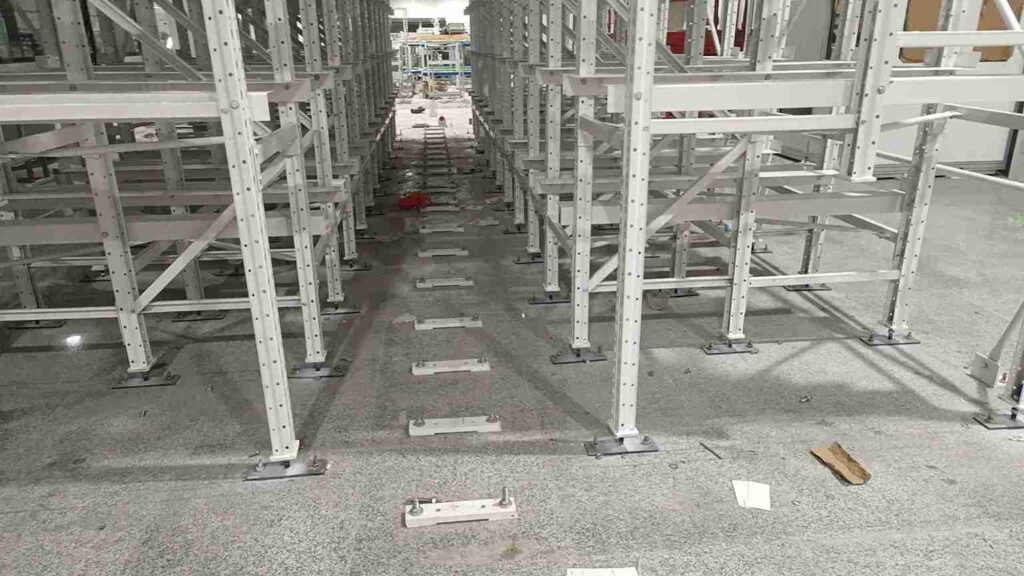
Anchor Design and Verification: The use of certified, high-capacity chemical anchors or large-diameter mechanical anchors, installed with precise torque specifications and regularly inspected, is non-negotiable in seismic pallet rack safety guidelines.
3.3 Guidelines for High-Throughput and Automated Facilities
As facilities integrate AGVs, pallet shuttles, and automated forklifts, the nature of impact risk changes. Guidelines must evolve.
Impact Protection for Automation Paths: Specifying reinforced column guards or protective barriers along designated AGV lanes and transfer points.
Increased Inspection Frequency: The higher frequency of load cycles justifies weekly or even daily visual checks of critical connection points.
Integration with WMS and Load Monitoring: The most advanced pallet rack safety guidelines discuss integrating sensor technologies—load cells on beams, strain gauges on uprights—to provide real-time data on load weights and structural stress, feeding into a digital twin of the storage system.
Chapter 4: The Professional Inspection Cycle – Implementing Dynamic Guidelines
Static documents gather dust. Safety is an active verb. This chapter outlines how to operationalize pallet rack safety guidelines through a tiered inspection regime.
Tier 1: Operator-Driven Daily Awareness
The first line of defense is the equipment operator. Pallet rack safety guidelines must be distilled into simple, actionable rules for them: “If you hit it, report it immediately. If you see a leaning load or damaged beam, report it immediately.” Training should use vivid imagery of failure consequences to drive home the “why.”
Tier 2: Supervisory Weekly/Monthly Formal Inspections
A designated safety officer conducts a scheduled walk-through using a detailed checklist (like the enhanced protocol in Chapter 2). This checklist is the applied version of the company’s pallet rack safety guidelines. Findings are logged in a dedicated register, categorized by severity, and assigned corrective actions with deadlines.
Tier 3: Quarterly/Annual Professional Engineering Audit
This is where expert eyes are essential. A certified rack inspector or structural engineer performs a hands-on audit. They use specialized tools (torque wrenches, laser levels, dent gauges, ultrasonic thickness testers for corrosion) to validate the internal inspections. They review the pallet rack safety guidelines themselves, recommending updates based on changes in operations, storage profile, or regulatory environment. Their report provides the technical authority to justify capital expenditures for repair or replacement.
The Documentation Loop: Every inspection, from a driver’s report to the annual audit, must be documented. This logbook becomes legal evidence of due diligence and forms the historical data trail to identify progressive issues. It closes the loop, making the pallet rack safety guidelines a living, breathing part of the operation’s DNA.
Chapter 5: From Guideline to Solution – The Critical Path to a Custom Reinforcement Quote
Identifying a problem through diligent adherence to pallet rack safety guidelines is only half the battle. The other half is executing the correct fix. This is where the transition from a maintenance crew to a specialized engineering partner becomes critical.
The Triaging Process:
Green Status (Maintain): All inspections align with guidelines. Continue the prescribed cycle.
Yellow Status (Plan & Schedule): Issues like minor corrosion, slight misalignment, or occasional overloads are found. These require engineered solutions but not necessarily emergency action. This is the stage to seek a customized reinforcement quote. The pallet rack safety guidelines have served their purpose as a diagnostic tool.
Red Status (Immediate Action): Critical damage is found. The area is evacuated, unloaded, and quarantined. An emergency assessment is requested, which will fast-track a reinforcement or replacement quote.
Anatomy of a Professional Custom Reinforcement Quote:
A meaningful quote is a mini-engineering report. It should directly reference the violations of the pallet rack safety guidelines that it is designed to rectify.
Executive Summary & Risk Assessment: Clearly states the observed hazards relative to accepted pallet rack safety guidelines.
Engineering Analysis: Explains the proposed solution’s principle. E.g., “To restore the load-bearing capacity of the dented upright per FEM/OSHA standards, we propose installing a bolted-on reinforcing channel across the damaged section to restore sectional modulus.”
Detailed Scope of Work:
Column Reinforcement: Specifying materials (grade of steel, coating type), methods (bolt-through vs. weld-on), and exact dimensions.
Beam Connector Retrofit: Listing kits to replace worn teardrops with bolt-on connectors, including all necessary hardware graded for the load.
Anchorage Upgrade: Specifying the type, size, depth, and torque of new anchor bolts, along with the epoxy system if chemical anchoring is required for the substrate.
Protection Systems: Detailing the installation of column guards, end-of-aisle protectors, or barrier rails as preventative measures.
Implementation Plan: Describes the work sequence to minimize operational disruption (e.g., working in night shifts, reinforcing one bay at a time).
Post-Installation Certification: The most critical deliverable. After installation, the provider should supply a signed engineer’s certificate stating that the reinforced rack now complies with relevant pallet rack safety guidelines and standards, and detailing its new certified load capacities.
When Reinforcement is Not Enough: The Upgrade Conversation
Sometimes, the audit reveals that the existing system is fundamentally inadequate for current needs. The pallet rack safety guidelines have exposed a systemic risk. In this case, the “reinforcement quote” may pivot to a “modernization proposal.” This could involve:
Replacement with a Higher-Class System: Migrating from selective racking to drive-in racking or push-back racking for better density and reduced forklift-rack interaction.
Integration of Automation: Proposing an Autonomous Mobile Robot (AMR)-based goods-to-person system or a mini-load ASRS to remove forklifts from the storage aisles entirely—the ultimate safety upgrade.
New Mezzanine or Structural System: Designing a new, code-compliant structure from the ground up.
A trustworthy partner will be transparent about when a repair is sufficient versus when a replacement is the safer, more cost-effective long-term investment, always grounding the recommendation in the fundamental principles of pallet rack safety guidelines.
Conclusion: Guidelines as the Foundation of a Safety Culture
Ultimately, the most comprehensive pallet rack safety guidelines are ineffective without commitment. They must be championed from the top floor to the warehouse floor. They are not a set of restrictions, but a framework for empowerment—giving teams the knowledge and authority to stop unsafe acts and report unsafe conditions.
The journey from a vulnerable facility to a resilient one begins with a choice: to move beyond the superficial download of generic pallet rack safety guidelines and invest in building a customized, living safety protocol. It involves training, disciplined inspection cycles, professional audits, and a partnership with engineers who speak the language of load dynamics and structural integrity.
By embracing pallet rack safety guidelines as a dynamic, applied science, operations leaders in growth markets can protect their greatest assets: their people, their inventory, and their business’s future. The blueprint for safety exists. The next step is to build it.
Frequently Asked Questions (F.A.Q.)
1. Our warehouse uses multiple brands and ages of racking. Can a single set of pallet rack safety guidelines cover this mix?
Yes, but the guidelines must be principles-based rather than manufacturer-specific. The core physics—plumb tolerances, depth-to-thickness rules for damage, beam connection integrity—are universal. However, the implementation requires extra diligence. The inspector must identify each rack type and locate its specific load plaque (RALD). The guidelines should mandate creating a warehouse map that zones areas by rack type and capacity, ensuring operators know the limits for each section. A professional audit is highly recommended for mixed-fleet facilities.
2. How do we handle pallet rack safety guidelines for very narrow aisle (VNA) racking, which seems more complex?
VNA systems introduce critical new dimensions to safety guidelines. The guidelines must expand to cover:
Guidance Rail Integrity: Regular inspection for straightness, alignment, and damage is paramount, as a bent rail can derail a forklift.
Floor Flatness Specifications: VNA requires an extremely flat floor (often within ±3mm over 3 meters). Your guidelines should include periodic floor flatness checks, as an uneven floor transfers stress to the rack structure.
Operator Certification: Strict, mandatory certification for VNA forklift drivers, with re-certification cycles.
Clearance Checks: Precise, frequent checks of the clearance between the rack structure and the forklift mast/carriage to prevent brushing impacts.
3. Are there internationally recognized standards that should form the basis of our pallet rack safety guidelines?
Absolutely. Referencing these standards elevates your guidelines from company policy to professional practice. Key standards include:
FEM 10.2.02: The European Federation of Materials Handling standard for the design of static steel racking.
EN 15635: The European standard for the use and maintenance of steel storage systems.
RMI/ANSI MH16.1: The American Rack Manufacturers Institute standard, widely referenced globally.
OSHA 1910.176(b): The U.S. Occupational Safety and Health Administration regulation for material handling and storage.
Your guidelines should state alignment with these (or relevant local) standards.
4. What is the role of the Warehouse Management System (WMS) in enforcing pallet rack safety guidelines?
A modern WMS is a powerful enforcement tool. It can be configured to:
Flag Overweight Orders: Prevent a pallet from being assigned a location if its weight exceeds the configured capacity for that beam level.
Enforce Putaway Logic: Direct heavier loads to lower beam levels and lighter loads to higher levels, optimizing the load distribution.
Create Inspection Tasks: Automatically generate work orders for supervisors when a rack section is due for its periodic inspection based on the guidelines’ schedule.
Document Incidents: Log reported damage linked to a specific location for tracking and repair management.
5. We’ve had a significant impact. Our internal guidelines say to unload the bay. What information should we gather before calling for a professional assessment?
Being prepared speeds up the response. Before calling, gather:
Clear Photos/Videos: Of the damage from multiple angles.
Location Details: Exact aisle, bay, and level.
Load Information: The type and approximate weight of the inventory stored on the affected beams and the two beams above and below.
Rack Identification: Photos of the manufacturer’s label (if present) and the RALD load plaque.
Impact Details: If known, what caused the impact (e.g., forklift type, attachment).
Providing this information allows the engineering team to preliminarily assess severity and arrive with the likely correct repair materials, ensuring a faster return to safe operation. This preparedness should be a documented step in your emergency response pallet rack safety guidelines.
If you require perfect CAD drawings and quotes for warehouse racking, please contact us. We can provide you with free warehouse racking planning and design services and quotes. Our email address is: jili@geelyracks.com