📐 "First 50 Enterprise Queries Get Custom 3D Warehouse Design" Plan


The Unseen Guardian: How Pallet Rack Safety Barriers Forge the Foundation of Modern Warehouse Resilience
In the pulsating heart of a modern distribution center, where the hum of automation orchestrates the symphony of commerce, a silent sentinel stands guard. It is the pallet rack safety barrier, an engineered solution so fundamental that its absence is only felt in the catastrophic aftermath of a failure.
For operations spanning the burgeoning industrial landscapes of Southeast Asia, the ambitious logistics hubs of the Middle East, the resource-rich terrains of Africa, and the dynamic markets of Latin America, the integration of robust pallet rack safety barriers is not a discretionary upgrade—it is the very bedrock upon which warehouse efficiency, asset protection, and human safety are secured.
This comprehensive examination delves beyond product specifications into the strategic philosophy of perimeter and zone protection, illustrating how tailored safety barrier systems are the critical enablers of uninterrupted flow in environments shared by agile AGVs, powerful forklifts, and human operatives. The discourse positions these barriers not as cost items, but as value-generating infrastructure essential for any enterprise aiming to thrive in the competitive global supply chain.
The High-Stakes Calculus of Warehouse Collisions: A Cost Analysis Beyond the Bent Steel
A direct impact between a 2.5-ton forklift and an unprotected rack upright is a moment of profound financial and operational consequence. The immediate, visible damage—a twisted column, a sheared beam connector—is merely the tip of the iceberg. The true cost unfolds in a cascading sequence of disruptions. Inventory worth tens of thousands of dollars may be compromised or destroyed.
The entire bay, and often adjacent bays for safety, must be meticulously unloaded—a labor-intensive process halting productive work for a team for a full shift or more. The damaged structural components require urgent replacement, contingent on supply chain lead times. Meanwhile, the designated picking location is offline, forcing a scramble to relocate SKUs, reroute warehouse management system (WMS) directives, and retrain pick paths for both humans and machines.
For facilities utilizing Automated Guided Vehicles (AGVs) or Autonomous Mobile Robots (AMRs), an incident can trigger a system-wide paralysis. A damaged rack may pose an undefined obstacle, causing the entire fleet to halt or reroute inefficiently, crippling throughput. The aggregate cost of a single significant impact can easily escalate to 50-100 times the price of a high-quality pallet rack safety barrier installed proactively.
This economic reality forms the core argument for a preventive, rather than reactive, approach to warehouse infrastructure investment. Deploying safety barriers is a calculated move to cap liability, preserve capital, and ensure the predictable operation that shareholders and customers demand.
Anatomy of Defense: Deconstructing the Engineering Principles of Effective Pallet Rack Safety Barriers
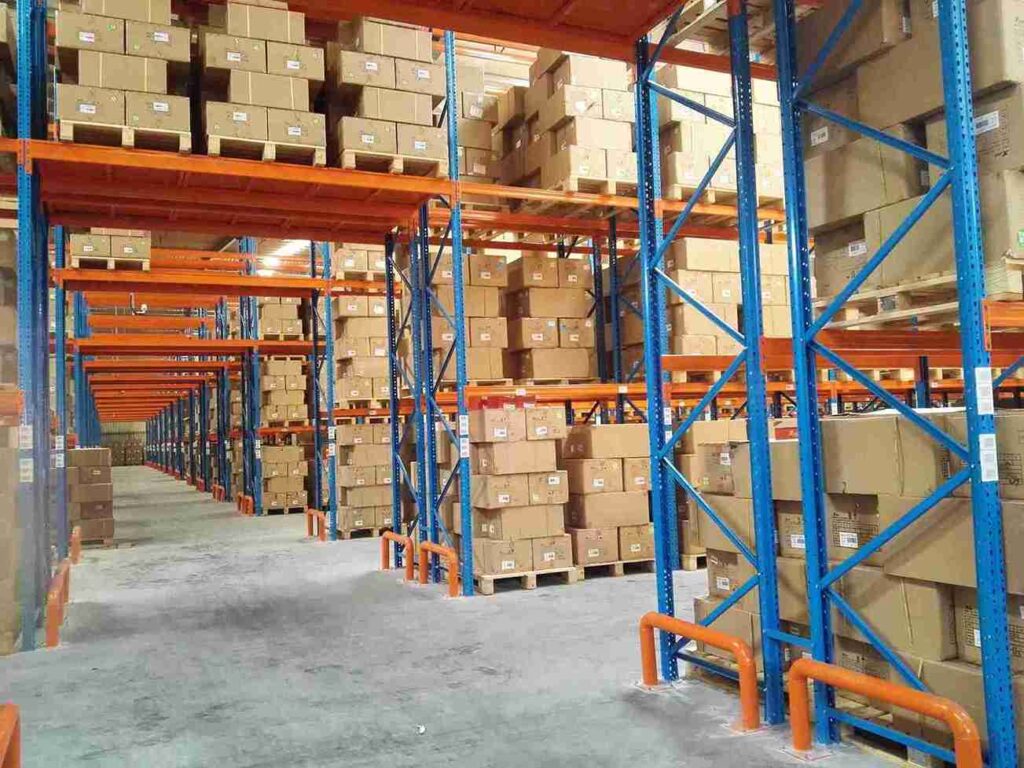
Not all protective structures are created equal. The distinction between a generic bollard and a purpose-engineered pallet rack safety barrier lies in the underlying engineering principles designed to manage kinetic energy. A superior system is conceived as a sacrificial, energy-dissipating component that isolates the primary storage structure from harm.
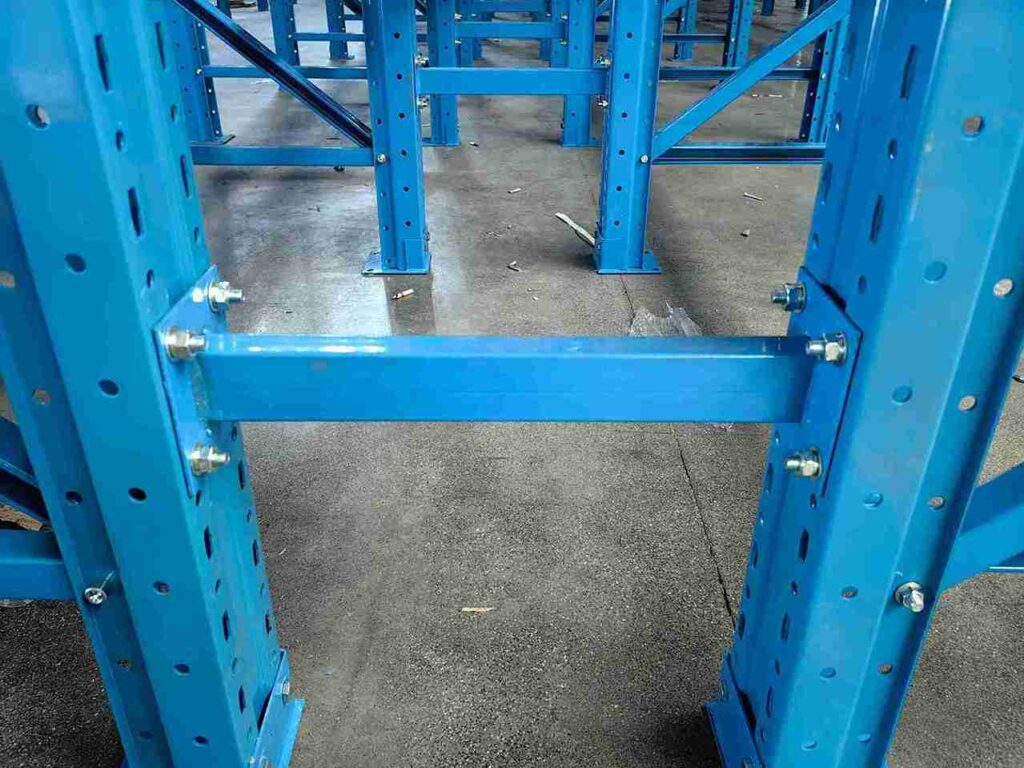
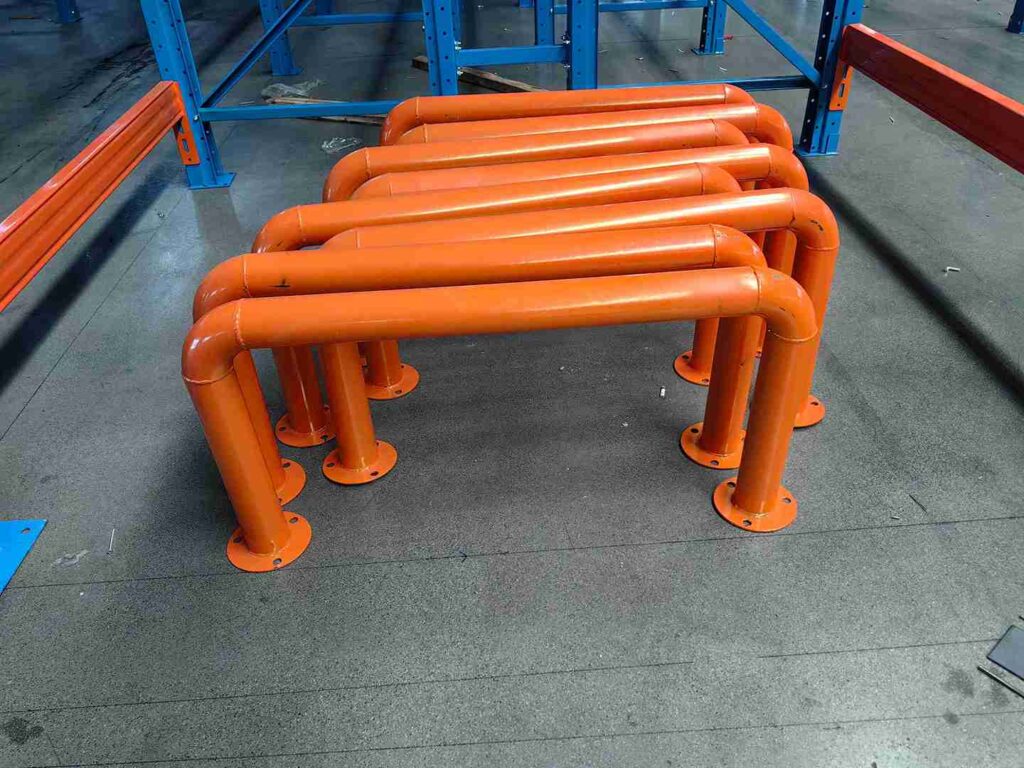
Material Integrity and Metallurgy: Leading safety barriers are fabricated from high-grade, low-carbon steel with a specified minimum yield strength (e.g., 350 MPa or higher). This ensures the material can endure significant plastic deformation without brittle fracture. The steel is often formed into a robust profile—such as a square or rectangular tube—with a wall thickness calibrated to the anticipated threat level. For the most critical zones, a bolted safety barrier configuration is preferred over welded units, as it allows for controlled energy absorption through component movement and easier post-impact replacement of individual parts.
Kinetic Energy Management: The primary function is to absorb and redistribute the kinetic energy of a moving vehicle. Advanced designs achieve this through specific geometries that encourage progressive crumpling or through engineered weak points that deform predictably. This process converts the vehicle’s momentum into deformation work within the barrier itself, preventing that energy from being transferred to the rack upright, which is not designed for lateral impact loads.
Structural Integration: A truly effective system integrates with the rack structure without compromising it. This involves custom-designed mounting brackets that clamp securely to the upright frame without the need for drilling into the critical load-bearing column. These brackets allow for precise positioning and ensure the safety barrier takes the full brunt of the impact, acting as the first and last line of defense.
The Customization Imperative: Tailoring Pallet Rack Safety Barriers to Specific Threat Vectors
The concept of a “one-size-fits-all” safety barrier is fundamentally flawed in a complex warehouse. Customization is the process of aligning the protective solution’s specifications with the unique risk profile of each location.
Threat Vector Analysis: This involves mapping the likely angle, height, and mass of potential impacts. A main aisle intersection frequented by counterbalance forklifts carrying palletized goods presents a different threat (broadside, mid-height impact) compared to a narrow aisle where a reach truck’s forks might scrape an upright (lower, glancing impact). Pallet rack safety barriers must be sized, positioned, and reinforced accordingly.
Vehicle-Specific Design: The operating parameters of the warehouse vehicle fleet are critical inputs. The weight, travel speed, mast height, and load capacity of each forklift type, as well as the navigation patterns and mass of AGVs, directly inform the required impact resistance of the safety barrier. A facility using high-throughput, unit-load AGVs requires barriers with a different design philosophy than one serviced primarily by pedestrian pallet jacks.
Environmental and Operational Factors: In coastal regions of Southeast Asia or the Middle East, corrosion resistance is paramount. Safety barriers may require hot-dip galvanizing or specialized powder coatings. In cold storage facilities, materials must retain their ductility at low temperatures. Furthermore, the barrier’s design must not obstruct fire sprinkler coverage, lighting, or signage, and should facilitate, not hinder, cleaning routines.
Strategic Zoning: A Layered Defense Strategy for High-Risk Areas
A strategic approach to deploying pallet rack safety barriers maximizes protection while optimizing investment. This involves categorizing areas based on traffic density, vehicle type, and consequence of failure.
Tier 1: Critical Impact Zones (Maximum Protection Mandatory): These are non-negotiable locations where the probability and consequence of impact are highest. They demand the most robust safety barrier solutions, typically full-height, bolted safety barrier assemblies.
Aisle End Protections: Every rack end that faces a cross-aisle or main thoroughfare is a prime target. End-of-aisle safety barriers often feature extended wings to protect the corner uprights on the adjoining aisle.
High-Activity Intersections: Areas near dock doors, staging lanes, packing stations, and merge points where vehicle traffic converges and maneuvering is frequent.
Support Column Protections: Free-standing building columns within operational areas are equally vulnerable and require dedicated column guard safety barriers.
Tier 2: High-Frequency Traffic Lanes (Enhanced Protection): Along primary travel paths for forklifts and defined AGV routes, a continuous run of safety barriers is advisable. This creates a protected corridor, preventing errant vehicles from veering into storage bays.
Tier 3: Selective & Reserve Storage Areas (Targeted Protection): In areas accessed less frequently or with lower-velocity vehicles, a more economical approach, such as sturdy post protectors or lower-profile barriers, may suffice. The strategy ensures comprehensive coverage where it matters most, directly safeguarding operational continuity.
Synergy with Automation: How Pallet Rack Safety Barriers Enable AGV and AMR Efficiency
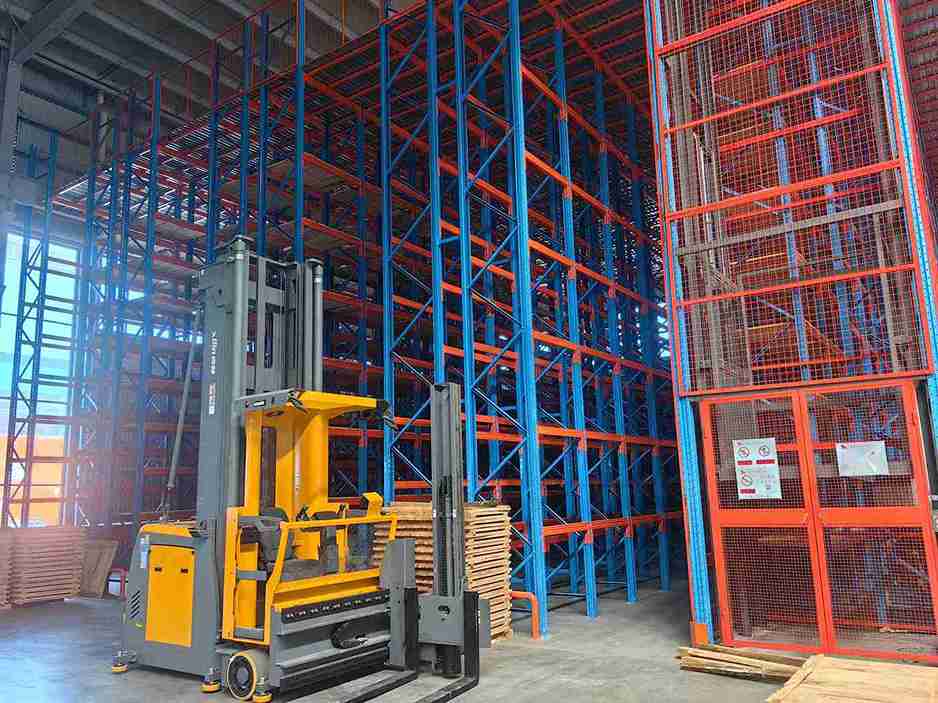
In automated warehouses, pallet rack safety barriers transition from passive protectors to active participants in the operational ecosystem. Their role is dual: to protect infrastructure from machines and to facilitate seamless machine operation.
Providing a Predictable Physical Boundary: AGVs rely on LiDAR, cameras, and other sensors to navigate. Well-defined, consistently placed pallet rack safety barriers provide a clear, unmoving boundary in the robot’s spatial map. This allows for tighter, more confident navigation and higher operational speeds, as the AGV’s obstacle detection algorithms can trust the barrier’s permanent location.
Sensor-Friendly Design Features: To avoid interfering with guidance systems, premium safety barriers can be designed with smooth, non-reflective surfaces and minimal protruding hardware. This prevents false positive obstacle readings and ensures LiDAR and optical scanners receive clean, reliable returns from the barrier’s surface.
Facilitating System Uptime: By virtually eliminating the risk of rack damage from AGV contact, these barriers ensure the automated storage and retrieval system (AS/RS) or mobile robot fleet can operate 24/7 without unscheduled stops for structural repairs. This protection is crucial for achieving the promised return on investment from high-cost automation projects.
The Installation and Integration Protocol: Ensuring Seamless Implementation
The effectiveness of a pallet rack safety barrier is contingent on its correct installation. A disciplined, phased methodology minimizes disruption to live operations—a critical consideration for facilities that cannot afford extended downtime.
Pre-Installation Audit and Digital Modeling: Using site plans and laser scans, engineers create a digital twin of the warehouse to plan barrier placement with millimeter accuracy, identifying clashes with utilities, sprinklers, or existing infrastructure before any physical work begins.
Staggered, Sequenced Roll-out: Installation is scheduled in logical zones, often coordinated with inventory cycle counts or low-activity periods. For a bolted safety barrier system, target bays are temporarily emptied using on-site material handling equipment. The process is swift, with a trained crew able to secure multiple barriers per hour.
Quality Assurance and Load Verification: Post-installation, each safety barrier is inspected for proper alignment, secure bracket attachment, and correct torque on all fasteners. The integrity of the rack structure is verified post-modification.
Operational Handover and Training: Site personnel are briefed on the purpose and limits of the new safety barriers. This includes reminding forklift operators that while the barriers are highly protective, they are not an invitation for reckless driving, and emphasizing that the barriers are part of a broader safety culture.
A Global Perspective: Adapting Pallet Rack Safety Solutions to Regional Challenges
The application of pallet rack safety barriers must be contextualized within regional industrial practices, environmental conditions, and regulatory frameworks.
In the High-Growth Markets of Southeast Asia and India: Rapid warehouse expansion sometimes outpaces formal safety protocols. Here, safety barriers serve as both physical protection and a tangible demonstration of a company’s commitment to international best practices, enhancing brand reputation and worker morale.
Across the Middle East and North Africa: In regions with extreme temperatures and pervasive dust, safety barriers require specifications for UV-stable coatings and designs that minimize dust accumulation, which can obscure visual warnings and interfere with sensors.
Throughout Africa’s Diverse Industrial Bases: From mining logistics to agricultural commodity storage, the need is for exceptionally durable and often modular safety barrier systems that can be adapted to evolving layouts in multi-use facilities.
In Latin America’s Manufacturing and Export Hubs: Compliance with both local safety codes and the standards of multinational clients is key. Engineered safety barrier systems, backed by professional documentation and load ratings, provide the necessary assurance to all stakeholders.
The Evolution of Standards and Future Trends in Rack Protection
The industry surrounding pallet rack safety barriers is not static. It evolves in response to new technologies and higher operational tempos. Emerging trends include:
Smart Barriers with Embedded Sensors: The integration of IoT-enabled accelerometers or impact sensors into safety barriers is on the horizon. These “smart barriers” could wirelessly transmit alerts upon a detectable impact, even a minor one, triggering immediate inspection and preventive maintenance, thus moving from scheduled to condition-based monitoring.
Advanced Composite Materials: Research into high-strength, lightweight composites could yield next-generation safety barriers with superior energy absorption-to-weight ratios, simplifying installation and reducing physical bulk.
Increased Harmonization of Testing Standards: As global trade expands, there is growing momentum toward more unified international standards for testing and rating the impact performance of pallet rack safety barriers, giving procurement teams clearer comparative data.
Conclusion: The Indispensable Investment in Operational Certainty
In the final analysis, the decision to implement a comprehensive system of pallet rack safety barriers is a definitive statement about an organization’s operational philosophy. It reflects a forward-looking perspective that values resilience over mere reactivity, and that understands true efficiency is impossible without foundational stability. These barriers are the silent guardians that allow innovation—in the form of AGVs, AS/RS, and high-density storage—to flourish without fear of catastrophic setback.
They protect not just steel and inventory, but also the well-being of the workforce, the confidence of investors, and the reliability promised to customers. For any enterprise operating a warehouse where machinery and infrastructure intersect, a strategic, customized investment in high-performance pallet rack safety barriers is not an optional line item; it is an indispensable, value-preserving pillar of modern logistics.
Frequently Asked Questions (FAQs)
1. What is the actual testing standard for pallet rack safety barriers, and how should we interpret the ratings?
While a universal ISO standard is still developing, reputable manufacturers test their pallet rack safety barriers according to rigorous protocols, often based on nationally recognized frameworks like those from the Rack Manufacturers Institute (RMI) or using in-house developed impact tests that simulate real-world forklift collisions.
Ratings are typically given in terms of energy absorption (Joules) or equivalent impact speed/weight. The key is to request detailed test reports and ensure the tested scenario (e.g., “impact from a 2,000 kg load at 4 km/h at 500mm height”) matches or exceeds the potential threats in your specific facility. A true engineered safety barrier will have documented, verifiable performance data.
2. Can pallet rack safety barriers be retrofitted to any brand or type of existing racking system?
Yes, a core principle of quality safety barrier design is adaptability. Professional suppliers design universal or custom bracket systems that clamp onto the upright profile of any major rack brand (e.g., teardrop, slotted, structural bolt-on). The engineering assessment prior to installation will confirm compatibility and ensure the mounting method does not compromise the rack’s load-bearing capacity. This makes retrofitting a viable and common strategy for upgrading older facilities.
3. How do we calculate the correct number of pallet rack safety barriers needed for our warehouse?
This requires a systematic risk assessment rather than a simple formula. The process involves: 1) Mapping all vehicle traffic patterns (forklift and AGV), 2) Identifying all potential impact points (aisle ends, corners, columns in paths), 3) Classifying these points into risk tiers (Critical, High, Low), and 4) Applying the appropriate barrier solution to each tier. Most expert providers offer a site audit or a detailed plan-review service to generate a precise bill of materials and layout diagram, ensuring no critical zone is left unprotected.
4. What is the expected lifespan of a properly installed steel pallet rack safety barrier, and do they require maintenance?
A hot-dip galvanized or properly powder-coated steel safety barrier in an indoor warehouse environment can have a functional lifespan exceeding 15-20 years. Maintenance is minimal but crucial. It involves periodic visual inspections (e.g., quarterly) for signs of impact, corrosion, or loose fittings, and an annual check where all bolted connections are verified for tightness. The safety barrier itself is designed to be the sacrificial component; any significant deformation after an impact indicates it has performed its job and should be replaced to restore full protection levels.
5. In a cost-benefit analysis, how do we justify the investment in custom pallet rack safety barriers to financial decision-makers?
Frame the investment not as an expense, but as risk mitigation insurance with a quantifiable return. Build a business case comparing the single, fully-loaded cost of a major racking collapse (including inventory loss, downtime, labor for re-stocking, rush-order replacement parts, and potential regulatory fines) against the total project cost of installing safety barriers.
The cost of prevention is almost always a fraction of the cost of one major failure. Furthermore, highlight the soft benefits: enhanced safety culture (reducing turnover and injury costs), protection of automation investments, and the avoidance of reputational damage from failed customer deliveries due to operational disruption. Presenting this comprehensive risk-adjusted ROI typically provides compelling justification.
If you require perfect CAD drawings and quotes for warehouse racking, please contact us. We can provide you with free warehouse racking planning and design services and quotes. Our email address is: jili@geelyracks.com