🐍 "先着50社のエンタープライズ・クエリーにカスタム3Dウェアハウス・デザインをプレゼント" プラン















Steel Structure Rack Safety and Assessment Standards: A Complete Guide to GB/T 41514-2022
Summary: GB/T 41514-2022, officially implemented on February 1, 2023, represents China’s first national standard dedicated to the safety inspection and assessment of steel structure rack systems. This comprehensive guide explores the standard’s three-tier inspection system, three-color risk classification methodology, detailed damage detection protocols, and practical implementation strategies.
Drawing on real-world case studies, industry statistics, and international comparisons with SEMA and RMI standards, this article examines how this landmark regulation transforms warehouse safety management across all steel structure rack types—from automated stereoscopic warehouses to cold storage facilities—and provides warehouse operators, safety managers, and facility owners with a unified framework for identifying, evaluating, and mitigating structural risks before they escalate into catastrophic failures.
H1: Introduction to GB/T 41514-2022: China’s First National Standard for Steel Structure Rack Safety
The warehouse industry has long operated without a unified, authoritative technical standard for steel structure rack safety inspection. Different manufacturers applied their own criteria, inspection agencies followed varying protocols, and warehouse operators lacked clear guidance on when and how to assess their steel structure rack systems. This fragmented approach created significant safety blind spots across the logistics and storage sector.
GB/T 41514-2022, titled “Standard for Safety and Evaluation of Steel Structure Racks”, fundamentally changed this landscape. Issued by the State Administration for Market Regulation and the Standardization Administration of China on July 11, 2022, and officially implemented on February 1, 2023, this national standard fills a critical void in China’s warehouse safety framework. According to the standard’s scope, it “applies to the overall assessment of various types of steel structure racks, as well as the components of various types of steel structure racks and the damage assessment of important nodes”.
What makes this standard particularly significant is its comprehensive scope. Unlike industry-specific or enterprise-level documents, GB/T 41514-2022 applies universally across all types of steel structure racks—including automated stereoscopic warehouses, cold storage racks, pallet racking, drive-in racking, cantilever racks, gravity racks, mezzanine racks, and shuttle cart racking systems. The standard covers not only complete steel structure rack systems but also individual components and critical connection points.
H2: Why This Standard Matters for Warehouse Safety
The standard’s importance cannot be overstated. Steel structure rack systems serve as the skeletal framework of modern logistics operations—they support millions of tons of inventory, facilitate efficient material flow, and directly impact workplace safety. Yet steel structure racks are subjected to continuous stress: repeated loading and unloading cycles, impact forces from material handling equipment, environmental factors like temperature fluctuations and corrosion, and sometimes improper loading practices.
The consequences of neglecting steel structure rack safety are devastating. In the United States, forklift impacts cause 90-95% of steel structure rack damage annually (2020-2025), underscoring the critical need for regular inspections to prevent collapses. OSHA reports that storage-related incidents, including steel structure rack failures, account for 8% of all US warehouse fatalities between 2020 and 2025. Warehouse-related injuries nearly doubled from 42,500 in 2019 to over 80,500 in 2022, with steel structure rack collapses and strikes contributing significantly due to inadequate inspections. The estimated annual economic cost of incidents linked to poor maintenance and inspection failures in the US alone is $36 billion.
Without systematic inspection and assessment protocols, structural degradation often goes unnoticed until failure occurs. The consequences can be devastating—steel structure rack collapses have resulted in fatalities, serious injuries, and millions in property damage. GB/T 41514-2022 provides warehouse operators with quantifiable, actionable criteria for identifying damage, assessing risk levels, and taking appropriate corrective action before minor issues escalate into catastrophic failures.
H2: A Real-World Wake-Up Call
Consider what happened at a large building materials retail store. A spotter working inside the facility was fatally crushed when a section of pallet racking collapsed in a tile storage area. Investigators found that the steel structure rack system had visible damage—a bent 1×3 inch frame section between knee and waist height—which had been noticed and reported to a supervisor about 30 minutes before the collapse. Despite this report, no steps were taken to block off the area or stop nearby forklift operations.
A reach truck passed beside the compromised steel structure rack, and the added movement and load caused the weakened system to give way. The employee was pinned under the falling materials and killed instantly. This fatality illustrates the deadly consequences of ignoring early warning signs and failing to act on known hazards in steel structure rack systems.
H1: The Three-Tier Inspection System: From Daily Checks to Professional Assessments
One of the standard’s most practical contributions is its structured, tiered approach to steel structure rack inspection. GB/T 41514-2022 establishes three distinct levels of inspection, each with specific frequency requirements, responsible personnel, and scope.
H2: Daily Inspections: The First Line of Defense
Daily inspections serve as the frontline defense against steel structure rack damage. Warehouse operations personnel conduct these routine visual inspections during their regular work activities. The primary objective is identifying obvious damage, deformation, or hazards through casual observation during normal warehouse operations.
What should daily inspectors look for when examining a steel structure rack? The standard specifies that daily checks should focus on:
Proper placement of unit loads on steel structure rack positions
Safe positioning of overhanging loads
Stability and neatness of palletized goods
Visible damage to steel structure rack components
Missing or damaged safety pins on the steel structure rack
Obvious signs of impact damage to the steel structure rack
The daily inspection protocol emphasizes immediate reporting and escalation. When warehouse personnel spot potential issues with a steel structure rack during their daily rounds, they must promptly report findings to supervisors for further evaluation. This creates a continuous monitoring loop that catches problems early.
H2: Periodic Inspections: Systematic Six-Month Reviews
Moving beyond casual observation, periodic inspections occur on a six-month cycle. These more systematic reviews are organized by warehouse managers or equipment managers, with professional involvement when necessary.
Periodic inspections of a steel structure rack represent a significant step up in rigor. Rather than relying on incidental observation, these scheduled reviews involve:
Systematic examination of the entire steel structure rack
Detailed assessment of critical load-bearing components of the steel structure rack
Documentation of all findings in written inspection records for the steel structure rack
Deformation and damage measurements where concerns about the steel structure rack exist
The six-month cadence strikes a practical balance—frequent enough to catch developing problems in a steel structure rack, yet manageable for warehouse operations without imposing excessive burden on staff or disrupting workflow.
H2: Professional Inspections: Comprehensive Expert Evaluation
The most thorough level of steel structure rack inspection is the professional inspection, required every 1 to 2 years. Unlike the first two tiers, professional inspections must be conducted by qualified specialists with appropriate expertise and, ideally, recognized certifications in steel structure rack safety.
Professional inspections of a steel structure rack demand:
Comprehensive evaluation of the entire steel structure rack system
Precision measurement using calibrated instruments on the steel structure rack
Formal assessment reports with documented findings for the steel structure rack
Specific remediation recommendations for identified damage to the steel structure rack
What distinguishes professional inspections is their technical depth. While daily and periodic inspections rely primarily on visual observation of the steel structure rack, professional inspections employ sophisticated measurement tools—total stations, leveling instruments, laser rangefinders, torque wrenches, and coating thickness gauges—to obtain quantitative data on structural conditions of the steel structure rack.
All inspection instruments for steel structure rack assessment must meet specified accuracy standards and undergo calibration and verification. This ensures measurement reliability and enables meaningful comparison across steel structure rack inspections.
H1: Comprehensive Safety Assessment: The Core of GB/T 41514-2022
Beyond routine inspections of a steel structure rack, the standard establishes detailed protocols for formal safety assessments triggered by specific conditions or events.
H2: Assessment Initiation Conditions
GB/T 41514-2022 specifies that formal risk assessments of a steel structure rack must be conducted—and written reports produced—when any of the following conditions arise:
a) Age and service life triggers for the steel structure rack:
Steel structure racks exceeding ten years of service
Steel structure racks reaching their agreed-upon service life
b) User-initiated assessments of the steel structure rack:
When users request safety evaluation of their steel structure rack
c) Visible structural damage to the steel structure rack:
Obvious buckling deformation of steel structure rack components
Impact damage (denting, tearing) to the steel structure rack
Corrosion damage to the steel structure rack
Fatigue damage in the steel structure rack
d) Operational changes affecting the steel structure rack:
Changes in stored goods weight or volume on the steel structure rack
Reactivation of previously empty steel structure racks
Changes in stored goods type on the steel structure rack after a period of vacancy
e) Physical alterations to the steel structure rack:
Relocation of steel structure racks
Structural changes to the steel structure rack: first-level beam height adjustments, beam spacing changes, rack height increases, pallet position count changes, reassembly of the steel structure rack
f) Environmental conditions affecting the steel structure rack:
Ground settlement, cracking, or damage beneath the steel structure rack
Changes in usage conditions that may affect the steel structure rack’s load-bearing capacity
These trigger conditions ensure that steel structure racks undergo assessment whenever circumstances change in ways that could compromise safety.
H2: Field Assessment Conditions
The standard also establishes minimum site conditions for conducting valid assessments of a steel structure rack:
Non-automated warehouse steel structure racks must meet site requirements specified in WB/T 1066-2017 (sections 5.1.2, 5.1.3, 5.1.4)
Automated stereoscopic warehouse steel structure racks must comply with JB/T 9018-2011 (section 7.1)
Floor flatness tolerances for steel structure rack installation must meet JB/T 9018-2011 Table 8 requirements
Temperature conditions must align with the steel structure rack’s design operating temperature specifications
Critically, if site conditions don’t meet these requirements for steel structure rack assessment, adjustments are mandatory. When floor flatness exceeds tolerances for a steel structure rack installation, professionals must re-evaluate the steel structure rack’s load-bearing capacity considering additional stresses from floor irregularities.
H2: Required Inspection Instruments for Steel Structure Rack Assessment
Professional assessments of a steel structure rack require precision instruments meeting specified accuracy levels:
| Instrument | Purpose in Steel Structure Rack Assessment |
|---|---|
| Leveling instruments | Floor flatness, horizontal alignment of steel structure rack |
| Theodolites | Angular measurements, vertical alignment of steel structure rack |
| Total stations | Three-dimensional positioning, overall steel structure rack sway |
| Laser rangefinders | Distance measurements on steel structure rack |
| Steel rulers and tape measures | Direct dimensional measurements of steel structure rack components |
| Calipers | Precise dimensional measurements of steel structure rack members |
| Torque wrenches | Bolt tension verification on steel structure rack connections |
| Coating thickness gauges | Corrosion assessment of steel structure rack surfaces |
| Dial gauges | Small deflection measurements on steel structure rack beams |
| Feeler gauges | Gap measurements in steel structure rack connections |
All instruments for steel structure rack inspection must be calibrated and verified to ensure measurement accuracy.
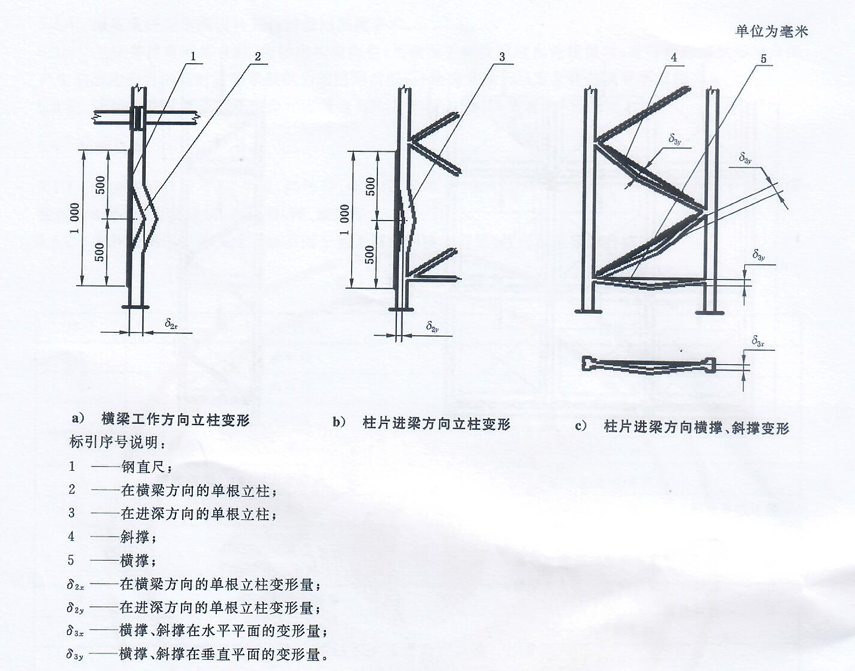
H1: Damage Detection Protocols: Systematic Component Evaluation of Steel Structure Racks
GB/T 41514-2022 provides detailed, component-specific damage detection protocols for every major element of a steel structure rack. This systematic approach ensures no critical component of the steel structure rack is overlooked during assessment.
H2: Overall Steel Structure Rack Sway (Global Lateral Displacement)
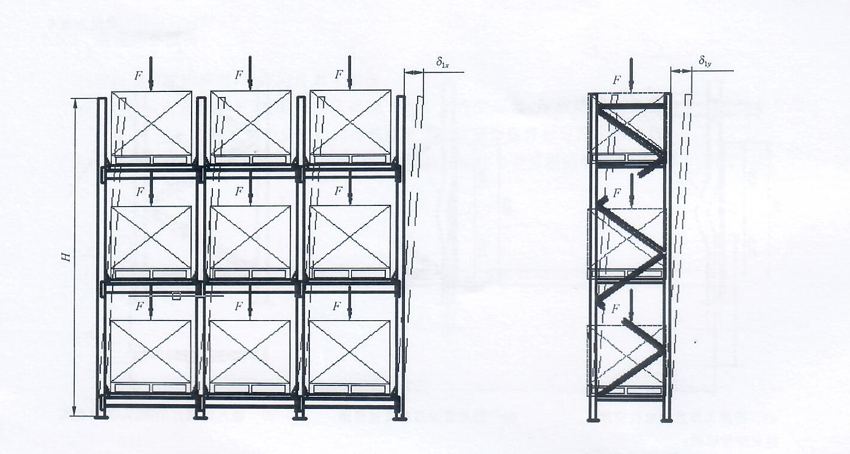
Overall steel structure rack sway represents one of the most critical safety indicators. Under vertical loading, if the entire steel structure rack sways beyond allowable limits, it constitutes damage requiring immediate action.
The standard specifies measurement protocols for steel structure rack sway using pallet racking as the example:
Apply rated load to each level of the steel structure rack
Use total stations, plumb bobs, and steel rulers to measure column top deformation in both bay width direction (δ₁ₓ) そして depth direction (δ₁ᵧ) of the steel structure rack
Test two sets of depth-direction column frames of the steel structure rack
Calculate and record average values for the steel structure rack
Allowable sway deformation limits for steel structure racks vary by rack type and are specified in Appendix C of the standard.
H2: Column and Column Frame Damage in Steel Structure Racks
Columns serve as the primary vertical load-bearing elements of a steel structure rack—their integrity is fundamental to steel structure rack stability. The standard’s column damage assessment protocol for a steel structure rack requires:
Measurement procedure for steel structure rack columns:
Unload the column frame of the steel structure rack completely
Measure residual deformation of columns, diagonal braces, and horizontal braces of the steel structure rack
Place a 1-meter straight ruler against the concave surface of the damaged steel structure rack component
Center the damaged area within the ruler’s length on the steel structure rack
Measure deformation in beam direction (δ₂ₓ) そして frame depth direction (δ₂ᵧ) of the steel structure rack
Key thresholds for steel structure rack columns: For steel structure rack columns, allowable residual deformation is 5mm per meter in the beam direction and 3mm per meter in the depth direction. For diagonal and horizontal braces of a steel structure rack, allowable deformation in both horizontal and vertical planes is 10mm.
For steel structure rack components shorter than 1 meter, proportional assessment applies—for example, a 0.5-meter component of a steel structure rack has half the allowable deformation of a 1-meter component.
Critical note: This measurement method for steel structure rack components applies to deformation damage only, not local damage such as dents, buckling, tears, or cracks in the steel structure rack.
Treatment protocols for steel structure rack columns: When steel structure rack columns exhibit buckling deformation, material tearing, or cracking, replacement is the preferred solution. If replacement of the steel structure rack component is impractical, reinforcement may be considered, but must be accompanied by load reduction calculated by qualified professionals for the steel structure rack.
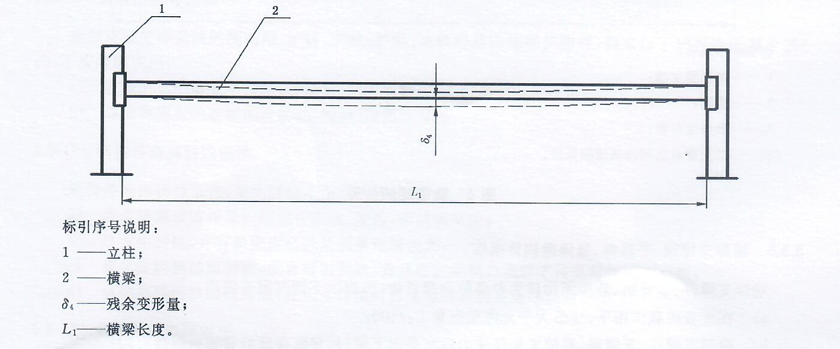
H2: Beam Damage in Steel Structure Racks
Beams—the horizontal members of a steel structure rack supporting loads—are subject to bending, fatigue, and impact damage. GB/T 41514-2022 identifies steel structure rack beam damage when:
Under vertical loading, steel structure rack beam deformation exceeds allowable limits
After unloading, residual deformation of the steel structure rack beam exceeds allowable residual deformation limits
Steel structure rack beams exhibit obvious twisting, sagging, bulging, or fracture
Beam-end connectors of the steel structure rack are deformed or fractured
Residual deformation limits for steel structure rack beams: For steel structure rack beam components, residual deformation must not exceed 20% of the maximum allowable deformation.
Allowable deflection limits for various steel structure rack types are specified in Appendix D.
H2: Shuttle Cart Rail Beam Damage in Steel Structure Racks
Shuttle cart rail beams in a steel structure rack serve dual functions—supporting both shuttle cart travel そして stored loads. This specialized steel structure rack component has unique damage criteria:
Under combined vertical load and cart movement loads, steel structure rack rail beam deformation exceeding L₂/400 (where L₂ is the distance between supports)
Residual deformation of the steel structure rack rail beam exceeding allowable residual limits after unloading
Twisting, bending, or bulging of the steel structure rack rail beam with residual deformation exceeding limits
Impact damage to the steel structure rack rail beam causing severe deformation or fracture
H2: Cantilever and Overhang Component Damage in Steel Structure Racks
Cantilever beams, overhang beams, and end support components of a steel structure rack carry loads on a single overhanging end—making them particularly vulnerable to specific failure modes:
Vertical load deformation of the steel structure rack cantilever exceeding L₃/100 (where L₃ is the cantilever length)
Downward tilting of the steel structure rack component under load that risks load slippage
Severe twisting or fracture of the steel structure rack component
The relatively strict L₃/100 limit (1% of length) for steel structure rack cantilevers reflects the heightened risk of cantilevered configurations—even small deformations can cause load instability and potential spills.
H2: Shelf and Support Bar Damage in Steel Structure Racks
Shelves (decking) そして support bars of a steel structure rack serve as load-bearing surfaces and secondary supports:
Steel structure rack shelf damage criteria:
Deformation exceeding L₄/300 under load (where L₄ is the distance between supports on the steel structure rack)
Breakage, missing corners, or missing edges of the steel structure rack shelf accompanied by twisting, bending, or fracture
Steel structure rack support bar damage criteria:
Deformation exceeding L₅/200 under vertical loading on the steel structure rack
Twisting or warping of the steel structure rack support bar
Loose fasteners on the steel structure rack support bar
Fracture of the steel structure rack support bar
H2: Bracing, Tie Rod, and Crossbeam Damage in Steel Structure Racks
Bracing and tie rod components of a steel structure rack provide lateral stability and load distribution:
Rigid non-adjustable tie rods on a steel structure rack with obvious bending or loose standard fasteners
Turnbuckle tie rods on a steel structure rack with loose, tension-free connections
Twisting, bending, bulging, or loosening deformation damage to steel structure rack bracing
Turnbuckle nut separation, severe bending, or fracture of steel structure rack tie rods
H2: Back Stops, Back Nets, and Protective Devices on Steel Structure Racks
Back stops, back nets, and protective devices on a steel structure rack prevent load spillage and protect steel structure rack integrity:
Impact damage to steel structure rack protective devices causing deformation
Loose connectors or fasteners on steel structure rack protective devices
Detachment of steel structure rack protective devices compromising protective function
Fracture of steel structure rack protective devices
Perimeter protection components of a steel structure rack (guardrails, bollards, protective posts, floor rails, isolation nets) require 100% inspection:
Impact damage to steel structure rack perimeter protection causing severe deformation, fracture, collapse, or missing sections
Loose, lifted, or detached floor anchor bolts on steel structure rack perimeter protection
Inability to provide protective function for the steel structure rack
H2: Corrosion Damage Assessment of Steel Structure Racks
Corrosion represents a progressive threat to any steel structure rack that gradually reduces load-bearing capacity. The standard defines corrosion damage to a steel structure rack in four progressive stages:
Paint film or galvanized coating on the steel structure rack peeling in sheets, forming oxide scale
Rust formation on the steel structure rack with oxide scale beginning to detach from base metal
Oxide scale peeling (or removable by scraping) from the steel structure rack with pitting visible under normal vision
Oxide scale peeling from the steel structure rack with widespread pitting visible under normal visual inspection
H2: Connection Integrity in Steel Structure Racks
Connection failures in a steel structure rack can be as dangerous as component failure:
Bolt connections on steel structure racks:
Loose or missing bolts in column frames, bracing, and other structural connections of the steel structure rack
Beam safety pins on steel structure racks:
Missing safety pins at beam-column connections of the steel structure rack
Safety pins on the steel structure rack must be inspected and maintained—missing pins must be replaced immediately
H1: The Three-Color Risk Classification System for Steel Structure Racks
One of GB/T 41514-2022’s most innovative features is its three-color risk classification system for steel structure racks. This intuitive framework enables rapid decision-making at the warehouse level—personnel can immediately understand severity and required actions for a steel structure rack based on color coding alone.
H2: Yellow Risk for Steel Structure Racks: Monitored Operation
Yellow risk represents the lowest severity level for a steel structure rack.
Definition: Deformation, corrosion, and connection damage on the steel structure rack remain within allowable limits. Steel structure rack components may be at or slightly beyond allowable elastic deformation under load, but residual plastic deformation of the steel structure rack after unloading remains within allowable limits.
Action required for the steel structure rack:
Damaged components of the steel structure rack must be recorded and marked
Conditional or restricted use of the steel structure rack is permitted
Re-inspection and re-assessment of the steel structure rack at the next inspection cycle
Key point: Yellow risk for a steel structure rack does not require immediate unloading—but it does require documentation and monitoring.
H2: Orange Risk for Steel Structure Racks: Immediate Unloading Required
Orange risk signals damage beyond allowable limits in a steel structure rack—the structure has compromised load-bearing capacity.
Definition: Deformation, corrosion, and connection damage on the steel structure rack exceed allowable ranges. Load-bearing components of the steel structure rack show excessive elastic deformation under load, and residual plastic deformation of the steel structure rack after unloading exceeds allowable limits.
Action required for the steel structure rack:
Immediate unloading of affected steel structure rack components and areas
Marking and local isolation of the damaged steel structure rack section
No reloading of the steel structure rack until repairs are complete
Critical timeline for steel structure rack orange risk: If repairs to the steel structure rack are not completed within 28 days of identification, the orange risk automatically escalates to red risk. This provision prevents indefinite postponement of necessary steel structure rack repairs.
During the 28-day window for steel structure rack repairs: Loaded positions on the steel structure rack may remain loaded for up to one week after initial identification. After that, immediate unloading of the steel structure rack is required.
H2: Red Risk for Steel Structure Racks: Immediate Stop
Red risk for a steel structure rack represents imminent danger—the structure is at risk of catastrophic failure.
Definition: Severe plastic deformation or brittle fracture in the overall steel structure rack or major load-bearing components.
Action required for the steel structure rack:
Immediate cessation of use of the steel structure rack
Unloading, isolation, barricading, and marking of affected steel structure rack areas
No reloading of the steel structure rack until repairs are completed and safety certification obtained
Repairs to the steel structure rack must be performed by replacement of damaged components
Repairs to the steel structure rack must be based on structural analysis calculations by the manufacturer
H2: No Risk for Steel Structure Racks: Green Status
When all components of a steel structure rack perform within allowable limits—no damage, no corrosion, proper connections—the steel structure rack operates at no risk.
In this condition, facilities should display a green safety mark on the steel structure rack’s safety inspection sign.
H1: Sampling Requirements and Inspection Quantity for Steel Structure Racks
GB/T 41514-2022 specifies minimum sampling quantities for each inspection level and component type of a steel structure rack:
| Component of Steel Structure Rack | Inspection Quantity |
|---|---|
| Overall steel structure rack sway | 10% of same-batch steel structure racks, minimum 2 groups |
| Column frame damage on steel structure rack | 5% of same-batch frames, edge and middle frames equally, minimum 10 frames |
| Beam damage on steel structure rack | 2% of same-batch beams, minimum 20 beams |
| Beam-end connector damage on steel structure rack | 2% of same-batch beams, minimum 20 beams |
| Rail beam damage on steel structure rack | 2% of same-batch beams, minimum 20 beams |
| Cantilever/overhang damage on steel structure rack | 2% of same-batch components, minimum 20 each |
| Shelf damage on steel structure rack | 5% of same-batch shelves |
| Support bar damage on steel structure rack | 5% of same-batch support bars |
| Bracing/tie rod damage on steel structure rack | 20% of vertical and horizontal bracing; 100% visual inspection of crossbeams; minimum 20 each |
| Back stop/back net damage on steel structure rack | 50% of same-batch rack positions |
| Protective devices on steel structure rack | 100% inspection |
| Perimeter isolation nets on steel structure rack | 100% inspection |
| Corrosion inspection of steel structure rack | 20% of same-batch structural components |
| Safety pins/bolts on steel structure rack | 2% of safety pins, 1% of bolts, minimum 50 each |
Daily inspections of a steel structure rack rely on visual observation. Periodic inspections of a steel structure rack use sampling per the table above. Professional inspections of a steel structure rack require full inspection of all items.
H1: International Context: How GB/T 41514-2022 Compares with Global Steel Structure Rack Standards
H2: The SEMA Code of Practice (United Kingdom)
The Storage Equipment Manufacturers Association (SEMA) in the UK has developed a comprehensive code of practice for steel structure rack safety that has been in use for over 40 years, updated most recently in 2020. SEMA’s approach to steel structure rack inspection follows a hierarchical three-level system remarkably similar to GB/T 41514-2022:
Damage inspection by warehouse operatives on the steel structure rack
Weekly inspections as a visual check from ground level of the steel structure rack
Annual or bi-annual inspection of the steel structure rack by a ‘technically competent person’
SEMA also uses a three-color risk classification system for steel structure racks—Red, Amber, and Green—that parallels GB/T 41514-2022’s yellow, orange, and red risk framework. Red risk in the SEMA system indicates severe damage greater than twice the SEMA limits on a steel structure rack.
SEMA emphasizes that the user of a steel structure rack should nominate a competent person to be responsible for racking safety (PRRS) who ensures the steel structure rack is used, inspected, and maintained in accordance with appropriate regulations and guidelines. Operator training is also stressed, with SEMA noting that comprehensive and effective driver training minimizes the possibility of accidents involving steel structure racks.
H2: The R-Mark Certification Program (United States)
In the United States, the Rack Manufacturers Institute (RMI) created the R-Mark certification program to help buyers mitigate risks by ensuring that the steel structure rack they specify, install, and use meets the highest structural and safety standards. The R-Mark certification verifies that a steel structure rack manufacturer’s systems comply with applicable American National Standards Institute (ANSI) standards, specifically ANSI MH16.1: Design, Testing, and Utilization of Industrial Steel Storage Racks.
The R-Mark program has evolved into a multi-tiered structure for steel structure rack certification:
R-Mark Certified Manufacturer: Indicates the company has demonstrated capability to produce steel structure rack systems that comply with RMI’s applicable ANSI standards
R-Mark Certified System: Applies to specific steel structure rack system designs that meet current engineering standards and include approved Load Application and Rack Configuration (LARC) drawings
R-Mark Certified Installation: Confirms that the installed steel structure rack matches the certified system design, based on an on-site inspection
As Patrick Davison of RMI explains: “So much of the strength or performance characteristics of a steel structure rack depend on its proper design and installation. It’s like a giant Erector set—built correctly, it’s strong and stable. Built incorrectly, it’s vulnerable to failure”.
H2: The CSA Guideline (Canada)
In Canada, the Canadian Standards Association has published updated guidelines providing a step-by-step process for effective steel structure rack inspections. These guidelines help inspectors identify parts of the steel structure rack and recognize the types of damage that can occur, understand how damage impacts the steel structure rack, recognize how modifications can undermine the steel structure rack structure, and conduct more detailed inspections of the steel structure rack at least once a year.
In Ontario, Canada, monthly steel structure rack inspections are required under OHSA, with annual in-depth checks preventing an estimated 20-30% of potential steel structure rack collapses in high-traffic warehouses (2020-2024 data).
H2: What Makes GB/T 41514-2022 Unique
While GB/T 41514-2022 shares many common elements with international steel structure rack standards—the three-tier inspection approach, the color-coded risk classification, and the emphasis on professional assessments—it also has distinctive features tailored to China’s industrial context.
First, GB/T 41514-2022 is China’s first national standard specifically dedicated to steel structure rack safety, unifying previously fragmented industry practices. Second, it covers the entire lifecycle of steel structure racks, extending monitoring from traditional static loads to dynamic stress changes, environmental corrosion, and other multi-dimensional parameters. Third, it establishes specific quantitative thresholds for deformation, residual deformation, and damage that provide clear, enforceable criteria for steel structure rack assessment.
H1: Risk Control and Documentation for Steel Structure Racks
H2: The Risk Control Process for Steel Structure Racks
GB/T 41514-2022 establishes a systematic risk control workflow for steel structure racks:
Identify damage to the steel structure rack through inspection
Classify risk level for the steel structure rack (yellow, orange, red, or none)
Apply appropriate controls to the steel structure rack based on risk level
Mark damaged components of the steel structure rack with unique identification and date
Color-code marks on the steel structure rack to match risk level
Document findings for the steel structure rack using assessment worksheets (Appendix E)
Implement remediation of the steel structure rack (preferably by original manufacturer)
H2: Damage Marking Requirements for Steel Structure Racks
All components of a steel structure rack identified as having risk—and not yet repaired—must be clearly marked:
Unique identification for each damaged component of the steel structure rack
Date of identification of the steel structure rack damage
Color-coded marking on the steel structure rack matching risk level (yellow, orange, or red)
Marks placed in clearly visible positions on damaged steel structure rack components
This marking system ensures that anyone interacting with the steel structure rack immediately recognizes the hazard.
H2: Assessment Report Requirements for Steel Structure Racks
Formal assessment reports for steel structure racks must include:
a) Steel structure rack information: Type, assembly address, project overview, commissioning date, supplier
b) Party information: Client and assessment agency details for the steel structure rack
c) Assessment timeline: Current assessment dates, previous assessment dates, maintenance records for the steel structure rack
d) Inspection results: Usage status inspection, documentation review, and findings for the steel structure rack
e) Detection details: Content, methods, and results for the steel structure rack assessment
f) Instruments used: Primary detection equipment for the steel structure rack
g) Safety assessment: Risk evaluation for all damage types on the steel structure rack
h) Personnel: Assessor information and approval signatures for the steel structure rack
i) Conclusions and recommendations: Assessment conclusions and remediation suggestions for the steel structure rack
H1: Practical Implementation: From Compliance to Safety Culture for Steel Structure Racks
H2: Building an Effective Steel Structure Rack Inspection Program
Implementing GB/T 41514-2022 effectively for steel structure racks requires more than checking boxes—it demands building a safety culture.
For warehouse operators with steel structure racks:
Establish standardized inspection procedures for steel structure racks
Train personnel in proper inspection techniques for steel structure racks
Develop science-based maintenance schedules for steel structure racks
Document everything—inspection records, maintenance actions, incidents involving steel structure racks
For steel structure rack manufacturers:
Provide complete technical documentation for steel structure racks
Establish after-sales service systems for steel structure racks
Develop safety assessment capabilities for steel structure racks
Accept safety responsibility for steel structure racks
For third-party inspection agencies for steel structure racks:
The standard provides an authoritative technical basis for steel structure rack services
Promotes professionalization and standardization of steel structure rack inspection services
H2: Common Steel Structure Rack Implementation Pitfalls to Avoid
Based on industry experience, common implementation failures for steel structure rack safety include:
1. Treating steel structure rack inspections as formalities: Relying solely on visual checks without proper measurement of steel structure racks—especially for deformation that may not be visible to the naked eye.
2. Ignoring orange risk deadlines on steel structure racks: Allowing the 28-day orange risk window for steel structure rack repairs to expire without action, triggering automatic escalation to red risk.
3. Inadequate documentation of steel structure racks: Failing to maintain complete records of steel structure rack inspections, findings, and actions—making trend analysis impossible and complicating liability issues.
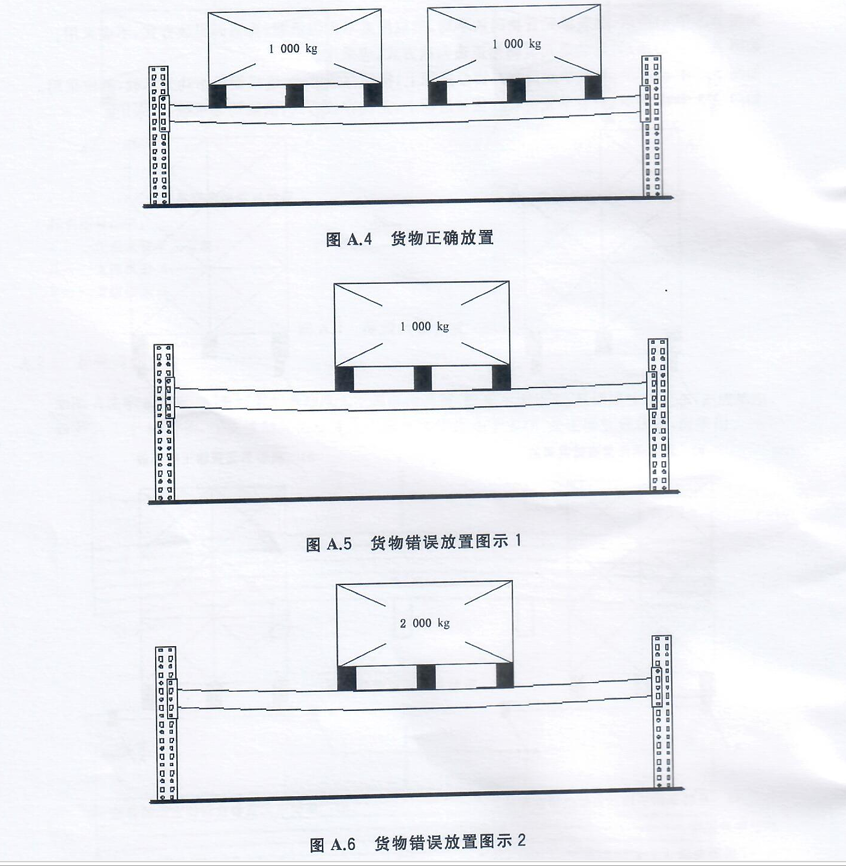
4. Improper load placement on steel structure racks: Storing goods on steel structure racks in configurations not aligned with design assumptions (as detailed in Appendix A of the standard).
5. Neglecting the human factor in steel structure rack safety: Failing to train personnel on proper inspection techniques and damage recognition for steel structure racks.
H1: The Economic Case for Steel Structure Rack Compliance
Some warehouse operators view steel structure rack safety inspections as cost centers rather than investments. This perspective misses the full picture.
H2: Cost of Non-Compliance with Steel Structure Rack Standards
The cost of ignoring steel structure rack safety can be staggering:
Injury and fatality costs: Medical expenses, compensation, legal liability from steel structure rack failures
Property damage: Inventory loss, equipment damage, facility repair from steel structure rack collapses
Business interruption: Lost revenue during recovery from steel structure rack incidents
Regulatory penalties: Fines and sanctions for steel structure rack violations
Reputational damage: Loss of customer confidence due to steel structure rack failures
OSHA citations for steel structure rack violations can be substantial. One recent citation involving unanchored and damaged steel storage racks resulted in penalties of $13,000. Another citation for inadequately labeled and maintained steel structure racking systems exposed employees to struck-by hazards. Steel structure rack columns not anchored to the floor have been cited as serious violations exposing employees to struck-by and/or crushing hazards if the steel structure racks were to fall or tip over.
From 2020-2022, US struck-by injuries from falling steel structure racking or loads caused 16% of warehouse fatalities, often preventable through bi-annual steel structure rack inspections as recommended by OSHA.
Industry data suggests that proactive steel structure rack inspection programs can reduce warehouse maintenance costs by approximately 20% through early detection and prevention of steel structure rack damage.
H2: ROI of Professional Steel Structure Rack Inspections
Regular professional inspections of steel structure racks deliver measurable returns:
Extended equipment life: Early damage detection of steel structure racks enables targeted repairs rather than wholesale replacement
Reduced downtime: Scheduled steel structure rack inspections minimize operational disruption compared to emergency responses
Lower insurance premiums: Documented steel structure rack safety programs may qualify for reduced rates
Improved safety metrics: Fewer incidents, lower workers’ compensation costs from steel structure rack failures
Enhanced operational confidence: Personnel can work without fear of steel structure rack structural failure
H1: Conclusion
GB/T 41514-2022 represents a watershed moment for steel structure rack safety in China. By establishing the country’s first unified national standard for steel structure rack safety assessment, it provides warehouse operators, safety professionals, and inspection agencies with clear, actionable protocols for identifying, evaluating, and mitigating structural risks in steel structure racks.
The standard’s three-tier inspection system (daily, periodic, and professional) ensures that steel structure racks receive appropriate attention at every stage of their service life. Its three-color risk classification (yellow, orange, red) enables rapid decision-making at the warehouse level for steel structure rack safety. Its detailed damage detection protocols leave no critical component of a steel structure rack unexamined. And its comprehensive scope covers every type of steel structure rack in use today.
For warehouse operators, compliance with GB/T 41514-2022 for steel structure racks is not merely a regulatory obligation—it is a 戦略的要請. Regular inspections and timely remediation of steel structure racks protect personnel, preserve assets, and maintain operational continuity. The standard’s 28-day orange risk remediation window for steel structure racks provides flexibility without compromising safety, while the automatic escalation provision prevents indefinite postponement of necessary steel structure rack repairs.
As the logistics and warehousing industry continues to evolve—with taller steel structure racks, heavier loads, and more automated systems—the importance of systematic safety assessment of steel structure racks will only grow. GB/T 41514-2022 provides the framework for steel structure rack safety. The responsibility to implement it effectively rests with every warehouse operator, safety manager, and facility owner with steel structure racks.
The question is not whether you can afford to implement this standard for your steel structure racks—it is whether you can afford not to.
よくある質問
Q1: What types of steel structure racks are covered by GB/T 41514-2022?
The standard applies to all types of steel structure racks, including automated stereoscopic warehouses, pallet racking, drive-in racking, cantilever racks, gravity racks, mezzanine racks, shuttle cart racking systems, cold storage racks, and shelf racks. Both the complete steel structure rack structure そして individual components of the steel structure rack are covered.
Q2: How do I determine if my steel structure rack requires immediate unloading versus scheduled repair?
This depends on the risk classification of your steel structure rack. Yellow risk steel structure rack components may continue in service with monitoring and documentation. Orange risk on a steel structure rack requires immediate unloading and isolation, with a 28-day window for repair before automatic escalation to red risk. Red risk on a steel structure rack requires immediate cessation of use, unloading, isolation, and barricading—no reloading of the steel structure rack until repairs are complete and safety certification obtained.
Q3: Can damaged steel structure rack components be repaired, or must they always be replaced?
について red risk damage to a steel structure rack, repairs must be performed by replacement of damaged components. For orange risk damage to a steel structure rack, repair approaches vary by component type and damage severity—some steel structure rack components can be reinforced, but any reinforcement must be accompanied by professional load calculation and may require load reduction on the steel structure rack. The preferred approach for steel structure rack repairs is replacement by the original manufacturer.
Q4: What qualifications should I look for in a professional steel structure rack inspection agency?
Professional steel structure rack inspection agencies should hold recognized certifications including CMA (China Metrology Accreditation—mandatory for testing organizations), CNAS (China National Accreditation Service—international mutual recognition), and ideally SEMA (Storage Equipment Manufacturers Association—UK-based, widely recognized internationally) certification for steel structure rack inspection. Agencies should have experienced structural engineers for steel structure racks and use calibrated precision instruments for steel structure rack assessment.
Q5: How does GB/T 41514-2022 address corrosion damage in steel structure racks, and what should I do if I find corrosion?
The standard defines corrosion damage to a steel structure rack in four progressive stages—from paint film peeling to widespread pitting visible to the naked eye on the steel structure rack. Corrosion of a steel structure rack is classified as yellow risk in early stages (paint peeling, oxide scale formation), orange risk as rust progresses with pitting on the steel structure rack, and red risk when widespread pitting on the steel structure rack is visible.
If you find corrosion on your steel structure rack, document it immediately, determine the stage based on the standard’s criteria for steel structure rack corrosion, and apply the appropriate risk controls—from monitoring for yellow risk on the steel structure rack to immediate isolation for red risk.
倉庫のラッキングのための完全な CAD デッサンそして引用語句を要求したら、, ご連絡ください. 倉庫ラッキングのプランニング、設計サービス、お見積もりは無料です。私たちのメールアドレスは jili@geelyracks.com