🐍 "先着50社のエンタープライズ・クエリーにカスタム3Dウェアハウス・デザインをプレゼント" プラン















H2: Extended Engineering Guide to Industrial Racks: Specification, Safety, and Lifecycle Performance
H3: The Operational Case for Industrial Racks in Modern Warehousing
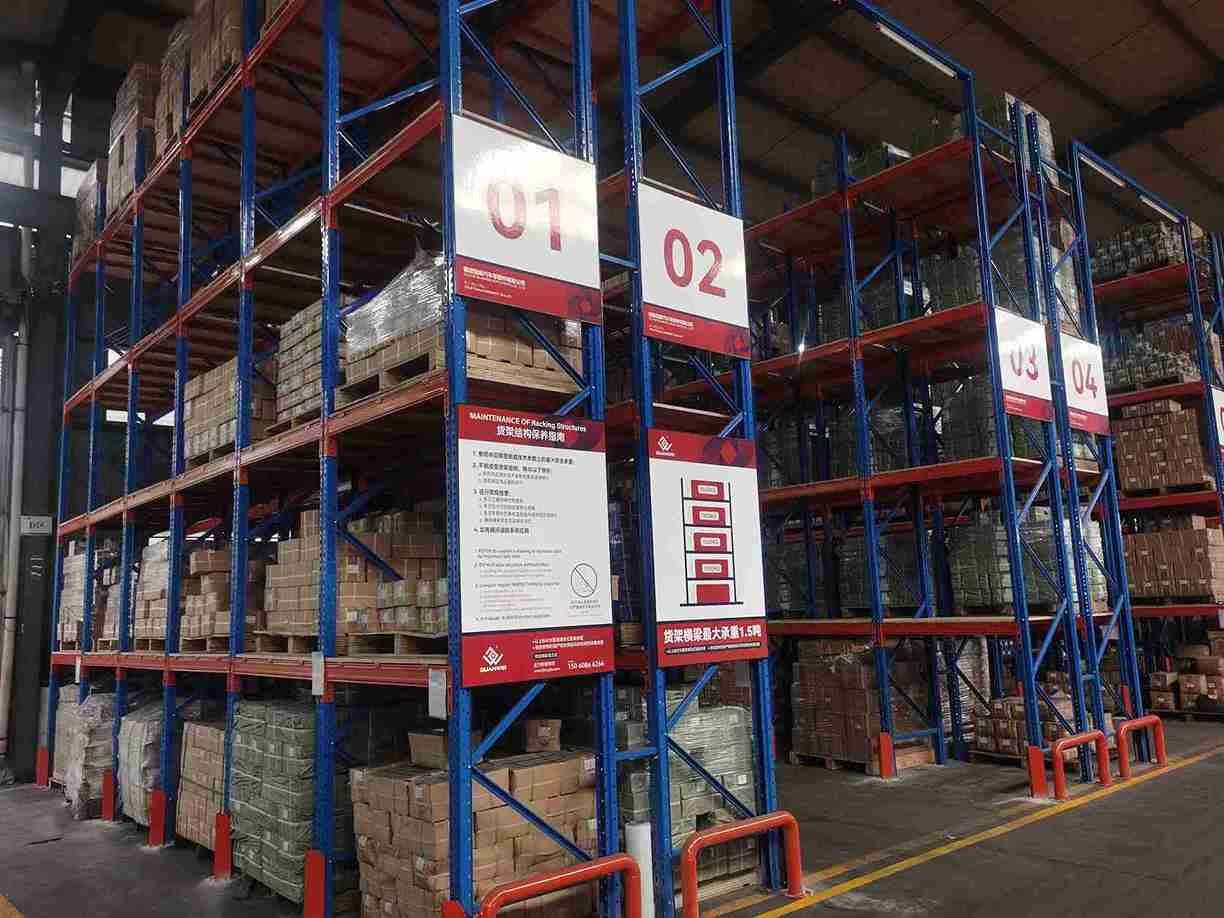
Industrial racks are not commodity products purchased by the linear meter and forgotten until a forklift damages an upright. They are engineered structures that determine how efficiently a warehouse moves, stores, and retrieves goods. In high-throughput distribution centers, industrial racks influence pick paths, travel distances, inventory accuracy, and the safety of every associate who walks the floor. When industrial racks are specified correctly, they become a silent productivity multiplier. When they are specified poorly, they become a daily source of friction, damage, and unplanned downtime.
Warehouse planners who treat industrial racks as a late-stage procurement item often pay for that decision in operational inefficiency. The rack layout dictates aisle widths, forklift turning radii, sprinkler clearance, and even the placement of conveyors and sortation equipment. Industrial racks that are selected without considering these interfaces force compromises that cannot be engineered away later. In contrast, facilities that involve rack engineers early in the design process consistently achieve higher storage density and smoother material flow. Industrial racks should be viewed as the skeleton of the warehouse, not as shelving that happens to hold pallets.
H3: How Industrial Racks Shape Storage Density and Retrieval Speed
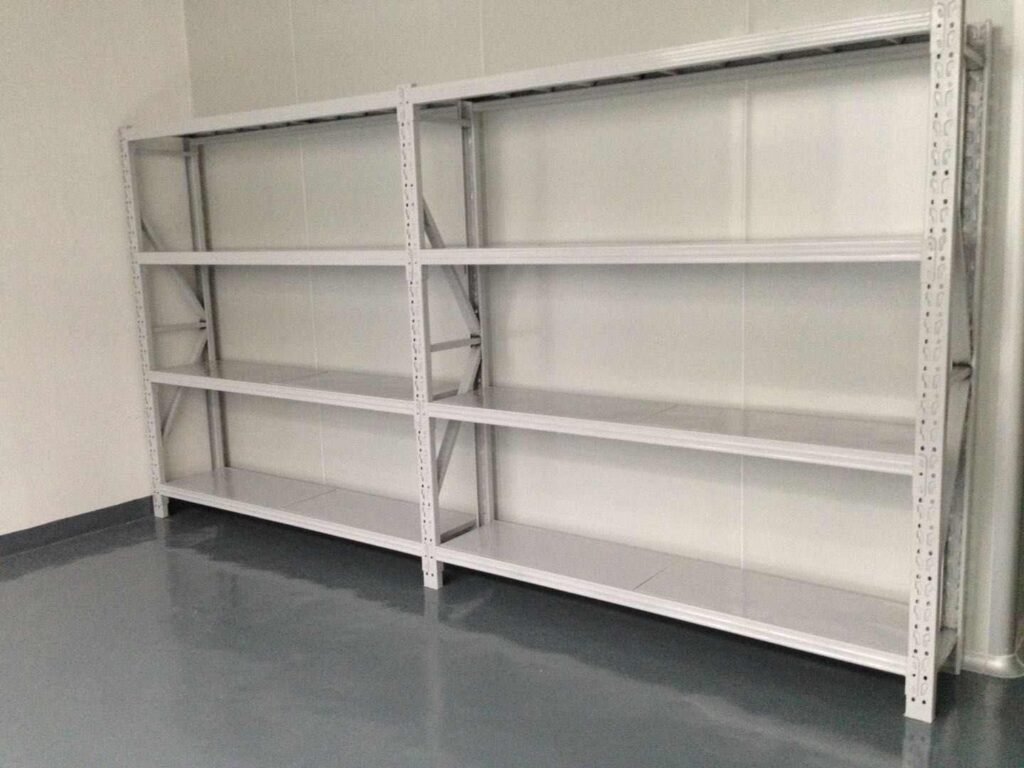
Storage density and retrieval speed are competing objectives in most facilities. Industrial racks configured for maximum density — such as drive-in or push-back designs — reduce aisle count but limit access to individual pallets. Industrial racks configured for selective access — such as standard pallet racking — provide immediate retrieval but consume more floor space for aisles. The engineering challenge is to find the configuration that matches the facility’s inventory profile, order profile, and throughput requirements.
For operations with a high proportion of slow-moving inventory, industrial racks with deeper lanes and narrower aisles can free up significant floor space. For operations with fast-moving SKUs and tight order cycles, industrial racks with wide aisles and single-deep selective configurations reduce travel time and improve pick rates. The key is not to choose one extreme but to segment the warehouse into zones, each served by industrial racks optimized for the inventory behavior in that zone. This zoning approach is one of the most reliable ways to improve both density and throughput without expanding the building footprint.
H2: Specification Decisions That Determine Industrial Racks Performance
H3: Beam-to-Column Interfaces in Industrial Racks
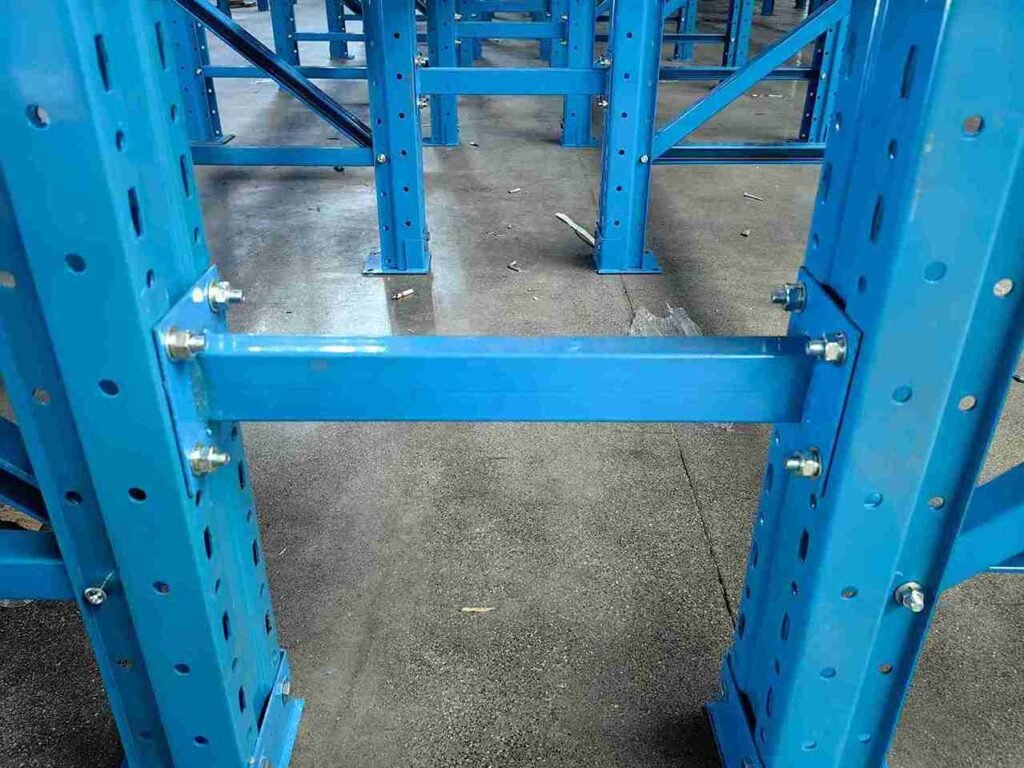
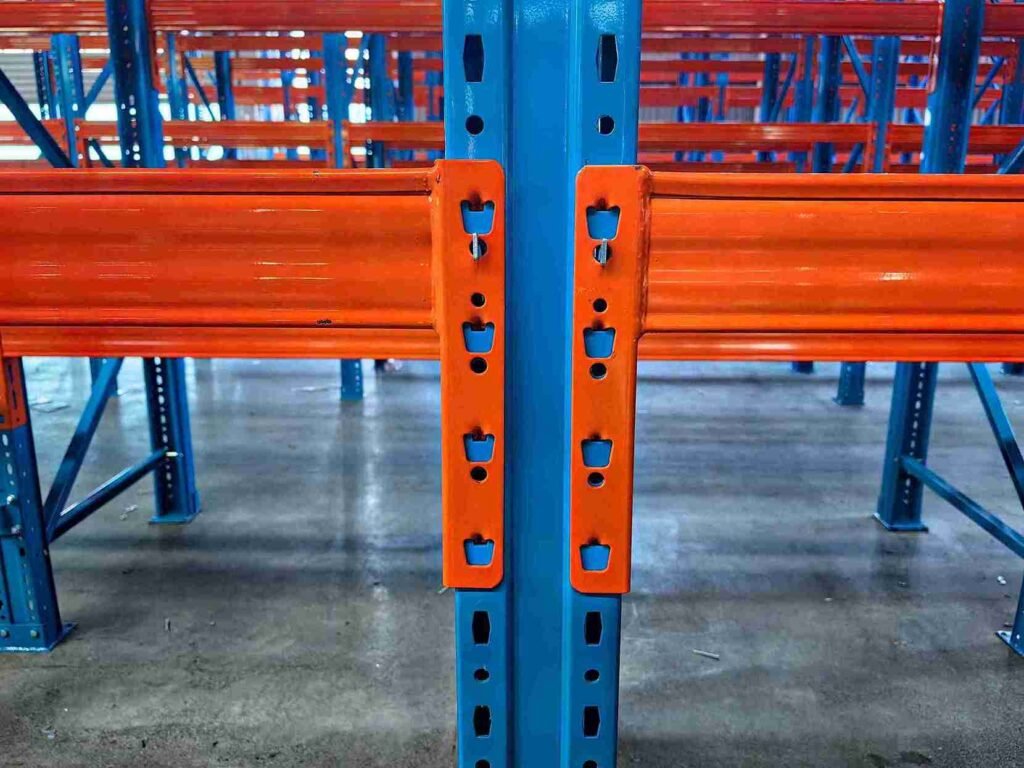
The beam-to-column connector is the most critical interface in any industrial racks system. It transfers the vertical load from the beam to the column and provides the lateral restraint that keeps the frame stable. A connector that is easy to install but loose under load will allow the beam to rotate, increasing deflection and reducing the effective capacity of the industrial racks. A connector that is tight but difficult to engage will slow installation and increase the risk of incomplete engagement, which is equally dangerous.
Experienced rack engineers evaluate industrial racks connectors using three criteria: vertical shear capacity, rotational stiffness, and engagement verification. Vertical shear capacity determines how much load the connection can transfer. Rotational stiffness affects beam deflection and the distribution of load between the beam and the column. Engagement verification ensures that the connector cannot be installed in a partially seated position. Industrial racks that use connectors with visual engagement indicators or safety clips provide a higher level of assurance that the installed configuration matches the engineered design.
H3: Column Protection and Industrial Racks Durability
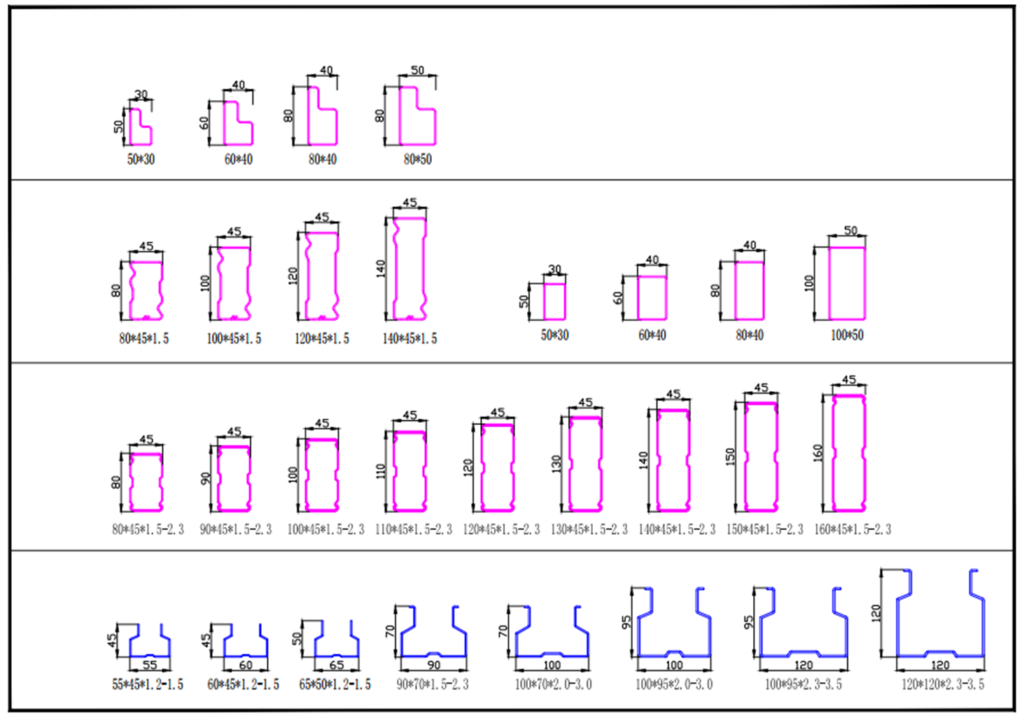
Columns are the most vulnerable components of industrial racks because they are located at the aisle face, where forklifts operate. A single impact can bend a column, reduce its buckling capacity, and compromise the entire upright frame. Industrial racks that are specified with heavier column wall thicknesses and larger section widths survive impacts that would destroy lighter frames. The additional steel cost is modest compared to the cost of replacing an upright frame and the operational disruption that follows.
Column protectors — whether clip-on plastic guards, bolt-on steel guards, or floor-mounted bollards — are not a substitute for properly sized industrial racks columns. They are a secondary defense. The primary defense is to specify industrial racks with columns that can tolerate the expected frequency and severity of impact without permanent deformation. In facilities with high forklift traffic, industrial racks columns should be selected at the upper end of the available section range, even if the static load calculation does not require it.
H2: Load Ratings and the Safety Margins of Industrial Racks
H3: Unit Load Variability and Industrial Racks Capacity
The rated load of industrial racks is based on a specified unit load — the pallet and its contents. In real warehouses, unit loads vary. Pallets are overloaded. Product density changes. A pallet that weighed 800 kg during the original rack design may weigh 1,100 kg after a packaging change or a supplier switch. Industrial racks that were rated for the original load may now be operating outside their safe capacity.
This is why load plaques on industrial racks must be reviewed whenever inventory profiles change. It is also why industrial racks should be specified with a capacity margin above the expected maximum unit load. A rack rated at 1,000 kg per level that routinely handles 950 kg pallets has almost no margin for dynamic loading, pallet placement impact, or future inventory changes. Industrial racks with a 1,250 kg or 1,500 kg rating provide a safer operating envelope and reduce the risk of progressive damage.
H3: Seismic Considerations for Industrial Racks
地震が多い地域では、, industrial racks must be designed for earthquake-induced forces, not just gravity loads. Seismic design of industrial racks considers the rack’s mass, stiffness, ductility, and the interaction between the rack and its contents. A rack that is fully loaded behaves differently from an empty rack. Industrial racks in seismic zones often require base plate anchorage to the slab, frame bracing, and beam-to-column connectors with enhanced rotational capacity.
The seismic design requirements for industrial racks vary by jurisdiction. In the United States, ANSI MH16.1 provides seismic provisions that are referenced by building codes. In Europe, FEM 10.2.02 and national annexes govern. In China, industrial racks must comply with the applicable seismic design code for the project location in addition to the dimensional requirements of GB/T 27924—2011. Specifiers of industrial racks in seismic regions should confirm that the rack manufacturer has experience with local seismic requirements and can provide documentation of compliance.
H2: International Standards and Industrial Racks Compliance
H3: ANSI MH16.1 and Industrial Racks in North America
ANSI MH16.1 is the primary design standard for industrial racks in North America. It covers structural design, testing, and utilization of industrial steel storage racks. The standard requires that industrial racks be designed using Allowable Strength Design or Load and Resistance Factor Design, and it includes specific provisions for beam-to-column connector testing. The R-Mark certification program provides third-party verification that a manufacturer’s industrial racks comply with ANSI MH16.1.
For warehouse operators in the United States and Canada, specifying R-Mark-certified industrial racks is the most reliable way to ensure that the load ratings on the plaque are backed by an independent engineering review. The certification process requires sealed calculations from a licensed professional engineer, independent review by two randomly selected engineers, and ongoing compliance with the standard. Industrial racks without R-Mark certification may still be safe, but the burden of verification falls entirely on the buyer.
H3: FEM 10.2.02 and Industrial Racks in Europe
FEM 10.2.02 provides design recommendations for static steel pallet racking and is widely used for industrial racks in Europe. The FEM approach emphasizes testing-based verification of beam-to-column connectors and provides detailed provisions for cold-formed steel members. European industrial racks often use a 75 mm hole pitch, which differs from the 50 mm and 100 mm pitches more common in North American and Chinese designs.
For multinational projects, industrial racks specified to FEM 10.2.02 may use dimensions from the GB/T 27924—2011 series without conflict. The dimensions are geometric; the design standard governs structural safety. However, industrial racks that mix components from different standards without engineering review can create unexpected interface problems. The safest approach is to specify a single design standard for the project and verify that all industrial racks components are compatible with that standard.
H3: GB/T 27924—2011 and Industrial Racks in China
GB/T 27924—2011 establishes the dimensional and load-rating framework for industrial racks in China. It covers industrial racks that use pallets as the loading unit, with a unit load not exceeding 2 tonnes. The standard includes dimensional series for rack system dimensions, upright frames, columns, and beams, as well as a rated load series. Industrial racks designed to this standard can be manufactured with a high degree of dimensional consistency across suppliers.
However, GB/T 27924—2011 is not a structural design standard. Industrial racks that comply with its dimensions must still be designed to a recognized structural standard, such as ANSI MH16.1, FEM 10.2.02, or the applicable Chinese building code. Specifiers of industrial racks in China should request both dimensional compliance and structural design documentation. Industrial racks that are dimensionally standard but structurally under-designed are a common and preventable failure mode.
H2: Inspection, Maintenance, and Lifecycle Management of Industrial Racks
H3: Routine Inspections for Industrial Racks
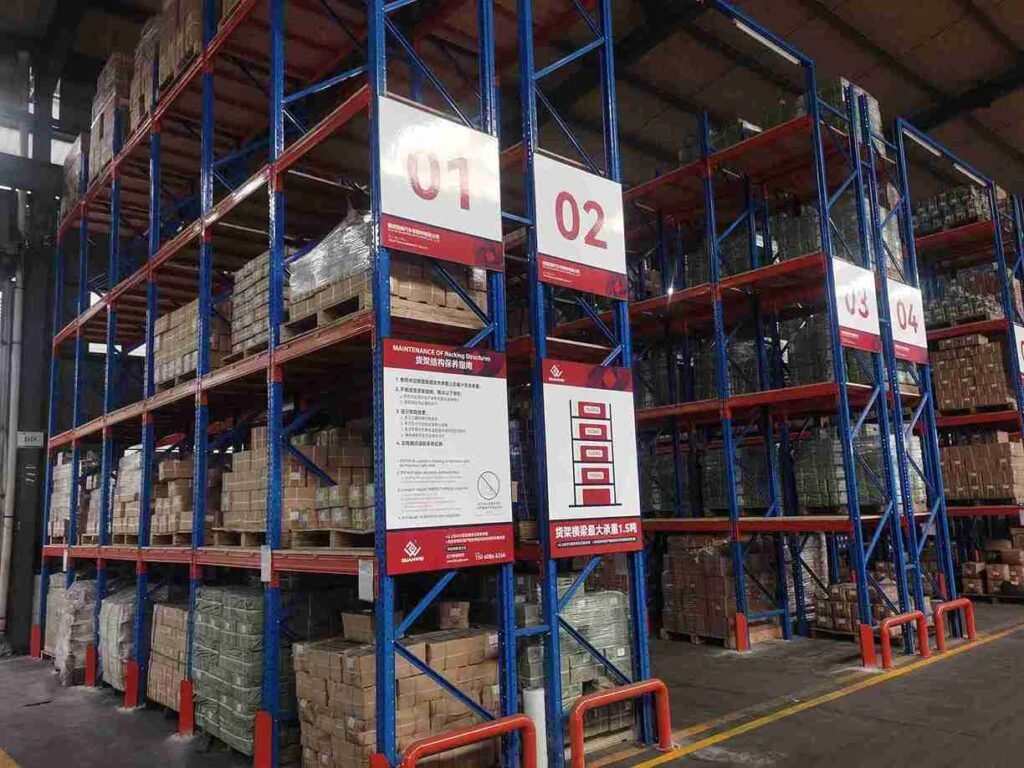
Routine inspection is the foundation of industrial racks safety. ANSI MH16.1 and RMI guidelines identify four types of inspections: installation, system, reconfiguration, and post-damage. Installation inspections verify that industrial racks match the engineering drawings. System inspections are the routine walk-through inspections that identify damage, corrosion, and missing components. Reconfiguration inspections are required whenever industrial racks are modified. Post-damage inspections are required after any incident that may have compromised structural integrity.
Industrial racks should be inspected at least annually, and more frequently in high-traffic facilities. The inspection should cover columns, beams, connectors, braces, base plates, anchors, and safety clips. Industrial racks with damaged columns should be unloaded immediately and evaluated by a qualified person. Industrial racks with damaged beams or connectors should be repaired or replaced before returning to service. The inspection record should be documented and retained for the life of the industrial racks.
H3: Damage Assessment in Industrial Racks
Damage assessment in industrial racks requires engineering judgment. A dent in a column may reduce its capacity by a small percentage or a large percentage, depending on the depth, location, and orientation of the dent. A bent brace may compromise the lateral stability of the entire upright frame. Industrial racks with bent or twisted columns should be evaluated using recognized damage criteria, such as those published by RMI or FEM.
Industrial racks that are damaged beyond repair should be replaced, not straightened. Straightening a damaged column introduces residual stresses and may create micro-cracks that are invisible to the eye. Industrial racks that are repaired by welding may lose the protective coating and create a corrosion site. The most reliable approach is to replace damaged components with new components from the original manufacturer. Industrial racks that use interchangeable components from a single manufacturer are easier to repair and maintain.
H3: Repair and Replacement Strategies for Industrial Racks
Repair and replacement strategies for industrial racks should be planned before damage occurs. The facility should maintain a small inventory of spare beams, columns, and connectors. The facility should also maintain a relationship with the original industrial racks manufacturer or a qualified rack repair company. When damage occurs, the response should be immediate: unload the affected bay, inspect the damage, and repair or replace the affected components.
Industrial racks that are repaired incorrectly can be more dangerous than industrial racks that are left damaged, because the repair may create a false sense of security. Industrial racks that are repaired by welding, for example, may have reduced strength in the heat-affected zone. Industrial racks that are repaired with non-standard components may have incompatible load ratings. The safest repair is one that uses original manufacturer components and follows the manufacturer’s repair instructions.
H2: Procurement and Supplier Selection for Industrial Racks
H3: Technical Documentation for Industrial Racks
Procurement of industrial racks should require technical documentation that demonstrates compliance with the applicable standards. This documentation should include dimensional drawings, load tables, connector test reports, and structural calculations. For industrial racks in seismic regions, the documentation should include seismic design calculations. For industrial racks in North America, the documentation should include R-Mark certification or equivalent third-party verification.
Industrial racks suppliers that cannot provide this documentation should be treated with caution. A low price for industrial racks may reflect a lack of engineering, testing, or certification. Industrial racks that are purchased without documentation may be difficult to insure, difficult to inspect, and difficult to repair. The cost of documentation is small compared to the cost of a rack failure.
H3: Total Cost of Ownership for Industrial Racks
The total cost of ownership of industrial racks includes the initial purchase price, installation cost, inspection cost, maintenance cost, repair cost, and the cost of operational downtime. Industrial racks with a lower purchase price may have a higher total cost of ownership if they require more frequent repairs or if they limit operational flexibility. Industrial racks with a higher purchase price may have a lower total cost of ownership if they are more durable, more adaptable, and better documented.
Facility managers who evaluate industrial racks on total cost of ownership often find that the most durable and best-documented industrial racks are the most economical over a ten- or twenty-year horizon. Industrial racks are long-lived assets. The decisions made at procurement have consequences that last for decades.
H2: Automation, AS/RS, and the Future of Industrial Racks
H3: Interface Requirements for Automated Industrial Racks
Automated storage and retrieval systems impose stricter tolerances on industrial racks than manual operations. Industrial racks in AS/RS installations must be installed within tight vertical and horizontal tolerances to ensure that the shuttle or crane can engage and retrieve pallets reliably. Industrial racks in AS/RS installations must also have consistent beam heights and clear openings, because the automation cannot adjust to variation the way a human operator can.
Industrial racks for AS/RS applications are often designed with larger column sections, tighter installation tolerances, and more rigorous quality control than industrial racks for manual warehouses. The cost of industrial racks for AS/RS is higher, but the cost of downtime in an AS/RS is also higher. Industrial racks that are specified for automation must be designed for the precision and reliability that automation demands.
H3: Sustainability and Industrial Racks
Sustainability is becoming a procurement criterion for industrial racks. Industrial racks that are made from recycled steel, that are designed for disassembly and reuse, and that have a long service life have a lower environmental footprint than industrial racks that are discarded after a short service life. Industrial racks that are bolted rather than welded are easier to dismantle and reconfigure, which extends their useful life and reduces waste.
Industrial racks that are designed for adaptability can be reconfigured as storage requirements change. Industrial racks that are designed for a single configuration may become obsolete when the inventory profile changes. The most sustainable industrial racks are those that remain useful for the longest time. Sustainability and longevity are closely linked in the industrial racks industry.
H2: Conclusion
Industrial racks are the backbone of modern warehousing. They determine how much inventory can be stored, how quickly it can be retrieved, and how safely the operation can be performed. Industrial racks that are specified to recognized standards, designed by qualified engineers, installed by trained crews, and maintained through routine inspection provide decades of reliable service. Industrial racks that are specified without engineering review, installed without documentation, and maintained without inspection become a liability.
The dimensional and load-rating framework of GB/T 27924—2011 provides a strong foundation for industrial racks specification, particularly in China and in markets that use Chinese-manufactured rack components. When combined with a recognized structural design standard such as ANSI MH16.1 or FEM 10.2.02, industrial racks can be specified with confidence in any region. The key is to treat industrial racks as engineered structures, not as commodity products.
Industrial racks will continue to evolve as warehouses become taller, denser, and more automated. Industrial racks will need to support heavier unit loads, tighter tolerances, and more complex interfaces with automation. Industrial racks will need to be more sustainable, more adaptable, and better documented. The facilities that succeed will be those that treat industrial racks as a strategic asset and invest in the engineering, inspection, and maintenance that keep them safe and productive.
H3: What is the most important factor when specifying industrial racks for a new warehouse?
The most important factor is the interface between the industrial racks and the operational requirements of the facility. Industrial racks must be selected based on the pallet dimensions, unit load weights, inventory profile, throughput requirements, and material handling equipment. Industrial racks that are selected without considering these factors may fit the building but fail to support the operation.
H3: How often should industrial racks be inspected?
Industrial racks should be inspected at least annually, and more frequently in high-traffic or high-risk environments. Industrial racks in facilities with heavy forklift traffic may require quarterly inspections. Industrial racks that have been damaged should be inspected immediately and removed from service until repaired.
H3: Can industrial racks be relocated or reconfigured?
Industrial racks can be relocated or reconfigured, but the process must be managed carefully. Industrial racks that are dismantled and reassembled may lose some of their load capacity if the connectors or columns are damaged during the process. Industrial racks that are reconfigured must be re-evaluated to confirm that the new configuration is structurally adequate. Industrial racks that are relocated to a new facility must be inspected and re-anchored.
H3: What documentation should be provided with industrial racks?
Industrial racks should be provided with dimensional drawings, load tables, connector test reports, and structural calculations. Industrial racks in seismic regions should be provided with seismic design calculations. Industrial racks in North America should be provided with R-Mark certification or equivalent third-party verification. Industrial racks without documentation should not be accepted.
H3: What is the future of industrial racks in automated warehouses?
の未来 industrial racks in automated warehouses is higher precision, higher capacity, and deeper integration with automation. Industrial racks will need to be designed for tighter tolerances, heavier unit loads, and more complex interfaces. Industrial racks will also need to be designed for sustainability, with recyclable materials and adaptable configurations. Industrial racks will remain the foundation of the automated warehouse, but they will need to be engineered to a higher standard than ever before.
Geelyracks is a factory specializing in warehouse racking and a global expert in custom racking solutions: https://geelyracks.com/
We can provide you with free warehouse racking design plans and price quotes; ご連絡ください. Our email address is jili@geelyracks.com