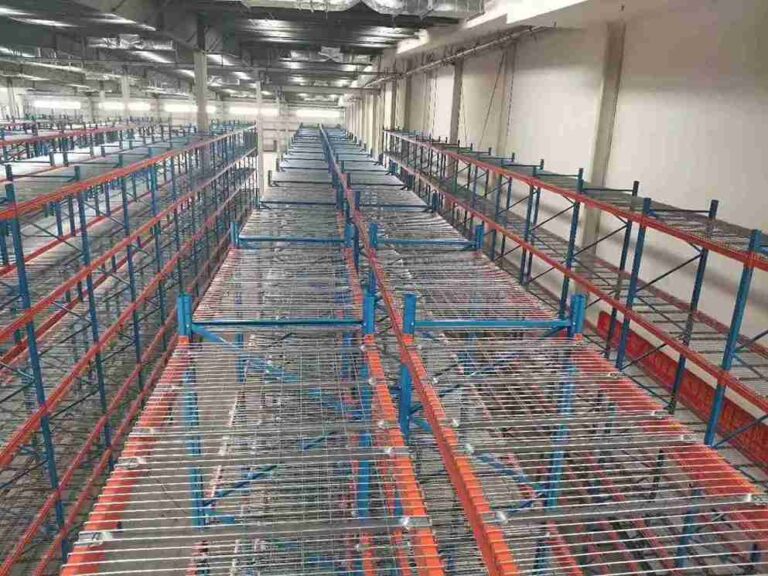
🐍 "先着50社のエンタープライズ・クエリーにカスタム3Dウェアハウス・デザインをプレゼント" プラン















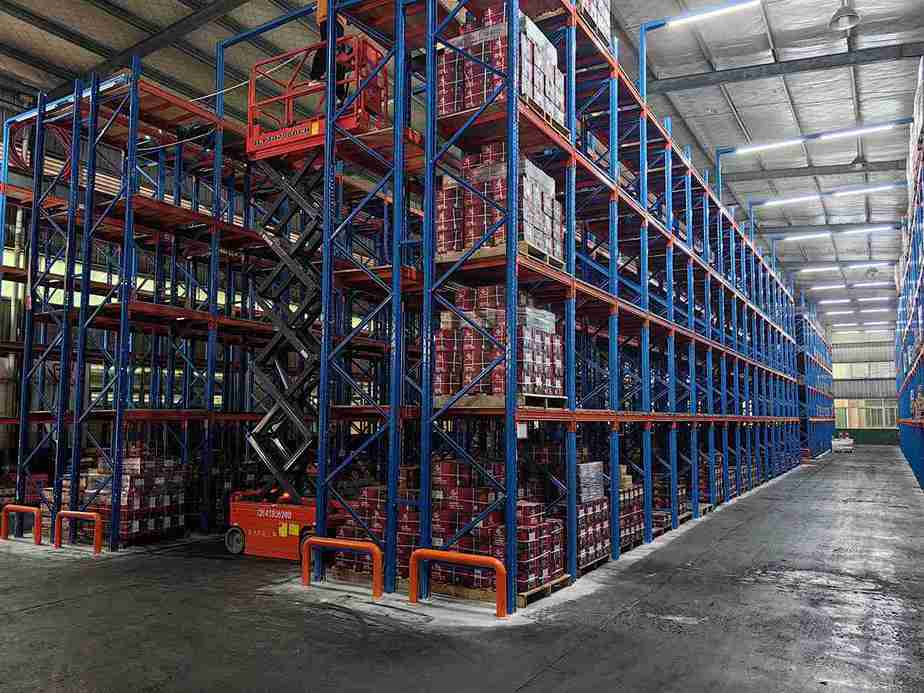
Pallet Racking: The Cornerstone of Modern Warehouse Operations
In the intricate dance of modern logistics, the storage solution a company chooses is not merely a backdrop; it is a active participant in determining efficiency, cost, and scalability. Among the myriad of options available, 選択式パレットラッキング stands out as the fundamental cornerstone upon which countless successful warehouse operations are built. Its design philosophy—simplicity, accessibility, and adaptability—has made it the most widely deployed storage system across the globe.
For Small and Medium Enterprises (SMEs) in growth-oriented regions, from the industrial hubs of Southeast Asia to the expanding markets of Latin America, implementing a robust 選択式パレットラッキング システム is often the first and most critical step toward achieving supply chain maturity. The universal appeal of 選択式パレットラッキング lies in its ability to solve the most pressing storage dilemma: how to store the maximum amount of goods while ensuring every single pallet remains instantly accessible. This is the core value proposition that makes 選択式パレットラッキング an indispensable asset.
Addressing the Unique Storage Challenges of SMEs
SMEs face a distinct set of challenges that large corporations with seemingly limitless budgets do not. Capital expenditure is scrutinized, space is often leased and limited, and operational flexibility is paramount. A poorly chosen storage system can lock an SME into a cycle of inefficiency. Selective pallet racking directly counteracts these challenges.
Its cost-effective nature makes high-quality storage infrastructure accessible. The inherent flexibility of a 選択式パレットラッキング system means it can be reconfigured as inventory profiles change, avoiding the need for a complete system overhaul. When discussing the long-term strategy for an SME’s warehouse, the conversation must begin with a well-engineered 選択式パレットラッキング layout. It is the stable foundation upon which all other process improvements can be layered.
The Critical Role of Professional Site Assessment and Customization
The journey to an optimal warehouse cannot begin with a generic catalog selection. The most significant differentiator between a mediocre storage system and a high-performance one is the depth of the initial site assessment and the degree of customization applied. A professional provider does not just sell 選択式パレットラッキング; they engineer a solution.
Beyond Measurements: A Holistic Operational Review
A true assessment for a 選択式パレットラッキング system goes far beyond taking length and width measurements. It involves a holistic review of the entire operation. Experts will analyze the complete material flow, from receiving dock to storage location to dispatch. They will document the types and capabilities of Material Handling Equipment (MHE) in use, as this directly impacts critical design decisions like aisle width.
They will assess the building’s infrastructure—floor flatness, column positions, sprinkler head clearances, and lighting—all of which can influence the final 選択式パレットラッキング design. This meticulous approach ensures the proposed 選択式パレットラッキング system is not just a fit for the space, but a catalyst for improved workflow.
The Science of Load Capacity and Safety Factor Engineering
Not all 選択式パレットラッキング is created equal. A critical, often overlooked aspect is the engineering behind the load capacities. Reputable manufacturers design their 選択式パレットラッキング components to meet or exceed stringent standards, such as those set by the Rack Manufacturers Institute (RMI).
This involves applying significant safety factors to the calculated load capacities of beams and upright frames. For instance, a beam rated for 2,500 kg per pair is engineered to withstand substantially more, ensuring integrity under dynamic loads, such as the impact of a forklift placing a pallet. This rigorous engineering is what separates a safe, durable 選択式パレットラッキング system from one that poses a safety risk. Companies investing in a 選択式パレットラッキング system must prioritize these engineering specifications over initial cost savings.
Advanced Configurations and Hybrid Storage Strategies
While the standard two-wide 選択式パレットラッキング configuration is common, the system’s true versatility is revealed in its advanced configurations and ability to form hybrid storage solutions. These approaches allow businesses to tailor their storage density and accessibility to match specific inventory characteristics.
Double-Deep Selective Pallet Racking: A Balance of Density and Accessibility
For operations storing a larger quantity of fewer SKUs, a double-deep 選択式パレットラッキング configuration can offer an excellent compromise. This setup involves placing two rows of 選択式パレットラッキング back-to-back, with the front row accessed directly and the back row accessed by a reach truck. This configuration effectively doubles the storage density of the 選択式パレットラッキング footprint while still maintaining good, though not 100%, selectivity. It is an ideal solution for businesses where pallets of the same SKU are stored together, and it demonstrates the inherent adaptability of the core 選択式パレットラッキング concept to be modified for increased density.
Integrating with Mezzanine Floors and Multi-Tier Systems
In facilities with high ceilings but a limited footprint, the most effective way to maximize the value of a 選択式パレットラッキング system is to integrate it with a structural mezzanine. In this hybrid model, the 選択式パレットラッキング structure itself can often be designed to support the mezzanine deck, creating a multi-level storage area. The lower level continues to function as standard 選択式パレットラッキング for palletized goods, while the mezzanine level can be used for lighter bulk storage, picking modules, or even office space. This integration effectively doubles the usable floor space without requiring a physical expansion of the building, making the 選択式パレットラッキング investment even more powerful.
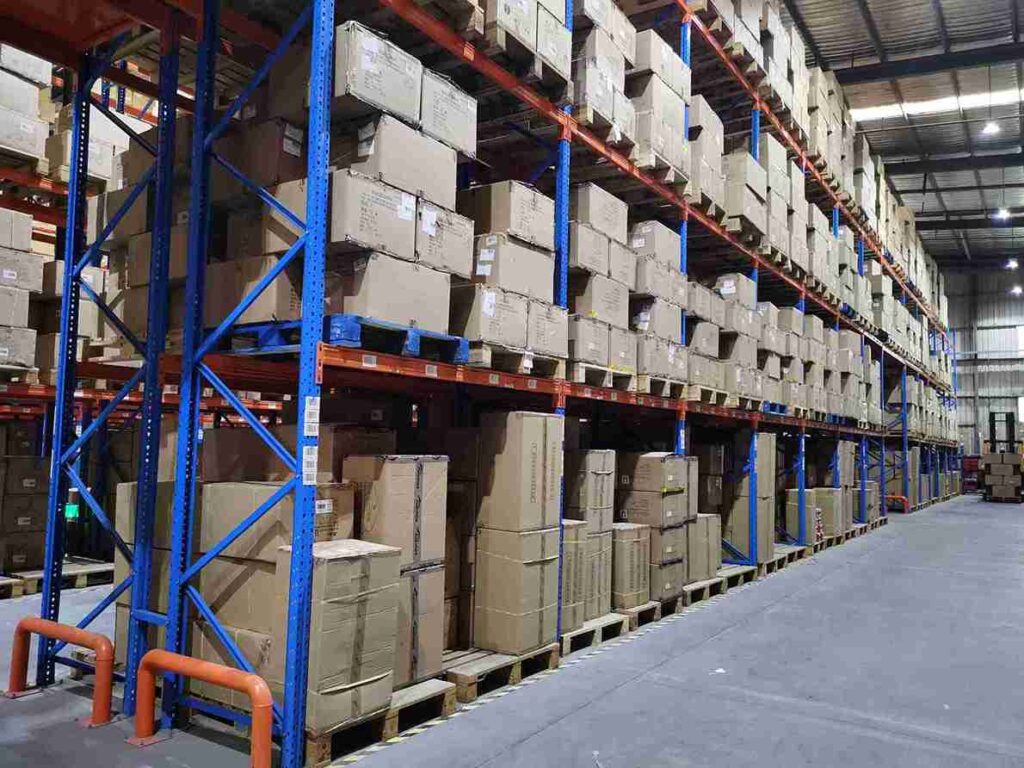
The Synergy Between Selective Pallet Racking and Warehouse Technology
In the era of Industry 4.0, a 選択式パレットラッキング system is far from a passive storage structure. It is the physical grid that interacts with digital and automated systems, forming the backbone of a smart warehouse.
Selective Pallet Racking as the Foundation for Warehouse Management Systems (WMS)
A Warehouse Management System (WMS) provides the intelligence for a modern warehouse, and the 選択式パレットラッキング system provides its physical skeleton. The WMS relies on the organized, predictable location structure of the 選択式パレットラッキング system to function optimally. Each bay and level within the 選択式パレットラッキング layout is assigned a unique identifier.
The WMS uses this logical addressing to direct put-away for optimal space utilization, generate the most efficient pick paths, and maintain perfect inventory accuracy in real-time. Without the disciplined structure of a 選択式パレットラッキング system, a WMS’s ability to optimize operations is severely limited. The combination of a well-planned 選択式パレットラッキング layout and a capable WMS is a force multiplier for warehouse productivity.
Optimized for Automation: AGVs and Narrow-Aisle Solutions
The clear, consistent, and organized aisles of a 選択式パレットラッキング system make it the ideal environment for automation. Automated Guided Vehicles (AGVs) and autonomous mobile robots (AMRs) require a predictable and well-structured world to navigate efficiently. The uniform layout of a 選択式パレットラッキング warehouse is perfect for this. Furthermore, the 選択式パレットラッキング design is perfectly suited for narrow-aisle (NA) and very-narrow-aisle (VNA) forklifts.
By designing the 選択式パレットラッキング layout with these specialized MHE in mind, businesses can dramatically reduce their aisle width from the 3.5 meters required for a counterbalance forklift to 1.6 meters or less. This single change can increase storage capacity within the same footprint by over 30%, showcasing how the 選択式パレットラッキング system is a key enabler of high-density, semi-automated storage.
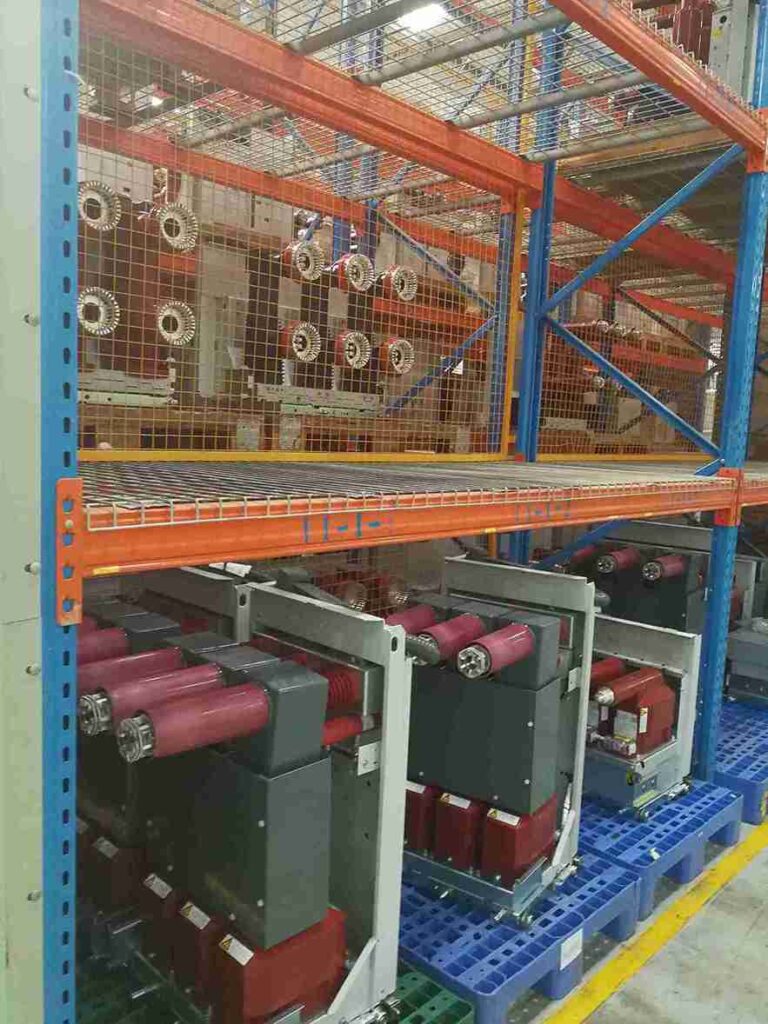
Making the Investment: Total Cost of Ownership and Strategic Value
を評価する。 選択式パレットラッキング system, savvy business leaders look beyond the initial purchase price and consider the Total Cost of Ownership (TCO) and the strategic value delivered.
Analyzing the True Cost: Quality vs. Price
The market for 選択式パレットラッキング is diverse, with offerings ranging from low-cost, lightweight options to heavily engineered, premium systems. The cheapest 選択式パレットラッキング available often carries hidden costs: lower load capacities, thinner protective finishes that lead to premature rust, and a lack of robust engineering that can increase the risk of racking collapse. Investing in a high-quality 選択式パレットラッキング system from a reputable manufacturer may have a higher upfront cost, but it pays dividends in safety, longevity, and reliability. The TCO of a quality 選択式パレットラッキング system is often lower, as it will not need to be replaced in a few years and will maintain its structural integrity through reconfigurations and relocations.
Selective Pallet Racking as a Depreciable Asset and Business Enabler
It is important to frame the acquisition of a 選択式パレットラッキング system not as an expense, but as a capital investment in a depreciable asset that enables business growth. A new 選択式パレットラッキング system directly contributes to the bottom line by reducing labor costs, minimizing product damage, and improving inventory accuracy. It enables the business to handle a larger volume of trade within the same four walls, directly supporting revenue growth. The 選択式パレットラッキング system is the hardware that allows the business’s operational software—its people and processes—to perform at their peak. This perspective transforms the decision from a simple procurement to a strategic investment in the company’s future.
Conclusion: Building a Foundation for Growth and Efficiency
In the final analysis, the decision to invest in a professionally designed and installed 選択式パレットラッキング system is one of the most impactful choices an SME can make for its logistics and supply chain health. This versatile, robust, and adaptable storage solution forms the essential foundation for an efficient, safe, and scalable operation. From its basic form to its advanced hybrid configurations and its seamless integration with digital and automated technologies, 選択式パレットラッキング proves its value time and again.
For any business looking to consolidate its operations, reduce costs, and position itself for sustainable growth, embarking on a project to implement a custom 選択式パレットラッキング system is the logical and profitable first step. The journey toward warehouse excellence unequivocally begins with a strategic focus on optimizing storage, and that journey is built upon the reliable framework of a well-executed 選択式パレットラッキング 解決策だ。.
よくある質問 (FAQ)
1. What is the typical lead time from design to installation for a comprehensive selective pallet racking system?
The timeline can vary based on the project’s scale and customization, but a typical project flows as follows: A detailed site audit and design phase takes 1-2 weeks. Manufacturing and shipping of the custom 選択式パレットラッキング components usually require 3-5 weeks. Finally, the on-site installation by a certified crew, depending on the system’s size, can take another 1-3 weeks. Reputable providers manage this as a seamless, project-managed process to minimize disruption.
2. How does the structural integrity of selective pallet racking hold up in regions with high seismic activity?
In seismic zones, the engineering of the 選択式パレットラッキング system is paramount. Professional engineers design these systems with specific seismic load calculations, often incorporating features like thicker upright frames, additional bracing, and specialized seismic ties that connect the 選択式パレットラッキング to the building structure. This ensures the 選択式パレットラッキング can withstand lateral forces, preventing a progressive collapse.
3. Can we reconfigure our existing selective pallet racking layout ourselves, or is professional assistance required?
While beam levels can often be adjusted by a trained in-house team, significant reconfigurations—such as moving entire rows, adding new sections, or increasing the height—should always be overseen by professionals. This ensures that the revised 選択式パレットラッキング layout is structurally sound, that all load capacities are maintained, and that the new configuration is optimally designed for your material handling equipment.
4. Are there specific fire safety regulations or sprinkler system requirements for warehouses using selective pallet racking?
Yes, this is a critical safety consideration. Local building and fire codes dictate specific requirements for in-rack sprinkler systems, especially as the height of the 選択式パレットラッキング increases. These systems are designed to suppress fire at its source within the 選択式パレットラッキング array. A professional provider will design the 選択式パレットラッキング layout in coordination with a fire safety engineer to ensure compliance with all local regulations, including maintaining clearances for sprinkler heads.
5. What is the end-of-life process for a selective pallet racking system? Is the material recyclable?
Selective pallet racking systems have a long service life, but when they are finally decommissioned, the steel components are 100% recyclable. The high-quality steel used in manufacturing 選択式パレットラッキング is a valuable commodity. Many providers even offer buy-back programs for old systems or can facilitate the recycling process, contributing to a circular economy and minimizing the environmental footprint of the storage solution.
お問い合わせ, 倉庫ラックのCAD図面が必要な場合。私達は自由のための倉庫の棚の計画そして設計を提供してもいいです。私達の電子メールアドレスは次のとおりです: jili@geelyracks.com