🐍 "先着50社のエンタープライズ・クエリーにカスタム3Dウェアハウス・デザインをプレゼント" プラン
















Introduction
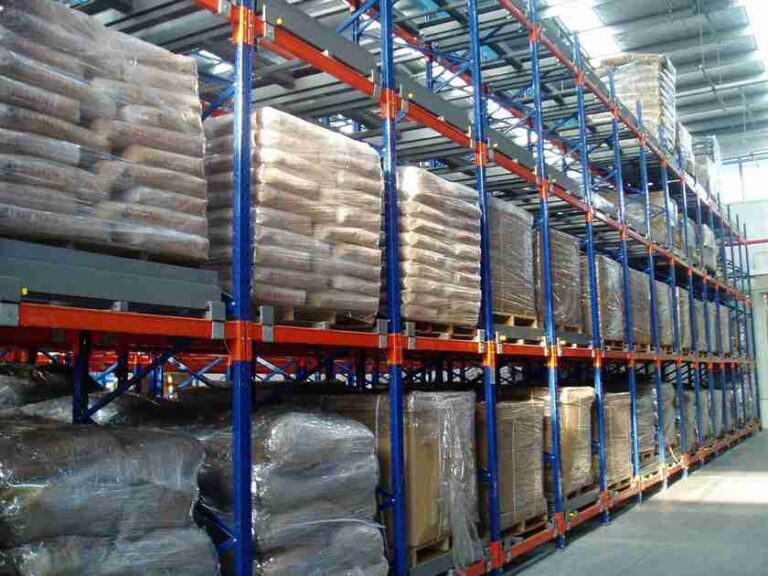
In an era where warehouse space is at a premium, プッシュバックラッキング has emerged as one of the most efficient storage solutions for businesses looking to maximize storage density without sacrificing accessibility. Unlike traditional selective racking, push back racking systems allow multiple pallets to be stored in a single lane, reducing aisle space while increasing storage capacity by up to 75%.
This in-depth guide explores every aspect of プッシュバックラッキング, from its mechanics and structural components to its advantages over competing systems like drive-in racks そして pallet flow racks. Warehouse managers, logistics planners, and supply chain professionals will find actionable insights on how プッシュバックラッキング can optimize their operations, reduce costs, and improve efficiency.
H1: What Is Push Back Racking?
H2: How Push Back Racking Works
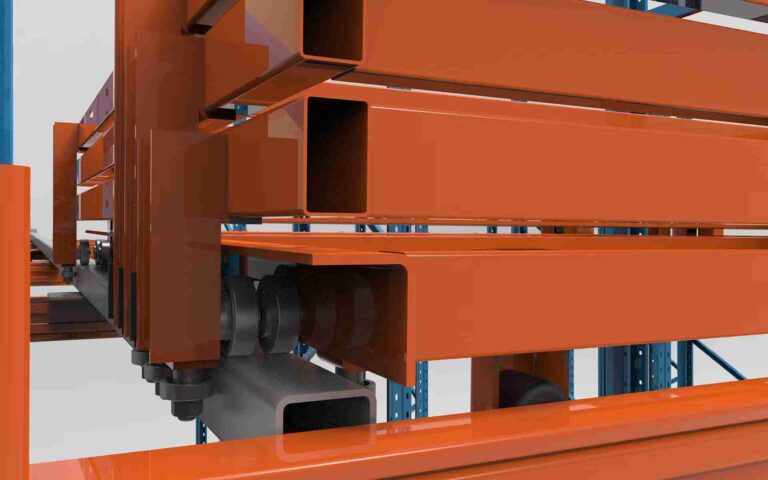
Push back racking operates on a 後入れ先出し(LIFO) principle, where pallets are loaded from the front and pushed backward onto inclined rails. Each new pallet displaces the previous one, allowing multiple pallets (typically 2-6 deep) to be stored in a single lane. When a pallet is retrieved, the remaining ones roll forward automatically, ensuring smooth and efficient material handling.
H3: Key Components of Push Back Racking
Structural Frames: Heavy-duty steel uprights and beams designed to withstand high loads.
Carriages & Rails: Angled tracks with wheeled carts that facilitate smooth pallet movement.
Push Back Arms: Prevent pallets from sliding out unintentionally, enhancing safety.
Safety Guards: Protect against accidental dislodging and ensure worker safety.
H2: Push Back Racking vs. Other Storage Systems
H3: Push Back Racking vs. Selective Racking
Selective racking allows direct access to every pallet but requires significantly more aisle space.
Push back racking reduces aisles by storing pallets deeper, increasing storage density without compromising accessibility.
H3: Push Back Racking vs. Drive-In Racking
Drive-in racks use a FIFO(先入れ先出し) system, making them ideal for homogeneous loads with long-term storage needs.
Push back racking offers better selectivity, allowing for multiple SKUs in the same lane while still maximizing space efficiency.
H3: Push Back Racking vs. Pallet Flow Racking
Pallet flow racks rely on gravity rollers for 先入れ先出し movement, best suited for high-turnover inventory.
Push back racking uses a 後入れ先出し system, making it more suitable for medium-turnover products where quick access to recent stock is essential.
H1: Benefits of Push Back Racking
H2: Increased Storage Density
One of the most significant advantages of プッシュバックラッキング is its ability to store up to 75% more pallets than traditional selective racks. By reducing the number of aisles required, warehouses can make better use of their available space, translating into cost savings and improved operational efficiency.
H2: Improved Selectivity
Unlike drive-in racks, which require forklifts to enter the storage lane, プッシュバックラッキング allows operators to access multiple SKUs without entering the lane. This feature makes it an excellent choice for warehouses storing a variety of products with different turnover rates.
H2: Enhanced Load Handling
Supports heavier pallets (up to 2,500 kg per pallet).
Compatible with forklifts, リーチトラックそして pallet jacks, ensuring flexibility in material handling.
H2: Cost-Effective Solution
Lower construction costs compared to automated storage and retrieval systems (AS/RS).
Reduced labor costs due to faster load retrieval and improved workflow efficiency.
H1: Ideal Applications for Push Back Racking
H2: Cold Storage Warehouses
Maximizes space in temperature-controlled environments where every square foot is valuable.
Reduces energy costs by minimizing aisle space, leading to lower refrigeration expenses.
H2: Food & Beverage Industry
Efficient for batch storage with medium turnover rates, such as seasonal products or promotional items.
H2: Retail Distribution Centers
Ideal for storing multiple SKUs with varying demand, ensuring quick access to high-turnover products.
H2: Manufacturing Facilities
Perfect for storing raw materials and finished goods that require frequent access but limited long-term storage.
H1: Installation & Safety Considerations
H2: Proper Floor Requirements
必要 level concrete flooring for stability and to prevent uneven pallet movement.
H2: Load Capacity & Weight Distribution
Must comply with OSHA そして RMI standards to ensure safe operation.
Regular inspections are necessary to maintain structural integrity.
H2: Regular Maintenance Tips
Inspect rails and carriages for wear and tear to prevent operational delays.
Ensure forklift operators are trained specifically on push back racking systems to avoid accidents.
H1: Conclusion
Push back racking は versatile, high-density storage solution that balances space efficiency with accessibility. Whether you’re managing a cold storage facility, retail distribution center, or manufacturing warehouse, this system can optimize storage capacity while reducing operational costs.
For businesses looking to upgrade their pallet storage, プッシュバックラッキング offers a 費用対効果, スケーラブルそして efficient alternative to traditional racking systems.
H1: Frequently Asked Questions (FAQs)
H2: 1. How many pallets can a push back rack hold?
ほとんどの場合 push back rack systems store 2-6 pallets per lane, depending on depth and load requirements.
H2: 2. Can push back racking be used with double-deep pallets?
そうだ、, double-deep push back racks are available for deeper storage configurations.
H2: 3. What forklift types work with push back racks?
Reach trucks, counterbalance forkliftsそして pallet jacks are commonly used.
H2: 4. Is push back racking suitable for automated warehouses?
While primarily manual, some semi-automated push back systems integrate with WMS (Warehouse Management Systems).
H2: 5. How does push back racking compare to mobile racking?
移動式ラッキング offers higher density but requires movable bases, whereas push back racks are fixed and more cost-effective.