📐 "First 50 Enterprise Queries Get Custom 3D Warehouse Design" Plan


The Unseen Foundation: Why Anchor Installation Is the Non-Negotiable Cornerstone of Warehouse Integrity
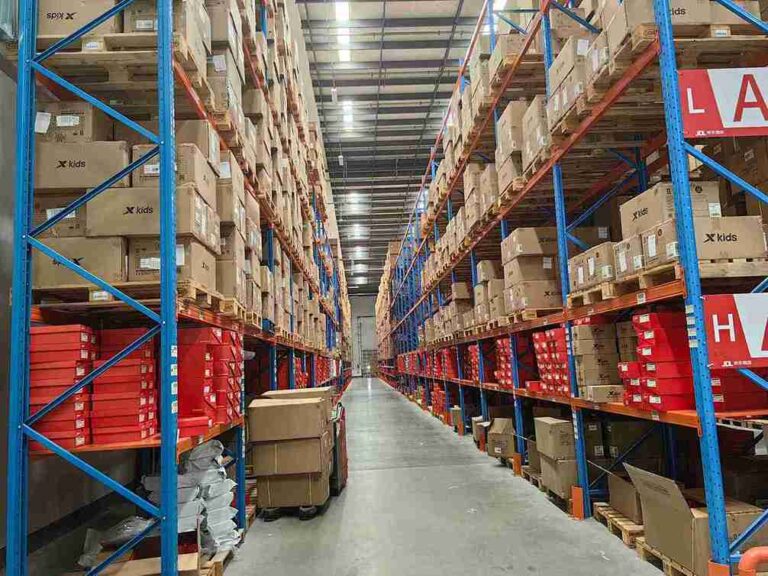
In the bustling logistics hubs of Nairobi, the sprawling distribution centers of São Paulo, and the high-throughput ports of Durban, a silent revolution in operational resilience begins not with flashy automation, but with a fundamental, often underestimated process: installing pallet racking anchors.
For the seasoned facility manager, the cost-conscious operations director, or the visionary investor building the future of African and Latin American supply chains, understanding the profound implications of this specific task is the difference between a protected asset and a looming liability. This article delves beyond the superficial, unpacking why the act of installing pallet racking anchors is a critical capital preservation strategy, not a mere construction formality.
Consider the physics at play. A pallet racking structure is a dynamic entity. It bears not just static weight, but constant forces: the kinetic energy of a forklift’s near-miss, the harmonic vibration from conveyor systems, the incremental sway from retrieved loads, and in seismically active zones, the lateral forces of earth tremors. Every one of these forces transmits through the upright frames and demands a singular, fail-safe dissipation point—the connection between the rack base plate and the concrete slab.
This connection, achieved solely through the correct installing pallet racking anchors, is the linchpin of systemic integrity. A failure here is not an isolated incident; it is the catalyst for a progressive, often catastrophic collapse. Therefore, approaching installing pallet racking anchors as a commodity task to be handed to the lowest-bidding general laborer is an existential risk to the entire storage investment.

Decoding the Hidden Costs: The Economic Calculus of Anchor Installation Failures
The financial argument for professional installing pallet racking anchors is compelling when framed by the devastating cost of failure. The “savings” from a substandard anchor installation job are illusory, evaporating instantly in the face of an incident. Let’s quantify the risks that professional installing pallet racking anchors is designed to mitigate.
Direct Collapse Costs: A racking collapse results in a multi-layered financial disaster. First, the inventory loss can be total, especially for high-value or perishable goods. Second, the racking itself, often twisted beyond repair, represents a direct capital loss. Third, and most crippling, is operational downtime. A warehouse forced offline for weeks for demolition, slab repair, and reconstruction loses not only current revenue but also damages hard-earned client trust and market reputation. The process of installing pallet racking anchors correctly is the primary insurance against this scenario.
The Insidious Cost of Incremental Failure: Not all failures are dramatic collapses. More common is the slow, unseen degradation from improperly executed installing pallet racking anchors. Anchors that are undertorqued, set in unclean holes, or placed in low-strength concrete will gradually loosen. This causes uprights to sway minutely, transferring abnormal stresses into the beam connectors and the frame itself. Over months, this leads to fatigue cracking, beam deflection, and a general weakening of the entire system. The cost here manifests as reduced system lifespan, necessitating premature replacement, and constant, nagging expenditures for reactive “band-aid” repairs. A meticulously planned process for installing pallet racking anchors prevents this value erosion from day one.
Compliance and Liability Exposure: Regulatory environments across Africa and Latin America are increasingly aligning with international safety standards like OSHA and FEM. Authorities and insurers are scrutinizing warehouse safety more closely. An incident traced back to improper installing pallet racking anchors can result in severe fines, facility shutdown orders, and voided insurance policies. The litigation and liability costs from personnel injury in such an event are potentially limitless. Professional installing pallet racking anchors provides documented, auditable proof of due diligence and compliance, shielding the business from these legal and financial repercussions.
The Anatomy of Excellence: A Technical Deep Dive into Professional Anchor Installation
What distinguishes world-class installing pallet racking anchors from an amateur attempt? It is a rigorous, science-driven protocol where every step is intentional and verified.
Phase 1: The Critical Pre-Installation Engineering Assessment
This foundational phase is what professional teams invest in and what cut-rate installers blatantly skip. It transforms installing pallet racking anchors from a guessing game into a precise engineering operation.
Substrate Competency Analysis: The concrete floor is the partner in this structural marriage. Its strength must be known. Professionals use a Schmidt rebound hammer or, for more certainty, perform a pull-out test to determine the in-situ compressive strength (measured in MPa or psi). This number dictates the type, diameter, and embedment depth of the anchor. Installing pallet racking anchors designed for 30 MPa concrete into a 20 MPa slab is a predetermined failure.
Slab Interrogation: Knowing what lies beneath is non-negotiable. Is there a post-tension cable system? A radiant heating loop? A waterproof membrane? Professional crews use ground-penetrating radar (GPR) or consult as-built drawings to map the sub-surface. Haphazard drilling during installing pallet racking anchors that severs a post-tension cable can compromise the entire building’s structure, creating a liability of monumental scale.
Load Path and Seismic Calculation: The anchors must be specified to handle the calculated loads. This includes the dead load (racks and inventory), live loads (personnel, equipment), and critically, for regions like Chile, Peru, or parts of East Africa, seismic lateral loads. The process of installing pallet racking anchors for a 12-meter high narrow-aisle rack in a seismic zone is fundamentally different from that for a 6-meter selective rack in a stable region. The engineering report specifies the required anchor’s ultimate tensile and shear values.
Phase 2: The Precision Installation Protocol
This is where the plan meets the concrete. The methodology for installing pallet racking anchors must be flawless.
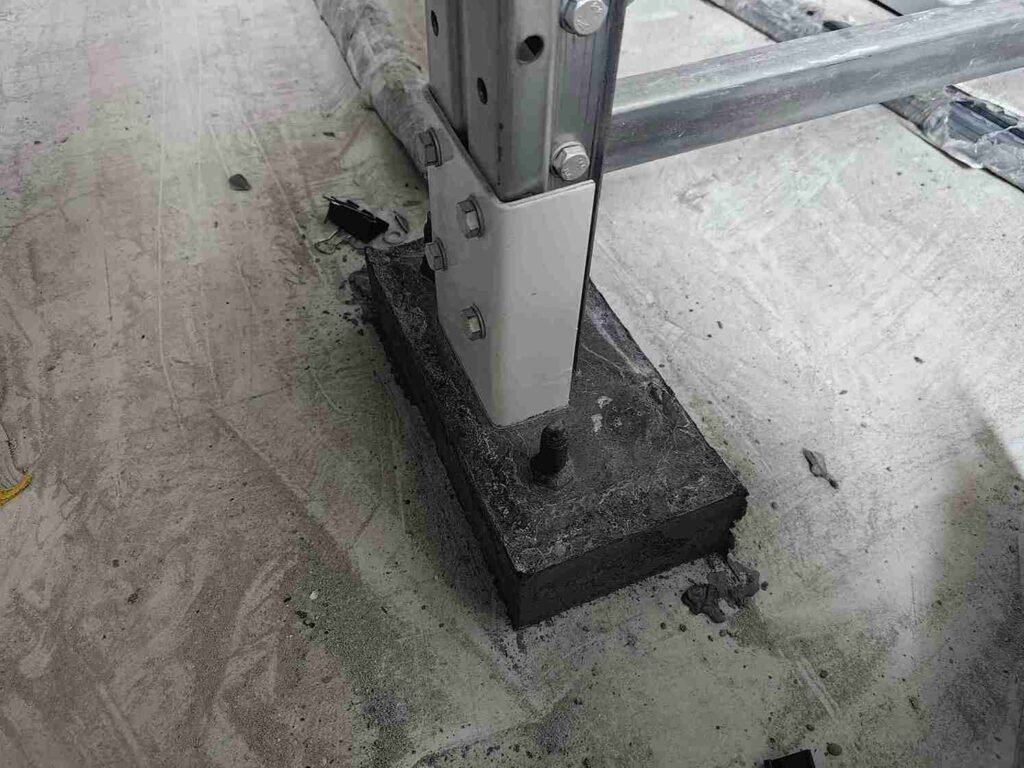
Template-Guided, Dust-Free Drilling: Precision begins with hole placement. Using jigs or CNC-drilled templates ensures each hole in the upright base plate aligns perfectly with the drill bit. Rotary hammer drills are banned for critical applications; instead, diamond-core drilling rigs are used. They create a clean, precise, and circular hole without micro-fracturing the concrete, which can reduce holding power by up to 50%. This step in installing pallet racking anchors is crucial for achieving the design strength.
The Sacred Ritual of Hole Cleaning: Perhaps the most frequently ignored step by amateurs, and the most vital. After drilling, a hole is filled with concrete dust, which acts as a lubricant, preventing proper anchor grip. The professional protocol for installing pallet racking anchors mandates a three-stage cleaning: wire brushing, industrial vacuuming, and finally, compressed air blasting. This ensures a pristine bonding surface.
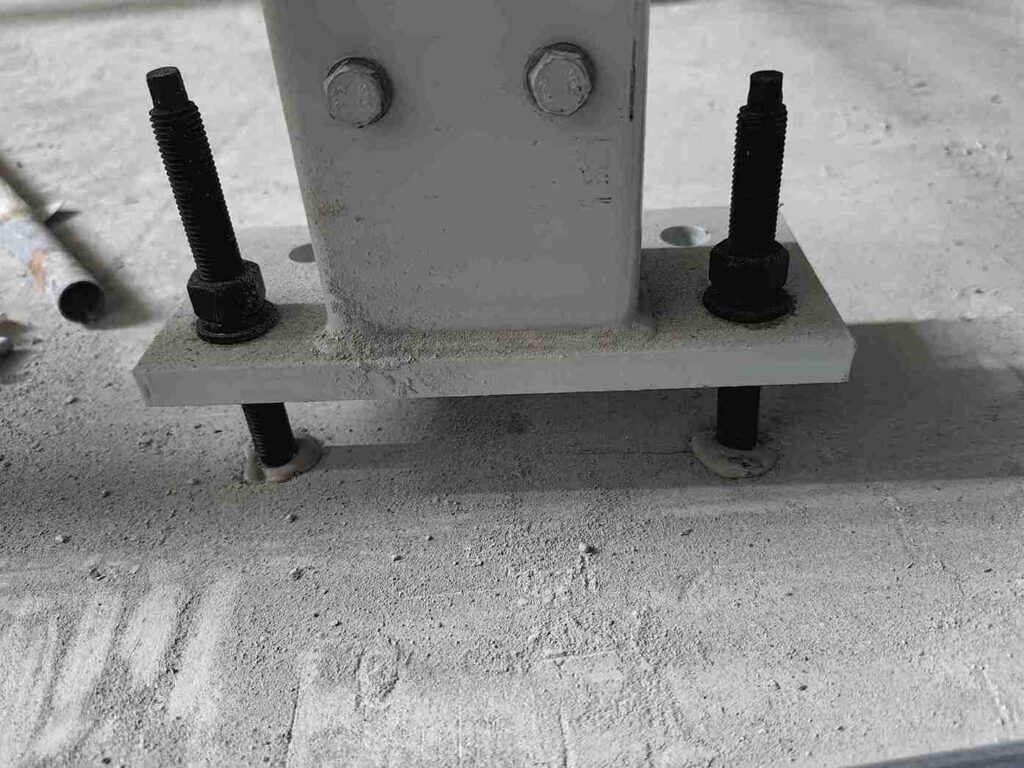
Anchor Selection and Setting: The anchor choice—mechanical (wedge, sleeve, screw) or chemical (epoxy, polyester, or vinylester resin)—is a result of the Phase 1 analysis. For mechanical anchors, calibrated torque wrenches are non-negotiable. The act of installing pallet racking anchors requires achieving the manufacturer’s specified installation torque. Undertorquing leaves the clamp load insufficient; overtightening can strip threads or damage the expansion mechanism. For chemical anchors, specialized injection systems fill the hole from the bottom up, preventing air pockets, and strict curing times are observed before loading.
Phase 3: Verification and the Creation of an Audit Trail
The job is not complete when the last anchor is set. Professional installing pallet racking anchors includes validation.
Proof Loading and Torque Auditing: A statistically significant sample of installed anchors (often 10-25%) undergoes verification. For mechanical anchors, a torque audit checks for relaxation after 24 hours. For critical applications, a proof load test (applying a percentage of the design load) may be performed. This final check in the process of installing pallet racking anchors provides empirical confidence.
As-Built Documentation: The deliverable is not just a standing rack. It is a dossier containing: signed-off engineering calculations, anchor manufacturer technical data sheets, torque audit reports, and as-built drawings marking anchor locations. This dossier is the tangible outcome of professional installing pallet racking anchors. It satisfies insurers, reassures auditors, and provides a baseline for all future safety inspections.
Regional Realities: Why Localized Knowledge is Paramount for Installing Pallet Racking Anchors
The “one-size-fits-all” manual fails spectacularly when installing pallet racking anchors across diverse geographies.
In African Logistics Hubs:
Concrete Variability: Mix ratios and curing practices can vary, leading to inconsistent slab strength. A professional approach to installing pallet racking anchors here involves more intensive spot-testing of the substrate.
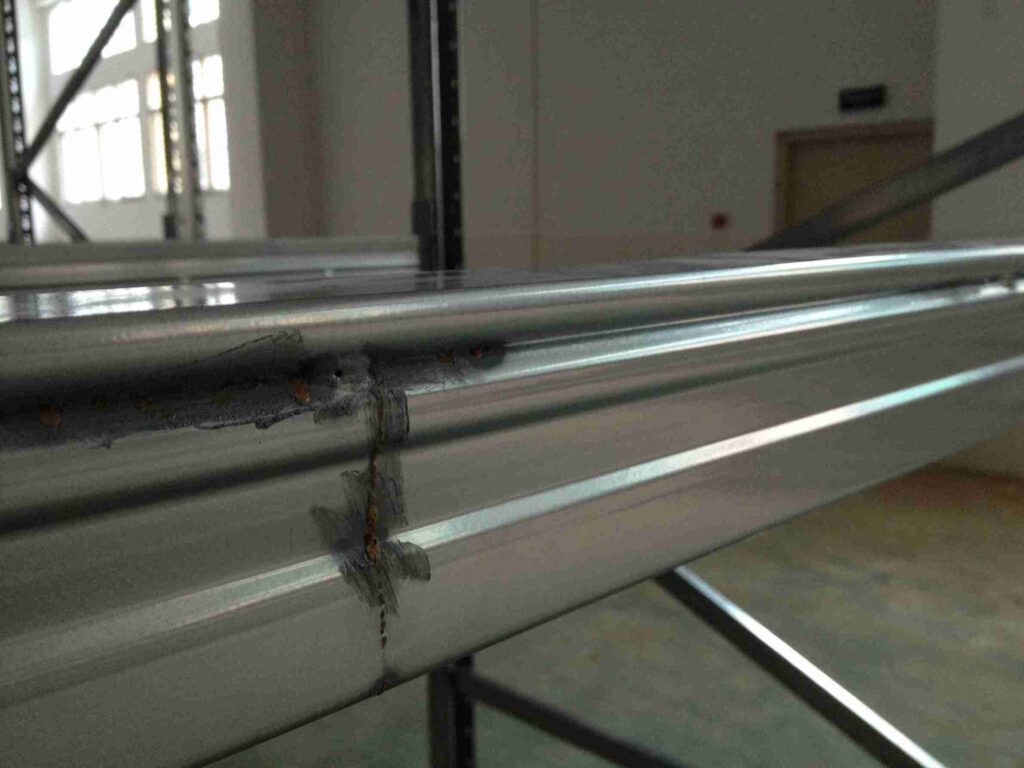
Corrosion Aggression: Coastal humidity in Lagos, Dar es Salaam, or Mombasa, combined with salty air, aggressively attacks standard steel. The strategy for installing pallet racking anchors must include specifying hot-dip galvanized or A4 (316) stainless steel anchors to ensure longevity.
Thermal Cycling: Inland hubs like Johannesburg or Nairobi experience significant diurnal temperature swings, causing concrete expansion and contraction. The methodology for installing pallet racking anchors may need to account for this movement through specific product choices.
In Latin American Logistics Centers:
The Seismic Imperative: This is the dominant design factor. Codes in Mexico, Colombia, Chile, and Peru are stringent. Installing pallet racking anchors here is not just about vertical load; it’s about designing for energy dissipation and ductility. The anchors and their installation must allow the racking system to sway within limits without experiencing a brittle fracture, a concept entirely foreign to non-specialist installers.
Volcanic and Soft Soils: In areas like Mexico City, slabs can settle over time. The engineering for installing pallet racking anchors may incorporate provisions for future adjustment or use anchors with higher tolerance for displacement.
Tropical Humidity and Rainfall: In Manaus or Central America, slab moisture is constant. Certain chemical anchors are hygroscopic. Therefore, installing pallet racking anchors in these regions requires selecting moisture-insensitive resins and may involve testing slab moisture content pre-installation.
The Strategic Integration: Anchors as the Bedrock of Automation and Future-Proofing
For businesses investing in Automated Guided Vehicles (AGVs), automated forklifts, or Automated Storage and Retrieval Systems (ASRS), the stakes for installing pallet racking anchors are exponentially higher. Automation demands millimeter precision. A rack upright that tilts or settles due to an inadequate anchor installation can cause alignment failures, sensor faults, and systemic shutdowns. The vibration profile from silent-running robots differs from that of internal combustion forklifts. Therefore, installing pallet racking anchors for an automation-ready warehouse involves even stricter tolerances, often employing laser-guided alignment during installation and specifying anchors with exceptional resistance to micro-vibration loosening. Investing in expert installing pallet racking anchors today is the foundational step in a scalable, future-proof logistics strategy.
The Vendor Selection Matrix: Interrogating Your Installer’s Capabilities
Choosing a partner for installing pallet racking anchors is a technical procurement decision. Key questions must be asked:
“What is your specific, documented procedure for verifying concrete strength and slab integrity before you begin installing pallet racking anchors on my site?”
“Can you provide the engineering load calculations, including seismic factors for my location, that justify the anchor type and layout you are proposing for installing pallet racking anchors?”
“Do your crews use calibrated torque wrenches, and will you provide a post-installation torque audit report for the work of installing pallet racking anchors?”
“What is your contingency plan if, during installing pallet racking anchors, you encounter a post-tension cable or an area of unacceptable concrete?”
“Can you show me case studies where your process for installing pallet racking anchors withstood a seismic event or was integral to a successful automation project?”
Conclusion: From Cost Center to Strategic Safeguard
In the final analysis, the specialized task of installing pallet racking anchors transcends its humble appearance. For the forward-thinking logistics operator in emerging markets, it represents a clear point of leverage. It is the decisive intervention that determines whether a storage system is a depreciating liability or a durable, resilient asset. The disciplined, engineering-led approach to installing pallet racking anchors directly safeguards inventory, protects human capital, ensures regulatory compliance, and underpins operational continuity.
It is the non-negotiable first chapter in the story of a safe, efficient, and profitable warehouse. To speculatively save pennies on the foundational act of installing pallet racking anchors is to risk the entire investment pound. The data, the physics, and the economics all point to one imperative: professionalize the foundation to protect the future.
Frequently Asked Questions (FAQs)
1: After professional installation, how do we maintain the integrity of the pallet racking anchors?
Integrity maintenance starts with incorporating the anchors into a formal, documented rack inspection regimen. A qualified inspector should annually check a sample of anchors for torque specification (using a calibrated wrench) and for any signs of movement, corrosion, or cracking in the surrounding concrete. Any major impact from material handling equipment should trigger an immediate local inspection. The process of installing pallet racking anchors professionally includes providing the baseline torque values for this very purpose.
2: Our warehouse has different types of racking (selective, drive-in, cantilever). Does the approach to installing pallet racking anchors vary?
Absolutely. The load dynamics and failure modes differ significantly. A cantilever rack has a large overturning moment. Drive-in racks experience different impact forces. The engineering analysis preceding installing pallet racking anchors must be specific to each rack type. The anchor type, spacing, and installation torque will likely differ across a single facility with mixed storage, making a one-method-fits-all approach dangerous.
3: We are expanding and adding onto an existing rack system. Can new anchors be installed adjacent to old ones?
This is a complex scenario requiring professional assessment. The existing slab’s condition, the original anchor placement, and load distribution must be evaluated. Simply installing pallet racking anchors for the new section without understanding the load path of the existing structure can overload the slab. A professional will analyze the as-built documents (hopefully from the original professional installing pallet racking anchors) and may recommend specific anchoring patterns or even slab reinforcement for the tie-in.
4: How do environmental factors like frequent floor washing or freezer conditions affect the choice and installation of pallet racking anchors?
These are critical considerations. In wash-down environments (e.g., food/beverage), stainless steel anchors are essential to prevent corrosion. The installation process must also consider potential chemical exposure. In freezer applications, the extreme cold affects the performance of both steel and concrete. Special low-temperature-certified chemical anchors or mechanical anchors designed for thermal contraction are used. The process of installing pallet racking anchors in these specialized environments follows modified protocols and product selections.
5: Is there a way to retrofit or upgrade anchors in an existing, questionably anchored rack system without a complete teardown?
Yes, in many cases, a system can be retro-anchored. This involves a detailed structural assessment to ensure the rack components are sound. Then, using precise drilling and installation techniques, new, high-capacity anchors can be installed—often chemical anchors due to their high strength in varied conditions—adjacent to or in place of the old ones, following a carefully engineered pattern. This process of retroactively installing pallet racking anchors to a higher standard is a common and highly valuable safety upgrade that extends system life.
If you require perfect CAD drawings and quotes for warehouse racking, please contact us. We can provide you with free warehouse racking planning and design services and quotes. Our email address is: jili@geelyracks.com