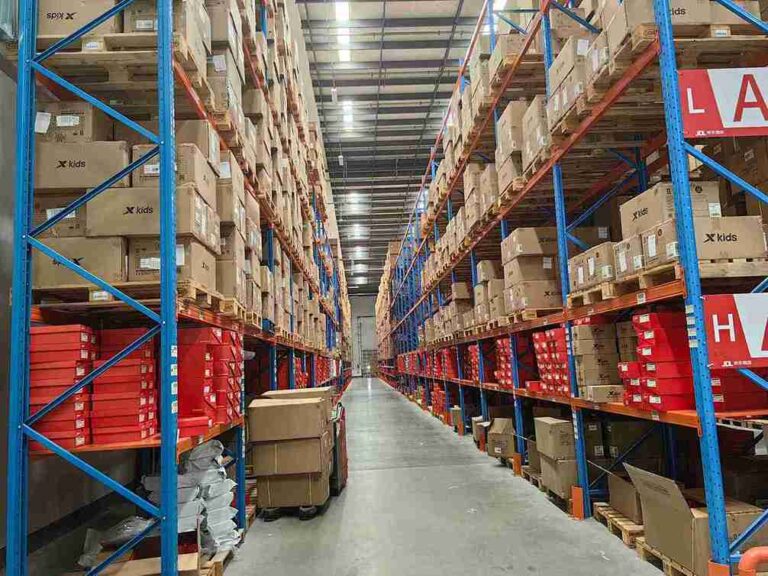
📐 "First 50 Enterprise Queries Get Custom 3D Warehouse Design" Plan


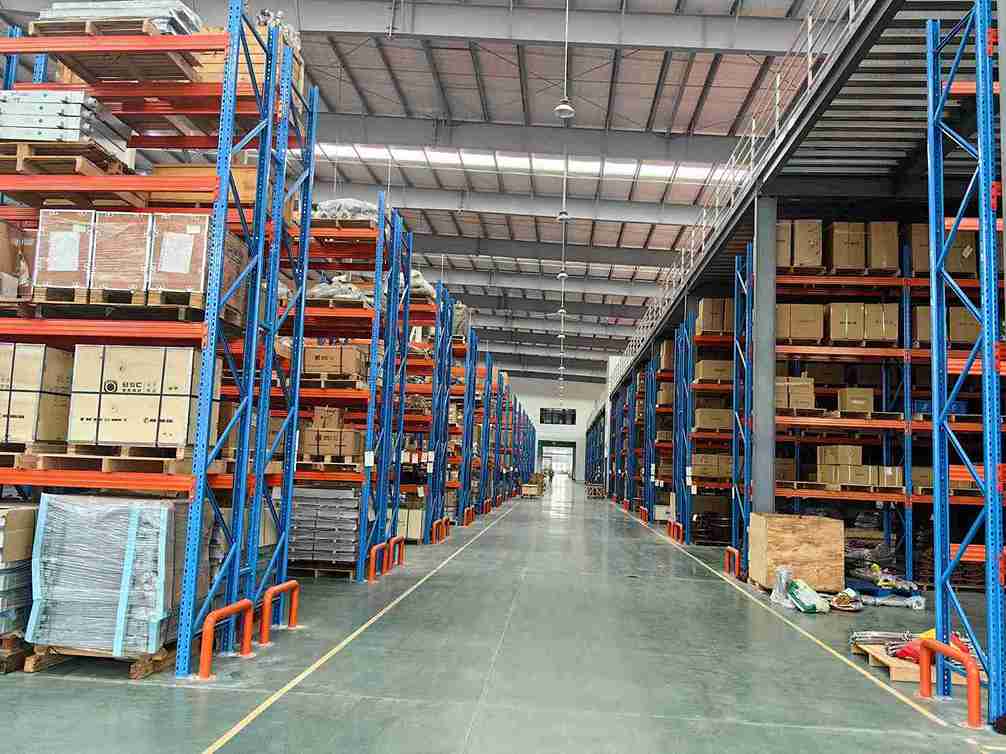
Stop Wasting Space! A Strategic Guide to Gaining 30% More Storage Without Warehouse Expansion
For logistics directors, warehouse managers, and supply chain leaders across the burgeoning industrial landscapes of Southeast Asia, the Middle East, Latin America, and Africa, the capacity crisis is a pressing reality. The confluence of rapid e-commerce growth, rising consumer expectations, and volatile supply chains has placed unprecedented pressure on existing storage infrastructures.
The conventional answer—constructing new facilities or leasing additional space—represents a monumental capital outlay, a protracted timeline, and a significant operational gamble. A paradigm shift is underway, moving the focus from acquiring more square meters to radically optimizing existing cubic meters. This comprehensive guide details the strategic implementation of industrial racking retrofit projects as the most intelligent and financially sound response to this challenge.
These are not mere equipment upgrades; they are holistic, engineered overhauls of storage DNA. By delving into the methodologies of high-density storage, seamless automation integration, and phased execution, this resource will demonstrate how forward-thinking companies are achieving storage density increases of 30%, 40%, even 50%, while simultaneously boosting throughput, accuracy, and workplace safety. The solution to the warehouse capacity puzzle lies not in expansion, but in the strategic re-imagination of the space you already own.
The Warehouse Capacity Crisis: Why Expansion is an Outdated Answer
In the dynamic markets of Jakarta, Dubai, Sao Paulo, and Lagos, warehouse operators are engaged in a constant battle against spatial constraints. The symptoms are universal: aisles transformed into makeshift storage, picking routes that resemble cross-country marathons, and inventory accuracy that deteriorates under the strain of congestion. The instinctive reaction for decades has been to pursue physical expansion. However, in today’s economic climate, the viability of this approach has severely diminished. The true cost of new construction extends far beyond the price of land and steel; it encompasses multi-year permitting processes, architectural fees, and the immense hidden cost of operational disruption during a move.
The modern solution is rooted in efficiency engineering. Astute logistics professionals are now reframing the core question from “Where can we find more space?” to “How can we achieve radical efficiency within our current four walls?” It is a documented fact that a vast majority of warehouses operate at a vertical utilization rate of below 30%. A staggering volume of potential storage space—the critical air space above standard racking—remains a wasted asset. Furthermore, traditional layouts, designed for the maneuverability of counterbalance forklifts, dedicate an excessive proportion of precious floor area to non-productive aisles.
It is precisely this inefficiency that targeted industrial racking retrofit projects are designed to eradicate. These projects represent a calculated intervention, leveraging advanced engineering and technology to reconfigure the storage landscape from the ground up. The objective is to create a storage environment that is not merely larger, but is fundamentally smarter, more responsive, and inherently scalable.
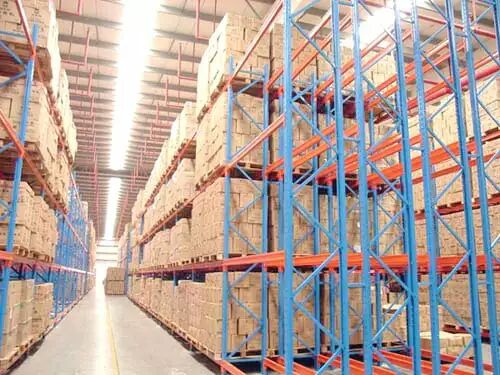
Deconstructing the Modern Industrial Racking Retrofit Project
A common misconception in the industry is to view a retrofit as a simple like-for-like replacement of old shelving with new racks. This fundamental misunderstanding can lead to underwhelming results and missed opportunities. In reality, a state-of-the-art industrial racking retrofit project is a sophisticated, multi-disciplinary endeavor. It is a systematic re-engineering of the entire storage and material handling process within the confines of an existing building, with the explicit goal of maximizing performance metrics across the board.
The Core Pillars of a Transformative Retrofit
A successful industrial racking retrofit project is not a single action but a symphony of integrated components working in concert.
High-Density Storage Systems: This involves the strategic replacement of traditional, space-inefficient shelving with engineered systems such as Narrow Aisle Pallet Racking, Drive-In/Drive-Thru Racking, or Push Back Racking. Each of these systems is selected based on specific SKU and turnover profiles.
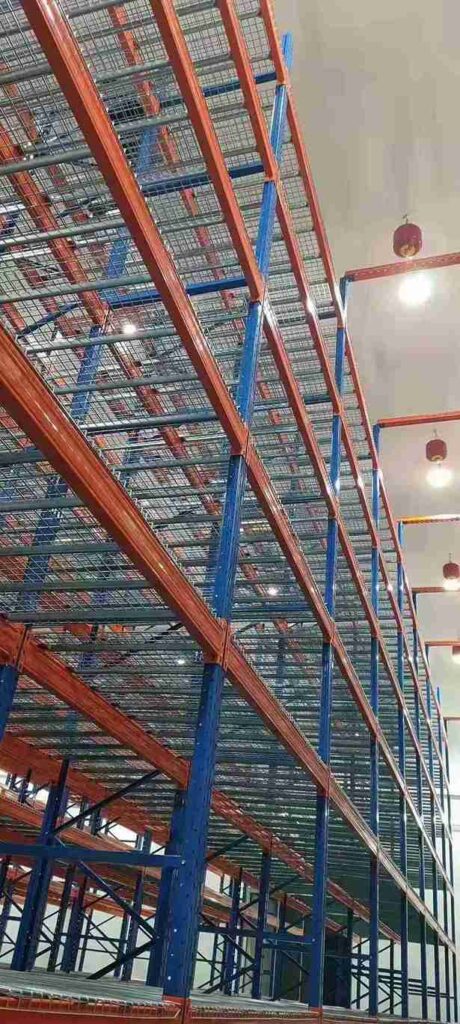
Vertical Capitalization: This pillar focuses on aggressively utilizing the full building height. This can mean installing taller, custom-engineered racking that reaches safely towards the roof structure or implementing Mezzanine Floors to create multi-level platforms for storage, assembly, or office space.
Automation and Robotics Integration: This is the critical differentiator between a basic upgrade and a transformative industrial racking retrofit project. The integration of technologies like Automated Storage and Retrieval Systems (ASRS), Vertical Lift Modules (VLMs), or fleets of Automated Guided Vehicles (AGVs) automates material movement, eliminating human error and labor-intensive tasks.
The Digital Nervous System: Software and Controls: The physical infrastructure is powerless without intelligent command. A crucial phase of any modern industrial racking retrofit project is the upgrade and integration of a robust Warehouse Management System (WMS) or Warehouse Execution System (WES) to orchestrate the entire ecosystem.
The Inescapable Business Case: Retrofit vs. New Build
To be clear, there are scenarios where a new greenfield facility is the correct strategic choice. However, for a significant majority of businesses facing capacity constraints, a well-executed industrial racking retrofit project presents a far superior financial and operational proposition. The following analysis illustrates the stark contrast:
| Factor | New Warehouse Construction | Industrial Racking Retrofit Project |
|---|---|---|
| Capital Investment | Extremely High (Land, Construction, Utilities) | Typically 40-60% of the cost of a new build |
| Implementation Timeline | 18-36 Months (Planning to Occupancy) | 3-9 Months (Phased, Minimized Disruption) |
| Operational Risk | High (Construction Delays, Market Shifts) | Managed and Mitigated through Phased Execution |
| Return on Investment (ROI) | Long-term (5-10+ Years) | Rapid, Often Achieved in 12-24 Months |
| Sustainability Quotient | High Embodied Carbon, New Land Use | “Green” Solution, Maximizes Existing Assets |
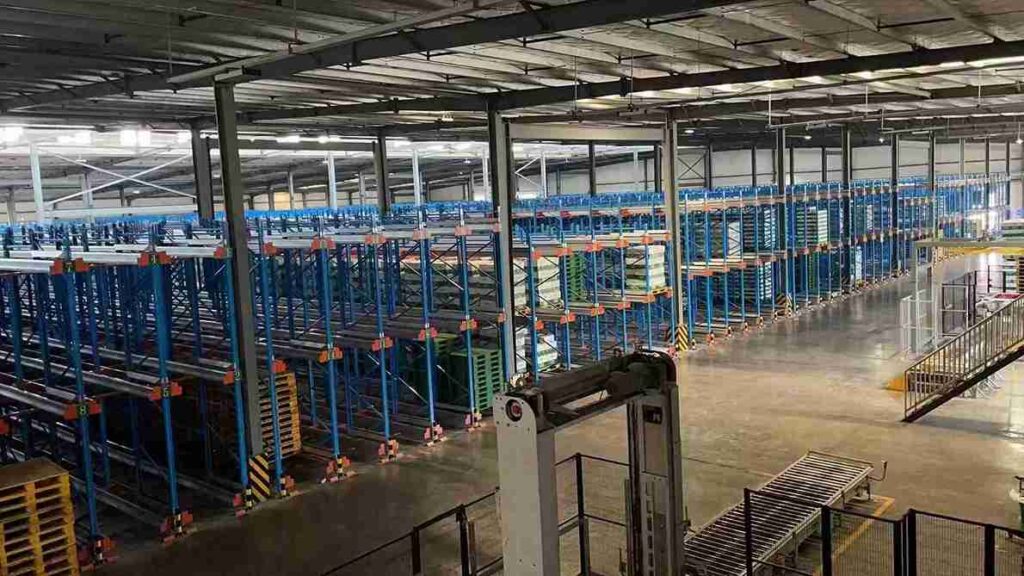
The 30%+ Solution: An Engineering Deep Dive into Storage Density
Achieving a minimum 30% increase in storage capacity is not a speculative claim; it is a predictable outcome of applied engineering principles. This performance gain is systematically extracted from two primary sources: the reclamation of wasted vertical air space and the conversion of non-productive floor area into high-density storage zones.
1. Conquering the Vertical Frontier: Reaching for the Roof
The most significant untapped asset in a typical warehouse is the cubic volume above the standard racking height. A deliberate industrial racking retrofit project is designed to capture this void.
Engineered Taller Racking Systems: Specialist structural engineers calculate the load-bearing capacity and design racking systems that ascend safely to within optimal proximity of the roof structure. This single intervention can add multiple layers of storage, effectively increasing pallet positions by a substantial margin.
Vertical Lift Modules (VLMs): For facilities managing a high volume of small parts, VLMs represent the pinnacle of vertical density. These fully enclosed, automated systems use the entire available room height, storing trays in a compact footprint and delivering requested items directly to an ergonomic workstation. A successful industrial racking retrofit project utilizing VLMs can achieve density improvements of up to 90% for small-parts storage.
2. The Narrow Aisle Revolution: The Power of Slimmer Aisles
The wide aisles necessary for conventional counterbalance forklifts represent a colossal inefficiency. A fundamental objective of any industrial racking retrofit project is to replace these with Narrow Aisle Racking configurations, slashing aisle widths to between 1.6 and 2.0 meters.
The Compelling Mathematics: Consider a warehouse with 10,000 square meters of total area. By systematically converting ten traditional 3.5-meter aisles down to 1.8-meter narrow aisles, the project can reclaim over 1,700 square meters of floor space. This reclaimed area is not lost; it is directly converted into additional racking rows, resulting in an immediate and dramatic increase in storage capacity.
The Enabling Technology: This transformation requires a corresponding investment in specialized material handling equipment, such as Narrow Aisle Forklifts or Order Pickers. The capital outlay for this equipment is rapidly amortized by the dual benefit of massive storage gains and a significant boost in operational efficiency, as operators spend less time traveling and more time on value-added tasks.
3. High-Density Storage Configurations: The Science of Footprint Compression
For operations with high-volume SKUs or deep-lane storage requirements, the implementation of high-density storage systems is the cornerstone of a high-impact industrial racking retrofit project.
Push Back Racking: This sophisticated system allows for pallet storage that is multiple loads deep. Pallets are stored on inclined rails on a series of nested carts. When a pallet is retrieved from the front, the subsequent pallet automatically glides forward due to gravity. This system offers an excellent balance of high storage density and good selectivity, making it ideal for applications requiring batch or lot management.
Drive-In/Drive-Thru Racking: This is the ultimate solution for maximizing storage density for products with low SKU count and high volume, such as in cold storage facilities or for holding seasonal goods. Forklift operators drive directly into the rack structure to store and retrieve pallets, effectively eliminating all but one aisle per bay. The strategic use of Drive-In Racking within an industrial racking retrofit project can yield the highest possible pallet count per square meter.
Pallet Flow Racking: Utilizing a dynamic, gravity-powered system, Pallet Flow Racking provides high-density, high-throughput storage with an inherent First-In, First-Out (FIFO) inventory rotation. This makes it exceptionally well-suited for fast-moving, time-sensitive consumer goods, perishables, or any product where strict stock rotation is critical.
Integrating Automation: The Cognitive Core of Advanced Retrofit Projects
A contemporary industrial racking retrofit project presents the perfect strategic window for the integration of automation technologies. This fusion of physical re-engineering with digital intelligence transforms a warehouse from a static cost center into a dynamic, competitive weapon. The goal of automation is not the wholesale replacement of human labor but the augmentation of human capability, leading to unprecedented levels of accuracy, safety, and productivity.
AGVs and AMRs: The Autonomous Workhorses
The deployment of AGV solutions within an industrial racking retrofit project creates a seamless and continuous flow of materials. These programmable, driverless vehicles can be tasked with a multitude of repetitive transport functions—moving pallets from the receiving dock to their designated high-density storage location, or ferrying completed picks from the order fulfillment zone to the dispatch area. They operate tirelessly across multiple shifts, reduce labor costs associated with mundane transport tasks, and establish a predictable, optimized material flow that is decoupled from human variability.
ASRS: The Pinnacle of Storage Intelligence and Density
For applications demanding the ultimate in storage density, inventory control, and retrieval speed, the integration of an Automated Storage and Retrieval System (ASRS) represents the apex of a modern industrial racking retrofit project. These computer-controlled crane systems operate within the racking aisles themselves, automatically storing and retrieving pallets or totes with sub-millimeter precision. They are capable of operating in aisles as narrow as 1.5 meters and can reach heights exceeding 40 meters, fully capitalizing on the building’s vertical cube. The implementation of an ASRS, governed by a sophisticated WMS, delivers near-perfect inventory accuracy, unparalleled throughput, and a significant reduction in product damage. It is the definitive statement in storage optimization.
A Phased Blueprint for Flawless Retrofit Project Execution
The prospect of a large-scale industrial racking retrofit project can seem intimidating to operational leaders who cannot afford extended downtime. The key to success lies in a meticulously planned, phased execution methodology that prioritizes business continuity and transparent communication.
Phase 1: In-Depth Discovery and 3D Simulation Modeling
The foundation of every successful industrial racking retrofit project is laid during the discovery phase. This involves a deep forensic analysis of operational data: SKU velocity, cube metrics, order profiles, and growth projections. Modern planners then utilize advanced 3D simulation software to create a digital twin of the proposed warehouse. This powerful tool allows engineers to model different scenarios, visualize material flow, identify potential bottlenecks, and optimize the entire layout in a risk-free virtual environment long before physical installation commences. This phase is critical for aligning all stakeholders on the expected outcome.
Phase 2: Meticulous Phased Installation and Commissioning
A “big bang” installation, where the entire warehouse is shut down, is almost never acceptable. Therefore, the execution of the industrial racking retrofit project is conducted in carefully orchestrated phases. Work is sequenced in specific zones, often scheduled during off-peak hours or weekends, with temporary operational areas established to ensure uninterrupted workflow. Experienced project managers are essential for coordinating this complex logistical ballet, ensuring that each phase is completed on time, on budget, and with minimal impact on daily operations.
Phase 3: Total System Integration and Comprehensive Staff Training
The most advanced physical infrastructure is rendered ineffective without the “brain” to control it. A critical success factor for any industrial racking retrofit project is the seamless integration of the new hardware with the warehouse management software. This creates a single, real-time source of truth for all inventory and operational data. Concurrently, a robust, hands-on training program is deployed for all operational staff, from floor operators to system supervisors. Empowering the team with confidence and proficiency in the new system is the final, crucial step in ensuring the projected ROI is fully realized.
Case in Point: A Retrofit Triumph in a Malaysian E-Commerce Hub
A prominent e-commerce logistics provider based in the Klang Valley, Malaysia, was grappling with the consequences of 40% year-over-year order growth. Their existing facility, designed for a bygone era, was characterized by chaotic layouts, escalating pick times, and an unsustainable error rate. A feasibility study for a new build returned a quote of over $5 million USD and an 18-month timeline, a proposition that was both financially and operationally untenable.
The Engineered Solution: The company partnered with experts to design and execute a comprehensive industrial racking retrofit project. The strategy was multi-faceted:
The existing wide-aisle layout was systematically replaced with a high-density Narrow Aisle Racking system, instantly increasing available pallet positions by 25%.
A large-scale mezzanine floor was constructed over a section of the warehouse, creating a dedicated, efficient space for value-added services like custom kitting and gift wrapping.
A coordinated fleet of AGV carts was deployed to autonomously transport picked orders from the dynamic pick zones to the central packing and shipping stations.
The Quantifiable Result: The entire industrial racking retrofit project was completed and fully operational within a remarkably swift 6-month period. The operational metrics post-implementation were transformative: a 35% increase in storage capacity, a 50% reduction in average order picking time, and a phenomenal 99.8% order accuracy rate. Most significantly, the calculated Return on Investment was achieved in just 14 months, solidifying the industrial racking retrofit project as a masterstroke in capital allocation and operational strategy.
Conclusion: Forging the Future-Proof Warehouse, Today
The universal challenge of warehouse capacity is a test of strategic vision. The solution, however, has evolved. It is no longer found solely in blueprints for new construction but in the intelligent, engineered re-optimization of the assets already under your roof. A professionally planned and executed industrial racking retrofit project stands as the most strategic, cost-effective, and rapid-response investment an organization can make to secure its logistical competitiveness for the coming decade.
It represents a decisive shift from reactive space management to a proactive, data-driven model of storage optimization. The latent capacity to support your company’s growth already exists within your current facility; it is simply waiting for the right expertise to unlock it through a transformative industrial racking retrofit project.
Frequently Asked Questions (FAQs)
1. How is structural integrity and safety assured during and after a retrofit, especially when adding significant height or weight?
Safety is the non-negotiable foundation of every industrial racking retrofit project. The process begins with a thorough structural analysis of the existing building, including floor load capacity and roof integrity. All new racking designs are executed by certified structural engineers who calculate load distributions, seismic factors (where applicable), and adherence to all international safety standards (e.g., RMI). The installation is followed by a rigorous load test and certification process before commissioning, ensuring the system’s absolute safety and reliability.
2. Can a retrofit project be designed to handle future scalability and flexibility for changing product lines?
Absolutely. A hallmark of a well-designed industrial racking retrofit project is inherent scalability. This is achieved through modular design principles, such as using boltless shelving for easy reconfiguration, designing mezzanines with future expansion points, and implementing a WMS that can manage evolving SKU profiles. The initial design phase always includes a “future-state” analysis to ensure the system can adapt to forecasted business growth and product mix changes with minimal additional investment.
3. What kind of data is required from our end to initiate the planning phase for a retrofit project?
To model the most efficient layout, engineers require a comprehensive dataset. This includes a minimum of 12 months of historical data: SKU master files (with dimensions and weight), inventory turnover reports (ABC analysis), order history (including peak season profiles), and current facility CAD drawings or detailed measurements. The quality of the input data directly correlates to the accuracy and success of the industrial racking retrofit project simulation and final design.
4. How does the project management structure work, and what is our involvement during the installation?
A dedicated, experienced Project Manager (PM) is assigned as your single point of contact for the duration of the industrial racking retrofit project. The PM manages a detailed Gantt chart, coordinates all subcontractors, and provides weekly progress reports. Your involvement is collaborative; a cross-functional team from your organization will work with the PM, participating in regular update meetings, providing access schedules, and assisting with internal communications to ensure a smooth rollout with minimal surprise.
5. For businesses in regions with inconsistent power grids, how reliable are automated systems like AGVs and ASRS?
This is a critical consideration for operations in emerging markets. Modern automated systems are designed with redundancy and power management in mind. Solutions include Uninterruptible Power Supply (UPS) systems for critical controls, automated guided vehicles with large battery buffers and opportunity charging stations, and system designs that allow for graceful degradation rather than complete failure during a brownout. A reputable provider will conduct a specific risk assessment for local conditions as part of the industrial racking retrofit project feasibility study.
Welcome to contact us, if you need warehouse rack CAD drawings. We can provide you with warehouse rack planning and design for free. Our email address is: jili@geelyracks.com