📐 "First 50 Enterprise Queries Get Custom 3D Warehouse Design" Plan


The Unseen Guardian: How Engineered Pallet Racking End Guards Fortify Global Supply Chains
The modern warehouse is a kinetic symphony of men, machines, and inventory, all moving at an ever-accelerating pace. Within this ecosystem, the pallet racking system forms the silent, static backbone—a significant capital investment intended to last for decades. Yet, its most vulnerable points, the exposed ends at the conclusion of each aisle, face a constant, silent barrage. Every turn of a forklift, every traversal of an AGV, every manual pallet jack maneuver presents a risk.
The impact against a rack end is not a matter of if, but when. This document serves not as a simple product guide, but as a foundational white paper for logistics, safety, and operations managers worldwide. It delves into the imperative of deploying specifically engineered pallet racking end guards as a primary, non-negotiable defense strategy. Moving beyond generic safety platitudes, it provides a granular, technical, and strategic framework for selecting, implementing, and benefiting from these critical protective components.
For operations spanning the manufacturing hubs of Southeast Asia, the burgeoning logistics corridors of the Middle East, the vast distribution networks of Africa, and the resource-rich landscapes of Latin America, understanding and applying these principles is essential for safeguarding personnel, assets, and profitability.

Deconstructing the Impact: The Multifaceted Crisis of Unprotected Rack Ends
A casual glance at a dented rack upright often underestimates the profound operational earthquake it signifies. The moment a forklift mast or AGV body makes contact with an unprotected rack end, a chain reaction of risk is initiated, with consequences far exceeding a simple repair order.
Structural Integrity Compromised: The Invisible Weakness
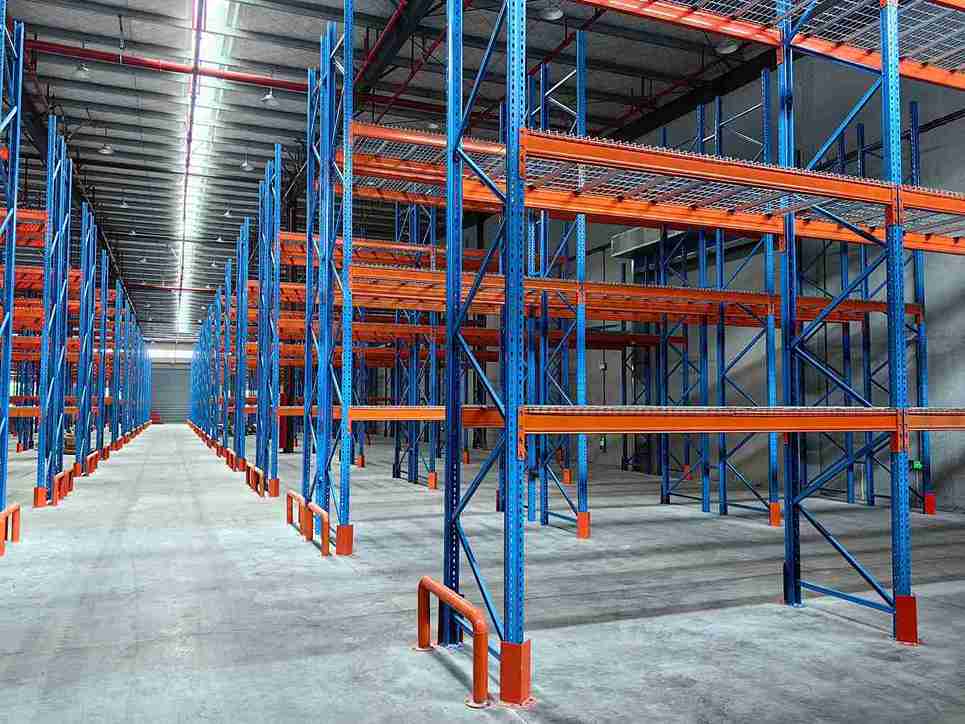
Pallet racking is a meticulously engineered structure where load capacity is calculated based on the integrity of every component, especially the upright columns. A direct impact, even one that appears superficial, can critically compromise that integrity. The damage often occurs at the column’s “connection zone”—the perforated area where beams are secured. A bend or twist in this zone redistributes stress unpredictably, drastically reducing the upright’s load-bearing capacity.
This creates a latent failure point. Under a full load, or during a subsequent minor tremor or impact, a progressive collapse can be triggered. The resulting domino effect can bring down multiple bays, representing tens of thousands of kilograms of inventory. This is not mere property damage; it is a catastrophic structural failure with grave implications. Therefore, the primary function of any serious pallet racking end guard is to intercept and dissipate this energy before it reaches and deforms the critical upright structure.
The Tangible Financial Avalanche: Calculating True Cost of Ownership
The financial argument for installing robust pallet racking end guards is unequivocal when a full cost analysis is conducted. An incident involving rack damage triggers a multi-line financial disaster:
Direct Asset Loss: The cost to replace a loaded rack bay is substantial. It involves scheduled downtime, labor for careful off-loading, disposal of the damaged structure, procurement of new components (which may have long lead times), and re-installation. For specialized environments like cold storage, where racks have specific thermal properties, costs can be double or triple.
Inventory Destruction: Collapsed racks crush product. This leads to total inventory loss, potential environmental remediation costs (for chemicals, oils, or foodstuffs), and lost sales revenue that can affect supply chain commitments.
Operational Paralysis: The affected zone becomes an immediate hazard area, requiring cordoning off. This disrupts material flow, halts picking operations, and creates bottlenecks that ripple through the entire logistics chain, missing critical shipping windows.
Ancillary Equipment Damage: The impacting vehicle, be it a $80,000 forklift or a $150,000 AGV, invariably suffers damage to its mast, wheels, guidance sensors, or body. This necessitates costly repairs and creates a secondary equipment shortage.
Insurance and Liability Premiums: A history of rack impacts labels a facility as high-risk. Insurers respond with steep premium increases, higher deductibles, or even non-renewal of policies. Furthermore, in the event of an injury, demonstrating negligence due to a known, unmitigated hazard (exposed rack ends) exposes the company to severe legal liability.
The Human Factor: Cultivating a Culture of Proactive Safety
Safety transcends compliance checklists. An unprotected rack end is a visible testament to a reactive safety culture. Employees operating equipment in tight aisles are acutely aware of these hazards, which can increase stress and potentially lead to overly cautious, less productive behavior. Conversely, the installation of visibly robust, engineered pallet racking end guards sends a powerful message: management prioritizes their physical safety above a minimal cost saving.
This fosters a culture of trust and shared responsibility for a safe workspace. In regions with rapidly evolving labor laws and a growing emphasis on worker welfare, this proactive stance is not only ethical but also a strategic advantage in talent retention and regulatory standing.
The Anatomy of a True Heavy-Duty Pallet Racking End Guard: Specifications Over Claims
The term “heavy-duty” is ubiquitously used and tragically underspecified in the industry. A true, engineered pallet racking end guard is a safety device, not a cosmetic accessory. Its design is a direct response to the physics of kinetic energy transfer in an industrial setting.
Material Selection: The First Line of Defense
The choice of material dictates performance, longevity, and suitability for specific environments.
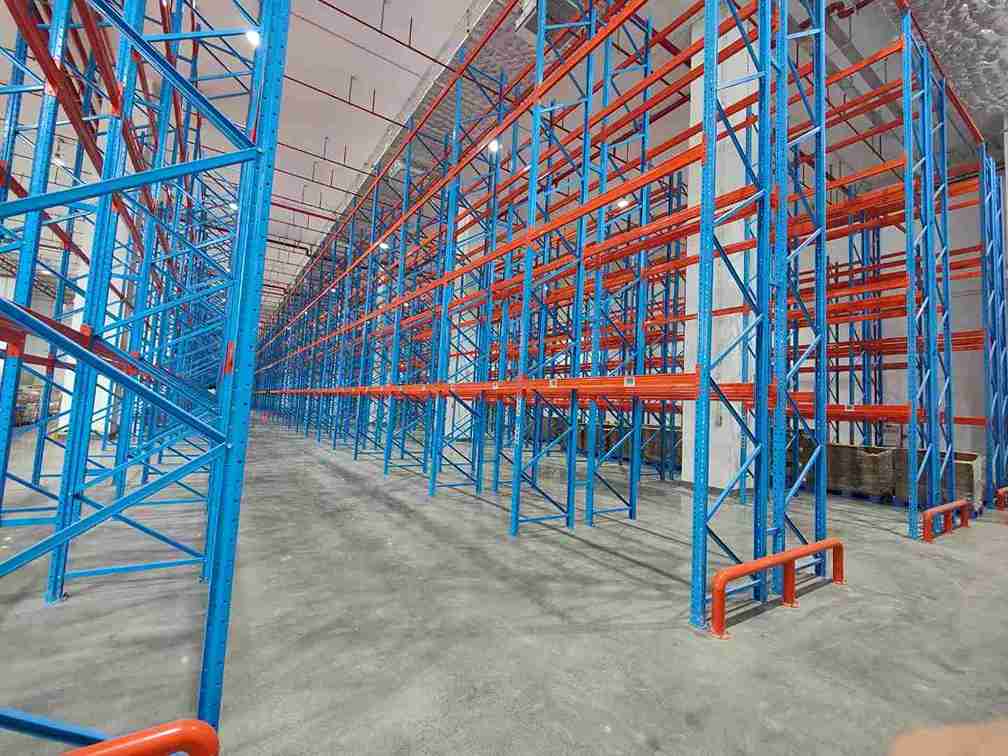
High-Strength, Low-Alloy (HSLA) Steel: For general industrial use, cold-rolled steel with a minimum thickness of 4.76mm (3/16″) and a high yield strength (e.g., 345 MPa/50,000 psi) is the benchmark. It offers an optimal balance of impact resistance and cost. A high-quality powder-coat finish, applied over a phosphate pre-treatment, is essential for corrosion resistance.
Marine-Grade Aluminum Alloys: In highly corrosive environments like coastal facilities in Vietnam or Philippines, or in food processing where frequent washdowns occur, aluminum alloys (e.g., 5052 or 6061) provide excellent strength-to-weight ratios and innate corrosion resistance without the need for painting.
Engineered Polymer Composites: Advanced composites, such as fiberglass-reinforced polyester or polyethylene, are ideal for specific applications. They are non-conductive, resistant to a wide range of chemicals, and will not rust. Their energy-absorption characteristics can be superior to steel in some low-temperature or chemical-laden environments, making them a prime choice for pharmaceutical or cold chain logistics pallet racking end guards.
Engineering Design: Channeling Forces Intelligently
A flat plate of steel is a poor energy absorber. Superior pallet racking end guards employ intelligent geometry.
Ribbed or Corrugated Profiles: These create longitudinal stiffeners that increase the moment of inertia, preventing the guard from buckling flat upon impact. They channel forces along the guard’s length, away from the mounting points and the rack upright itself.
Controlled Deformation Zones: Some advanced designs incorporate intentional weak points or crumple zones that sacrifice themselves to absorb the maximum amount of energy, much like a car’s bumper system, ensuring the rack structure remains untouched.
Full-Height Protection Profile: Protection must be comprehensive. The most critical impact zone is between floor level and approximately 1.5 meters high—the strike range of a forklift mast or AGV body. Therefore, a credible pallet racking end guard should offer protection across this entire vertical profile, seamlessly connecting to base-level column protectors for a continuous defensive barrier.
Mounting Integrity: The Critical Connection
The most robust guard is only as strong as its connection to the rack. There are two primary philosophies:
Bolted-Through, Structural Mounting: This is the gold standard. The guard is secured using high-tensile bolts that pass directly through pre-drilled holes in the rack upright. This transforms the pallet racking end guard into a structural extension of the rack itself, ensuring optimal force transfer and eliminating any risk of the guard detaching upon impact.
Heavy-Duty Clamp-On Systems: For retrofits where drilling into uprights is prohibited or for temporary installations, industrial-grade clamping systems exist. These must utilize massive, forged steel clamps with serrated jaws and high-torque bolts to achieve a vise-like grip on the upright. They should never be confused with lightweight strap-style solutions.
The Global Applicability: Tailoring Pallet Racking End Guards to Regional and Operational Realities
A solution perfect for an automotive warehouse in Germany may fail catastrophically in a port-side facility in Dubai. Specifying the correct pallet racking end guards demands a deep understanding of the operational environment.
Climatic and Environmental Adaptation
Tropical & Coastal (Southeast Asia, Gulf Coast): The twin threats are constant high humidity and salt-laden air. Here, pallet racking end guards must be constructed from hot-dip galvanized steel (with a minimum coating class) or marine-grade aluminum. Powder coating, while excellent, must be of the highest quality with robust edge coverage to prevent substrate corrosion.
Arid & Dusty (Middle East, North Africa): Ultraviolet (UV) radiation and abrasive sand are the primary concerns. Polymer-based pallet racking end guards must be specified with UV stabilizers to prevent brittleness and cracking. Steel guards require finishes resistant to abrasive dust erosion.
Cold Storage & Controlled Environments: Temperatures can plunge to -30°C. Materials must retain their ductility and not become brittle. Certain grades of stainless steel and specific, cold-rated polymers are mandatory. Designs must also account for potential ice buildup.
Integration with Automation and Material Handling Equipment
The type of equipment dictates the nature of the impact.
Traditional Counterbalance & Reach Forklifts: These represent the highest energy impacts. Pallet racking end guards in their aisles require the highest dynamic load ratings. Consideration must be given to the protruding mast; a guard may need to be offset from the rack face to prevent the mast from bypassing it and striking the upright directly.
Automated Guided Vehicles (AGVs): AGV impacts are typically lower energy but can be frequent due to their programmed, repetitive paths. Pallet racking end guards in AGV zones should have smooth, low-friction surfaces to allow the vehicle to “glance off” without catching, which could cause an AGV to stall or derail. The guard’s presence also protects the expensive AGV from damage.
Very Narrow Aisle (VNA) Systems: In aisles barely wider than the load itself, impacts, while less forceful, are almost inevitable during the learning curve of new operators or due to slight guide rail deviations. Here, pallet racking end guards need to be incredibly durable over thousands of minor grazes and must have an ultra-slim profile to maintain mandated clearances.
The Quantifiable Business Case: ROI Analysis for Pallet Racking End Guards
Framing pallet racking end guards as an expense is a fundamental error. They are a capital investment with a demonstrable and often rapid return. The analysis shifts from cost to value preservation.
Direct Cost Avoidance Model
A simplified financial model illustrates the point starkly. Assume a single significant rack impact event.
Event Cost (Estimated):
Rack Bay Replacement & Labor: $4,500
Destroyed Inventory: $8,000
Forklift Repair: $3,000
12 Hours of Line Downtime: $6,000
Total Immediate Cost: $21,500
Prevention Investment:
Installation of high-performance pallet racking end guards on 40 critical ends: $450/unit (fully installed) = $18,000.
In this model, preventing a single incident provides a 119% return on the protective investment. Over the 10-15 year lifespan of the guards, the probability of multiple incidents is high, making the ROI exponential. This does not even factor in the “soft” savings from avoided insurance hikes, legal fees, or reputational damage.
Enhancing Asset Lifecycle and System Value
A racking system is a long-term asset. Protecting it from degradation maintains its designed load capacity and safe working life, preserving its book value and deferring multi-million dollar replacement projects. Furthermore, in facilities seeking certifications like ISO 45001 (Occupational Health & Safety) or those undergoing rigorous customer audits (common in automotive or aerospace logistics), the presence of a documented rack protection plan featuring professional pallet racking end guards is a tangible indicator of a mature, responsible operation, potentially unlocking new business opportunities.
A Procedural Framework: From Audit to Installation of Pallet Racking End Guards
Implementing an effective rack protection strategy is a procedural endeavor, not a simple procurement task.
Phase 1: Comprehensive Facility Risk Mapping
This is a collaborative exercise involving safety officers, operations managers, and maintenance staff. It involves:
Walking the Floor: Identifying every rack end position.
Traffic Pattern Analysis: Mapping high-risk zones: intersections, blind corners, areas near packing stations, and zones adjacent to charging bays for electric equipment.
Equipment Inventory: Documenting the make, model, weight, and mast dimensions of all MHE.
Historical Analysis: Reviewing past incident reports for patterns.
Phase 2: Technical Specification Development
Based on the audit, develop a performance-based specification for your pallet racking end guards:
Minimum Dynamic Impact Rating: e.g., “Must withstand a simulated impact of 10,000 Joules from a pendulum test per ANSI MH16.3 guidelines.”
Material and Finish: “Constructed from 4.76mm thick, grade 350 steel, hot-dip galvanized to ZM-345 specification.”
Dimensions and Coverage: “Must provide protection from 150mm above finished floor to 1600mm high, covering all column perforations.”
Mounting Method: “Bolted-through mounting utilizing Grade 8.8 M12 hardware.”
Ancillary Features: “Must include integral, replaceable high-visibility yellow impact indicator strip and provision for bolted-on signage panel.”
Phase 3: Supplier Qualification and Validation
Request Engineering Test Reports: Insist on seeing certified third-party test data for the exact model being proposed. Do not accept generic claims.
Demand Geographic References: Ask for case studies or installation lists from projects in similar climates or industries within your region (e.g., “Show us three installations in humid, tropical climates”).
Scrutinize Total Delivered Cost: Account for international shipping, import duties, and the availability of local technical support or installation guidance.
Phase 4: Professional Implementation and Integration
Installation is a precision task. It should be conducted by trained personnel following the manufacturer’s instructions precisely, including specified torque values for all bolts. The installation of pallet racking end guards should be integrated into the facility’s broader Preventative Maintenance (PM) schedule. During routine rack inspections, the guards themselves should be examined for signs of impact, which serve as valuable data points for near-miss reporting and operator re-training.
Advanced Applications and System Integration
The principle of rack end protection extends to more complex storage architectures.
Protection for Automated Storage/Retrieval Systems (AS/RS)
In these high-density, high-value systems, the end-of-aisle interfaces where the S/R machine deposits and retrieves loads are critical. Here, pallet racking end guards are often custom-engineered as part of the original system design. They may interface directly with the machine’s safety laser scanners, creating a protected “landing zone” that is integral to the automation logic.
Securing Mezzanine and Multi-Tier Structures
The support columns at the corners of mezzanine floors are exceptionally vulnerable, often located at traffic intersections. Pallet racking end guards for these applications frequently need to be taller and may be combined with structural post protectors and even integrated handrails, serving a combined purpose of impact protection and fall prevention.
The Future Trajectory: Smart Guards and the Data-Driven Warehouse
The next evolution of pallet racking end guards lies in connectivity and intelligence. The concept of the “Internet of Things” (IoT) is reaching warehouse infrastructure.
Instrumented Impact Sensing: Imagine a pallet racking end guard equipped with a piezoelectric sensor or an accelerometer. Upon a detectable impact, it wirelessly transmits an alert to the Warehouse Management System (WMS), logging the exact time, location, and force of the strike.
Predictive Analytics: This data stream allows for predictive maintenance and behavioral analysis. Patterns can emerge, showing that impacts spike during a specific shift or in a particular aisle, prompting targeted investigations into training, lighting, or layout.
Automated Workflow Triggers: A significant impact could automatically generate a work order for the maintenance team to inspect the guard and the adjacent racking, and even flag the involved vehicle (via its telematics ID) for a safety check. This transforms the pallet racking end guard from a passive shield into an active, data-generating component of the smart warehouse ecosystem.
Conclusion
In the relentless pursuit of throughput optimization, automation, and lean logistics, the fundamentals of physical asset preservation can sometimes be inadvertently marginalized. The pallet racking system is the literal backbone of the storage operation; its integrity is paramount. Exposed rack ends represent a persistent, quantifiable, and severe threat to that integrity.
The strategic deployment of engineered, context-specific pallet racking end guards is a definitive statement of operational excellence. It is a direct investment in human safety, financial stability, and continuous workflow. For logistics professionals across the dynamic markets of the world—from the ports of Indonesia to the mines of South Africa, from the free zones of the UAE to the factories of Mexico—the question has evolved.
It is no longer a matter of debating the need for pallet racking end guards, but rather a urgent imperative to specify and implement the correct solution with precision and foresight. The cost of inaction is not merely a dented column; it is an unacceptable gamble with people’s wellbeing and the very continuity of the business itself.
Frequently Asked Questions (FAQs)
1. How often should pallet racking end guards be replaced?
- Every 3–5 years, or immediately after a severe impact.
2. Can pallet racking end guards be used in narrow aisles?
- Yes, low-profile pallet racking end guards are available for tight spaces.
3. Do pallet racking end guards interfere with forklift operations?
- No, properly installed guards maintain safe clearance for forklifts.
4. Are there fire-resistant pallet racking end guards?
- Steel-based guards meet fire safety standards better than polymers.
5. Can pallet racking end guards be customized with company logos?
- Yes, but high-visibility colors should remain for safety compliance.
If you require perfect CAD drawings and quotes for warehouse racking, please contact us. We can provide you with free warehouse racking planning and design services and quotes. Our email address is: jili@geelyracks.com