📐 "First 50 Enterprise Queries Get Custom 3D Warehouse Design" Plan


The Strategic Imperative of Engineered Storage Solutions
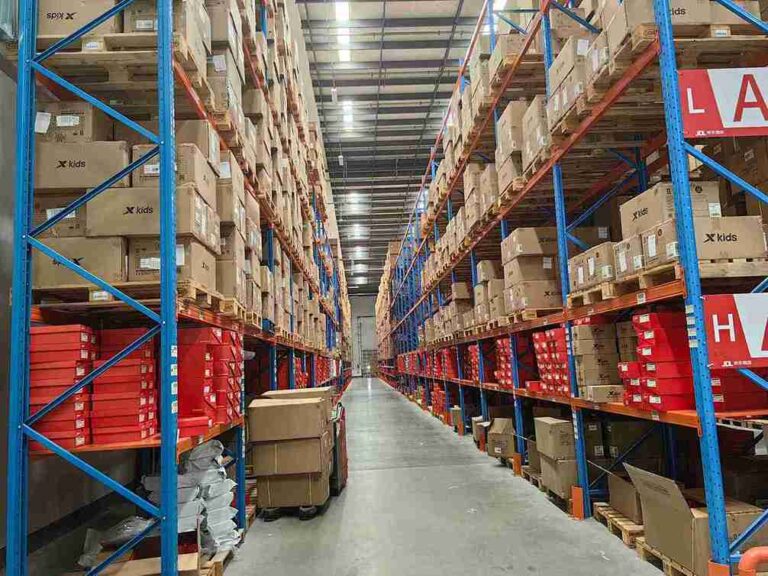
Across the rapidly evolving industrial landscapes of the Middle East and Africa, the warehouse has transformed from a passive holding area into the critical, beating heart of the supply chain. This shift places unprecedented demands on storage infrastructure, where every component must contribute to resilience, speed, and safety. Pallet rack wire dividers, specifically engineered as heavy-duty decking systems, emerge not as a simple accessory but as a foundational element for operational excellence.
This comprehensive analysis delves into how specifying the correct wire dividers directly dictates a facility’s safety profile, its order fulfillment velocity, and its long-term economic viability. For logistics directors, warehouse managers, and project planners in regions from the GCC to Sub-Saharan Africa, understanding the technical nuances of these systems is paramount. The following guide provides the depth of knowledge required to make informed decisions that protect assets, empower workforces, and ensure seamless compliance with both international and burgeoning local standards.
Part 1: The Critical Function of Wire Decking in Systemic Integrity
Defining the Role: More Than a Shelf, a Safety and Efficiency Platform
The uninitiated might view a section of pallet rack wire dividers as merely a metal grid placed on beams. In the calculus of modern warehouse engineering, this perspective is dangerously reductive. These dividers function as the essential horizontal plane that actively manages risk and enables functionality.
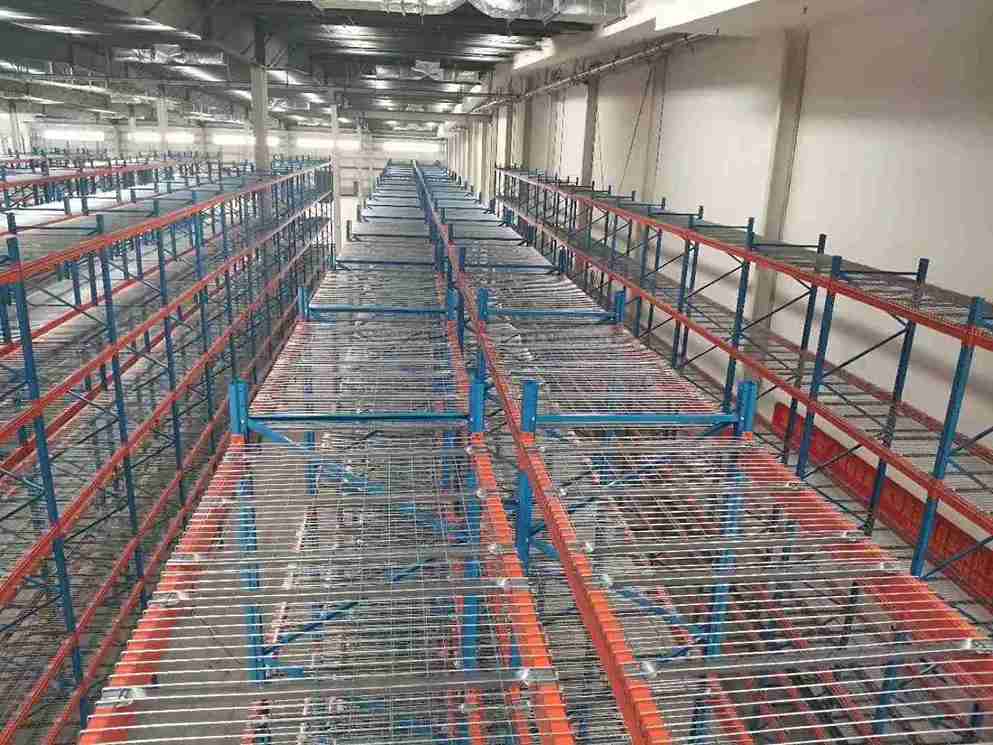
By converting the open space between beams into a secure, load-bearing surface, they perform multiple critical duties: they contain palletized goods, support non-standard loads, provide a safe walking surface for pickers during order fulfillment, and prevent inventory from falling into aisles. In facilities across Riyadh’s industrial districts or the logistics parks outside Lagos, the specification of wire dividers is a first-order decision, integral to the initial structural design, influencing seismic load calculations, fire safety plans, and overall rack system stability.
The Inherent Advantages of Wire Mesh Design for Regional Challenges
While solid decking alternatives exist, pallet rack wire dividers constructed from heavy-gauge welded mesh offer a suite of advantages that are particularly compelling for the environmental and operational conditions prevalent in target markets.
Climate Control and Fire Mitigation: The open mesh design facilitates superior air circulation. This is crucial in climate-controlled environments like cold storage for food exports in North Africa, where it prevents dead air zones and ice buildup, and in general storage across the Gulf, where it reduces heat accumulation and condensation. From a fire safety perspective—a top priority for insurers—this openness prevents the dangerous accumulation of flammable dust and allows water from sprinkler systems to penetrate directly to the seat of a fire, a key factor in compliance with regional fire codes.
Dust and Debris Management: In the naturally dusty environments common to industrial zones in Saudi Arabia or the agricultural storage hubs of Kenya, traditional solid decks become collection plates for debris. Pallet rack wire dividers allow this material to pass through, maintaining a cleaner, safer working environment and significantly reducing the fire load and the need for constant manual cleaning.
Operational Visibility and Lighting Efficiency: The grid structure allows light to permeate multiple storage levels, reducing the need for excessive artificial lighting and cutting energy costs. More importantly, it allows floor-level staff to visually inspect inventory on higher levels, streamlining cycle counts and simplifying stock-taking processes without the need for climbing.
Structural Weight and Load Optimization: High-tensile wire constructions often provide equivalent or greater strength than solid sheet metal at a lower weight. This reduction in dead load allows the overall rack structure to support more live inventory, a subtle but impactful factor in maximizing storage density. Furthermore, the lighter weight of individual wire divider panels makes installation and future reconfiguration less labor-intensive.
Part 2: The Anatomy of “Heavy-Duty”: A Technical Deep Dive
Material Specifications: Building for Decades, Not Years
The longevity and performance of pallet rack wire dividers are fundamentally rooted in material science. Commercial-grade mild steel serves as a baseline, but for operations facing the corrosive humidity of coastal Jeddah, the chemical exposure in manufacturing plants in Durban, or the abrasive dust in mining supply warehouses, enhanced specifications are non-negotiable.
Hot-Dip Galvanized (HDG) Steel: This process involves immersing the fabricated wire divider panel in a bath of molten zinc. The result is a thick, metallurgically bonded coating that provides sacrificial cathodic protection to the underlying steel. Even if scratched, the zinc corrodes first, protecting the structural integrity of the pallet rack wire dividers. This is considered the minimum standard for any serious investment in regions with challenging climates.
Powder-Coated Finishes: Applied electrostatically and cured under heat, powder coating is often used over galvanized steel. It adds an extra layer of protection against abrasion and UV degradation from intense sunlight, common in the Middle East and Africa. Furthermore, it allows for color-coding of storage zones (e.g., red for quarantine, green for fast-moving goods), enhancing visual management and safety protocols.
Decoding Load Capacity: Engineering for Real-World Forces
A load rating plaque is only as good as the engineering assumptions behind it. Distinguishing between load types is critical for safe specification of pallet rack wire dividers.
Uniformly Distributed Load (UDL): This is the maximum safe static load, evenly spread across the entire surface of the wire divider. It is the figure most commonly used for initial sizing.
Point Load Capacity: This measures the panel’s resistance to a concentrated force, such as a corner of a heavy machinery part or the impact from a misaligned forklift fork. For heavy-duty pallet rack wire dividers, a high point load rating is often more indicative of real-world durability than UDL alone.
Reputable manufacturers adhere to a minimum safety factor of 3:1 as per FEM and OSHA-inspired guidelines. This means a panel rated for 2,000 kg UDL is engineered to not fail until approximately 6,000 kg is applied. This substantial buffer absorbs the dynamic, unpredictable forces inherent in daily warehouse operations, providing a critical margin of safety.
Construction Quality: Where Durability is Forged
The true quality of pallet rack wire dividers is determined at the intersection of design and manufacturing.
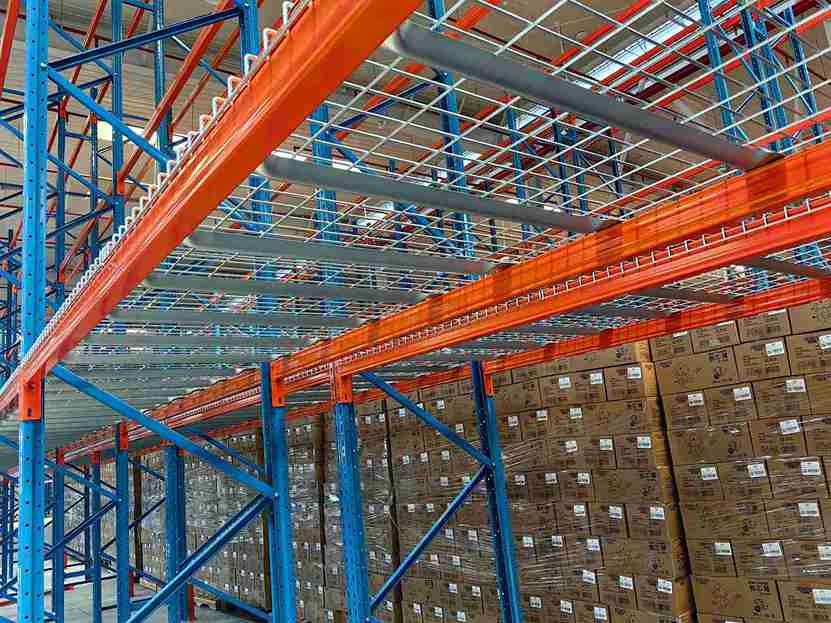
Wire Gauge and Diameter: The term “heavy-duty” transitions from marketing to reality with wire thickness. For true heavy-duty applications, bearing wires should start at 6-gauge (4.9mm) or 5-gauge (5.5mm). Cross wires may be slightly lighter but must be substantial enough to prevent buckling under load.
Mesh Pattern and Density: A 50mm x 50mm (2″ x 2″) or 100mm x 50mm (4″ x 2″) grid pattern is the industry standard for heavy-duty pallet rack wire dividers. This size prevents most packaged goods from falling through while offering an optimal strength-to-weight ratio. Finer meshes are available for small-parts storage, while larger patterns may be used for specific bulk materials.
Weld Integrity: The Non-Negotiable Factor: Every intersection of bearing and cross wire must be fully resistance-welded. Automated welding ensures consistency, creating a solid nugget at each junction. Poor or “tack” welding creates immediate failure points, leading to grid collapse under load. High-quality pallet rack wire dividers will have clean, consistent welds at every intersection.
Perimeter Frame (Border) Design: The border is the backbone of the panel. A fully welded, box-section channel made from folded steel provides maximum rigidity, prevents the mesh from deforming at the edges, and offers a secure, safe method for attachment to the rack beams. It also protects warehouse personnel and equipment from sharp, unfinished edges.
Part 3: Tailoring Solutions for Middle Eastern and African Operational Realities
Engineering for Environmental Extremes
The ambient conditions in warehouses from Dubai to Dar es Salaam act as a constant stress test on storage equipment.
The Corrosion Challenge: Salt-laden air in coastal regions, high humidity, and temperature fluctuations create a perfect storm for rust. Unprotected or poorly protected pallet rack wire dividers can degrade rapidly, losing strength and becoming a safety hazard.
The Engineered Response: The specification must be hot-dip galvanized steel with a supplementary powder coat. The galvanizing provides the essential sacrificial protection, while the powder coat acts as a physical barrier against sand abrasion and UV radiation, which can degrade the zinc layer over time. For extreme environments, such as chemical storage, specifications may call for stainless steel wire dividers, though at a significantly higher cost.
Designing for High-Velocity, High-Impact Logistics
Warehouses servicing ports like Salalah or Durban, or e-commerce hubs in Cairo, operate at a frenetic pace with constant material handling equipment (MHE) traffic. Impact is inevitable.
The Safety Challenge: Forklifts and pallet jacks will collide with racking. Pallets can be mis-driven. The system must be designed to absorb these impacts without catastrophic failure.
The Engineered Response: Modern heavy-duty pallet rack wire dividers incorporate several impact-management features:
Integrated High Kick Plates: These are not add-ons but are formed from the border itself, typically rising 100-150mm (4-6 inches) vertically at the rear and sides. They act as a vital containment barrier, preventing pallets from being pushed off the deck during loading or unloading.
Reinforced Forklift Entry Profiles: The front edge of the wire divider is often the point of first contact. A reinforced, upward-angled channel at this point helps deflect forklift tynes, preventing them from catching under the panel and dislodging it.
Positive Attachment Systems: Gravity is not a securement method. Pallet rack wire dividers must be mechanically locked to the beams. Options include patented beam-lock clips that engage with the beam profile, or through-bolting for the highest level of security in seismic zones or for exceptionally heavy loads.
Navigating the Compliance Ecosystem
Operating a warehouse is a regulated activity. Compliance protects employees, secures insurance, and ensures business continuity.
The Regulatory Challenge: Standards can be a complex mix of international benchmarks and local adaptations. Key frameworks include OSHA 1910.176(b) (Storage of Materials), FEM 10.2.02 (Design of Static Steel Pallet Racking), and increasingly, local standards from bodies like the GCC Standardization Organization (GSO) or South African Bureau of Standards (SABS).
The Engineered Response: Professional suppliers provide pallet rack wire dividers that are part of a certified system. This includes providing Third-Party Load Test Certificates and Structural Engineering Drawings that verify the panels’ performance. For projects in countries like Saudi Arabia, specific product certifications (e.g., SASO) may be required. Documentation proving the origin and specification of materials (mill certificates) is also part of a robust compliance package.
Part 4: The Direct Correlation to Efficiency, Productivity, and Profitability
Streamlining Workflow from Receiving to Dispatch
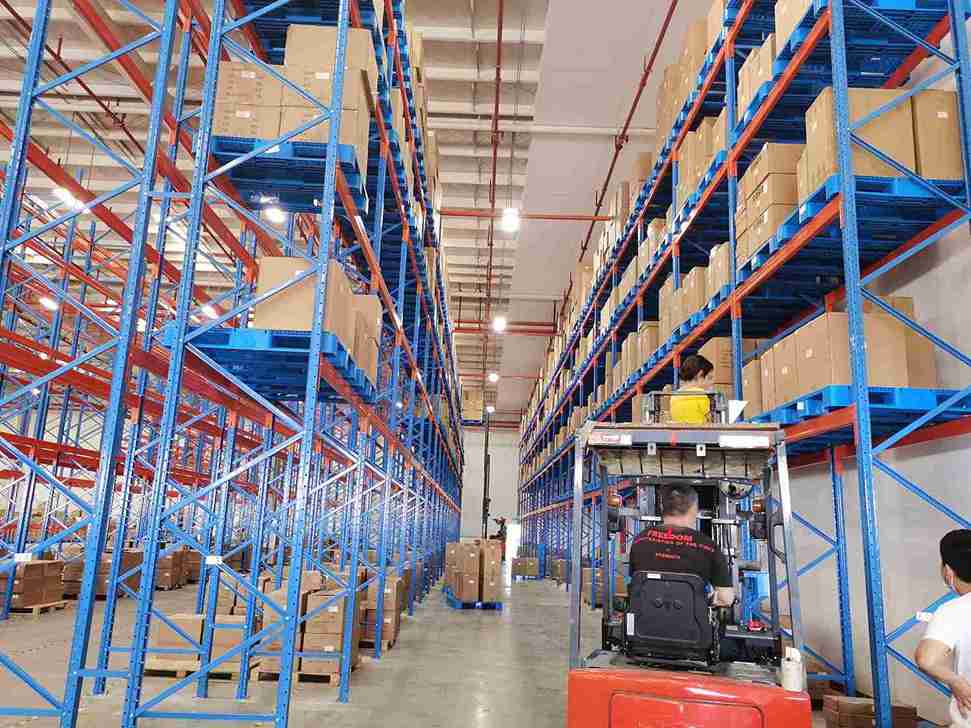
The choice of pallet rack wire dividers has a direct, measurable impact on workflow efficiency. A secure, stable deck allows for faster, more confident placement of goods by forklift operators. The open mesh enables quick visual identification of stock-keeping units (SKUs) from the aisle below, speeding up the order-picking process. In case-picking operations, pickers can safely walk on sturdy wire dividers at elevated levels, enabling highly efficient multi-level picking strategies that drastically reduce travel time per order compared to traditional floor-level picking.
Unlocking True Cubic Storage Potential
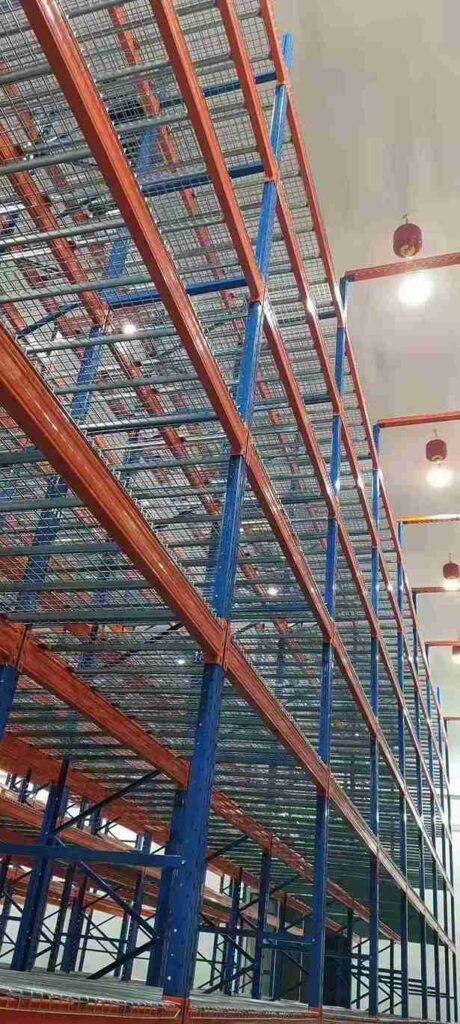
With land and construction costs soaring in commercial centers like Nairobi or Doha, optimizing every cubic meter of existing warehouse space is a financial imperative. Pallet rack wire dividers are the key to safe, vertical space utilization. They enable the creation of stable mezzanine levels within the racking structure itself. This “rack-supported mezzanine” concept allows for the storage of slower-moving items, packaging materials, or non-palletized goods on the decking, while palletized goods occupy the spaces below or above. This dramatically increases storage density without the cost and planning complexity of a standalone mezzanine floor, all facilitated by the reliable support of the wire dividers.
The High Cost of Damage: A Preventable Expense
Product damage and shrinkage directly erode profitability. Well-specified pallet rack wire dividers are a primary defense.
Crush Damage Prevention: Unlike beam-only storage which creates high pressure points on the pallet stringers, a wire divider provides full, even support across the entire pallet base. This is critical for goods packed in corrugated cardboard.
Fall and Impact Damage Mitigation: High kick plates and secure mounting, as part of the wire divider system, prevent loads from being accidentally pushed off during MHE operations. The inherent rigidity of a heavy-duty panel also minimizes load sway.
Environmental Damage Reduction: By allowing air to circulate, pallet rack wire dividers reduce the potential for moisture buildup and condensation drip, which can damage sensitive goods like paper products or certain metals.
Part 5: Specialized Applications Demanding Engineered Dividers
The Cold Chain: From Port to Palace
For the critical food logistics sectors in the Middle East and Africa, cold storage facilities require equipment that performs reliably in sub-zero temperatures and high humidity. Galvanized pallet rack wire dividers are ideal for this harsh environment. The zinc coating provides corrosion resistance against constant condensation and cleaning chemicals. The steel maintains its ductility and does not become brittle in the cold. Most importantly, the open mesh ensures powerful refrigerated air circulates freely around all sides of the stored product, maintaining a consistent, safe temperature and improving energy efficiency of the cooling system.
Automotive, Aerospace, and Heavy Industrial Parts
In the industrial zones supporting automotive plants in South Africa or infrastructure projects in Kuwait, storing heavy, asymmetric loads like engines, transmissions, or large metal fabrications is common. Standard pallet rack wire dividers may need reinforcement. Solutions include double-thickness bearing wires, under-deck support bars running perpendicular to the beams, or even bolt-down solid deck inserts placed on top of the wire grid for extremely concentrated point loads. The specification of these heavy-duty wire dividers is a precise engineering task based on the exact load characteristics.
Bulk Bag (FIBC) and Awkward Load Storage
Industries like mining, agriculture, and chemicals rely on Flexible Intermediate Bulk Containers (FIBCs). Storing these bags on pallet rack wire dividers requires specific considerations. The deck must have low deflection (minimal sagging) to prevent the bag from bulging and becoming unstable. A tight mesh grid provides good support across the entire bag bottom. In these applications, the wire dividers prevent bag tie-downs from snagging and ensure the load remains stable and contained.
Part 6: A Framework for Specification and Procurement
A Disciplined Process for Optimal Selection
Selecting the right pallet rack wire dividers is a multi-step process that mitigates risk:
Conduct a Load Audit: Document the weight, dimensions, footprint, and packaging of every item type to be stored. Don’t forget future inventory plans.
Profile the Operational Environment: Record ambient temperature ranges, humidity levels, presence of corrosive agents (salts, chemicals), and typical cleaning methods.
Analyze Material Flow: Map forklift traffic density, picking frequency (fast vs. slow movers), and any special handling requirements.
Identify Compliance Drivers: Determine which international (FEM, OSHA) and local regulatory standards the installation must meet. Consult with local authorities or insurers if unsure.
Engage a Specialist Partner: Use the gathered data to engage a technical supplier. The conversation should focus on wire gauge, finish type, border design, attachment method, and the need for kick plates or reinforcements.
Common and Costly Specification Errors
Prioritizing Price Over Total Cost of Ownership (TCO): Cheaper, under-specified pallet rack wire dividers lead to premature replacement, higher damage rates, and potential safety incidents, costing far more in the long run.
Ignoring Environmental Factors: Using plain painted wire dividers in a coastal warehouse guarantees rapid corrosion and failure.
Overlooking Attachment Security: Assuming panels will “sit in place” is a major safety oversight. Positive locking is essential.
Inaccurate Load Calculation: Using average weight instead of maximum weight, or neglecting to account for dynamic forces during loading/unloading.
Part 7: Ensuring Long-Term Performance: Installation and Maintenance
Professional Installation: The Foundation of System Integrity
The performance of even the highest-quality pallet rack wire dividers is contingent on correct installation.
Pre-Installation Verification: All components, including the wire dividers, should be inspected for damage upon delivery. Beam levels and column plumb must be verified before decking installation begins.
Precision Placement and Alignment: Each panel must be seated perfectly level on its supporting beams to ensure even load distribution. Panels should be butted tightly together where required to form a continuous surface.
Secure Attachment Confirmation: Every specified locking clip or bolt must be installed and torqued to the manufacturer’s specification. A post-installation audit should randomly check a percentage of attachments.
Load Testing and Sign-Off: For critical or high-capacity installations, a phased load test—gradually bringing the system to its designed capacity—is prudent. Final “as-built” drawings noting any field adjustments should be archived.
A Proactive Maintenance Regimen for Maximum Lifespan
A simple, consistent maintenance protocol extends the service life of pallet rack wire dividers for decades.
Routine Visual Inspections (Monthly/Quarterly): Warehouse staff should be trained to look for obvious damage: severe bending or deformation of the wire divider grid, significant corrosion, detached kick plates, or loose/missing attachments. Any impacted or damaged pallet rack wire dividers should be tagged and taken out of service immediately.
Annual Professional Audit: A qualified rack inspector or engineer should perform a detailed assessment. This includes checking for deflection (sag) in loaded wire dividers, verifying weld integrity, assessing coating condition, and ensuring all attachments remain secure. This audit is often an insurance requirement.
Cleaning and Housekeeping: While the open mesh reduces debris accumulation, periodic removal of any built-up dust or spillage from the surface of the wire dividers is good practice, especially in food-grade or sensitive electronic storage environments.
Conclusion: The Strategic Decision for a Resilient Supply Chain
In the competitive, fast-paced, and physically demanding logistics environments defining the growth trajectories of the Middle East and Africa, storage infrastructure decisions carry profound consequences. Pallet rack wire dividers, when specified and engineered as heavy-duty decking systems, represent a strategic investment in the fundamental resilience of the operation. They are the decisive factor for businesses that prioritize the safety of their personnel, the integrity of their inventory, the efficiency of their workflows, and their adherence to a complex regulatory landscape.
By selecting a system designed not just for generic storage, but for the specific climatic, operational, and compliance challenges of the region, logistics leaders are not merely purchasing equipment—they are architecting a robust, scalable, and profitable foundation for their supply chain’s future.
Frequently Asked Questions (FAQs)
1: For a retrofit project, how do we ensure new wire dividers are compatible with our existing, older racking beams?
Compatibility is paramount. A professional supplier will require precise measurements of your existing beam profile (including height, width, flange shape, and any pre-punched hole patterns). The pallet rack wire dividers will then be supplied with attachment clips or brackets specifically designed to engage that unique profile. Crucially, a structural assessment is mandatory to verify that the existing upright frames and floor fixings can support the additional dead load of the new wire dividers plus the intended live load. Never assume compatibility without a formal engineering review.
2: Are there specific design considerations for wire dividers in warehouses that use fully automated storage and retrieval systems (AS/RS)?
Absolutely. AS/RS environments place unique demands on pallet rack wire dividers. Dimensional tolerances are extremely tight, so panels must have consistent, precise footprints. The surface must be perfectly flat to prevent pallets from rocking when placed by the automated crane. Attachment methods must be ultra-secure to prevent any panel movement or dislodgement over thousands of unmanned cycles. Furthermore, the design of the wire dividers, particularly the front profile, must not interfere with the path of the AS/RS mast or its load-handling device. Collaboration between the racking supplier and the AS/RS integrator from the design phase is essential.
3: How does the presence of wire decking affect the sprinkler system design and fire compartmentalization in a warehouse?
From a fire safety perspective, properly installed pallet rack wire dividers are generally considered beneficial. Their open design does not obstruct the spray pattern of ceiling-mounted sprinklers, allowing water to reach fires at lower levels more effectively—a significant advantage over solid decks. However, they do not act as a fire barrier. For fire compartmentalization requirements, separate, approved fire curtains or barriers must be installed within the racking system where specified by the fire engineer. The design of the wire dividers should be shared with the fire safety consultant to ensure the overall system meets the required performance criteria.
4: What are the indicators that a wire divider has been damaged and needs immediate replacement, beyond obvious bending?
Visual vigilance is key. Beyond clear bending or impact deformation, inspectors should look for:
Cracked or Broken Welds: Examine wire intersections, especially near the perimeter frame, for signs of weld failure.
Severe Corrosion: Localized rust that has pitted the wire, reducing its cross-sectional diameter by a significant amount (e.g., >10%), compromises strength.
Loose or Detached Border Sections: Any separation between the mesh grid and the perimeter frame is a critical failure point.
Excessive Permanent Sag (Deflection): If a panel, when unloaded, does not return to a near-flat state and retains a visible sag, its structural integrity is compromised. Any pallet rack wire dividers exhibiting these signs must be immediately unloaded, isolated, and replaced.
5: For warehouses storing products for the pharmaceutical or electronics industries, are there specific hygiene or ESD (Electrostatic Discharge) concerns with wire decking?
Yes, both concerns are addressable through specification. For high-hygiene environments, pallet rack wire dividers with a smooth, high-quality powder coat finish (often in a light color like white) are easier to clean and inspect. The open mesh still aids cleanliness by preventing debris accumulation. For ESD-sensitive environments, such as electronics assembly or storage, specially coated wire dividers can be specified. These feature a durable surface coating with controlled electrical resistance, designed to safely dissipate static charges to ground, protecting sensitive components from damage. This must be part of a fully bonded ESD-protective system throughout the warehouse.
If you require perfect CAD drawings and quotes for warehouse racking, please contact us. We can provide you with free warehouse racking planning and design services and quotes. Our email address is: jili@geelyracks.com