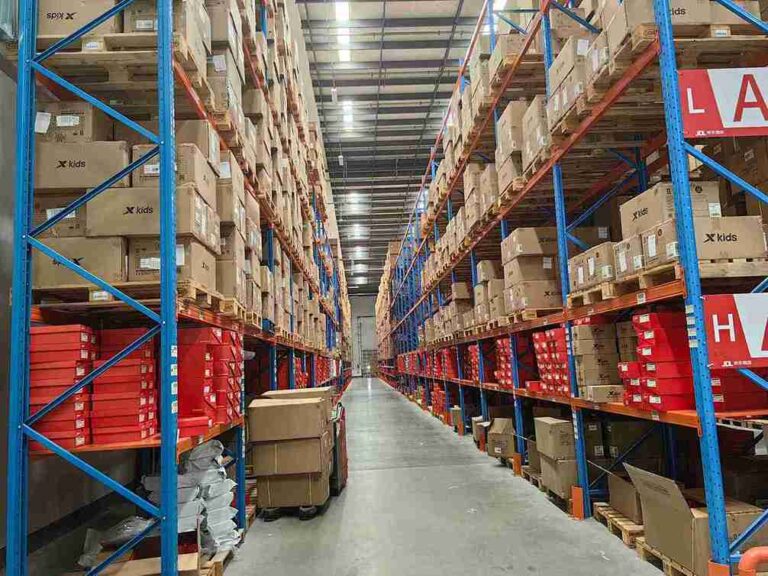
📐 "First 50 Enterprise Queries Get Custom 3D Warehouse Design" Plan


The Strategic Guide to Maximizing Value with Affordable Used Pallet Racking
(Article Summary)
For warehouse managers, logistics directors, and business owners across Southeast Asia, the Middle East, Africa, and Latin America, the challenge is universal: scaling storage capacity in a reliable, timely, and fiscally responsible manner. This definitive resource tackles that challenge head-on by exploring the intricate dynamics of used pallet racking prices. Moving far beyond a simple cost comparison, this guide provides a masterclass in strategic procurement.
It demonstrates how informed investments in certified pre-owned storage systems can deliver savings exceeding 40% versus new alternatives, while unpacking the critical elements—from rigorous inspection protocols to global logistics mastery—that transform used pallet racking prices from a tempting figure into a secure, high-ROI business decision. This is essential reading for anyone aiming to optimize their warehouse’s financial and operational performance.
Deconstructing the Market: Why Used Pallet Racking Prices Present a Strategic Advantage
In the calculus of warehouse expansion, the equation is not merely about cost per pallet position; it’s about velocity, agility, and capital preservation. The compelling nature of used pallet racking prices lies in their ability to positively disrupt all three variables. For a growing distribution center in Jakarta, a manufacturing plant in Monterrey, or a cold storage facility in Dubai, the decision often comes down to a stark choice: wait 4-6 months for new racks at a premium cost, or deploy a certified, like-new system in weeks at a fraction of the price.
The advertised save up to 40% vs new racks is not a hypothetical maximum; it is a regularly achieved benchmark for standard selective pallet rack configurations. This dramatic reduction in used pallet racking prices directly liberates capital. The savings realized can be redirected toward critical complementary investments: a fleet of AGV to automate material movement, a sophisticated automated conveyor sortation system, or even the bolstering of working capital. In essence, the strategic leverage gained from favorable used pallet racking prices extends far beyond the storage aisle, funding the very technologies that define a modern, competitive operation.
The Global Supply Chain’s Role in Shaping Used Pallet Racking Prices
A common misconception is that used pallet racking prices are solely a function of age and condition. In reality, the most significant factor is often logistical and geographical. A premium supplier operates on a global circular model. High-quality systems are professionally decommissioned from facilities in North America, Europe, or Northeast Asia, where corporate upgrades and consolidations are frequent. This equipment is then meticulously processed and shipped to regional hubs serving target growth markets.
This model directly benefits the end buyer in several ways. First, it provides access to engineering and manufacturing quality (from brands like Interlake, Ridg-U-Rak, or STÖCKLIN) that may have been cost-prohibitive if purchased new. Second, by aggregating supply in regional hubs—for instance, in Malaysia for ASEAN, the UAE for the Middle East and Africa, or Panama for Latin America—the supplier achieves logistical efficiencies. These efficiencies are a key component in maintaining attractive used pallet racking prices while still guaranteeing quick delivery. The alternative—sourcing piecemeal from local liquidations—rarely yields the consistency, volume, or certification needed for a major project.
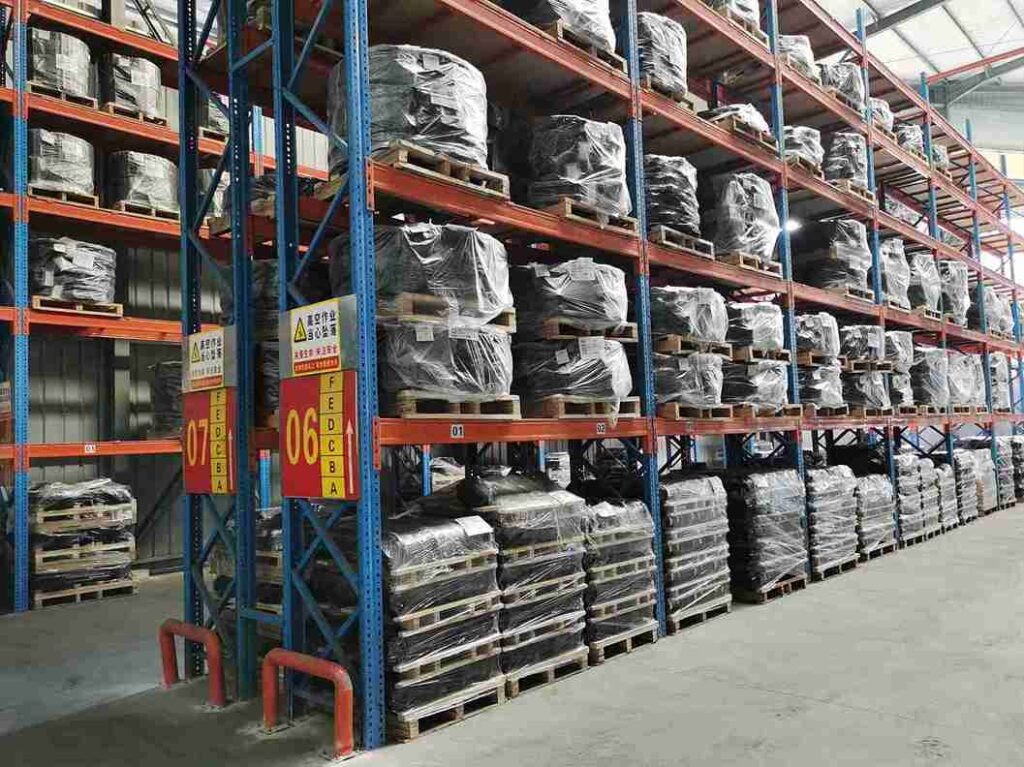
The Anatomy of Cost: A Granular Look at Used Pallet Racking Prices
To truly understand used pallet racking prices, one must dissect the variables that compose a final project quote. This knowledge empowers buyers to make apples-to-apples comparisons and identify true value.
Core Determinants of Final Quotation
System Design and Configuration: The single greatest influencer of used pallet racking prices is the type of system required. Standard selective racking, which offers direct access to every pallet, represents the most common and cost-effective point on the spectrum. As one moves into more space-dense configurations like drive-in racking, push-back racking, or pallet flow systems, the used pallet racking prices will increase due to complexity and lower availability. The engineering and additional components (like carriage and rails for push-back) inherently command a premium, even on the secondary market.
Component Specifications and Metrics: Every dimension and capacity rating matters.
Upright Frame Specifications: Height, depth (front-to-back dimension of the column), and column gauge (steel thickness) are primary drivers. A 24-foot tall, 42-inch deep, heavy-duty upright frame will be priced significantly higher than a 12-foot, 30-inch light-duty frame. The used pallet racking prices accurately reflect this material and capacity disparity.
Beam Specifications: Length, gauge (often 3″, 4″), and profile design affect both price and compatibility. Standard lengths (e.g., 96”, 108”) are more readily available and support more competitive used pallet racking prices than non-standard, custom-cut lengths.
Load Capacity: The Safe Working Load (SWL), recertified post-inspection, is paramount. A system de-rated for 2,000 kg per beam level will have different used pallet racking prices than one rated for 5,000 kg, due to the underlying steel strength.
Quantity and Project Scale: Economies of scale apply powerfully. The used pallet racking prices per pallet position for a 50-position system will be higher than for a 5,000-position project. Larger projects allow suppliers to optimize container loads, streamline logistics, and allocate engineering resources more efficiently, savings that are often passed on to create highly attractive bulk used pallet racking prices.
Reconditioning and Certification Level: Not all “used” is equal. Some suppliers offer “as-is” lots, while others, like a reputable provider, invest in a comprehensive process. This process—involving shot blasting, repainting with industrial epoxy, and the replacement of worn connectors—adds value and cost. Therefore, when comparing used pallet racking prices, it is critical to confirm what level of reconditioning and certification is included. The lowest upfront used pallet racking prices can become costly if they necessitate extensive on-site repair or fail to meet safety standards.
The Total Cost of Ownership (TCO) Analysis: Used vs. New
The true value proposition of favorable used pallet racking prices is revealed through a TCO lens. Let’s model a scenario for a 3PL company in Vietnam expanding by 1,200 pallet positions.
New Rack Quote (FOB Asia): $280,000. Lead Time: 22 weeks. Operational delay cost (estimated lost revenue): $35,000.
Certified Used Rack Quote (CIF Hai Phong Port): $175,000. Lead Time: 6-8 weeks. Operational delay cost: $0 (faster ramp-up).
Immediate Capital Savings: $105,000 (37.5% saving on equipment).
Avoided Opportunity Cost: $35,000 (revenue from 14 extra weeks of operation).
Effective Total Savings: $140,000.
This analysis demonstrates that the compelling used pallet racking prices are just the entry point. The compounded financial benefit, when quick delivery is factored in, dramatically accelerates ROI and provides a competitive edge in fast-moving markets.
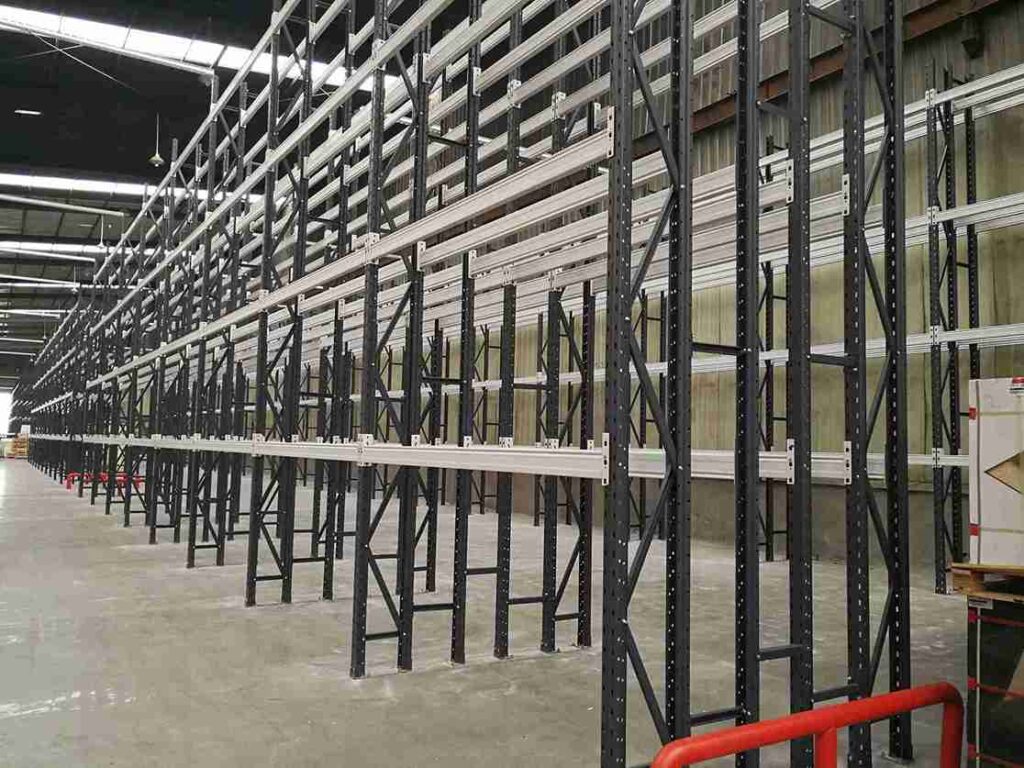
Ensuring Integrity: The Certification Process That Underpins Value
The viability of any investment in used storage systems hinges on trust. Attractive used pallet racking prices are meaningless without an ironclad guarantee of safety and performance. This is where the supplier’s process becomes the critical differentiator.
From Decommissioning to Reliable Inventory: A 15-Step Protocol
A leading supplier doesn’t just broker equipment; they engineer reliability into it. Their process typically involves:
Strategic Sourcing: Selecting only systems from known manufacturers with verifiable service histories, avoiding equipment from harsh environments (e.g., certain chemical plants) unless specifically re-engineered for it.
Precision Dismantling: Trained crews use proper tools to avoid damage to connectors and column faces during takedown.
Initial Sorting and Tagging: Components are cataloged by type, specification, and initial condition.
High-Pressure De-rusting and Cleaning: Removal of dirt, grease, and superficial corrosion.
Structural Metrology: Using laser levels and precision tools to measure upright columns for twist and bow against RMI/ANSIMH16.1 tolerances. Beams are checked for straightness and end connector integrity.
Ultrasonic Thickness Gauging: Critical for assessing beam and column web thickness to verify no significant corrosion-induced material loss.
Connector and Lock Inspection: Every teardrop, lock, or bolt-hole is inspected for deformation, wear, or stress cracks. Damaged components are scrapped.
Shot Blasting: Abrasive blasting to a white metal finish (SA 2.5 standard) for perfect paint adhesion.
Epoxy Powder Coating: Application of a durable, corrosion-resistant finish, often in a standard gray or requested color.
Reassembly and Load Testing: Sample upright and beam frames are assembled and subjected to load simulation to verify connection integrity and frame stability.
Conservative Re-rating: Based on all measurements, a new, conservative Safe Working Load (SWL) is calculated and clearly marked on new load placards.
Documentation: A comprehensive inspection dossier is created for the batch, providing traceability and proof of compliance.
Strategic Warehousing: Certified components are stored in the regional hub, ready for quick delivery.
Project-Specific Engineering Drawings: For each client order, layout drawings are produced to confirm design validity.
Continuous Quality Audits: Random batch audits ensure ongoing adherence to the protocol.
This exhaustive process is the bedrock upon which trustworthy used pallet racking prices are built. It transforms commodity steel into a certified capital asset.
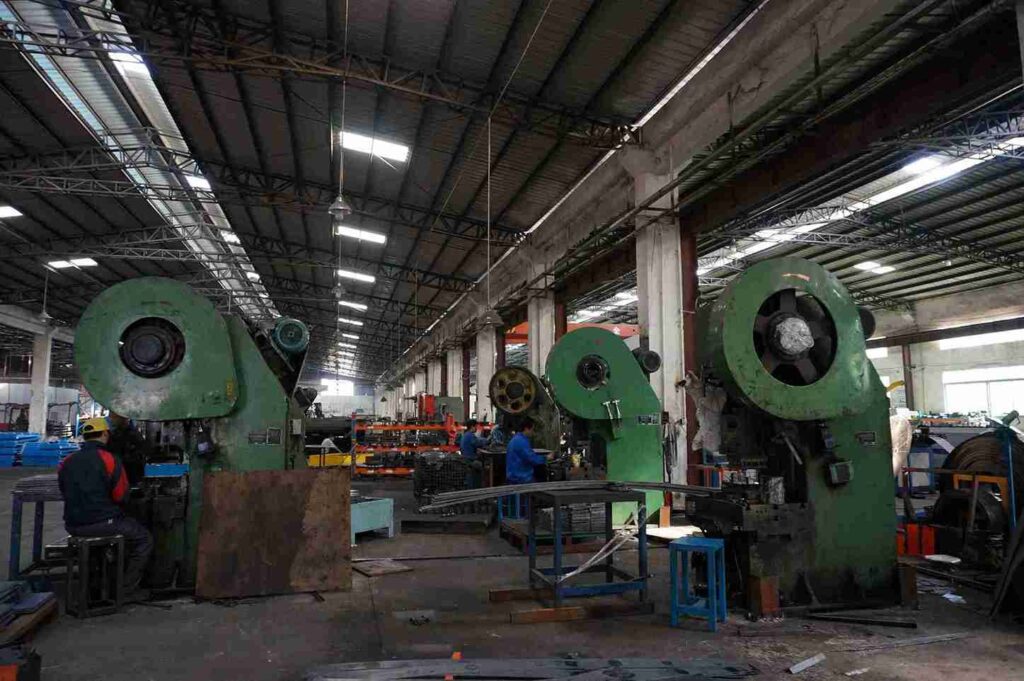
The Speed Imperative: How Quick Delivery is Engineered
The phrase quick delivery is a cornerstone of the value proposition, especially when paired with competitive used pallet racking prices. For a business facing a sudden surge in demand or a contract with a tight startup deadline, speed is not a luxury—it is the requirement.
The Logistics Architecture Enabling Rapid Deployment
A supplier’s ability to promise and deliver quick delivery rests on a multi-tiered logistics architecture:
Regional Inventory Buffers: Unlike manufacturers who build-to-order, a top used rack supplier holds vast, pre-certified inventory of common configurations in regional hubs. When a client in the Philippines needs 800 pallet positions of 20-foot high racking, the supplier is often drawing from stock in Malaysia, not waiting for a factory production slot overseas. This is the single biggest accelerator.
In-Region Expertise: Navigating customs clearance, port delays, and final-mile logistics in markets like Nigeria, Saudi Arabia, or Chile requires local knowledge. Established suppliers have in-country partners or subsidiaries to manage this, ensuring that attractive used pallet racking prices are not eroded by unforeseen logistical fees and delays.
Just-in-Time Logistics Planning: From the moment a quote is approved, logistics teams are mobilizing. Container booking, route optimization, and document preparation happen in parallel with order picking in the warehouse. This compressed timeline is how used pallet racking prices and quick delivery become a unified benefit, not a trade-off.
The operational impact is profound. A facility can be fully operational months sooner, generating revenue and capturing market share while competitors wait for their new racks to arrive. This time-to-market advantage often outweighs even the significant savings highlighted by the used pallet racking prices themselves.
Integration with Modern Automation: A Synergistic Partnership
A pervasive myth suggests that used racking belongs only in manual, traditional warehouses. This is a profound misconception. In many ways, the precision and robustness of high-quality certified used racking make it an ideal companion for automation.
The Foundation for Automated Systems
Modern automated storage and retrieval systems (AS/RS), whether they are mini-load, unit-load, or shuttle-based, demand an exceptionally rigid and dimensionally accurate support structure. The runway rails for stacker cranes must be mounted on perfectly aligned upright frames. Similarly, AGV小车 navigating narrow aisles rely on predictable rack face positions for pallet pickup and placement.
Inherent Rigidity: Older racking from top-tier manufacturers was often over-engineered by today’s cost-optimized standards. This results in a structure with excellent inherent rigidity, minimizing deflection—a critical factor for automation precision.
Certification for Dynamic Loads: A reputable supplier, when certifying racking for potential automation use, will consider not just static pallet weight but dynamic loads: the forces imparted by a retrieving shuttle, an AGV docking, or a conveyor transfer. This analysis may lead to a more conservative SWL, but it ensures absolute safety and performance. This specialized service is a value-add that justifies used pallet racking prices for automated projects, as it includes critical engineering oversight.
Hybrid System Design: It is common for projects to utilize a mix of new and used racking. For instance, the high-bay, high-throughput ASRS aisle might use new racks for absolute specification certainty, while the bulk storage and picking aisles serviced by AGV小车 or forklifts use certified used racking. This hybrid approach maximizes the budgetary advantage of favorable used pallet racking prices where it is most impactful.
Navigating Procurement: A Buyer’s Checklist for Maximizing Value
Securing the best combination of reliable used pallet racking prices, quality, and service requires a methodical approach. This checklist serves as a guide for procurement specialists and operations managers.
Phase 1: Internal Discovery & Specification
Audit Needs Precisely: Define maximum pallet weight (including pallet), dimensions, required clearances for MHE, and target storage density. A vague request guarantees inaccurate quotes.
Engage Early with Key Stakeholders: Involve safety officers, facility managers, and potential automation partners in the initial discussion to ensure the selected system supports all future needs.
Secure Site Data: Have accurate warehouse drawings, including floor load capacity, ceiling height, column locations, and door clearances.
Phase 2: Supplier Evaluation & Request for Quotation (RFQ)
Request Detailed Documentation: In your RFQ, demand inspection reports, load calculation methodologies (referencing RMI/FEM standards), and pictures of actual inventory, not stock images.
Demand Comprehensive Quotes: Ensure the provided used pallet racking prices are all-inclusive: CIF or DDP to your site, covering delivery, duties, and basic documentation. Scrutinize any vague line items.
Verify Credentials Rigorously: Ask for client references in similar industries and regions. Confirm the supplier carries product liability insurance specific to the racking they provide.
Ask the Engineering Questions: “How do you de-rate load capacity?” “What is your protocol for inspecting beam connectors?” “Can you provide seismic calculations for my region?” The answers will separate marketers from experts.
Phase 3: Project Execution & Installation
Plan for Professional Installation: Even the best used pallet racking prices can be negated by poor installation. Use the supplier’s certified installers or thoroughly vet your own team against a strict installation checklist.
Inspect Upon Delivery: Before signing the delivery note, check for any shipping damage and verify component counts against the packing list.
Prioritize Anchoring: The entire system’s safety depends on proper anchorage to a suitable floor. This is non-negotiable. Follow the supplier’s engineered anchor type, pattern, and torque specifications exactly.
Conclusion: The Intelligent Path to Scalable, Resilient Storage
In the dynamic commercial landscapes of emerging global markets, business success is increasingly defined by strategic agility and capital efficiency. The procurement of warehouse infrastructure is a prime arena to exercise these principles. A deep, nuanced understanding of the factors driving used pallet racking prices—coupled with a rigorous selection process focused on certification, logistics, and total cost—unlocks a powerful pathway to growth.
The compelling used pallet racking prices offered by certified specialists are not a reflection of diminished value, but of optimized supply chains, expert re-engineering, and a commitment to circular economy principles. When these favorable used pallet racking prices are combined with the operational urgency of quick delivery, the result is a transformative advantage: the ability to scale capacity rapidly, direct precious capital to core competitive differentiators, and build a storage foundation that is both cost-effective and relentlessly reliable. For the discerning logistics professional, mastering this equation is not just a purchasing decision; it is a strategic imperative for sustainable expansion.
Frequently Asked Questions (FAQs)
1.How volatile are used pallet racking prices compared to new steel prices?
While used pallet racking prices are influenced by global steel commodity trends, they are generally less volatile than prices for new racks. New rack prices are directly tied to raw material costs and manufacturing capacity, which can fluctuate sharply. The used pallet racking prices market is more influenced by inventory availability in the regional supply hubs and the steady flow of decommissioned systems, creating a more stable, though still dynamic, pricing environment.
2.Can I mix used and new racking components in the same aisle?
This is strongly discouraged unless explicitly engineered and approved by a qualified rack professional. Mixing brands or even different generations from the same brand can lead to incompatible connectors, differing deflection ratings, and unpredictable load paths, creating a serious safety hazard. A reputable supplier will always recommend using a uniform, certified system. If expansion is needed later, they can source matching components, which is a key benefit of their large, cataloged inventory supporting stable long-term used pallet racking prices for spares.
3.What is the environmental impact of choosing used racking, and does it affect pricing?
Choosing certified used racking has a significantly positive environmental impact, avoiding the carbon emissions associated with new steel production (mining, smelting, manufacturing). While this “green” benefit is rarely a direct discount on used pallet racking prices, it is an increasingly important ESG (Environmental, Social, and Governance) factor for multinational corporations and can simplify regulatory and reporting requirements in certain regions, adding intangible value to the purchase.
4.For a high-throughput, 24/7 operation, is used racking a reliable choice?
Absolutely, provided it is sourced and certified for that specific duty cycle. The inspection process for such an application would be even more rigorous, focusing on fatigue points and historical stress. The resulting used pallet racking prices for such high-cycle-rated equipment would reflect this extra scrutiny but would still be substantially below the cost of new. The key is transparent communication with the supplier about the operational intensity so they can select and certify the most appropriate inventory.
5.How do import duties and taxes in my country affect the final landed cost of used racking?
This is a crucial consideration. A professional supplier will have clear experience shipping to your country. Used pallet racking prices are often quoted as DDP (Delivered Duty Paid) to provide final cost certainty. In other cases, they may quote CIF (Cost, Insurance, Freight) to port, with a clear estimate of local duties and taxes based on harmonized tariff codes for used industrial equipment. The most reliable suppliers remove this ambiguity, ensuring the initially attractive used pallet racking prices are not undermined by unexpected fees upon arrival.
Welcome to contact us, if you need warehouse rack CAD drawings. We can provide you with warehouse rack planning and design for free. Our email address is: jili@geelyracks.com