📐 "La unuaj 50 entreprenaj demandoj ricevas personigitan dezajnon de 3D-stokejo" Plano














Introduction: The Battle of Warehouse Efficiency
In the world of industrial storage solutions, few debates are as heated as double deep racking vs selective racking. Both systems dominate modern warehouses, but which one truly maximizes space, accessibility, and cost-efficiency?
This in-depth comparison dives into every critical factor—storage density, forklift requirements, inventory management, and long-term ROI—to help warehouse managers, logistics professionals, and business owners make the best choice for their operations.
By the end, readers will know:
- When to choose double deep racking vs selective racking
- Which industries benefit most from each system
- How to optimize warehouse space without sacrificing efficiency

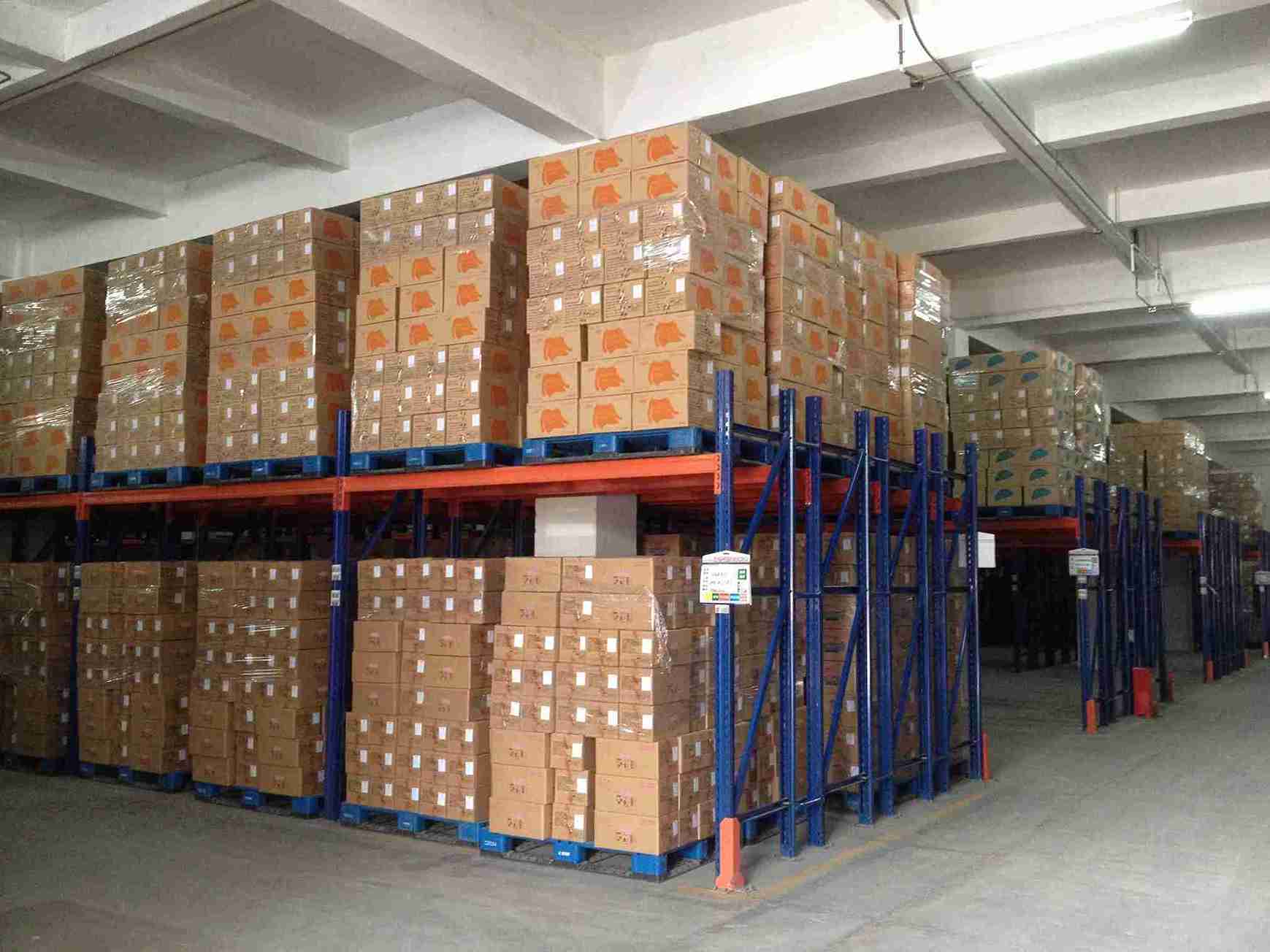
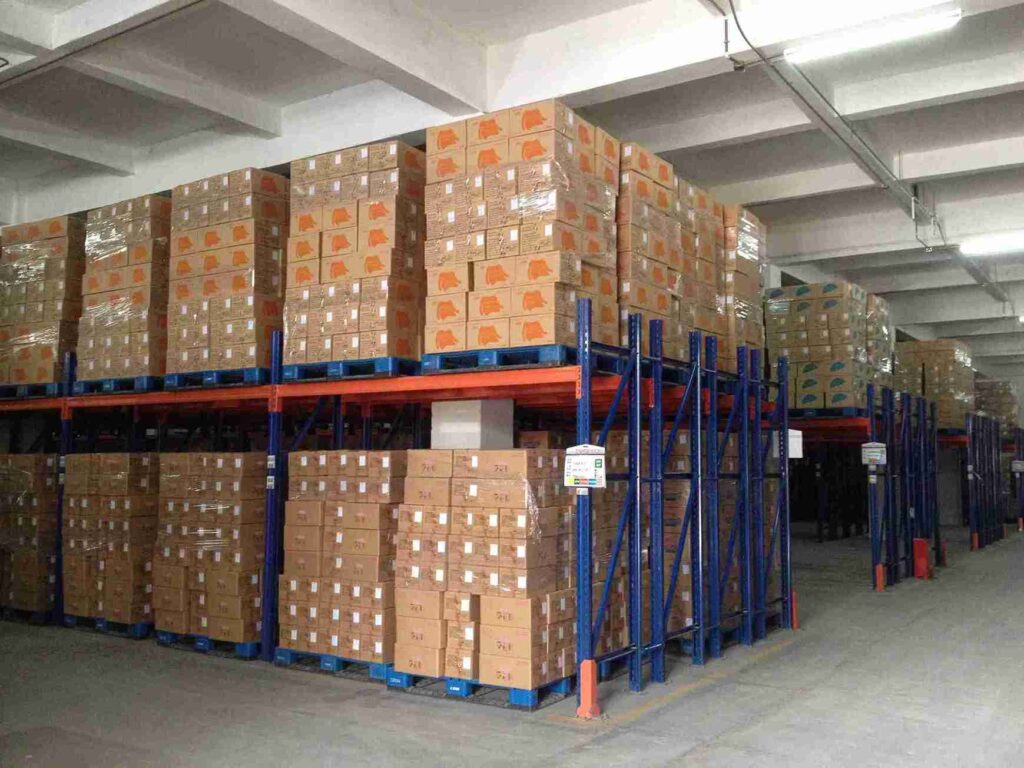
Selective racking system in warehouse – double deep racking vs selective racking comparison
1. Defining the Contenders: What is Selective Racking?
Selektema bretsistemo, the most widely used pallet racking system, offers direct, unimpeded access to every pallet. It’s the go-to solution for warehouses with high-SKU inventorieskaj kajfrequent order picking.
1.1 How Selective Racking Operates
- Single-depth pallet storage
- No need to move other pallets for retrieval
- Compatible with standard forklifts
1.2 Key Advantages of Selective Racking
✔Instant Accessibility – Every pallet is individually reachable, making it ideal for FIFO (First-In-First-Out) inventory.
✔Flexibility – Adapts easily to mixed pallet sizes and weights.
✔Lower Equipment Costs – Works with standard forklifts, reducing capital expenditure.
1.3 Limitations of Selective Racking
✖ Lower Storage Density – Requires more aisles, reducing total pallet capacity.
✖ Higher Labor Costs – More travel time for forklifts due to additional aisles.
2. What is Double Deep Racking?
Double deep racking is a high-density storage solution where pallets are stored du-profunda, significantly reducing aisle space while increasing storage capacity.
2.1 How Double Deep Racking Functions
- Pallets are stored in tandem (two-deep) configurations
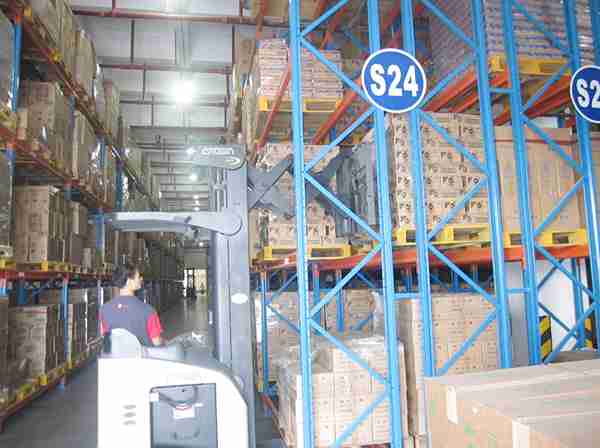
- Requires reach trucks or double-deep forklifts
- Typically follows LIFO (Last-In-First-Out) inventory flow
2.2 Major Benefits of Double Deep Racking
✔40-50% More Storage – Fewer aisles mean higher pallet positions per square foot.
✔Lower Long-Term Costs – Reduced aisle space cuts labor and energy expenses.
2.3 Challenges of Double Deep Racking
✖ Limited Direct Access – Rear pallets must be moved to retrieve front ones.
✖ Specialized Equipment Needed – Requires narrow-aisle forklifts, increasing initial investment.
3. Double Deep Racking vs Selective Racking: The Core Differences
| Factor | Selective Racking | Double Deep Racking |
|---|---|---|
| Alirebleco | 100% direct access | Rear pallets require shuffling |
| Stoka denseco | Lower (more aisles) | Higher (40-50% more capacity) |
| Forklift Type | Normaj ĉareloj | Reach trucks or double-deep forklifts |
| Inventory Method | FIFO preferred | LIFO common |
| Best for High SKU Turnover? | Jes | Ne |
| Ideal for Bulk Storage? | Ne | Jes |
4. Which Industries Should Use Each System?
4.1 When to Choose Selective Racking
✅ E-commerce & Retail Distribution – Fast-moving, high-SKU inventories need quick access.
✅ Cold Storage & Food Warehousing – FIFO compliance is critical for perishable goods.
✅ Automotive & Pharmaceutical – Frequent picking of varied SKUs demands flexibility.
4.2 When to Opt for Double Deep Racking
✅ Beverage & Alcohol Distribution – High-volume, uniform pallets benefit from dense storage.
✅ Manufacturing & Raw Material Storage – Long-term bulk storage with low turnover.
✅ Apparel & Seasonal Goods – Stores large quantities with infrequent retrieval needs.
5. How to Decide: Key Factors in Choosing Between Double Deep Racking vs Selective Racking
5.1 Inventory Turnover Rate
- High turnover? → Selektema bretsistemo (better for frequent access).
- Low turnover? → Double deep racking (ideal for bulk storage).
5.2 Warehouse Space Constraints
- Limited space? → Double deep racking maximizes capacity.
- Ample space? → Selective racking improves workflow efficiency.
5.3 Forklift & Equipment Budget
- Standard forklifts only? → Selective racking is the default choice.
- Willing to invest in reach trucks? → Double deep racking pays off long-term.
6. Hybrid Solutions: Combining the Best of Both Worlds
Some warehouses blend selective and double deep racking:
- Fast-moving SKUs → Selective racks for quick picking.
- Slow-moving bulk items → Double deep racks for dense storage.
This hybrid model optimizes both space and accessibility, making it a smart choice for mixed inventory warehouses.
7. Cost Analysis: Which System is More Economical?
7.1 Upfront Investment
- Selektema bretsistemo – Lower initial cost (standard forklifts suffice).
- Double deep racking – Higher due to specialized equipment.
7.2 Long-Term Operational Savings
- Selektema bretsistemo – More aisles = higher labor and energy costs.
- Double deep racking – Fewer aisles = lower operational expenses over time.
8. Safety & Maintenance Considerations
8.1 Selective Racking Safety
✔Clear visibility of all pallets reduces accidents.
✔No pallet shuffling minimizes product damage.
8.2 Double Deep Racking Safety
⚠ Higher risk of pallet collisions during retrieval.
⚠ Requires trained operators for deep storage handling.
9. Future-Proofing Your Warehouse: Automation & Scalability
- Automated storage systems (AS/RS) work better with Selektema bretsistemo.
- High-density needs may push warehouses toward duoble profunda bretsistemo.
10. Final Verdict: Which System Wins for Your Warehouse?
The double deep racking vs selective racking debate has no universal winner—it depends on your specific needs:
- Choose selective racking if:
- You need 100% pallet accessibility.
- Your inventory has high turnover or diverse SKUs.
- You use standard forklifts.
- Choose double deep racking if:
- Storage density is a priority.
- You handle uniform, slow-moving pallets.
- You can invest in specialized forklifts.
Por mixed operations, a hybrid approach may be the ultimate solution.
Oftaj demandoj (Oftaj demandoj)
Q1: Can I retrofit selective racking into double deep racking later?
Yes, but it requires structural modificationskaj kajnew forklift equipment, which can be costly.
Q2: Which system is better for perishable goods requiring FIFO?
Selektema bretsistemo is the clear winner for FIFO compliance.
Q3: Does double deep racking support very heavy pallets (3,000+ lbs)?
Jes, sed forklift capacitykaj kajracking strength must be rated for the load.
Q4: How much space can double deep racking save compared to selective?
Tipe40-50% more pallet positions, depending on aisle width.
Q5: What’s the maximum height for double deep racking systems?
Most systems support up to 40 feet, but this depends on forklift reach and building clearance.