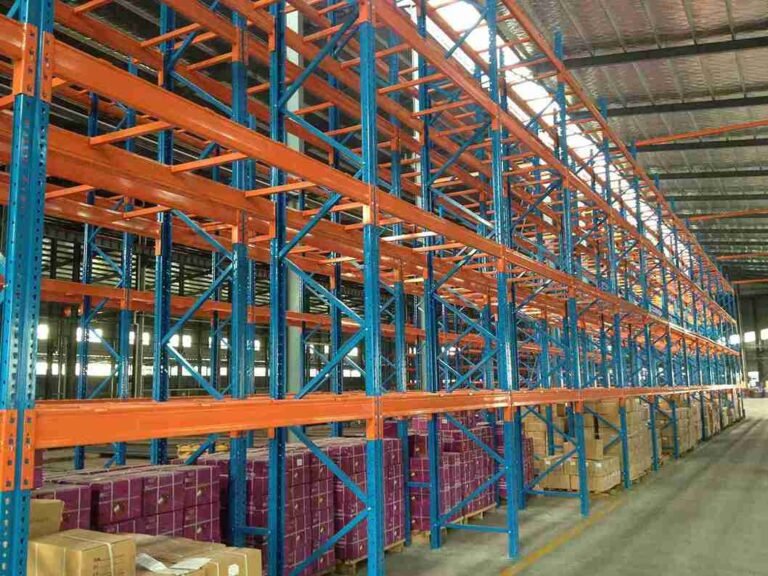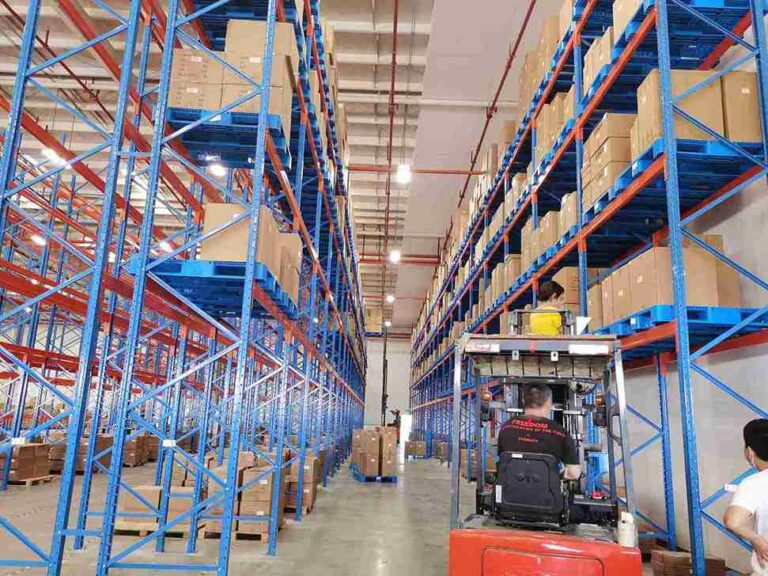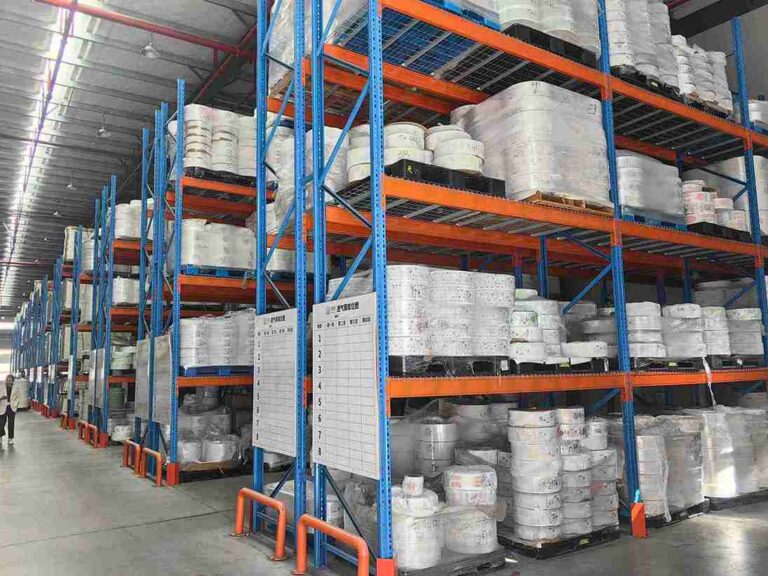
📐 "Τα πρώτα 50 επιχειρηματικά ερωτήματα λαμβάνουν προσαρμοσμένο σχεδιασμό 3D αποθήκης" Σχέδιο















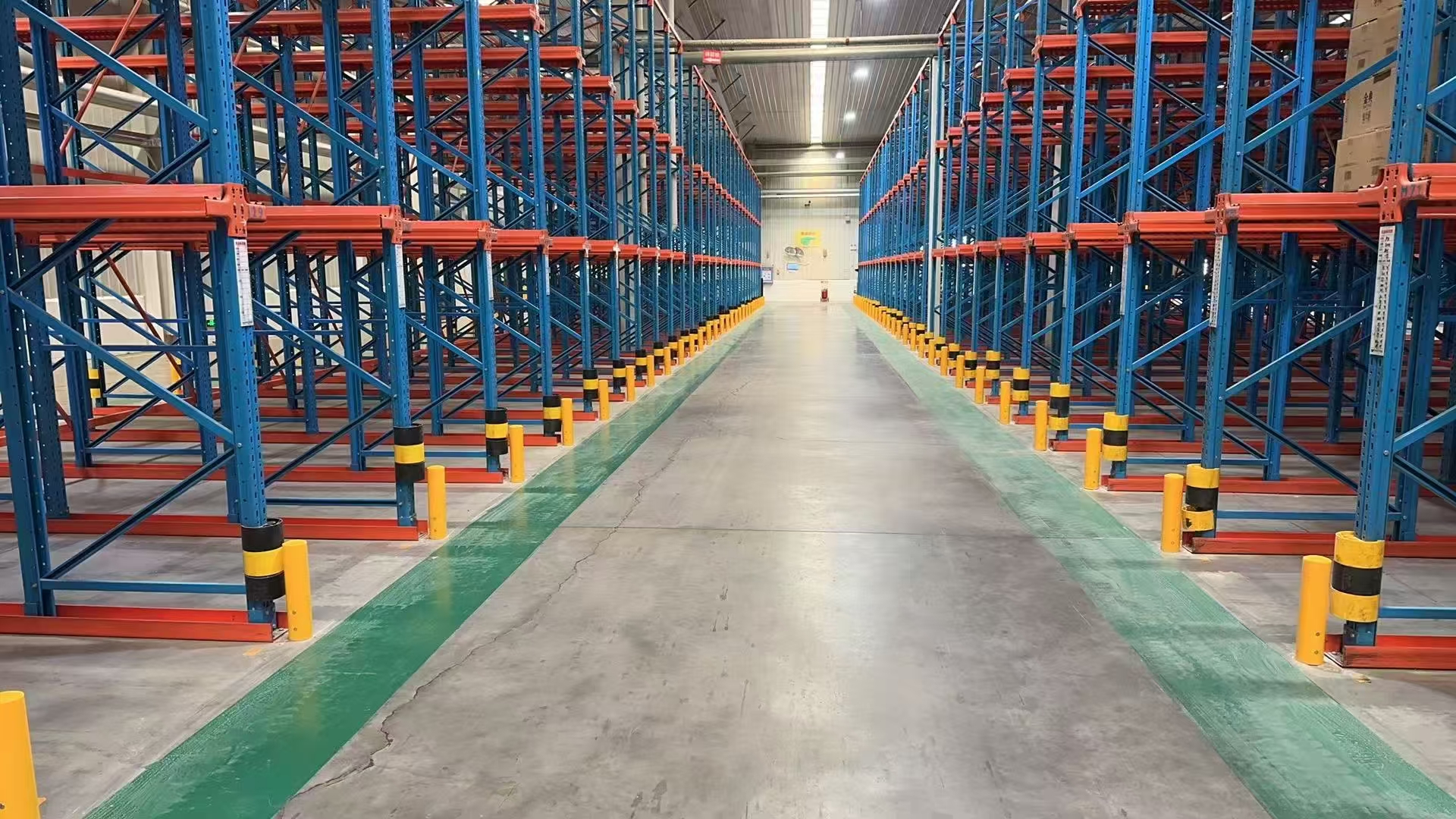
Automation Longspan Shelving for Food & Beverage Pharma Warehousing—A Complete Technical & Commercial Guide
In the rapidly evolving world of warehouse logistics, Automation Longspan Shelving has emerged as the critical infrastructure component that bridges traditional static storage and fully intelligent material handling systems. Unlike standard pallet racking designed for bulk unit loads or basic shelving intended for small parts, Automation Longspan Shelving provides the structural flexibility, load-bearing capacity, and integration readiness required by modern food and beverage and pharmaceutical warehouses.
This article delivers a deep, practitioner-level exploration of Automation Longspan Shelving—from materials science and AGV compatibility to regional market nuances and regulatory compliance. Warehouse owners, logistics managers, and procurement professionals across Southeast Asia, the Middle East, Africa, and Latin America will gain actionable insights to make informed decisions about Automation Longspan Shelving investments that deliver measurable returns and future-proof their operations.
Automation Longspan Shelving for Food & Beverage Pharma Warehousing—The Definitive Resource for Decision Makers
H2: What Makes Automation Longspan Shelving Different from Conventional Storage Solutions
Before diving into specifications and implementation, it is essential to understand why Automation Longspan Shelving occupies a unique position in the material handling equipment hierarchy. The term “longspan” refers to the longer horizontal distance between upright frames—typically 1.8 to 3 meters—which allows the system to accommodate a wider variety of load sizes than clip shelving. The “automation” prefix indicates that this shelving is not merely a passive storage structure but an active node in a connected warehouse ecosystem. Automation Longspan Shelving is engineered with precise leveling tolerances, integrated sensor mounting points, AGV navigation interfaces, and communication protocols that enable real-time inventory visibility.
For a food and beverage warehouse handling over 5,000 SKUs ranging from 5-kilogram bags of flour to 20-liter containers of cooking oil, Automation Longspan Shelving provides the ideal storage density without sacrificing accessibility. For a pharmaceutical distribution center storing thousands of small cartons of prescription drugs alongside bulk batches of over-the-counter products, Automation Longspan Shelving delivers the configurability needed to enforce FIFO rotation and quarantine separation.
H3: Load Capacity and Structural Dynamics of Automation Longspan Shelving
One of the first questions a warehouse engineer asks about any shelving system is: how much weight can it handle? Automation Longspan Shelving typically supports between 200 kilograms and 800 kilograms per shelf level, depending on beam gauge, upright gauge, and overall bay configuration. This places it squarely between light-duty standard shelving (up to 150 kilograms per level) and heavy-duty pallet racking (1,000 kilograms or more per level). That middle range is exactly where most food and pharmaceutical case storage, tote storage, and mixed SKU operations fall.
When Automation Longspan Shelving is specified for automated environments, additional structural considerations come into play. The upright frames must be anchored to floors with significantly tighter tolerances than manual systems. The reason is simple: an AGV or automated retrieval mechanism navigates with millimeter precision based on floor markers or laser positioning. If the Automation Longspan Shelving has settled unevenly or was installed with sloppy leveling, the AGV’s forks or robotic arm may miss the intended load pocket by centimeters, causing collisions, product damage, or system shutdowns.
The best manufacturers of Automation Longspan Shelving offer bolt-together construction with precision-ground base plates and shim kits that allow installers to achieve levelness within two millimeters across the entire bay width. For pharmaceutical cold rooms where the floor may undergo thermal expansion and contraction, Automation Longspan Shelving should be installed using expansion anchors that accommodate slight movement without losing positional accuracy.
H3: AGV and AMR Integration Interfaces for Automation Longspan Shelving
Any discussion of Automation Longspan Shelving in a modern warehouse inevitably turns to AGV and AMR compatibility. The two technologies are not optional add-ons; they are core requirements for any facility aiming to reduce labor costs and improve throughput. Automation Longspan Shelving supports AGV navigation in three primary ways.
First, the shelving aisle configuration must provide clear, unobstructed pathways for robotic vehicles. A well-designed Automation Longspan Shelving layout leaves aisles that are at least 200 millimeters wider than the AGV’s widest point to accommodate turning radii and sensor sweeps. For warehouses using VDA 5050-compliant AGV fleets, the Automation Longspan Shelving can be equipped with QR code markers placed at consistent heights on upright posts—usually 300 millimeters above floor level—to serve as visual landmarks that the AGV’s cameras use for localization.
Second, Automation Longspan Shelving can be fitted with RFID readers at strategic aisle intersections and shelf openings. When an AGV carrying an RFID-tagged pallet passes through a reader portal integrated into the Automation Longspan Shelving, the system automatically logs the movement, updating the warehouse management system in real time. This eliminates manual scanning steps and reduces the risk of data entry errors.
Third, advanced deployments of Automation Longspan Shelving incorporate LED pick-to-light strips along the beam faces. When the WMS directs an AGV or human picker to retrieve a specific SKU, the corresponding LED on the Automation Longspan Shelving illuminates, guiding the operator to the exact bay, shelf level, and position. This feature alone can reduce picking travel time by 40 percent and virtually eliminate wrong-item picks.
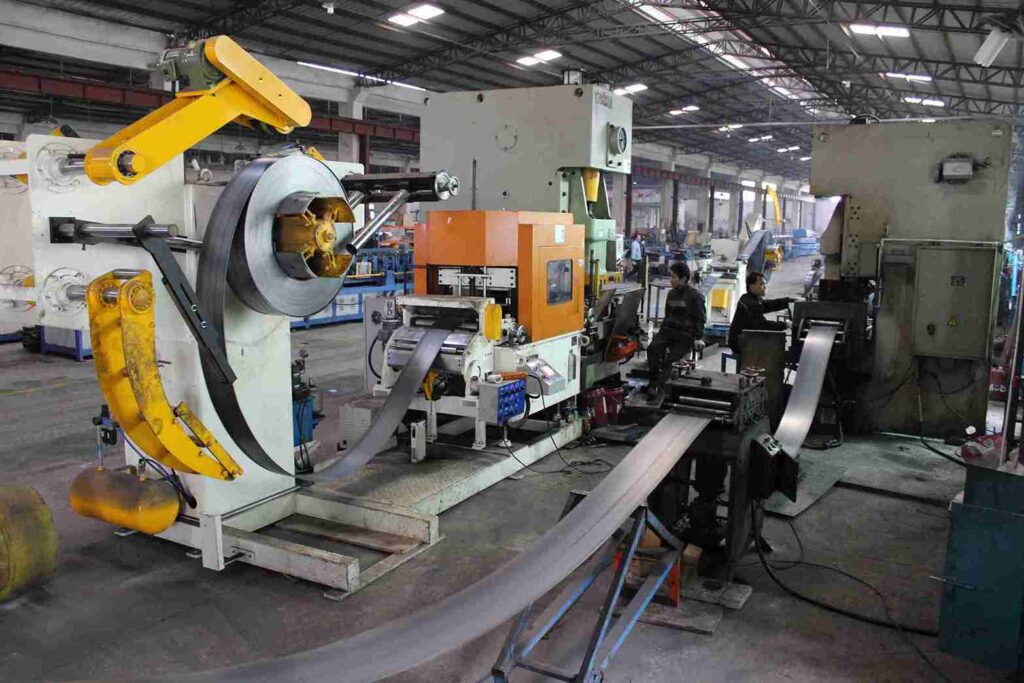
H2: Why Food & Beverage Warehouses Are Standardizing on Automation Longspan Shelving
The food and beverage industry operates under intense margin pressure and demanding service-level agreements with retailers. Any warehouse serving this sector must achieve high throughput, low error rates, and perfect inventory rotation. Automation Longspan Shelving has become the go-to solution for several compelling reasons.
H3: FIFO and FEFO Compliance Through Smart Automation Longspan Shelving
First-in, first-out (FIFO) and first-expiry, first-out (FEFO) are not just best practices in food warehousing; they are regulatory requirements in many jurisdictions. Automation Longspan Shelving equipped with weight sensors and LED guidance systems can enforce FIFO by directing pickers or AGVs to the oldest batch first. The weight sensors beneath each shelf level continuously monitor inventory levels, and when a new pallet is placed into the Automation Longspan Shelving, the WMS records its batch number, expiry date, and exact location. When an order comes in for that SKU, the system examines all locations containing that product within the Automation Longspan Shelving network and directs the retrieval to the location with the earliest expiry date.
For a dairy warehouse storing fresh yogurt with a 21-day shelf life, this capability is not a luxury but a survival tool. Automation Longspan Shelving with integrated FEFO logic can reduce spoilage by up to 30 percent compared to manual rotation systems where workers may inadvertently pick newer stock simply because it is more accessible.
H3: Cold Storage Adaptations of Automation Longspan Shelving
Many food warehouses operate temperature-controlled zones—chillers at 2°C to 8°C and freezers at -20°C or lower. Standard shelving materials can suffer accelerated corrosion in these environments due to condensation and the freeze-thaw cycle. Automation Longspan Shelving destined for cold storage must use materials that withstand these conditions. Stainless steel grade 304 is the minimum acceptable specification for chilled environments, while grade 316 stainless steel should be used in freezers and areas where salt-based brine solutions are used for cleaning.
Moreover, Automation Longspan Shelving in cold storage must be designed to minimize frost accumulation. Open beam designs with smooth, sloped surfaces prevent water from pooling and freezing into ice dams that could interfere with AGV navigation. Some manufacturers of Automation Longspan Shelving offer electropolished stainless steel finishes that reduce surface roughness to less than 0.4 micrometers Ra, making it extremely difficult for ice to adhere.
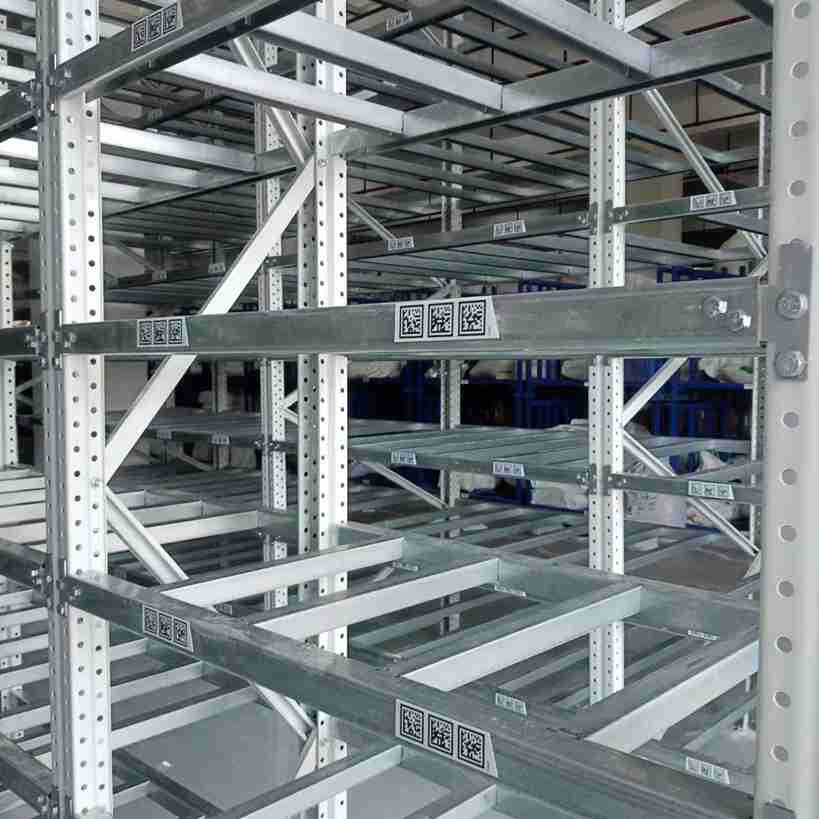
H2: Pharmaceutical Warehousing and the Critical Role of Automation Longspan Shelving
Pharmaceutical warehouses face a different set of challenges. While throughput is important, compliance is paramount. Automation Longspan Shelving designed for pharmaceutical applications must satisfy the requirements of global good manufacturing practice (GMP) standards, including FDA 21 CFR Part 211, EU GMP Annex 15, and local equivalents in emerging markets.
H3: GMP-Compliant Materials and Surface Finishes for Automation Longspan Shelving
Under GMP, any surface that comes into contact with drug product containers or packaging must be non-reactive, non-additive, and easily cleanable. Automation Longspan Shelving used in pharmaceutical warehouses typically employs pharmaceutical-grade powder coating or stainless steel construction. The powder coating must withstand repeated wiping with isopropyl alcohol, quaternary ammonium compounds, and other disinfectants commonly used in pharmaceutical environments.
For warehouses storing active pharmaceutical ingredients (APIs) or hazardous drugs, Automation Longspan Shelving may require stainless steel construction with fully welded seams to eliminate crevices where residues could accumulate. The upright frames, beams, and shelf decking of such Automation Longspan Shelving systems are often designed with radiused corners rather than sharp 90-degree angles, further enhancing cleanability.
H3: Quarantine and Segregation Features in Automation Longspan Shelving
FDA 21 CFR Part 211.142 requires written warehousing procedures including the quarantine of drug products before release by the quality control unit. Automation Longspan Shelving can support this requirement through physical segregation features. A single Automation Longspan Shelving installation can be partitioned into zones using colored beam guards, lockable mesh panels, or dedicated bay sections that are electronically interlocked with the WMS. When a product lot enters the warehouse, the WMS directs it to a quarantine zone within the Automation Longspan Shelving array. Only after the quality control unit logs a release in the system will the WMS permit transfer of that lot to the released inventory zones.
For contract manufacturing organizations that serve multiple pharmaceutical clients, Automation Longspan Shelving can also enforce client segregation. One aisle of Automation Longspan Shelving may be dedicated to Client A’s products, while the next aisle is reserved for Client B, with the WMS preventing any cross-contamination of locations.
H2: Regional Deep Dives—Deploying Automation Longspan Shelving Across High-Growth Markets
The global demand for Automation Longspan Shelving is not evenly distributed. The fastest growth is occurring in emerging economies where greenfield warehouse construction is booming and labor shortages are accelerating automation adoption.
H3: Southeast Asia—Automation Longspan Shelving for E-Commerce and Food Logistics
Southeast Asia’s warehouse automation market is expanding at a compound annual growth rate of over 12 percent. In countries such as Vietnam, Thailand, Malaysia, Indonesia, and the Philippines, Automation Longspan Shelving is being deployed in large e-commerce fulfillment centers and cold chain facilities. A notable trend is the preference for modular Automation Longspan Shelving that can be installed in phases. A food importer in Jakarta might start with a basic manual Automation Longspan Shelving system for dry goods storage, then six months later add QR code navigation markers and a small fleet of AGVs to automate picking for their top 200 SKUs. The same Automation Longspan Shelving infrastructure supports this evolution without requiring replacement of any structural components.
Another Southeast Asia-specific consideration is seismic activity. The region lies along the Pacific Ring of Fire, meaning earthquakes are a genuine risk. Automation Longspan Shelving installed in Indonesia or the Philippines must be designed with seismic bracing and base isolation features. Reputable suppliers of Automation Longspan Shelving offer seismic-certified designs that have been tested to withstand ground accelerations typical of Zone 4 seismic areas.
H3: Middle East—Automation Longspan Shelving for Extreme Climate and Pharmaceutical Hubs
The Middle East presents unique challenges and opportunities for Automation Longspan Shelving. Ambient temperatures in unairconditioned warehouses can exceed 50°C during summer months, which affects both the shelving materials and any attached electronics. For Automation Longspan Shelving deployed in such environments, powder coatings must be rated for high-heat exposure, and any integrated sensors or LED lights must have operating temperature ranges that extend to at least 60°C.
Saudi Arabia’s Vision 2030 and the UAE’s logistics expansion plans have fueled substantial investment in pharmaceutical cold chain infrastructure. The region aims to become a distribution hub for biologics and vaccines destined for Africa and South Asia. Consequently, Automation Longspan Shelving equipped with temperature monitoring sensors and 24/7 data logging capabilities is in high demand. A typical pharmaceutical distribution center in Dubai might deploy Automation Longspan Shelving across 10,000 square meters, with temperature sensors placed every six meters along every aisle, all connected to a central WMS that triggers alerts if any zone drifts outside the required 2°C-to-8°C range.
H3: Africa—Automation Longspan Shelving for Cold Chain Expansion
Africa’s warehouse automation market is smaller but growing rapidly, driven by the African Continental Free Trade Area (AfCFTA) and international aid programs that fund cold chain infrastructure for vaccines and perishable foods. Automation Longspan Shelving is finding a strong foothold in South Africa, Kenya, Nigeria, and Ghana. The key differentiator in African markets is the need for ruggedized, low-maintenance designs. Internet connectivity in some warehouse locations may be unreliable, so Automation Longspan Shelving with onboard data buffering capabilities—where sensors record readings locally and upload them when connectivity is restored—is highly valued.
For humanitarian and development projects, Automation Longspan Shelving suppliers often need to provide training and documentation in French and Portuguese as well as English, given the linguistic diversity across African nations. Suppliers who can offer remote commissioning support and spare parts kits for critical components like RFID readers and weight sensors have a significant competitive advantage.
H3: Latin America—Automation Longspan Shelving in High-Density Urban Warehouses
Latin America’s megacities—São Paulo, Mexico City, Buenos Aires, Bogotá—have extremely expensive industrial real estate. Warehouses must maximize cubic storage density, making Automation Longspan Shelving an ideal solution. In São Paulo, for example, a food distributor might use Automation Longspan Shelving with 2.5-meter bay widths and up to six shelf levels, achieving over 80 percent space utilization compared to 50 percent for conventional shelving.
The Latin American market is also characterized by fragmented last-mile logistics. Many warehouses serve as cross-dock and micro-fulfillment centers for e-commerce. Automation Longspan Shelving with integrated pick-to-light and put-to-light systems accelerates order consolidation for these small-batch, high-frequency orders. Brazilian warehouse operators, in particular, have shown strong interest in Automation Longspan Shelving that can be financed through leasing models or pay-per-use structures, given the region’s higher interest rates and capital constraints.
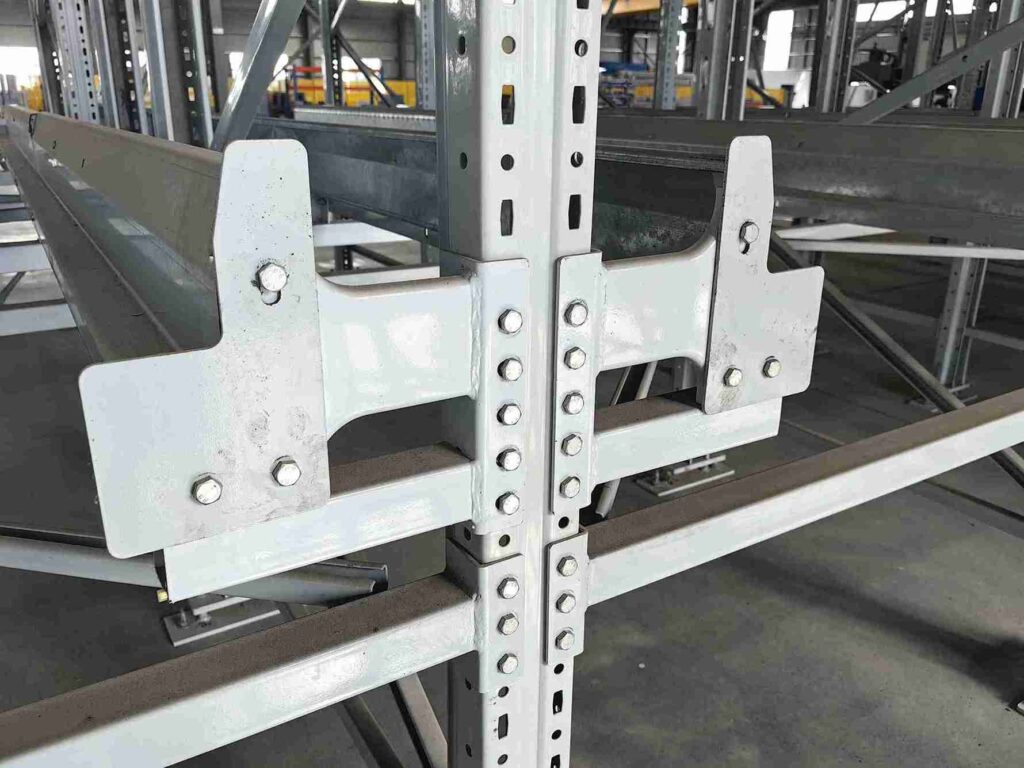
H2: Engineering Deep Dive—Specifying Automation Longspan Shelving for Performance and Longevity
Selecting the right Automation Longspan Shelving for a specific application requires careful consideration of dozens of technical parameters. This section provides a decision framework for procurement teams.
H3: Beam and Upright Gauge Selection for Automation Longspan Shelving
The gauge (thickness) of the steel used in Automation Longspan Shelving directly affects load capacity, durability, and cost. Uprights are typically manufactured from roll-formed steel in gauges ranging from 1.5 millimeters to 3.0 millimeters. For most food and pharmaceutical applications where loads are under 500 kilograms per level, 1.8-millimeter uprights with 1.5-millimeter beams are sufficient. For higher-density storage with loads approaching 800 kilograms per level, Automation Longspan Shelving should use 2.5-millimeter uprights and 2.0-millimeter beams.
Heavier gauge Automation Longspan Shelving also resists damage from AGV collisions better than lighter systems. While collision avoidance systems are standard on modern AGVs, occasional contact does occur. A Automation Longspan Shelving system built with thicker steel will suffer only cosmetic damage in such events, whereas a lighter system might experience beam deflection that compromises the entire bay.
H3: Bolt-Together Versus Weldment Designs for Automation Longspan Shelving
Two manufacturing approaches dominate the Automation Longspan Shelving market: bolt-together systems and fully welded modules. Bolt-together Automation Longspan Shelving offers the advantage of adjustability. Shelf levels can be repositioned in 50-millimeter increments to accommodate changing inventory profiles. This is particularly valuable in food warehouses where seasonal product lines may require different case dimensions. Bolt-together Automation Longspan Shelving also ships flat and occupies less container volume, reducing freight costs for international projects.
Fully welded Automation Longspan Shelving, by contrast, is stiffer and has no loose fasteners that could loosen over time due to AGV-induced vibration. For pharmaceutical cleanroom applications where dust and particle generation must be minimized, welded Automation Longspan Shelving with ground-smooth welds is preferred because there are no threaded holes or exposed bolt heads where residues could accumulate.
H3: Floor Anchoring and Seismic Bracing for Automation Longspan Shelving
Η απόδοση οποιουδήποτε Automation Longspan Shelving system ultimately depends on how well it is attached to the warehouse floor. Standard anchoring uses expansion anchors or chemical epoxy anchors set into concrete. For Automation Longspan Shelving installed in seismic zones, additional bracing elements must be added. Cross-aisle horizontal ties connect rows of Automation Longspan Shelving to each other, preventing the independent sway that could lead to progressive collapse during an earthquake. Back-to-back rows of Automation Longspan Shelving can be bolted together through their uprights, creating a rigid structural block that resists lateral forces.
Warehouse floor flatness also matters. The industry standard for AGV-compatible floors is a tolerance of plus or minus 3 millimeters over any 3-meter span, as defined in the ASTM E1155 standard for floor flatness (FF) and floor levelness (FL). If the existing floor falls outside this specification, the installer of Automation Longspan Shelving may need to use adjustable shims or floor-leveling compounds before the system can be properly anchored.
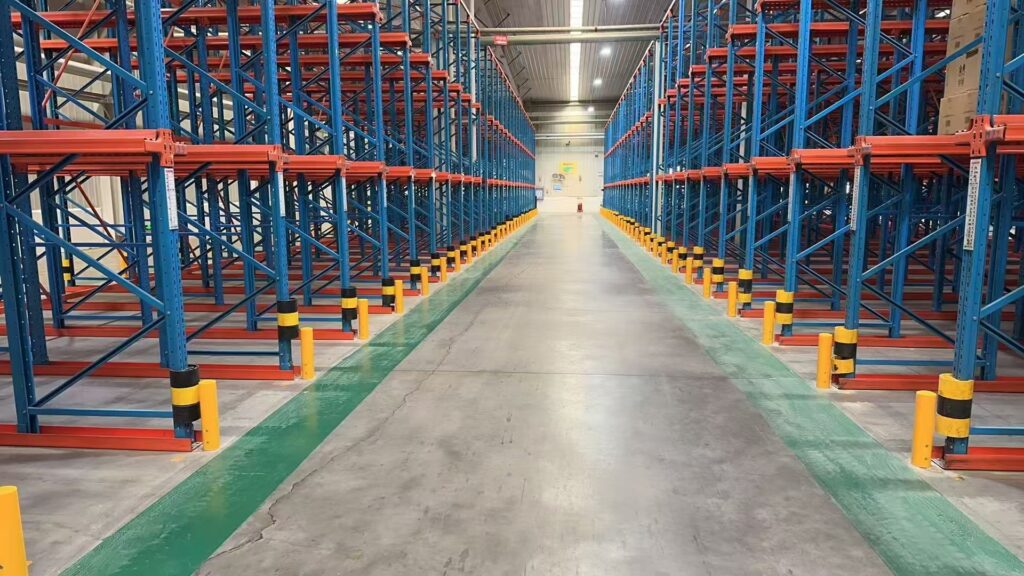
H2: Integration Architecture—Connecting Automation Longspan Shelving to WMS and WCS
A standalone Automation Longspan Shelving system is just metal. The value multiplies when it becomes part of a connected ecosystem. This section maps the typical integration layers.
H3: Sensor Networks Integrated into Automation Longspan Shelving
Σύγχρονο Automation Longspan Shelving can embed dozens of sensors per bay. The most common are strain-gauge weight sensors mounted between the beam and the shelf deck. These sensors continuously measure the load on each shelf level and transmit the data via a low-power wireless protocol (LoRaWAN or Zigbee) to a gateway that connects to the WMS. When the weight on a particular Automation Longspan Shelving location drops below a reorder threshold, the system can automatically generate a replenishment task for the AGV.
Temperature and humidity sensors are often integrated into Automation Longspan Shelving at intervals of 6 to 10 meters in climate-controlled zones. These sensors are potted in epoxy for protection against condensation and cleaned during routine sanitation cycles. For Automation Longspan Shelving used in vaccine warehouses storing mRNA-based products that are extremely temperature-sensitive, redundant sensors are recommended—one sensor at the front of the shelving and another at the back—to detect any gradient within the stored cartons.
H3: RFID Infrastructure for Automation Longspan Shelving
RFID transforms Automation Longspan Shelving from a passive storage medium into an active inventory tracker. The architecture consists of three components: passive UHF RFID tags affixed to each pallet, case, or tote; fixed RFID readers mounted on Automation Longspan Shelving uprights at aisle entrances and exits; and antennas positioned to create read zones around each shelf opening.
When an AGV approaches a particular Automation Longspan Shelving bay to deposit a pallet, the onboard RFID reader (or a fixed reader on the shelving itself) captures the pallet’s tag ID. The WMS then updates its database to show that the specific pallet now resides at that Automation Longspan Shelving location. This creates perfect inventory accuracy without any manual scanning. For pharmaceutical companies subject to track-and-trace regulations like the US Drug Supply Chain Security Act (DSCSA), this capability is essential.
H3: VDA 5050 and Middleware for Mixed-Fleet Automation Longspan Shelving
Many warehouses deploy AGVs from multiple manufacturers—for example, a large autonomous forklift for pallet movement and a smaller AMR for tote picking. The VDA 5050 communication standard enables these different vehicles to receive commands from a single master controller and to report their positions and statuses back to the system. Automation Longspan Shelving suppliers who understand VDA 5050 can advise customers on how to position navigation markers and RFID portals so that all vehicle types can operate within the same shelving aisles without interference.
Middleware platforms act as translators between the WMS and the AGV fleet. When the WMS issues an instruction to move a specific pallet from one Automation Longspan Shelving location to another, the middleware selects the appropriate AGV, calculates the optimal path (taking into account traffic congestion and other ongoing moves), and dispatches the command in the specific protocol understood by that AGV’s onboard computer.
H2: Total Cost of Ownership and ROI Models for Automation Longspan Shelving
Capital expenditure is only part of the equation. A complete business case for Automation Longspan Shelving must consider operating expenses, maintenance costs, and the value of intangible benefits.
H3: Direct Labor Savings from Automation Longspan Shelving
The most quantifiable benefit of Automation Longspan Shelving is reduced labor cost. A conventional warehouse without automation might require 15 pickers per shift to handle 10,000 order lines daily. After deploying Automation Longspan Shelving with AGV integration and pick-to-light guidance, the same throughput might be achieved with 8 pickers per shift—a 47 percent reduction. Assuming a fully burdened labor cost of USD 25,000 per year per picker in an emerging market (including wages, benefits, and training), the annual savings exceed USD 175,000.
Moreover, Automation Longspan Shelving reduces the need for skilled forklift operators. In many developing economies, certified forklift operators command premium wages and are in short supply. By shifting material transport from forklifts to AGVs that navigate through Automation Longspan Shelving aisles, warehouse operators can reduce their reliance on this scarce labor category.
H3: Error Reduction and Damage Prevention with Automation Longspan Shelving
Manual picking errors typically run between 1 percent and 3 percent of order lines in well-managed warehouses. For a food warehouse shipping 5,000 orders daily, that translates to 50 to 150 mis-shipments per day, each incurring return processing costs, replacement product costs, and potential customer penalty fees. Automation Longspan Shelving equipped with RFID confirmation reduces pick errors to near zero. The AGV or picker scans the item before removing it from the Automation Longspan Shelving location, and the system validates that the scanned SKU matches the order line. If there is a mismatch, the system issues an audible alert and prevents the move from being completed.
Product damage also decreases with Automation Longspan Shelving. In manual warehouses, workers may drop items or stack cases improperly, leading to crushed boxes and unsellable product. Automated retrieval through Automation Longspan Shelving follows predefined, gentle handling profiles, significantly reducing damage rates.
H3: Maintenance and Lifecycle Costs of Automation Longspan Shelving
While standard static shelving may last 20 to 30 years with minimal maintenance, Automation Longspan Shelving contains electronic components that have finite lifespans. Weight sensors typically have a mean time between failures of 50,000 to 100,000 hours. RFID readers may need replacement every 5 to 7 years as technology evolves. The annual maintenance budget for Automation Longspan Shelving should include calibration of sensors (recommended every 12 months), cleaning of QR code markers and RFID antennas, and firmware updates for the WMS integration modules.
That said, the structural components of Automation Longspan Shelving—the uprights, beams, and decking—require little more than periodic visual inspection for damage or corrosion. A well-maintained Automation Longspan Shelving system can have a useful life of 15 to 20 years before structural replacement is needed, similar to conventional shelving.
H2: Selecting the Right Supplier for Automation Longspan Shelving—A Vendor Evaluation Framework
Not all suppliers of Automation Longspan Shelving possess equal capabilities. This section provides a 10-point checklist for procurement teams to use during vendor selection.
H3: Technical Capabilities to Verify
Load test documentation: The supplier should provide third-party load test certificates for their Automation Longspan Shelving designs, showing safety factors of at least 1.8 times the rated capacity.
Integration track record: Ask for case studies where the supplier’s Automation Longspan Shelving was successfully integrated with AGVs from at least two different manufacturers. Request contact information for those customers.
Sensor ecosystem: Does the supplier manufacture their own sensors and RFID components, or do they partner with established vendors? Preferably, the supplier of Automation Longspan Shelving should offer a single warranty covering both the metal structure and the electronics.
Software compatibility: The supplier should demonstrate that their Automation Longspan Shelving sensor data can be ingested by common WMS platforms such as SAP EWM, Oracle WMS, Manhattan Associates, or Blue Yonder. If the supplier only supports proprietary software, integration costs will be higher.
H3: Commercial and Logistical Capabilities
Regional presence: For projects in Southeast Asia, the Middle East, Africa, or Latin America, look for suppliers of Automation Longspan Shelving with local warehouses, installation teams, and customer support. Shipping shelf components from a factory in China or Europe adds weeks of lead time and significant freight costs.
Spare parts availability: Request a commitment for spare parts availability for at least 10 years after the initial purchase. Some Automation Longspan Shelving suppliers change component designs frequently, making it impossible to obtain replacement beams or sensor boards for older systems.
Installation supervision: Will the supplier send an experienced supervisor to oversee local labor during installation of the Automation Longspan Shelving? Many international projects suffer quality issues when local contractors install complex systems without proper guidance.
H3: Compliance and Certification
GMP documentation: For pharmaceutical projects, the Automation Longspan Shelving supplier must provide material certificates (mill test reports for steel), coating thickness verification reports, and a validation package confirming that the shelving meets FDA 21 CFR Part 211 requirements.
Seismic certification: In seismic zones, the supplier should provide engineering calculations or test reports showing that their Automation Longspan Shelving meets local building codes (e.g., IBC 2021 in many jurisdictions, or equivalent standards in target markets).
Warranty terms: The best suppliers of Automation Longspan Shelving offer a 10-year structural warranty and a 2-year warranty on electronic components. Avoid vendors that limit structural warranties to 1 or 2 years.
H2: Case Study—Automation Longspan Shelving in a Middle Eastern Pharmaceutical Distributor
This anonymized case study illustrates the real-world benefits of Automation Longspan Shelving.
A pharmaceutical distributor in Dubai serving over 200 hospitals and clinics across the UAE and Saudi Arabia operated from a 15,000-square-meter warehouse. The facility stored 8,000 SKUs, including cold chain products requiring 2°C-to-8°C control. Before automation, the warehouse employed 45 hourly workers and 6 forklift operators. Picking accuracy was 97.5 percent, which meant approximately 200 orders per month contained errors, each requiring expensive reshipment and customer compensation.
The company invested in Automation Longspan Shelving across 80 percent of their storage area. The system featured stainless steel construction for the cold room zone, weight sensors on every shelf level, RFID readers at aisle portals, and integration with their existing SAP WMS. A fleet of 12 AGVs navigated through the Automation Longspan Shelving aisles to transport totes between receiving, put-away, picking, and shipping zones.
Results after 12 months of operation:
Picking accuracy rose to 99.96 percent
Labor reduced from 51 total workers to 28
Order cycle time dropped from 6 hours to 2.5 hours
Inventory accuracy reached 99.8 percent
The company calculated a return on investment in 22 months
The warehouse manager noted in a post-implementation review: “The Automation Longspan Shelving gave us the confidence to accept new business from multinational pharmaceutical companies that require audited, validated storage conditions. Without this system, we would have lost those contracts.”
H2: Future Trends—Where Is Automation Longspan Shelving Headed?
The technology of Automation Longspan Shelving continues to evolve. Three trends will shape the market over the next five years.
H3: AI-Driven Slotting Optimization for Automation Longspan Shelving
Artificial intelligence models are being trained to optimize how inventory is assigned to Automation Longspan Shelving locations. The AI considers factors such as SKU velocity (how often an item is picked), dimensions, weight, special handling requirements (e.g., fragile, flammable), and compatibility with adjacent items. The AI then recommends the optimal Automation Longspan Shelving bay and level for each incoming pallet to minimize AGV travel distance and reduce congestion in high-traffic aisles. Early adopters report that AI-optimized Automation Longspan Shelving layouts reduce internal transport work by 15 to 25 percent compared to static assignment methods.
H3: Wireless Power and Data Transmission for Automation Longspan Shelving
One of the challenges with sensor-equipped Automation Longspan Shelving is battery replacement for wireless sensors. New technologies using inductive power transfer and backscatter communication allow sensors to harvest energy from ambient radio waves (e.g., from nearby AGV Wi-Fi signals or dedicated power transmitters). This means that once installed, the sensors on Automation Longspan Shelving could operate for a decade or more without battery changes. Several leading suppliers are piloting this technology in 2025, with commercial availability expected in 2027.
H3: Modular Automation Longspan Shelving as a Service
Finally, the “as-a-service” business model is coming to Automation Longspan Shelving. Under this model, the customer pays a monthly fee that covers the hardware, sensors, software integration, maintenance, and even the AGV fleet. This shifts the investment from a large upfront capital expense to an operating expense, which is particularly attractive for smaller food and pharmaceutical warehouses in emerging markets that may not have access to low-cost financing. The Automation Longspan Shelving as a service model also includes automatic upgrades to new sensor technologies as they become available, ensuring the customer always has state-of-the-art capabilities.
H2: Conclusion
Automation Longspan Shelving is not merely an incremental improvement over traditional storage solutions; it represents a fundamental rethinking of how warehouses can operate. By combining the physical adaptability of longspan shelving with the intelligence of sensors, the connectivity of RFID, and the mobility of AGVs, Automation Longspan Shelving creates a storage environment that is accurate, efficient, and compliant with the strictest food and pharmaceutical regulations.
For warehouses in Southeast Asia, the Middle East, Africa, and Latin America, the case for Automation Longspan Shelving is compelling. Labor shortages, rising real estate costs, and increasing regulatory demands are pushing operators to automate. Those who adopt Automation Longspan Shelving early will gain a competitive advantage through lower error rates, faster order fulfillment, and the ability to satisfy high-stakes clients such as multinational food brands and pharmaceutical companies.
The technical decisions involved in specifying Automation Longspan Shelving—material selection, sensor integration, AGV compatibility, and software architecture—require careful analysis and expert guidance. But the reward is a warehouse that does not just store products but actively contributes to business growth. Automation Longspan Shelving turns a cost center into a strategic asset.
For decision-makers ready to take the next step, the path is clear: evaluate your current storage challenges, define your automation goals for the next five years, and partner with a supplier who can deliver Automation Longspan Shelving that is scalable, serviceable, and compliant. The future of food and pharmaceutical warehousing is automated, and Automation Longspan Shelving is the foundation on which that future is built.
FAQ Section
1: Can Automation Longspan Shelving be used in existing warehouses with column obstructions, or does it require a completely open floor plan?
Ναι, Automation Longspan Shelving can be configured to work around existing columns, sprinkler risers, and other obstructions. The modular bolt-together design allows installers to create C-shaped or L-shaped configurations that hug columns, and special short-span beams can bridge the gaps created by obstructions.
The key requirement is that AGV navigation paths must remain clear—columns should be integrated into the layout as virtual obstacles in the fleet management software, with Automation Longspan Shelving aisles planned to avoid tight turns around structural elements. An experienced Automation Longspan Shelving supplier can perform a laser scan of the existing facility and generate a 3D layout showing exactly how the system will fit around fixed obstacles.
2: How do we ensure that the RFID tags on our pallets are always readable by the readers embedded in the Automation Longspan Shelving?
Read reliability depends on tag placement, reader power, and environmental factors. For Automation Longspan Shelving applications, the best practice is to affix RFID tags to the same location on every pallet (typically the lower left corner of the shorter side) and to orient tags consistently. The Automation Longspan Shelving should be equipped with circularly polarized antennas that read tags regardless of orientation.
Regular testing with a handheld RFID reader should be performed—any Automation Longspan Shelving location where read rates fall below 99.5 percent may need an additional antenna or a power adjustment. For pallets containing liquids or metals (common in food and pharmaceutical warehousing), special on-metal RFID tags must be used, and the Automation Longspan Shelving supplier should have tested these tag types before deployment.
3: What is the typical insurance impact of installing Automation Longspan Shelving compared to conventional shelving?
Many warehouse insurers view Automation Longspan Shelving favorably because it reduces risks associated with forklift accidents, falling items, and inventory errors. AGVs follow predictable paths and have collision avoidance systems, so the frequency of shelf impacts is much lower than with human-operated forklifts driving through Automation Longspan Shelving aisles. However, the replacement cost of sensor-equipped Automation Longspan Shelving is higher than standard shelving.
Warehouses should disclose the total declared value of their Automation Longspan Shelving (structure plus electronics) to their insurer. Some carriers offer premium discounts of 5 to 10 percent for automated facilities because of the improved safety profile. Always request a risk assessment from your insurance provider before finalizing a Automation Longspan Shelving procurement.
4: How long does it take to train warehouse staff to operate and maintain Automation Longspan Shelving systems?
Training requirements for Automation Longspan Shelving are often overestimated by nervous warehouse managers. Most daily operations—put-away, picking, cycle counting—are handled by the WMS and AGVs, not by direct human interaction with the Automation Longspan Shelving. The primary human tasks involve troubleshooting (e.g., clearing a jammed AGV), cleaning the shelving, and monitoring the system dashboards.
A typical training program lasts 3 to 5 days and covers: basic operation of the WMS interface, interpreting alerts from Automation Longspan Shelving sensors, manually overriding shelf assignments in case of sensor failure, and safety protocols for working in automated aisles. For maintenance technicians who will calibrate sensors or replace RFID readers, an additional 2-day manufacturer-certified course is recommended. Most Automation Longspan Shelving suppliers provide remote training via video conference and on-site training as part of the installation contract.
5: Can we mix Automation Longspan Shelving from different manufacturers in the same warehouse facility?
Mixing Automation Longspan Shelving from different manufacturers is technically possible but strongly discouraged. Even if both products meet the same load ratings, differences in beam-to-upright connection designs, hole spacing patterns, and surface finishes can create compatibility problems. A shelf beam from Manufacturer A may not lock securely into an upright frame from Manufacturer B, creating a safety hazard. Moreover, the sensor and RFID systems are almost never interoperable between manufacturers.
If you need to expand an existing Automation Longspan Shelving installation, always purchase additional bays from the original manufacturer to ensure mechanical and electronic compatibility. If the original manufacturer is no longer in business, the safer route is to replace the entire zone rather than attempting a mixed-brand configuration.
Εάν χρειάζεστε τέλεια σχέδια CAD και προσφορές για ράφια αποθήκης, παρακαλώ επικοινωνήστε μαζί μας. Μπορούμε να σας παρέχουμε δωρεάν υπηρεσίες και προσφορές σχεδιασμού και σχεδιασμού ραφιών αποθήκης. Η διεύθυνση ηλεκτρονικού ταχυδρομείου μας είναι: jili@geelyracks.com