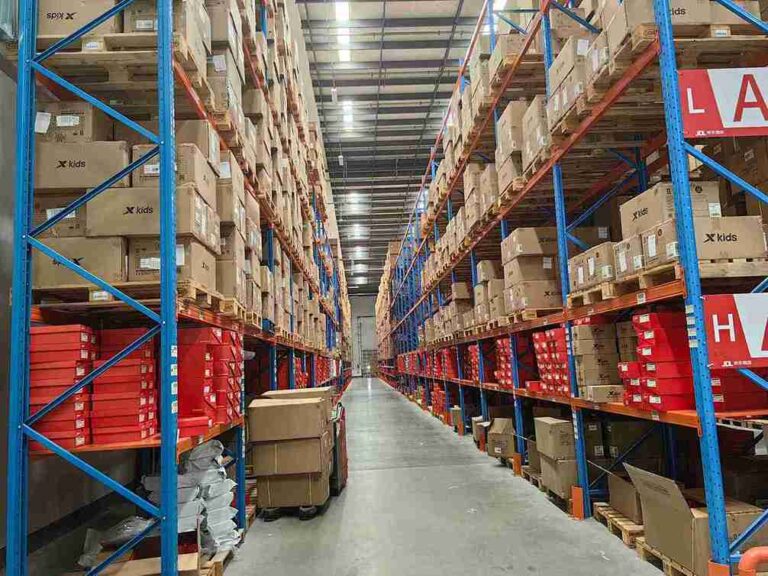
📐 "First 50 Enterprise Queries Get Custom 3D Warehouse Design" Plan


Engineering Unbreakable Storage: The Definitive Guide to Dexion Pallet Racking for Extreme Operational Environments
In the demanding landscapes of industrial and logistical operations across Southeast Asia, Africa, the Middle East, and Latin America, storage infrastructure is not merely a passive asset. It is a critical, active component of supply chain resilience. For facility managers and operations directors confronting corrosive coastal air, abrasive inland dust, heavy seismic activity, or volatile chemical atmospheres, the specification of storage solutions demands a forensic level of scrutiny.
The choice transcends basic storage capacity; it becomes a strategic decision impacting safety, total cost of ownership, and long-term operational viability. This exhaustive exploration delves into why a genuine, correctly specified Dexion pallet racking system stands as the singular most reliable investment for operations in harsh environments. Beyond marketing claims, we will dissect the engineering protocols, material science, and application-specific design philosophies that differentiate a true Dexion racking solution from commodity-grade alternatives, providing a clear pathway to achieving unparalleled longevity and robust return on investment.

The High-Stakes Calculus of Storage in Severe Conditions: Why Generic Systems Are a Catastrophic Liability
The allure of lower upfront costs from generic racking suppliers is a pervasive and dangerous temptation. In harsh environments, this compromise initiates a predictable, often accelerated, failure cycle that jeopardizes far more than the initial capital outlay. The degradation is systemic, attacking the very integrity of the storage system and, by extension, the operation it supports.
Deconstructing Environmental Adversaries: A Regional Threat Analysis
Understanding the specific antagonist is the first step in engineering an effective defense. Different regions present unique, potent challenges that standard, lightly protected racking cannot endure.
The Southeast Asian Crucible: Humidity, Salt, and Cyclical Stress: Operations from Haiphong to Surabaya face relentless high humidity and salt aerosol exposure. This combination is particularly insidious. The constant moisture serves as a highly conductive electrolyte, dramatically accelerating galvanic corrosion at joints, connectors, and any microscopic flaw in a coating. Furthermore, the thermal cycling in these climates causes continuous expansion and contraction, stressing welded points and connections, leading to fatigue cracks in poorly manufactured systems.
The African Context: Abrasion, Particulate, and Climate Extremes: Facilities servicing the mining sector in the DRC, agriculture in Kenya, or logistics hubs in South Africa confront high-density particulate matter. This isn’t just dust; it’s an abrasive agent that, when combined with condensation or occasional moisture, creates a grinding paste that erodes protective paint layers and accelerates wear on moving parts within automated systems. Inland temperature swings further stress materials.
The Middle Eastern and Central Asian Reality: Thermal Shock and Sand Abrasion: The extreme diurnal temperature variance—sometimes exceeding 20°C between day and night—subjects steel to relentless expansion and contraction cycles. This mechanical stress, combined with the abrasive impact of sand and dust storms, strips standard powder coatings, exposing raw steel to oxidative attack in a matter of months, not years.
The Universal Industrial Challenge: Chemical and Mechanical Aggression: Across all regions, facilities in food processing (with acidic sanitizers), chemical storage, heavy manufacturing (with oils and coolants), and cold chains present aggressive chemical and physical challenges. Standard epoxy-polyester powders offer negligible long-term resistance, leading to rapid coating failure and substrate corrosion.
The Inevitable Domino Effect: From Corroded Upright to Operational Standstill
The failure of a storage system in a harsh environment is a cascading event, not a single-point incident. The progression follows a grimly predictable pattern:
Coating Compromise: The first sign is often cosmetic—blistering, chipping, or fading of the paint on the Dexion pallet racking components. In a quality system, this is a warning. In a generic one, it may already be too late.
Substrate Attack: Once the protective barrier is breached, environmental agents attack the base metal. Rust begins, often hidden within beam-to-upright connections or at the base of columns where moisture collects.
Structural Degradation: Corrosion eats away at the material, reducing the effective cross-sectional area of the load-bearing steel. This directly and dangerously reduces the load capacity of the racking system.
Catastrophic Risk: The weakened structure may fail under a routine load it was once rated for, or during a seismic event. The result can be a partial or total collapse—a catastrophic event risking lives, inventory, automated guided vehicles (AGVs), and other high-value capital equipment.
Operational and Financial Collapse: The immediate aftermath involves emergency shutdown, costly inventory recovery, potential regulatory intervention, and crippling liability. The “savings” from the initial purchase are obliterated many times over by business interruption, reputational damage, and urgent replacement costs.
The Dexion Pallet Racking Philosophy: A Legacy of Engineered Resilience, Not Assembly
The Dexion name is not merely a brand; it represents a heritage of pioneering the very concept of adjustable pallet racking. This legacy is built on a foundation of engineering integrity, where every component is part of a calculated structural system. This core philosophy fundamentally shapes the approach to manufacturing Dexion pallet racking for harsh environments. It is a holistic process that begins at the atomic level of the material and extends through to the final on-site verification.
Metallurgical Precision: The Foundational Integrity of Dexion Steel
The journey to durability begins long before the paint line. The specification of raw steel is a critical differentiator. Dexion pallet racking components are fabricated from consistently high-tensile steel with rigorously controlled chemical composition and mechanical properties. This ensures:
Predictable Yield Strength: Engineers can rely on precise material behavior under calculated loads, providing a known and reliable safety margin.
Optimal Formability: The steel must be capable of undergoing the roll-forming process that creates the complex open-box sections of upright frames without developing internal stresses or micro-fractures that become failure initiation points.
Coating Adhesion Foundation: A clean, consistent substrate is essential for the adhesion of advanced coating systems. Inferior steel with surface impurities, mill scale, or inconsistent galvanization will cause premature coating delamination, no matter how advanced the paint technology.
The Science of Protection: Dexion’s Advanced Coating Systems Arsenal
This is the most visible and technically sophisticated layer of defense. Rejecting a one-coat-fits-all approach, Dexion specifies coating systems based on a scientific assessment of the operational environment, aligned with international standards like ISO 12944 (Corrosion protection of steel structures by protective paint systems).
Dexion ZyncGuard™ Plus (Hot-Dip Galvanization with Topcoat): For the ultimate defense against moisture-driven corrosion—the primary threat in coastal Southeast Asia or high-humidity regions—this process is unparalleled. Structural components are immersed in molten zinc at approximately 450°C, creating a metallurgical bond and a zinc-iron alloy layer. This provides sacrificial cathodic protection: if the coating is scratched, the zinc corrodes preferentially, protecting the underlying steel. The additional powder topcoat (polyester or epoxy-polyester) adds color, further UV resistance, and an extra physical barrier. This combination is often specified for ports, offshore logistics, and tropical food storage facilities.
Dexion DuroCoat™ Pro (High-Performance Epoxy Hybrid System): Engineered for severe industrial and chemical exposures, this multi-layer system involves a zinc-rich epoxy primer for cathodic protection, a high-build epoxy intermediate coat, and a chemical-resistant epoxy topcoat. It exhibits exceptional resistance to solvents, acids, alkalis, and mechanical abrasion, making it ideal for pharmaceutical warehouses, chemical plant storage, and automotive parts facilities using automated conveyor systems.
Dexion ArmourKote™ Fortis (Heavy-Duty Polyester for Abrasive Environments): Designed to withstand the punishing combination of abrasion and UV exposure found in mining, bulk agriculture, and certain manufacturing settings in Africa and the Americas. It features a robust pretreatment, an anti-corrosive primer, and a specially formulated, thick polyester powder coat that resists chipping and sand-blasting effects from airborne particulates.
Dexion KryoSafe™ (Flexible Coating for Cold Storage): Standard powder coatings become brittle and prone to micro-cracking at sub-zero temperatures. KryoSafe™ is a elastomer-modified coating system that retains its flexibility and adhesion down to -30°C and below, preventing moisture ingress through cracks and ensuring long-term integrity in freezer applications for the food and biomedical sectors.

Architectural Resilience: Design Features Engineered into Dexion Pallet Racking
The protective strategy extends far beyond surface coatings. The intrinsic design of Dexion pallet racking incorporates features that proactively combat environmental challenges and enhance overall system longevity.
Intelligent Connection Design: Eliminating Failure Points
The beam-to-upright connection is the most critical dynamic joint in any racking system. In harsh environments, standard tab-and-slot designs become traps for moisture and corrosive agents.
Dexion’s bolt-through or patented locking systems are designed with environmental resilience in mind. These connections minimize crevices and pockets where condensation can pool and corrosive cycles can begin. The use of high-grade, plated bolts ensures the fastener itself is not the weak link.
Seismic and Dynamic Load Engineering: For regions in Southeast Asia and Latin America prone to seismic activity, or for warehouses exposed to high wind loads, the Dexion pallet racking design integrates specific bracing configurations, moment-resisting connections, and anchored base plates. These are not add-ons but are calculated into the global structural analysis of the system, ensuring it can dissipate dynamic energy without catastrophic failure.
System-Wide Durability Enhancements
Every component is considered part of the protective ecosystem:
Robust, Multi-Anchor Base Plates: Larger surface area plates distribute load more effectively on potentially uneven floors and provide superior resistance to uplift forces from wind or seismic events. Multiple anchor holes allow for optimal positioning around floor imperfections.
Seamless and Clean Profiles: The roll-forming process for uprights and beams is engineered to create smooth profiles with minimal sharp edges or seams. This ensures a more uniform coating thickness during application, eliminating thin spots that are typical on stamped or welded components from inferior racking.
Full Compatibility of Accessories: Wire mesh decking, partition frames, stairways, and mezzanine elements specified as part of a Dexion storage solution receive the same level of protective coating scrutiny, ensuring no component becomes the sacrificial anode in the system.

The Dexion Process: A Framework for Guaranteed Performance in Your Environment
Supplying Dexion pallet racking for a harsh environment is a consultative, engineered process, not a transactional equipment sale. This systematic approach is what guarantees the promised performance on the warehouse floor.
Phase 1: Forensic Site & Operational Diagnostics
A Dexion specialist initiates the engagement with a comprehensive assessment that goes far beyond measuring square footage. This diagnostic phase includes:
Environmental Corrosivity Categorization (to ISO 12944): A visual and instrumental assessment to classify the environment (e.g., C4 High, C5 Very High, or CX Extreme). This scientific classification dictates the minimum coating system specification.
Operational Dynamics Audit: Analysis of load spectra, inventory turnover, material handling equipment (MHE) types—with special focus on integration points for AGV systems and unmanned forklifts—and frequency of potential impacts.
Facility Interface Review: Examination of floor flatness, drainage, lighting, HVAC conditions, and proximity to external doors or processes that may create micro-climates within the warehouse.
Phase 2: Precision Digital Engineering & Specification
Leveraging advanced Building Information Modeling (BIM)-compatible software and finite element analysis (FEA) tools, engineers create a Digitally Twin-Validated Layout. This deliverable is not a schematic but a fully engineered set of plans including:
Load Notices and Layout Drawings: Showing every bay, beam level, and load capacity.
Foundation & Anchoring Details: Specific to the actual slab conditions.
Bill of Materials with Coating Codes: Every component, down to the last bolt, is specified with its exact protective finish.
Integration Details: Clear specifications for interfaces with automated storage and retrieval systems (AS/RS), conveyor spurs, and pick stations.
Phase 3: Certified Installation & Commissioning Protocol
The best-engineered Dexion pallet racking can be compromised by poor installation. Therefore, the final phase is controlled execution.
Factory-Trained Installation Crews: Teams are certified on Dexion assembly protocols, including the use of calibrated torque wrenches for all critical connections.
Sequenced Assembly Methodology: A step-by-step process ensures structural stability is maintained throughout the build, crucial for large-scale or high-bay installations.
Final Verification & Load Test Certification: Upon completion, a systematic inspection against the engineered drawings is conducted. A signed certification document is provided, affirming the installation conforms to the design specification—a vital record for safety audits and insurance.
The Automation-Ready Foundation: Dexion Pallet Racking as the Platform for Industry 4.0
In modern logistics, static storage is obsolete. The racking structure is the foundational grid upon which automation operates. Dexion pallet racking is inherently designed to be the stable, precise, and reliable platform for automated technologies.
AGV & AMR Navigation Precision: The integration of Autonomous Guided Vehicles (AGVs) and Autonomous Mobile Robots (AMRs) requires exceptional dimensional consistency. The manufacturing tolerances of Dexion pallet racking ensure aisle widths, beam heights, and column positions are uniform, allowing for reliable navigation and pallet pickup/deposit by automated systems. Reinforcement options are available at predicted contact points.
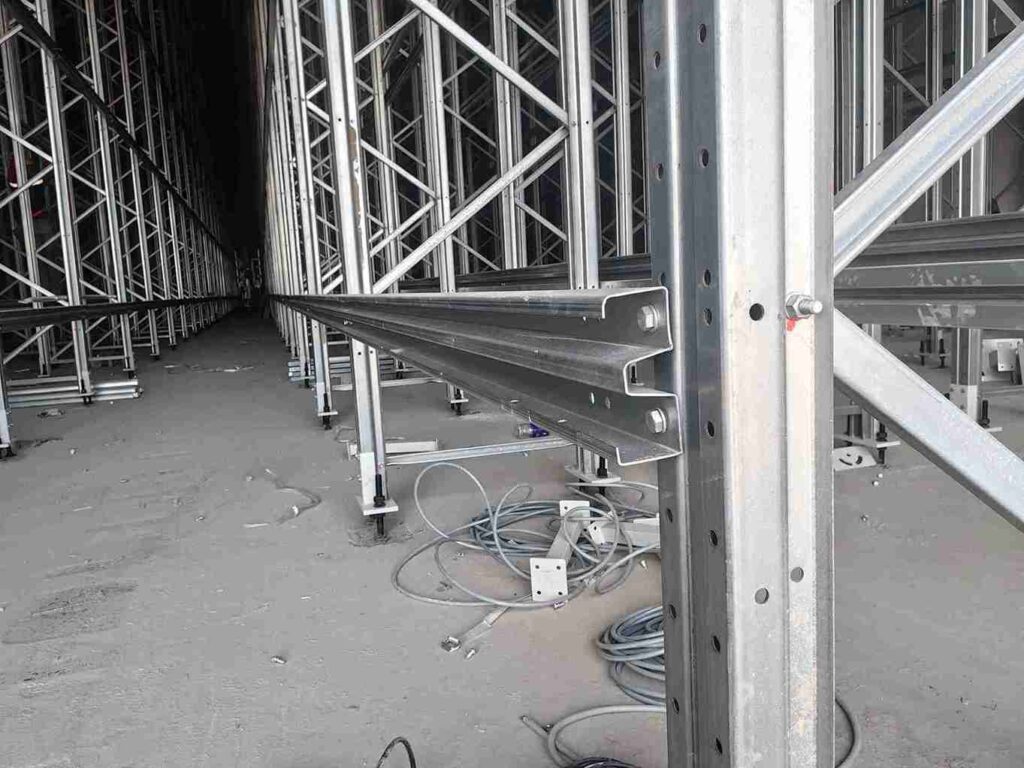
AS/RS Structural Demands: Automated Storage and Retrieval Systems place extraordinary demands on a racking structure. The guide rails for stacker cranes must be supported with near-absolute precision and unwavering rigidity over decades of operation. The engineering rigor behind Dexion pallet racking, especially in its high-bay selective pallet racking and drive-in racking configurations, provides the necessary stability and accuracy, minimizing maintenance downtime for the cranes.
Conveyor and Picking Module Integration: The racking uprights and beams often form the primary support structure for integrated conveyor systems, pick-to-light modules, and put walls. The structural analysis for a Dexion solution accounts for these additional dynamic and static loads from the outset, ensuring a cohesive and safe material handling ecosystem.
The Unassailable Economics of Dexion: A Total Cost of Ownership (TCO) Analysis
The initial investment in a harsh-environment-specified Dexion pallet racking system must be evaluated through the lens of Total Cost of Ownership, a calculation where it demonstrates decisive superiority.
Quantifying the Avoided Costs: The TCO Advantage
Asset Lifecycle Extension: A properly specified Dexion pallet racking system in a C5 environment can reliably target a 25-30 year service life with minimal maintenance. A generic alternative may require total replacement in 7-10 years, effectively tripling the lifecycle cost.
Elimination of Reactive Maintenance: The cycle of spot-painting corroded areas, welding cracked joints, or replacing individual corroded components—a constant drain on maintenance budgets and operational focus—is virtually eliminated.
Business Continuity Assurance: The financial impact of a single day of warehouse shutdown for emergency racking repairs can eclipse the entire cost of the racking system. The resilience of Dexion pallet racking insures against this catastrophic operational risk.
Insurance and Liability Optimization: Demonstrable investment in an engineered, certified storage solution from a reputable manufacturer like Dexion provides compelling evidence of risk mitigation to insurers, often leading to lower premiums and smoother claim processes.
The Value of Intangible Returns
Strategic Risk Mitigation: The peace of mind that comes from knowing the storage infrastructure is not a latent threat is invaluable for operational leadership.
Unconstrained Scalability: A Dexion racking system is a modular asset that can be confidently expanded, reconfigured, or integrated with new automation as business needs evolve, protecting the initial investment.
Brand and Compliance Assurance: It upholds commitments to customers, regulators, and stakeholders by ensuring a safe, compliant, and uninterrupted storage operation.
Regional Deep Dive: Tailoring Dexion Pallet Racking for Southeast Asia & Africa
A nuanced understanding of regional challenges informs the precise specification of Dexion pallet racking systems.
Southeast Asia: The Battle Against Moisture and Salt
For a frozen seafood export facility in Thailand or an electronics distribution center in a Philippine special economic zone, the specification would typically center on Dexion ZyncGuard™ Plus. The engineering would also focus on promoting airflow within the racking bays to reduce stagnant humidity pockets. Layouts might be adjusted to minimize exposure to direct rain ingress from dock doors. Furthermore, the installation schedule would be meticulously planned around monsoon seasons, and post-installation guidance would include simple rinse-down procedures after extreme salt-laden wind events.
Africa: Durability Against Particulate and Variable Infrastructure
For a copper mining equipment warehouse in Zambia or a continental distribution hub for fast-moving consumer goods (FMCG) in Nigeria, the solution might blend Dexion ArmourKote™ Fortis for abrasion resistance with strategic design choices. This could include specifying solid steel decking instead of wire mesh to contain dust and facilitate cleaning, or designing for higher point-load capacities to account for less-than-ideal floor conditions. The robustness of the Dexion pallet racking system provides a stable, reliable infrastructure in contexts where other building services may be less predictable.
Initiating Your Partnership for Resilience
Securing an unbreakable storage foundation begins with a dialogue grounded in technical expertise and a shared commitment to operational excellence. The process is collaborative and transparent, starting with a detailed exploration of your specific environmental and operational challenges, leading to a comprehensive proposal, and culminating in a certified installation and ongoing support partnership. This ensures your investment in Dexion pallet racking delivers maximum safety, efficiency, and value for its entire multi-decade lifespan.
Conclusion
In the severe operational theatres of emerging global markets, warehouse storage is critical infrastructure upon which supply chain integrity depends. Specifying this infrastructure based on initial purchase price is a high-risk strategy that transfers immense hidden costs and liabilities into the future. True operational economy and long-term savings are engineered through superior materials, scientifically validated protection systems, and precision execution.
By selecting a Dexion pallet racking solution engineered for harsh environments, operations managers and business leaders are making a definitive strategic choice. They are choosing to eradicate a key point of vulnerability, to safeguard human and capital assets, and to construct a scalable, automation-ready platform for sustainable growth. It is an investment not just in storage, but in the fundamental resilience and future-readiness of the entire logistics operation.
Frequently Asked Questions (FAQs)
1. How does the actual procurement and delivery process work for a custom-coated Dexion pallet racking system to a remote location in Africa or an island in Southeast Asia?
The process is managed through a dedicated project management office. Following specification, all components for the Dexion pallet racking system are fabricated and coated in controlled factory conditions. They are then meticulously packed with protective materials and desiccants in containerized shipments to prevent transit corrosion and damage. Detailed packing lists, assembly drawings, and installation manuals are provided digitally and physically. The project manager coordinates with local logistics partners and your team to ensure smooth customs clearance and timely delivery to site, synchronized with the arrival of our installation supervisors.
2. We have specific sustainability (ESG) goals. How does choosing a long-life Dexion system contribute, and are the coatings environmentally responsible?
A long-life Dexion pallet racking system is inherently sustainable. By lasting 3-4 times longer than inferior systems, it drastically reduces the resource consumption, manufacturing energy, and transportation carbon emissions associated with frequent replacements. Furthermore, Dexion’s advanced powder coating systems are solvent-free, producing negligible VOC emissions during application. Many coatings are also compliant with RoHS and REACH regulations. The hot-dip galvanization process is also a closed-loop system. Investing in durability is one of the most effective ESG decisions a logistics operation can make.
3. Can your engineering team provide calculations and documentation to satisfy our local building code or corporate safety audit requirements?
Absolutely. As part of the engineered Dexion racking solution, we provide a comprehensive structural engineering package. This includes signed and stamped calculations (by locally certified engineers where required) detailing load capacities, seismic/wind force resistance, and foundation requirements. This documentation, along with the material certifications and coating specifications, is essential for satisfying stringent corporate safety standards (like those in mining or oil & gas) and for facilitating smooth approvals from local authorities.
4. What happens if our operational needs change and we need to modify the racking layout after a few years? Is the coating system compromisable during reconfiguration?
The Dexion pallet racking system is designed for adjustability and reconfiguration. Beams can be safely relocated to different upright frames using standard tools. The high-quality coating systems, especially galvanization, are extremely resilient to this kind of handling. Minor scratches to a galvanized layer are protected by the cathodic action of the surrounding zinc. For powder-coated systems, touch-up kits matching the original color can be provided for any significant abrasions at new connection points, though these are rarely structurally consequential. This modularity protects your long-term investment.
5. Beyond the physical product, what kind of training or knowledge transfer do you provide to our maintenance team for ongoing care of the system?
We believe in empowering our clients. Upon project completion, we provide an Operational Resilience Dossier that includes easy-to-follow guides: a visual inspection checklist for monthly/quarterly reviews, guidelines for identifying early signs of coating wear or impact damage, and procedures for reporting findings. We can also conduct a dedicated training session for your facilities team, covering safe loading practices, the importance of reporting impacts from MHE, and basic care instructions tailored to your specific environment, ensuring you maximize the lifespan of your Dexion pallet racking investment.
If you require perfect CAD drawings and quotes for warehouse racking, please contact us. We can provide you with free warehouse racking planning and design services and quotes. Our email address is: jili@geelyracks.com