📐 "First 50 Enterprise Queries Get Custom 3D Warehouse Design" Plan


The Unseen Guardians: How Precision-Engineered Pallet Rack Load Signs Form the Foundation of Modern Warehouse Safety and Efficiency
In the dynamic, high-stakes world of logistics and warehousing, where automation accelerates and inventory turns at a blinding pace, a silent sentinel stands as the first and most critical line of defense. These are not the gleaming AGVs or robotic arms, but the meticulously crafted, information-dense pallet rack load signs. Far more than simple stickers or regulatory afterthoughts, professionally engineered pallet rack load signs represent a fundamental pillar of operational intelligence, risk management, and strategic planning.
For any facility—from a bustling e-commerce fulfillment center in Jakarta to a bulk material storage yard in Johannesburg or a cold storage facility in Santiago—the implementation of a comprehensive, custom pallet rack load sign system is the non-negotiable cornerstone upon which safety, efficiency, and scalability are built. This definitive exploration delves into the multifaceted role of these essential identifiers, illustrating why generic solutions fail and how a scientifically developed pallet rack load sign program delivers measurable return on investment, prevents catastrophic loss, and enables the seamless integration of advanced automation.
Decoding the Critical Function: What Pallet Rack Load Signs Truly Communicate
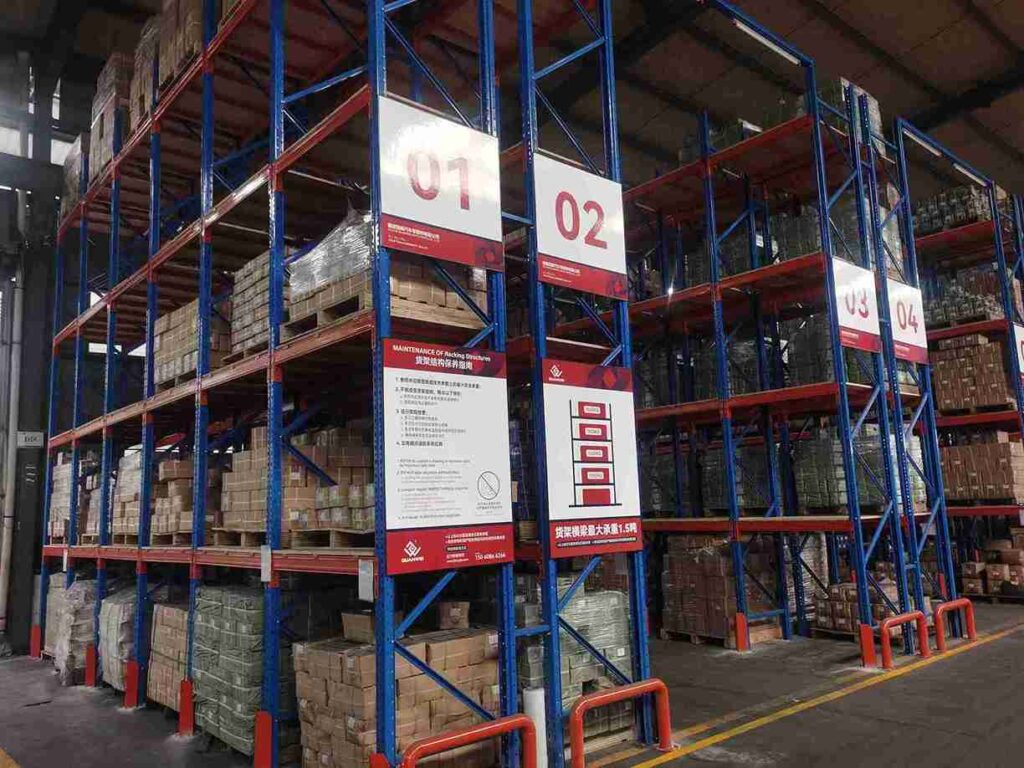
A pallet rack load sign serves as the permanent, on-site repository of vital structural data. Its primary function is to communicate, with absolute clarity and authority, the maximum allowable weight capacity for a specific rack component—typically a beam level or a complete bay. However, its role extends far beyond this basic number. An expert-level pallet rack load sign system conveys a complete safety narrative. It informs warehouse personnel of the precise configuration it relates to, the date it was certified, and any specific loading instructions.
It acts as a constant visual reminder of the engineered limits of the storage structure. In environments where turnover is high or multiple languages are spoken, the symbology and layout of these pallet rack load signs become a universal language, preventing potentially disastrous misinterpretations. The absence of a clear, durable, and accurate pallet rack load sign forces operators into a dangerous game of assumption, where a single misjudgment can trigger a cascade of structural failure.
The Anatomy of Failure: Consequences of Neglecting Professional Load Signage
The cost of inadequate or absent pallet rack load signs is quantifiable and severe, impacting every facet of an operation. The risks are not hypothetical; they are daily realities in facilities that underestimate this critical component.
Structural Catastrophe and Inventory Apocalypse: The most dire consequence is a progressive or sudden racking collapse. Overloading a beam, often due to an unreadable or missing pallet rack load sign, induces metal fatigue and deformation. This can precipitate a domino-effect failure, where one compromised bay brings down dozens, burying inventory under tons of twisted steel. The financial toll encompasses total inventory loss, massive equipment damage, facility repair costs, and potentially irreparable business interruption. A single such event can shutter a small-to-medium enterprise permanently.
The Silent Profit Drain: Chronic Product and Asset Damage: Even without a full collapse, the insidious effects of improper loading persist. Beams bent under consistent over-stress cause pallets to tilt and products to spill. This results in consistent, often unaccounted-for, product damage—a direct hit to profitability. Furthermore, the racking itself, a significant capital asset, suffers accelerated degradation, forcing premature replacement long before its intended lifecycle.
Human Toll and Safety Liability: Warehouse environments are inherently kinetic. Forklift operators, pickers, and other personnel work in close proximity to storage structures. A compromised rack bay is a lethal hazard. The lack of a definitive pallet rack load sign places the burden of guesswork on these individuals, creating an unacceptable safety climate. The moral and legal liabilities following a serious injury or fatality linked to a racking incident are immeasurable.
Regulatory and Insurance Repercussions: Globally, occupational safety and health regulations, from the influential OSHA 1910.176(b) standard to local incarnations like India’s Factory Act or Brazil’s NR-11, explicitly mandate the clear marking of load capacities. Insurance providers are increasingly sophisticated in their risk assessments; the presence of a certified, systematic pallet rack load sign program is a key determinant in underwriting and a prerequisite for valid claims following an incident. Non-compliance can result in crippling fines, operational shutdowns, and voided insurance policies.
The Science of Effective Signage: Engineering Behind Every Durable Pallet Rack Load Sign
Creating an effective pallet rack load sign is an interdisciplinary exercise in materials science, structural engineering, and human factors design. It begins not with printing, but with calculation.
Foundational Data Acquisition: The information on a legitimate pallet rack load sign originates from one of two authoritative sources: the original manufacturer’s certified load tables or a professional structural assessment conducted by a qualified engineer. For older systems or modified racks, the latter is imperative. This assessment evaluates upright gauge, beam profile, connector type, decking specifications, and the condition of all components. The engineer then calculates the Safe Working Load (SWL), applying rigorous safety factors that account for dynamic loading (forklift impact), potential seismic activity (critical in regions like Central Asia or the Pacific Coast of Latin America), and environmental stresses.
Material Selection for Hostile Environments: The physical sign must be as robust as the data it carries. Off-the-shelf vinyl labels fade under the intense UV exposure common in the Middle East, degrade in the high-humidity climates of Southeast Asia and West Africa, or peel in the temperature fluctuations of arid and high-altitude regions. Industrial-grade solutions utilize:
Anodized Aluminum: Offers excellent corrosion resistance and durability for most general warehousing applications.
Stainless Steel: The premium choice for harsh environments like chemical storage, food processing, or coastal facilities with salt air exposure.
Engineering-Grade Polyester Laminates: These thick, multi-layered films provide exceptional resistance to abrasion, solvents, and moisture, often used in manufacturing and heavy industrial settings.
The adhesive backing is equally critical, formulated for permanent bonding to painted or galvanized surfaces without failure or residue.
Cognitive Design for Instant Comprehension: A superior pallet rack load sign is designed for split-second understanding. It employs a strict visual hierarchy: the MAXIMUM LOAD figure is displayed in the largest, boldest font. Supporting information—beam level, location ID, certification date—is presented in smaller, organized text. The use of universally recognized pictograms (weight symbols, pallet icons, hazard warnings) transcends language barriers, which is essential for workforces in diverse regions like the UAE, South Africa, or Malaysia. High-contrast color schemes (e.g., black on safety yellow, white on red) ensure visibility from a distance and in low-light conditions.
The Customization Imperative: Transforming Signs into a Strategic Operational Tool
A bespoke pallet rack load sign program elevates signage from a compliance item to a integrated management tool. Customization addresses the unique DNA of each warehouse.
Multilingual and Regional Compliance: A facility in Vietnam may require English, Vietnamese, and Korean text. A plant in Peru might need Spanish and Quechua. Custom pallet rack load signs are designed to accommodate this, ensuring comprehension across all levels of the workforce and alignment with local regulatory language requirements.
Color-Coding for Visual Management: Signs can be color-coded to instantly communicate operational rules. For example, blue signs could denote fast-moving goods zones, yellow for fragile items, and red for quarantine or hazardous material storage. This visual system streamlines put-away and picking processes, reducing errors and training time.
Integration with Digital Ecosystems: The most advanced pallet rack load sign systems incorporate scannable QR codes or barcodes. When scanned with a handheld device, this code can link directly to the warehouse management system (WMS), pulling up the exact engineering certificate for that bay, its current inventory, and its inspection history. This bridges the physical and digital worlds, creating a “digital twin” data point for each rack location.
Facilitating Automation Integration: For warehouses implementing AGVs, automated forklifts, or AS/RS, accurate load data is not optional—it is fundamental programming input. A custom pallet rack load sign provides the guaranteed, verified capacity for each storage location, enabling the safe and efficient programming of automated retrieval and storage cycles. The pallet rack load sign becomes a critical data node in the Internet of Things (IoT) architecture of a smart warehouse.
A Systematic Implementation Methodology: The Path from Audit to Assurance
Deploying a world-class pallet rack load sign system is a phased, meticulous process that guarantees accuracy and longevity.
Phase 1: Comprehensive Structural Audit: Certified inspectors conduct a thorough examination per FEM 10.2.02 or SEMA guidelines, documenting every instance of damage, misalignment, or modification. This audit creates the baseline condition report.
Phase 2: Authoritative Load Calculation & Certification: Using the audit findings and original specifications, structural engineers determine the verified SWL for every unique rack configuration. This step often involves differentiating between uniformly distributed loads and concentrated point loads.
Phase 3: Collaborative Design & Prototyping: Facility managers review digital proofs of the proposed pallet rack load signs, ensuring all operational needs (zoning, language, WMS integration) are met before manufacturing.
Phase 4: Precision Manufacturing: Signs are fabricated in a controlled environment using the specified durable materials and high-fidelity printing or etching technology.
Phase 5: Managed Installation & Documentation: Trained technicians install each pallet rack load sign at a consistent height and orientation. A master installation map is delivered, correlating every sign with its rack location and engineering certificate.
Phase 6: Training and Cultural Embedment: The system’s success hinges on user understanding. Formal training sessions educate all personnel on how to interpret the pallet rack load signs, report discrepancies, and incorporate them into daily safety protocols.
Quantifying the Return: The Tangible Economics of Professional Load Signage
Investing in a custom pallet rack load sign system generates a compelling and multi-faceted return on investment (ROI).
Risk Mitigation: The primary ROI is the avoidance of a single catastrophic collapse. The potential savings here—avoiding costs related to inventory loss, business interruption, legal liability, and asset replacement—can reach seven or eight figures, dwarfing the investment in a proper sign system.
Operational Efficiency Gains: Clear, unambiguous pallet rack load signs eliminate time wasted on verifying capacities or searching for correct locations. They reduce loading errors and associated product damage, directly improving pick rates and order accuracy.
Asset Lifecycle Extension: By ensuring racks are never overloaded, the system prevents cumulative stress and metal fatigue, extending the useful life of the racking investment by years.
Insurance and Compliance Benefits: Demonstrable safety management through a certified pallet rack load sign program can lead to reduced insurance premiums and provides unequivocal evidence of due diligence to regulators, preventing fines and operational stoppages.
Global Adaptation: Tailoring Pallet Rack Load Signs for Regional Challenges
Expert providers design pallet rack load sign solutions with regional exigencies in mind.
Southeast Asia & Tropical Climates: Here, pallet rack load signs must be constructed from materials immune to relentless humidity and mold, such as specific laminates or coated metals, with adhesives rated for tropical adhesion.
The Middle East & Arid Zones: Extreme heat and abrasive dust storms demand pallet rack load signs made from thermally stable materials like stainless steel or specially coated aluminum that resist fading and sand abrasion.
Africa’s Diversifying Markets: Solutions must be adaptable, often blending international standards (ISO, FEM) with evolving local regulations, and include robust educational support to foster a ingrained safety culture.
Latin America’s Seismic and Industrial Variability: Load calculations for pallet rack load signs in countries like Chile or Mexico must integrate seismic coefficients. Simultaneously, signs for mining, agriculture, or automotive sectors require specific material resistances to oils, acids, or fertilizers.
The Future Frontier: Smart Load Signs and the IoT Warehouse
The evolution of the pallet rack load sign is toward intelligence. The next generation involves embedding micro-sensors within or beside the sign. These “smart” pallet rack load signs could monitor real-time load weight, beam deflection, or even impacts, transmitting data wirelessly to a facility management dashboard. This transforms the static pallet rack load sign into an active, predictive component of a warehouse’s health monitoring system, enabling preventative maintenance and taking safety to a proactive, data-driven level.
Conclusion: The Indispensable Keystone of Warehouse Integrity
In the relentless pursuit of logistical optimization, the importance of foundational elements cannot be overstated. Pallet rack load signs are precisely that—a foundational element of operational integrity. They are the critical interface between the engineered capacity of storage structures and the human and automated systems that interact with them. A generic, off-the-shelf pallet rack load sign represents a significant vulnerability, while a custom-engineered, professionally implemented pallet rack load sign system is a strategic asset.
It is a direct investment in human safety, asset protection, regulatory compliance, and operational excellence. For any business operating storage facilities across the dynamic markets of Southeast Asia, the Middle East, Africa, or Latin America, prioritizing a comprehensive pallet rack load sign program is the first, and most intelligent, step toward building a resilient, efficient, and future-ready logistics operation. The true cost is not in the implementation of these vital signs, but in the profound risk of their absence.
Frequently Asked Questions (FAQs)
Q1: We are adding new, heavier products to our inventory. Can our existing pallet rack load signs simply be updated with a new weight sticker?
Absolutely not. A pallet rack load sign displays a certified Safe Working Load based on the specific structural configuration and condition of the rack at the time of assessment. Changing the product weight profile necessitates a fresh professional evaluation. An engineer must determine if the existing structure can safely handle the new loads. Simply placing a new sticker over the old pallet rack load sign is dangerously misleading and voids any prior certification, potentially invalidating insurance coverage.
2: How does the design of a pallet rack load sign differ for drive-in racking compared to standard selective pallet racking?
The information architecture is fundamentally different. A selective rack pallet rack load sign typically indicates a per-beam capacity. For drive-in racking, the critical metric is the total lane load—the maximum aggregate weight for all pallets stored in a single deep lane. Furthermore, the pallet rack load sign for drive-in systems often must include loading sequence instructions (e.g., “Load from bottom to top, back to front”) to maintain structural stability, making its design more complex and tailored.
3: Are there specific regulations governing the placement (height, orientation) of pallet rack load signs on the uprights?
While specific millimeter-precise regulations are rare, best practice standards dictate clear principles. A pallet rack load sign must be placed at a consistent, easily visible height—typically at eye level for a forklift operator (approx. 1.5 to 1.8 meters from the floor). It should be affixed to the upright face, not on a beam, and be oriented for clear sightlines from the primary aisle of approach. Consistency in placement is key to ensuring operators can find and read the pallet rack load sign quickly and reliably.
4: Can a pallet rack load sign system be integrated with our planned warehouse expansion in two years?
A professionally designed pallet rack load sign system is inherently scalable. The master documentation and design templates created for the initial installation serve as the blueprint for expansion. When new racking is added, the same rigorous process—audit, calculation, manufacturing to the same design standard—is followed, ensuring seamless integration. The pallet rack load sign system becomes a living part of the facility’s safety documentation.
5: What is the recommended process for verifying that the information on our installed pallet rack load signs remains correct after a minor forklift impact?
Any impact, even minor, necessitates immediate action. The affected bay should be immediately quarantined—a temporary “DO NOT USE” tag should be placed over the existing pallet rack load sign. A qualified inspector must then assess the damage. If repairs are made (e.g., straightening a beam or replacing a connector), a new structural assessment and load calculation are required before a new, certified pallet rack load sign can be issued. The old sign must be removed and replaced, never merely patched over.
If you require perfect CAD drawings and quotes for warehouse racking, please contact us. We can provide you with free warehouse racking planning and design services and quotes. Our email address is: jili@geelyracks.com