📐 "First 50 Enterprise Queries Get Custom 3D Warehouse Design" Plan















Handle Heavier Loads Safely: The Engineering Mastery Behind Custom Heavy-Duty Beam Racking for Demanding Environments
In the relentless ecosystem of global logistics and industrial storage, the structural integrity of storage systems transcends mere organization—it becomes the fundamental determinant of operational safety, throughput efficiency, and long-term economic viability. Facilities managing substantial weights, operating under aggressive schedules, and enduring challenging conditions discover a universal truth: standard pallet racking constitutes the most vulnerable link in their supply chain. This definitive resource examines the singular, engineered solution engineered for such challenges: Custom Heavy-Duty Beam Racking.
The discourse explores how a precision-engineered, custom-fabricated racking system represents a strategic capital investment rather than a simple procurement. It functions as the foundational element that empowers warehouses to handle heavier loads safely, optimize cubic space utilization, and resist the punishing realities of the world’s most demanding environments, from Southeast Asia’s humid climates to the Middle East’s vast industrial complexes and Latin America’s bustling distribution centers. This analysis moves beyond the generic, catalog-driven approach, focusing instead on a structural solution tailored to the operational DNA of each unique facility.

The Critical Failure Points of Standard Racking in Industrial Realities
Industrial operations frequently encounter a predictable, costly narrative: a rapidly scaling enterprise installs standard, off-the-shelf racking, only to witness its premature failure under the weight of commercial success. These failures often manifest not as dramatic collapses but as progressive, expensive deteriorations.
Unveiling the True Economic Impact of Inadequate Racking
Forcing a standardized system beyond its engineered design parameters triggers a cascade of negative consequences. Observable symptoms include persistent beam deflection—a permanent, unsettling bowing that signals metal fatigue. This visual warning indicates underlying structural compromise, leading eventually to micro-fractures, connection point failures, and a radically shortened system lifespan. The financial damage extends beyond potential structural failure, embedding itself in continuous maintenance, premature system replacement, and costly operational interruptions. Most critically, it imposes an invisible safety tax. Each overstressed component represents a potential failure point, perpetually endangering personnel and inventory assets. Within any demanding environment, standard racking constitutes an unacceptable gamble with disproportionately high stakes.
Deconstructing Environmental Demands: Beyond Basic Storage
A demanding environment for storage systems encompasses any condition that accelerates material degradation, induces abnormal stress concentrations, or compromises structural resilience. These challenges rarely present in isolation.
Extreme Static and Dynamic Loading Profiles: This extends far beyond pallet weight to include impact forces from material handling equipment (particularly AGVs and unmanned forklifts that apply force with machined precision), vibrational energy from adjacent machinery, and stress from uneven load distributions caused by irregular inventory.
Corrosive and Climatic Assaults: Coastal installations confront salt-laden atmospheres. Cold storage facilities endure constant thermal cycling and aggressive chemical cleaning regimens. Tropical regions with high humidity accelerate oxidation processes. Each condition degrades protective coatings and attacks base metals, precipitating catastrophic strength reduction long before the racking’s theoretical service life concludes.
Unrelenting Operational Intensity: High-velocity distribution centers, particularly those integrated with automated sortation systems, subject their racking structures to near-continuous mechanical stress. This elevated activity frequency increases impact probability and connection fatigue, necessitating systems engineered with higher safety factors and demonstrably robust components.
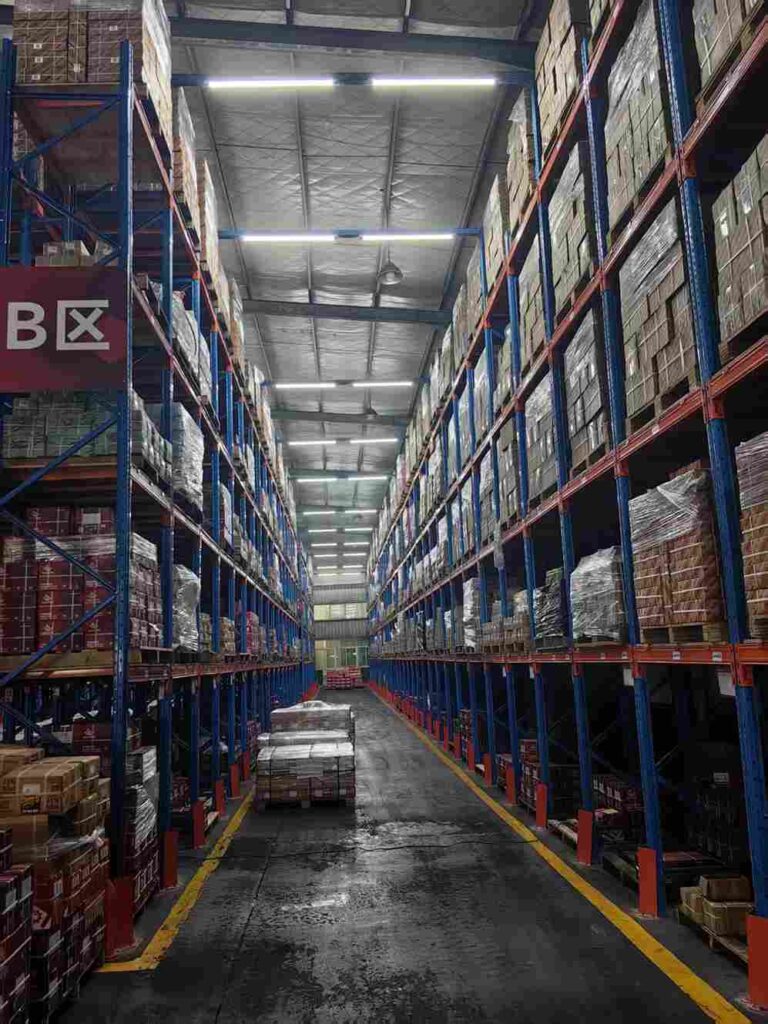
The Structural Philosophy of Uncompromising Custom Heavy-Duty Beam Racking
What fundamentally distinguishes Custom Heavy-Duty Beam Racking from conventional alternatives is a foundational engineering philosophy—every constituent element undergoes selection, specification, and fabrication for a precisely defined, challenging operational purpose.
Advanced Material Science in Steel Metallurgy
Providers of superior Custom Heavy-Duty Beam Racking utilize high-tensile steel, frequently exhibiting yield strengths of 50KSI or greater, rather than generic mild steel. This metallurgical characteristic enables the material to withstand substantially greater force before undergoing permanent deformation. The selection of specific steel grades represents a calculated engineering decision based on unique load requirements and environmental exposures, ensuring the final Custom Heavy-Duty Beam Racking installation doesn’t merely meet minimum standards but surpasses them with considerable safety margins.
Beam Engineering: The Core of Load-Bearing Performance
The beam functions as the primary load-bearing element, making its design the definitive arena for engineering excellence in Custom Heavy-Duty Beam Racking.
Step-Beam Versus Box-Beam Structural Analysis: While step-beams suffice for standard applications, genuine heavy-duty scenarios frequently necessitate box-beams (structurally termed tubular beams). These closed-section profiles deliver superior torsional rigidity and enhanced moment of inertia, providing exceptional resistance against twisting and bending deformations under extreme, asymmetrical loads.
Precision Fabrication and Weld Integrity: Beams for Custom Heavy-Duty Beam Racking undergo precision roll-forming ensuring consistent, high-strength profiles. Critical welds, particularly those securing end connectors, employ automated processes guaranteeing complete penetration and uniformity, thereby eliminating structural weak points.
The Primacy of Moment Capacity: Leading engineers of Custom Heavy-Duty Beam Racking specify and certify beams according to their moment capacity—a precise engineering quantification of bending resistance. This methodology provides clients with definitive, reliable data specifying exact weight capacities for each beam at unique span lengths within their Custom Heavy-Duty Beam Racking configuration.
Upright Frame Design: The Immovable Structural Foundation
If beams constitute the workhorses, the upright frames represent the immutable anchor. For genuine Custom Heavy-Duty Beam Racking, engineering focus centers on:
Column Structural Gauge and Thickness: Engineers specify thicker-gauge steel for upright columns, typically 10-gauge or heavier, contrasting sharply with the 12 or 14-gauge materials common in inferior systems.
Footplate Engineering and Load Distribution: Substantial, reinforced footplates dissipate immense compressive loads across broader concrete floor areas, preventing destructive point-loading and potential slab failure. This becomes critically important when integrating with AGV systems that demand perfectly level, stable flooring surfaces.
Connection Technology and Safety Locking Mechanisms
The connection points represent the critical nervous system of any racking structure. A single connector failure can initiate catastrophic progressive collapse. Superior Custom Heavy-Duty Beam Racking systems incorporate:
Patented Teardrop or Bolted Connection Systems: Engineers deploy robust connection designs ensuring secure, positive engagement. Many systems destined for seismic zones or high-impact environments utilize bolted connections for absolute, unwavering structural stability.
Redundant Safety Locking Protocols: Beyond primary connectors, integrated secondary safety locks, including clip-on beam locks or bolt-on safety clips, become non-negotiable in facilities utilizing automated equipment, delivering essential fail-safe protection against impact events.
The Bespoke Engineering Process: Tailoring Custom Heavy-Duty Beam Racking
The term “Custom” within Custom Heavy-Duty Beam Racking describes a rigorous, collaborative process, not a marketing slogan. It constitutes a partnered journey from initial concept to fully operational storage infrastructure.
Phase 1: The Exhaustive Site and Load Analysis
The engineering process for Custom Heavy-Duty Beam Racking commences with an intensive diagnostic analysis. Specialists don’t merely accept stated loads; they perform rigorous verification. This involves measuring pallet footprints, weighing actual unit loads, and analyzing load distribution characteristics. Teams execute comprehensive site surveys, evaluating floor flatness, structural column placements, overhead clearances, and potential seismic considerations. This collected dataset forms the non-negotiable foundation for the Custom Heavy-Duty Beam Racking design.
Phase 2: Sophisticated CAD Modeling and Computational Load Simulation
Leveraging audit-derived data, engineers generate detailed 3D models of the proposed Custom Heavy-Duty Beam Racking system using advanced Computer-Aided Design (CAD) platforms. The process advances further through Finite Element Analysis (FEA), simulating multi-directional stresses under varied load scenarios. This virtual prototyping identifies and mitigates potential failure points before manufacturing commences, guaranteeing the Custom Heavy-Duty Beam Racking system possesses inherent design resilience to handle heavier loads safely.
Phase 3: Holistic Integration with Automation and Material Flow
Custom Heavy-Duty Beam Racking never functions in isolation; it constitutes one component within a broader material handling ecosystem. The design process meticulously plans integration with Automated Storage and Retrieval Systems (AS/RS), AGV navigation pathways, and conveyor networks. Engineers guarantee perfect clearances for automated guided vehicles and ensure the Custom Heavy-Duty Beam Racking structure accommodates specific interface requirements for robotic shuttles and other automation machinery.
Specialized Engineering for Extreme Operational Environments
Certain operating conditions demand additional layers of specialized engineering for Custom Heavy-Duty Beam Racking.
Corrosion-Resistant Engineering for Aggressive Environments
For cold storage, chemical processing warehouses, or coastal installations, standard powder coating proves fundamentally inadequate. Advanced corrosion protection strategies for Custom Heavy-Duty Beam Racking include:
Hot-Dip Galvanizing: Total immersion of racking components in molten zinc creates a metallurgical bond delivering sacrificial protection, even if the surface becomes scratched—representing the paramount standard for harsh environments.
Epoxy-Based Powder Coating Systems: For moderately aggressive conditions, specialized epoxy powders provide exceptional resistance against moisture, chemicals, and physical abrasion, extending the service life of the Custom Heavy-Duty Beam Racking.
Seismic and High-Wind Zone Structural Engineering
In seismically active regions or hurricane-prone areas, the Custom Heavy-Duty Beam Racking must resist substantial lateral and uplift forces. Seismic designs incorporate specialized cross-bracing systems, enlarged base plates with increased anchor bolts, and comprehensive structural analysis ensuring compliance with stringent local building codes, including IBC and RMI guidelines.
The Total Cost of Ownership Analysis: Custom Heavy-Duty Beam Racking as Strategic Investment
While the initial capital outlay for a Custom Heavy-Duty Beam Racking system may exceed standard component assembly, the genuine cost requires evaluation across the equipment’s entire operational lifespan.
Elimination of Premature System Replacement: A Custom Heavy-Duty Beam Racking system engineered for specific loads delivers decades of reliable service, not years.
Maximized Operational Uptime and Minimized Maintenance: The robust design philosophy inherent in Custom Heavy-Duty Beam Racking drastically reduces repair frequency and adjustment needs, sustaining uninterrupted operational flow.
Enhanced Insurance and Liability Protection: A professionally engineered Custom Heavy-Duty Beam Racking system, accompanied by structural load certifications, can favorably influence insurance premiums and provide crucial liability protection.
Optimized Spatial Efficiency: By safely constructing higher storage elevations and utilizing deeper, stronger beams, facilities store greater inventory within identical footprints, deferring or eliminating expensive facility expansions.
Implementation in Action: A Custom Heavy-Duty Beam Racking Case Study
A prominent automotive parts distributor operating major Middle Eastern hubs confronted a critical operational crisis. Their standard racking exhibited visible deformation under engine blocks and transmission assemblies, while forklift impacts caused recurring damage. Repair-related downtime severely compromised their just-in-time delivery model.
The distributor commissioned a definitive Custom Heavy-Duty Beam Racking solution. The engineering audit confirmed consistent loads exceeding 3,000 kg per pallet location. The designed Custom Heavy-Duty Beam Racking system specified hot-dip galvanized, structural box-beams with moment capacities rated for 4,500 kg. It incorporated bolted connections and protective column guards. This Custom Heavy-Duty Beam Racking installation integrated seamlessly with their new unmanned forklift fleet, featuring precisely calibrated aisles and reinforced end-of-aisle protection.
The operational outcome demonstrated zero structural integrity issues across three years of continuous operation. The client achieved a 22% safe storage density increase while completely eliminating unplanned maintenance downtime. The Custom Heavy-Duty Beam Racking system transformed from passive storage to an active enabler of their automated logistics framework.

Conclusion: Engineering Safety, Efficiency, and Operational Confidence
Within the demanding sphere of modern industrial logistics, storage represents a dynamic, integral process. The racking system constitutes critical industrial infrastructure, and compromising its quality or suitability presents an unacceptable business risk. Selecting a Custom Heavy-Duty Beam Racking system represents a definitive corporate declaration that safety, operational efficiency, and long-term value constitute paramount priorities. It remains the proven methodology to conclusively handle heavier loads safely while constructing a resilient, future-proof operation capable of excelling within any demanding environment. Corporations should not adapt their business processes to the limitations of their storage systems. The strategic imperative involves engineering the Custom Heavy-Duty Beam Racking to power and facilitate sustainable business growth.
Frequently Asked Questions About Custom Heavy-Duty Beam Racking
1. What constitutes the typical project timeline for custom-designed and manufactured heavy-duty racking systems?
Project timelines vary based on complexity and scale, typically spanning 6 to 12 weeks. This encompasses detailed engineering, material procurement, custom fabrication, and protective surface treatment. Expedited schedules often compromise the essential engineering phase, hence thorough design processes are prioritized to ensure long-term safety and performance for Custom Heavy-Duty Beam Racking.
2. How does the integration process function with existing or planned Automated Guided Vehicles (AGVs)?
Integration forms a core component of the design audit for Custom Heavy-Duty Beam Racking. Engineers map precise AGV pathways, turning radii, and lift heights to develop the racking layout. This includes specifying exact aisle widths, incorporating reinforced column guards at high-impact probability points, and ensuring racking interfaces align with robotic picking mechanisms. Detailed layout drawings are frequently supplied for automation software integration.
3. Is upgrading or reinforcing existing racking to heavy-duty standards feasible, or does it mandate complete replacement?
While minor capacity enhancements through reinforcement are occasionally possible, a substantive transition to genuine heavy-duty capacity almost invariably necessitates complete system replacement. Existing racking subjected to overloading may harbor invisible fatigue damage. Furthermore, upright frames possess defined capacity limits; upgrading beams alone creates structural imbalance and does not represent a safe, engineered **Custom Heavy-Duty Beam Racking** solution.
4. What specific certifications and load documentation accompany a professional heavy-duty beam racking system?
A comprehensive certification package for **Custom Heavy-Duty Beam Racking** includes professional engineer-stamped drawings (where legally mandated), Load Application and Racking Configuration (LARC) documents, and technical manuals detailing certified moment capacities for all beams and the complete system. This documentation proves vital for safety audits, insurance compliance, and operational training protocols.
5. How do installers address unique challenges when implementing heavy-duty racking within a live, operational warehouse environment?
Project teams develop phased installation plans for Custom Heavy-Duty Beam Racking designed to minimize operational disruption. This involves strategic sequencing to maintain operational areas, scheduling work during off-peak periods, and establishing stringent safety perimeters. Project managers collaborate directly with client logistics teams to schedule projects around peak seasons, ensuring smooth transition and minimal throughput impact during Custom Heavy-Duty Beam Racking implementation.
Welcome to contact us, if you need warehouse rack CAD drawings. We can provide you with warehouse rack planning and design for free. Our email address is: jili@geelyracks.com