📐 "أول 50 استفسار مؤسسي يحصل على تصميم مستودع ثلاثي الأبعاد مخصص" الخطة















The global warehousing sector is undergoing a seismic shift. With climate deadlines looming and consumer demand for eco-friendly practices at an all-time high, the 2025 sustainability guidelines for warehousing are no longer aspirational—they’re a business imperative. This guide dives into actionable strategies, backed by real-world case studies and regulatory insights, to help warehouses slash emissions, cut costs, and lead the charge toward a greener supply chain.
H1: Why 2025 is the Make-or-Break Year for Warehouses
The Triple Pressure: Climate, Consumers, and Compliance
In 2023 alone, the warehousing industry contributed 8% of global logistics-related emissions—a figure regulators aim to halve by 2030. But the push isn’t just top-down. A 2024 Deloitte survey found that 67% of B2B buyers now prioritize suppliers with verifiable sustainability credentials. Meanwhile, mandates like the EU’s Corporate Sustainability Reporting Directive (CSRD) require warehouses to disclose Scope 3 emissions (think transportation and waste) starting in 2025.
Industry Insight:
Take DHL’s flagship warehouse in Germany. By integrating solar panels and AI-driven HVAC systems, they reduced energy costs by **€220,000 annually** while achieving a 92% recycling rate. Their playbook? Start small, scale fast, and embed sustainability into every operational layer.
H1: Energy Efficiency: Beyond Solar Panels
H2: Renewable Energy Integration: What Works (and What Doesn’t)
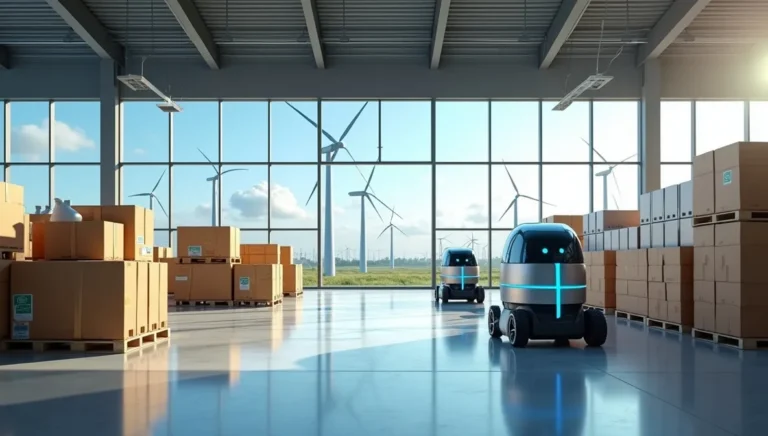
While rooftop solar dominates headlines, warehouses in cloudy regions like the UK are turning to wind-powered microgrids. For example, Amazon’s Manchester facility now sources 40% of its energy from onsite wind turbines, paired with Tesla Megapack batteries for nighttime operations.
H3: The Hidden Costs of Solar: A Reality Check
Solar isn’t a one-size-fits-all solution. Upfront installation costs can exceed 0 upfront.
Pro Tip:
Use tools like the National Renewable Energy Laboratory’s (NREL) PVWatts Calculator to estimate solar ROI based on your location and energy needs.
H1: Waste Reduction: From Landfill to Profit
H2: Case Study: IKEA’s Zero-Waste Warehouse in Poland
IKEA’s Warsaw facility achieved zero waste to landfill in 2023 by:
- Repurposing damaged wooden pallets into retail display units.
- Partnering with local farms to compost food packaging waste.
- Installing AI-powered sorting robots from AMP Robotics, which increased recycling accuracy to 98%.
H3: How to Negotiate with Recycling Vendors
Most warehouses overpay for recycling services. Demand transparency:
- Require vendors to provide monthly contamination reports (aim for <5%).
- Bundle services (e.g., cardboard + plastic) for volume discounts.
Authority Link:
Learn best practices from the Environmental Protection Agency’s (EPA) WasteWise Program.
H1: Building Design: Retrofits vs. New Construction
H2: Retrofitting a 1990s Warehouse: A Step-by-Step Guide
Older facilities can still hit 2025 targets. Prologis’ retrofit of a 1995 California warehouse included:
- Spray foam insulation (cut HVAC costs by 35%).
- Motion-activated LED lights with daylight sensors.
- Cool roof coating to reflect 80% of sunlight, reducing AC load.
Cost Breakdown:
| Upgrade | Cost (per sq. ft.) | Payback Period |
|---|---|---|
| LED Lighting | $2.50 | 2.1 years |
| Insulation | $1.80 | 3.4 years |
Industry Resource:
Download the U.S. Green Building Council’s (USGBC) LEED Retrofit Guide.
H1: Automation: Where Robotics Meets Sustainability
H2: Why AGVs Are Overrated (and What to Use Instead)
While autonomous guided vehicles (AGVs) dominate conversations, autonomous mobile robots (AMRs) like Locus Robotics’ units consume 60% less energy and adapt to layout changes without costly infrastructure upgrades.
H3: The ROI of Predictive Maintenance
Unplanned downtime costs warehouses **50,000 per hour**. Tools like Siemens’ MindSphere predict equipment failures 7 days in advance, reducing energy waste from idling machinery.
Case Study:
XPO Logistics cut energy use by 18% after deploying Honeywell’s AI-powered HVAC optimization across 12 warehouses.
H1: Water Conservation: Lessons from Drought-Stricken Regions
H2: How a Texas Warehouse Saved 12 Million Gallons Annually
Facing recurring droughts, a Dallas-based 3PL provider implemented:
- Greywater recycling for truck wash bays (saving 5M gallons/year).
- Smart irrigation with soil moisture sensors for onsite green spaces.
- Leak detection drones that patrol pipelines nightly.
Tool Recommendation:
Track water usage in real time with EcoBot’s IoT Water Management Platform.
H1: Transportation: Tackling the “Last Mile” Dilemma
H2: Why Your EV Charging Strategy is Flawed
Most warehouses install Level 2 chargers (7–19 kW), but DC fast chargers (50–350 kW) future-proof operations for heavy-duty EVs. ChargePoint’s analysis shows fast chargers reduce idle time by 70%, crucial for high-volume hubs.
Regulatory Alert:
The California Air Resources Board (CARB) now mandates EV charging stations for warehouses over 100,000 sq. ft.—a policy likely to spread nationwide.
H1: Workforce Training: Bridging the Skills Gap
H2: Certifications That Actually Matter
Forget generic “green” training. Target programs like:
- ISM’s Sustainable Warehousing Certification (covers circular logistics, ISO 14001).
- ASCM’s Supply Chain Sustainability Certificate (focuses on Scope 3 emissions).
Internal Link:
Explore our guide on **How to Implement ISO 14001 in 90 Days**.
H1: Compliance: Navigating the 2025 Regulatory Maze
H2: The CSRD Checklist for U.S. Warehouses
Even non-EU warehouses must comply if they serve European clients. Prepare to report:
- Emissions data (verified by third parties like SGS).
- Transition plans to phase out fossil fuel vehicles.
- Risk assessments for climate-related disruptions.
Authority Link:
Access the European Commission’s CSRD Implementation Guide.
H1: Conclusion: The Cost of Inaction
Delaying sustainability upgrades isn’t just risky—it’s expensive. Fines under the EU’s CSRD can hit 4% of global revenue, while energy-efficient warehouses report 15–25% lower operating costs within 3 years. The roadmap is clear: invest now, or pay far more later.
الأسئلة الشائعة
- How do I calculate ROI for warehouse solar panels?
Use NREL’s **PVWatts Calculator** and factor in local incentives. - What’s the cheapest way to start a recycling program?
Partner with **Rubicon’s Marketplace** for competitive vendor bids. - Are drones practical for small warehouses?
Yes—affordable models like the DJI Dock automate inventory checks for under $10,000. - How to handle Scope 3 emissions from subcontractors?
Include sustainability clauses in contracts and audit partners via **EcoVadis**. - What’s the first step toward LEED certification?
Conduct a **LEED Gap Analysis** and prioritize low-cost credits like water-efficient landscaping.
مرحباً بكم في الاتصال بنا, إذا كنت بحاجة إلى رسومات CAD لرفوف المستودعات. يمكننا تزويدك بتخطيط وتصميم رفوف المستودعات مجانًا. عنوان بريدنا الإلكتروني هو: jili@geelyracks.com