📐 "Les 50 premières requêtes d'entreprise bénéficient d'une conception personnalisée de l'entrepôt 3D" Plan















The global warehousing sector is undergoing a seismic shift. With climate deadlines looming and consumer demand for eco-friendly practices at an all-time high, the 2025 sustainability guidelines for warehousing are no longer aspirational—they’re a business imperative. This guide dives into actionable strategies, backed by real-world case studies and regulatory insights, to help warehouses slash emissions, cut costs, and lead the charge toward a greener supply chain.
H1: Why 2025 is the Make-or-Break Year for Warehouses
The Triple Pressure: Climate, Consumers, and Compliance
In 2023 alone, the warehousing industry contributed 8% of global logistics-related emissions—a figure regulators aim to halve by 2030. But the push isn’t just top-down. A 2024 Deloitte survey found that 67% of B2B buyers now prioritize suppliers with verifiable sustainability credentials. Meanwhile, mandates like the EU’s Corporate Sustainability Reporting Directive (CSRD) require warehouses to disclose Scope 3 emissions (think transportation and waste) starting in 2025.
Industry Insight:
Take DHL’s flagship warehouse in Germany. By integrating solar panels and AI-driven HVAC systems, they reduced energy costs by **€220,000 annually** while achieving a 92% recycling rate. Their playbook? Start small, scale fast, and embed sustainability into every operational layer.
H1: Energy Efficiency: Beyond Solar Panels
H2: Renewable Energy Integration: What Works (and What Doesn’t)
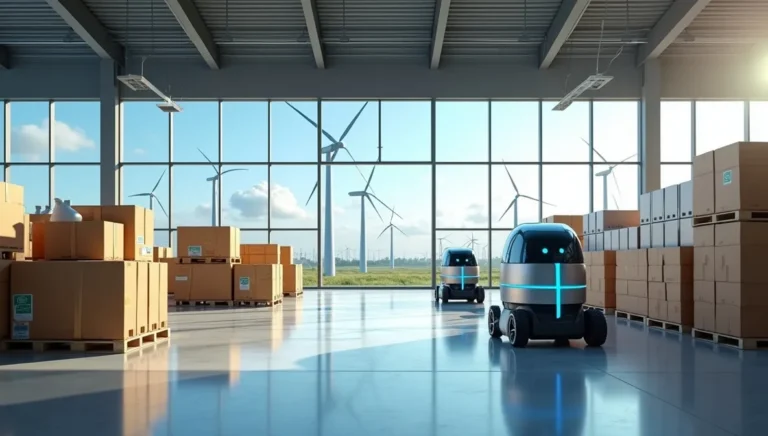
While rooftop solar dominates headlines, warehouses in cloudy regions like the UK are turning to wind-powered microgrids. For example, Amazon’s Manchester facility now sources 40% of its energy from onsite wind turbines, paired with Tesla Megapack batteries for nighttime operations.
H3: The Hidden Costs of Solar: A Reality Check
Solar isn’t a one-size-fits-all solution. Upfront installation costs can exceed 0 upfront.
Pro Tip:
Use tools like the National Renewable Energy Laboratory’s (NREL) PVWatts Calculator to estimate solar ROI based on your location and energy needs.
H1: Waste Reduction: From Landfill to Profit
H2: Case Study: IKEA’s Zero-Waste Warehouse in Poland
IKEA’s Warsaw facility achieved zero waste to landfill in 2023 by:
- Repurposing damaged wooden pallets into retail display units.
- Partnering with local farms to compost food packaging waste.
- Installing AI-powered sorting robots from AMP Robotics, which increased recycling accuracy to 98%.
H3: How to Negotiate with Recycling Vendors
Most warehouses overpay for recycling services. Demand transparency:
- Require vendors to provide monthly contamination reports (aim for <5%).
- Bundle services (e.g., cardboard + plastic) for volume discounts.
Authority Link:
Learn best practices from the Environmental Protection Agency’s (EPA) WasteWise Program.
H1: Building Design: Retrofits vs. New Construction
H2: Retrofitting a 1990s Warehouse: A Step-by-Step Guide
Older facilities can still hit 2025 targets. Prologis’ retrofit of a 1995 California warehouse included:
- Spray foam insulation (cut HVAC costs by 35%).
- Motion-activated LED lights with daylight sensors.
- Cool roof coating to reflect 80% of sunlight, reducing AC load.
Cost Breakdown:
| Upgrade | Cost (per sq. ft.) | Payback Period |
|---|---|---|
| LED Lighting | $2.50 | 2.1 years |
| Insulation | $1.80 | 3.4 years |
Industry Resource:
Download the U.S. Green Building Council’s (USGBC) LEED Retrofit Guide.
H1: Automation: Where Robotics Meets Sustainability
H2: Why AGVs Are Overrated (and What to Use Instead)
While autonomous guided vehicles (AGVs) dominate conversations, les robots mobiles autonomes (AMR) like Locus Robotics’ units consume 60% less energy and adapt to layout changes without costly infrastructure upgrades.
H3: The ROI of Predictive Maintenance
Unplanned downtime costs warehouses **50,000 per hour**. Tools like Siemens’ MindSphere predict equipment failures 7 days in advance, reducing energy waste from idling machinery.
Case Study:
XPO Logistics cut energy use by 18% after deploying Honeywell’s AI-powered HVAC optimization across 12 warehouses.
H1: Water Conservation: Lessons from Drought-Stricken Regions
H2: How a Texas Warehouse Saved 12 Million Gallons Annually
Facing recurring droughts, a Dallas-based 3PL provider implemented:
- Greywater recycling for truck wash bays (saving 5M gallons/year).
- Smart irrigation with soil moisture sensors for onsite green spaces.
- Leak detection drones that patrol pipelines nightly.
Tool Recommendation:
Track water usage in real time with EcoBot’s IoT Water Management Platform.
H1: Transportation: Tackling the “Last Mile” Dilemma
H2: Why Your EV Charging Strategy is Flawed
Most warehouses install Level 2 chargers (7–19 kW), but DC fast chargers (50–350 kW) future-proof operations for heavy-duty EVs. ChargePoint’s analysis shows fast chargers reduce idle time by 70%, crucial for high-volume hubs.
Regulatory Alert:
LesCalifornia Air Resources Board (CARB) now mandates EV charging stations for warehouses over 100,000 sq. ft.—a policy likely to spread nationwide.
H1: Workforce Training: Bridging the Skills Gap
H2: Certifications That Actually Matter
Forget generic “green” training. Target programs like:
- ISM’s Sustainable Warehousing Certification (covers circular logistics, ISO 14001).
- ASCM’s Supply Chain Sustainability Certificate (focuses on Scope 3 emissions).
Internal Link:
Explore our guide on **How to Implement ISO 14001 in 90 Days**.
H1: Compliance: Navigating the 2025 Regulatory Maze
H2: The CSRD Checklist for U.S. Warehouses
Even non-EU warehouses must comply if they serve European clients. Prepare to report:
- Emissions data (verified by third parties like SGS).
- Transition plans to phase out fossil fuel vehicles.
- Risk assessments for climate-related disruptions.
Authority Link:
Access the European Commission’s CSRD Implementation Guide.
H1: Conclusion: The Cost of Inaction
Delaying sustainability upgrades isn’t just risky—it’s expensive. Fines under the EU’s CSRD can hit 4% of global revenue, while energy-efficient warehouses report 15–25% lower operating costs within 3 years. The roadmap is clear: invest now, or pay far more later.
FAQ
- How do I calculate ROI for warehouse solar panels?
Use NREL’s **PVWatts Calculator** and factor in local incentives. - What’s the cheapest way to start a recycling program?
Partner with **Rubicon’s Marketplace** for competitive vendor bids. - Are drones practical for small warehouses?
Yes—affordable models like the DJI Dock automate inventory checks for under $10,000. - How to handle Scope 3 emissions from subcontractors?
Include sustainability clauses in contracts and audit partners via **EcoVadis**. - What’s the first step toward LEED certification?
Conduct a **LEED Gap Analysis** and prioritize low-cost credits like water-efficient landscaping.
Nous vous invitons à nous contacter, Si vous avez besoin de dessins CAO pour des rayonnages d'entrepôt, nous pouvons vous fournir gratuitement la planification et la conception des rayonnages. Nous pouvons vous fournir gratuitement la planification et la conception des rayonnages d'entrepôt. Notre adresse électronique est la suivante : jili@geelyracks.com