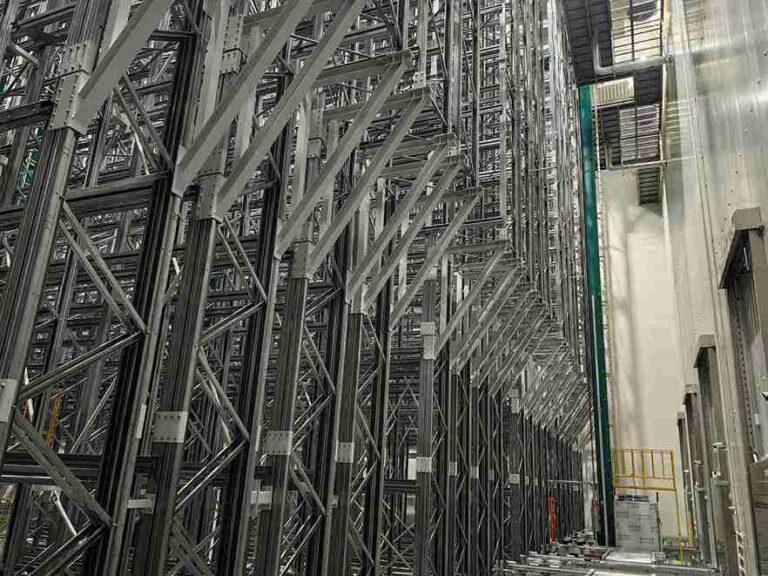
📐 "أول 50 استفسار مؤسسي يحصل على تصميم مستودع ثلاثي الأبعاد مخصص" الخطة















Advanced Engineering, Procurement, and Operational Excellence for ASRS Heavy Duty Pallet Racking
Introduction: Why ASRS Heavy Duty Pallet Racking Has Become the Structural Foundation of Modern Logistics Factories
The global logistics industry is undergoing a structural transformation. Warehouses that once relied on wide aisles, forklift operators, and manual inventory checks are being replaced by high-bay automated facilities where ASRS heavy duty pallet racking serves as the load-bearing backbone of every storage and retrieval cycle. This shift is not driven by fashion or marketing. It is driven by hard economics: land costs are rising, labor availability is tightening, order profiles are becoming more fragmented, and customers expect same-day or next-day fulfillment.
In this environment, ASRS heavy duty pallet racking is no longer a niche product for Fortune 500 distribution centers. It has become a mainstream engineering requirement for logistics factories, third-party logistics providers, cold chain operators, and manufacturing plants that need to store finished goods at high density and retrieve them with speed and accuracy.
What separates ASRS heavy duty pallet racking from ordinary pallet racking is not simply the steel thickness. It is the entire engineering philosophy. A conventional selective rack system is designed to hold pallets while a human-operated forklift places and removes them. An ASRS heavy duty pallet racking system is designed to hold pallets while a machine—a stacker crane, a shuttle, or a robotic transfer vehicle—interfaces with the rack at high speed, often at heights exceeding 100 feet, with positional tolerances measured in millimeters.
This difference changes everything: the load calculations, the connection details, the bracing patterns, the anchoring requirements, the inspection intervals, and the supplier qualification criteria. A procurement team that treats ASRS heavy duty pallet racking as a commodity purchase will eventually discover that the savings on steel were illusory. The real cost appears later in the form of crane faults, shuttle misalignments, structural fatigue, and unplanned downtime.
This article continues the deep technical and commercial examination of ASRS heavy duty pallet racking by moving beyond basic definitions and into advanced engineering, procurement, installation, maintenance, and strategic planning. The discussion is written in third person because the intended audience includes facility owners, logistics directors, structural engineers, procurement managers, and maintenance supervisors who need objective, vendor-neutral guidance. The goal is not to promote a single supplier or technology. The goal is to give decision-makers a comprehensive reference that raises the quality of their questions, sharpens their specifications, and improves the precision of their inquiries to ASRS heavy duty pallet racking suppliers.
How ASRS Heavy Duty Pallet Racking Redefines Load Paths and Structural Behavior
Every structure tells a story through its load paths. In ASRS heavy duty pallet racking, the story is one of concentrated forces, dynamic amplification, and relentless cyclic loading. A single upright frame in a high-bay ASRS heavy duty pallet racking installation may carry hundreds of thousands of pounds of stored inventory, plus the weight of the rack itself, plus the horizontal forces generated by a stacker crane accelerating and decelerating at each level.
These forces do not travel in a straight line from top to bottom. They move through beam-to-upright connections, through diagonal and horizontal bracing, through baseplates, and finally into the concrete floor slab. If any link in that chain is undersized or improperly installed, the entire ASRS heavy duty pallet racking system becomes vulnerable to deflection, vibration, and premature failure.
One of the most misunderstood aspects of ASRS heavy duty pallet racking is the role of torsional stiffness. Conventional racking often uses open C-channel uprights because they are inexpensive and easy to produce. But open profiles twist under load. In an ASRS heavy duty pallet racking system, even a small twist at the top of a 100-foot upright can translate into a significant lateral displacement at the crane rail. That displacement may exceed the crane’s ability to compensate, leading to repeated fault codes and reduced throughput.
This is why most ASRS heavy duty pallet racking designs specify closed tubular or omega-shaped uprights with high torsional rigidity. The additional material cost is more than offset by the reduction in commissioning time and operational interruptions.
Another critical load path issue in ASRS heavy duty pallet racking involves the distribution of vertical loads across multiple levels. In a conventional rack, it is acceptable to assume that each beam level carries its own load independently. In ASRS heavy duty pallet racking, however, the crane may deposit or retrieve pallets at any level in any sequence.
This creates uneven loading patterns that can cause differential settlement, upright rotation, and beam disengagement if the connections are not designed for reverse loading. Engineers who specialize in ASRS heavy duty pallet racking therefore perform influence line analysis and moving load simulations, not just static load checks. They also specify beam connectors that resist uplift and lateral movement, because a crane extractor can impart forces in directions that a forklift never would.
Material Specifications and Profile Design for ASRS Heavy Duty Pallet Racking
The steel used in ASRS heavy duty pallet racking is not chosen by guesswork. It is selected according to international standards that define chemical composition, mechanical properties, and tolerances. The most common grades for ASRS heavy duty pallet racking uprights and beams are S235, S275, and S355 under EN 10025, or ASTM A1011 and A653 in North America.
For the most demanding ASRS heavy duty pallet racking applications—such as rack-supported buildings, cold storage, or seismic zones—high-strength low-alloy steels with improved weldability and toughness are often specified. The difference between S235 and S355 may seem small on a data sheet, but in an ASRS heavy duty pallet racking system, it can mean the difference between a 90-foot upright that remains plumb and one that drifts out of tolerance after two years of service.
Profile design is equally important. ASRS heavy duty pallet racking uprights typically feature perforations on a 50mm or 75mm pitch to allow precise beam positioning. The perforation pattern must be designed so that it does not create stress concentrations that could initiate fatigue cracks. This is a common failure point in low-cost ASRS heavy duty pallet racking imported from suppliers who prioritize production speed over engineering validation. A reputable manufacturer will have performed full-scale cyclic testing on its upright profiles and beam connectors, and will be able to provide test reports that demonstrate compliance with ANSI MH16.1 or EN 15512.
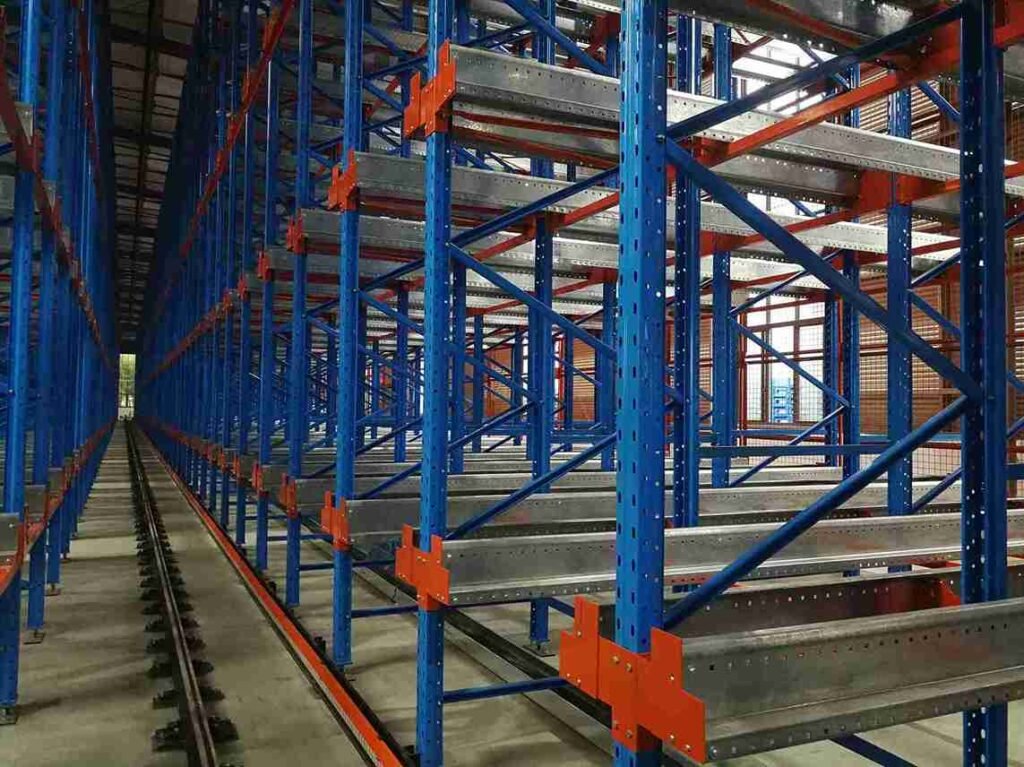
Beams for ASRS heavy duty pallet racking are usually box sections or double-U profiles. Box beams offer superior torsional resistance and are less likely to twist under eccentric loading, which is common when a crane places a pallet slightly off-center. The beam-to-upright connection is the most critical detail in the entire ASRS heavy duty pallet racking النظام.
Bolted connections are preferred over boltless hook-in connections because they provide greater rigidity, better load transfer, and easier verification of proper installation. In high-seismic regions, ASRS heavy duty pallet racking may require additional beam-to-upright bolts, reinforced connectors, or even welded connections in critical locations. Each of these details affects the cost, lead time, and installation complexity of the ASRS heavy duty pallet racking المشروع.
Load Capacity, Deflection, and Fatigue in ASRS Heavy Duty Pallet Racking
Load capacity in ASRS heavy duty pallet racking is often quoted as a single number, such as 40,000 kilograms per bay or 70,000 pounds per upright frame. But that number is meaningless without context. The actual capacity of ASRS heavy duty pallet racking depends on the beam span, the number of levels, the upright height, the bracing configuration, the baseplate size, the anchor type, the concrete strength, and the dynamic amplification factor. A supplier that quotes a capacity without asking about these variables is not providing engineering—it is providing a guess. Facility owners who want reliable ASRS heavy duty pallet racking should insist on a project-specific load calculation that shows every assumption and every safety factor.
Deflection control is where ASRS heavy duty pallet racking differs most sharply from conventional racking. The standard deflection limit for conventional pallet racking is often L/200, meaning the beam may sag by 1/200th of its span under load. For ASRS heavy duty pallet racking, that limit is usually tightened to L/300 or even L/400. Why? Because the crane’s extractor mechanism has a fixed vertical envelope. If the beam deflects too much, the pallet sits lower than expected, and the extractor may not engage correctly.
Over time, repeated attempts to retrieve a pallet from a deflected beam can damage both the pallet and the ASRS heavy duty pallet racking structure. The tighter deflection limit requires deeper beams, closer upright spacing, or both. This is one reason why ASRS heavy duty pallet racking costs more per pallet position than conventional racking—but also why it performs reliably for decades.
Fatigue is another consideration that is often ignored in conventional racking but is central to ASRS heavy duty pallet racking design. A high-throughput ASRS may perform 10,000 or more storage and retrieval cycles per day. Over a 20-year design life, that is more than 70 million cycles. Each cycle imposes a small stress reversal on the beam-to-upright connection, the upright perforations, and the baseplate anchors.
If the ASRS heavy duty pallet racking is not designed with adequate fatigue resistance, cracks can initiate and propagate, leading to catastrophic failure. Reputable suppliers of ASRS heavy duty pallet racking use finite element analysis and fatigue testing to validate their designs for high-cycle applications. They also recommend inspection intervals that are short enough to detect fatigue damage before it becomes dangerous.
Seismic Engineering for ASRS Heavy Duty Pallet Racking
In regions prone to earthquakes, ASRS heavy duty pallet racking must be designed for forces that are far more complex than gravity loads. Seismic design standards such as ASCE 7, IBC, and Eurocode 8 require ASRS heavy duty pallet racking to resist lateral forces that can be several times greater than the vertical loads. The challenge is compounded by the tall, slender nature of ASRS heavy duty pallet racking. A free-standing rack that is 100 feet tall and only 4 feet deep has a height-to-depth ratio of 25:1. Under seismic shaking, such a structure can experience large amplifications of ground motion, especially if its natural frequency matches the dominant frequency of the earthquake.
To address this, engineers who design ASRS heavy duty pallet racking for seismic zones use several strategies. They may increase the depth of the rack row by coupling two rows together, creating a more stable box-like configuration. They may add heavy-duty horizontal and diagonal bracing at the top and bottom of the ASRS heavy duty pallet racking structure. They may specify larger baseplates and more anchors per upright to resist uplift and overturning. In some cases, they may use base isolation or damping devices, although these are more common in very high-value ASRS heavy duty pallet racking installations such as pharmaceutical or semiconductor warehouses.
The consequences of inadequate seismic design in ASRS heavy duty pallet racking are severe. A rack that remains standing after an earthquake may still be functionally unusable if it has permanent deformation, loose connections, or misaligned crane rails. For a logistics factory that depends on ASRS heavy duty pallet racking for daily operations, even a brief shutdown can cost millions of dollars. This is why seismic engineering for ASRS heavy duty pallet racking should never be treated as a checkbox exercise. It requires site-specific ground motion data, nonlinear time-history analysis, and a supplier with proven experience in similar seismic conditions.
Fire Protection and ASRS Heavy Duty Pallet Racking
Fire protection is a critical but often overlooked aspect of ASRS heavy duty pallet racking design. High-bay ASRS heavy duty pallet racking creates unique fire protection challenges because the rack structure itself can obstruct sprinkler spray, and the dense storage configuration can allow fire to spread vertically and horizontally with surprising speed. NFPA 13, FM Global Data Sheet 8-9, and other fire codes provide specific requirements for in-rack sprinklers, ceiling sprinklers, and fire barriers in ASRS heavy duty pallet racking installations. Compliance is not optional. Insurance carriers may refuse coverage or charge exorbitant premiums if the ASRS heavy duty pallet racking does not meet recognized fire protection standards.
The integration of fire protection with ASRS heavy duty pallet racking requires early coordination between the rack supplier, the fire protection engineer, the automation integrator, and the building architect. In-rack sprinkler piping must be supported by the ASRS heavy duty pallet racking structure, which means the rack must be designed for the additional dead load and the dynamic forces of water hammer. Sprinkler heads must be positioned so that they are not damaged by crane or shuttle movement, and they must be accessible for maintenance without entering the active storage aisle.
In some cases, ASRS heavy duty pallet racking may be equipped with fire detection sensors, video monitoring, or automatic isolation systems that stop the crane and close fire doors when a threat is detected. These features add cost, but they also add resilience—and in high-value logistics operations, resilience is worth the investment.
Integration of ASRS Heavy Duty Pallet Racking with Stacker Cranes and Shuttle Systems
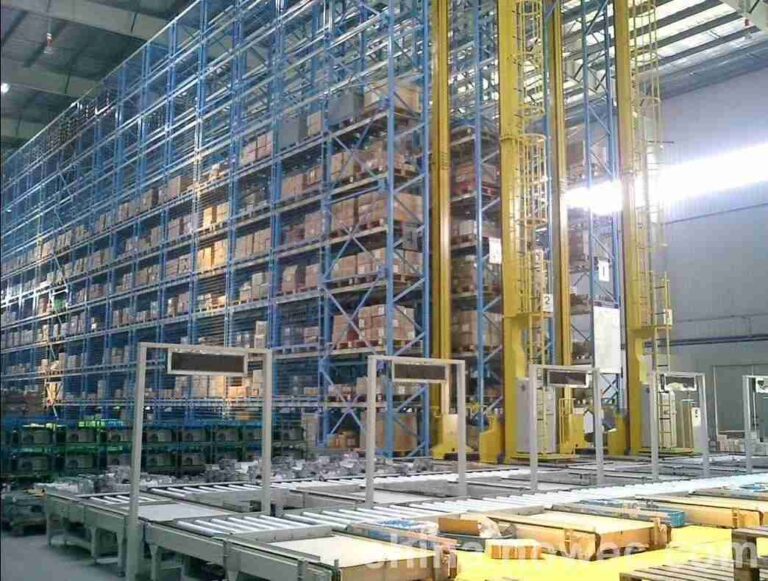
The performance of an automated warehouse depends on the seamless integration of ASRS heavy duty pallet racking with stacker cranes, shuttle systems, conveyors, and warehouse control software. This integration is not a simple matter of bolting a crane rail to the top of the rack. It requires a deep understanding of how the ASRS heavy duty pallet racking structure behaves under dynamic loads, how it deflects under varying temperatures, and how it responds to the vibration frequencies generated by the handling equipment. A crane that operates flawlessly in a test environment can fail repeatedly in a real warehouse if the ASRS heavy duty pallet racking was not designed with the correct stiffness and damping characteristics.
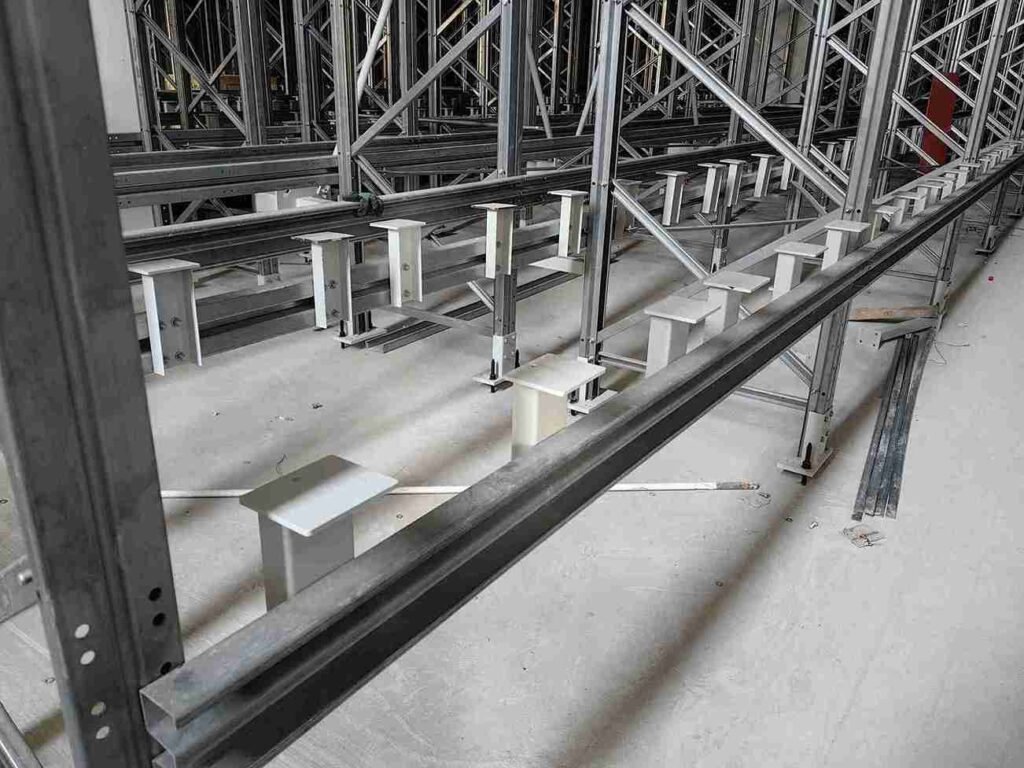
Crane rail alignment is one of the most demanding aspects of ASRS heavy duty pallet racking integration. The rail must be straight, level, and parallel to the rack face within tight tolerances. Any deviation causes the crane to skew, which increases wheel wear, rail wear, and energy consumption. In extreme cases, skewing can cause the crane to derail or collide with the ASRS heavy duty pallet racking. To prevent this, engineers specify rail support brackets that are adjustable after installation, allowing fine-tuning as the ASRS heavy duty pallet racking settles under load. They also require periodic laser surveys to verify that the rail alignment remains within tolerance throughout the life of the system.
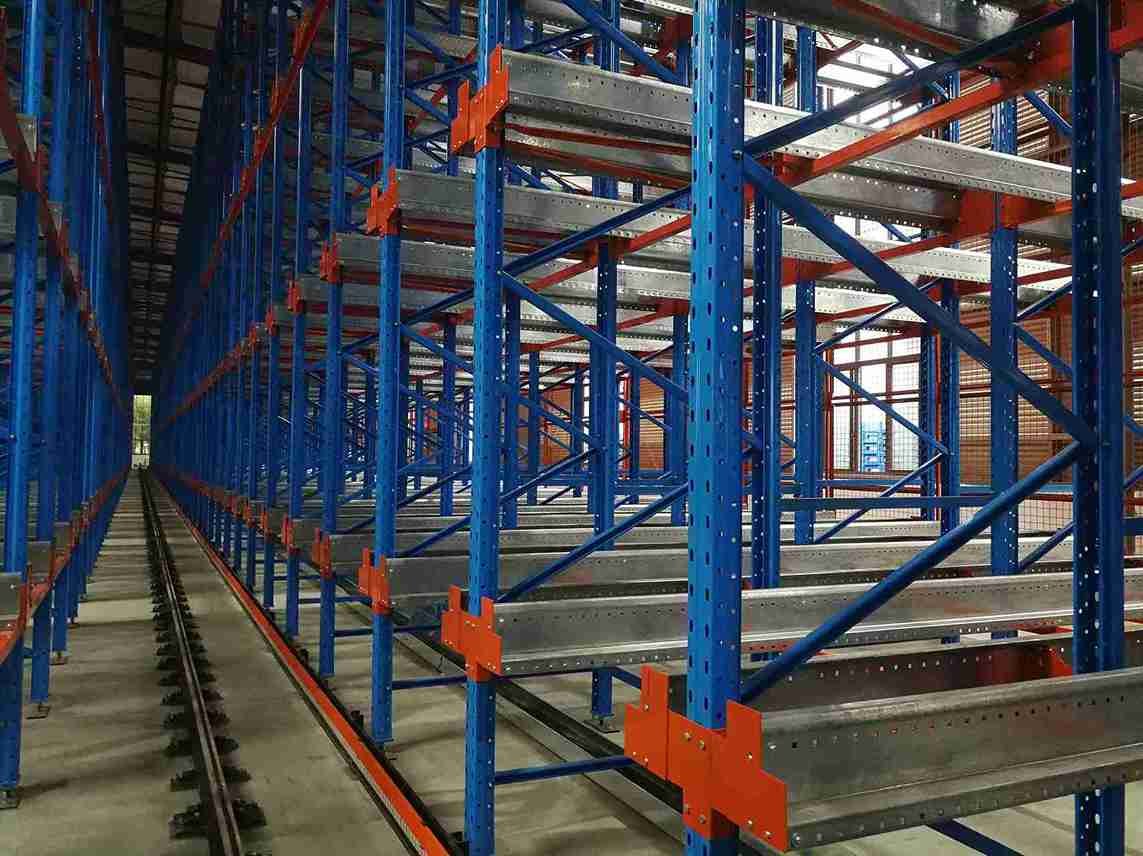
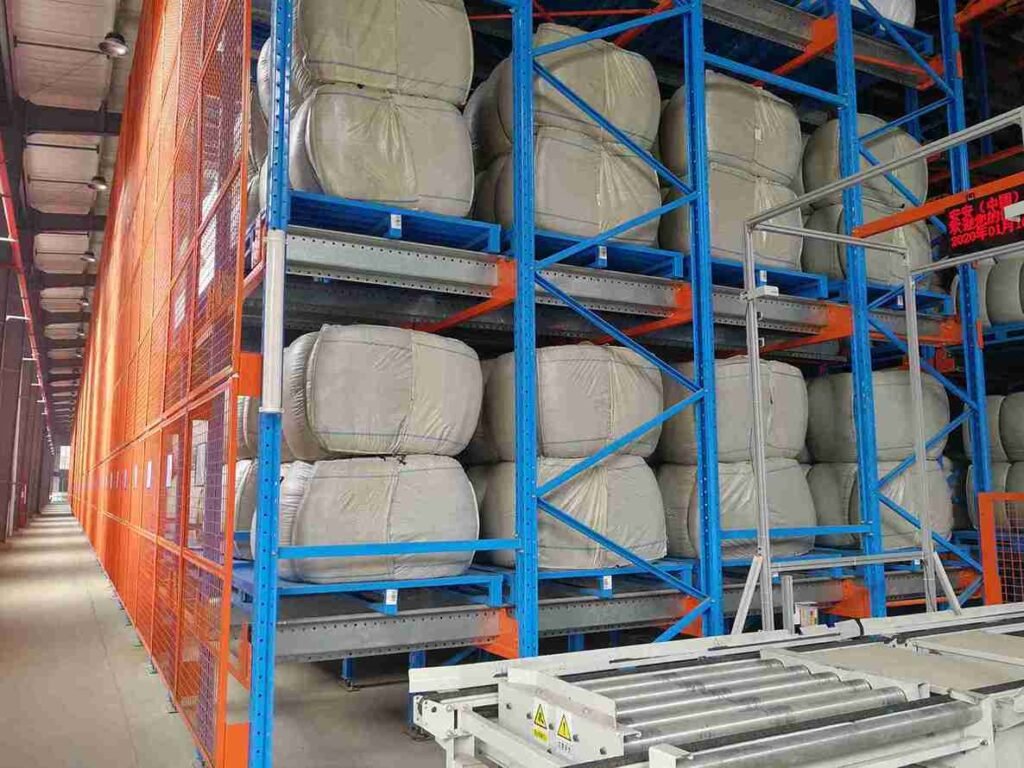
Shuttle systems add another layer of complexity. A shuttle travels horizontally within a rack level, transferring pallets between the ASRS heavy duty pallet racking and a vertical lift or crane. The shuttle rails must be perfectly aligned from bay to bay, and the ASRS heavy duty pallet racking beams must be stiff enough to prevent excessive deflection when the shuttle and pallet pass over them. In double-deep or multi-deep ASRS heavy duty pallet racking configurations, the shuttle must travel deep into the rack, which means the rails must be supported at multiple points to avoid sagging. The design of these rails and supports is a specialized skill that only experienced ASRS heavy duty pallet racking suppliers possess.
Conveyor interface points are the final link in the ASRS heavy duty pallet racking integration chain. These are the locations where pallets transfer between the conveyor system and the crane or shuttle. They experience the highest impact loads in the entire system, because every pallet that enters or leaves the ASRS heavy duty pallet racking passes over them. If the interface is not designed for these repeated impacts, it will fail prematurely, causing downtime and requiring expensive repairs. The best ASRS heavy duty pallet racking suppliers design these interfaces as replaceable modules, so that worn components can be swapped out quickly without cutting or welding.
Installation Tolerances and Quality Control for ASRS Heavy Duty Pallet Racking
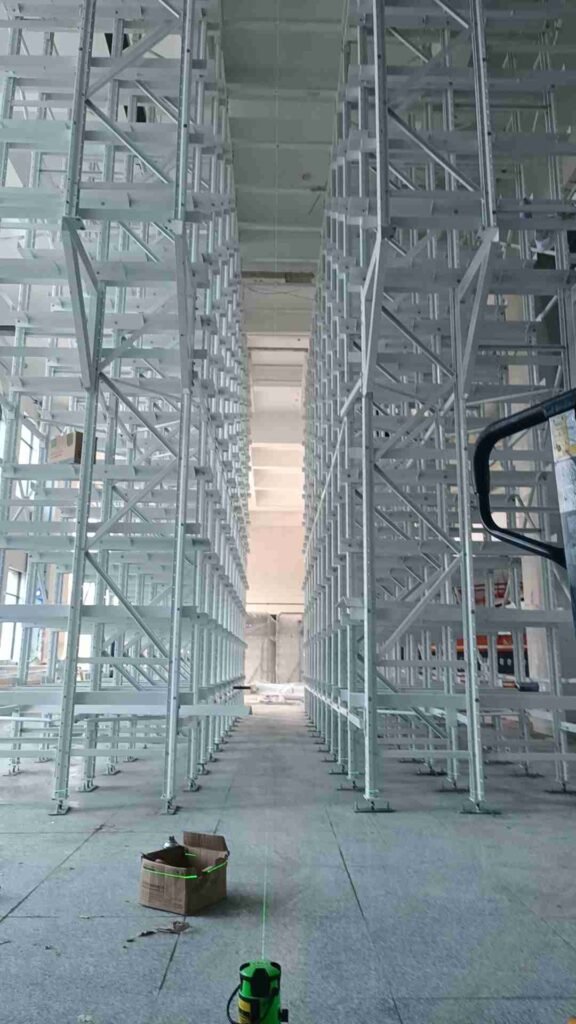
The installation of ASRS heavy duty pallet racking is not a construction task that can be entrusted to any general contractor. It requires specialized crews who understand the precision requirements, the sequencing, and the safety protocols of high-bay rack installation. The tolerances for ASRS heavy duty pallet racking are typically expressed in millimeters, not inches.
For example, the vertical alignment of an upright may be required to be within ±3mm over its entire height. The elevation of beams in adjacent bays may be required to be within ±2mm. The plumbness of the rack row may be required to be within 1/1000th of the height. These are not arbitrary numbers. They are derived from the operating envelope of the stacker crane and shuttle systems, and they must be respected.
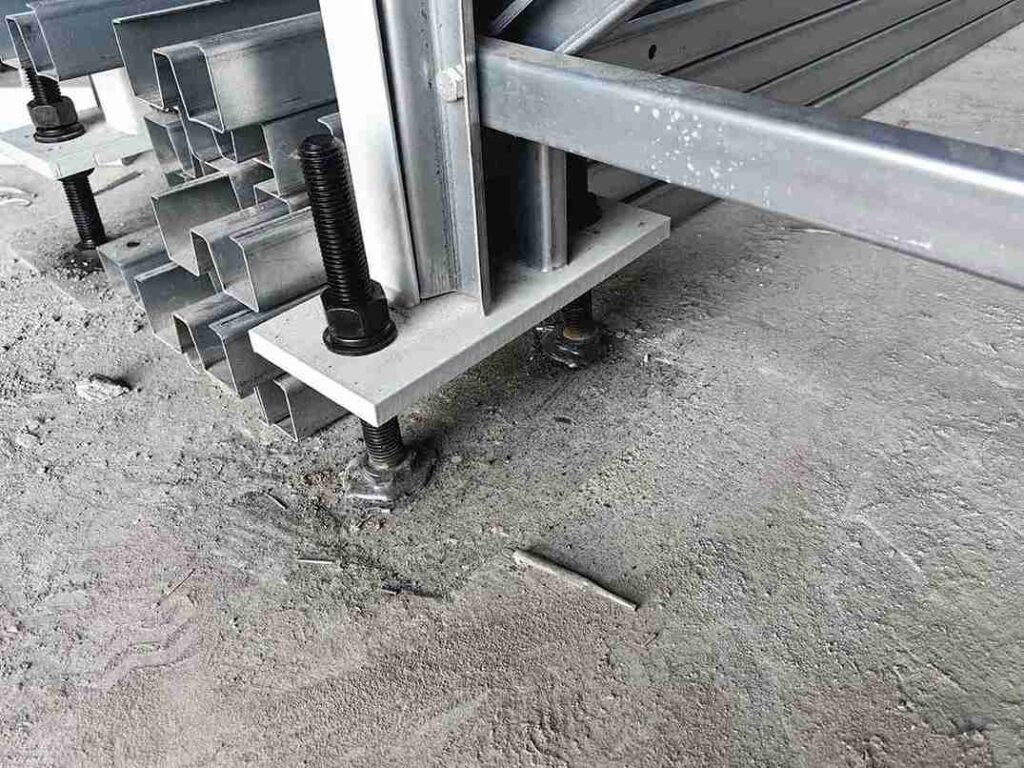
Floor flatness is the foundation of successful ASRS heavy duty pallet racking installation. If the concrete slab is not flat and level within the specified tolerance, the installers will have to use shims under the baseplates to bring the ASRS heavy duty pallet racking into alignment. Shimming is acceptable for small corrections, but excessive shimming can create point loads that crack the concrete or cause the anchors to pull out. In new construction, it is far better to specify a floor slab that meets the flatness requirements before the ASRS heavy duty pallet racking is delivered. In existing buildings, a floor survey should be conducted before the project begins, and any necessary remediation should be completed before installation starts.
Anchor installation is another critical quality control point. The anchors that hold the ASRS heavy duty pallet racking to the floor must be installed with the correct embedment depth, the correct hole diameter, and the correct torque. If the holes are drilled too deep, the anchor may not develop its full capacity. If the holes are drilled too shallow, the anchor may not engage enough concrete.
If the concrete is too weak, the anchor may pull out under load. Inspectors should verify anchor installation by reviewing the drill logs, checking the torque values, and performing pull tests on a sample of anchors. A single improperly installed anchor can compromise the stability of an entire ASRS heavy duty pallet racking bay.
Inspection, Maintenance, and Repair of ASRS Heavy Duty Pallet Racking
Even the best-designed and best-installed ASRS heavy duty pallet racking requires ongoing inspection and maintenance. ANSI MH16.1 and OSHA require that ASRS heavy duty pallet racking be inspected at regular intervals by a qualified person. The inspection should cover uprights, beams, bracing, baseplates, anchors, safety clips, and load plaques. It should also check for corrosion, which can be a serious problem in cold storage, food processing, or coastal environments. In high-throughput ASRS heavy duty pallet racking, the inspection interval should be shorter than for conventional racking, because the number of load cycles is much higher.
Daily visual checks by forklift operators or maintenance technicians are not sufficient for ASRS heavy duty pallet racking. A trained inspector should examine the rack at least once a year, and preferably every six months in demanding applications. The inspector should look for bent or twisted uprights, deflected beams, missing or loose bolts, cracked welds, and signs of fatigue such as hairline cracks near perforations or connections. Any damage should be documented, photographed, and reported to the ASRS heavy duty pallet racking supplier for evaluation. Minor damage can often be repaired with replacement components, but severe damage may require shutting down the affected aisle until repairs are completed.
Repair of ASRS heavy duty pallet racking should always be performed by qualified personnel using original manufacturer components. Field welding or cutting on ASRS heavy duty pallet racking is generally prohibited unless approved by the manufacturer, because it can damage the protective coating, introduce residual stresses, and void the rack’s certification. Bolted connections should be re-torqued to the manufacturer’s specifications, and any damaged anchors should be replaced with anchors of equal or greater capacity. A well-maintained ASRS heavy duty pallet racking system can last 20 years or more, but neglect will shorten its life dramatically.
Supplier Selection for ASRS Heavy Duty Pallet Racking
Choosing the right supplier is one of the most important decisions in an ASRS heavy duty pallet racking project. The supplier must be able to provide not just steel, but engineering, testing, certification, logistics, installation support, and after-sales service. The supplier must also be able to collaborate with the automation integrator, because the ASRS heavy duty pallet racking and the handling equipment are interdependent. A supplier that cannot communicate effectively with the crane manufacturer or the warehouse software provider will create delays and conflicts that ultimately harm the project.
When evaluating ASRS heavy duty pallet racking suppliers, procurement teams should ask for project references that are similar in scale, height, load, and seismic condition. They should ask for structural calculations, load test reports, and certifications such as R-Mark, ISO 9001, and EN 15512 compliance. They should visit the factory to observe the manufacturing process and verify that the steel grades match the specifications. They should also ask about the supplier’s experience with high-bay ASRS heavy duty pallet racking, because a supplier that only builds conventional racking may underestimate the precision requirements.
Price is important, but it should not be the primary selection criterion. The lowest-priced ASRS heavy duty pallet racking is often the most expensive in the long run, because it may require more frequent repairs, cause more crane faults, and have a shorter service life. A better approach is to evaluate the total cost of ownership, including engineering, installation, inspection, maintenance, energy consumption, and downtime. The supplier that offers the best value is not necessarily the one with the lowest initial quote. It is the one that delivers reliable ASRS heavy duty pallet racking with the lowest total cost over the life of the system.
Total Cost of Ownership for ASRS Heavy Duty Pallet Racking
The total cost of ownership for ASRS heavy duty pallet racking includes several components that are often overlooked in initial budgeting. The first is the cost of the rack itself, which includes engineering, materials, fabrication, surface treatment, and freight. The second is the cost of installation, which includes labor, equipment, anchoring, and alignment. The third is the cost of integration, which includes the interface with cranes, shuttles, conveyors, and software. The fourth is the cost of inspection and maintenance over the life of the system. The fifth is the cost of downtime, which can be the largest component if the ASRS heavy duty pallet racking fails unexpectedly.
To minimize total cost of ownership, facility owners should invest in high-quality ASRS heavy duty pallet racking from a reputable supplier, specify the correct load capacity and deflection limits, ensure proper installation, and implement a rigorous inspection and maintenance program. They should also consider the cost of future expansion. Modular ASRS heavy duty pallet racking systems can be expanded more easily than welded or custom systems, which reduces the cost of adding capacity later. Finally, they should consider the residual value of the ASRS heavy duty pallet racking. High-quality bolted racking can often be disassembled and reused or resold, recovering a portion of the initial investment.
Common Mistakes in ASRS Heavy Duty Pallet Racking Projects
Many ASRS heavy duty pallet racking projects encounter problems that could have been avoided with better planning. One common mistake is specifying the rack before selecting the automation equipment. The crane and shuttle determine the required tolerances, the load capacities, and the interface details. If the ASRS heavy duty pallet racking is designed without this information, it will likely require costly redesigns. Another mistake is underestimating the dynamic loads. Static load calculations alone are not sufficient for ASRS heavy duty pallet racking. The design must account for acceleration, deceleration, impact, and fatigue.
A third mistake is ignoring the floor condition. ASRS heavy duty pallet racking requires a flat, level, and strong floor. If the floor is inadequate, the rack may settle, tilt, or lose alignment. A fourth mistake is choosing a supplier based solely on price. Low-cost ASRS heavy duty pallet racking may lack the engineering rigor, material quality, and certification required for reliable operation. A fifth mistake is neglecting inspection and maintenance. Even the best ASRS heavy duty pallet racking will deteriorate over time if it is not inspected and maintained. Regular inspections can detect problems early, before they become costly failures.
Future Trends in ASRS Heavy Duty Pallet Racking
The future of ASRS heavy duty pallet racking will be shaped by several trends. One is the increasing use of robotics and artificial intelligence to optimize storage and retrieval. ASRS heavy duty pallet racking will need to interface with a wider range of robotic handling equipment, including autonomous mobile robots and robotic arms. Another trend is the growth of cold chain logistics, which requires ASRS heavy duty pallet racking that can operate reliably at temperatures as low as -30°C. This requires special steel grades, coatings, and lubricants that do not become brittle in the cold.
A third trend is sustainability. ASRS heavy duty pallet racking suppliers are under pressure to reduce the carbon footprint of their products by using recycled steel, energy-efficient manufacturing processes, and environmentally friendly coatings. A fourth trend is digitalization. ASRS heavy duty pallet racking is increasingly equipped with sensors that monitor load, deflection, vibration, and corrosion. This data is fed into warehouse management systems to predict maintenance needs and prevent failures. A fifth trend is modularity. Facility owners want ASRS heavy duty pallet racking that can be expanded, reconfigured, or relocated as their business needs change. Modular bolted ASRS heavy duty pallet racking is well positioned to meet this demand.
Case Examples: ASRS Heavy Duty Pallet Racking in Action
Consider a cold storage logistics factory in Northern Europe that needed to store 20,000 pallets of frozen food at -25°C. The facility selected ASRS heavy duty pallet racking with 12 levels, reaching a height of 35 meters. The rack was designed with closed tubular uprights and bolted beam connections to withstand the dynamic loads of high-speed stacker cranes. The ASRS heavy duty pallet racking was manufactured from S355 steel with a special coating to resist corrosion in the cold, humid environment. After three years of operation, the system has achieved 99.8% uptime, and the ASRS heavy duty pallet racking has required only routine inspections and minor adjustments.
In another case, a consumer goods manufacturer in Southeast Asia retrofitted an existing warehouse with ASRS heavy duty pallet racking to increase storage density. The building had a floor that was not flat enough for high-bay racking, so the project team first applied a self-leveling topping to bring the floor within tolerance. The ASRS heavy duty pallet racking was then installed in phases to avoid disrupting ongoing operations. The result was a 60% increase in pallet positions within the same footprint, with a payback period of just over three years. These examples show that ASRS heavy duty pallet racking can be adapted to a wide range of environments, but success depends on careful engineering and planning.
Frequently Asked Questions About ASRS Heavy Duty Pallet Racking
What is the maximum height for ASRS heavy duty pallet racking?
The maximum height for ASRS heavy duty pallet racking depends on the building, the crane, and the seismic conditions. In practice, ASRS heavy duty pallet racking can reach heights of 45 meters or more in rack-supported buildings. However, most free-standing ASRS heavy duty pallet racking installations are limited to 30–40 meters because of stability and code requirements. The height must be determined by a structural engineer in collaboration with the ASRS heavy duty pallet racking supplier and the crane manufacturer.
How long does it take to install ASRS heavy duty pallet racking?
Installation time for ASRS heavy duty pallet racking depends on the size and complexity of the project. A typical high-bay ASRS heavy duty pallet racking system with 10,000 pallet positions may take 8–16 weeks to install, including floor preparation, anchoring, alignment, and commissioning. Larger projects can take six months or more. The installation schedule should be coordinated with the delivery of the stacker cranes and the warehouse software to avoid delays.
What maintenance is required for ASRS heavy duty pallet racking?
ASRS heavy duty pallet racking requires daily visual checks, annual expert inspections, and periodic re-torquing of bolts. The inspection should cover uprights, beams, bracing, anchors, and safety clips. Any damage should be repaired promptly with original manufacturer components. In high-throughput facilities, ASRS heavy duty pallet racking may require semi-annual inspections to detect fatigue or wear.
Can ASRS heavy duty pallet racking be used in cold storage?
Yes, ASRS heavy duty pallet racking can be used in cold storage, but it must be designed for low temperatures. The steel must have adequate toughness to avoid brittle fracture, the coatings must resist corrosion, and the lubricants must remain effective at low temperatures. Cold storage ASRS heavy duty pallet racking also requires special consideration for ice buildup, condensation, and thermal expansion.
How does ASRS heavy duty pallet racking improve warehouse safety?
ASRS heavy duty pallet racking improves warehouse safety by eliminating the need for forklifts to operate in high-bay storage aisles. This reduces the risk of collisions, falls, and injuries. However, ASRS heavy duty pallet racking introduces new safety considerations, such as the need for lockout/tagout procedures during maintenance, fall protection for inspectors, and fire protection systems. A comprehensive safety program is essential for any ASRS heavy duty pallet racking installation.
الخاتمة
ASRS heavy duty pallet racking is the structural heart of modern automated logistics. It determines how high a warehouse can build, how fast it can retrieve, how safely it can operate, and how reliably it can serve customers. The engineering, procurement, installation, and maintenance of ASRS heavy duty pallet racking are not tasks for generalists. They require specialized knowledge, rigorous standards, and a long-term perspective. Facility owners who invest in high-quality ASRS heavy duty pallet racking and support it with proper inspection and maintenance will be rewarded with decades of reliable service. Those who treat ASRS heavy duty pallet racking as a commodity will eventually pay the price in downtime, repairs, and lost productivity.
The most successful ASRS heavy duty pallet racking projects share several characteristics: early involvement of the rack supplier, close collaboration with the automation integrator, clear specification of loads and tolerances, thorough floor preparation, and a commitment to ongoing inspection and maintenance. These are not secrets. They are the fundamentals of sound engineering. As logistics factories continue to evolve toward higher density, higher throughput, and higher levels of automation, ASRS heavy duty pallet racking will remain the foundation on which those ambitions are built. The suppliers who understand this will earn the trust of their customers. The facility owners who demand it will build warehouses that outperform their competitors for years to come.
Geelyracks is a factory specializing in warehouse racking and a global expert in custom racking solutions: https://geelyracks.com/
We can provide you with free warehouse racking design plans and price quotes; يرجى الاتصال بنا. Our email address is jili@geelyracks.com