📐 "First 50 Enterprise Queries Get Custom 3D Warehouse Design" Plan


Aisle Width Optimization for Racking: The Definitive Strategic Guide to Unlocking Maximum Warehouse Capacity
In the relentless logistics landscapes of Southeast Asia, the industrial hubs of the Middle East, the growing markets of Latin America, and the dynamic economies of Africa, a silent revolution is reshaping the foundational principles of warehouse management. This revolution is centered on a singular, powerful concept: aisle width optimization for racking. For distribution center managers, warehouse planners, and logistics executives, the pressure to do more with existing space is immense.
The costs of new construction, soaring land prices, and operational inefficiencies make physical expansion a least-favored option. The solution, as leading supply chain experts are proving, lies not in expanding the warehouse’s footprint, but in radically re-engineering the space within it. Aisle width optimization for racking is the precise, engineering-driven discipline of minimizing the travel paths between storage structures to liberate vast areas for additional pallet positions, directly translating into increased revenue potential and a stronger competitive edge.
This comprehensive resource delves deeper than any other available guide, providing the technical depth, strategic context, and actionable insights necessary to master aisle width optimization for racking and achieve transformative storage density gains that can exceed 30%, fundamentally altering the warehouse’s capacity and efficiency profile.
The Foundational Imperative: Why Aisle Width Optimization for Racking is a Non-Negotiable Modern Strategy
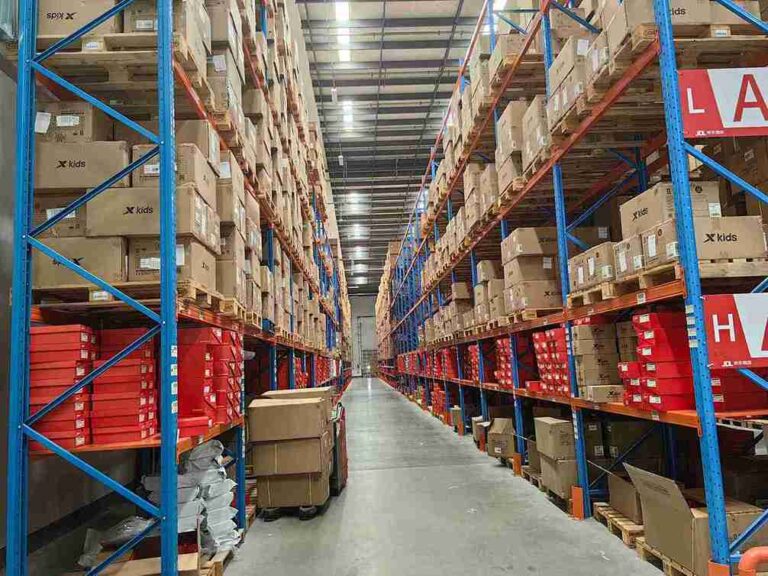
To truly grasp the impact of aisle width optimization for racking, one must first view the warehouse floor not as a static plan, but as a dynamic financial asset. Every square meter dedicated to an aisle is a non-revenue generating asset. In facilities relying on conventional forklifts, it is not unusual for 40% to 50% of the total floor area to be consumed solely by aisles. This represents a staggering underutilization of capital. The core objective of any serious aisle width optimization for racking initiative is to systematically reclaim this wasted space, converting it into productive, high-density storage.
The process is a meticulous science, involving the careful analysis of material handling equipment (MHE) turning radii, load dimensions, and operational workflows to determine the absolute minimum safe aisle dimension. A successful project for aisle width optimization for racking is the difference between a warehouse that is a cost center and one that is a strategic, profit-driving engine for the business.
The Geometric Power of Reduced Aisles: A Capacity Analysis
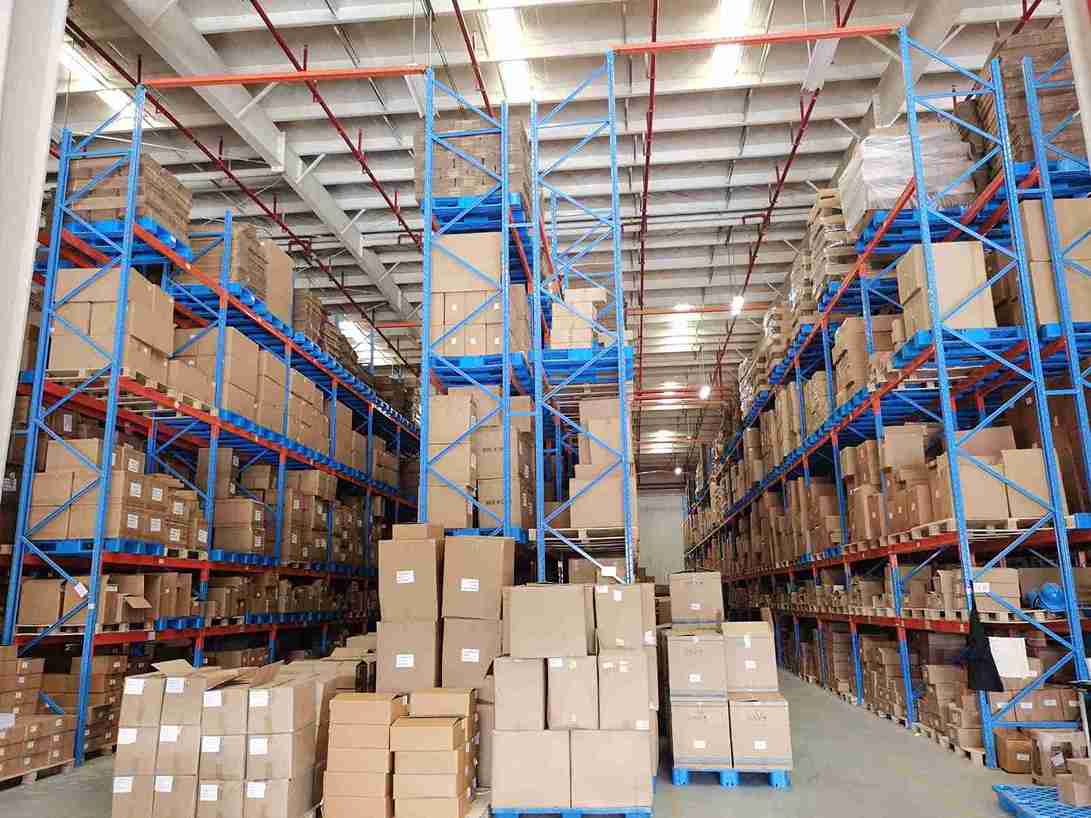
The relationship between aisle width and storage capacity is not merely linear; it is profoundly geometric. A reduction of even 20 centimeters in aisle width can, in a large-scale distribution center, create the spatial opportunity for an entirely new row of racking running the full length of the facility. This single additional row multiplies the available storage positions by hundreds or even thousands.
When the financial value of these new pallet locations is calculated—factoring in the avoided costs of land acquisition, construction, and ongoing utilities—the return on investment for a focused aisle width optimization for racking project becomes overwhelmingly clear. This is the ultimate value proposition of advanced aisle width optimization for racking: it transforms dormant, non-productive space into a high-value asset, delivering a dramatic capacity uplift without the need for a single new construction permit.
The Equipment Ecosystem: The Direct Correlation Between Machinery and Aisle Dimensions
The single most critical factor determining the feasibility and scale of aisle width optimization for racking is the selection of material handling equipment. The evolution of MHE is, in essence, a history of progressively shrinking aisle requirements. A deep understanding of this equipment spectrum is paramount for any organization planning an aisle width optimization for racking project.
Conventional Counterbalance Forklifts: The Baseline of Inefficiency
These ubiquitous, sit-down forklifts represent the traditional approach, and they are the primary reason many warehouses suffer from inefficient layouts. Their design, which uses a rear counterweight to balance loads, necessitates a very wide turning radius. To safely execute a 90-degree turn into a racking bay while carrying a standard pallet, these machines typically require aisles ranging from 3.5 to 4.5 meters (11.5 to 14.8 feet). For any company serious about aisle width optimization for racking, the first step is often to phase out or limit the use of counterbalance forklifts within the main storage arena, confining them to loading docks and bulk floor stacking operations.
Narrow-Aisle Reach Trucks: The Gateway to Significant Density Gains
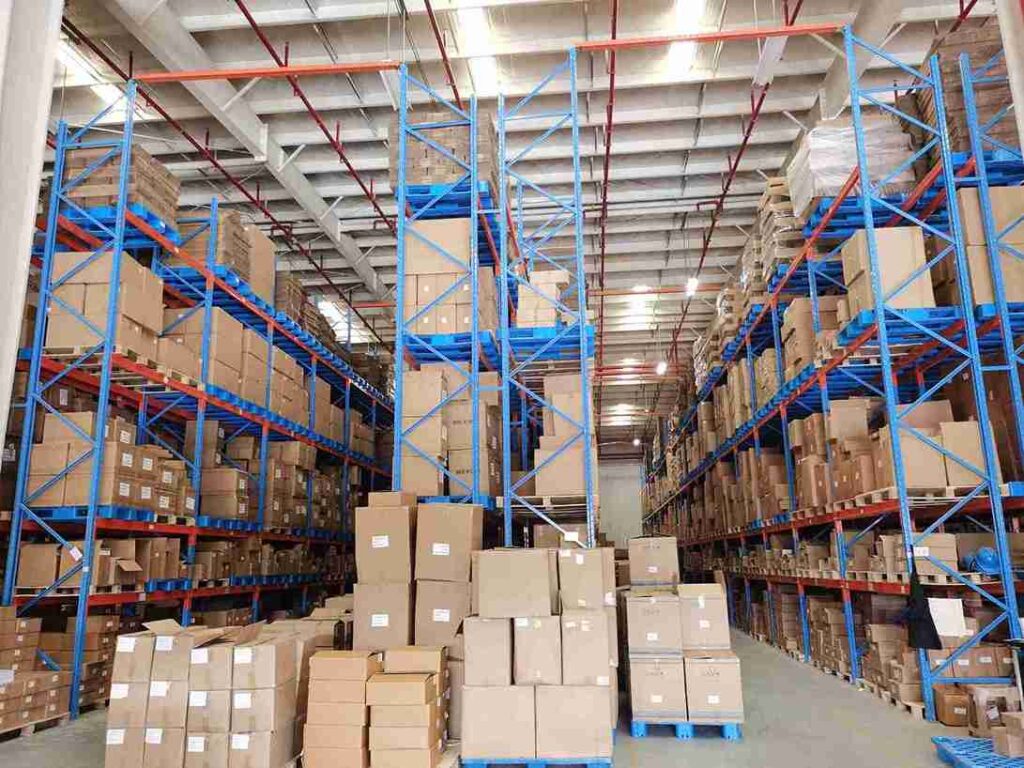
Reach trucks are the cornerstone of modern storage efficiency and the most common starting point for a strategic aisle width optimization for racking program. Their defining feature is a set of forks that can extend forward (“reach”) into the racking, allowing the truck’s body to remain within the aisle. This fundamental design shift eliminates the need for the wide turning radius of a counterbalance truck. Consequently, a comprehensive aisle width optimization for racking plan using reach trucks can achieve functional aisles in the range of 2.6 to 3.2 meters (8.5 to 10.5 feet). This represents a massive space reclamation compared to conventional layouts, making reach trucks a highly popular solution for achieving effective aisle width optimization for racking.
Operational Prerequisites: Floor Flatness and Mast Visibility
Implementing a successful aisle width optimization for racking system with narrow-aisle trucks imposes two non-negotiable requirements on the warehouse infrastructure. First, the concrete floor slab must be exceptionally flat and level. Even minor deviations can cause dangerous pallet sway when the mast is elevated, compromising both safety and efficiency. A professional floor flatness survey (using F<sub>F</sub>/F<sub>L</sub> metrics) is an essential precursor. Second, high-visibility masts are critical for operator confidence and precision in tight spaces. Any project focused on aisle width optimization for racking must rigorously assess these factors during the planning phase.
Very Narrow Aisle (VNA) Systems: The Pinnacle of High-Density Storage
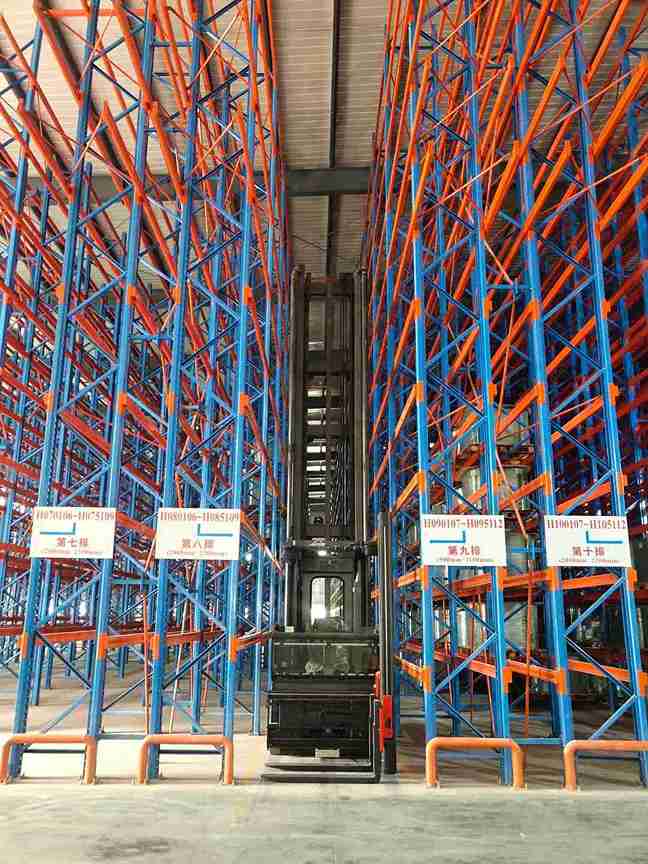
When the operational goal is to achieve the absolute maximum possible storage density from a given footprint, Very Narrow Aisle (VNA) systems represent the ultimate expression of aisle width optimization for racking. VNA equipment operates within astonishingly tight confines, with aisles typically measuring between 1.6 to 2 meters (5.2 to 6.5 feet). To operate safely and accurately at these tolerances, VNA trucks rely on sophisticated guidance systems.
The two primary types are wire guidance, which uses a wire embedded in the floor to keep the truck centered, and rail guidance, where physical rails guide the wheels, often preferred for heavier loads or less-than-perfect floors. A key feature of many VNA systems is the man-up order picker or a rising cab, which allows the operator to ascend with the load, making racking heights of 12 meters and more both practical and highly productive. This vertical integration is a core component of a high-level aisle width optimization for racking strategy.
The Automated Frontier: AGVs and Unmanned Forklifts
The cutting edge of aisle width optimization for racking is found in the realm of full automation. Automated Guided Vehicles (AGVs) and autonomous unmanned forklifts can be programmed to operate in aisles that are only centimeters wider than the combined width of the pallet and the racking structure. By removing the human operator from the vehicle, these systems eliminate the variability and potential for error, allowing for movements with millimeter precision.
This enables aisles in the range of 1.7 to 2.2 meters (5.5 to 7.2 feet) for pallet handling, pushing the boundaries of aisle width optimization for racking to its logical extreme. For businesses in high-growth markets looking to build a decisive competitive advantage, automation represents the most efficient and future-proof end-state for aisle width optimization for racking. The integration of such systems often represents the final, most advanced phase of a long-term aisle width optimization for racking master plan.
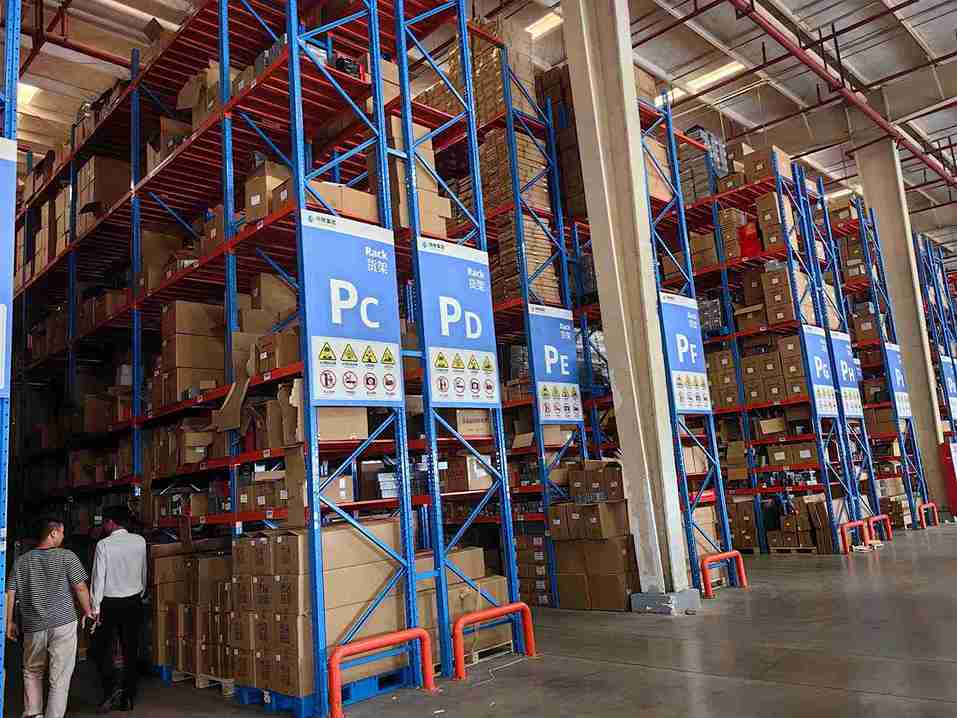
A Methodological Blueprint: Executing a Successful Aisle Width Optimization for Racking Project
A project of this complexity and impact cannot be approached haphazardly. It demands a disciplined, phased methodology that transforms the concept of aisle width optimization for racking from a theoretical idea into a tangible, operational reality.
Phase 1: The Granular Data Discovery and Audit
The foundation of any successful aisle width optimization for racking project is immutable data. This phase involves a deep dive into the very DNA of the warehouse operation:
Comprehensive SKU Analysis: Documenting the physical dimensions, weight, packaging type, and inventory turnover rate (using ABC analysis) for every stock-keeping unit.
Throughput Velocity Mapping: Analyzing historical data to understand daily, weekly, and seasonal peaks in pallet in-take and dispatch.
Precision Layout and Obstacle Mapping: Creating a detailed CAD model of the existing facility, accurately placing every column, door, fire sprinkler head, and electrical panel, as these will all influence the final aisle width optimization for racking layout.
Phase 2: Advanced Modeling, Simulation, and Scenario Planning
Before any physical work begins, the proposed aisle width optimization for racking designs must be rigorously tested. Using sophisticated warehouse simulation software, engineers can create a digital twin of the facility. This model is used to run multiple scenarios: What is the throughput impact of VNA versus narrow-aisle? How will the flow change during a peak season with the new layout? This simulation phase is critical for de-risking the investment in aisle width optimization for racking, as it identifies potential bottlenecks and validates the projected efficiency gains in a virtual environment.
Phase 3: The Holistic Total Cost of Ownership (TCO) and ROI Analysis
The financial justification for aisle width optimization for racking extends far beyond the invoice for new equipment. A robust analysis must encompass:
Capital Expenditure (CapEx): The cost of new racking systems, material handling equipment, and any necessary infrastructure upgrades (e.g., floor grinding, new electrical systems).
Operational Expenditure (OpEx): Projected changes in energy consumption, labor requirements (often a reduction, especially with automation), maintenance contracts, and insurance premiums.
Intangible and Soft Benefits: Quantifying the value of reduced product damage, improved order accuracy, enhanced workplace safety, and increased scalability.
Final ROI Calculation: The projected payback period is calculated by weighing the total investment against the hard cost savings from avoided expansion and the ongoing value of the new storage capacity created by the aisle width optimization for racking project.
Real-World Application: A Deep-Dive Case Study on Aisle Width Optimization for Racking
A prominent beverage distributor based in Thailand was facing severe capacity constraints. Their 8,000 square meter facility was operating at 115% capacity, forcing them to lease expensive off-site storage, which crippled their operational agility and profitability. Their existing layout used counterbalance forklifts with 4.2-meter aisles.
The Challenge: Achieve a minimum of 35% more storage capacity within the same building envelope without disrupting ongoing operations.
The Solution: A phased aisle width optimization for racking strategy was deployed. The core storage area was redesigned for a VNA system with wire-guided trucks operating in 1.7-meter aisles, with racking extended to 13 meters high. The fast-moving product zone was configured for narrow-aisle reach trucks (2.8-meter aisles) for faster order picking.
The Quantifiable Results:
Storage Capacity: Increased by 48%, allowing the complete elimination of external storage leases.
Operational Efficiency: Overall throughput improved by 22% due to reduced travel times and more streamlined workflows.
Financial Return: The comprehensive aisle width optimization for racking project achieved a full return on investment in just 16 months, based on the savings from lease cancellations and increased operational throughput.
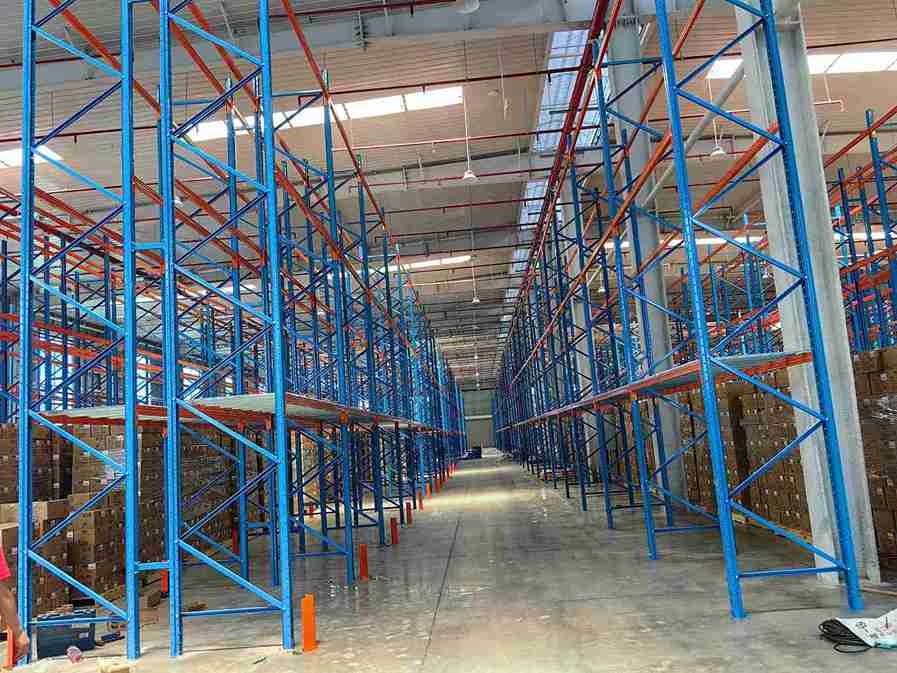
Navigating Challenges: Critical Considerations for Aisle Width Optimization for Racking
While the benefits are compelling, a successful aisle width optimization for racking project requires careful navigation of potential pitfalls. Awareness of these challenges is what separates a theoretical plan from an executable one.
The Paramount Importance of Warehouse Floor Flatness
This point cannot be overstated. The success of any significant aisle width optimization for racking project, particularly those involving VNA or AGVs, is entirely dependent on the quality of the concrete slab. These systems require exceptionally flat floors, with tolerances often specified within a few millimeters over a 10-meter span. A comprehensive floor survey is not an optional extra; it is a foundational requirement. Proceeding with an aisle width optimization for racking project on an unsuitable slab will lead to operational failures, chronic equipment damage, and serious safety hazards.
Investing in the Human Element: Operator Training and Change Management
Transitioning from a conventional forklift to a narrow-aisle or VNA truck is a significant skills shift. A skilled, certified operator is safe, efficient, and productive. An untrained operator in a narrow aisle is a significant liability. Therefore, a dedicated budget and timeline for comprehensive operator training and certification must be an integral part of every aisle width optimization for racking project plan. Managing the cultural change and ensuring buy-in from the operations team is equally critical for long-term success.
The Systems Approach: Integrating Racking and Equipment as One
A critical, yet often overlooked, aspect of aisle width optimization for racking is the symbiotic relationship between the racking structure and the MHE. They are two parts of a single system. You cannot simply purchase a VNA truck and expect it to work efficiently in racking designed for a reach truck. The racking must be specifically engineered to handle the different load dynamics, impact forces, and precise tolerances of the new equipment. Engaging a supplier that can provide a fully integrated solution—both the racking and the equipment—is the most reliable path to ensuring a harmonious and effective aisle width optimization for racking outcome.
The Future Trajectory: Beyond Traditional Aisle Width Optimization for Racking
The logical conclusion of the pursuit of maximum density is the move towards aisle-less warehousing. Technologies like Automated Storage and Retrieval Systems (ASRS) and cube-based shuttle systems represent the final frontier of aisle width optimization for racking. In these configurations, a single, ultra-narrow transfer aisle is serviced by a central crane or robot, which stores and retrieves pallets or bins from a massive, high-bay block of storage. This approach reduces the aisle-to-storage ratio to an absolute minimum, representing the ultimate evolution of the principles underpinning aisle width optimization for racking. For businesses where land is at an extreme premium or throughput requirements are immense, this is the destination of the density journey.
Conclusion: Making the Strategic Decision to Optimize
The evidence is clear and compelling. In an era defined by supply chain volatility and intense cost pressure, aisle width optimization for racking has transitioned from a specialized technical consideration to a core strategic imperative for any logistics-intensive business. The process of aisle width optimization for racking offers a proven, high-return pathway to unlock the hidden capacity within existing facilities, deferring or eliminating the need for capital-intensive expansion.
The journey requires expertise, careful planning, and a commitment to integrating the right equipment with the right infrastructure. However, for those who undertake it, the reward is a transformed operation: a warehouse that is not a bottleneck, but a powerful, scalable, and efficient engine for growth. The critical question for decision-makers is no longer whether they can afford to invest in aisle width optimization for racking, but how much longer they can afford to ignore the vast potential lying dormant in their aisles.
Frequently Asked Questions (FAQs) on Aisle Width Optimization for Racking
1. How does the choice of pallet size and type influence an aisle width optimization for racking project?
The dimensions and overhang of the pallets are a primary input for calculating the minimum achievable aisle. Non-standard, larger, or less rigid pallets may require wider aisles to prevent collisions with the racking uprights during the storing and retrieval process. A full pallet audit is, therefore, an essential first step in any **aisle width optimization for racking** plan.
2. Can we achieve meaningful aisle width optimization for racking in a warehouse with low clearance heights?
Absolutely. While high-bay warehouses achieve density by building up, **aisle width optimization for racking** is equally critical in lower-clearance facilities. The gains are realized horizontally. By reducing aisle width, you can fit more racking rows on the same floor area, significantly increasing capacity even without increasing height.
3. What is the typical project timeline for a full-scale aisle width optimization for racking redesign?
A comprehensive project involving new racking and MHE typically ranges from 12 to 20 weeks from initial design to full operational handover. This timeline includes detailed planning, equipment lead times, phased installation to minimize disruption, and thorough operator training. Simpler projects involving only an equipment upgrade can be faster.
4. How do we handle emergency egress and fire safety regulations with narrower aisles?
This is a paramount safety and compliance issue. All **aisle width optimization for racking** designs must be reviewed and approved by a qualified fire safety engineer. Main cross-aisles and fire escape routes must be maintained at widths compliant with local building codes. The integration of enhanced fire suppression systems is often a key part of obtaining regulatory approval for reduced aisle widths in storage areas.
5. Is it possible to mix different aisle widths within the same warehouse during an optimization project?
Yes, and this hybrid approach is often highly effective. A common strategy is to deploy VNA systems in the reserve storage area for maximum density, while using narrow-aisle reach trucks in the forward-picking zones for greater flexibility and faster order cycle times. This tailored approach allows for a nuanced application of **aisle width optimization for racking** principles across different operational zones.
Welcome to contact us, if you need warehouse rack CAD drawings. We can provide you with warehouse rack planning and design for free. Our email address is: jili@geelyracks.com