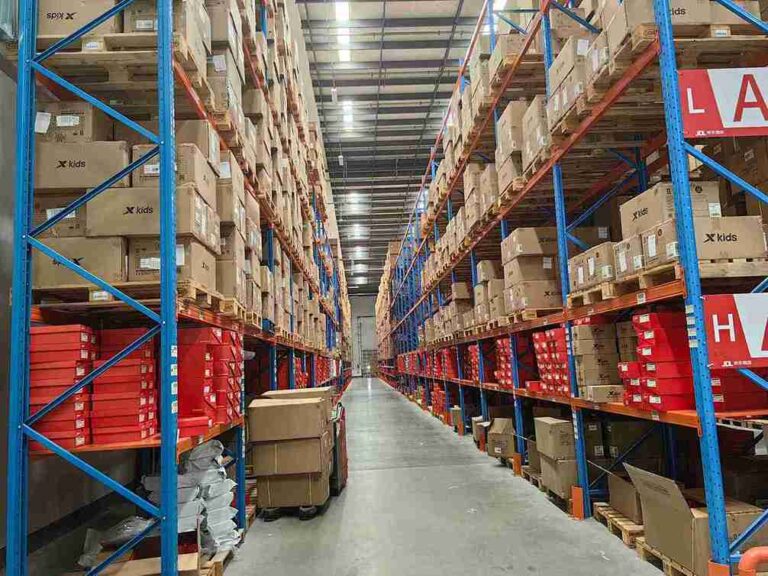
📐 "First 50 Enterprise Queries Get Custom 3D Warehouse Design" Plan


Unlock Future Growth: The Definitive Guide to Affordable, Automation-Ready Pallet Racking
Executive Summary
For warehouse and logistics managers operating in the dynamic markets of Southeast Asia, the Middle East, Africa, and Latin America, the challenge is universal: achieving exponential growth with linear budgets. The pressure to find immediate, affordable pallet racking options is relentless, yet the fear of investing in a system that becomes obsolete with the first automation initiative is equally paralyzing. This guide dismantles that dilemma.
It presents a strategic pathway where affordable pallet racking options are not the endpoint, but the intelligent, future-proof foundation for scalable efficiency. We will demonstrate how the most cost-effective decision is to select low-cost pallet racking options engineered from the ground up to be AGV & Automation Ready. This approach transforms storage infrastructure from a static cost center into a dynamic, appreciating asset.
By prioritizing automation-ready design within a budget-friendly pallet racking system, businesses can achieve immediate gains in storage density and workflow efficiency while building a seamless, low-risk bridge to partial or full automation. This is not a compromise; it is a superior procurement strategy for growth-focused businesses worldwide.

The Global Landscape: Why Affordable Storage Demands Strategic Foresight
In emerging economies, warehousing is the backbone of commerce, yet capital allocation is meticulously scrutinized. The quest for affordable warehouse storage systems often leads to a procurement focus on unit cost per bay. This myopic view can be catastrophic. Truly affordable pallet racking options are defined by their Total Cost of Ownership (TCO), not their initial invoice. A system that fails under load, requires constant repair, or, most expensively, cannot integrate with automation technologies, is the opposite of affordable. Across industries from e-commerce fulfillment in Jakarta to pharmaceutical distribution in Dubai, leaders are recognizing that budget-friendly pallet racking solutions must be evaluated through a lens of strategic scalability.
The convergence of rising labor costs, land prices, and customer expectations for speed makes automation an inevitable destination for competitive operations. Therefore, the most prudent affordable pallet racking options are those that protect this future capability. Investing in automation-ready pallet racking is an exercise in risk mitigation and capital preservation. It ensures that today’s necessary expenditure on economical pallet racking systems does not become tomorrow’s sunk cost, requiring a complete rip-and-replace to advance. For a medium-sized distributor in Colombia or a manufacturing hub in Vietnam, this foresight is what separates market leaders from those perpetually struggling to catch up.
Deconstructing Automation-Ready Design: The Engineering Behind the Promise
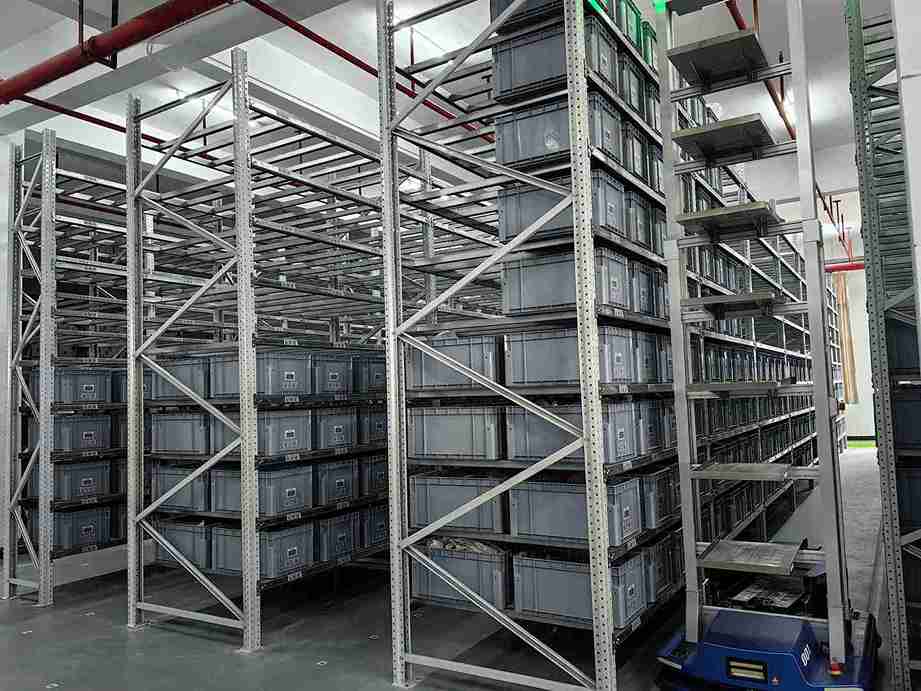
The term “Automation-Ready” is frequently used, but often poorly defined. In practice, it represents a suite of precise engineering specifications that differentiate a proactive storage solution from a passive commodity. Genuine AGV & Automation Ready Designs for affordable pallet racking options incorporate the following critical dimensions:
Structural Rigor for a Robotic Workflow
While standard racking is designed for human-operated equipment, automation-ready racking is engineered for the relentless, precise interaction of machines. This demands higher specifications in several areas:
Enhanced Tolerances: The alignment of upright frames is critical. For smooth AGV and AS/RS operation, tolerances for vertical plumb and aisle straightness are often 3-5 times stricter than those for manual systems. This requires superior manufacturing processes and often, a higher-grade steel formulation in the upright columns. When evaluating low-cost pallet racking options, verifying these tolerance specifications is non-negotiable.
Vibration-Resistant Locking Mechanisms: Continuous automated movement creates harmonic vibrations. Standard boltless connections can gradually loosen. True automation-ready designs incorporate positive, often double-locking connections (e.g., a safety clip combined with a deformable locking tab) that are empirically tested to withstand vibrational forces. This is a cornerstone of long-term warehouse safety in an automated environment.
Dynamic Load and Impact Engineering: The design calculus includes not just static pallet weight but also potential kinetic energy from low-speed AGV contact. Reinforcement at key impact zones, such as the lower portion of uprights, is a common feature of robust automation-ready pallet racking.
Dimensional Harmony with Automation Hardware
The physical interface between rack and robot is where strategy becomes operational. Affordable pallet racking options destined for automation must speak the precise dimensional language of the hardware.
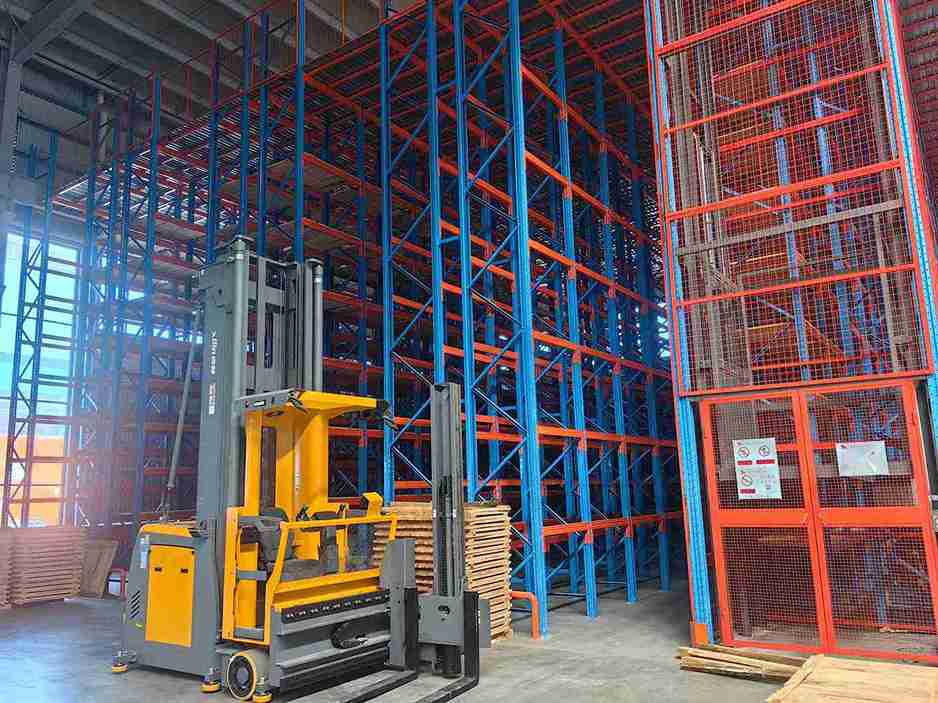
Aisle Width as a Strategic Lever: The most dramatic efficiency gain from automation is space recovery. Manual forklifts need wide aisles (3.5m+). AGV-compatible pallet racking enables Very Narrow Aisle (VNA) configurations, with widths from 1.6m to 2.0m. The immediate benefit of choosing such space-efficient affordable racking is a 30-50% increase in storage positions within the same footprint, delivering a rapid ROI even before automation is deployed.
Critical Clearances: Beam heights, depths, and upright face clearances are meticulously calculated to match the fork geometry and lifting trajectories of target AGV or stacker-crane models. This ensures flawless pickup and deposit cycles without damaging the rack, the load, or the robot. Procuring cost-effective pallet racking without these considerations can render future automation projects prohibitively expensive to integrate.
Configuration for Access Strategies: Whether for pallet-to-person or goods-to-person (G2P) systems, the racking layout must facilitate robotic access. This influences decisions on single-deep versus multi-deep storage, the integration of carton flow rails within a pallet frame, and the spacing between back-to-back racks. A versatile affordable pallet racking system is designed with these advanced workflows in mind from the initial layout.
Achieving True Affordability: Intelligent Configuration and Strategic Sourcing
The pursuit of low-cost pallet racking options must be guided by intelligence, not just a search for the lowest price tag. True affordability is engineered through customization and supply chain sophistication.
Tailored Configurations: The End of One-Size-Fits-All
The most significant cost waste in storage is over-engineering. A holistic analysis of inventory—weight, dimensions, turnover velocity (ABC classification), and handling requirements—allows for a zoned storage strategy. This approach mixes different classes of affordable pallet racking options within the same facility to optimize cost and performance:
Zone A (High-Turnover, Automation-Primary): Here, the highest-specification automation-ready selective pallet racking is installed. This zone is designed for the first wave of AGV integration and handles the most frequent transactions.
Zone B (Medium-Turnover): This area may use a slightly lighter gauge, yet still compatible, budget-friendly pallet racking solution. It might be serviced initially by manual equipment but is dimensionally ready for future automation.
Zone C (Low-Turnover/Bulk Storage): Here, truly economical pallet racking systems like drive-in racks or block stacking might be used for very dense storage of slow-movers. The capital saved in Zone C can be reallocated to enhance the specifications in Zone A.
This strategic segmentation ensures every dollar spent on affordable pallet racking options is targeted for maximum operational and strategic return.
Global Logistics and Regional Manufacturing Synergy
For businesses in Southeast Asia, Africa, or Latin America, the landed cost of storage systems is heavily influenced by logistics. The most cost-effective pallet racking solutions consider this from the design stage.
Regional Production Hubs: Leading providers operate manufacturing clusters strategically. For the ASEAN market, production in Thailand or Vietnam minimizes lead times, freight costs, and import duties for customers in Malaysia, Indonesia, and the Philippines. For the Middle East and Africa, facilities in Turkey or Egypt serve as efficient hubs. This “local-for-local” model is a key driver in delivering genuinely affordable pallet racking options to these growth markets.
Knocked-Down (KD) Design Excellence: Engineering racks for ultra-efficient flat-pack shipping is a non-negotiable aspect of global affordability. A KD design can reduce shipping volume by over 75% compared to pre-assembled bays, dramatically cutting ocean freight or overland transport costs—a crucial factor for budget-conscious warehouse projects in landlocked regions. Furthermore, a well-designed KD system with intuitive connectors enables rapid, error-free local assembly, reducing total installed cost and time.
The Phased Implementation Pathway: De-Risking the Automation Journey
The supreme advantage of starting with automation-ready affordable pallet racking options is the ability to de-risk and phase the automation investment. This turns a daunting capital project into a series of manageable, ROI-positive steps.
Phase 1: The High-Efficiency Manual Foundation
The journey begins with the full installation of your low-cost pallet racking options across the facility. Even operating with manual forklifts or reach trucks, the benefits are immediate: superior storage density from optimized layouts, improved inventory visibility, and faster picking cycles. The business case for this phase is justified solely on these tangible improvements in warehouse efficiency and space utilization. The fact that the system is automation-ready is a forward-looking benefit that secures future flexibility.
Phase 2: Pilot AGV Integration in High-ROI Zones
With the robust, perfectly aligned racking infrastructure in place, introducing automation becomes a software and vehicle integration challenge, not a structural rebuild. A company might start by deploying a fleet of pallet-moving AGVs to automate the movement of goods from receiving to the primary storage aisles. Because the aisles are the correct width and the racks are perfectly aligned, integration is swift and disruption is minimal. This pilot phase proves the automation concept, builds internal competency, and delivers a clear, measurable ROI on the AGV investment.
Phase 3: Scale and Integrate Vertical Systems
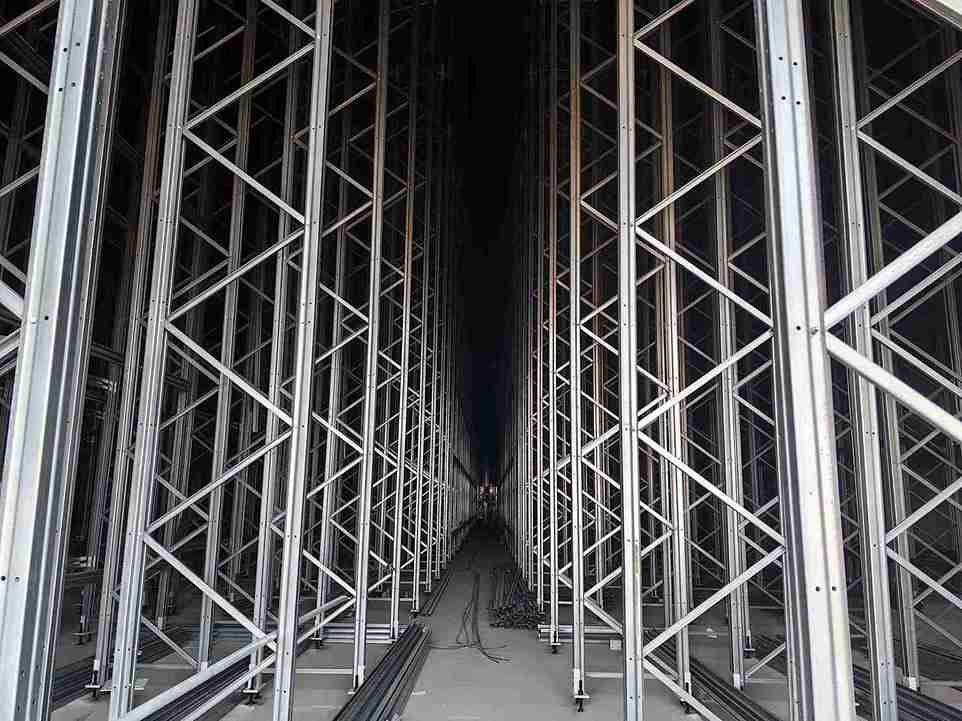
With confidence and experience gained, the operation can scale. This could involve adding an Automated Storage and Retrieval System (AS/RS) for high-density reserve storage, or implementing a goods-to-person mobile robot system for case picking. The affordable pallet racking options installed in Phase 1 form the compliant, ready-made grid into which these higher-level systems integrate. The capital outlay is sequential, matched to business growth, and never wasted.
The Compelling Financial Logic: A Comparative TCO Analysis
Consider a practical model for a distribution center in the Philippines with an initial need for 3,000 pallet positions and a 5-year growth plan.
Scenario A: Conventional “Low-Cost” Approach
Year 0: Purchase basic, non-automation-ready selective pallet racking. Lowest upfront cost.
Year 3: Business has grown 40%. The warehouse is congested, labor costs and errors are up, and competitors are automating. To stay competitive, management decides to automate.
Costs Incurred: 1) Complete dismantling and disposal of old racking. 2) Expensive site downtime. 3) Purchase of new, automation-spec racking. 4) Reconfiguration of floor plan and services. 5) Then, purchase and integration of AGVs.
Result: The initial “savings” are obliterated. Total 5-year TCO is exorbitant, and business disruption is severe.
Scenario B: Strategic Automation-Ready Approach
Year 0: Invest in slightly higher-specification affordable pallet racking options that are AGV & Automation Ready (e.g., 20% premium). Immediate gain: 25% more storage density via VNA-ready design, even with manual trucks.
Year 3: Facing the same growth, the pathway is clear. The company can directly procure and deploy AGVs into the existing rack grid. No rack modification, minimal downtime.
Costs Incurred: The incremental cost of the ready-ready racks, plus the AGV investment. There are zero costs for rack removal, zero costs for new racks, and near-zero disruption costs.
Result: The 5-year TCO is substantially lower than Scenario A. The business has been operating at higher efficiency since Year 0 and transitions to automation smoothly. The initially affordable pallet racking options have provided an unbeatable return on investment.
Navigating Critical Pitfalls in Specification and Procurement
Selecting the right automation-ready affordable pallet racking options requires vigilance. Common pitfalls include:
Prioritizing Price Over Specification Sheets: Insist on detailed engineering drawings and specification documents that explicitly state tolerances (e.g., EN 15635, FEM 10.2.02), locking mechanism types, and load ratings for automated applications. The cheapest budget-friendly pallet racking solution often omits these critical details.
Ignoring Local Environmental and Regulatory Demands: In the humid climate of Vietnam or Nigeria, corrosion resistance is paramount. Specifications must mandate appropriate galvanization or coating thickness (e.g., 120-micron epoxy polyester). In seismic zones like Chile or Indonesia, racking must be designed and certified for specific seismic loads. Generic affordable pallet racking options often fail in these areas.
Overlooking the Importance of Site Preparation: The performance of high-specification racking and AGVs is wholly dependent on floor flatness. Tolerances of ±3mm over 3m are common requirements. This must be specified and verified before installation. A provider of serious automation-ready pallet racking will include detailed floor prep requirements in their proposal.
Neglecting Data and Infrastructure Conduits: An automation-ready design extends beyond steel. It includes planning for conduits for data cables, location markers for AGV navigation (fiducials), and placement for AGV charging stations. These should be integrated into the initial warehouse layout plan.
Case Study: Implementing Future-Proof Storage in the Middle East
A large e-commerce retailer in Saudi Arabia faced rapid growth. They needed to quickly expand capacity in their Riyadh fulfillment center but knew automation was in their 3-year plan. They opted for affordable pallet racking options configured to be automation-ready from a provider with regional manufacturing expertise.
Solution: A mix of high-specification selective racking in the fast-moving goods area (VNA-ready, 1.8m aisles) and medium-duty racking for slower categories. All uprights featured reinforced base plates for seismic stability and a high-grade galvanized finish for the desert environment.
Immediate Benefit: Even using manual reach trucks, they achieved a 35% increase in storage capacity over their old layout.
Future-Proof Outcome: Eighteen months later, they seamlessly integrated a fleet of hybrid AGV/stacker units into the VNA-ready aisles during a weekend shutdown. The integration was purely digital and mechanical—no welding, cutting, or moving of racks was required. Their low-cost pallet racking options proved to be the most strategic investment they had made, enabling a leap in productivity without a massive, disruptive capital project.
Conclusion: The Strategic Inflection Point for Modern Warehousing
The narrative that businesses must choose between affordable pallet racking options and automation-ready design is a false one. The most sophisticated, forward-thinking strategy unites these objectives. For logistics leaders in Bangkok, Johannesburg, Dubai, and Mexico City, the decision is clear: the only truly cost-effective pallet racking solution is one that serves today’s density and budget needs while actively enabling tomorrow’s technological evolution.
By redefining affordability through the lens of Total Cost of Ownership and strategic flexibility, businesses can transform their warehouse from a fixed asset into a platform for innovation. Investing in automation-ready affordable pallet racking options is not an expense; it is the foundational capital expenditure that protects all future investments in efficiency. It is the definitive step for any organization that intends to grow, compete, and lead in the dynamic global marketplace.
Frequently Asked Questions (FAQs)
1. We have a very limited budget this year. Can we still invest in automation-ready racking, or should we buy basic racks and plan to replace them later?
This is the core dilemma. The data consistently shows that buying basic racks with a plan to replace them is the more expensive long-term path. The smarter approach is to phase your affordable pallet racking options purchase. Start by installing automation-ready racking in your highest-turnover or most congested zone—where the immediate efficiency payoff is greatest. You can use standard racks in archival storage areas. This focused investment gets the critical part of your operation future-proofed and efficient, aligning expenditure with both immediate need and long-term strategy. Many providers offer scalable financing or phased delivery plans for such budget-friendly pallet racking solutions.
2. How do we verify that a supplier’s “automation-ready” claim is genuine and not just marketing?
Demand concrete, measurable specifications. Key documents to request include:
FEM 10.2.02 or RMI Compliance Certificates: These industry standards define tolerances for racking.
Detailed Tolerance Sheets: Ask for the specific plumb, level, and straightness tolerances (e.g., ±2mm per 3m of height).
Test Reports for Connectors: Evidence that the beam-end connectors have passed vibrational fatigue testing.
Reference Projects: Ask for contactable clients who have successfully integrated AGVs with their racking system. A credible provider of genuine automation-ready pallet racking will have this documentation readily available.
3. What happens if we buy this racking but then choose a different brand or type of AGV in the future than we originally planned?
Quality automation-ready affordable pallet racking options are designed to universal interface standards. The critical parameters—consistent beam heights, standardized clearances, robust upright faces—are agnostic to AGV brand. The integration between the AGV’s fork geometry and the rack is standardized around common pallet sizes (1200x1000mm, 1200x800mm, etc.). As long as the AGV is designed for standard pallet handling (which the vast majority are), it will interface correctly with properly specified racking. Your flexibility is maintained.
4. Does automation-ready racking require more maintenance than standard racking?
Quite the opposite. Properly specified automation-ready pallet racking is built to higher durability standards to withstand continuous use. While a rigorous periodic inspection regimen (as per EN 15635) is essential for any racking system, the enhanced locking mechanisms and robust construction of a ready-ready system often result in fewer unplanned maintenance issues, such as loose beams or damaged uprights from minor impacts. The precision of an automated system also reduces accidental impacts compared to manual operations.
5. Can our existing warehouse staff manage the installation and later the integration, or do we need specialized contractors?
Installation of the racking itself requires precision but not overly specialized skills if the KD design is good and guides are clear. However, for automation-ready affordable pallet racking options, we strongly recommend using the supplier’s certified installation team or supervised installation. The reason is the tolerances. A slight misalignment during installation that would be acceptable in a manual warehouse can cause constant faults in an automated one. The marginal extra cost for expert installation guarantees performance and protects your warranty. For the AGV integration, that will always be handled by the automation provider or a systems integrator in close collaboration with your team.
If you require perfect CAD drawings and quotes for warehouse racking, please contact us. We can provide you with free warehouse racking planning and design services and quotes. Our email address is: jili@geelyracks.com