📐 "First 50 Enterprise Queries Get Custom 3D Warehouse Design" Plan
















In the high-stakes world of industrial storage, few decisions carry as much weight as the selection of a storage system for temperature-controlled and food-grade environments. Standard shelving units, designed for benign, dry warehouses, are fundamentally unequipped to handle the relentless challenges posed by sub-zero temperatures, aggressive sanitation protocols, and stringent regulatory scrutiny.
The solution, increasingly recognized by leading logistics managers and facility engineers, is the strategic deployment of custom-engineered wire shelf racking. This comprehensive guide delves into the technical nuances, operational benefits, and strategic advantages of specifying a fully customized wire shelf racking system, positioning it not as a commodity purchase, but as a critical capital investment in operational integrity, product safety, and long-term profitability.
H2: The Critical Failures of Standard Shelving in Hostile Environments
Attempting to utilize standard shelving in a cold storage or food processing warehouse is an exercise in managing inevitable failure. The unique conditions of these environments systematically exploit the weaknesses of conventional storage solutions.
H3: Corrosion: The Silent Saboteur of Structural Integrity
The pervasive moisture present in coolers, freezers, and processing areas is a catalyst for rapid corrosion on unprotected or poorly protected metal. Standard shelving, often featuring thin paint or light-duty chrome plating, quickly succumbs to rust when subjected to constant condensation cycles and chemical cleaning agents. This corrosion is not merely cosmetic; it is a direct threat to product purity and personnel safety.
Flaking rust particles present an unambiguous contamination hazard for food and pharmaceutical products. More insidiously, the corrosion process compromises the metallurgical structure of the wire shelf racking, leading to a progressive and often invisible reduction in its load-bearing capacity, creating a significant risk of catastrophic structural failure.
H3: Hygiene Breakdowns and Regulatory Non-Compliance
Solid-sided shelving and sheet metal decks create shadows, dead zones, and concealed surfaces that are impossible to inspect and difficult to clean. These areas become breeding grounds for mold, mildew, and pathogenic bacteria like Listeria and Salmonella, directly contravening the principles of HACCP (Hazard Analysis Critical Control Point) and inviting severe regulatory action from bodies like the FDA and USDA. A storage system that cannot be thoroughly and efficiently sanitized is a liability, turning routine sanitation from a controlled process into a high-risk gamble.
H3: Operational Inefficiency in a High-Cost Environment
Cold storage environments are exceptionally expensive to operate, with energy costs for refrigeration and the human cost of worker comfort being major concerns. Inefficient storage layouts, characterized by poor visibility and difficult access inherent in many standard shelving designs, force employees to spend more time in the cold. This leads to slower order picking, increased error rates, and higher labor costs. Furthermore, a non-optimized wire shelf racking system fails to maximize storage density, wasting valuable cubic space and effectively forcing a company to pay for a larger facility than necessary.
H2: The Engineering Superiority of Custom Wire Shelf Racking
Custom wire shelf racking is not a simple product; it is an engineered system designed to transform storage challenges into tangible competitive advantages. Its fundamental design principles directly address the shortcomings of standard shelving.
H3: Unobstructed Airflow as a Foundation for Product Integrity
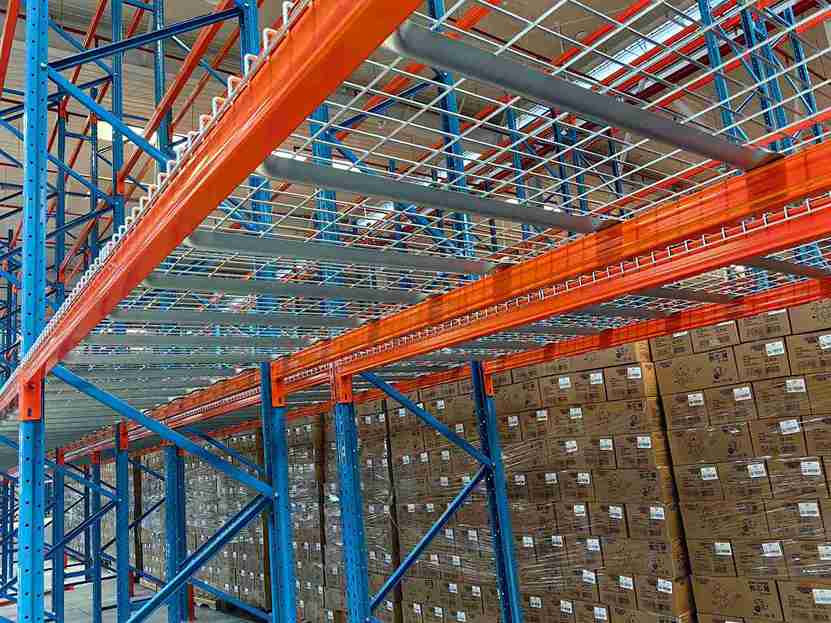
The open mesh construction that defines quality wire shelf racking is its most critical asset in temperature-controlled logistics. This design facilitates the laminar flow of refrigerated air throughout the entire storage mass, eliminating the stagnant air pockets and temperature differentials that plague solid-shelf systems. This ensures every product, whether located at the front or rear of the wire shelf racking bay, is maintained at a consistent, specified temperature. This is non-negotiable for preserving the shelf life and safety of temperature-sensitive goods.
H3: Inherently Hygienic Design for Uncompromising Cleanliness
Hygiene is engineered into the DNA of industrial wire shelf racking. The absence of solid surfaces and 90-degree corners leaves no sanctuary for contaminants. Spills and debris fall through the open wire deck, and all surfaces are directly exposed for cleaning and visual inspection. This allows for high-pressure wash-down and rapid chemical sanitization without the need for disassembly, drastically reducing cleaning time and labor while ensuring a verifiable level of cleanliness that satisfies the most rigorous audits.
H3: Engineered Durability and Corrosion Resistance
The term “wire” in wire shelf racking can be misleading, suggesting a lack of strength. In reality, industrial-grade wire shelf racking is fabricated from high-tensile steel wire, typically 12-gauge or heavier, electrically welded at every intersection to form an immensely strong matrix. The critical differentiator is the finish. A high-performance wire shelf racking system undergoes a multi-stage pre-treatment and is coated with a thick, industrial-grade epoxy powder. For the most extreme environments, the wire shelf racking can be constructed entirely from Type 304 or 316 stainless steel, offering unparalleled resistance to corrosion and pitting, ensuring a multi-decade service life.
H2: The Design and Specification Process for Optimal Wire Shelf Racking
Achieving the full benefits of wire shelf racking requires a meticulous, collaborative design process. Off-the-shelf dimensions and capacities are merely a starting point for a truly custom solution.
H4: Structural Analysis and Load Capacity Engineering
Professional providers of wire shelf racking do not simply sell shelves; they engineer storage structures. This involves a detailed analysis of both static (dead) and dynamic (live) loads. Engineers calculate the required wire gauge, weld specifications, and overall frame design to support the intended inventory, incorporating a significant safety factor to account for potential point-loading, impact from material handling equipment, and the long-term integrity of the wire shelf racking system.
H4: Spatial Optimization and Ergonomic Workflow Integration
The layout of the wire shelf racking is paramount to operational efficiency. Using advanced CAD software, designers create a 3D model of the proposed wire shelf racking installation to optimize storage density and workflow. This involves determining the ideal shelf dimensions and vertical spacing to accommodate specific totes, cases, or pallets, while configuring aisle widths to suit the type of material handling equipment used, from pallet jacks to narrow-aisle forklifts. The goal is to create a wire shelf racking layout that minimizes travel time, reduces worker fatigue, and maximizes throughput.
H4: Strategic Integration with Material Handling Systems
A wire shelf racking system must function synergistically with the broader warehouse ecosystem. This includes designing for integration with conveyor systems, ensuring clearances for automated guided vehicles (AGVs), and specifying protective elements like column guards, post protectors, and reinforced uprights to mitigate damage from forklifts. This holistic view ensures the wire shelf racking is a durable and functional component of a fully integrated logistics operation.
H2: The Material Science Behind High-Performance Wire Shelf Racking
The longevity and performance of a wire shelf racking system are determined by the science of its materials and finishes.
H3: Epoxy Powder Coating: A Shield Forged in Science
The application of an epoxy powder coat is a sophisticated process. After fabrication, the wire shelf racking components undergo a chemical pre-treatment to clean and etch the metal, followed by a phosphate coating to enhance adhesion. The epoxy powder is then applied electrostatically and cured under high heat, creating a seamless, resilient skin. This finish is highly resistant to chipping, chemicals, and moisture, making it the workhorse protection for most cold storage wire shelf racking applications. The color, often sanitary white, is chosen for its ability to reflect light and reveal contaminants.
H3: Stainless Steel: The Pinnacle of Performance and Purity
For environments where hygiene and corrosion resistance are paramount, stainless steel wire shelf racking is the ultimate choice. Type 304 stainless steel provides excellent general corrosion resistance for food and pharmaceutical applications. In environments with high chlorides or aggressive cleaning chemicals, Type 316 stainless steel wire shelf racking, with its molybdenum content, offers superior resistance to pitting and crevice corrosion. While the initial investment is higher, the zero-maintenance and indefinite lifespan of stainless steel wire shelf racking often results in a lower total cost of ownership.
H2: Advanced Applications: Wire Shelf Racking in Automated and High-Density Systems
The versatility of wire shelf racking allows it to be a foundational element in state-of-the-art warehouse automation.
H3: The Backbone of Tote-Based AS/RS
Automated Storage and Retrieval Systems (AS/RS) are no longer exclusive to pallet loads. Modern, light-duty AS/RS designed for totes and cases frequently use custom wire shelf racking as their storage backbone. The open structure of the wire shelf racking is ideal for these systems, allowing for unimpeded access by robotic shuttles and clear lines of sight for optical sensors, ensuring flawless automated inventory management.
H3: Multi-Level Mezzanines: Expanding Capacity Vertically
When floor space is constrained, the structural strength of heavy-duty wire shelf racking can be leveraged to create multi-level storage mezzanines. These structures effectively double or triple the available storage and picking space within the same footprint. Using wire shelf racking for both the supporting structure and the decking ensures the mezzanine benefits from the same advantages of airflow, visibility, and cleanliness as the primary wire shelf racking system below.
H2: A Rigorous Total Cost of Ownership (TCO) Analysis for Wire Shelf Racking
The true value of an investment in custom wire shelf racking is revealed through a thorough TCO analysis, which looks beyond the initial purchase price.
Capital Expenditure vs. Operational Expenditure: A premium, custom wire shelf racking system requires a higher initial capital outlay. However, this cost is distributed over a service life that can be three to four times longer than that of an inferior system.
Elimination of Maintenance and Premature Replacement: A properly specified and finished wire shelf racking system requires virtually no maintenance and will not need to be replaced due to corrosion or failure. This eliminates recurring costs and business disruption.
Quantifiable Gains in Operational Efficiency: The improvements in picking speed, inventory accuracy, and space utilization directly lower labor costs and increase throughput. The efficiency of a well-designed wire shelf racking system generates a continuous operational dividend.
Risk Mitigation and Liability Reduction: The cost of a single product recall, regulatory fine, or accident related to storage failure can be astronomical. A custom wire shelf racking system is a proactive investment in risk management, safeguarding against these potentially devastating events.
H2: Case Study: Transforming a Frozen Food Distribution Center with Custom Wire Shelf Racking
A national frozen food distributor was struggling with an outdated storage system in its -10°F distribution center. The existing structural racking and solid shelving were rusting, creating contamination concerns, and the layout led to congested aisles and slow order fulfillment.
The Challenge: The primary objective was to deploy a wire shelf racking solution that would eliminate corrosion, increase pick-face density by 40%, and streamline workflow to meet a 15% reduction in order cycle time, all while complying with AIB International food safety standards.
The Custom Solution: A three-pronged wire shelf racking strategy was implemented. First, the bulk storage area was reconfigured with heavy-duty, epoxy-coated wire shelf racking with customized dimensions for full-case picking. Second, a two-tiered wire shelf racking mezzanine was erected for slower-moving SKUs, dramatically increasing storage density. Third, all shelving was specified with a 5-mil sanitary white epoxy coating.
The Documented Outcome: Within six months, the facility reported a 45% increase in storage density within the same footprint. Order picking efficiency improved by 18% due to improved visibility and accessibility of the wire shelf racking system. The sanitation team confirmed a 60% reduction in time required for weekly cleaning. The new wire shelf racking installation was highlighted as a best practice during the company’s next AIB audit.
H2: Ensuring Regulatory Compliance Through Strategic Wire Shelf Racking Selection
A custom wire shelf racking system is a powerful tool for achieving and maintaining compliance with critical health and safety regulations.
FDA & USDA Compliance: The easily cleanable, non-absorbent, and corrosion-resistant nature of a properly specified wire shelf racking system directly meets the equipment requirements outlined in the FDA Food Code and USDA directives for meat, poultry, and egg facilities.
OSHA Compliance: From a structural safety perspective, a professionally engineered and installed wire shelf racking system is designed to meet or exceed OSHA standards (29 CFR 1910.176) for safe load management and storage, ensuring a safer working environment and reducing employer liability.
H2: The Implementation Journey: A Phased Approach to Wire Shelf Racking Deployment
Partnering with an expert provider for a custom wire shelf racking solution involves a structured, phased process designed to ensure success from concept to completion.
Phase 1: Deep-Dive Discovery and Needs Assessment: This initial phase is dedicated to understanding the client’s unique operational workflow, inventory profile, pain points, and long-term business objectives. It involves a thorough site survey.
Phase 2: Collaborative Design and Engineering: Using the data gathered, design engineers create detailed 2D and 3D models of the proposed wire shelf racking system, facilitating a collaborative review process to refine the layout, capacity, and configuration before fabrication.
Phase 3: Precision Fabrication and Rigorous Quality Control: The approved wire shelf racking design moves to the fabrication facility, where it is manufactured with precision. Every component of the wire shelf racking undergoes multiple quality checks for weld integrity, dimensional accuracy, and finish quality.
Phase 4: Professional, Turnkey Installation: Certified installation teams manage the entire process, from receiving materials to the final bolt-tightening. They ensure the wire shelf racking system is assembled correctly, safely, and with minimal disruption to ongoing operations.
Phase 5: Ongoing Support and System Optimization: The partnership continues after installation with the provision of as-built drawings, load capacity certificates, and ongoing support for future reconfigurations or expansions of the wire shelf racking system as business needs evolve.
Conclusion
In the demanding arenas of cold storage and food-grade warehousing, the selection of a storage system is a strategic decision with profound implications for safety, efficiency, and compliance. Standard shelving represents a significant operational risk and a hidden long-term cost. In contrast, a custom-engineered wire shelf racking system is a capital investment that delivers measurable returns by safeguarding product integrity, optimizing workflow, and ensuring regulatory adherence.
The robust, hygienic, and highly adaptable nature of modern wire shelf racking makes it the unequivocal choice for logistics professionals who are committed to building a resilient, efficient, and future-proof operation. The path to superior storage begins with a commitment to customization and a partnership with experts who understand the critical role that high-performance wire shelf racking plays in supply chain success.
Frequently Asked Questions (FAQs)
1. How does the initial cost of custom wire shelf racking compare to standard shelving, and what justifies the difference?
The initial purchase price for custom wire shelf racking is typically higher than for standard-duty shelving. This cost differential is justified by the engineering involved, the superior quality of materials (heavier gauge steel), the advanced corrosion-resistant finishes, and the precise customization to the application. When evaluated through a Total Cost of Ownership lens, the custom wire shelf racking system proves to be far more economical due to its vastly longer lifespan, near-zero maintenance, and the operational efficiencies it creates.
2. Can wire shelf racking be effectively used for storing heavy, palletized loads, or is it only for lighter items?
While light-duty wire shelf racking is suitable for smaller items, industrial-grade wire shelf racking is engineered for substantial weight. Custom wire shelf racking systems can be designed with reinforced posts and heavy-gauge wire decks to support distributed loads of several thousand pounds per shelf, making them suitable for storing palletized goods, especially in applications where accessibility and airflow are priorities. For the very heaviest unit loads, a structural pallet rack may be recommended, but a robust wire shelf racking system handles a wide range of heavy-duty tasks.
3. What are the key maintenance requirements for a powder-coated or stainless steel wire shelf racking system in a cold storage environment?
A significant advantage of a properly specified wire shelf racking system is its minimal maintenance requirement. For epoxy-coated systems, routine visual inspections for any chips or scratches (which can be touched up with a matching FDA-compliant paint) are sufficient. Stainless steel wire shelf racking requires only periodic cleaning with appropriate solutions to maintain its surface. There is no need for repainting or rust treatment, which translates into long-term labor and cost savings.
4. We are planning a new facility. At what stage in the design process should we engage a wire shelf racking specialist?
Engagement at the earliest possible stage is highly advantageous. Involving a wire shelf racking specialist during the architectural planning phase allows for the storage system to be seamlessly integrated into the building’s design. This collaboration can influence critical decisions such as ceiling height, column spacing, and door placements to optimize the layout and efficiency of the wire shelf racking installation, avoiding costly retrofits or compromises later in the project.
5. Are there fire-rating options available for wire shelf racking used in storage areas adjacent to production or packaging facilities?
Yes, specialized fire-protection solutions are available for wire shelf racking systems. Components can be treated with intumescent coatings that, when exposed to the heat of a fire, expand to form a thick, insulating char. This protects the structural steel of the wire shelf racking from the effects of high temperatures for a specified period, helping to contain a fire and protect the asset. This is a critical consideration for facilities with strict fire code and insurance requirements.
Welcome to contact us, if you need warehouse rack CAD drawings. We can provide you with warehouse rack planning and design for free. Our email address is: jili@geelyracks.com