📐 "First 50 Enterprise Queries Get Custom 3D Warehouse Design" Plan















In the ecosystem of an industrial warehouse, the racking system is the unskeletal framework, the silent, steadfast giant that bears the entire weight of commerce. For those sourcing genuine heavy duty shelf racking, the decision transcends a simple procurement task; it represents a pivotal capital investment in the operation’s future.
This guide, drawing upon decades of field-tested expertise, moves beyond basic specifications to explore the profound impact that correctly engineered heavy duty shelf racking has on safety protocols, throughput velocity, and long-term profitability. The following sections provide a masterclass in understanding, selecting, and maintaining the heavy duty shelf racking that will become the backbone of a world-class facility.
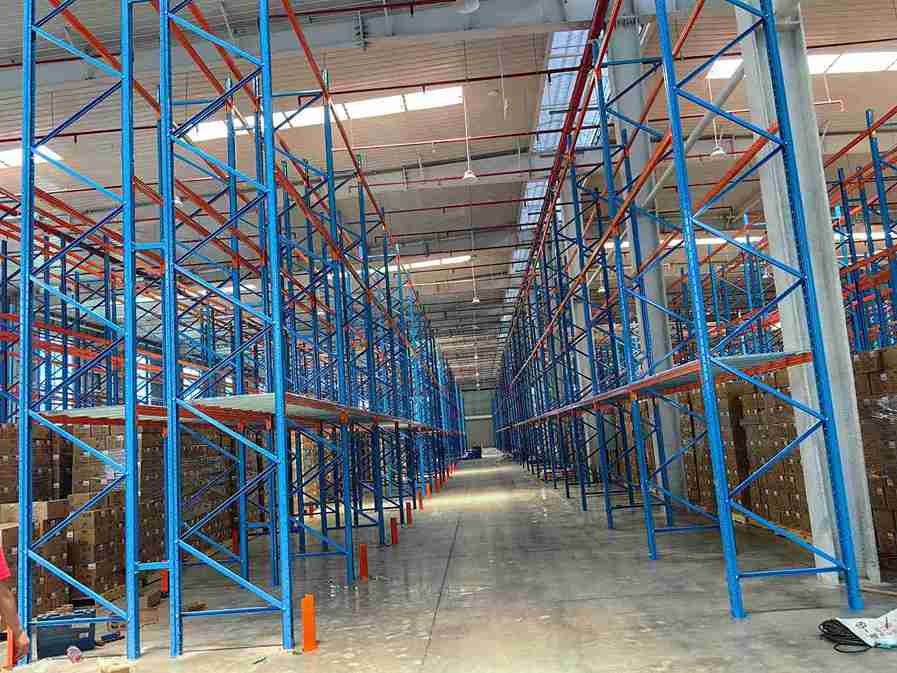
<h2><b>Deconstructing the Anatomy of True Heavy Duty Shelf Racking</b></h2>
The term “heavy duty” is often diluted in marketing materials, but in the context of industrial storage, it carries significant, quantifiable meaning. Authentic heavy duty shelf racking is defined by a combination of exceptional load-bearing capacity, often ranging from 1,000 to 25,000 pounds per shelf, and a structural integrity engineered to withstand the rigors of daily industrial use.
<h3><b>The Metallurgy and Physics of Load Management</b></h3>
What fundamentally separates standard shelving from true heavy duty shelf racking is the science behind the steel. Premium systems utilize high-strength, low-alloy (HSLA) steel with a minimum yield strength of 50,000 PSI or higher. This material choice is critical; it provides a superior strength-to-weight ratio, allowing the heavy duty shelf racking to support immense loads without resorting to excessively bulky components that waste valuable space. The design of the upright frames is equally scientific.
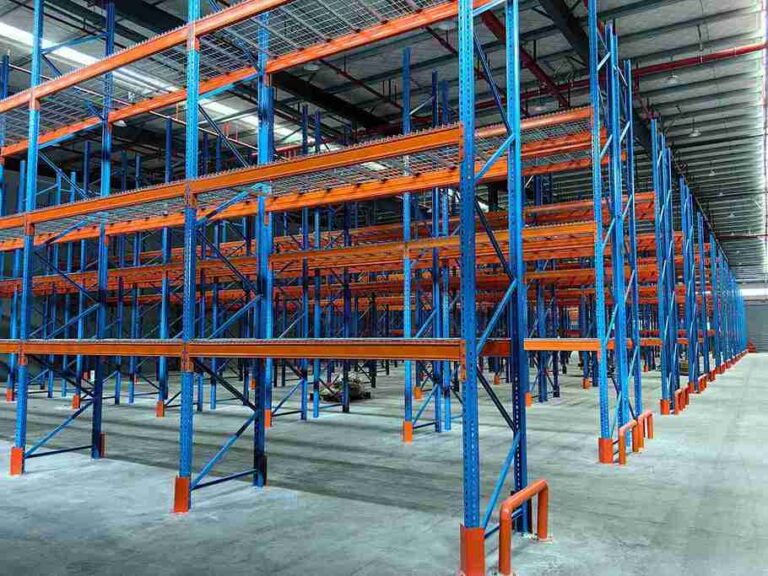
Many high-capacity heavy duty shelf racking profiles are roll-formed into an open-box or “omega” shape. This geometry provides exceptional resistance to torsional and bending forces, far surpassing the capabilities of a simple C-channel design. This meticulous attention to the base material and structural physics is the first hallmark of a superior heavy duty shelf racking system.
<h3><b>Beam Engineering and the Science of Connection</b></h3>
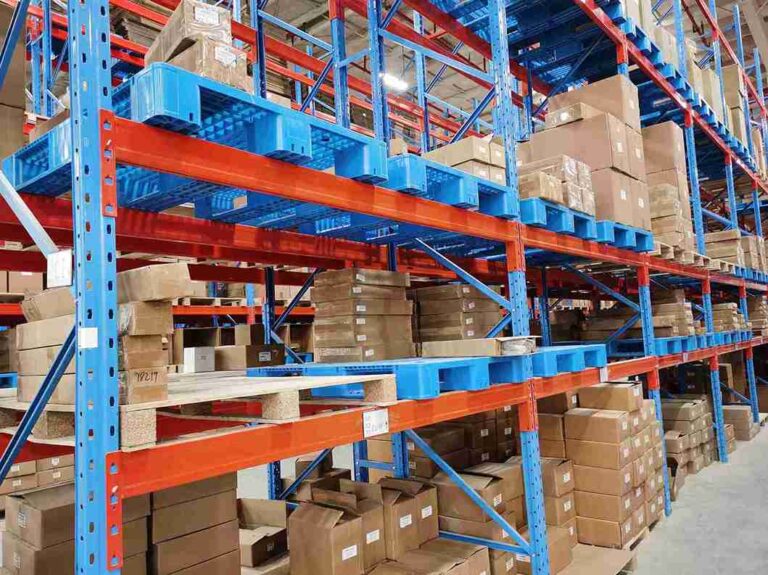
The beams in a heavy duty shelf racking system are the primary load-bearing horizontals, and their design is paramount. They are not mere shelves but engineered components. Most are roll-formed into a box-like or hat-like profile, creating a torsion-resistant structure that actively prevents sagging under extreme weight. The connection point between the beam and the upright frame is arguably the most critical safety junction in the entire heavy duty shelf racking structure.
A simple pin is insufficient. Industrial-grade systems employ positive-locking mechanisms, such as teardrop designs with safety clips, or bolted connections that create a rigid, moment-resistant frame. This ensures that the heavy duty shelf racking remains stable and secure, even when subjected to the incidental impacts of forklift operations.
<h2><b>A Detailed Taxonomy of Heavy Duty Shelf Racking Systems</b></h2>
Selecting the correct type of heavy duty shelf racking is a strategic decision that directly impacts workflow efficiency and storage density. There is no universal solution; the optimal choice is dictated by inventory profile, turnover velocity, and material handling equipment.
<h3><b>Selective Pallet Racking: The Unrivaled Champion of Accessibility</b></h3>
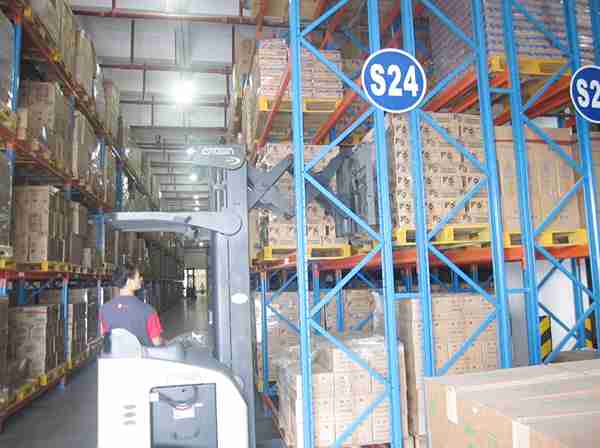
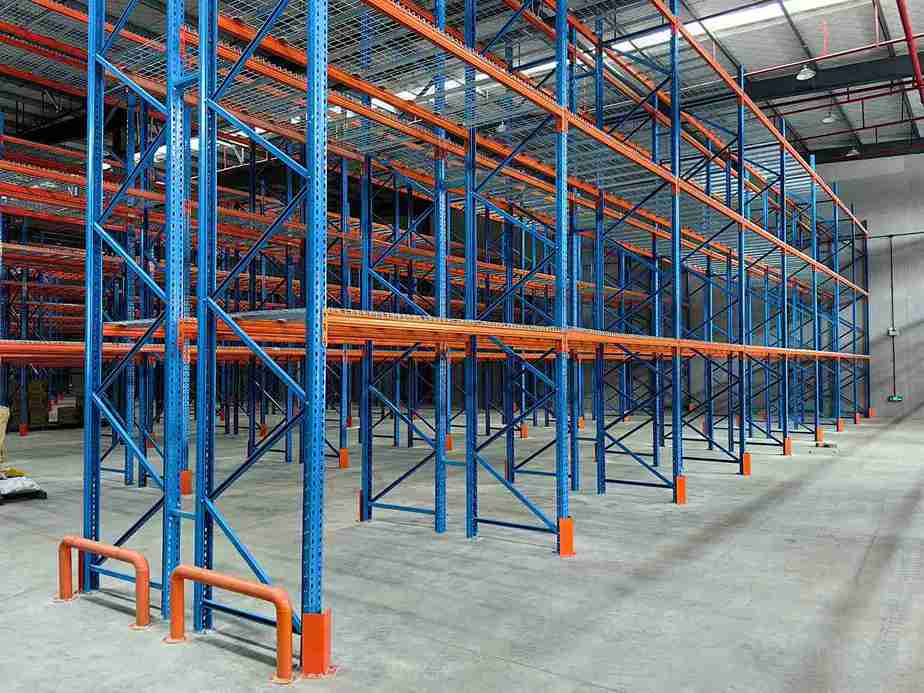
As the most widely deployed system globally, selective pallet racking offers unmatched versatility and direct access to every single pallet. This configuration of heavy duty shelf racking consists of upright frames and connectable beams, creating individual bays for each pallet. Its greatest strength is its 100% selectivity, making it the undisputed choice for warehouses with a high number of SKUs requiring frequent, random-access picking.
The durability of a well-constructed selective heavy duty shelf racking system ensures it can endure decades of constant loading and unloading, representing a timeless investment in operational flexibility.
<h3><b>Drive-In/Drive-Thru Racking: The Architecture of High-Density Storage</b></h3>
When storage density for a limited number of SKUs becomes the primary objective, drive-in and drive-thru heavy duty shelf racking systems provide the solution. These are substantial structures where the heavy duty shelf racking itself forms the guide rails and support for forklifts to drive directly into the storage lanes.
The heavy duty designation here is non-negotiable. The upright frames must be engineered to withstand not only the static load of the pallets but also the dynamic forces and weight of the forklift operating within the structure. The upright columns are typically of a heavier gauge, and the guide rails are reinforced to tolerate repeated contact. This type of heavy duty shelf racking is a testament to engineering for a specific, high-impact purpose.
<h3><b>Push-Back Racking: The Dynamic Middle Ground</b></h3>
Push-back racking represents a sophisticated evolution in heavy duty shelf racking technology, masterfully balancing high density with improved selectivity. Operating on a Last-In, First-Out (LIFO) principle, this system features carriage carts that ride on inclined rails within the heavy duty shelf racking structure, typically storing pallets two to five deep.
The heavy duty components are the high-load capacity nested carts, the hardened steel rails, and the precision incline that ensures controlled movement. This system minimizes aisle space while providing faster access to multiple pallets of the same product than a drive-in system, making this specific heavy duty shelf racking configuration ideal for batch storage with medium to high turnover.
<h3><b>Pallet Flow Racking: The Engine of Perfect FIFO Logistics</b></h3>
For the highest-density live storage with uncompromising First-In, First-Out (FIFO) inventory control, pallet flow heavy duty shelf racking is the pinnacle of efficiency. This system uses a series of gravity flow rails set on a decline within a robust heavy duty shelf racking framework. Pallets are loaded from the rear and glide to the pick face on high-capacity wheels or rollers. The engineering of this heavy duty shelf racking is exceptionally precise.
The flow rails must be meticulously calibrated for the specific weight and bottom surface of the pallets. Integrated speed controllers and braking systems are essential heavy duty shelf racking components here, ensuring pallets descend in a safe and controlled manner. This type of heavy duty shelf racking is indispensable in cold storage, beverage, and pharmaceutical industries where inventory rotation is paramount.
<h2><b>The Unsung Heroes: Advanced Materials and Protective Finishes</b></h2>
The long-term performance and durability of any heavy duty shelf racking system are fundamentally determined by the quality of its raw materials and the science of its protective coatings.
<h3><b>Beyond Basic Steel: The Alloy Advantage</b></h3>
The use of high-strength, low-alloy steel is what allows modern heavy duty shelf racking to achieve such remarkable load capacities without excessive bulk. This advanced material provides a higher yield strength, meaning it can withstand greater stress before permanent deformation occurs.
The design of the components, from the upright frames to the beam connectors, is optimized through finite element analysis to ensure stress is distributed evenly throughout the heavy duty shelf racking structure. This computational engineering eliminates weak points and guarantees that every element of the heavy duty shelf racking contributes to its overall strength and stability.
<h3><b>A Shield Against Time and Elements: The Powder Coating Process</b></h3>
The finish on heavy duty shelf racking is not merely cosmetic; it is a critical protective system. A raw steel component would quickly succumb to corrosion in a warehouse environment. The industry standard for protecting heavy duty shelf racking is a multi-stage process. It begins with a thorough chemical pre-treatment, often a zinc phosphate coating, which etches the steel and creates a surface that dramatically improves paint adhesion and corrosion resistance.
The electrostatic application of a thermosetting epoxy powder follows this. When cured under heat, this powder forms a seamless, hard, and incredibly resilient skin. This finish on the heavy duty shelf racking resists chipping from impacts, scratches from pallets, and chemical exposure, thereby preserving the structural integrity and extending the service life of the heavy duty shelf racking investment for decades.
<h2><b>The Blueprint for Success: Meticulous Planning and Installation</b></h2>
Deploying a new heavy duty shelf racking system is a significant operational project. Success hinges on meticulous pre-planning, precise data collection, and flawless execution.
<h3><b>The Indispensable Role of the Warehouse Capacity Audit</b></h3>
A professional cannot design an effective system without comprehensive data. A warehouse capacity audit is the foundational first step in specifying the correct heavy duty shelf racking. This audit moves far beyond simple floor measurements to analyze:
Inventory Dynamics: A detailed profile of all SKUs, including pallet dimensions, weights, and turnover frequency (ABC analysis).
Operational Workflow: A clear map of how goods move from receiving to shipping, identifying bottlenecks and opportunities.
Equipment Integration: The specifications of all material handling equipment, including forklift lift heights, fork dimensions, and turning radii.
Facility Constraints: Precise data on floor flatness, ceiling height, column placements, and fire suppression system layout.
This data-driven approach ensures the proposed heavy duty shelf racking layout is a custom-engineered solution, not an off-the-shelf approximation.
<h3><b>Navigating the Imperatives of Safety Factors and Seismic Codes</b></h3>
In the realm of heavy duty shelf racking, safety is not an add-on; it is an intrinsic property of the design. Reputable manufacturers engineer their heavy duty shelf racking to comply with rigorous standards set by bodies like the Rack Manufacturers Institute (RMI). A crucial concept is the safety factor. The published load capacity of a beam is its rated, usable capacity.
The actual failure point is intentionally designed to be much higher, as components are derated by a safety factor (typically 1.67 for static loads) to account for dynamic forces, incidental damage, and material variances. Furthermore, in seismically active zones, the heavy duty shelf racking design must incorporate specific engineering provisions to resist lateral forces, often requiring specialized bracing and anchor designs. This level of detailed engineering is what separates professional-grade heavy duty shelf racking from commodity products.
<h2><b>The Automated Warehouse: Integrating Heavy Duty Shelf Racking with Robotics</b></h2>
The modern warehouse is a symphony of physical and digital systems. Today’s heavy duty shelf racking is not a passive storage unit; it is the critical physical infrastructure for automation technologies.
<h3><b>The Precision Foundation for AS/RS and AGVs</b></h3>
An Automated Storage and Retrieval System (AS/RS) demands a level of precision from its heavy duty shelf racking that is measured in millimeters. The upright frames must be perfectly vertical, and the beams must be perfectly level to serve as the “rail and road” for the retrieval machines.
The heavy duty shelf racking used in these applications is engineered to exacting tolerances, ensuring flawless interaction with the automated cranes. Similarly, when heavy duty shelf racking is integrated with Automated Guided Vehicles (AGVs) or autonomous mobile robots, the pick face alignment and system dimensions must be consistent and precise. The synergy between the physical robustness of the heavy duty shelf racking and the digital intelligence of the automation software is where peak operational efficiency is realized.
<h3><b>Supporting Advanced Pick Modules and Conveyor Integration</b></h3>
Beyond unit-load storage, heavy duty shelf racking forms the structural core of complex order fulfillment pick modules. In these zones, the heavy duty shelf racking is integrated with conveyor systems at multiple levels and supports a suite of technology, including pick-to-light displays, put-to-light systems, and digital screens. The inherent strength and stability of the heavy duty shelf racking are essential to prevent any vibration or movement that could disrupt these sensitive electronic guides, ensuring accurate, high-speed order picking operations around the clock.
<h2><b>Preserving the Investment: A Proactive Approach to Maintenance and Inspection</b></h2>
A heavy duty shelf racking system is a dynamic asset that requires proactive care to maintain its safety, performance, and value over its entire lifespan.
<h4><b>Implementing a Tiered Inspection Protocol</b></h4>
A formal, documented inspection program is a non-negotiable aspect of responsible heavy duty shelf racking ownership. This program should be structured in tiers:
Operator-Level Visual Checks: Training forklift operators to perform a daily visual check of their work area, reporting any visible damage, such as a bent beam or dislodged safety lock, immediately.
Supervisory Weekly Walk-Throughs: A designated warehouse supervisor should conduct a more systematic weekly inspection, looking for issues like loose anchor bolts, leaning uprights, or progressively worsening damage.
Annual Certified Professional Inspection: At least once a year, a certified racking inspector should perform a comprehensive assessment. This expert uses specialized tools to measure upright deflection and beam levelness, providing a formal report on the condition of the heavy duty shelf racking and any necessary repairs.
<h4><b>Mitigating and Managing Forklift Impact Damage</b></h4>
The most common threat to the durability of any heavy duty shelf racking system is impact from material handling equipment. A seemingly minor bump can compromise a structural component. The first line of defense is the installation of Column Protector Guards (Upright Guards). However, when damage occurs, it must be addressed immediately and correctly.
A bent upright can reduce the load capacity of an entire bay by over 50%. A professional provider of heavy duty shelf racking will offer a rapid response repair service and stock critical replacement parts to ensure that the integrity of the heavy duty shelf racking system is restored without compromising safety or performance.
<h2><b>Conclusion: Engineering a Foundation for Scalable Growth</b></h2>
Specifying and investing in a professionally engineered heavy duty shelf racking system is one of the most strategic decisions an operational leader can make. It is a capital investment that yields continuous returns through enhanced safety, optimized workflows, and maximized spatial utility. From the accessible flexibility of selective racking to the high-density intelligence of push-back and flow systems, the optimal heavy duty shelf racking solution is a fusion of precise engineering, deep industry knowledge, and a clear strategic vision for future growth.
By prioritizing maximum storage density, unwavering durability, and seamless integration with both current and future technologies, decision-makers are not merely purchasing shelving; they are architecting the resilient, scalable, and high-performance backbone of a world-class supply chain operation. The correct heavy duty shelf racking system is the silent partner in profitability, and its selection deserves the highest level of scrutiny and expertise.
<h3><b>Frequently Asked Questions (FAQs)</b></h3>
1. What is the realistic lifespan of a professionally installed heavy duty shelf racking system, and what factors most influence its longevity?
The service life of a high-quality heavy duty shelf racking system can easily exceed 25 years with proper care. The primary factors influencing longevity are the quality of the initial materials and finish, the severity of the operating environment (e.g., humidity, temperature fluctuations), the frequency and severity of forklift impacts, and the rigor of the ongoing inspection and maintenance program. A well-maintained system in a controlled environment can remain in service for decades.
2. How does the procurement and installation process for a large-scale heavy duty shelf racking project typically unfold?
The process is multi-phased. It begins with a comprehensive consultation and site audit to gather all necessary data. This is followed by a detailed engineering and design phase, resulting in a proposal and layout. Upon approval, manufacturing begins, which can take 4-8 weeks. Finally, a certified installation team executes the project on-site, which includes anchoring, assembly, and a final load test and inspection. The entire timeline for a large project typically ranges from 8 to 14 weeks.
3. For a facility with a mix of very heavy and lighter pallet loads, is it possible to configure a single heavy duty shelf racking system to handle both efficiently?
Absolutely. This is a common scenario and a key strength of customizable heavy duty shelf racking systems. The design can incorporate different beam capacities within the same bay or allocate specific areas of the warehouse to different types of heavy duty shelf racking. For example, one section can be configured with beams rated for 10,000 lbs for the heavy loads, while another area uses beams rated for 4,000 lbs for lighter goods, all within the same overall system footprint. This optimizes cost and efficiency.
4. What are the key questions to ask a potential supplier to verify the quality and compliance of their heavy duty shelf racking products?
Prospective buyers should always ask for:
Proof of compliance with RMI or similar international standards.
Load calculation documentation and engineering drawings.
Details on the steel grade and finish specifications (e.g., mil thickness of powder coat).
Information on warranty coverage for both materials and finish.
Case studies or references from similar projects.
A reputable supplier of heavy duty shelf racking will readily provide this information.
5. Can heavy duty shelf racking be effectively reconfigured or relocated if our warehouse layout needs to change?
Yes, one of the significant advantages of selective-style heavy duty shelf racking is its inherent modularity and reconfigurability. Beams can be unclipped and moved to different heights, and entire bays can be disassembled and relocated to a new area of the warehouse or even a new facility entirely.
This flexibility provides long-term value, allowing the heavy duty shelf racking system to evolve alongside the business. It is crucial, however, that any reconfiguration is performed by qualified personnel and that a new professional inspection is conducted post-move.
Welcome to contact us, if you need warehouse rack CAD drawings. We can provide you with warehouse rack planning and design for free. Our email address is: jili@geelyracks.com