📐 "First 50 Enterprise Queries Get Custom 3D Warehouse Design" Plan
















A Comprehensive Narrow Aisle Budget Planning Guide: Maximising Value in Every Square Metre
For logistics managers, operations directors, and business owners across the globe’s high-growth regions, the challenge is universal. Space is a finite, often expensive commodity, yet commercial pressure demands ever-greater storage density and faster order fulfilment. The strategic adoption of narrow aisle storage systems presents a compelling answer, transforming vertical cube utilisation and operational workflow. However, the journey from a traditional warehouse layout to an optimised narrow aisle operation is fraught with financial complexity.
Without a meticulous, forward-looking narrow aisle budget planning guide, projects risk significant cost overruns, underperformance, or outright failure. This definitive narrow aisle budget planning guide serves as an essential strategic blueprint. It moves beyond generic cost lists to provide a granular, actionable framework for planning, justifying, and executing a narrow aisle project that genuinely optimises space without jeopardising financial stability. This guide dissects the total investment ecosystem, revealing cost drivers, hidden expenses, and proven strategies for cost-containment, tailored for markets from Southeast Asia to Latin America.
Understanding the Core Investment: The Narrow Aisle Ecosystem
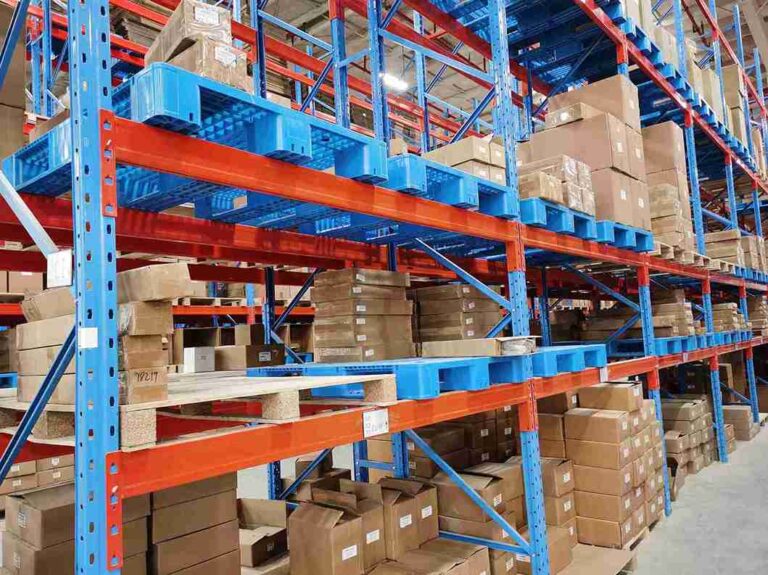
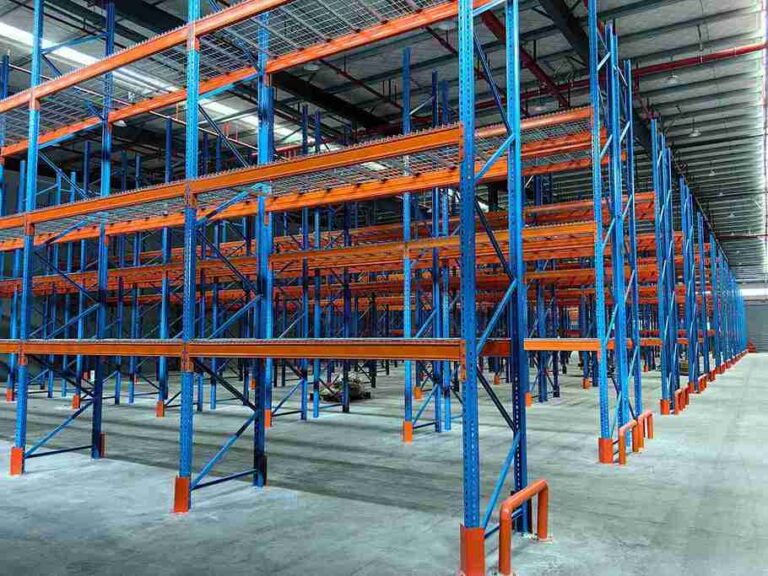
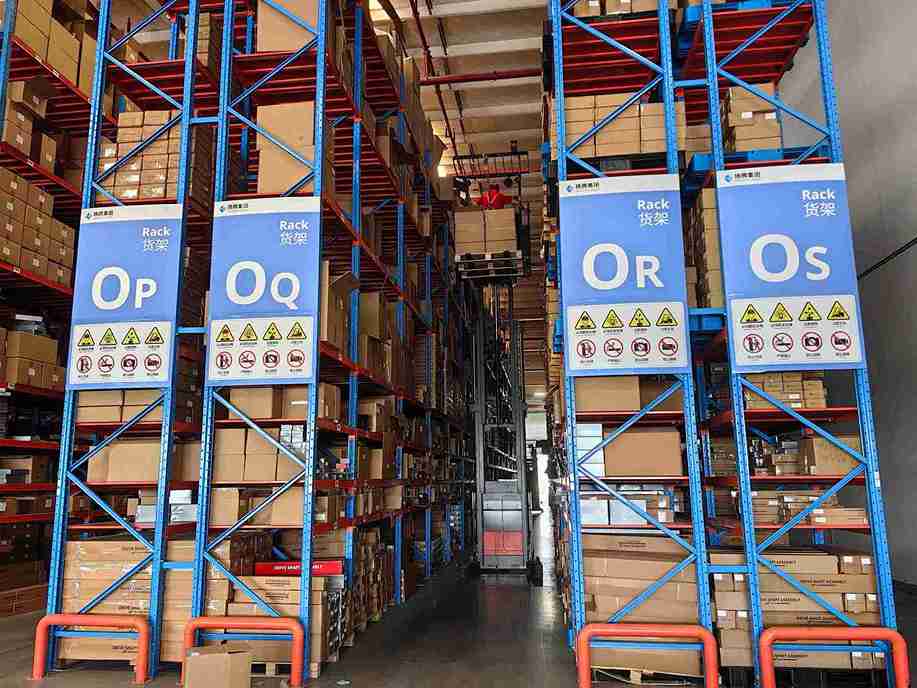
A critical error in early-stage planning is viewing a narrow aisle system as a simple rack-and-forklift purchase. In reality, it constitutes a fully integrated operational ecosystem. A robust narrow aisle budget planning guide must account for this totality. The storage structure—the racking itself—sets the foundational parameters. Whether selective, push-back, or drive-in, its specifications (height, capacity, finish) directly dictate the requirements and costs of the accompanying equipment and infrastructure.
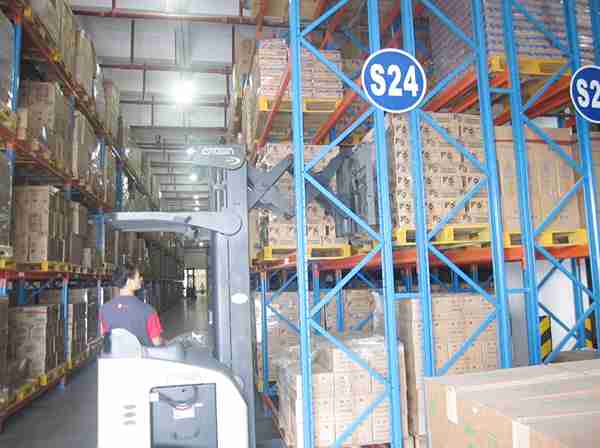
The choice of material handling equipment—be it man-down turret trucks for very narrow aisles (VNA) or versatile reach trucks—represents the single largest variable in both performance and financial outlay. Crucially, this budget planning exercise must prioritise the often-overlooked foundation: the warehouse floor. Narrow aisle equipment operates with minimal clearances, demanding exceptionally flat floors (with stringent FF/FL flatness tolerances).
Ignoring this in a narrow aisle budget planning guide is a recipe for exorbitant remedial costs later, addressing rack damage, product spillage, and accelerated equipment wear. Furthermore, the technological nervous system—comprising guidance systems, fleet management software, and Warehouse Management System (WMS) integration—alongside the human element of certified operator training, form indispensable, budgeted components of a viable system.
Phase 1: Foundational Analysis – The Bedrock of Accurate Budgeting
The first phase of any effective narrow aisle budget planning guide involves zero capital expenditure but is arguably the most valuable. This deep-dive discovery phase defines the “why” before the “how much,” preventing costly mis-specification. It begins with a forensic analysis of the SKU profile: dimensions, weights, and, critically, turnover rates (ABC analysis). This data determines optimal storage media and picking locations. Concurrently, mapping throughput volumes—peak and average—informs the number and performance grade of forklifts required, directly impacting the capital budget. A professional site audit is non-negotiable.
This includes measuring clear heights and column spacing, but its cornerstone is a comprehensive floor flatness survey. The results of this survey will decisively influence whether the budget must accommodate major floor grinding or levelling. Finally, this phase must codify future growth expectations. A narrow aisle budget planning guide that doesn’t scaffold in scalability may save short-term capital but incur far greater costs during future expansion.
Phase 2: Total Cost of Ownership (TCO) – The True Financial Lens
Astute planners understand that the lowest purchase price can mask the highest long-term cost. Therefore, a professional narrow aisle budget planning guide advocates for a 7 to 10-year Total Cost of Ownership (TCO) model. This holistic view expands beyond initial Capital Expenditure (CAPEX) for hardware, installation, and infrastructure. It incorporates ongoing Operational Expenditure (OPEX): the energy consumption of an electric fleet (including charging infrastructure), predictable maintenance and repair contracts, the cost of spare parts inventory, and potential labour cost differentials for higher-skilled operators.
Perhaps most significantly, it assigns a value to reliability and uptime. What is the financial impact per hour of a disabled aisle in a high-density system? Quantifying this risk within the narrow aisle budget planning guide justifies investment in quality equipment and comprehensive service agreements, transforming them from costs into insurance policies.
Phase 3: Constructing the Granular Budget – A Line-Item Framework
With a TCO perspective established, the next stage in this narrow aisle budget planning guide is building a detailed, line-item budget. Transparency here is key to control later. Direct hardware costs should be itemised: narrow aisle racking by bay and beam level, material handling equipment per unit (including essential attachments and a mandatory spare battery/charger per truck for multi-shift operations), and any guidance technology hardware.
Infrastructure costs, frequently underestimated, must have their own dedicated section: floor remediation quotes, professional installation fees (never a DIY line item), electrical work for charging and lighting, and ancillary safety systems. Critically, the budget must account for “soft” costs: professional design and project management services, structured training programmes, and a non-negotiable contingency fund of 10-15%. This contingency is the hallmark of a realistic narrow aisle budget planning guide, covering unforeseen site conditions, currency volatility for imported equipment, and minor scope modifications.
Phase 4: The Business Case – Translating Density into Financial Returns
A technical specification gains executive approval when translated into a compelling financial narrative. This phase of the narrow aisle budget planning guide is about building an irrefutable business case. It starts by calculating the tangible gain in pallet locations, converting this into hard savings by offsetting the annual cost of external storage or deferring the need for a costly new facility expansion. The next step is quantifying productivity lifts: faster travel and retrieval cycles mean more pallets moved per operator shift, reducing cost per handling unit.
Improvements in inventory accuracy and a reduction in product damage and safety incidents add further, quantifiable bottom-line benefits. The culmination of this narrow aisle budget planning guide step is a formal financial analysis, typically using Net Present Value (NPV) and Internal Rate of Return (IRR) metrics. A well-planned project, following this guide, should demonstrate a strong positive NPV and an IRR that comfortably exceeds the company’s hurdle rate, with a typical payback period of two to four years.
Phase 5: Strategic Procurement – Selecting a Partner, Not Just a Vendor
The marketplace for storage solutions is diverse, and supplier selection can make or break a project’s financial and operational outcome. A prudent narrow aisle budget planning guide therefore includes a rigorous vendor evaluation framework. It assesses total capability: does the supplier offer the integrated ecosystem (racking, equipment, software, service) and, crucially, do they have local engineering support in the target region, be it the Middle East or Africa? Due diligence involves demanding client references and, ideally, visiting operational sites.
Scrutinising contractual fine print—warranty terms, service level agreements, parts availability—is essential. The budget planning process also involves a strategic negotiation approach, often finding that bundling equipment and long-term service contracts yields greater lifetime value than pursuing the lowest piece-price for each component.
Phase 6: Execution and Governance – Safeguarding the Planned Investment
The final operational phase covered by this narrow aisle budget planning guide is the disciplined execution of the plan. A budget is a tool for control, not just forecasting. To manage risk and cash flow, consider a phased roll-out, implementing the system in logical stages. Appointing a dedicated internal project manager to work alongside the supplier ensures accountability and timeline adherence.
Comprehensive change management, including clear communication and thorough training, is not an optional cost line but a critical investment to minimise productivity dips during transition and ensure the workforce can safely and efficiently leverage the new technology. This governance turns the paper budget planning guide into a live, successful operational reality.
Regional Adaptations within the Budget Planning Framework
A globally effective narrow aisle budget planning guide must acknowledge regional operational realities. In the high humidity of Southeast Asia, the budget must allocate funds for premium corrosion protection on racking and consider impacts on internal airflow. In the extreme heat and dust of the Middle East, allocations for enhanced equipment cooling, filtration, and potentially air-conditioned operator cabins become necessary.
Across parts of Africa, where power reliability can be a concern, budget lines for voltage stabilisation, backup power, or a larger spare parts holding are prudent. In Latin America, varying national safety and labour regulations necessitate budgeting for locally certified training programmes. This contextual awareness is what separates a generic narrow aisle budget planning guide from a truly actionable one.
Future-Proofing the Investment: The Bridge to Automation
The modern narrow aisle budget planning guide must look beyond immediate needs. The logical evolution from a manned narrow aisle system often leads towards greater automation. Therefore, contemporary budget planning should incorporate future-proofing considerations. This can involve specifying racking that is structurally compatible with future automated guided vehicles (AGVs) or autonomous mobile robots (AMRs).
It may mean investing slightly more upfront in equipment with robust IoT sensor capabilities and ensuring the WMS is capable of advanced task interleaving and data analytics, laying a digital foundation for easier upgrade. A modular budget approach, allowing for the phased addition of aisles or autonomous trucks, encapsulates this forward-thinking principle.

Conclusion: From Planning to Competitive Advantage
This exhaustive narrow aisle budget planning guide underscores a central thesis: optimising warehouse space without overspending is an achievable outcome of disciplined, strategic planning. A narrow aisle system is a powerful engine for logistic transformation, but its performance and financial return are dictated by the quality of its financial and operational blueprint.
By adhering to the phased framework within this guide—embracing Total Cost of Ownership, rigorously analysing site fundamentals, constructing a detailed and contingency-backed budget, and governing execution meticulously—businesses can move forward with confidence. The result is not merely a storage solution, but a strategically funded asset that drives density, efficiency, and resilience, delivering a compelling return on investment and lasting competitive advantage in any market.
Frequently Asked Questions (FAQs)
1. How does the cost profile of a narrow aisle system differ fundamentally from a traditional wide-aisle setup?
The cost structure shifts significantly from a simple rack-and-equipment purchase to a integrated system investment. A traditional setup has lower upfront costs for basic racks and standard forklifts. A narrow aisle system, as outlined in a comprehensive narrow aisle budget planning guide, typically involves higher-capacity racking, specialised, often more expensive forklifts (e.g., turret trucks), and mandatory investments in floor remediation and operator training. The financial justification comes from the long-term TCO, where massive gains in space utilisation and operational efficiency deliver a superior ROI despite the higher initial outlay.
2. What are the most common hidden costs that derail a narrow aisle budget, and how does this guide help mitigate them?
The most frequent budget derailers are inadequate floor conditions, leading to unbudgeted levelling work; underestimating the complexity and cost of professional installation and electrical infrastructure; omitting the necessary spare batteries and chargers for continuous operation; and forgetting to budget for ongoing, specialised technical training and preventative maintenance contracts. This narrow aisle budget planning guide systematically identifies these potential pitfalls in its phased approach, specifically mandating a floor survey early on, creating detailed line items for all infrastructure and soft costs, and emphasising the importance of TCO modelling which captures ongoing support expenses.
3. For a business with fluctuating seasonal demand, how should the budget planning for a narrow aisle system be approached?
The budget planning guide must account for peak capacity, not just average demand. This means the system design and corresponding budget should be based on the storage volume and throughput required during the busiest period. The business case, however, can be strengthened by calculating the cost savings from avoiding short-term external storage rentals during these peaks. Furthermore, the budget could explore the feasibility of a modular racking design and the potential for leasing additional material handling equipment seasonally, rather than purchasing all assets outright, to improve capital efficiency in line with a dynamic narrow aisle budget planning guide.
4. How critical is the integration between the Warehouse Management System (WMS) and the narrow aisle equipment, and what budget should be allocated?
Integration is paramount. A high-density narrow aisle system without a smart WMS directing put-away and retrieval is like a library without a catalogue—chaotic and inefficient. The WMS optimises location selection for both space and access, enables task interleaving (combining put-away and picking missions), and manages inventory accuracy in a dense environment. Budgeting, as per a thorough narrow aisle budget planning guide, should include not only potential WMS software licence upgrades but, critically, professional services for system integration and interface development. This cost can be significant (20-40% of software costs) but is essential for realising the full ROI of the physical investment.
5. In regions with less stable electrical grids, what specific budget considerations must be included for an electric narrow aisle fleet?
This is a vital regional adaptation in any narrow aisle budget planning guide for such markets. The budget must extend beyond the purchase of trucks and standard chargers. It needs to include the cost of voltage stabilisers or conditioners to protect sensitive electronic control systems from power surges. Investment in a backup generator with sufficient capacity to support the charging station may be necessary. Additionally, the battery technology choice becomes crucial; some modern lithium-ion batteries may have stricter charging requirements regarding power quality, necessitating further protective infrastructure. These items are not optional extras but core to ensuring operational resilience.
If you require perfect CAD drawings and quotes for warehouse racking, please contact us. We can provide you with free warehouse racking planning and design services and quotes. Our email address is: jili@geelyracks.com