📐 "First 50 Enterprise Queries Get Custom 3D Warehouse Design" Plan















Demystifying the Complete Investment: A Deep Dive into Narrow Aisle Racking Total Project Cost
For logistics directors, warehouse managers, and business owners across emerging markets, the decision to implement a narrow aisle racking system represents a pivotal moment. It’s a commitment to maximizing cubic space, streamlining operations, and gaining a competitive edge. Yet, the journey from initial interest to a fully operational, high-density storage system is fraught with financial pitfalls.
The central, often misunderstood, concept governing this journey is the narrow aisle racking total project cost. A truly accurate total project cost is not a single-line quote for steel; it is a comprehensive, multi-disciplinary budget that accounts for every physical, technical, and regulatory component required to transform an empty space or outdated warehouse into a high-performing storage asset.
This article serves as an exhaustive guide, dissecting the complete anatomy of a narrow aisle racking total project cost. It will illuminate why a region-specific, turnkey approach is not merely a premium service but the most effective financial risk mitigation strategy for projects in Southeast Asia, the Middle East, Africa, and Latin America. Understanding the full scope is the difference between achieving predicted ROI and encountering debilitating budget overruns.
The Foundational Flaw: Confusing Commodity Pricing with Solution Investment
The marketplace for storage equipment is diverse. On one end, suppliers operate as commodity traders, dealing primarily in the volume sale of standardized racking components. Their proposals focus intensely on a per-pallet or per-frame price for the narrow aisle racking structure itself. This figure creates a powerful, but dangerous, illusion of affordability. It directly appeals to the procurement-driven mindset of securing the lowest upfront capital expenditure. However, this approach fundamentally misrepresents the nature of a narrow aisle racking installation.
The system is not a standalone product; it is the central, interdependent component of a complex storage ecosystem. Isolating its cost is as logical as pricing an aircraft engine without considering the airframe, avionics, or fuel systems. The subsequent, inevitable costs of integrating this “engine” into a functional warehouse “aircraft” are where budgets unravel. A genuine narrow aisle racking total project cost must, from the outset, acknowledge this interdependence. It frames the purchase not as a transaction for goods, but as an investment in a functional outcome—increased storage density and operational throughput.
The failure to make this distinction at the quotation stage is the primary cause of project distress, where the apparent savings on the initial narrow aisle racking quote are obliterated by unforeseen expenses in civil works, equipment integration, and compliance. This fragmented procurement model places the immense burden of systems integration and project management onto the client, transforming them into a general contractor for a highly specialized field—a role for which most internal teams are not resourced.
The Hidden Cost Catalog: Deconstructing an Incomplete Quote
To build an accurate financial model, one must first identify all elements routinely absent from a basic narrow aisle racking proposal. These are the variables that convert a simple price into a true total project cost. Their omission is not always malicious; sometimes it stems from a supplier’s limited scope of capability. Regardless, the financial impact on the client is the same.
1. Site Readiness and Civil Works: The Non-Negotiable Base
The performance and safety of a narrow aisle racking system are utterly contingent on the foundation upon which it stands. This is the first and most substantial area of hidden cost.
Floor Flatness and Levelness (FF/FL Specifications): Standard warehouse concrete is poured to tolerances suitable for traditional forklifts. A narrow aisle system, operating with clearances often measured in mere centimeters, demands a surgical-grade surface. The specialized trucks—turret trucks or guided reach trucks—require exceptionally flat floors to operate safely at height without load wobble, which risks product damage and racking impact. Achieving the required specification (e.g., FF60/FL50) almost invariably necessitates professional laser grinding or the application of a high-tolerance self-leveling topping slab. This process is a significant civil works contract, rarely included in a racking quote but absolutely critical to the narrow aisle racking total project cost.
Subfloor Strength and Reinforcement: The concentrated point loads from a densely packed, tall narrow aisle racking system can exceed the design capacity of an existing slab. A geotechnical and structural assessment may reveal the need for underpinning, slab thickening, or even piling. Discovering this requirement after racking procurement commences leads to catastrophic delays and cost overruns.
Utility Relocation and Enhancement: New racking lanes often conflict with existing building services. Sprinkler heads, lighting trunks, electrical conduits, and HVAC ducts may require rerouting at considerable expense. Furthermore, increasing storage height may mandate a complete redesign of the fire suppression system to an Early Suppression Fast Response (ESFR) scheme, a major separate project in itself.
2. The Symbiotic Partner: Specialized Material Handling Equipment (MHE)
The narrow aisle racking design and the MHE are a single, co-engineered unit. One cannot function without the other, and their costs are inseparable in a holistic total project cost.
The Cost of the Right Truck: A single, high-level, guided turret truck represents a capital investment comparable to, or exceeding, the cost of the racking for a significant portion of the warehouse. Whether purchasing new, leasing, or adapting existing fleet, this cost must be integrated into the narrow aisle racking total project cost model. The choice of truck (man-up, man-down, hybrid) directly influences racking design parameters like aisle width and beam heights.
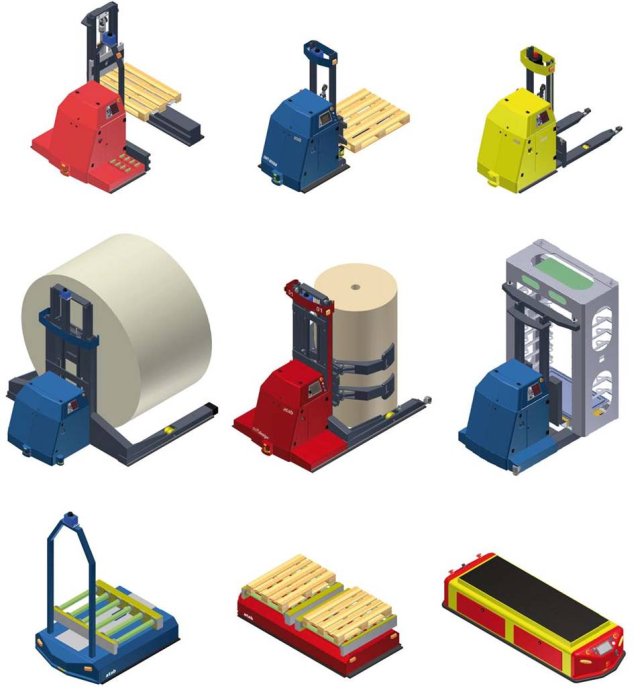
Automation and AGV Integration: The modern evolution is toward Automated Guided Vehicles (AGVs) and unmanned forklifts. This integration dramatically alters the total project cost structure. It introduces costs for navigation infrastructure (laser targets, magnetic tape, or natural feature mapping), fleet management software, integration with the Warehouse Management System (WMS), and specialized racking interfaces for the robotic equipment. The narrow aisle racking design for AGVs may feature different clearances and guidance profiles. Treating the racking and automation budgets separately is a recipe for incompatibility and failure.
3. Engineering Integrity: Beyond Generic Load Tables
The steel must be certified for your specific building, in your specific location. This is where engineering transforms from a theoretical exercise into a tangible cost center for safety and compliance.
Seismic and Wind Load Engineering: A racking design valid for a warehouse in flat, temperate Northern Europe is irrelevant and unsafe for a facility in seismically active Chile, the Philippines, or Turkey. Similarly, coastal regions in the Middle East or Southeast Asia face specific wind load challenges. Proper site-specific seismic and wind load calculations, performed by accredited structural engineers, are not optional. They are a mandatory component of the narrow aisle racking total project cost in most global regions, impacting steel gauge, bracing design, and anchor specifications.
Building Interaction Analysis: The racking is not an island. Forces transmit to the host building. A professional analysis determines if the racking should be free-standing or tied to building columns, and what reinforcing, if any, the building shell requires. Overlooking this can lead to costly damage to the client’s primary asset—the warehouse building itself.
Third-Party Design Certification and Insurance: Reputable projects require an independent, certified engineer to review and stamp the final design and as-built installation. This provides liability protection and is often required for insurance underwriting. The fee for this independent certification is a vital, yet frequently omitted, line item in the total project cost.
4. Precision Installation: The Art of Assembly
The quality of installation dictates the long-term performance and safety of the system. It is a specialized trade, not general labor.
Specialized Crews and Equipment: Erecting high-rise narrow aisle racking to tolerances of +/-3mm requires trained installers using rotary laser levels, calibrated torque wrenches, and heavy equipment like telehandlers. Mobilizing such a crew, with their tools and equipment, constitutes a major portion of the narrow aisle racking total project cost.
Project Management and Coordination: The installation manager must sequence deliveries, coordinate with other trades (electricians, sprinkler fitters), manage site safety, and adhere to a critical path schedule. Poor management here leads to downtime, rework, and claims—all of which inflate the final total project cost for the client.
Commissioning and Load Testing: Once installed, the system must be formally commissioned. This involves checking every connection, verifying levels, and often conducting a physical load test to certify performance. This formal handover process is a defined project phase with associated costs.
5. The Lifecycle Commitment: Beyond the Handshake
The financial relationship does not end at project completion. The ongoing operational cost is determined by initial choices.
Spare Parts Strategy and Local Inventory: Does the supplier maintain a local stock of critical spare parts (beams, connectors, safety locks)? If a component is damaged, is the lead time for a replacement 2 days or 2 months? The cost of warehouse downtime waiting for a part flown in from overseas can be astronomical.
Preventive Maintenance and Service Agreements: Like any precision equipment, narrow aisle racking requires regular inspection and adjustment. A planned preventive maintenance contract, conducted by factory-trained technicians, is a predictable operational expense that prevents major failures. Its value should be factored into the long-term total project cost analysis.
Future Expansion and Reconfiguration: A well-designed system allows for cost-effective future expansion. A poorly designed or proprietary system can make adding bays or changing configurations prohibitively expensive. The flexibility for future growth is an inherent part of the system’s value and impacts its lifetime total project cost.
Building the Definitive Cost Model: A Line-by-Line Framework
A transparent and complete narrow aisle racking total project cost proposal should resemble a detailed construction budget. It provides visibility and accountability for every phase. Here is the framework a sophisticated client should demand:
Phase 1: Discovery and Design (The Foundation of Accuracy)
Professional Site Audit & Laser Scanning: Capturing precise as-built conditions of the warehouse.
Floor Flatness (FF/FL) Survey and Geotechnical Assessment: Quantifying site readiness costs upfront.
Conceptual Design & Throughput Simulation: Modeling different layouts to optimize the total project cost against performance goals.
Detailed Manufacturing & Installation Drawings: Including full seismic/wind calculations and building interaction reports.
Integration Blueprint: Defining the WMS/MHE/racking data interfaces.
Phase 2: Procurement and Fabrication
Racking Structure: The core steel components, specified to the engineered design.
Ancillary Safety and Access Steel: Column guards, rack protectors, mezzanine floors, staircases, and gates.
Material Handling Equipment: The trucks or AGV fleet, with specifications perfectly matched to the racking design.
Software and Control Systems: Licenses for warehouse execution software, AGV fleet management, and interface modules.
Phase 3: Site Preparation and Enabling Works
Floor Remediation: Laser grinding, topping slab, or sub-floor reinforcement.
Building Services Modification: Sprinkler system redesign/relocation, lighting grid overhaul, electrical supply for MHE charging.
Civil and Structural Modifications: Any required strengthening of the building shell.
Phase 4: Execution and Activation
Installation Labor, Supervision, and Site Management: All-inclusive costs for the erection team and project leadership.
Specialized Equipment Rental and Logistics: Cranes, telehandlers, and material handling on site.
System Commissioning, Load Testing, and Performance Validation: Formal sign-off procedures.
Comprehensive Training Programs: For operators, maintenance staff, and system administrators.
Phase 5: Sustained Operations and Support
Warranty Documentation with Clear Terms and Exclusions.
Annual Preventive Maintenance Service Contract.
Initial Spare Parts Inventory Package.
Technical Support with defined Service Level Agreements (SLAs).
When evaluating a narrow aisle racking total project cost, this level of granularity is non-negotiable. It transforms the proposal from a price list into a project plan and a partnership agreement.
The Regional Imperative: Why Geography Dictates Cost and Strategy
A narrow aisle racking total project cost is not a global constant. It is profoundly shaped by geographic, economic, and regulatory realities. A “one-design-fits-all” approach is a liability. A region-specific package intelligently bundles solutions to local challenges, providing cost predictability and compliance assurance.
Engineering for Environmental and Regulatory Realities
Seismic Design in Asia-Pacific and Latin America: In markets like Indonesia, Japan, Chile, or Mexico, seismic activity is a primary design driver. Our engineering does not just apply a blanket safety factor, which can lead to wasteful over-engineering. Instead, we perform site-specific analysis per local codes (e.g., SNI in Indonesia, NCh433 in Chile), optimizing the steel design for both safety and material efficiency, directly controlling a major variable in the narrow aisle racking total project cost.
Climate Adaptation: High humidity in Southeast Asia accelerates corrosion. Dust and sand in the Middle East abrade surfaces. We specify and factor in the cost of appropriate protective finishes, such as high-grade powder coating or specialized galvanization, into the package. For cold storage projects in food distribution, we engineer for thermal contraction and use low-temperature steels, preventing brittle failure—a cost that must be included from the start.
Navigating Local Compliance Labyrinths: Each region has its own standards body (e.g., GCC in the Gulf, SON in Nigeria, INN in Chile). Our package includes the management and cost of obtaining all necessary local certifications and approvals, preventing costly delays at the port or during final inspection. This proactive compliance management is a critical, value-added component of our total project cost model.
Localized Execution: Mitigating Supply Chain and Logistical Risk
In-Region Manufacturing and Strategic Inventory: By leveraging manufacturing partnerships and stocking key components within economic zones in Southeast Asia, the Middle East, or Africa, we dramatically reduce lead times, import duties, and shipping volatility—three of the largest uncontrollable variables in a typical narrow aisle racking total project cost. This local presence also ensures rapid access to spares.
Vetted Local Installation Partners: We do not fly expensive expatriate crews for every project. We invest in training and certifying local installation companies to our global quality standards. This controls labor costs, ensures cultural and linguistic alignment, and builds a local support infrastructure, all contributing to a more stable and competitive total project cost.
End-to-End Logistics Management: We assume responsibility for the entire supply chain, from factory floor to project site. This includes customs clearance, inland transportation, and just-in-time delivery scheduling. By managing this complex process internally, we eliminate surprise fees and delays for the client, baking predictable logistics into the single narrow aisle racking total project cost.
Total Systems Integration: The Ultimate Cost Control Mechanism
The pinnacle of a region-specific package is single-source accountability. We provide and are responsible for the entire storage ecosystem.
Seamless Racking-AGV-WMS Integration: When we design the narrow aisle racking, we concurrently engineer the interface for the AGVs and the WMS. The racking dimensions, pick face locations, and data protocols are pre-coordinated. This eliminates the immense hidden costs of retrofitting, software patching, and system downtime that occur when disparate vendors try to interface post-installation.
Unified Project Management: The client has one project manager who orchestrates the civil contractor, the electrician, the sprinkler installer, and the racking team on a single, optimized schedule. This synchronization alone prevents weeks of costly idle time and rework, a saving directly reflected in a more efficient total project cost.
Performance Guarantee on the Integrated System: We guarantee the outcome—the storage capacity and throughput—of the entire system, not just the structural soundness of the racking. This shifts the supplier’s incentive from merely selling equipment to ensuring operational success, aligning their goals with the client’s ROI.
Comparative Analysis: The True Cost of a “Low” Quote
Consider a manufacturing company in Saudi Arabia needing to expand storage capacity by 50%. They evaluate two paths:
Path A (Fragmented Procurement): They accept a low quote of $350,000 for the narrow aisle racking steel from a supplier with no regional presence. They plan to manage other costs separately.
Path B (Our Region-Specific Package): They accept a comprehensive narrow aisle racking total project cost quote of $650,000 for a full turnkey solution.
Path A Unfolds:
The client must hire a local engineer to perform seismic calculations for SBC code compliance: +$20,000.
The engineer requires design modifications: +$40,000 in additional steel and anchors.
The floor requires grinding to FF/FL 55: +$60,000 (discovered late).
The local installation crew, unfamiliar with the design, makes errors causing a 3-week delay: +$35,000 in overheads and expediting fees.
A damaged upright must be shipped from Europe, halting work for 6 weeks: Lost production value exceeds $150,000.
The sprinkler system needs redesign for new rack height: +$80,000 (separate contract).
Final Total Project Cost for Path A exceeds $735,000, with massive operational disruption and no single point of support.
Path B Unfolds:
The project completes at the quoted total project cost of $650,000, on schedule. The package included the seismic engineering, floor preparation, certified installation, sprinkler coordination, and a local spare parts kit. The system is operational in month 4, generating value. The total project cost was higher upfront but was accurate, controlled, and ultimately lower in final outlay and business impact.
This stark contrast illustrates that the quoted narrow aisle racking total project cost is meaningless without completeness. The lower initial figure for the racking alone was a financial illusion.
The Strategic Value of a Complete Partnership
Choosing a partner capable of delivering a definitive narrow aisle racking total project cost within a region-specific package confers strategic advantages far beyond budget control.
Financial Predictability and Risk Transfer
The client receives a fixed-price contract for a defined scope. The financial risks associated with hidden site conditions, integration failures, and regulatory delays are transferred to the solution provider. This predictability is invaluable for capital allocation and secures stakeholder buy-in by eliminating the fear of endless cost overruns.
Accelerated Time-to-Value (TTV)
A synchronized, single-source project accelerates the timeline from groundbreaking to full operation. Parallel workstreams are expertly managed. There is no downtime waiting for the client to procure the next vendor. A faster TTV means the new, efficient storage asset begins contributing to profitability sooner, improving the net present value (NPV) of the investment and making the total project cost more justifiable.
Guaranteed Uptime and Long-Term Asset Health
With a single warranty and service contract covering the entire system, clients avoid disputes between suppliers. Preventive maintenance conducted by the original system experts extends the asset’s life and maintains its performance. This guaranteed uptime protects the revenue-generating capability of the warehouse, ensuring the narrow aisle racking total project cost delivers sustained returns.
Inherent Future-Proofing and Scalability
Our designs are developed with a growth roadmap. The region-specific package includes documentation on how to add modules, integrate higher levels of automation, or adapt to new product profiles. This foresight prevents the warehouse from becoming a stranded asset and avoids the exorbitant total project cost of a full system redesign in 5 years.
The Informed Client’s Checklist: Scrutinizing Your Next Quote
Before approving any project, equip your team with this due diligence checklist. Pose these questions to every potential supplier:
“Can you provide a line-item breakdown of your narrow aisle racking total project cost that includes columns for site survey, floor specification, and civil works?”
“Who is the locally licensed structural engineer of record for the seismic design, and is their stamp and certification fee included?”
“How do you price and specify the interface between your racking and the required MHE or AGVs? Is integration testing a separate cost?”
“Where is your nearest inventory of spare parts for this system, and what is the guaranteed lead time for emergency components?”
“What is the exact scope of your installation services? Does it include coordination with other trades, and who bears the cost of delays caused by their readiness?”
“Can you share a sample project plan showing the critical path for a similar narrow aisle racking total project cost delivery in [Your Country]?”
A partner offering a true region-specific package will provide clear, detailed answers and documentation. A commodity supplier will be unable to do so, revealing the latent risks in their seemingly attractive price.
Conclusion: Redefining Value Through Total Cost Intelligence
In the global landscape of industrial storage, the most expensive mistake is basing a multi-million dollar infrastructure decision on an incomplete financial picture. The pursuit of a low narrow aisle racking component price is a proven catalyst for a bloated and painful total project cost. True fiscal intelligence lies in demanding transparency, completeness, and regional expertise from the outset.
A comprehensive narrow aisle racking total project cost, delivered through a region-specific package, represents the evolution from client-as-general-contractor to client-as-informed-investor. It is a collaborative model where the supplier’s success is inextricably linked to the client’s operational and financial success. It ensures that the theoretical benefits of narrow aisle racking—unmatched density, accuracy, and efficiency—are fully realized in practice, on budget, and on time.
Ultimately, the question is not “What is the price of the racking?” The only question that matters is “What is the complete narrow aisle racking total project cost to achieve my business outcome, and who can guarantee it?” The answer to that question defines the success of your warehouse transformation and the resilience of your supply chain for the decade to come.
FAQs:
1. How does the building column layout affect our narrow aisle racking total project cost?
The existing column grid is a major fixed constraint that directly impacts the narrow aisle racking total project cost. An inefficient column spacing can force sub-optimal racking layouts, reducing storage density and requiring more steel to work around obstacles. A professional site survey will model different racking configurations against the column grid to find the most space-efficient solution. Sometimes, the total project cost analysis may even indicate that a modest building modification (e.g., adding a single reinforced column) can yield a far superior racking layout, resulting in a higher storage gain that justifies the additional structural cost.
2. For a multi-phase rollout, how should we structure the narrow aisle racking total project cost?
A phased approach requires a master plan with a phased total project cost. Phase 1’s narrow aisle racking total project cost must include the engineering and design for the ultimate build-out. This ensures compatibility. Costs for shared infrastructure (e.g., a central AGV charging station, a WMS server capable of handling full capacity) are often allocated upfront. Each subsequent phase will have its own total project cost, but these will be lower as they leverage the base infrastructure and avoid redesign fees. A clear master plan prevents the total project cost of later phases from ballooning due to earlier shortsighted decisions.
3. How do different pallet types and load specifications influence the narrow aisle racking total project cost?
Pallet type (wooden, plastic, CHEP) and condition (warped, consistent) directly affect beam selection, load beam lock types, and required clearances. Non-standard or inconsistent pallets may require more robust (and costly) beams or adjustable systems. Unusual load dimensions or weights necessitate custom engineering, impacting the narrow aisle racking total project cost. A professional partner will conduct a pallet audit early in the process to specify the correct, cost-optimized components, avoiding the need for expensive retrofits later.
4. What are the “soft costs” often missing from a narrow aisle racking total project cost analysis?
Beyond hard construction costs, the narrow aisle racking total project cost should account for soft costs: Internal labor for project management and supervision; Inventory transition costs for moving stock from an old system to the new one (often requiring temporary storage or overtime labor); Business interruption insurance during the cut-over phase; and Training time for operators on the new system, which temporarily reduces productivity. While sometimes borne separately by the client, a holistic total project cost model will at least highlight these for proper planning.
5. How does your region-specific package handle volatile currency and material cost fluctuations in the quoted narrow aisle racking total project cost?
For long-lead projects, we employ several strategies to protect the quoted narrow aisle racking total project cost. For key imported components, we may use forward currency contracts to lock in exchange rates. We may also secure fixed-price agreements with our regional manufacturing partners based on projected steel indices. These risk mitigation strategies are built into our procurement process, allowing us to present a firm, reliable total project cost with validity periods that account for regional market realities, providing our clients with exceptional financial certainty.
If you require perfect CAD drawings and quotes for warehouse racking, please contact us. We can provide you with free warehouse racking planning and design services and quotes. Our email address is: jili@geelyracks.com