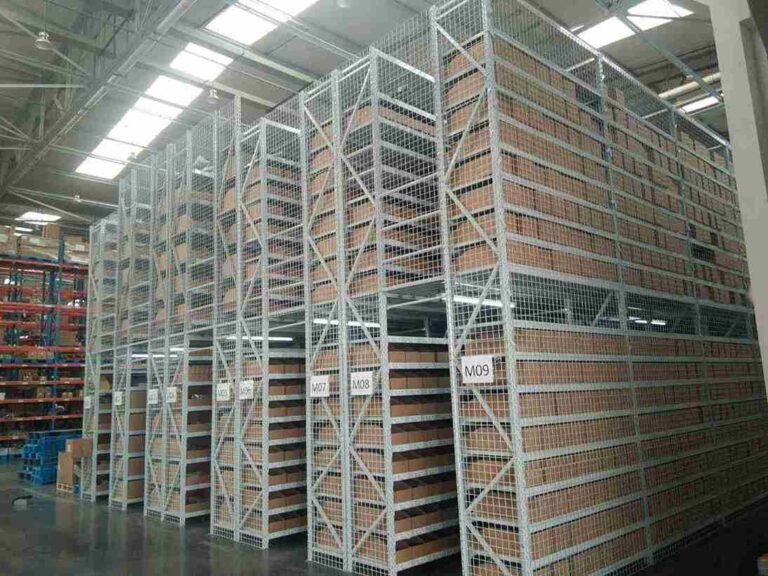
📐 "First 50 Enterprise Queries Get Custom 3D Warehouse Design" Plan
















The Definitive Masterclass in Precision Storage: Engineering Warehouse Success Through Meticulous Narrow Aisle Racking Dimensions
In the global arena of logistics and supply chain management, space is not merely a physical constraint; it is the ultimate currency. For operations spanning the dynamic growth corridors of Southeast Asia, the bustling trade hubs of the Middle East, the resource-rich landscapes of Africa, and the expanding industrial bases of Latin America, mastering this currency is the difference between thriving and merely surviving. The strategic implementation of narrow aisle racking dimensions stands as the most impactful lever for capitalizing on this currency.
However, the true art lies not in simply installing narrower racks, but in orchestrating a symphony of precision engineering, advanced robotics, and contextual adaptation, all hinged on the mastery of narrow aisle racking dimensions. This exhaustive guide transcends basic specifications, delivering a masterclass in how the meticulous planning of every millimeter in your narrow aisle racking dimensions blueprint can catalyze unprecedented gains in density, efficiency, and operational intelligence.
Decoding the Blueprint: The Anatomy of High-Density Storage
At its core, a narrow aisle system is an exercise in geometric and operational optimization. The foundational principle is the drastic reduction of the aisle width—the space allocated for material handling equipment to maneuver—from the 3.5 to 4 meters required by traditional counterbalance forklifts to a lean 1.6 to 2.2 meters. This reduction is the engine of storage density, but its successful execution is entirely dependent on the holistic calculation of all interrelated narrow aisle racking dimensions.
The Pillars of Precision: Upright Frames and Load Beams
The vertical and horizontal components of the racking system form its skeleton, and their dimensions are the first critical variables. Upright frames, characterized by their depth, height, and column gauge, must be engineered to support not only the designated load capacity but also to meet the unique stresses of a high-bay, high-throughput environment. In seismic zones like Indonesia or Chile, the dimensions and design of the upright frame bracing become a critical safety and compliance factor, often requiring specific reinforcements that influence the overall footprint.
Load beam length is equally pivotal. Determining the storage bay width, this dimension is directly dictated by the pallet or storage container size, plus a carefully calculated clearance—typically 100-150mm—to facilitate smooth load handling. A miscalculation of just 50mm in beam length, when multiplied across hundreds of bays, can result in catastrophic inefficiency or unusable space. Therefore, the initial phase of defining narrow aisle racking dimensions demands an exhaustive audit of all unit load types, including regional variations like the 1100mm x 1100mm pallets common in Asia or the non-standard loads prevalent in manufacturing sectors across Africa.
The Heart of the Matter: Aisle Width Calculation
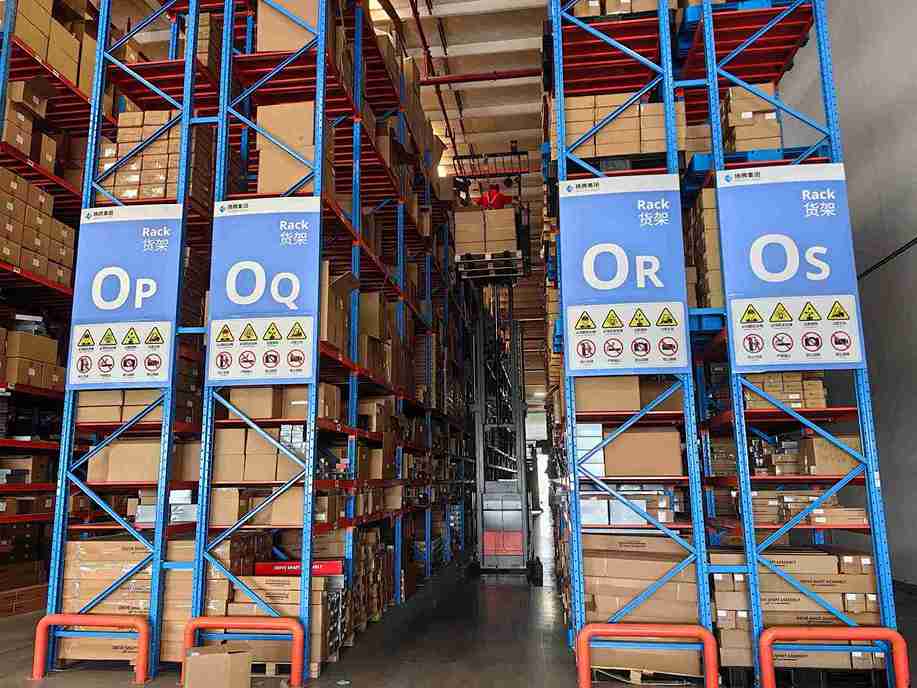
The aisle width is the most talked-about dimension in a narrow aisle racking system, and for good reason. It represents the direct trade-off between storage space and operational space. This dimension is not a static number pulled from a catalogue; it is a dynamic formula:
Aisle Width = (Vehicle Width + Load Width) + Operational Clearance + Safety Tolerance.
For manned equipment like turret trucks, the “Operational Clearance” must account for the operator’s skill, sightlines, and reaction space. This is where the revolution of automation profoundly alters the equation. When integrating Automated Guided Vehicles (AGVs) or driverless forklifts, the clearance is dictated by the vehicle’s sensor accuracy and repeatable precision. An AGV equipped with LiDAR and 3D vision systems can operate consistently within a tolerance of ±10mm. This allows planners to design aisle dimensions that are at the absolute physical minimum, effectively converting what was “wasted” clearance into valuable storage real estate. This precise calibration of narrow aisle racking dimensions for automated systems is where the promised 40-50% density increases are concretely realized.
The Automation Synergy: Where Dimensions Meet Intelligence
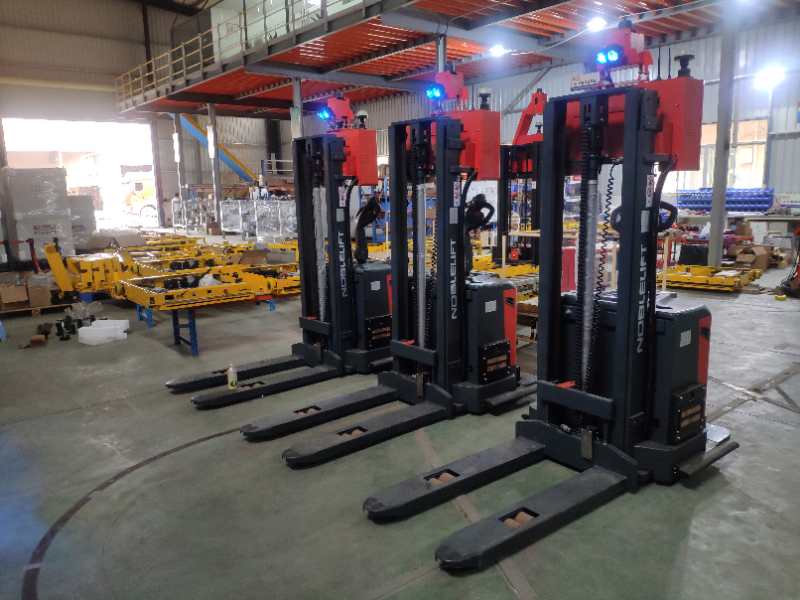
The discussion of narrow aisle racking dimensions is incomplete without a deep dive into the robotic partners that bring these tight spaces to life. The integration of AGVs and driverless forklifts is not an add-on; it is a complete re-engineering of the material handling paradigm, with rack dimensions at its core.
Navigation and the Racking Interface
Modern AGVs navigate via a combination of technologies: magnetic tape, QR codes, LiDAR mapping, or natural feature guidance. The chosen method has direct implications for the narrow aisle racking dimensions. Systems using natural feature guidance, where the vehicle’s sensors map the racking structure itself, require exceptionally consistent and precise racking dimensions to build a reliable digital map. Any deviation in upright alignment or beam height can confuse the navigation system. Therefore, the installation tolerances for the racking in an automated facility are far stricter, often requiring laser-guided alignment during setup to ensure the physical dimensions match the digital twin perfectly.
Vehicle-to-Rack Mechanical Integration
The physical interaction between the robot and the rack is a ballet of precision. The dimensions of the AGV’s fork, its lift height, and its mast design must be in perfect harmony with the narrow aisle racking dimensions. This includes:
Fork Length and Spread: Must be optimized to handle the specific pallet types used, with length sufficient for secure engagement but not so long as to risk contacting the rear upright in a deep-reach scenario.
Mast and Overhead Clearance: The mast’s lowered and extended heights must be calculated to move seamlessly within the vertical space between beam levels and the building’s roof structure. This impacts the vertical dimensions of the storage bays and the overall clear ceiling height requirement.
Communication Hardware Placement: For systems relying on RFID or other tags for location verification, the placement of these tags on the rack uprights becomes a part of the dimensional planning, ensuring they are within the reliable read range of the vehicle’s sensors.
Contextual Engineering: Adapting Dimensions to Market Realities
A world-class narrow aisle racking system in Germany cannot be simply replicated in the Philippines or Saudi Arabia. Success in emerging markets demands a philosophy of contextual engineering, where the standard narrow aisle racking dimensions are adapted to local environmental, infrastructural, and operational realities.
Environmental and Climatic Adaptations
The local environment actively influences the narrow aisle racking dimensions and specifications.
High Humidity and Coastal Climates (Vietnam, Thailand, UAE Coast): Here, the threat is corrosion. While this doesn’t change the primary dimensions, it dictates material specifications. Heavier galvanization (e.g., 120-150 micron) is standard. Furthermore, in climates where wooden pallets can absorb moisture and swell, the clearance dimensions within the rack bays might be slightly increased to prevent pallets from becoming jammed—a fine balance between anti-corrosion planning and operational fluidity.
Extreme Heat and Dust (Middle East, North Africa): Prolonged heat can affect the dimensional stability of certain materials and lubricants. Dust infiltration can impair AGV sensor function. Narrow aisle racking dimensions in these regions might incorporate slightly wider aisles to account for potential sensor performance degradation, or specify AGVs with pressurized and cooled sensor housings. The racking structure itself may use paints and coatings with higher UV resistance to prevent degradation that could, over time, affect tolerances.
Seismic Activity (Chile, Philippines, Mexico): This is a major factor for dimensions related to structural integrity. Seismic-rated racking often features different upright frame dimensions—deeper columns, thicker gauge steel, and specialized bracing configurations—to meet local building codes. These modifications ensure stability during seismic events but must still align with the tight aisle dimensions required for automated vehicles, a complex engineering challenge.
Infrastructure and Operational Workflow Adaptation
Beyond climate, the “on-the-ground” reality dictates design.
Power Reliability: In regions with less stable grid power, the design of the AGV system must account for battery management and potential downtime. This might influence the narrow aisle racking dimensions layout by encouraging the design of smaller, modular storage zones that can be operated independently, rather than one monolithic dense block, providing operational resilience.
Multi-SKU, Mixed-Pallet Operations: 3PLs and distributors in growing markets often handle an immense variety of SKUs on different pallet types. A flexible narrow aisle racking system uses adjustable beams to create bays with variable dimensions. The AGVs are then equipped with vision-assisted fork positioning or adaptable fork arms. The master data defining the dimensions of each storage location in the Warehouse Management System (WMS) must be dynamic, updating as beam positions are changed to accommodate different clients or products.
The Implementation Odyssey: From Digital Twin to Physical Masterpiece
Translating the theory of optimized narrow aisle racking dimensions into a live, breathing operation is a multi-stage odyssey that separates true experts from mere equipment suppliers.
Phase 1: Forensic Data Analysis and Dynamic Simulation
This phase is foundational. It begins with a forensic-level audit of all inventory profiles, order history, and growth projections. Using advanced simulation software, engineers create a digital twin of the proposed warehouse. Within this virtual environment, they test thousands of permutations of narrow aisle racking dimensions—aisle width, beam spacing, rack height—against simulated AGV fleet performance. They can visualize the impact of a 50mm reduction in aisle width on overall throughput, or test how a change in beam level dimensions affects picking efficiency. This data-driven approach removes guesswork, providing clients with a guaranteed performance model based on precise dimensions before any steel is cut.
Phase 2: Integrated System Design and Prototyping
With the optimal dimensions validated, detailed design begins. This stage produces construction-level drawings where every dimension is specified. Crucially, it also involves “soft” prototyping of the system integration. The communication protocols between the WMS, the AGV fleet management software, and the physical racking location data are developed and tested. A key output is a comprehensive bill of materials where every component, defined by its specific dimensions and tolerances, is listed, ensuring the physical build will match the digital plan.
Phase 3: Phased Commissioning and Performance Validation
A “big bang” switchover is risky. The superior methodology is phased commissioning. A section of the warehouse is built out to the exact narrow aisle racking dimensions of the plan. The AGVs are introduced and calibrated specifically for those dimensions. This pilot zone runs in parallel with the old operation, serving as a proof-of-concept, a training ground, and a performance validation cell. Data from this pilot—actual travel times, pick rates, battery life—is used to fine-tune the dimensions or operational rules for the remaining phases, de-risking the entire project rollout.
The Quantifiable Advantage: ROI Sculpted by Precision
The return on investment from a system engineered around perfect narrow aisle racking dimensions is multi-dimensional and profound.
Direct Real Estate Monetization: By optimizing dimensions to store more within the same footprint, companies defer or eliminate the need for expensive warehouse expansion. In markets like Manila, Bangkok, or Dubai, where industrial land costs are at a premium, this capital expenditure avoidance is often the single largest financial benefit.
Operational Efficiency at Scale: Precision dimensions enable faster, more predictable cycle times. AGVs traveling in optimally sized aisles follow the most efficient paths without hesitation or correction. This translates to more picks per hour, per shift, with near-perfect accuracy. The reduction in product damage from precise robotic handling further adds to the bottom line.
Labor Optimization and Upskilling: The system addresses the universal challenge of skilled labor shortages. It shifts the workforce role from manual, repetitive driving to higher-value tasks like system supervision, exception management, and maintenance, leading to better staff retention and lower long-term labor volatility.
Energy and Sustainability Gains: Electrically powered AGVs operating in a layout designed for minimal travel distance consume significantly less energy than traditional forklift fleets. The high density achieved through smart dimensions also means a smaller building envelope is needed for the same storage volume, reducing heating, cooling, and lighting costs—a powerful sustainability metric.
The Frontier of Innovation: AI, Connectivity, and Adaptive Dimensions
The future of storage systems lies in dynamism. The next evolution beyond static narrow aisle racking dimensions is towards adaptive and predictive systems.
AI-Driven Dynamic Slotting: Future WMS, powered by machine learning, will continuously analyze order patterns. It could automatically suggest or even execute changes to beam level heights (vertical dimensions) to reposition fast-moving SKUs into the “golden zone” for optimal access speed, constantly re-optimizing the three-dimensional use of space.
5G and Real-Time Rack Communication: The advent of ultra-low latency 5G networks could enable two-way communication between AGVs and the racking structure itself. Sensors on the racks could monitor load weight or rack integrity, feeding data back to the control system. This “Internet of Racks” concept would make the physical dimensions and status of the storage medium a live data stream.
Modular and Mobile Racking Concepts: For ultimate flexibility, some operations are exploring systems where racks themselves are on mobile bases. In this scenario, the narrow aisle racking dimensions are not fixed; aisles can be opened and closed on demand by moving racks together. AGVs would then interface with a constantly changing landscape, guided by real-time spatial mapping.
Conclusion: The Dimension of Success
In the competitive landscapes of the world’s most vibrant emerging markets, logistics excellence is a non-negotiable pillar of business success. Achieving this excellence is no longer about brute force or expansive square footage; it is about intelligent compression, precision, and automation. The journey to this pinnacle is meticulously charted through the science and strategy of narrow aisle racking dimensions.
From the initial calculation of aisle width to the final integration of autonomous robotics, every decision on dimensions reverberates through the entire operation’s efficiency, cost, and scalability. Partnering with experts who possess not only the technical mastery to calculate these dimensions but also the regional savvy to adapt them to local challenges is the most strategic investment a growing enterprise can make. It is the process of transforming empty space into a meticulously engineered, high-performance asset—one precisely calculated millimeter at a time.
Frequently Asked Questions (FAQs)
1. We have an existing warehouse with floors that are not perfectly level. Can we still implement a high-precision narrow aisle system with AGVs?
This is a highly common scenario, particularly in older facilities. The answer is nuanced. Minor floor deviations can often be accommodated through advanced AGV navigation systems that utilize inertial measurement units (IMUs) combined with natural feature guidance, allowing the vehicle to adjust its path in real-time. However, significant leveling issues or frequent floor joints can compromise safety and the precise narrow aisle racking dimensions required for consistent operation. A comprehensive site survey is the first step. Solutions can range from AGV software adaptation and selective floor grinding to employing racking designs with adjustable base plates that can compensate for minor irregularities, ensuring the critical vertical dimensions of the rack structure remain plumb.
2. How does the choice of pallet (e.g., wooden, plastic, steel) influence the critical dimensions of the racking system?
The pallet is the fundamental load unit, and its characteristics directly dictate several narrow aisle racking dimensions. Beyond its length and width (which set the beam length), its construction material affects required clearances. A wooden pallet may warp or have protruding nails, necessitating slightly larger bay dimensions for clearance. A plastic pallet has more consistent dimensions but can be more flexible, requiring support beam configurations that prevent sagging. A heavy, rigid steel pallet allows for tighter clearances but dramatically increases point load pressures on the beams, which may require beams with different dimensions (depth and thickness) to maintain structural integrity. A full pallet analysis is therefore mandatory before finalizing any dimensional design.
3. What are the key maintenance checks required to ensure the narrow aisle racking dimensions remain stable and safe over time, especially with high-frequency AGV traffic?
Preventive maintenance is crucial for preserving the integrity of the system’s dimensions. A rigorous schedule should include:
Regular Torque Checks: All rack bolts must be checked to ensure they remain at specified torque levels, preventing frame loosening that could alter critical upright dimensions and alignment.
Laser Alignment Surveys: Periodic checks using laser levels to ensure upright frames remain perfectly plumb. Even a slight lean can reduce effective aisle width and cause AGV navigation errors.
Beam Deflection Measurement: Checking beams for permanent deformation (sag) under load, which changes the vertical clearance dimensions between levels and can hinder load placement.
Column Guard and Upright Inspection: Frequent impact from loads, even minor ones, can dent or deform uprights. Regular inspections ensure any damage that might affect the narrow aisle racking dimensions or structural strength is identified and repaired immediately.
4. For a business with highly seasonal peaks (e.g., agri-commodities in Africa or consumer goods before festivals in Southeast Asia), how can a narrow aisle system designed around fixed dimensions handle massive fluctuations in inventory volume?
This challenge is expertly addressed through smart design focused on scalable dimensions. Solutions include:
Designing for Peak, Operating for Average: The racking structure itself is installed with the dimensions and height to accommodate peak volume. During off-peak times, only a portion of the system is utilized.
Incorporating Dynamic Storage Zones: The layout can combine fixed narrow aisle racking dimensions in the core picking area with wider, more flexible bulk storage zones (using portable racking or block stacking) in other parts of the facility for overflow peak inventory. The AGV system’s workflow rules are programmed to prioritize the high-density area first.
Utilizing Very Narrow Aisle (VNA) Options: For the highest density peaks, a system can be designed with aisles so narrow they require specialized guidance rails. This represents the ultimate optimization of dimensions for maximum seasonal storage, though it comes with different equipment requirements.
5. How do international standards (like FEM, RMI) influence the recommended narrow aisle racking dimensions for a project in a specific country, and who is responsible for compliance?
International standards provide critical guidelines for design loads, safety factors, and testing methodologies that directly inform the engineering of safe narrow aisle racking dimensions. For instance, FEM 10.2.02 standards define load application and deformation limits for upright frames. However, the ultimate authority is always the local national building and safety code. A reputable provider will engineer the system to meet or exceed both the relevant international and local standards.
The responsibility for ensuring the final installed system, with all its specified dimensions and components, is fully compliant with local regulations typically rests with the solution provider or the installing contractor, and this must be clearly defined in the project contract. Due diligence involves verifying the provider’s familiarity with regional codes in markets like Saudi Arabia (SASO), South Africa (SANS), or Brazil (ABNT).
If you require perfect CAD drawings and quotes for warehouse racking, please contact us. We can provide you with free warehouse racking planning and design services and quotes. Our email address is: jili@geelyracks.com