📐 "First 50 Enterprise Queries Get Custom 3D Warehouse Design" Plan
















Introduction: Reframing Racking as Dynamic Infrastructure, Not Static Furniture
In the high-stakes environment of global logistics and manufacturing, where margins are tight and efficiency is paramount, facility managers meticulously maintain their active assets. Forklifts undergo scheduled servicing, conveyor belts are tracked for wear, and automated systems receive daily diagnostics. Yet, there exists a ubiquitous piece of engineered infrastructure that is all too often relegated to the status of passive furniture: the pallet racking system. It stands silently, bearing immense loads and value, its integrity gradually challenged by relentless cycles of loading, impact, and environmental stress. This pervasive oversight represents not just a hidden risk, but a staggering missed opportunity for operational excellence and financial prudence.
The most transformative pallet racking maintenance tips do not merely suggest occasional visual checks; they advocate for a fundamental shift in perspective. This guide distills decades of field engineering experience across continents—from the humid ports of Southeast Asia to the expansive desert logistics hubs of the Middle East, and the growing industrial complexes of Africa and Latin America—into a master protocol. The core promise is unequivocal and achievable: through disciplined, expert-led pallet racking maintenance, organizations can realistically extend the effective lifespan of their storage systems by 50% or more while constructing an impregnable defense against the devastating operational downtime that follows structural failure.
This resource moves far beyond superficial lists. It deconstructs the anatomy of racking failure, establishes a rigorous framework for proactive care, and integrates advanced monitoring strategies. It positions a robust pallet racking maintenance program as the critical foundation upon which future automation and technological upgrades are built. For any professional responsible for warehouse integrity, safety, and profitability, the following pages provide not just information, but a actionable blueprint for lasting asset optimization.

Section 1: The Foundational Imperative – Understanding Why Reactive Strategies Fail
The economics of neglect are brutally straightforward, yet consistently underestimated. A reactive approach to pallet racking maintenance—acting only when damage is too glaring to ignore—is a high-risk strategy that guarantees escalating costs.
The Multifaceted Cost of Complacency
Catastrophic Collapse Costs: Beyond the immediate replacement of twisted uprights and beams lies the true financial vortex: the value of destroyed inventory, emergency cleanup labor, regulatory fines, and potential litigation from workplace injuries. A single collapse can erase a quarter’s profitability.
The Insidious Drain of Premature Degradation: Even without collapse, unaddressed minor damage accelerates wear. A slightly bent beam connector increases stress on adjacent components. A dented upright column has compromised load-bearing capacity, potentially triggering a progressive failure sequence under peak loads.
Operational Inefficiency and Hidden Downtime: Damaged racking impedes workflow. Forklifts navigate cautiously around misaligned frames, slowing cycle times. Unstable loads require re-picking. This constant, low-level friction constitutes a significant, unmeasured form of operational downtime.
Compromised Safety and Morale: A visibly damaged warehouse environment signals to employees that their safety is not a priority, eroding morale and increasing the likelihood of other safety shortcuts.
The Proactive Investment: Quantifying the Return on Systematic Maintenance
Implementing a structured regimen of pallet racking maintenance tips delivers a calculable return on investment that transcends mere risk mitigation.
Capital Asset Preservation: This is the most direct financial return. High-grade industrial racking is a major capital expenditure. Proactive maintenance is the single most effective factor in maximizing its service life, delaying replacement capital outlays by years.
Predictable Operational Budgeting: It transforms racking-related expenses from unpredictable, large-scale emergency costs into scheduled, manageable line items for inspection services and minor part replacements.
Enhanced Insurability and Regulatory Compliance: A documented pallet racking maintenance program demonstrates due diligence to insurers and regulators, potentially lowering premiums and providing a robust defense in the event of an audit or incident.
Foundation for Future Innovation: A racking system maintained to precise geometric tolerances is the perfect launchpad for integrating automated guided vehicles (AGVs), pallet shuttles, or other automated storage and retrieval systems (AS/RS). Precision maintenance today enables automation tomorrow.
Section 2: The Cornerstone Framework – A Four-Pillar Maintenance Protocol
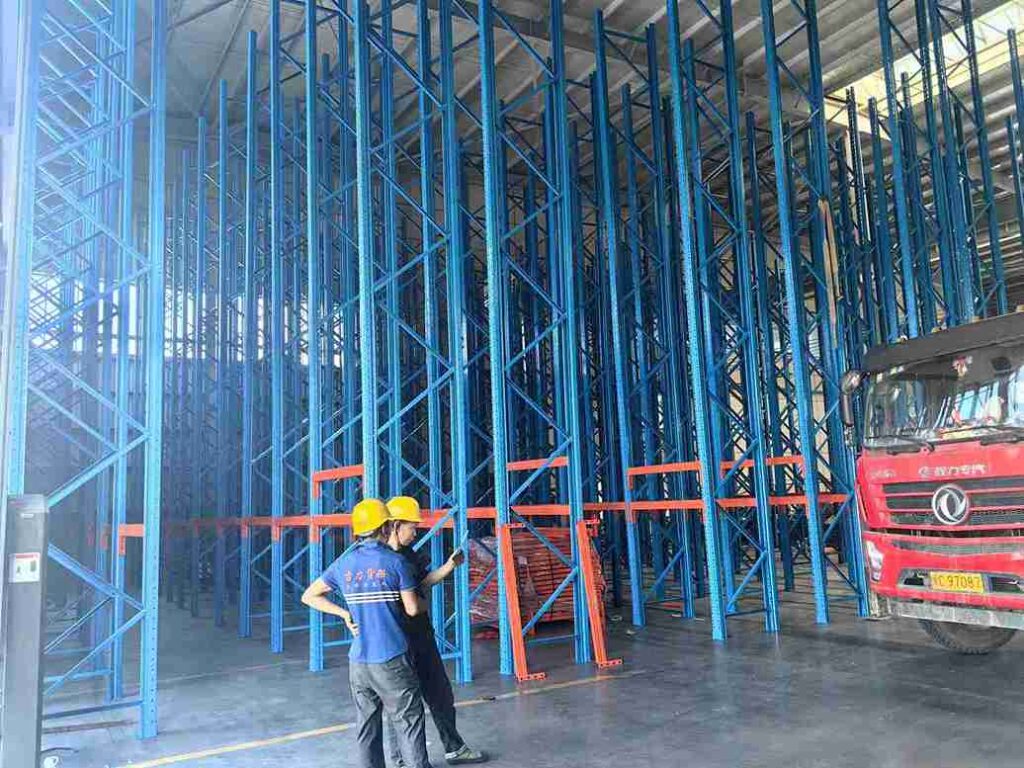
Effective pallet racking maintenance is not a random activity; it is a disciplined process. This four-pillar framework ensures comprehensiveness and sustainability.
Pillar I: Scheduled and Trigger-Based Inspections – The Rhythm of Vigilance
Ad-hoc checks are insufficient. Inspection frequency must be codified.
Operational-Level Checks (Daily): Empower every forklift operator and floor worker with a simple, visual mandate: report any major, obvious damage immediately. This is the human sensor network.
Supervisory Zone Walks (Weekly): Warehouse supervisors should conduct scheduled, brief inspections of designated zones using a standardized checklist, looking for new impacts, leaning, or loose components.
Comprehensive Formal Inspection (Quarterly): This is the backbone of the maintenance program. A trained individual methodically inspects every component in the facility—upright, beam, connector, and anchor—using tools and detailed records.
Professional Engineering Audit (Annual): An external specialist or certified engineer performs a top-to-bottom assessment. This provides an expert, unbiased evaluation and fulfills best-practice standards, offering critical pallet racking maintenance tips specific to the facility’s usage patterns.
Event-Driven Inspection (Immediate): Any significant impact, seismic event, flood, or configuration change triggers an immediate, focused inspection of the affected area. This is a non-negotiable maintenance rule.
Pillar II: The Qualified Assessment – A Deep Dive into Critical Failure Points
Superior pallet racking maintenance tips demand moving beyond a superficial glance. Here is what a qualified inspector scrutinizes.
The Foundation: Floor and Anchorage Integrity
Everything begins at the base. Instability here propagates upward.
Concrete Floor Condition: Inspectors look for cracks, spalling, or moisture damage under and around upright bases. Settlement can cause frames to tilt.
Anchor Bolt Torque and Condition: Each anchor must be checked for tightness with a calibrated torque wrench against the manufacturer’s specification. Corroded or cracked concrete around an anchor is a critical red flag. Consistent re-torquing is a vital, often overlooked pallet racking maintenance tip.
Shim Security: If leveling shims are used, verify they are welded or securely fastened. A dislodged shim can precipitate sudden collapse.
Upright Frame Analysis: The Load-Bearing Spine
Upright damage is among the most serious concerns. Assessment is guided by a formal Rack Damage and Tolerance Chart.
Plumb and Alignment Verification: Using a laser level, measure deviation from true vertical. Exceeding manufacturer tolerances (often 1/8″ per 10ft) requires corrective action. Also check the straight-line alignment of frames down an aisle.
Column Damage Assessment per the Chart: This is the gospel of pallet racking maintenance. Dents are measured for depth, length, and location. A dent deeper than 3/8″ (10mm) in the column’s middle third (the critical zone of highest bending stress) typically mandates immediate replacement. Ignoring this chart negates all other pallet racking maintenance tips.
Footplate and Weld Inspection: Examine the welds connecting the column to the footplate for any signs of cracking or fatigue.
Beam and Connector Scrutiny: The High-Stress Interface
Beams and their connectors are the workhorses, subject to constant dynamic loads.
Beam Deformation: Check for excessive sag (beyond designed deflection), twist, or upward bowing. Inspect the beam end connectors for wear or deformation.
Connector Integrity – The Critical Fuse: The teardrop, tab, or hook connector is a deliberately engineered “fuse.” Inspect each one for full engagement in the upright slot. Any visible bending, warping, or cracking indicates the connector has yielded and must be replaced immediately. This is a paramount pallet racking maintenance tip that prevents beam dislodgement.
Safety Lock Verification: Ensure all secondary locking devices (safety clips, beam locks) are present and fully engaged.
Load and Configuration Compliance
The system must be used as engineered.
Load Observation: Are beams sagging excessively under normal loads? This suggests overloading or beam damage.
Decking and Support Condition: Inspect wire mesh decking or pallet supports for rust, broken welds, or dislodgement.
Adherence to Load Notices: Verify that operational loads do not exceed the posted Uniformly Distributed Load (UDL) and Point Load Capacity (PLC). Incorrect loading voids engineering certification.
Configuration Management: Ensure no unauthorized modifications have been made. All braces, row spacers, and frame ties must be present and secure.
Pillar III: Corrective Action Hierarchy: Repair, Replace, or Reinforce
Finding damage is futile without a clear action protocol.
Immediate Red-Zone Response: Conditions like a dislodged beam, severe lean (>2″), or cracked weld require instant isolation, offloading, and repair by qualified personnel before operations resume.
Scheduled Remediation: For items like a single bent connector tab or minor, in-tolerance dent, schedule repair within a defined window (e.g., 7 days).
The OEM Parts Imperative: A cardinal pallet racking maintenance tip is to never mix components from different manufacturers. Metallurgy and tolerances are not interchangeable. Always source replacements from the original equipment manufacturer or a certified supplier providing engineering validation.
Engineered Reinforcement Solutions: For damaged but not yet failed columns, professional column reinforcement sleeves (steel jackets welded or bolted in place) can restore and even enhance original strength, offering a cost-effective alternative to full upright replacement.
Pillar IV: Meticulous Documentation: The Legal and Managerial Backbone
“Trust, but verify” is recorded. Documentation proves due diligence.
Inspection Logs: Digital or physical records of every inspection, noting date, inspector, scope, and findings.
Damage and Repair Register: A living log tracking each defect from discovery through to repaired closure, ideally with photographs. This history is invaluable.
Asset Records and Load Notices: Maintain updated as-built drawings and posted load capacity signs. Revise after any modification.
Training Records: Document all staff training on rack safety and inspection procedures.
Section 3: Advanced Strategies and Technological Integration
Modern pallet racking maintenance tips leverage technology for predictive insights.
Ultrasonic Thickness Testing: In corrosive environments (coastal, cold storage), this tool measures remaining metal thickness inside columns, detecting hidden corrosion.
Telemetry and Strain Monitoring: For mission-critical, high-density storage, wireless sensors on key structural members can provide real-time data on load stresses and alert to dangerous overload events.
Aerial and Drone Inspection: For very high bay or ASRS systems, drones with high-res cameras enable safe, detailed visual surveys of hard-to-reach areas.
CMMS Integration: Incorporate racking assets into the facility’s Computerized Maintenance Management System to schedule inspections, generate work orders, and attach digital documentation seamlessly.
Section 4: The Strategic Trajectory: From Maintenance to Modernization
A facility that has mastered these pallet racking maintenance tips and runs a precision upkeep program has laid the groundwork for technological evolution. The progression is logical:
Stage 1: Optimized Conventional Racking: A perfectly plumb, square, and documented system.
Stage 2: Semi-Automated Integration: This stable environment is ideal for deploying AGVs or autonomous mobile robots, which require consistent, unchanging navigation paths.
Stage 3: Full Automation Retrofit: Retrofitting a pallet shuttle or stacker crane into an existing aisle is vastly more successful when the underlying rack structure is known to be within millimeter-level tolerances. Precision maintenance enables seamless automation.
Conclusion: Elevating Maintenance from Chore to Core Competency
For logistics and warehouse professionals operating in the dynamic markets of Southeast Asia, the Middle East, Africa, and Latin America, resilience is the ultimate competitive advantage. Proactive, expert-driven pallet racking maintenance is a profound lever for building that resilience. It is a direct investment in asset longevity, operational continuity, and human safety.
The comprehensive protocol outlined here—spanning scheduled inspection, qualified assessment, disciplined corrective action, and rigorous documentation—transforms a generic list of pallet racking maintenance tips into a sustainable, operational discipline. It delivers on the tangible promise of extending system lifespan by over 50% and eradicating the preventable catastrophe of racking-induced downtime. By adopting this mindset, managers cease to be passive custodians of static steel and become active stewards of a critical, performance-driving asset. The journey toward a safer, more efficient, and future-ready warehouse begins with the fundamental, powerful step of committing to excellence in pallet racking maintenance.
Frequently Asked Questions (FAQs)
Q1: How does the recommended maintenance frequency change for racking subjected to very high throughput, such as in an e-commerce fulfillment center?
In high-velocity environments, the wear-and-tear on racking is significantly accelerated. The quarterly formal inspection should be considered a minimum standard. In such settings, a monthly formal visual inspection of high-traffic areas (pick zones, receiving/staging lanes) is advisable. Furthermore, the annual professional audit is non-negotiable and may need to be conducted bi-annually. The focus should intensify on beam connectors and upright face columns in aisle ways, as these endure the most frequent interaction with material handling equipment. These adjusted frequencies are critical pallet racking maintenance tips for high-cycle operations.
Q2: What specific inspection techniques are recommended for racking in environments with large temperature fluctuations, like in the Middle East or certain parts of Latin America?
Extreme thermal cycling causes expansion and contraction in metal, which can loosen mechanical connections over time. Key pallet racking maintenance tips for these regions include: 1) Increasing the frequency of anchor bolt torque checks—biannually may be necessary. 2) Paying close attention to expansion joints in long runs of racking; ensure they are clean and functioning. 3) Looking for signs of “walking” or shifting at the base of frames. 4) Being vigilant for thermal fatigue cracks, particularly at weld points on braces and connectors. Using a high-quality penetrating dye check during the annual inspection can help reveal hairline cracks.
Q3: For facilities with older racking where original manufacturer documentation is lost, how should load capacities and damage tolerances be determined?
This is a high-risk scenario requiring a conservative, safety-first approach. The most critical of pallet racking maintenance tips in this situation is to immediately engage a registered professional engineer (PE) specializing in storage structures. The engineer will typically: 1) Identify the rack type and estimate its vintage. 2) Perform field measurements of component dimensions (column gauge, beam section). 3) Conduct a non-destructive evaluation of material condition. 4) Derive de-rated safe load capacities based on conservative assumptions and current condition. 5) Provide a new, site-specific damage tolerance guide. Operating older, undocumented rack without this engineering assessment is a severe liability.
Q4: How can warehouse managers effectively create a “safety culture” around racking maintenance among their operational staff?
Beyond formal training, integrating pallet racking maintenance into daily culture requires visible leadership and simple processes. Effective strategies include: 1) Visual Management: Place clear, multi-language “Damage Look-For” posters in break rooms and near time clocks. 2) Simplified Reporting: Create an easy, non-punitive reporting channel (e.g., a dedicated QR code, a simple app form, a red-tag station) for reporting damage. 3) Positive Reinforcement: Publicly recognize teams or individuals who identify and report hazards. 4) Leadership Participation: Have managers and supervisors actively participate in weekly inspection walks, demonstrating commitment. These human-centric pallet racking maintenance tips foster shared ownership of warehouse safety.
Q5: When considering a switch to a different type of storage system (e.g., from selective to drive-in), what maintenance-related data from the existing system is most valuable for planning?
The historical data from a rigorous pallet racking maintenance program is invaluable for future planning. Key datasets include: 1) The Damage Register: This reveals “hot spots” in the warehouse where impact frequency is high, informing the layout of the new system (e.g., placing more robust or protected racking in high-risk zones). 2) Load History: Documented load patterns help accurately size the beams and uprights of the new system. 3) Foundation Condition Reports: Knowledge of floor settlement or weakness areas guides the placement and anchoring requirements for the new, often heavier, system. This historical maintenance intelligence ensures the new investment is optimally configured for the specific operational realities of the facility.
If you require perfect CAD drawings and quotes for warehouse racking, please contact us. We can provide you with free warehouse racking planning and design services and quotes. Our email address is: jili@geelyracks.com