📐 "First 50 Enterprise Queries Get Custom 3D Warehouse Design" Plan















The True Cost of Compromise: Why “Good Enough” Installation is Never Good Enough
The journey toward warehouse optimization is paved with critical decisions, and none is more foundational than the installation of pallet racking. While much attention is paid to selecting the right type of racking—be it selective, drive-in, or part of an automated system—the process that translates these engineered components into a safe, high-performing storage structure is where success or failure is determined. A meticulous installation is the ultimate performance multiplier, whereas even minor pallet racking installation mistakes act as chronic, compounding liabilities.
The global market, from the bustling ports of Vietnam to the growing logistics hubs in Kenya and Colombia, is rife with examples where cost-cutting on installation led to exponential losses. This resource serves as an exhaustive, experience-driven manual dedicated to identifying, understanding, and, most importantly, preventing the spectrum of common pallet racking installation mistakes.
It moves beyond basic checklist advice, delving into the engineering rationale behind proper procedures, thereby empowering facility managers, warehouse owners, and project planners to demand and recognize true professional execution. The goal is not merely to avoid errors but to build a system that delivers decades of safe, efficient, and reliable service—a true asset rather than a hidden liability.
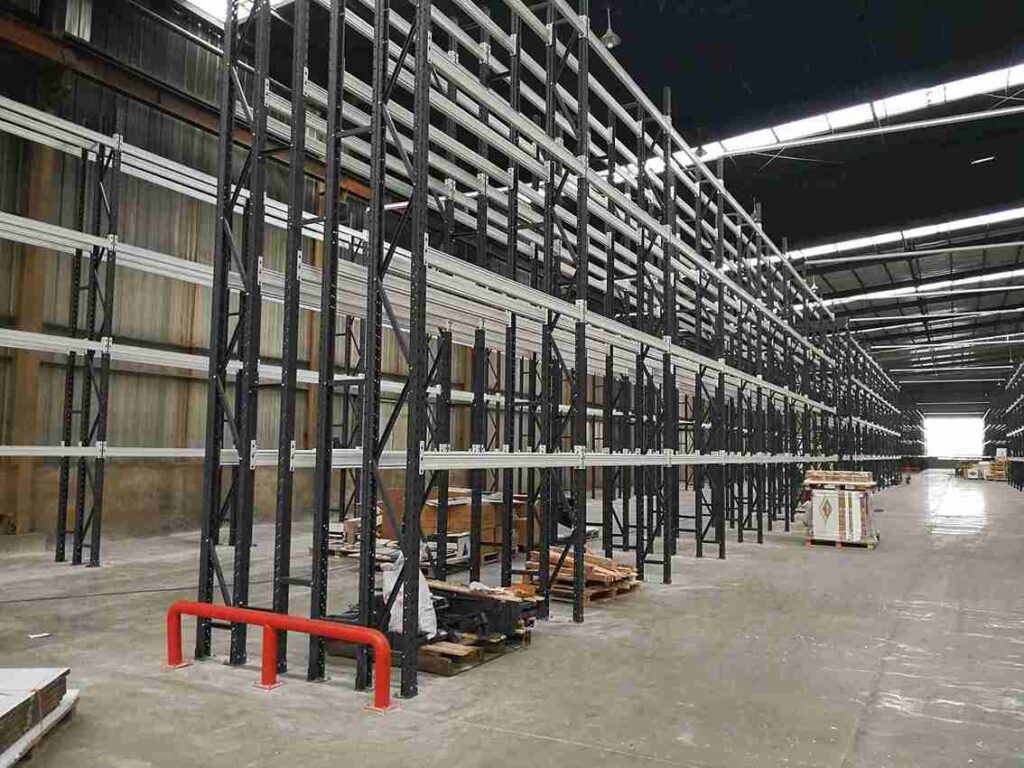
Foundation Failures: The Unseen Catalyst for Catastrophe
The most consequential pallet racking installation mistakes are often the first ones made, occurring before a single upright is assembled. A profound misunderstanding is viewing the concrete slab as a passive surface rather than the integral structural component it is. The relationship between the rack and the floor is symbiotic; weakness in one guarantees failure in the other.
The Myth of the “Standard” Slab
A primary and costly error in pallet racking installation is assuming existing floor specifications are adequate. In regions experiencing rapid industrial growth, warehouse slabs may have been designed for lighter-duty storage. The static and dynamic loads imposed by fully laden, 20-foot-tall racking systems are of a different magnitude entirely. Professional installers will calculate the required point load capacity at each upright foot, which far exceeds the average distributed load capacity often listed in building plans. An insufficient slab will eventually crack, settle, or crumble, causing the entire rack structure above to shift, lean, and fail. This is not a repairable onsite issue; it necessitates a complete system teardown and floor remediation—a devastating financial blow.
Floor Flatness: The Invisible Tilt
Perhaps the most technically overlooked of all pallet racking installation mistakes involves floor flatness (measured by FF/FL ratings). A floor that slopes or has local deviations beyond tolerance—typically more than 3 mm over a 3-meter span—makes achieving plumb, aligned upright frames impossible. Installers forced to shim uprights excessively to compensate create point loads the baseplate wasn’t designed for. This inherent misalignment propagates upward, causing beams to sit unevenly and loads to transfer diagonally through the frame, compromising the system’s rated capacity. Correcting major floor flatness mistakes after pallet racking installation is prohibitively expensive, underscoring the need for a pre-installation survey.
Anchoring: The Critical Link
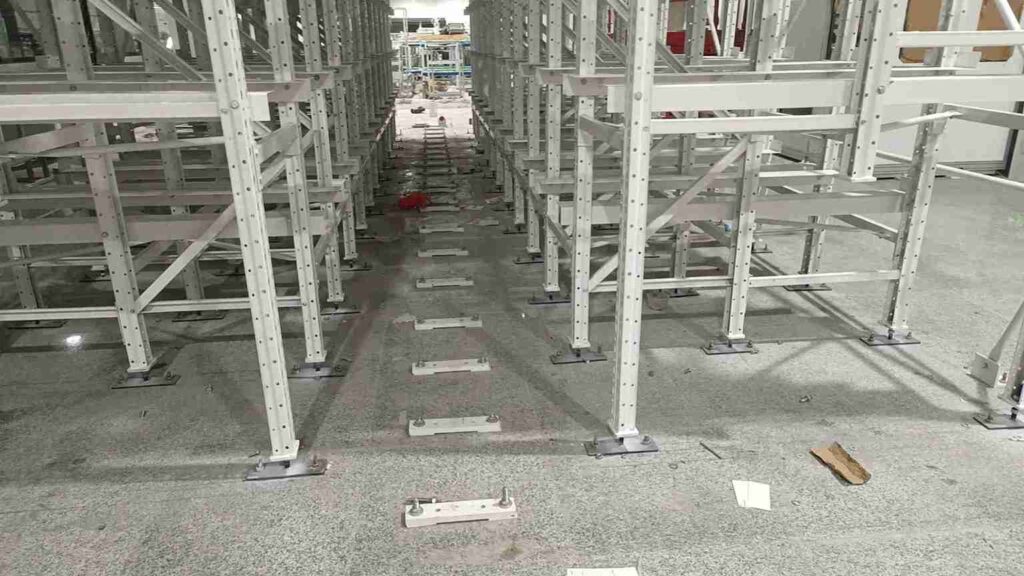
The selection and installation of anchors represent a nexus of potential critical pallet racking installation mistakes. The choice between chemical epoxy anchors and mechanical wedge anchors is not one of preference but of concrete condition and required pull-out strength. In seismic zones or older facilities with cracked concrete, chemical anchors are often mandatory. The mistakes here are legion: using anchors of inferior grade, drilling holes to the incorrect diameter or depth, failing to properly clean drilled holes of dust (which prevents bond), and the cardinal sin—improper torquing.
A torque wrench is not a suggestion; it is an absolute requirement. Every anchor specification sheet provides a precise torque value. Under-torquing leaves the anchor loose, allowing for dangerous movement. Over-torquing can strip the threads or, worse, create a micro-fracture in the concrete around the hole, destroying its holding capacity. Furthermore, ignoring the mandated cure time for chemical anchors before applying load is a reckless pallet racking installation error that nullifies the science behind the product. These are not mere procedural oversights; they represent a direct breach of the engineered design, voiding warranties and compromising safety at the most fundamental connection point.
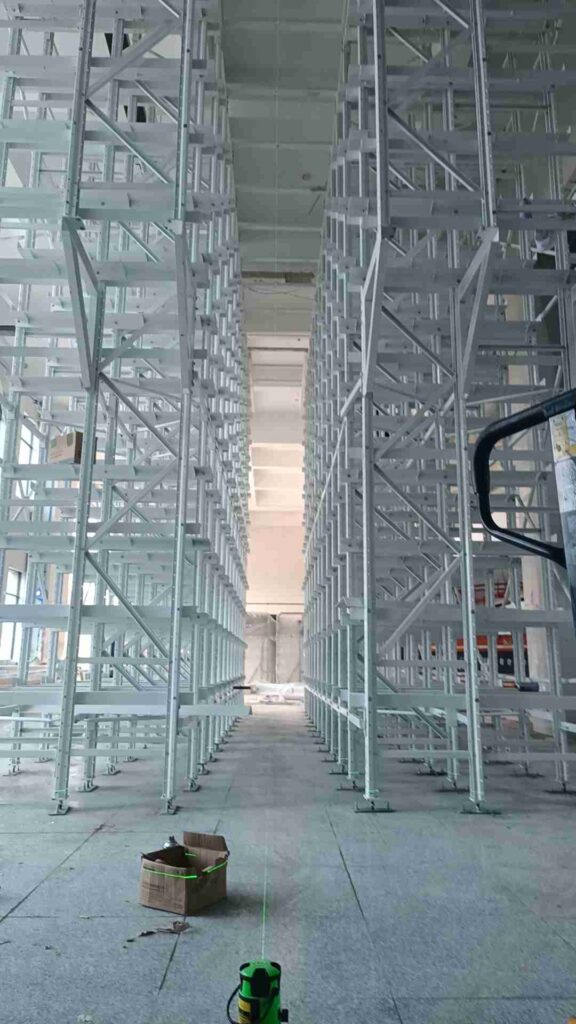
Structural Integrity Erosion: From Upright Misalignment to Brace Negligence
Once the foundation is verified, the focus shifts to the steel skeleton itself. Here, precision is paramount, and the tolerance for pallet racking installation mistakes shrinks to millimeters.
The Plumb and Alignment Imperative
Erecting upright frames that are not perfectly plumb in both the front-to-back and side-to-side planes is a foundational error in pallet racking installation that creates a cascade of problems. A frame leaning even slightly transfers loads into bending stresses it was not engineered to withstand.
This reduces overall capacity, induces premature wear, and makes the structure vulnerable to collapse from lateral impacts or seismic events. Achieving true plumb requires modern tools—a quality laser level—not just a visual assessment. Aligning rows perfectly straight and at the specified aisle width is equally crucial. Aisles that narrow or widen create immediate hazards for forklift and AGV operation, leading to impacts that then compound the initial installation mistake.
Beam Engagement: The “Click” is Not a Certificate
The connection between beam and upright is the workhorse of the racking system. Complacency here is responsible for one of the most frequent and dangerous common pallet racking installation mistakes. The audible “click” as a beam end engages a tab is not a guarantee of security. Installers must visually and physically verify that both the top and bottom hooks of the beam end are fully seated on the tab.
In high-volume installations, it’s easy to miss a partially engaged beam, especially if a tab is slightly bent. Furthermore, the secondary safety device—be it a clip, pin, or flip-lock—must be deployed on every single connection. In dusty or busy environments, these locks can be overlooked, a critical pallet racking installation mistake that leaves the beam reliant solely on gravity.
The Often-Ignored Guardian: Bracing and Stabilization
Diagonal and horizontal braces are the unsung heroes that resist the rack’s tendency to twist, sway, and collapse under lateral forces. Neglecting their proper installation is a severe pallet racking installation error. Braces must be installed in the correct orientation (often in specific tension patterns), and all connecting bolts must be tightened to specification. Omitting row spacers—the horizontal braces that connect back-to-back rows—to save time or money is a catastrophic decision.
These spacers transform individual rows into a cohesive, mutually supportive block, vastly increasing overall stability. Similarly, failing to install prescribed wall ties, which connect the rack to the building structure, is a missed opportunity to leverage the building’s strength, particularly in regions prone to high winds or seismic activity. Every omitted or improperly tensioned brace is a deliberate weakening of the system’s engineered design.
The Commissioning Blind Spot: Assuming Installation is Complete at the Last Bolt
A pervasive and risky pallet racking installation mistake is considering the job finished when the final beam is placed. The commissioning and verification phase is what separates a professional installation from a hazardous one.
The Non-Negotiable Load Test
A system should never be loaded to full capacity immediately. A progressive load test is a critical best practice. After initial assembly and anchor torquing, a section should be loaded to 25-50% of capacity. This allows the entire system—anchors, frames, connections—to settle under stress. After 24-48 hours, a qualified installer must return to re-check anchor torque (which often changes after settling), re-verify plumb, and inspect all connections. This step alone catches a significant percentage of latent pallet racking installation mistakes before they can cause a failure under full operational load.
Documentation: The Paper Trail of Integrity
A professional installation concludes with a comprehensive handover package. The absence of this documentation is a telling sign of amateur work. This package should include: as-built drawings noting any field deviations, certificates of compliance for anchors (including torque values), the manufacturer’s load application placards permanently affixed to the rack, and a formal inspection report. This paperwork is not bureaucratic; it is the system’s birth certificate and manual, essential for future inspections, modifications, and insurance validation. Failure to provide it is a major pallet racking installation error.
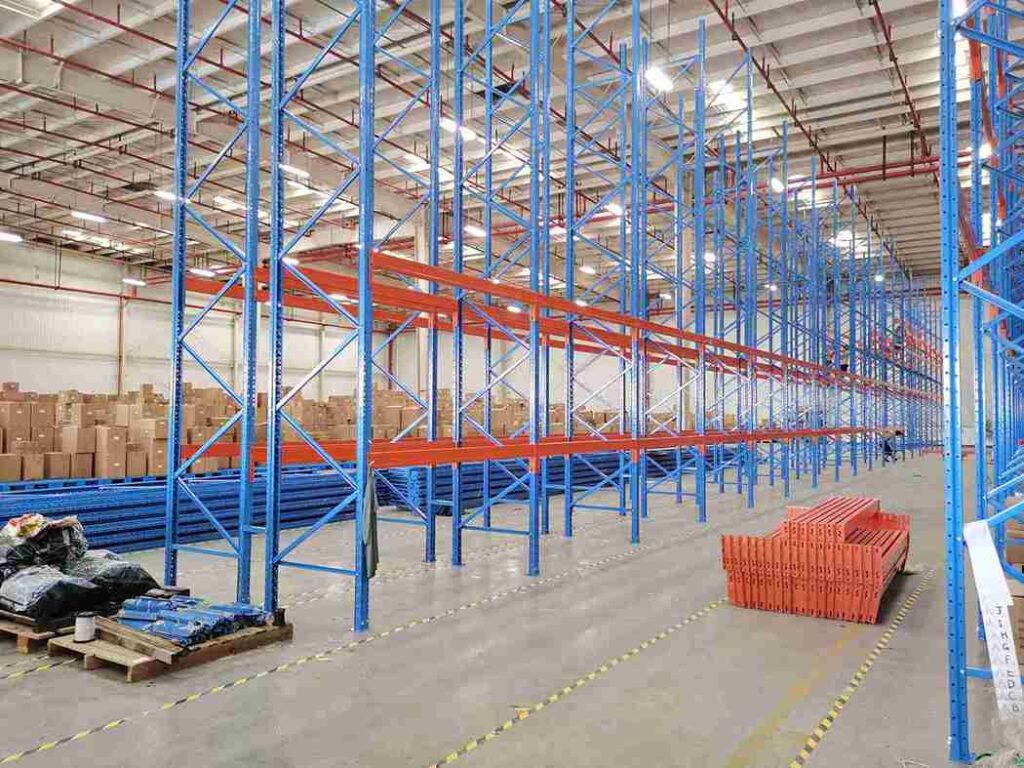
Regional Realities: How Geography Exacerbates Installation Errors
Pallet racking installation mistakes have universal consequences, but their risk and impact are magnified by specific regional challenges in key growth markets.
High Humidity & Coastal Environments (Southeast Asia, Gulf States): In these regions, a critical mistake is installing racking without considering corrosion protection. Standard mill finish steel may suffice inland, but near coastlines, specifying and installing hot-dip galvanized or appropriately painted racking is essential. Furthermore, installers must ensure protective coatings are not scratched or damaged during installation, as these become nucleation points for rapid rust, compromising structural integrity.
Seismic Zones (Parts of Latin America, Southeast Asia): In these areas, the cost of pallet racking installation mistakes is measured in lives, not just dollars. Seismic-rated racking has specialized bracing, connections, and anchorage details. An installer’s failure to precisely follow these seismic-specific instructions—such as using the exact specified seismic anchor or bracing layout—renders the expensive seismic design utterly useless. The margin for error here is zero.
Rapid Scale & Skill Shortages (Emerging Markets Globally): In fast-growing industrial regions, the pressure to build quickly can lead to the delegation of pallet racking installation to uncertified, general labor. This is the single greatest systemic risk. Without understanding the engineering principles, these crews are guaranteed to make fundamental mistakes—from improper torquing to missed braces—that create ticking time bombs in warehouses. The solution is insisting on manufacturer-trained or internationally certified installation crews, even if it requires importing them for the project duration.
The Automation Imperative: Where Installation Tolerances Become Microns
When racking is part of an Automated Storage and Retrieval System (AS/RS), pallet racking installation mistakes carry an even stiffer penalty. The tolerance for error shifts from millimeters to fractions of a millimeter.
Guide Rail Foundations: For stacker crane systems, the rails upon which the cranes run must be installed with near-machine tool precision. Floor flatness requirements are exponentially stricter. A pallet racking installation mistake here, such as a misaligned upright that attaches to the guide rail, will cause constant crane faults, product damage, and system-wide downtime. The installation is no longer just about storage; it’s about creating a precision guideway for high-speed machinery.
Integration Point Errors: The racking must interface perfectly with automated conveyors, palletizers, and AGV pickup/drop-off points. A rack bay that is out of alignment by even a centimeter can cause pallets to jam, transfers to fail, and the entire automated workflow to halt. Coordination between the racking installers and automation integrators must be seamless, with shared datum points and continuous quality checks. A siloed approach guarantees expensive, project-delaying installation mistakes.
Conclusion: The Professional Installation Dividend
In conclusion, the landscape of pallet racking installation mistakes is vast and fraught with technical pitfalls. From the unseen quality of the concrete to the final turn of a torque wrench, each step carries weight. These errors are not merely operational hiccups; they are systemic vulnerabilities that undermine safety, evaporate profitability through damage and inefficiency, and dramatically shorten the asset’s lifespan.
The compelling business case is clear: the upfront investment in a certified, experienced, and meticulous installation team—one that conducts pre-installation surveys, uses calibrated tools, follows engineered drawings to the letter, and executes rigorous commissioning—is marginal compared to the total lifecycle cost of the storage system. It is the most effective risk mitigation and performance insurance policy a logistics operator can purchase.
For companies operating in the dynamic markets of Southeast Asia, the Middle East, Africa, and Latin America, the stakes are especially high. Navigating diverse environmental conditions, supply chain variables, and regulatory environments demands a partner with global expertise and local execution intelligence. A partner who doesn’t just ship racking but delivers a certified, performance-guaranteed storage structure, built on a foundation of precision and free from the devastating legacy of pallet racking installation mistakes. The true measure of a warehouse’s strength is not in the weight of its steel, but in the quality of its installation.
Frequently Asked Questions (FAQs)
Q1: We are adding a second-level mezzanine to our existing racking. Can our maintenance team handle this, or is it considered a new installation with new risks?
Adding a mezzanine is a major structural modification, not a simple addition. It drastically changes the load paths and dynamics of the entire existing rack structure. This is a high-risk scenario for pallet racking installation mistakes if done in-house. It requires a full structural re-evaluation by an engineer, specific connection details, and likely reinforcement of existing uprights. This work must be performed by specialists to avoid overloading and collapsing the original system.
Q2: What is the single most important tool for preventing pallet racking installation mistakes on site?
While the laser level is crucial for alignment, the most non-negotiable tool is the calibrated torque wrench. Proper anchor installation is the bedrock of safety, and torque is the measurable, verifiable metric that ensures it. No professional installation report is complete without a log of anchor torque values.
Q3: How does poor installation affect our racking’s warranty and insurance coverage?
Virtually all manufacturers’ structural warranties are explicitly voided if the racking is not installed by an approved or certified installer according to their provided instructions and local codes. Similarly, property and liability insurance policies may deny claims following a collapse if it is determined that the root cause was improper installation—a clear case of pallet racking installation mistakes negating coverage.
Q4: For a new greenfield warehouse, in what sequence should the racking installation and concrete floor finishing occur?
The ideal sequence is collaborative. The racking supplier should provide the floor flatness (FF/FL) and load specifications to the civil contractor before the final floor pour. After the slab is poured and cured, a flatness survey should be conducted and approved by the racking project manager before installation begins. Pouring the floor without these specs is a pre-emptive pallet racking installation mistake.
Q5: We see minor damage like scratched paint or a small dent on a component upon delivery. Should we proceed with installation or is this a concern?
Do not install damaged components without authorization. A small dent in an upright column or a beam end can significantly reduce its load-bearing capacity. Scratches in corrosion protection coatings will lead to rust. Always document the damage with photos, report it immediately to the supplier, and request a replacement. Installing known-damaged components is a deliberate pallet racking installation error that compromises the entire system’s integrity.
Welcome to contact us, if you need warehouse rack CAD drawings. We can provide you with warehouse rack planning and design for free. Our email address is: jili@geelyracks.com