📐 "First 50 Enterprise Queries Get Custom 3D Warehouse Design" Plan















H1: Beyond Price: The True ROI of Smart Storage Racking (Cost/Sq Ft Analysis Included)
This definitive guide dismantles the industry’s fixation on the upfront storage racking cost per square foot, presenting a more sophisticated financial model for warehouse planning. It reveals how a narrow focus on this initial metric leads to long-term operational inefficiency and higher Total Cost of Ownership (TCO). By contrasting the true, holistic costs of traditional static racking against the transformative value of integrated smart systems, this analysis provides a clear, actionable framework for calculating the genuine Return on Investment (ROI). Logistics directors and operations managers will learn to quantify the hidden savings in labor, space, and accuracy that smart racking delivers, transforming a capital expenditure into a strategic, profit-driving investment.
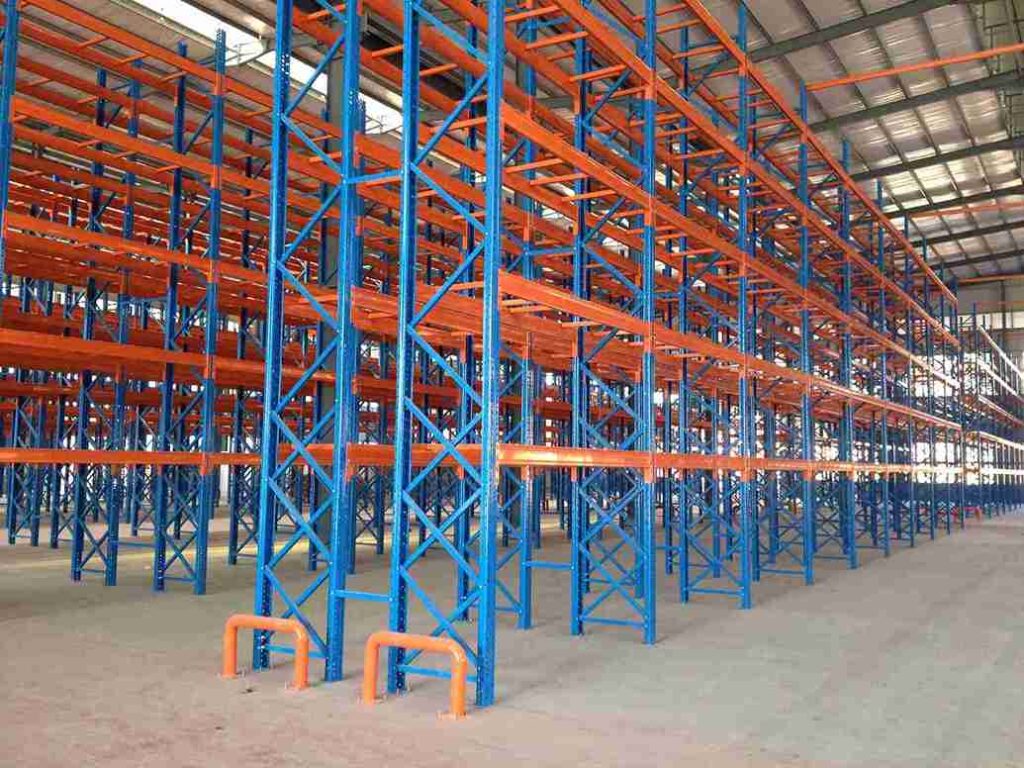
H2: Rethinking Storage Racking Cost Per Square Foot: The Flawed Industry Standard
In boardrooms and planning meetings from Mexico City to Kuala Lumpur, one figure often dominates the early conversation about warehouse expansion or retrofit: the storage racking cost per square foot. It’s a seemingly logical starting point—a tangible, comparable number that fits neatly into spreadsheet cells and capital appropriation requests. However, this myopic focus on the initial storage racking cost per square foot is arguably the most significant strategic error a logistics professional can make. It’s a metric that tells a dangerously incomplete story, focusing solely on the skeleton of the storage system while ignoring the lifeblood of its operation.
The industry’s reliance on this simplified storage racking cost per square foot calculation has, for decades, locked companies into cycles of inefficiency. They secure what appears to be a low storage racking cost per square foot for conventional pallet racking, only to discover that the real financial burden lies in the years of operational costs required to service that very racking. The true storage racking cost per square foot is not a static purchase price; it is a dynamic figure that accumulates over the system’s entire lifespan, heavily influenced by labor, energy, error rates, and lost opportunity.
This article will demonstrate that the smartest financial decision often involves accepting a higher initial storage racking cost per square foot for a smart system to achieve a dramatically lower lifetime storage racking cost per square foot when all operational factors are calculated.
H2: The True Cost of Storage Racking Per Square Foot: A Comprehensive TCO Analysis
To genuinely appreciate the value proposition of smart storage solutions, one must first conduct a forensic audit of the complete cost structure associated with traditional storage racking. The invoice for the steel structure represents a fraction of the financial commitment.
H3: Visible Costs: The Initial Storage Racking Cost Per Square Foot Calculation
These are the direct, capital costs that form the basis of the traditional storage racking cost per square foot quote.
Raw Material and Fabrication: This encompasses the cost of the steel, the manufacturing of beams, upright frames, and decking. Fluctuations in global steel prices directly impact this component of the storage racking cost per square foot.
Professional Installation and Commissioning: The complexity of the installation significantly influences the final project storage racking cost per square foot. High-bay installations exceeding 10 meters or projects with complex seismic requirements demand specialized crews and engineering, elevating the installed storage racking cost per square foot.
Basic Layout and Structural Engineering: Ensuring the racking design can support the intended loads and complies with local building codes is a non-negotiable part of the upfront storage racking cost per square foot.
H3: Hidden Costs: What Your Storage Racking Cost Per Square Foot Quote Doesn’t Show
This is where the seemingly low initial storage racking cost per square foot of traditional racking reveals its true, expensive nature. These are recurring, operational expenses that are often buried in broader overhead accounts.
Chronic Labor Inefficiency: This is the single largest cost sink. In a conventional warehouse with wide-aisle racking, studies indicate that order pickers can spend over 50% of their shift simply traveling. The labor cost required to navigate, search, and retrieve from the racking over a 10-year period can be 5 to 10 times the original storage racking cost per square foot. This operational storage racking cost per square foot is a perpetual liability.
Inefficient Real Estate Utilization: Low-density storage solutions consume a premium asset: floor space. In markets like the UAE or Singapore, where industrial land is at a premium, dedicating vast areas to forklift aisles is a colossal waste. The true economic storage racking cost per square foot must include the rent or opportunity cost of this wasted space. A system that stores more in less area effectively reduces the operational storage racking cost per square foot.
Systemic Product Damage and Inventory Shrinkage: Human-operated forklifts in congested aisles inevitably lead to collisions with racking and products. Furthermore, manual picking processes are prone to errors, leading to mis-ships and lost inventory. These losses represent a direct, recurring addition to the effective storage racking cost per square foot.
Safety and Insurance Premiums: Environments with high levels of manual material handling pose greater risks. Workplace accidents can lead to downtime, insurance claims, and increased premiums, all of which contribute to the hidden operational storage racking cost per square foot.
H2: Smart Storage Solutions: A New Approach to Storage Racking Cost Per Square Foot
Smart storage racking represents a fundamental paradigm shift. It is an integrated, cyber-physical system where the physical storage structure, automation technology, and control software are co-engineered to work as a single, optimized unit. The goal is to minimize the total operational storage racking cost per square foot, not just the initial purchase storage racking cost per square foot.
H3: High-Density Storage and Its Impact on Storage Racking Cost Per Square Foot
The hardware in a smart system is designed for maximum density, throughput, and seamless integration with automation.
Automated Storage and Retrieval Systems (ASRS/立体仓库): These high-bay systems use robotic cranes that operate within the rack structure itself, eliminating the need for multiple forklift aisles. While the upfront storage racking cost per square foot for an ASRS is higher, its ability to utilize the entire building cube dramatically reduces the real estate storage racking cost per square foot.
Autonomous Pallet Shuttle Systems: These systems use battery-powered shuttles that run inside the rack levels, transporting pallets to the aisle front for pickup. They offer a compelling balance, providing high density and throughput with a storage racking cost per square foot that is often lower than a full ASRS, but with significantly better efficiency than static racking.
High-Density Mobile Racking: This system mounts racking on motorized carriages that move along rails, creating a single access aisle only where and when needed. It can increase storage density by over 80%, profoundly impacting the long-term spatial storage racking cost per square foot.
H3: How Automation Reduces Operational Storage Racking Cost Per Square Foot
This is the command center of the smart racking ecosystem, where the majority of the ROI is generated.
The Warehouse Management System (WMS): This software acts as the brain, making intelligent decisions about inventory placement (putaway) based on turnover, weight, and size. By optimizing travel paths for both humans and machines, it directly attacks the labor component of the storage racking cost per square foot.
The Warehouse Control System (WCS): This is the nervous system, translating high-level orders from the WMS into real-time commands for the automated equipment (robots, shuttles, conveyors). Its efficiency determines the throughput, which is a key factor in the ROI calculation that goes far beyond the basic storage racking cost per square foot.
H2: Calculating ROI: Moving Beyond Basic Storage Racking Cost Per Square Foot
Translating the benefits of smart racking into a compelling financial argument requires moving beyond the simplistic storage racking cost per square foot and building a robust Total Cost of Ownership (TCO) model.
H3: How Automation Reduces Operational Storage Racking Cost Per Square Foot
These are the most straightforward figures to calculate and present a powerful case.
Labor Cost Reduction: Model the reduction in forklift operators, order pickers, and other floor personnel. A smart system can typically reduce these direct labor requirements by 50-70%. This saving is a direct, annual reduction in the operational storage racking cost per square foot.
*Financial Modeling Example: A facility employing 10 floor staff at a fully-burdened cost of $30,000 each incurs a $300,000 annual labor cost. A 60% reduction through automation saves $180,000 per year, fundamentally altering the TCO.*
Real Estate Optimization: Calculate the value of the floor space saved. This can be quantified as avoided rental costs, the value of repurposed space for production, or the deferral of a costly facility expansion. A high-density system that doubles capacity within the same footprint effectively halves the long-term spatial storage racking cost per square foot.
Reduction in Inventory Shrinkage: Analyze historical loss rates. Smart systems, with their near-perfect inventory accuracy, can reduce shrinkage and damage by over 90%. This saving directly improves the bottom line and reduces the effective storage racking cost per square foot.
H3: Quantifying Labor Savings in Your Storage Racking Cost Per Square Foot Analysis
These benefits, while harder to quantify, often deliver the most significant competitive advantage.
Throughput and Accuracy Multiplier: Faster, flawless order fulfillment leads to higher customer satisfaction and retention. The ability to handle peak season volumes without hiring temporary staff provides immense operational stability. This capability has a direct, though sometimes indirect, impact on revenue and must be factored into any analysis that looks beyond the simple storage racking cost per square foot.
Scalability and Business Agility: The modular nature of many smart storage systems allows for capacity to be added in increments, without a complete operational shutdown. This flexibility defers large capital outlays and provides a significant strategic advantage that is not captured in a static storage racking cost per square foot analysis.
Resilience to Market Volatility: Automation provides a predictable, reliable core operation, insulating the business from labor shortages, rising wage pressures, and training challenges. This resilience protects revenue streams and is a critical component of modern risk management.
H3: The Real Estate Factor in Storage Racking Cost Per Square Foot Calculations
The final step is to synthesize all data into a clear financial picture.
Total Annual Benefit (TAB): (Sum of Hard Savings) + (Estimated Value of Soft Benefits).
Total Investment (TI): Project Cost (Smart Racking, Automation, Software, Installation). This is the higher initial storage racking cost per square foot.
Net Annual Benefit (NAB): TAB – Annual Operating Cost of the new system (e.g., maintenance, software subscriptions, specialized staff).
Simple Payback Period: TI / NAB = Payback Period in Years.
5-Year and 10-Year TCO: (TI) + (Annual Operating Cost * 5 or 10). Compare this figure directly with the TCO of the traditional racking alternative.
A well-planned smart storage project typically demonstrates a compelling payback period of 2 to 5 years. After this point, the annual net benefit flows directly to the company’s profit, proving that the higher initial storage racking cost per square foot was a wise investment.
H2: A Comparative Case Study: Traditional vs. Smart Racking in a 10,000 Sq Ft Facility
Let’s apply this TCO model to a hypothetical but realistic scenario for a 10,000 square foot distribution center in a growing market.
H3: Storage Racking Cost Per Square Foot: Traditional vs. Smart Systems Comparison
Upfront Capital Outlay: A conventional storage racking cost per square foot of $45 results in a total investment of $450,000.
Projected Annual Operating Costs:
Labor for 8 operators: $240,000
Real Estate Opportunity Cost (due to low density): $80,000
Inventory Damage and Shrinkage: $20,000
Total Annual Operational Cost: $340,000
H3: Traditional Storage Racking Cost Per Square Foot Analysis
Upfront Capital Outlay: A higher initial storage racking cost per square foot of $130 for an integrated ASRS results in a total investment of $1,300,000.
Projected Annual Operating Costs:
Labor for 3 system controllers: $90,000
Real Estate Opportunity Cost: $0 (optimal density)
Inventory Damage and Shrinkage: $2,000
System Maintenance & Software Licenses: $60,000
Total Annual Operational Cost: $152,000
H3:Total Cost of Ownership: The Real Storage Racking Cost Per Square Foot
Traditional Racking TCO (5-Year): $450,000 + (5 * $340,000) = $2,150,000
Smart ASRS TCO (5-Year): $1,300,000 + (5 * $152,000) = $2,060,000
Traditional Racking TCO (10-Year): $450,000 + (10 * $340,000) = $3,850,000
Smart ASRS TCO (10-Year): $1,300,000 + (10 * $152,000) = $2,820,000
The Conclusion is Inescapable: While the smart ASRS carried a 189% higher initial storage racking cost per square foot, its 5-year TCO is already $90,000 lower. By the 10-year mark, the smart system delivers a staggering $1,030,000 in savings. The annual operational storage racking cost per square foot for the smart system is demonstrably and overwhelmingly lower, validating the strategic investment.
H2: Key Factors That Impact Storage Racking Cost Per Square Foot
Certain features of smart racking systems are primary contributors to this dramatic ROI.
H3: The Goods-to-Person (G2P) Revolution
Traditional “person-to-goods” picking is inherently inefficient. Smart systems, using bots or shuttles, bring the inventory to a stationary, ergonomically optimized pick station. This can increase pick rates from 100-150 lines per hour to over 500-700 lines per hour. This massive throughput multiplier directly attacks the labor component of the storage racking cost per square foot and increases revenue-handling capacity.
H3: Vertical Cube Utilization: Building Upwards, Not Outwards
The most expensive square footage in a warehouse is often the floor. By building upwards to 40+ feet with stable, integrated ASRS, companies effectively create multiple layers of storage within the same footprint. This vertical strategy is the most effective way to reduce the real estate storage racking cost per square foot and is a primary reason the long-term TCO of smart systems is superior.
H3: Uncompromising Inventory Integrity
With the WMS in direct, digital control of the robotics, the system executes commands with perfect precision. Barcode or RFID scanning at every transaction point ensures that the right product is always in the right location. This virtual elimination of errors saves countless hours of search time, prevents costly shipping mistakes, and provides flawless inventory data for finance and planning.
H2: Optimizing Your Storage Racking Cost Per Square Foot Investment
Adopting smart storage is a strategic journey that can be de-risked through careful, phased planning.
H3: Phase 1: Holistic Discovery and Data Interrogation
The process begins not with a product selection, but with a deep analysis of SKU velocity, order profiles, seasonality patterns, and a 5-year growth forecast. This data is the foundation for a digital twin simulation that models the performance of different solutions.
H3: Phase 2: Tailored Solution Design and Financial Justification
Engineers and logistics consultants use the data model to design a system optimized for the client’s specific needs. This phase delivers the detailed ROI and TCO model, providing the financial justification needed to secure board-level approval, moving the conversation beyond a simplistic storage racking cost per square foot debate.
H3: Phase 3: Managed Roll-out and Continuous Optimization
A “big bang” installation is often unnecessary. A phased approach—starting perhaps with a high-density shuttle system for slow-movers and later integrating AGVs for transport—allows for capital to be allocated over time, staff to be trained progressively, and the system to be fine-tuned based on real-world performance data.
H2: Future-Proofing the Logistics Operation
The global supply chain is characterized by volatility and disruption. An intelligent warehouse is an agile and resilient warehouse.
Adaptability to Business Model Shifts: The software-driven nature of smart racking allows it to be reconfigured for new product lines, different order profiles (e.g., B2B to B2C), or new value-added services without changing the physical infrastructure.
Immunity to Labor Market Fluctuations: Automation provides a stable, predictable operational backbone, unaffected by the challenges of recruiting, training, and retaining skilled warehouse labor in a competitive market.
Sustainability and Corporate Responsibility: Smart systems are inherently greener. They consume less energy per unit handled, maximize space to reduce the need for new construction, and enable more accurate inventory planning that reduces waste. This aligns with the growing ESG (Environmental, Social, and Governance) mandates of modern corporations.
H2: Conclusion: The Paradigm Shift from Cost Center to Strategic Advantage
The critical question for any business leader today is not “What is the lowest storage racking cost per square foot?” but rather “What storage solution delivers the lowest Total Cost of Ownership and the highest strategic return over its operational lifespan?”
Continuing to prioritize the initial storage racking cost per square foot is a legacy mindset that guarantees perpetual operational inefficiency. It is a decision that optimizes for a short-term budget line item at the expense of long-term profitability and competitiveness. Smart storage racking, as a fully integrated system, represents an investment in core operational capability. It is a platform for growth, accuracy, and resilience that pays for itself through continuous, quantifiable savings and enables market leadership. The future of logistics is not just about storing goods; it’s about intelligently managing assets and information. That future begins by looking beyond the price tag and understanding the true ROI.
H2: Frequently Asked Questions (FAQs)
1. Our operations are unique. Can a smart system handle a mix of pallets, small cases, and individual items?
Absolutely. Modern smart warehouses are often hybrid systems. A common configuration uses an ASRS for full-pallet storage, a mini-load ASRS for small parts in bins, and automated conveyor spurs for case handling. The WMS acts as the unifying brain, orchestrating the flow of all these different unit types seamlessly. The storage racking cost per square foot for such a hybrid system is calculated based on the optimized mix of technologies, ensuring each product type is stored in the most cost-effective and efficient way.
2. How does the ROI model hold up in regions with lower labor costs compared to North America or Western Europe?
While the absolute labor savings are smaller, the other ROI drivers become relatively more critical. In high-growth markets across Southeast Asia, Africa, and Latin America, the cost and scarcity of suitable industrial land are massive issues. The space-saving benefit of smart racking, which drastically reduces the effective real estate storage racking cost per square foot, is a huge financial driver. Furthermore, the need for accuracy and speed to build a reliable brand and compete globally is paramount. Investing in automation is a strategy to leapfrog competitors, not just to save on wages.
3. What is the operational lifespan of these systems, and how does maintenance impact the long-term storage racking cost per square foot?
The structural racking itself has a lifespan of 25+ years. The core automation components (e.g., cranes, shuttles) are designed for a 10-15 year service life, often with clear upgrade paths. A comprehensive annual maintenance contract, typically costing 2-4% of the equipment’s value, is essential for ensuring high system uptime (often 99.5%+). This maintenance cost is a known, budgetable operational expense that is factored into the TCO model, ensuring the long-term operational storage racking cost per square foot remains predictable and low.
4. We cannot afford a full shutdown. Is a phased implementation truly feasible without crippling our ongoing operations?
Yes, and it is a standard practice for experienced system integrators. The implementation plan is meticulously phased using a “rolling commissioning” approach. This involves installing and bringing online one section or zone of the new system at a time, while the rest of the warehouse continues to operate using the old system or a temporary setup. Detailed logistics planning ensures that customer orders continue to be fulfilled throughout the transition period, mitigating operational risk.
5. How deep is the integration between the smart racking software (WMS/WCS) and our existing enterprise systems like SAP or Oracle?
Seamless, bidirectional integration is a fundamental requirement, not an afterthought. Modern WMS and WCS platforms are built with robust, standards-based APIs (Application Programming Interfaces) that facilitate real-time data exchange with all major ERP and enterprise systems. This ensures that critical information—such as inventory levels, purchase orders, and shipment confirmations—flows instantly and accurately between the warehouse floor and the corporate financial system, creating a single source of truth for the entire organization.
Welcome to contact us, if you need warehouse rack CAD drawings. We can provide you with warehouse rack planning and design for free. Our email address is: jili@geelyracks.com