📐 "First 50 Enterprise Queries Get Custom 3D Warehouse Design" Plan















Stop Guessing: Get Precision Warehouse Racking CAD Drawings in 24 Hours
In the high-stakes world of warehouse logistics and automation, the gap between a successful project and a costly failure is often measured in millimeters, not meters. For project managers, facility planners, and logistics engineers, the planning phase of a new storage system is fraught with uncertainty. Traditional methods—relying on supplier catalogs, 2D sketches, and rough calculations—are no longer sufficient. These approaches lead to a cascade of problems: installation errors, wasted space, safety vulnerabilities, and catastrophic integration failures with automated systems like AGVs and ASRS.
This is where the paradigm shifts. The industry’s leading solution for eliminating this guesswork is the deployment of professionally engineered, data-rich warehouse racking CAD drawings. These are not simple diagrams; they are intelligent, dynamic digital blueprints that serve as the single source of truth for an entire storage project. The company behind the headline “Stop Guessing: Get Precision Warehouse Racking CAD Drawings in 24 Hours” has built its service on a fundamental promise: to deliver comprehensive, installation-ready warehouse racking CAD drawings within a single business day. This article delves into why this service is not just a convenience but a critical strategic advantage, de-risking multi-million dollar investments and setting a new standard for project execution.

Why Precision Warehouse Racking CAD Drawings Are Non-Negotiable
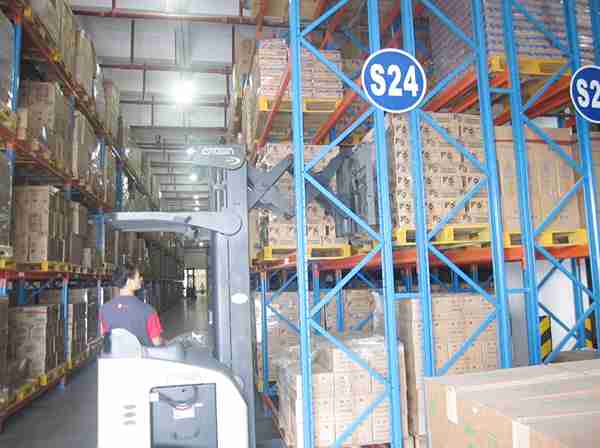
The temptation to cut corners during the design phase is understandable, often driven by perceived cost savings or time pressures. However, the real-world consequences of inadequate warehouse racking CAD drawings are severe and quantifiable. Consider a recent, real-world scenario from a distribution center in the Midwest. The management team, working from a basic layout provided by a general contractor, proceeded with the installation of a selective pallet racking system.
The drawings failed to account for the precise turning radius of their new fleet of narrow-aisle reach trucks. The result? After the steel was erected, they discovered a critical three-inch clearance deficit, making it impossible for operators to enter aisles safely without risking impact. The remedy involved a complete teardown and re-installation of an entire warehouse section, resulting in over $120,000 in wasted labor, material, and significant project delays.
This is not an isolated incident. The absence of precision warehouse racking CAD drawings leads to several predictable and costly outcomes:
Structural Compromises and Safety Hazards: Without dynamic load calculations embedded within the warehouse racking CAD drawings, there is a real risk of overloading beams or under-specifying upright frames. The consequence extends beyond damaged inventory to the potential for a catastrophic racking collapse, endangering personnel and operations.
Automation Integration Failures: This is the most critical failure point. Automated Guided Vehicles (AGVs) and Automated Storage and Retrieval Systems (ASRS) operate on digital twins that require millimeter-level precision. Warehouse racking CAD drawings that are off by even a centimeter can render a multi-million dollar automation system inoperable, as the robots will be unable to navigate or retrieve pallets as programmed.
Chronic Inefficiency in Space Utilization: A hand-drawn sketch or a non-optimized CAD file cannot algorithmically optimize every cubic foot of available clear height and floor space. This results in leaving valuable storage capacity on the table, directly and negatively impacting storage density and long-term ROI.
Defining “Precision”: What Truly Constitutes Professional Warehouse Racking CAD Drawings?
In the context of modern storage solutions, the term “precision” transcends simple geometry. A professional set of warehouse racking CAD drawings is a comprehensive information system. When a provider commits to delivering precision warehouse racking CAD drawings, they are obligated to include a suite of specific, actionable data layers:
Fully Dimensioned and Annotated Layouts: Every critical measurement—aisle width, beam level height, bay depth, and overall footprint—is explicitly dimensioned. This eliminates all ambiguity for the installation team, ensuring the physical build matches the digital model perfectly.
Integrated Load Capacity Calculations and Annotations: Each component within the warehouse racking CAD drawings is intelligently tagged with its specific Safe Working Load (SWL). This allows project stakeholders to see at a glance the capacity of every beam and the collective capacity of each upright frame, ensuring compliance with RMI (Rack Manufacturers Institute) and other relevant engineering standards.
Seamless Integration with Building Infrastructure: Superior warehouse racking CAD drawings do not exist in a vacuum. They model and reference critical building elements: structural columns, sprinkler head locations and their clearances, HVAC ducting, electrical conduits, and lighting. This proactive clash detection in the digital stage prevents expensive on-site modifications.
Automated Bill of Materials (BOM) Generation: From the intelligent object-oriented CAD model, the system can automatically generate a precise bill of materials. This empowers the procurement team to order the exact quantity of beams, frames, frame connectors, and safety locks required, eliminating both costly shortages and wasteful overages.
Compatibility with Automation and WMS Software: For clients implementing AGVs or ASRS, the warehouse racking CAD drawings must be exportable in formats compatible with the system’s control software (e.g., DXF, IFC). This creates a perfect “digital twin,” allowing for flawless path simulation, cycle time analysis, and seamless deployment of the automated equipment.

Deconstructing the 24-Hour Promise: Supply Warehouse Racking CAD Drawings
The promise of 24-hour turnaround for warehouse racking CAD drawings may seem ambitious, but it is achievable through a refined, technology-augmented, and expert-led process. It is a well-oiled machine designed for speed and accuracy.
Phase 1: The Intelligent, Guided Project Intake (The First 2 Hours)
The 24-hour clock initiates upon receipt of a project dossier through a secure, structured online portal. This is not a passive upload link; it is an intelligent intake system that prompts the client for specific, actionable data:
Existing Facility Documentation: Architectural drawings, structural grids, MEP (Mechanical, Electrical, Plumbing) schematics, and, ideally, laser-scanned point cloud data. The latter provides a millimeter-accurate digital representation of the existing space.
Detailed Storage Profile: Comprehensive data on unit loads, including pallet types (e.g., CHEP, GMA), exact dimensions, weights, and any overhang. The profile of the stored goods dictates the racking configuration.
Material Handling Equipment (MHE) Specifications: The make, model, and detailed specifications of all forklifts, reach trucks, order pickers, AGVs, or stacker cranes. Critical data points include overall width, mast width, turning radius, and lift height.
Operational and Business Objectives: Is the primary goal maximum storage density, high-throughput order picking, or seamless integration with an existing conveyor sortation system? The design of the warehouse racking CAD drawings is directly influenced by these strategic goals.
Phase 2: Expert-Led Digital Modeling and Engineering Analysis (The Core 18 Hours)
This phase is the heart of the operation, where human expertise transforms data into intelligence. It is not an automated software output.
Base Model Creation and Validation: The team first creates a precise 2D/3D model of the facility, accurately placing all obstructions and structural elements based on the provided data.
Dynamic System Configuration and Optimization: Using advanced software platforms, certified engineers configure the racking system. They dynamically adjust beam levels, select upright frames based on calculated axial and moment loads, and apply real-world seismic and impact load factors as required. The layout is iteratively optimized for the client’s stated objectives.
Virtual Validation and Simulation: The preliminary design is subjected to rigorous virtual tests. This includes running sightlines for operators, simulating the path of an AGV to ensure clearances, and validating compliance with OSHA and other local safety regulations.
Dual-Layer Quality Assurance: A senior engineer, separate from the lead designer, conducts a comprehensive review of the warehouse racking CAD drawings. This second set of eyes is crucial for catching potential issues, ensuring the deliverable meets a “zero-critical-error” standard.
Phase 3: Finalization, Annotation, and Secure Delivery (The Final 4 Hours)
In the final stretch, the near-final warehouse racking CAD drawings are polished for delivery:
Viewport and Sheet Setup: Creating plan views, elevation views, detailed sections, and any necessary isometric details for clarity.
Comprehensive Annotation: Adding all critical notes, load tables, general notes, and a legend to make the warehouse racking CAD drawings self-explanatory.
BOM and Documentation Finalization: Preparing the precise Bill of Materials and any supplemental calculation summaries as separate, professional documents.
Final QC and Format Export: A last check ensures perfection before the package—typically containing DWG, PDF, and often 3D PDF files—is delivered via secure email and download link, fulfilling the 24-hour pledge.
What Defines Exceptional Warehouse Racking CAD Drawings
The ROI from investing in professional warehouse racking CAD drawings is direct, significant, and multi-faceted. It is an investment that pays for itself many times over.
Total Elimination of Costly Rework: As demonstrated in the earlier case study, preventing a single installation error can save tens to hundreds of thousands of dollars, dwarfing the initial cost of the warehouse racking CAD drawings service.
Dramatically Accelerated Project Timelines: With certified, trusted warehouse racking CAD drawings in hand, projects can move immediately to the procurement and installation phases without the typical weeks-long delays for design iterations.
Empowered, Apples-to-Apples Procurement: The precise BOM derived from the warehouse racking CAD drawings allows clients to solicit and compare quotes from multiple suppliers on identical grounds, ensuring they pay a fair market price for exactly what is needed.
Future-Proofing the Capital Investment: The completed warehouse racking CAD drawings become a valuable digital asset. For future expansions, reconfigurations, or safety audits, these drawings provide the perfect, accurate foundation, saving immense time and cost on subsequent projects.
Case in Point: Precision for a Multi-Tiered ASRS in a Cold Storage Environment
A client in the food distribution sector was implementing a new 5-tier high-density ASRS within a retrofitted cold storage facility. The margin for error was absolute zero, and the client’s initial plans, based on manual surveys, were incomplete. They failed to accurately model the complex, overhead network of ammonia cooling lines.
Leveraging the 24-hour warehouse racking CAD drawings service, the project team submitted their rough sketches and the piping schematics. Within the deadline, they received a comprehensive 3D Revit model. This model not only detailed the racking layout but also integrated the cooling infrastructure. Crucially, it identified two potential clashes where the ASRS mast would have interfered with a primary coolant pipe—a flaw undetected in the initial planning. Resolving this conflict digitally, before any procurement, saved the project an estimated $150,000 in potential rework, system downtime, and avoided refrigerant loss. This is the power and tangible value of precision warehouse racking CAD drawings.

Addressing Common Project Concerns: The FAQ
Q1: Our project involves a complex mix of pallet racking, a structural mezzanine, and a conveyor system. Is this truly feasible in 24 hours?
A: Yes. Our team comprises specialists in integrated storage solutions, including structural engineers for mezzanines and automation engineers for conveyor interfaces. For projects of high complexity, we often initiate a brief, focused kick-off call immediately after document receipt to confirm key parameters, ensuring our 24-hour workflow is perfectly aligned with the project’s intricacies from the very start.
Q2: What specific file formats can we expect to receive?
A: We deliver industry-standard .DWG files for full editability by contractors, fully-layered .PDFs for universal viewing and printing, and, where beneficial, 3D .PDF or .STEP files to facilitate visualization and integration with other 3D/BIM software used by your team or partners.
Q3: What is the policy if we need a revision after receiving the initial warehouse racking CAD drawings?
A: Our service includes one round of minor revisions at no additional cost, acknowledging that internal reviews may reveal minor tweaks. We commit to a swift 6-hour turnaround for these revisions to ensure your project’s momentum is maintained.
Q4: How does this service function if we are in the early bidding stage and have not selected a racking supplier?
A: It functions perfectly. We offer this as a standalone, fee-based professional design service. There is absolutely no obligation to purchase equipment from us. Many of our clients use this service to de-risk their project, obtain an unbiased, expert design, and create a definitive set of warehouse racking CAD drawings with which they can confidently solicit competitive bids from any supplier.
Q5: Do your warehouse racking CAD drawings adhere to international building and safety codes?
A: Unquestionably. Our engineering team designs to all relevant standards, including RMI in North America, FEM in Europe, and other local seismic and safety codes as project-specific requirements dictate. All design assumptions and the governing standards are clearly annotated on the title block of the warehouse racking CAD drawings.
Conclusion: Transforming Warehouse Planning from an Art into a Science
In the logistics and supply chain industry, where efficiency and safety are paramount, the era of approximation is over. The risks associated with inadequate planning—financial, operational, and human—are too significant to ignore. The strategic adoption of professionally engineered warehouse racking CAD drawings, delivered with the speed and reliability of a 24-hour service, represents a fundamental evolution. It replaces the inherent vulnerability of guesswork with the unshakeable confidence of data-driven precision.
This approach transforms the project lifecycle, ensuring that the foundation of any storage or automation system is built upon a blueprint of absolute clarity and accuracy. For forward-thinking companies, this isn’t just an option; it’s the new standard for operational excellence. The blueprint for a safer, more efficient, and more profitable warehouse is not a distant concept—it is a deliverable that can be in your hands within a single business day.
By following this guide, you’ll optimize your warehouse for safety, efficiency, and scalability—all backed by precision CAD engineering. 🚀
If you need warehouse racking CAD drawings, we can do warehouse racking planning and design for free, you can consult us. Our email: jili@geelyracks.com.