📐 "First 50 Enterprise Queries Get Custom 3D Warehouse Design" Plan
















Maximize Cold Storage ROI: A Strategic Guide to Durable Racking That Slashes Energy & Labor Costs
For cold storage operators across Southeast Asia, the Middle East, Latin America, and beyond, the balance between operational capacity and crippling overhead is a daily battle. Every cubic meter of space, every minute of labor, and every kilowatt of electricity consumed directly impacts the bottom line. The conventional approach of viewing warehouse racking as a simple storage commodity is a costly oversight. In the frigid, demanding environment of a cold storage facility, the racking system is the very backbone of operational efficiency.
It is not just a cost; it’s a pivotal investment. This guide demonstrates how a strategically selected, durable cold storage racking system, with a core focus on the versatility of Adjustable Beam Racking, is the most powerful lever to pull to maximize cold storage ROI, delivering dramatic, measurable savings in both energy consumption and labor costs.
The immense, ongoing expense of refrigerating a warehouse means that inefficiencies are amplified. A poorly planned layout restricts airflow, forcing refrigeration units to work harder. Inefficient storage designs lead to longer pick paths, requiring personnel to spend more time in sub-zero temperatures, which impacts safety, increases wage costs, and slows throughput. The right Adjustable Beam Racking solution addresses these challenges at their core. It transforms a cold storage from a static cost center into a dynamic, profit-protecting asset.
This exploration delves into the engineering principles behind energy-efficient layouts, the material science of frost-resistant structures, and the integration strategies that connect storage to automation, all designed to provide a sustainable competitive advantage in the demanding global cold chain.

The Cold Storage Conundrum: Where Profit Margins Freeze Solid
Operating a cold storage facility is fundamentally different from managing a dry warehouse. The environment itself is the biggest adversary. The constant strain of ultra-low temperatures, the cyclical defrosting, and the high humidity create a perfect storm for equipment degradation and operational waste. The primary costs eating into profitability are not just the racking’s initial purchase price, but the relentless, accumulating expenses that follow.
The Hidden Tax of Inefficient Cold Storage Layouts
Many facilities evolve organically, with racking added piecemeal as storage needs grow. This ad-hoc approach creates a labyrinth that is costly in ways often unquantified. Inefficient layouts force lift trucks to travel greater distances for each pick, burning more energy and exposing operators to the cold for longer periods. But the most significant hidden cost is energy waste. When racking is placed without consideration for airflow optimization, it creates dead zones and blockages.
The refrigeration system, the single largest energy consumer, must then overcompensate, working against the very infrastructure meant to support it. This is a continuous drain on the power budget, directly eroding cold storage ROI. A well-configured system of Adjustable Beam Racking is the first line of defense against this waste, allowing for a layout that prioritizes both storage density and air circulation.
Why Standard Racking is a Liability in Sub-Zero Environments
Not all steel is created equal. Standard warehouse racking, designed for ambient temperatures, becomes brittle and susceptible to catastrophic failure in the extreme cold. The micro-fractures that form under constant thermal stress compromise the entire system’s structural integrity. Furthermore, these racks are often coated with paints or powders that are not designed for high-humidity, low-temperature conditions, leading to rapid corrosion, flaking, and contamination of stored goods.
This translates into frequent, costly replacements and unacceptable safety risks. Investing in durable cold storage racking, specifically Adjustable Beam Racking built with low-temperature steel and superior corrosion protection, is a fundamental requirement for operational continuity and safety.

Engineering Your Racking for Maximum Energy Preservation
The goal of an energy-optimized cold storage facility is to create a seamless, unobstructed path for cold air to circulate. The racking system is the primary element that either facilitates or impedes this flow. By treating the racking as an integral part of the refrigeration system, engineers can engineer out the primary sources of energy waste, and the flexibility of Adjustable Beam Racking is central to this process.
The Science of Airflow and Space Utilization
Refrigeration systems maintain a consistent temperature by displacing warm air with cold air. When dense back-to-back racking blocks this displacement, temperature stratification occurs. Sensors may read the correct temperature in one aisle while product in the center of a block is warming, jeopardizing its integrity and forcing the compressors to run continuously. The solution lies in strategic layout planning, a task for which Adjustable Beam Racking is uniquely suited.
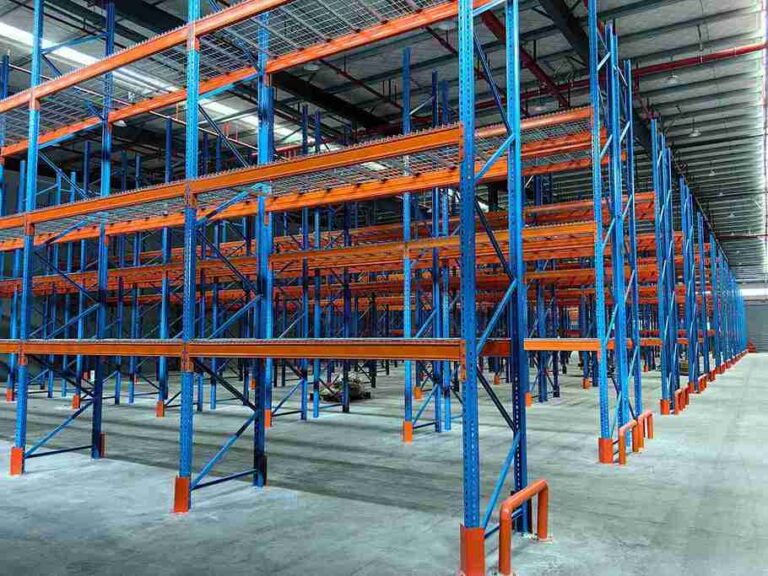
Wide-Aisle vs. Narrow-Aisle Designs: While narrow-aisle (NA) racking increases storage density, it can severely restrict airflow if not planned correctly. A hybrid approach, incorporating wider main aisles that act as “cold air highways,” is often recommended. The key advantage of using Adjustable Beam Racking here is the ability to fine-tune aisle widths even after initial installation, allowing operators to respond to changing equipment or airflow patterns without a complete overhaul.
Incorporating Vertical Air Channels: For very deep storage, designing vertical gaps or channels into the racking bays at strategic intervals is critical. These are engineered ventilation shafts that enable cold air to penetrate deep into the storage block. The design of these channels is made practical and adaptable through the use of Adjustable Beam Racking, as beams can be repositioned to create these essential airflow paths without compromising structural integrity.
Selective Pallet Racking (SPR): The Flexible Foundation for Efficiency
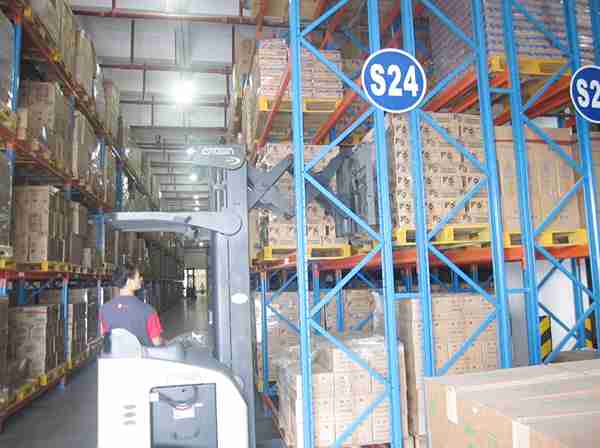
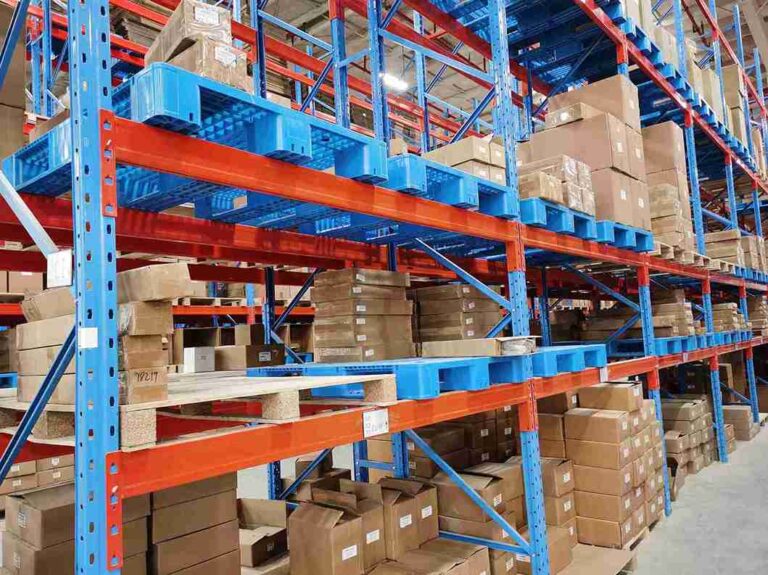
Selective Pallet Racking, the category under which most Adjustable Beam Racking falls, is the most common system for a reason: it offers direct access to every single pallet location. This inherent accessibility is a key to reducing energy loss. When doors are open for loading and unloading, the time to retrieve a pallet is minimized, reducing the volume of warm air entering the facility. To optimize SPR for cold storage, the focus must be on the specific qualities of Adjustable Beam Racking:
Beam-to-Upright Connectors: High-quality Adjustable Beam Racking uses specialized, cold-forged steel connectors with a higher ductility to withstand thermal contraction without becoming brittle. The adjustability of the beam locks must be designed to maintain a secure grip even as the metal contracts and expands, a feature not found in standard systems.
Optimized Aisle Width: The true power of Adjustable Beam Racking shines in its ability to calibrate the optimal aisle width based on specific forklift models (including AGVs and unmanned forklifts). This minimizes the number of turns and corrections required, thereby reducing the time the vehicle—and its operator—spends in the aisle, directly saving energy and labor.
Case in Point: A Frozen Seafood Exporter in Vietnam
A major seafood exporter in Vietnam was facing a 25% higher-than-projected energy bill. Their existing SPR layout was a maze of tight, congested aisles that trapped cold air. By re-engineering their layout with strategic wider cross-aisles and upgrading to a hot-dip galvanized Adjustable Beam Racking system, they achieved a 17% reduction in their energy consumption within the first month. The new, adaptable layout allowed the cold air to circulate effectively, and the robustness of the Adjustable Beam Racking ensured long-term performance in the corrosive, salty environment.
The Unparalleled Adaptability of Adjustable Beam Racking in a Dynamic Cold Chain
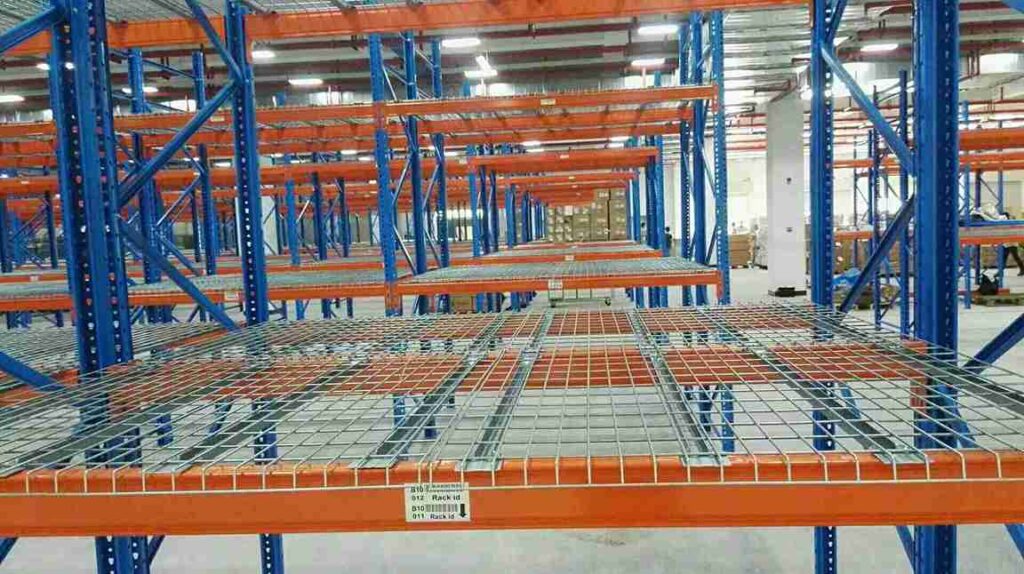
The cold storage industry is not static. Inventory profiles change, pallet sizes vary by season, and operational processes evolve. A static racking system can become an anchor, holding an operation back. This is where the fundamental design of Adjustable Beam Racking transitions from a mere feature to a critical strategic advantage. The ability to reconfigure beam levels without tools or specialized labor is a game-changer for operational agility.
Responding to Seasonal Inventory Fluctuations
A facility might store tall, lightweight packaging in the summer and switch to shorter, denser frozen goods in the winter. With a fixed racking system, this leads to wasted vertical space for half the year. With Adjustable Beam Racking, the transition is seamless. Warehouse managers can quickly and safely reposition beams to create an optimal cube utilization for each season, ensuring that no expensive refrigerated space is wasted. This dynamic use of Adjustable Beam Racking directly translates to a higher storage density per cubic meter cooled, thereby improving the overall ROI of the facility.
Future-Proofing Against Packaging Changes
Global supply chain shifts often mandate changes in pallet type or packaging dimensions. A racking system that cannot adapt becomes obsolete. Adjustable Beam Racking provides inherent future-proofing. The investment in a high-quality Adjustable Beam Racking system is an investment in flexibility, ensuring that the storage infrastructure can evolve with the business, protecting the capital investment for decades. This long-term adaptability is a core component of the durability and value proposition of premium Adjustable Beam Racking.

High-Density Racking: Unlocking Capacity to Dilute Fixed Energy Costs
One of the most effective ways to maximize cold storage ROI is to store more product within the same refrigerated envelope. By increasing storage density, operators effectively dilute the fixed cost of refrigeration per pallet. High-density systems are a game-changer, but their implementation in cold storage requires expert precision. Interestingly, Adjustable Beam Racking often forms the foundation upon which these more complex systems are built.
Drive-In/Drive-Through Racking: Maximizing the Cubic Space
Drive-In Racking Systems are ideal for high-volume storage of products with low SKU variety. Instead of aisles for each row, forklifts drive directly into the rack structure. This can increase storage density by up to 75% compared to selective pallet racking.
The Role of Adjustable Beam Racking: While the guide rails are fixed, the front-facing structure and the internal beam supports within a drive-in system are often based on the principles of Adjustable Beam Racking. This allows for customization of the entry points and landing levels to suit different forklift specifications and pallet conditions, enhancing both safety and efficiency.
Energy and Labor Synergy: The primary energy saving comes from the reduced building volume required per pallet. A smaller, denser footprint is cheaper to cool. The integration of reliable, Adjustable Beam Racking components ensures that this dense configuration remains accessible and manageable.
Pallet Flow Racking: The Ultimate FIFO Efficiency Machine
For products with strict expiry dates, Pallet Flow Racking is unparalleled. This dynamic system uses a slight decline and wheel or roller tracks to allow pallets to flow from the loading end to the picking end automatically, enforcing a perfect FIFO system.
Dramatic Labor Cost Reduction: The pick face is consolidated into a single, highly efficient aisle. This can reduce picking times by over 60%, drastically cutting the man-hours spent in the freezing environment.
Integration with Adjustable Beam Racking: The supporting structure for the flow rails themselves is frequently a heavy-duty Adjustable Beam Racking framework. This allows engineers to perfectly align the incline and support points, and it permits future adjustments should the product weight or packaging change, ensuring the flow system operates flawlessly for years. The robustness of the underlying Adjustable Beam Racking is critical to handling the constant dynamic load.
The Material Science of Durability: Building Racking That Lasts a Lifetime
Durability in a cold storage context is not about withstanding heavy loads alone; it’s about winning the battle against cold, moisture, and physical impact. When specifying Adjustable Beam Racking for these environments, the material specifications are paramount.
Why Hot-Dip Galvanization is Non-Negotiable for Adjustable Beam Racking
Powder coating, while effective in dry warehouses, is porous. In the high-humidity environment of a cold storage, moisture penetrates these microscopic pores, leading to rust that spreads underneath the coating, unseen. Hot-dip galvanization is a completely different process. The steel components of the Adjustable Beam Racking are immersed in a bath of molten zinc, creating a metallurgical bond that is non-porous.
The Galvanization Advantage for Adjustable Components: This zinc layer acts as a sacrificial anode, meaning it will corrode before the underlying steel does. For Adjustable Beam Racking, this is especially crucial. The repeated handling and adjustment of beams could chip powder coating, creating rust points. Hot-dip galvanization ensures that even at the adjustment points and connector teeth, the protection remains intact, ensuring the long-term durability of the investment.
Low-Temperature Steel Formulations for Adjustable Beam Racking
The steel itself must be specially formulated. Standard steel becomes increasingly brittle as temperatures drop. Adjustable Beam Racking destined for cold storage must be fabricated from steel with specific chemical compositions (often with higher nickel content) that maintain their ductility and toughness well below -25°C. This ensures that the beam ends and the upright frame’s connector holes, the critical points of any Adjustable Beam Racking system, do not become stress-fracture initiation points under impact or load.
Integrating Automation: The Final Frontier in Cost Reduction
While durable racking forms the skeleton, automation is the central nervous system that brings it to life with unparalleled efficiency. The synergy between a well-designed racking system and automation is where the most dramatic labor and energy savings are realized. The precision required by automation makes the specification of high-tolerance Adjustable Beam Racking not just beneficial, but essential.
AGVs and Unmanned Forklifts: Operating in the Cold, Unburdened
Human operators require breaks and protective clothing; Automated Guided Vehicles (AGVs) and unmanned forklifts are immune to the cold. They can operate 24/7 in the coldest freezer zones. Integrating them requires a racking system built with machine precision.
Racking for Machine Precision: The Adjustable Beam Racking must be installed with laser-level accuracy. Even minor misalignments that a human operator can compensate for will cause an AGV to fault. The consistency and precision of a high-grade Adjustable Beam Racking system provide the reliable physical interface that automated systems depend on for flawless operation.
Labor Cost Elimination: This is the most direct labor cost saving. Human capital is reallocated to supervisory roles, while the machines handle the grueling work. The reliability of the Adjustable Beam Racking infrastructure ensures uninterrupted automated workflow.
Automated Storage and Retrieval Systems (AS/RS) for Cold Storage
For the pinnacle of efficiency, Automated Storage and Retrieval Systems (AS/RS) represent the ultimate integration. These fully automated, high-bay systems use robotic cranes to store and retrieve pallets with pin-point accuracy.
The Role of Adjustable Beam Racking: While the AS/RS structure itself is often custom-engineered, the concept of adjustability is borrowed directly from the principles of Adjustable Beam Racking. The ability to fine-tune storage locations to the millimeter is built into these systems. Furthermore, the infeed and outfeed conveyor areas that support the AS/RS are frequently constructed using heavy-duty Adjustable Beam Racking to create versatile staging and transfer zones.
The Ultimate ROI Calculation: An AS-RS maximizes cube utilization and creates a near-hermetic seal, minimizing air exchange. The reduction in energy consumption is staggering. Furthermore, it requires almost no human labor inside the cold store. The initial investment is significant, but the long-term ROI is unbeatable for high-throughput facilities, and its success is predicated on the absolute precision of its structural components, a principle championed by quality Adjustable Beam Racking.
Conclusion: Your Racking System as a Profit Center
The decision to invest in a professionally engineered cold storage racking solution is a strategic move from reactive cost management to proactive profit optimization. It is a decision to stop pouring money into an inefficient system and start building a foundation for sustainable growth.
The interconnected savings in energy consumption—achieved through intelligent airflow design and high-density storage—and the dramatic reduction in labor costs—delivered through efficient layouts and automation integration—create a compound effect that fundamentally maximizes cold storage ROI. Throughout this entire strategy, the Adjustable Beam Racking system proves to be the versatile, durable, and intelligent backbone that makes such efficiency possible.
It is the critical component that allows a cold storage facility to adapt, evolve, and thrive in a competitive market. Viewing racking not as a shelf, but as the most critical operational system in the cold chain, is the first step toward transforming a freezing financial burden into a cool, calculated, and highly profitable asset.
Frequently Asked Questions (FAQs)
1. What is the typical payback period for investing in a high-quality, energy-optimized cold storage racking system like Adjustable Beam Racking?
The payback period can vary based on the scale of the facility and the current level of inefficiency, but clients typically see a full return on investment within 12 to 24 months. This is calculated from the combined savings on energy bills (often 15-25%) and reduced labor costs from improved operational efficiency facilitated by the flexibility of the Adjustable Beam Racking. The long-term durability and adaptability of the Adjustable Beam Racking system then translate into pure profit for years beyond the payback period.
2. Can our existing cold storage racking be retrofitted or reinforced to improve its energy efficiency and durability, or must we switch entirely to an Adjustable Beam Racking system?
In some cases, existing Adjustable Beam Racking can be retrofitted. A structural audit can assess integrity. Retrofitting options can include adding vertical air channels by repositioning beams, or applying specialized cold-grade protective coatings. However, if the underlying steel is already compromised or is not rated for low temperatures, a full system replacement with a new, certified Adjustable Beam Racking system is the only safe and cost-effective long-term solution.
3. How does the load capacity of Adjustable Beam Racking change in ultra-low temperature environments?
This is a critical engineering consideration. The load capacity of all steel, including that used in Adjustable Beam Racking, can be derated in extreme cold. Reputable manufacturers provide specific load charts for their Adjustable Beam Racking at various temperature thresholds (e.g., -5°C, -25°C). A professional cold storage racking design must always use these derated capacities to ensure absolute safety and structural integrity.
4. We have a multi-temperature facility (e.g., chiller, freezer, blast freezer). Do we need different specifications of Adjustable Beam Racking for each zone?
Absolutely. The material and specification requirements become more stringent as the temperature drops. While hot-dip galvanization is recommended for all zones, the steel formulation for the Adjustable Beam Racking in a -30°C blast freezer will be of a higher, low-temperature grade than that for a +2°C chiller. A tiered solution using the appropriate grade of Adjustable Beam Racking for each environment ensures safety and cost-effectiveness.
5. What is the process for installing a new Adjustable Beam Racking system in a live cold storage operation without disrupting daily business?
Specialized providers offer phased, turnkey installations in live environments. A meticulous project plan sections off parts of the warehouse for installation of the new Adjustable Beam Racking while the rest remains operational. Teams trained to work efficiently in cold conditions coordinate closely with the client’s logistics team to manage inventory around the installation schedule. The goal is to cause minimal disruption while building a robust Adjustable Beam Racking system that will eliminate future operational disruptions for years to come.
If you require perfect CAD drawings and quotes for warehouse racking, please contact us. We can provide you with free warehouse racking planning and design services and quotes. Our email address is: jili@geelyracks.com