📐 "First 50 Enterprise Queries Get Custom 3D Warehouse Design" Plan


H1: Heavy Duty Longspan Shelving for Pharmaceutical Distribution Center Quotation: An Expanded Engineering, Compliance, and Procurement Reference
A heavy duty longspan shelving quotation for a pharmaceutical distribution center is a technical and regulatory commitment disguised as a commercial document. The shelving specified for a regulated facility determines whether cartons of finished drug product sit in a layout that survives a GMP inspection, whether a cold-chain anteroom keeps its coating integrity through years of temperature cycling, whether a temperature-mapping study finds homogeneous airflow or a stagnant pocket behind a solid-deck shelving bay, and whether the facility’s quality unit can produce a documentation trail that ties every load sign to a stamped calculation.
This reference examines the shelving quotation from the inside out: the structural anatomy of a pharmaceutical-grade shelving bay, the surface engineering that separates an ambient shelving installation from a cold-room shelving installation, the airflow consequences of shelving layout, the line-item architecture of a defensible quotation, the qualification documentation that a shelving supplier should deliver, and the exclusion clauses that quietly transfer risk back to the buyer. It is written for procurement leads, engineering managers, quality professionals, and operations directors who need to compare shelving proposals on something more substantive than the total at the bottom of the page.
H2: Why Pharmaceutical Shelving Specification Diverges From General Warehouse Shelving
General warehousing tolerates compromise. A distribution center moving consumer goods can absorb a sagging shelf, a chipped coating, or a layout that obstructs airflow without triggering a regulatory consequence. A pharmaceutical distribution center cannot. The shelving in a licensed facility sits inside a quality system, and every physical characteristic of that shelving — surface finish, load rating, adjustability, cleanability, anchoring — becomes evidence in an inspection or an audit.
H3: The Regulatory Weight Carried by a Shelving Installation
The U.S. FDA’s cGMP regulations for finished pharmaceuticals, at 21 CFR 211.42, require buildings used for holding drug products to be of suitable size and construction to facilitate cleaning, maintenance, and proper operations, with separate or defined areas to prevent contamination and mixups. A shelving layout is the physical expression of that requirement. If the shelving cannot be cleaned because the upright perforations and beam connections create upward-facing ledges, the shelving becomes a finding.
If the shelving layout does not physically segregate quarantine stock, released stock, rejected material, and recalled product, the shelving configuration undermines the segregation the regulation demands. Quality units increasingly treat shelving drawings as controlled documents for exactly this reason: a shelving change is a layout change, and a layout change is a change to the conditions under which product is stored.
H3: The GDP Layer Applied to Shelving Layout
The EU Guidelines on Good Distribution Practice (2013/C 343/01) and the WHO GDP guidance (TRS 961, Annex 9) push the shelving conversation into operational territory. Storage conditions must be demonstrated rather than assumed. Temperature-sensitive batches require a storage environment whose performance is qualified. The shelving in that environment is not passive furniture; it obstructs air, creates thermal mass, and shapes the temperature gradient from floor to ceiling.
A shelving layout finalized without reference to the room’s airflow design is a layout that the temperature-mapping exercise will eventually test — and, in a meaningful number of cases, fail. Procurement teams that treat shelving as a late-stage purchase, awarded after the HVAC and mapping scopes are closed, frequently discover that the shelving is the variable that forces rework.
H3: Where “Heavy Duty” Becomes a Technical Claim on Shelving
In commodity markets, “heavy duty” is an adjective. In pharmaceutical procurement, it should be a defined Uniformly Distributed Load per shelf level, verified against a calculation that respects the beam span, the deck material, and the cumulative upright capacity. Pharmaceutical shelving commonly sits in the 300 kg to 800 kg per level range, with longer spans and denser product profiles pushing toward the upper end.
Those numbers are meaningless without the span and the deflection basis attached to them. A shelving supplier who quotes “500 kg per shelf” without stating the span at which that rating applies has provided a marketing figure, not an engineering figure. The distinction matters because pharmaceutical cartons are heavy, frequently reloaded, and often handled by staff working at speed — the conditions under which a marginally rated shelving bay becomes a safety incident.
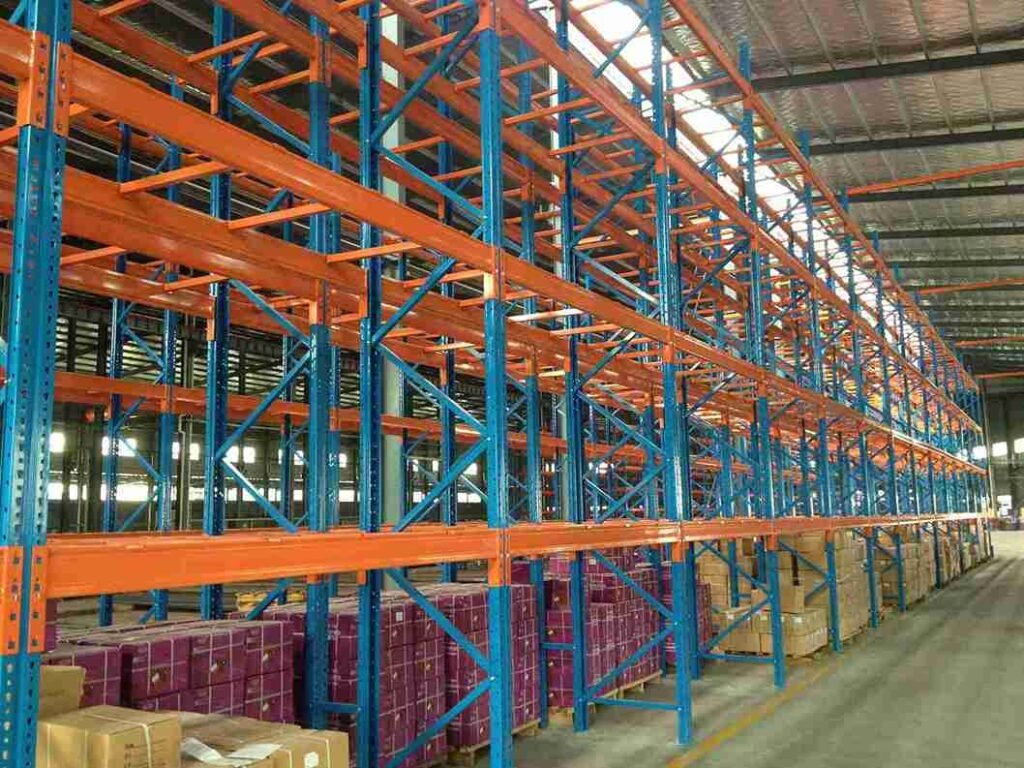
H2: The Structural Anatomy of a Pharmaceutical-Grade Longspan Shelving Bay
A longspan shelving bay appears simple: two upright frames, a set of horizontal beams, and shelf panels. In a regulated environment, each of those components carries a specification burden that drives performance, documentation, and price.
H3: Uprights, Bracing, and the Adjustment Pitch That Defines Shelving Flexibility
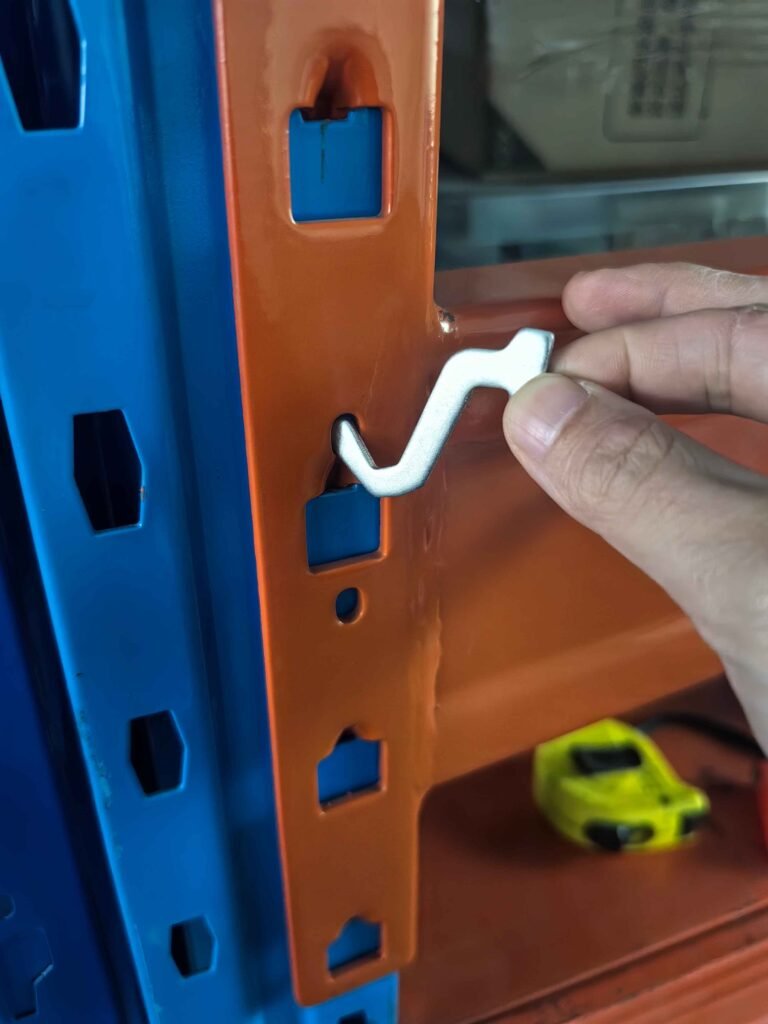
Pharmaceutical product mixes change. A shelving bay configured for a six-month supply of boxed antibiotics at one carton height may be reconfigured within a year for a different pack format with a different height and weight profile. The 50 mm pitch on shelving upright perforations is therefore more than a convenience; it is the feature that allows shelving levels to be relocated without cutting, welding, or field modification of the frame. Any intervention that alters the frame compromises the load rating and breaks the documentation trail that supports the shelving installation during qualification.
The shelving upright section itself deserves scrutiny. A 90 × 60 mm or 100 × 70 mm perforated L-shaped upright with horizontal and diagonal bracing at regular intervals is a common longspan shelving construction. Bracing at roughly 600 mm intervals provides a sensible baseline for sway resistance, particularly where shelving height exceeds 2.5 m or the site sits in a seismic zone. In pharmaceutical rooms, the bracing detail also has a hygiene dimension: shelving bracing that creates horizontal surfaces facing upward will collect dust and resist wiping, and cleaning validation swabs will find those surfaces eventually.
H3: Beam Spans, Deflection, and the Load Table Behind the Shelving Rating
The beam is where a shelving quotation most often conceals its compromises. A roll-formed box beam in S235JR steel with a minimum yield strength of 235 MPa is the workhorse of longspan shelving because the closed section resists torsion across spans that would cause a simple C-section to sag. Beam thickness typically ranges from 1.5 mm to 2.5 mm, with thinner gauges appropriate only for short shelving spans carrying modest loads.
The practical problem is that many shelving quotations state a load capacity without stating the span, the deck type, and the deflection basis behind it. A 2,400 mm shelving beam rated at 500 kg UDL does not behave like a 1,800 mm shelving beam with the same nominal rating, and the deck material introduces a third limit.
The safe working load of a shelving shelf is the lowest of three values: the beam capacity at its actual span, the deck capacity, and the upright capacity carrying the cumulative load of every level above. A shelving quotation that lists one headline number without those qualifiers is not a technical quotation; it is an invitation to overloading, and overloading is one of the most common root causes identified in racking and shelving inspections.
H3: Decking Choices and Their Consequences for Shelving Cleanability
Solid steel panels, galvanized steel, wire mesh, and encapsulated chipboard all appear in pharmaceutical shelving installations, and each changes the cleaning and airflow profile of the shelving bay.
Wire mesh decking on shelving supports vertical airflow and reduces dust accumulation on the deck surface, but it multiplies the edges and intersections that must be wiped during cleaning. Solid steel shelving panels present a smooth, uninterrupted surface that is easier to disinfect, but they obstruct vertical air movement and can produce temperature stratification inside a loaded shelving bay. Encapsulated chipboard is economical and smooth but must be sealed against moisture ingress in humidity-controlled and cold-chain zones.
The shelving quotation should name the deck material explicitly and connect it to the room’s cleaning strategy and airflow design. A single line reading “shelves included” tells a quality unit nothing about whether the shelving will pass a cleaning verification swab or a mapping study.
H3: Accessories That Turn Shelving Into an Audit-Ready System
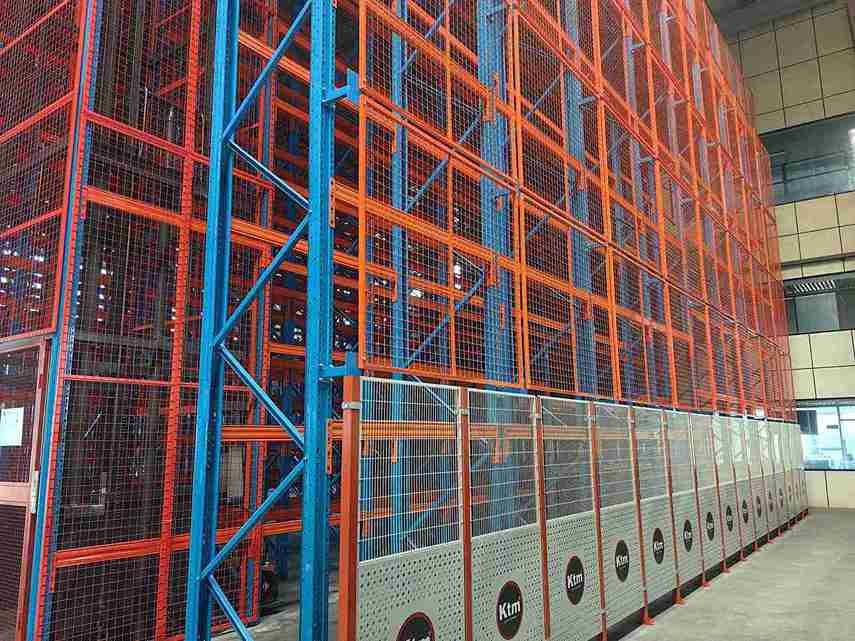
Column protectors, end-of-aisle guards, beam safety clips, load signs, anchor bolts, shims, and touch-up paint are individually small shelving line items that collectively determine safety and compliance. In pharmaceutical facilities, the accessory list often extends to locked mesh enclosures that convert a shelving bay into a quarantine cage, divider systems that support batch segregation on shelving levels, and identification plate holders that carry bay-level labeling for traceability. These items are frequently excluded from a base shelving quotation and added later as change orders once the operations team reviews the layout. A shelving quotation that anticipates the segregation and identification requirements of a GDP-compliant warehouse is worth more than one that prices only steel.
H2: Surface Engineering for Shelving in Regulated Environments
The finish on pharmaceutical shelving is not cosmetic. It is the first barrier against particulate shedding, microbial retention, and corrosion-driven structural degradation, and it is the specification most often diluted to protect a shelving price.
H3: Epoxy Powder Coating on Ambient Shelving
An epoxy-polyester powder coating in the 60–80 micron range is the default finish for ambient pharmaceutical shelving. A properly applied coating produces a smooth, non-porous surface that gives dust and bacteria nowhere to settle, and it resists the mild detergents used in routine cleaning. Independent testing of epoxy-polyester shelving coatings has demonstrated 500-hour salt spray resistance under ISO 9227, which is adequate for controlled ambient rooms.
The limitation appears in cold storage and high-humidity anterooms. A standard powder coating on shelving that cycles between a 2–8°C cold room and a warmer loading area is vulnerable to micro-cracking and chipping at impact points. Once the coating barrier on a shelving upright is breached, corrosion begins at the exposed steel, and a corroded shelving upright no longer carries the load printed on its sign. Field experience in refrigerated environments has recorded visible rust on poorly coated shelving within fourteen months and measurable capacity loss by year five. In a pharmaceutical cold chain, that trajectory is not a maintenance inconvenience; it is a deviation.
H3: Hot-Dip Galvanizing for Cold-Chain and Wash-Down Shelving
For cold storage at –25°C, rooms above 85% RH, and wash-down-adjacent areas, hot-dip galvanizing to ISO 1461 is the more defensible shelving specification. The zinc-iron alloy layers provide cathodic protection at cut edges and impact points, and a properly galvanized shelving frame can deliver twenty-plus years of corrosion protection without depending on a polymer barrier.
The trade-off is visual: galvanized shelving has a rougher, crystalline appearance than powder-coated shelving, and some facility teams find it less uniform across an open warehouse floor. In a cold room, corrosion resistance and cleanability outrank visual uniformity, and a credible shelving quotation for a mixed ambient-and-cold-chain facility will not apply one finish across the entire project. It will separate ambient shelving bays, cold-room shelving bays, and wash-down shelving areas and price the appropriate protection for each.
H3: Stainless Steel Shelving and the Cost of Over-Specification
Stainless steel shelving is the highest-hygiene option and is appropriate for aseptic support areas, aggressive disinfectant exposure, and surfaces that must withstand frequent wash-down. For most ambient and cold-chain pharmaceutical distribution floors, a high-quality epoxy coating or hot-dip galvanizing provides adequate cleanability at a fraction of the cost. Stainless steel shelving typically runs 1.8 to 2.5 times the epoxy-coated alternative depending on grade. The decision should follow the cleaning chemistry, the wash-down frequency, and the cleanroom classification of the room. A blanket assumption that “pharma means stainless” produces expensive shelving in rooms that never needed it, and it consumes capital that would be better directed at the cold-chain shelving that genuinely requires the upgrade.
H3: Color Coding and Zoning Within a Shelving Layout
Color on shelving is a safety feature and a zoning tool. RAL 5010 blue on drive-aisle shelving uprights and RAL 1007 yellow on end frames improves visibility and reinforces traffic separation, but in GDP-oriented layouts, color coding can also distinguish quarantine shelving from released-product shelving, or ambient shelving from cold-chain shelving. The shelving quotation should state whether the color is a standard RAL selection or a custom batch, because custom shelving colors affect lead time and minimum order quantities. In facilities that run multiple temperature zones, a consistent shelving color convention reduces picking errors and supports the visual controls that auditors expect to see.
H2: Shelving Layout, Airflow, and the Temperature-Mapping Consequence
The shelving quotation and the temperature-mapping protocol are usually produced by different teams at different project stages. That separation is a recurring source of expensive rework, and it is entirely avoidable if the shelving layout is treated as an input to the mapping design rather than an output of the procurement schedule.
H3: Shelving as an Airflow Obstruction in GMP Mapping
A GMP warehouse mapping study identifies at-risk areas by considering the layout of racks, shelves, and pallets, the capacity of diffusers to circulate air, temperature gradients between floor and ceiling, and the location of HVAC sensors. The shelving layout is a direct input to that assessment. A dense shelving installation with solid decking and narrow flue spaces can create stagnant zones that the HVAC design never anticipated. The mapping study will locate those zones, and the facility will then choose between derating storage volume, adding air circulation equipment, or reconfiguring the shelving. Of those three options, reconfiguring the shelving before installation is the only one that does not consume qualified capacity or require re-validation.
H3: Shelf Spacing in Cold-Store Shelving
In pharmaceutical cold storage, the relationship between shelving arrangement and temperature distribution is measurable. Research on high-rack pharmaceutical cold stores has examined how shelf layout influences internal airflow and temperature homogeneity, linking shelving layer spacing to average temperature and temperature non-uniformity within the stored volume. A shelving spacing that suits ambient picking — driven by carton height and ergonomic reach — may not be optimal for cold-chain airflow. The shelving quotation should flag whether the proposed beam elevations have been reviewed against the room’s airflow design, or whether the facility will validate the shelving layout after installation and absorb the cost of adjustment. That single question, asked during shelving tender evaluation, has saved projects from post-installation reconfiguration more than once.
H3: Aisle, Flue, and Picking Dimensions in Shelving Design
The engineering compromise in pharmaceutical shelving usually sits between airflow, cleanability, and picking density. Wire mesh shelving decking with defined flue gaps preserves vertical air movement but complicates wiping. Solid shelving decking simplifies cleaning but requires the HVAC design to compensate for reduced percolation. Aisle widths around shelving must accommodate the material handling equipment in use — manual picking carts, order-picker reach trucks, or walkie stackers — while preserving emergency egress and access for cleaning equipment. A shelving quotation that prices steel but does not reference the aisle and flue dimensions of the approved layout is pricing a commodity. The shelving quotation that references those dimensions is pricing an installation that can be qualified.
H2: Reading a Pharmaceutical Shelving Quotation Line by Line
Most shelving quotations arrive as a one-page equipment list with a total at the bottom. That format is structurally inadequate for a regulated project. A shelving quotation capable of surviving a capital appropriations review and a supplier qualification audit has to expose the cost architecture beneath the total.
H3: Shelving Equipment and Materials: The Visible 35 to 50 Percent
The steel in a shelving project — uprights, beams, decking, base plates, anchors, beam clips, and protectors — typically represents 35 to 50 percent of total installed cost. The shelving quotation should break this down by bay type and by zone. A cold-room shelving bay with galvanized finish and a reinforced anchor specification does not cost the same as an ambient shelving bay with standard powder coating. If a shelving quotation presents a single blended rate per bay across a facility with mixed temperature zones and mixed finish requirements, the facility is either overpaying for ambient shelving or under-specifying cold-chain shelving. Both outcomes are unacceptable, and both are invisible unless the shelving quotation is disaggregated.
H3: Shelving Engineering and PE-Stamped Calculations: The 5 to 12 Percent
Structural engineering, layout design, and stamped calculations for load capacity, seismic design where applicable, and anchor specification typically run 5 to 12 percent of total shelving project cost. In a pharmaceutical project, this line item is not optional. The engineering package is what allows the shelving to be permitted, inspected, and qualified, and it is the document that proves during an audit that the stated shelving load capacities are calculated values tied to a specific configuration at a specific site.
A shelving quotation that excludes engineering, or that offers “free layout design” without a stamped calculation package, transfers structural risk to the facility. That risk resurfaces as a permit delay, a consultant peer review, or an insurer’s inspection finding, and it arrives later with less negotiating leverage.
H3: Shelving Permitting and Code Compliance: The 3 to 8 Percent
High-pile storage permits, building permits, plan review, fire marshal coordination, and inspection scheduling generally account for 3 to 8 percent of shelving project cost, with jurisdictions such as California, New York, and New Jersey sitting at the higher end. The permitting cost is not a reason to avoid a compliant shelving installation. It is a reason to insist that the shelving quotation identifies who produces permit drawings, who responds to plan-review comments, and whether the shelving supplier’s engineering package will be accepted by the local authority without a third-party review.
In pharmaceutical projects, shelving permitting frequently intersects with fire-code requirements for in-rack sprinkler compatibility and flue space. A shelving layout with solid decking and tight flue dimensions may require sprinkler modifications that were never anticipated in the base building design. The shelving quotation should either include a sprinkler compatibility review or explicitly exclude it with a note requiring the facility to confirm the shelving layout against the fire protection design. Silence on this point is not neutral; it becomes a change order.
H3: Shelving Installation Labor: The 30 to 45 Percent
Installation labor, supervision, and site management commonly represent 30 to 45 percent of total shelving cost, depending on facility access, ceiling height, and layout complexity. In a pharmaceutical distribution center, shelving installation is more than bolting steel together. It is a controlled activity that may occur in a live facility with segregated construction zones, dust barriers, and documented cleaning protocols. The installation crew’s familiarity with GMP housekeeping expectations affects both schedule and cost.
The shelving quotation should state the installation methodology: whether the crew will work in occupied areas, how debris and packaging will be controlled, whether anchor drilling will use dust extraction, and how the completed shelving will be handed over for qualification. A line item reading “installation included” without those qualifiers is a placeholder. It is also the line item most likely to generate a variation once the shelving crew encounters a live pharmaceutical environment for the first time.
H3: Shelving Ancillary Items That Inflate the Final Invoice
The ancillary list on a shelving quotation deserves the same scrutiny as the structural steel. Column protectors, aisle guards, safety clips, load signs, anchors, shims, and touch-up paint are small individually but significant collectively. In pharmaceutical facilities the list may also include quarantine enclosures, shelving dividers for batch segregation, and label holders for traceability. A shelving quotation that anticipates these requirements is easier to budget against than one that reveals them after the purchase order is signed. Procurement teams that compare shelving proposals should normalize the ancillary scope first, because a shelving price that looks lower often reflects a narrower definition of what the shelving package includes.
H2: Load Verification and Engineering Standards Behind the Shelving Rating
The load capacity printed on a shelving quotation is a claim. The engineering standard behind it is what makes the claim defensible in a permit review, an insurance inspection, and a quality audit.
H3: UDL Versus Point Load on Pharmaceutical Shelving
Uniformly distributed load ratings assume that weight is spread evenly across the shelving surface. In practice, pharmaceutical cartons, totes, and bottled liquids do not always load uniformly. A shelving shelf rated at 500 kg UDL may behave differently under a concentrated point load from a dense case of glass vials positioned at the beam midpoint. The shelving structural calculation should consider the load pattern, or the facility should impose a conservative derating where actual loading is not uniform. The shelving quotation can support this by providing a load table showing capacity at the specified span and deck type rather than a single UDL figure.
H3: The L/200 Deflection Limit Applied to Shelving
For longspan shelving under full uniform load, a deflection limit of L/200 — span divided by 200 — is a common engineering criterion. For a 2.4 m beam, that equates to 12 mm of maximum sag. Beyond that limit, weld fatigue accelerates, the shelving surface develops a slope that affects picking ergonomics, and the decking may begin to disengage from the beam under repeated load cycles. In a pharmaceutical warehouse where the same shelving bay may be loaded and unloaded several times per shift, deflection control is a durability requirement. A shelving supplier who cannot answer the question “at what deflection is this load rating calculated?” has not engineered the shelving to a pharmaceutical standard.
H3: Seismic Design and Anchoring for Shelving
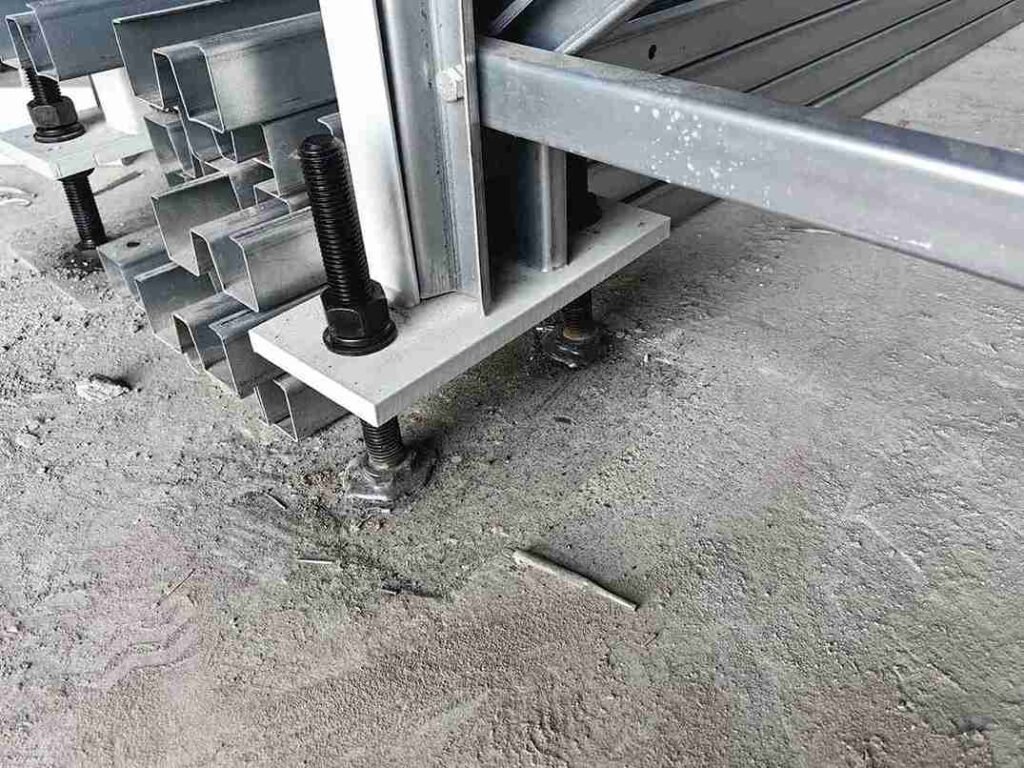
Seismic requirements vary by jurisdiction. In China, GB 50011 governs the seismic design of shelving in pharmaceutical facilities; in the United States, ASCE 7 provisions govern seismic design and anchor specification for shelving above certain height thresholds. A shelving quotation for a pharmaceutical distribution center should identify the seismic design category of the site and confirm that the anchor specification — anchor type, embedment depth, edge distance, and concrete strength assumption — matches that category.
In non-seismic regions the anchor specification still matters for uplift and shear resistance, though the design envelope is less demanding. A shelving quotation listing “anchors included” without a site-specific anchor calculation is applying a generic assumption to a site-specific structure, and that assumption will surface during permitting or qualification.
H2: Qualification, Documentation, and Change Control for Shelving
Pharmaceutical shelving is not always validated in the same way as an HVAC unit or a purified water loop, but the expectation is moving in that direction. The DQ-IQ-OQ-PQ lifecycle is increasingly applied to shelving in GMP warehouses, particularly where the shelving configuration is tied to storage-condition claims or automated handling interfaces.
H3: What IQ/OQ Means for a Shelving Installation
Installation Qualification establishes documented evidence that the shelving was installed in accordance with the approved design: the correct uprights, beams, decking, anchors, and accessories are present, the shelving bay dimensions match the layout, the load signs are correct and legible, and the shelving is complete and ready for use. Operational Qualification confirms that the installed shelving operates within its intended parameters — that the shelf adjustment mechanism functions, that the beam connectors engage fully, and that the as-built shelving configuration matches the load-rating assumptions.
For a longspan shelving project, the IQ/OQ package does not replace the structural engineering. It is the documentation layer that connects the shelving engineering to the facility’s quality system. A shelving quotation that includes a validation package line item signals that the supplier understands the pharmaceutical context. A shelving quotation that treats validation as the facility’s problem leaves the facility to reconstruct the documentation trail after the shelving installer has left site.
H3: The Shelving Documentation Package
A complete handover package for pharmaceutical shelving typically includes as-built layout drawings, a structural calculation summary with load tables and deflection basis, anchor specification and installation records, coating or galvanizing certificates, a load-sign schedule, and IQ/OQ protocols with completed execution records. The shelving quotation should identify which of those documents are included, which are available at additional cost, and which the supplier will not provide. The gap between those categories is where audit findings originate, and it is also where a shelving supplier’s real capability becomes visible. A supplier that can describe its shelving documentation package in detail during tender evaluation is usually a supplier that has delivered into regulated facilities before.
H3: Shelving Change Control After Handover
Once the shelving installation is qualified, every subsequent change to the shelving layout — adding a level, relocating a beam, removing a bay, adding a divider — should pass through the facility’s change control process. The reason is straightforward: the shelving load signs, the shelving layout drawing, and the temperature-mapping assumptions are all tied to the as-built shelving configuration.
An informal shelving modification that adds a shelf level without recalculating the upright load can silently exceed the shelving frame capacity. A facility that treats shelving as fixed infrastructure rather than reconfigurable equipment tends to discover this late. The better practice is to keep a shelving register, log every shelving change, and require the shelving supplier to confirm capacity whenever the configuration changes.
H2: Exclusion Clauses That Transfer Shelving Risk Back to the Buyer
Exclusion clauses are not inherently illegitimate. A shelving supplier cannot be responsible for conditions it has not surveyed. But in pharmaceutical projects, certain exclusions transfer risk in ways the facility may not fully appreciate until the shelving project is underway.
H3: “Floor Condition Assumed Adequate”
A standard shelving exclusion states that the quotation assumes the concrete slab is level, cured, and strong enough to accept anchor loads. In a pharmaceutical distribution center, the floor may carry a resin coating, may contain post-tensioning tendons, or may have a slab thickness never designed for the point loads of a tall shelving installation. If the floor requires grinding, patching, or an engineered anchor solution, that cost falls to the facility. A shelving quotation that does not flag the floor condition as a site-survey item leaves a structural variable unaddressed.
H3: “Permitting by Others”
Many shelving quotations exclude permit fees and plan-review management, treating them as the facility’s responsibility. That exclusion is defensible where the facility has a permitting consultant, but it becomes a scheduling risk when the shelving supplier’s drawings are the core of the permit submission. The facility may find itself managing a plan-review cycle without the engineering resources to answer comments. The shelving quotation should clarify whether the supplier will provide permit-ready drawings and support the review, even where the fees remain the facility’s cost.
H3: “Temperature Mapping and Validation by Others”
Temperature mapping and cleaning validation are specialist activities, and it is reasonable for a shelving supplier to exclude them. The risk arises when the shelving layout is finalized without input from the mapping team and the post-installation study identifies airflow deficiencies requiring shelving reconfiguration. The cost of that reconfiguration — labor, new beams, re-qualification — is rarely borne by the shelving supplier under a standard exclusion. A shelving quotation that includes a design-review touchpoint with the facility’s validation team, or that states the airflow assumptions behind the shelving layout, reduces the probability of a post-installation surprise.
H2: Total Cost of Ownership for Pharmaceutical Shelving
The shelving quotation price is the entry cost. Total cost of ownership includes everything that accrues after the shelving is installed, inspected, and placed into service.
H3: Coating Life Cycle and Shelving Maintenance Cost
Powder-coated shelving in an ambient, humidity-controlled room may deliver fifteen years or more of service with routine touch-up of impact damage. Powder-coated shelving in a cold-chain anteroom may need coating repair within three to five years, and if corrosion reaches the shelving upright section, the repair may require frame replacement rather than paint. Galvanized shelving carries a higher initial price and a lower maintenance burden in aggressive environments. The shelving finish specification is therefore a life-cycle cost decision, not merely a capital cost decision, and it deserves a separate line in the shelving business case.
H3: Reconfiguration Value and the Shelving Adjustment Pitch
Pharmaceutical portfolios change. A shelving bay configured for one carton format at 350 kg per shelf may be reconfigured a year later for a different format with a different height and weight profile. The 50 mm adjustment pitch on shelving uprights allows that reconfiguration without new frames. A shelving system with a coarser pitch, or with beams that require tools and structural verification to relocate, imposes a reconfiguration cost every time the product mix shifts. The shelving quotation should confirm the adjustment mechanism and the tools required, because the operational flexibility of the shelving is part of its economic value and part of its argument against a cheaper alternative.
H3: Inspection Cycles and Shelving Compliance Cost
In jurisdictions following Australian Standard AS 4084, racking and shelving must be inspected by a qualified professional at least every twelve months, regardless of size, working load, or traffic. Even where AS 4084 does not apply, pharmaceutical quality systems increasingly expect documented shelving inspections as part of the maintenance program. The inspection examines beam overload, damage, missing parts, anchor condition, load-sign legibility, upright and footplate condition, plumbness, and bracing integrity. The cost of that shelving inspection program, and the repairs that follow it, belong in the total cost of ownership. A shelving system that is difficult to inspect — because of inaccessible connections or poor labeling — makes the inspection more expensive than it needs to be.
H2: Supplier Qualification and Shelving Proposal Evaluation
Selecting a shelving supplier is a quality decision as much as a commercial one. The shelving supplier’s engineering capability, documentation discipline, and installation experience in regulated facilities determine whether the shelving project closes cleanly or generates a trail of deviations.
H3: Questions That Separate Capable Shelving Suppliers From Order Takers
A procurement team evaluating shelving proposals should ask for the load table behind each shelving rating, the deflection basis, the steel grade and coating specification with certificates, the anchor calculation methodology, the shelving documentation deliverables list, and a reference from a comparable pharmaceutical shelving installation. Suppliers who answer those questions precisely during tender are generally the suppliers whose shelving installations survive audits. Suppliers who answer with brochures and generic load charts are generally the suppliers whose shelving requires rework.
H3: Red Flags in a Shelving Quotation
Several patterns in a shelving quotation warrant scrutiny: a single blended bay rate across mixed temperature zones; a load capacity stated without span or deck type; a finish described only as “powder coated” without a micron range or salt-spray claim; engineering described as “included” without a stamped calculation deliverable; installation described as “included” without a methodology statement; and a documentation package described as “available on request.” None of those flags is automatically disqualifying, but each represents an ambiguity that will be resolved later, usually at the facility’s expense.
H3: Pre-Delivery Verification of Shelving
Before shelving leaves the factory, the facility should verify the shelving bill of materials against the approved layout, confirm the shelving coating or galvanizing certificates, check the shelving load signs, and confirm that the shelving anchor specification matches the site’s concrete condition. Pre-delivery verification is inexpensive relative to the cost of correcting a shelving discrepancy on site, particularly in a live pharmaceutical facility where every delivery and every shelving installation activity must be coordinated with operations.
H2: Installing Shelving in a Live Pharmaceutical Distribution Center
Installation sequencing in an operating pharmaceutical warehouse is a planning exercise in itself. The shelving installation must proceed without compromising the storage conditions of product already in the building, and it must leave the facility in a state that can be cleaned and returned to service at each phase boundary.
H3: Phased Shelving Installation and Product Protection
A phased shelving installation — one zone at a time, with temporary barriers and defined cleaning protocols at each boundary — allows the facility to keep shipping while the shelving is built out. The shelving quotation should identify whether phased installation carries a cost premium, because the labor efficiency of a phased shelving build is lower than an empty-building shelving installation. Facilities that discover this premium after award often compromise on phasing and accept construction dust in adjacent storage zones, which is precisely the outcome a GMP-minded shelving plan should avoid.
H3: Dust Control During Shelving Anchoring
Anchor drilling generates concrete dust, and concrete dust in a pharmaceutical storage area is a contamination risk. The shelving installation methodology should specify dust extraction at the drill point, negative-pressure containment where required, and a cleaning protocol before the shelving bay is released for use. These measures add cost to the shelving installation, but they are considerably cheaper than a contamination deviation investigation triggered by visible dust on shelving surfaces in a released-product zone.
H3: Handover and Acceptance of Shelving
The shelving handover should include a walkdown against the as-built layout, verification of anchor torque, confirmation of load-sign placement, a plumbness check on shelving frames, confirmation that beam safety clips are fitted, and a documented cleaning before the shelving is released to operations. The facility’s quality unit should sign the shelving acceptance record, and that record should reference the shelving documentation package. A handover that consists of a delivery note and a handshake is not a handover in a regulated environment.
H2: Five Frequently Asked Questions About Pharmaceutical Shelving Quotations
H4: Can a Standard Longspan Shelving Quotation Be Used in a Cold-Chain Zone?
No. A standard shelving quotation for ambient use typically specifies an epoxy powder coating adequate for controlled room temperature but not for the condensation and temperature cycling of a 2–8°C cold room or a –25°C freezer. A cold-chain shelving quotation should specify hot-dip galvanizing to ISO 1461 or a coating system explicitly warranted for the room’s temperature and humidity envelope. It should also confirm that the shelving steel grade maintains toughness at the low end of the operating range and that the shelving baseplate and anchor design accounts for possible floor movement. Using an ambient shelving quotation in a cold zone is a false economy that surfaces as coating failure and capacity loss within the first few years.
H4: How Should a Shelving Quotation Address Temperature-Mapping Airflow Requirements?
It often does not, and that is a risk the facility must manage. A shelving quotation is typically priced from a layout drawing, and that drawing may never have been reviewed against the room’s airflow design. The shelving quotation should state the decking type and the flue dimensions between shelving bays, because those parameters affect vertical air movement and temperature homogeneity.
If temperature mapping has not yet been completed, the shelving quotation should be treated as provisional with respect to shelving spacing and decking until the mapping protocol and HVAC design have been reviewed together. Post-installation shelving reconfiguration to correct an airflow deficiency almost always costs more than coordinating the layout and mapping inputs before the shelving steel is ordered.
H4: Is Stainless Steel Shelving Required in Pharmaceutical Facilities?
Stainless steel shelving is the highest-hygiene option and is appropriate for aseptic support areas, wash-down zones, and surfaces exposed to aggressive disinfectants. For most ambient and cold-chain pharmaceutical distribution spaces, high-quality epoxy-coated or galvanized shelving provides adequate cleanability and corrosion resistance at significantly lower cost. Stainless steel shelving typically costs 1.8 to 2.5 times the epoxy-coated alternative depending on grade. The decision should follow cleaning chemistry, wash-down frequency, and room classification rather than a blanket assumption that pharmaceutical storage always requires stainless shelving.
H4: What Should a Shelving Quotation Include for IQ/OQ Documentation?
A shelving quotation supporting a pharmaceutical qualification program should identify documentation deliverables explicitly: as-built drawings, load-calculation summary with deflection basis, anchor specification and installation records, coating or galvanizing certificates, load-sign schedule, and IQ/OQ protocols. It should also state whether the shelving supplier will execute the protocols or provide templates for the facility’s quality team. The common failure mode is a shelving quotation that includes “documentation” as a single line without defining scope; the facility then discovers after shelving installation that the calculation package is an extra-cost item or that the shelving load signs do not match the as-built configuration.
H4: How Do Shelving Permitting and Engineering Costs Compare Between General Warehousing and Pharmaceutical Distribution?
The percentage ranges are broadly similar — shelving engineering at 5 to 12 percent and shelving permitting at 3 to 8 percent of total project cost — but the content of those scopes is heavier in a pharmaceutical project. The shelving engineering package may need to address seismic design, anchor calculations, and sprinkler compatibility in greater detail, and the shelving permit submission may require coordination with a fire authority and a quality unit that expects documented change control. The shelving quotation should separate engineering and permitting line items rather than bundling them into a project management fee, so the facility can compare what is delivered against the scope its own quality system requires.
H2: Conclusion: A Shelving Quotation Is a Compliance Document in Waiting
A heavy duty longspan shelving quotation for a pharmaceutical distribution center sits at the intersection of structural engineering, surface science, regulatory compliance, and capital budgeting. The number at the bottom of the page is the least informative part of the document.
What matters is whether the shelving quotation exposes the beam span and deflection basis behind each shelving load rating, whether it separates ambient shelving and cold-chain shelving finish specifications, whether it accounts for the airflow and segregation requirements of a GDP-compliant shelving layout, whether it defines the shelving engineering and permitting scope, and whether it specifies the shelving documentation package that will support qualification and audit.
The shelving quotation becomes the first compliance document in the project because that is what it is read as — by the quality unit, the engineering team, the capital appropriations committee, and eventually the inspector. A shelving quotation that is transparent about its technical basis and its exclusions is not necessarily the cheapest shelving quotation. It is the one that gives the facility the information it needs to make a defensible decision, and that standard matters when the product on the shelving is a medicine rather than a commodity.
Geelyracks is a factory specializing in warehouse racking and a global expert in custom racking solutions: https://geelyracks.com/
We can provide you with free warehouse racking design plans and price quotes; please contact us. Our email address is jili@geelyracks.com