📐 "First 50 Enterprise Queries Get Custom 3D Warehouse Design" Plan


In the high-stakes world of logistics and supply chain management, efficiency is the ultimate currency. Warehouse managers are constantly battling a triad of formidable challenges: maximizing space, accelerating throughput, and ensuring absolute accuracy, all while maintaining a safe and adaptable environment. While advanced technologies like robotics and AI often command attention, the most impactful gains frequently stem from optimizing the most fundamental element of the storage ecosystem: the shelving system.
Among the various options available, wire shelving racks for warehouses have emerged as a paramount solution for businesses seeking a tangible and rapid return on investment. This definitive guide explores how the strategic implementation of wire shelving racks for warehouses directly confronts and solves core operational inefficiencies, transforming chaotic storage areas into models of streamlined productivity and impeccable organization. The focus here is not just on the product, but on the profound operational philosophy it enables—a philosophy centered on visibility, flexibility, and relentless efficiency.
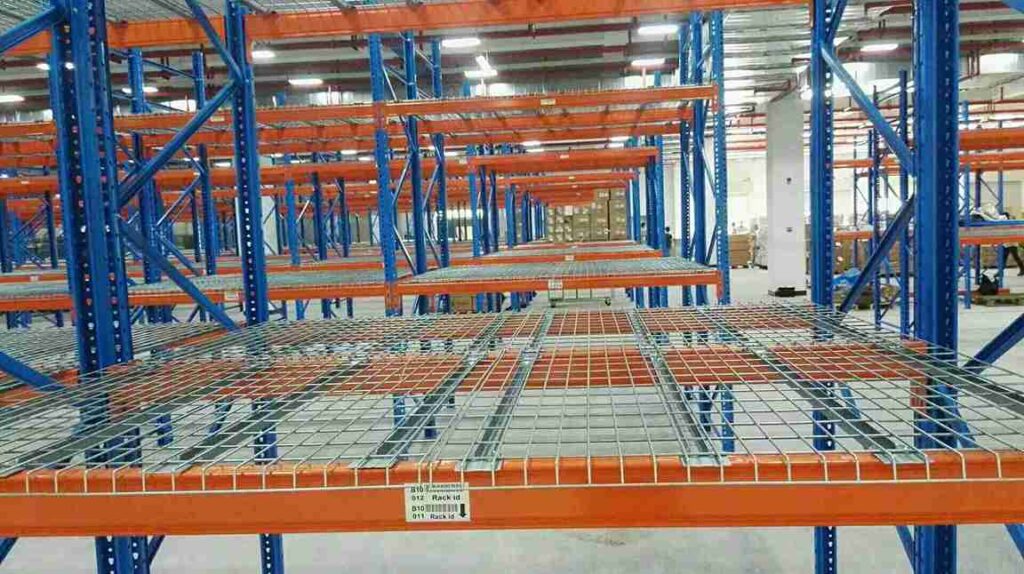
H2: The High Cost of Inefficiency: Common Warehouse Pain Points
To fully appreciate the transformative power of wire shelving racks for warehouses, one must first understand the crippling inefficiencies inherent in outdated storage systems, such as solid-back or particle board shelving. These traditional options create a cascade of operational deficits that strangle productivity and inflate costs.
H3: The Black Hole of Inventory: Poor Visibility and Accessibility
Solid shelving units create dark, enclosed spaces where inventory effectively disappears. This lack of visibility is the primary culprit behind several critical failures:
Plummeting Picking Productivity: Order pickers waste an inordinate amount of time searching for items, shifting other products, or straining to read labels in poorly lit shelves. This “search and retrieve” delay is the single largest drain on labor productivity in manual picking operations.
Chronic Inventory Inaccuracy: When items are hidden from view, they become lost, leading to systemic stockouts, costly overordering, and frustrating cycle count discrepancies. This erodes trust in the Warehouse Management System (WMS) and turns demand forecasting into a guessing game.
Compromised Safety: Poor visibility leads to overreaching, awkward postures, and the unexpected dislodging of items during retrieval. These factors significantly increase the risk of musculoskeletal injuries and workplace accidents for warehouse staff.
H3: Wasted Space and Inflexible Layouts
Warehouse space is premium real estate, and any wasted cubic footage directly impacts the bottom line. Outdated shelving systems are notoriously inefficient in this regard.
Inefficient Cube Utilization: Solid shelving disrupts airflow and light penetration, creating dead zones. More critically, it does not allow for the passive benefits of an open structure, making the upper sections of a warehouse feel cavernous and oppressive.
Strategic Rigidity: Traditional bolted shelving is difficult and time-consuming to reconfigure. As SKU profiles, seasonality, and business needs evolve, these inflexible systems cannot adapt, locking facilities into a layout that is perpetually suboptimal.
H3: The Hidden Hazards: Sanitation and Pest Control
In sectors like food and beverage, pharmaceuticals, and electronics, cleanliness is non-negotiable. Solid shelving is a significant liability in these environments.
Dust and Contaminant Accumulation: Horizontal solid surfaces are magnets for dust, dirt, and spillage, which can contaminate products and create an unhygienic work environment.
Unseen Spills and Moisture: Liquid spills are trapped on solid shelves, leading to product damage, corrosion, and persistent slip hazards on the floor below once they eventually leak.
Pest Harborage: The dark, enclosed spaces provide ideal nesting and breeding grounds for insects and rodents, undermining even the most rigorous integrated pest management programs.
H2: The Strategic Advantage of Wire Shelving Racks for Warehouses
The design of wire shelving racks for warehouses is a masterclass in solving fundamental problems with elegant, engineering-led solutions. The open-wire mesh construction is not merely an aesthetic choice; it is the core feature that drives operational excellence.
H3: Unrivaled Visibility for Uncompromising Inventory Control
The most immediate and impactful benefit of deploying wire shelving racks for warehouses is the complete eradication of inventory obscurity.
Panoramic Product Views: The 360-degree visibility allows personnel to identify and locate items from any angle instantly. This transforms the order-picking process from a search mission into a direct retrieval operation.
Flawless Labeling and Identification: Bin location labels remain visible from multiple vantage points, drastically reducing mis-picks. This synergy between the physical layout and the digital WMS ensures near-perfect inventory record accuracy.
Ambient Light and Air Permeation: Natural and artificial light filters through the entire structure, eliminating dark shadows and reducing the need for additional task lighting. Simultaneously, continuous airflow prevents moisture buildup, mitigates odors, and contributes to a more comfortable workspace.
H3: Mastering Cubic Space: The Art of Density and Flexibility
When it comes to space utilization, wire shelving racks for warehouses are unparalleled in their category.
Vertical Storage Optimization: Engineered for strength and stability, these systems can be configured to great heights, safely leveraging the vertical cube of the facility. This allows businesses to store more inventory within the same footprint, delaying or avoiding the need for expensive expansion.
Inherent Adaptability: The best wire shelving racks for warehouses feature tool-free, easily adjustable shelves. This allows warehouse managers to dynamically reconfigure storage layouts in response to changing SKU sizes, seasonal fluctuations, or new product lines, ensuring that space is never wasted.
H3: A Foundation for Safety, Cleanliness, and Compliance
The operational benefits are clear, but the advantages in safety and sanitation are equally transformative, making wire shelving racks for warehouses a critical asset for regulated industries.
Self-Cleaning Design: Dust and debris simply have no place to accumulate. Spills pass directly through to the floor where they are immediately visible and can be cleaned promptly, protecting inventory and enhancing overall hygiene.
Proactive Pest Deterrence: By eliminating the dark, enclosed harborage points that pests seek, wire shelving racks for warehouses act as a powerful deterrent. This open architecture supports robust sanitation protocols and makes routine inspections far more effective.
Inherently Safer Work Environment: The combination of clear visibility, reduced clutter, and a cleaner floor surface directly minimizes the risks of trips, falls, and impact injuries. Employees can work with greater confidence and efficiency.
H2: The Synergistic Storage Strategy: Zoning with Wire Shelving Racks for Warehouses
The maximum value of wire shelving racks for warehouses is realized when they are deployed as part of a holistic, zoned storage strategy. A one-size-fits-all approach is inherently inefficient; a zoned strategy assigns the right storage solution to the right task.
H3: The High-Velocity Picking Zone
This is the undisputed domain of wire shelving racks for warehouses. Designed for speed and accuracy, this zone benefits immensely from the shelving’s core attributes.
Perfect for Fast-Moving SKUs: The visibility and accessibility of wire shelving racks for warehouses make them ideal for high-turnover items, reducing pick times and increasing order fulfillment rates.
Ideal for Broken-Case Picking: The ability to easily see and access individual items within a case is a game-changer for e-commerce and distribution centers focused on single-unit picks.
H3: The Dynamic Kitting and Assembly Zone
The clean, open surface of wire shelving racks for warehouses provides an excellent workstation for kitting operations and light assembly.
Organized Component Staging: Parts and components remain visible and within easy reach, streamlining the kitting process and reducing errors.
Mobile Configurations: Units equipped with casters can be easily repositioned to create ad-hoc assembly lines or to support fluctuating production needs, offering unparalleled layout flexibility.
H3: The Strategic Buffer and Decant Zone
Wire shelving racks for warehouses also serve a critical function as buffer storage between receiving and putaway, or for decanting bulk pallets into pickable quantities.
Temporary Holding: Their open structure allows for quick visual confirmation of received goods before they are entered into the WMS and moved to their primary storage location.
Decanting Efficiency: They provide an organized and accessible staging area for breaking down palletized goods into case-level or item-level inventory for the picking zones.
H2: The Automation-Ready Platform: Wire Shelving in the Digital Warehouse
A common misconception is that basic shelving is incompatible with a high-tech warehouse. In reality, wire shelving racks for warehouses are an ideal partner for automation, serving as the critical interface between human workers and robotic systems.
H3: Seamless Integration with AGVs and AMRs
The physical design of wire shelving racks for warehouses is perfectly suited for collaboration with Automated Guided Vehicles (AGVs) and Autonomous Mobile Robots (AMRs).
Unobstructed Sensor Fields: The open mesh design does not impede the LiDAR, cameras, or other sensors used by robots for navigation and operation, allowing for safe and efficient interaction.
Optimized for Goods-to-Person Systems: In automated systems where robots bring the shelf to the person, the visibility of wire shelving racks for warehouses allows the picker to immediately identify the required item without manual searching, maximizing the throughput of the automated system.
H3: Empowering Warehouse Management Systems (WMS)
An effective WMS relies on accurate physical data. Wire shelving racks for warehouses bridge the gap between the digital and physical worlds.
Enhanced Pick-to-Light and Put-to-Light Efficacy: These light-directed technologies are far more effective when the inventory is fully visible, as there is no obstruction between the light and the product.
Accurate Cycle Counting and Audits: The ability to see all inventory at a glance makes physical counts faster and more accurate, ensuring the WMS data remains a reliable source of truth for the entire business.
H2: Beyond the Mesh: Advanced Features of Modern Wire Shelving Racks for Warehouses
The evolution of wire shelving racks for warehouses has introduced a suite of advanced features that extend their functionality and durability far beyond that of a simple wire grid.
H3: Ergonomic and Productivity-Focused Engineering
Beveled Shelf Edges: These prevent snagging of polybags, cardboard, and other packaging materials, reducing product damage and accelerating the speed of both putaway and picking.
Integrated Labeling Solutions: Built-in label holders or dedicated channels ensure that bin location and SKU identification labels remain secure, legible, and perfectly positioned, a minor feature with a major impact on operational accuracy.
Mobility with Heavy-Duty Casters: The availability of high-load-capacity swivel and rigid casters transforms static wire shelving racks for warehouses into dynamic, mobile units. This enables the creation of flexible aisle systems and the easy reconfiguration of storage layouts to meet shifting daily demands.
H3: Uncompromising Structural Integrity and Load Capacity
Professional-grade wire shelving racks for warehouses are engineered to withstand the rigors of an industrial environment. Their strength is a result of deliberate design and robust manufacturing.
High-Tensile, Heavy-Gauge Steel: The use of commercial-grade steel wire ensures exceptional durability and resistance to impact, deformation, and long-term wear.
Reinforced Bracing and Welded Construction: Strategic cross-bracing and fully welded joints under each shelf prevent sagging under maximum load, ensuring product safety and structural integrity for the lifespan of the equipment. Load capacities often exceed 1,000 pounds per shelf, making them suitable for a vast range of industrial applications.
H2: The Specification Deep Dive: Selecting the Optimal Wire Shelving Racks for Warehouses
Selecting the right system is a strategic process that requires a thorough analysis of operational requirements. Not all wire shelving racks for warehouses are suited for every task.
H3: Critical Specification Considerations
Dynamic vs. Static Load Capacity: Dynamic capacity refers to the weight a shelf can hold during routine loading and unloading, which is often lower than its static (at-rest) capacity. Understanding this distinction is crucial for safety and longevity.
Shelf Dimensions and Adjustability Increments: The length, depth, and height between shelves must align with the physical dimensions of the stored SKUs. Fine adjustability (e.g., 1-inch increments) provides the greatest flexibility for optimizing vertical space.
Protective Finishes for Harsh Environments: For cold storage, food processing, or chemical warehouses, a high-quality epoxy or chrome-plated finish is essential. These coatings provide superior resistance to corrosion, moisture, and chemical exposure, ensuring a long service life.
Accessory Ecosystem: The utility of wire shelving racks for warehouses can be greatly expanded with accessories like divider posts, security doors, solid deck inserts for small parts, and integrated bin boxes, allowing for a fully customized storage solution.
H2: Calculating the Return: The Tangible ROI of Wire Shelving Racks for Warehouses
Investing in a high-performance storage system is a capital decision, and the return on investment for wire shelving racks for warehouses is both significant and measurable. The efficiency gains translate directly into hard and soft cost savings.
Labor Productivity Dividend: A conservative 15-20% reduction in picking time is a common outcome. When multiplied by the number of pickers and their fully burdened hourly wage, this saving alone can justify the investment within a very short period.
Error Elimination Savings: Reducing mis-picks, mis-ships, and associated returns directly protects profit margins and preserves brand reputation and customer loyalty.
Deferred Capital Expenditure: By achieving greater storage density within the existing facility, companies can often postpone the massive capital outlay required for a new warehouse expansion or relocation.
Loss Prevention: The reduction in product damage from spills, pests, and mishandling, coupled with the near-elimination of “lost” inventory, directly improves the company’s bottom line.
H2: Conclusion: Building a Foundation for Future Growth
In the relentless pursuit of supply chain excellence, foundational elements matter most. Wire shelving racks for warehouses represent a proven, powerful, and profoundly adaptable storage solution that systematically dismantles the classic barriers to efficiency: poor visibility, wasted space, and compromised safety. They provide the organized, efficient, and clean platform upon which all other processes—from manual order fulfillment to advanced goods-to-person robotics—can achieve their full potential.
The decision to implement a strategic storage plan centered on high-quality wire shelving racks for warehouses is not merely a procurement activity; it is a commitment to building a more resilient, productive, and profitable operation. It is the essential first step in engineering a warehouse that is not just a cost center, but a competitive advantage.
Frequently Asked Questions (FAQs)
H3: 1. What is the maximum weight capacity I can expect from industrial-grade wire shelving racks for warehouses?
Industrial-grade wire shelving racks for warehouses are exceptionally robust. It is common for high-quality models to have a dynamic load capacity per shelf of 1,000 to 1,500 pounds, with some heavy-duty versions exceeding 2,000 pounds. The total capacity of the entire unit is, of course, substantially higher. Specification sheets from reputable manufacturers will clearly list both dynamic and static load ratings.
H3: 2. Our facility has very narrow aisles. Are there specific configurations of wire shelving racks for warehouses that can help?
Absolutely. The modular nature of wire shelving racks for warehouses allows for custom configurations, including units that are specifically designed for narrow-aisle applications. Furthermore, the option to select units with a reduced depth (e.g., 24 inches instead of 36 or 48 inches) can help create the necessary aisle space without sacrificing the benefits of vertical storage.
H3: 3. How do wire shelving racks for warehouses perform in cold storage or high-humidity environments?
They are an excellent choice for these challenging environments, provided they have the correct finish. Wire shelving racks for warehouses with a chrome-plated or epoxy powder-coated finish offer superior resistance to rust and corrosion. The open mesh design is also beneficial in cold storage as it does not trap cold air, allowing for more consistent temperatures and reducing the strain on refrigeration systems.
H3: 4. Can we connect wire shelving racks for warehouses to our existing pallet racking system for a seamless storage flow?
While they are typically separate, freestanding systems, a cohesive storage strategy often involves placing wire shelving racks for warehouses in the picking zones that are directly supplied by bulk pallet racking in the reserve storage area. This creates a highly efficient flow where pallets are broken down into pickable quantities on the wire shelving racks for warehouses, which are optimized for that specific task.
H3: 5. What is the typical lead time for a large, custom-configured order of wire shelving racks for warehouses?
Lead times can vary based on the scale of the project and the level of customization. For a standard large order, a lead time of 4 to 8 weeks is typical, accounting for manufacturing, finishing, and quality control. For complex, highly customized projects, it is advisable to consult directly with the provider for a detailed project timeline. Proactive planning is key to ensuring a smooth warehouse upgrade with minimal operational disruption.
Welcome to contact us, if you need warehouse rack CAD drawings. We can provide you with warehouse rack planning and design for free. Our email address is: jili@geelyracks.com


