📐 "First 50 Enterprise Queries Get Custom 3D Warehouse Design" Plan


The Critical Role of Heavy-Duty Pallet Racking in Modern Warehousing
In today’s high-speed logistics environment, heavy-duty pallet racking serves as the foundation for efficient storage solutions. Among the most innovative systems revolutionizing warehouse operations is shuttle racking, a semi-automated solution that dramatically improves storage density and retrieval speed.
This comprehensive guide explores everything warehouse managers need to know about heavy-duty pallet racking, with a special focus on what is shuttle racking, its advantages, and how it compares to traditional systems.

H1: What is Heavy-Duty Pallet Racking?
Heavy-duty pallet racking refers to industrial-grade storage systems engineered to support substantial weight loads, typically ranging from 1,000 lbs to over 20,000 lbs per shelf. These systems are built for durability, stability, and high-density storage, making them essential for warehouses handling large, bulky, or heavy inventory.
H2: The Evolution of Pallet Racking: Introducing Shuttle Racking
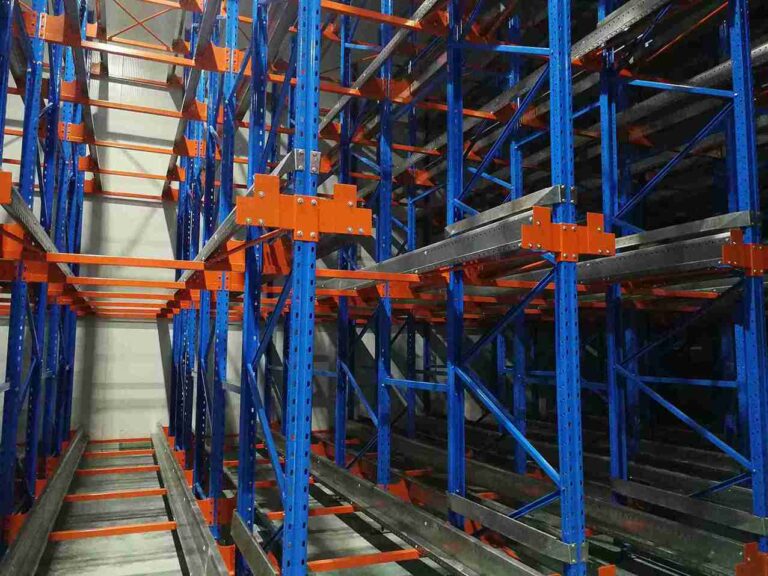
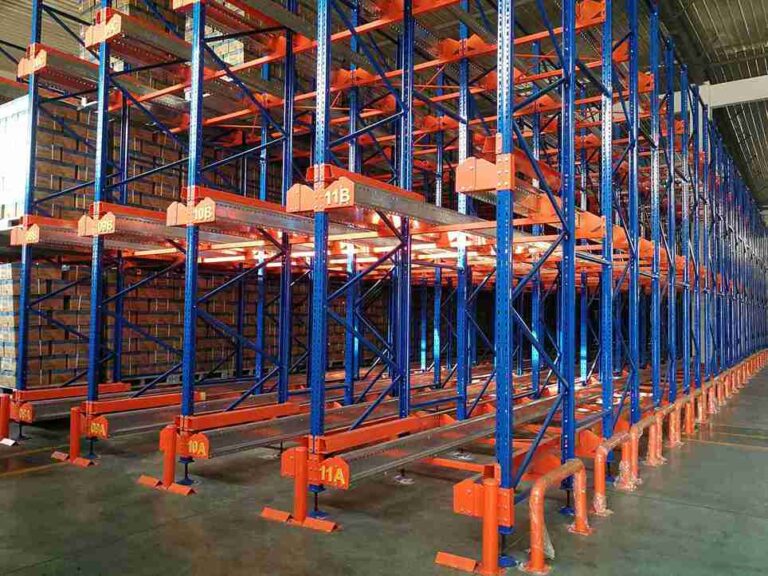
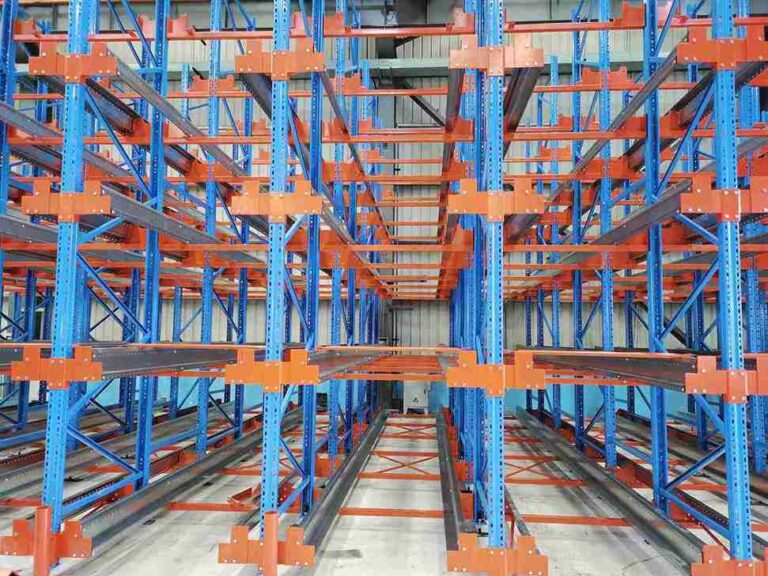
A game-changer in warehouse storage, what is shuttle racking? It is a semi-automated storage system that uses an electrically powered shuttle to transport pallets within deep storage lanes, eliminating the need for forklifts to enter the racking structure. This system is particularly beneficial for high-density storage with FIFO (First-In-First-Out) or LIFO (Last-In-First-Out) inventory management.
H1: Types of Heavy-Duty Pallet Racking Systems
Different warehouse operations require different storage solutions. Below are the most common types of heavy-duty pallet racking, with a deep dive into what is shuttle racking and why it’s transforming modern warehousing.
H2: Selective Pallet Racking
The most widely used system, offering direct access to every pallet. Ideal for warehouses with a high variety of SKUs but less suitable for ultra-high-density storage compared to shuttle racking.
H2: Drive-In & Drive-Through Racking
Maximizes storage density by allowing forklifts to drive directly into the racking lanes. However, it lacks the efficiency and automation benefits of shuttle racking, which reduces labor costs and improves speed.
H2: Push Back Pallet Racking
A high-density system where pallets are stored on nested carts, pushing back when new pallets are loaded. While effective, it doesn’t match the automation and precision of shuttle racking.
H2: Pallet Flow Racking
Uses gravity rollers to move pallets automatically. Though efficient, it requires a decline slope, whereas shuttle racking operates on a flat surface, offering more flexibility.
H2: Cantilever Racking
Designed for long, bulky items like pipes and lumber. Unlike shuttle racking, it doesn’t support high-density pallet storage.
H2: What is Shuttle Racking? The Future of High-Density Storage
Shuttle racking is a semi-automated storage system that uses a remotely controlled shuttle to transport pallets within deep storage lanes. This system is ideal for:
- Cold storage facilities (reducing forklift traffic inside freezers).
- High-volume warehouses (speeding up loading/unloading).
- Operations with limited labor (reducing manual handling).
Compared to traditional racking, shuttle racking offers:
✔ Higher storage density (up to 60% more than selective racking).
✔ Faster throughput (reducing retrieval time by 50% or more).
✔ Lower operational costs (reducing forklift dependency).
H1: Benefits of Heavy-Duty Pallet Racking with Shuttle Systems
Investing in the right pallet rack system offers numerous advantages, especially when incorporating shuttle racking.
H2: Increased Storage Capacity & Space Optimization
- Shuttle racking allows deeper storage lanes (up to 50 pallets deep).
- Vertical storage optimization without sacrificing accessibility.
H2: Improved Efficiency & Reduced Labor Costs
- Shuttle racking minimizes forklift traffic, reducing accidents.
- Automated pallet movement cuts labor requirements by up to 30%.
H2: Enhanced Safety & Durability
- Fewer forklifts mean fewer collisions and rack damage.
- Shuttle racking is built for heavy loads (up to 3,500 lbs per pallet).
H2: Cost-Effective Long-Term Investment
- Lower energy costs (especially in cold storage).
- Faster ROI due to increased productivity.
H1: How to Choose Between Traditional Racking and Shuttle Racking
Selecting the right system depends on several factors:
H2: When to Choose Shuttle Racking
✔ High-density storage needs (limited floor space).
✔ Cold storage or hazardous environments (reducing forklift use).
✔ High-volume, low-SKU operations (e.g., beverage distribution).
H2: When Traditional Racking May Be Better
✔ Frequent individual pallet access (e.g., mixed-SKU warehouses).
✔ Lower initial budget (shuttle systems require higher upfront investment).
H2: Key Considerations Before Investing in Shuttle Racking
- Pallet dimensions & weight (must be uniform for optimal performance).
- Warehouse layout (shuttle systems require precise lane depths).
- Future scalability (can the system expand with business growth?).
H1: Installation & Maintenance of Shuttle Racking Systems
Proper setup is crucial for maximizing efficiency.
H2: Professional Installation is a Must
- Shuttle racking requires precise alignment for smooth operation.
- Expert installers ensure compliance with safety standards.
H2: Routine Maintenance for Peak Performance
- Battery checks (shuttles run on rechargeable batteries).
- Rail inspections (ensure no obstructions in lanes).
- Software updates (for advanced shuttle systems with WMS integration).
H2: Common Issues & Fixes
- Shuttle jams (often caused by misaligned pallets).
- Battery failures (regular charging cycles extend lifespan).
H1: Future Trends in Pallet Racking: The Rise of Shuttle Automation
The industry is rapidly evolving, with shuttle racking leading the charge.
H2: Integration with Warehouse Management Systems (WMS)
- Real-time tracking of pallet locations.
- Predictive analytics for optimal stock rotation.
H2: Robotics & AI in Shuttle Racking
- Autonomous shuttles with AI-driven routing.
- Machine learning for dynamic storage optimization.
Conclusion: Is Shuttle Racking Right for Your Warehouse?
Shuttle racking is transforming modern warehousing by offering higher density, faster operations, and lower labor costs. While the initial investment is higher than traditional racking, the long-term benefits make it a smart choice for high-volume, cold storage, and automated warehouses.
For a customized consultation on whether shuttle racking fits your operation, contact a trusted warehouse solutions provider today.
FAQs About Heavy-Duty Pallet Racking & Shuttle Systems
1. What is shuttle racking, and how does it work?
Shuttle racking is a semi-automated system where a motorized shuttle moves pallets within deep storage lanes, reducing forklift dependency.
2. What industries benefit most from shuttle racking?
✔ Food & beverage (high-volume pallet movements).
✔ Pharmaceuticals (precise inventory control).
✔ Cold storage (minimizing forklift use in freezers).
3. How much does a shuttle racking system cost?
Prices vary, but expect 200,000+ depending on size and automation level.
4. Can shuttle racking handle uneven pallet weights?
No, pallets must be uniform in size and weight for optimal performance.
5. What’s the lifespan of a shuttle racking system?
With proper maintenance, 15–20 years is typical.
Welcome to contact us, if you need warehouse rack CAD drawings. We can provide you with warehouse rack planning and design for free. Our email address is: jili@geelyracks.com