📐 "First 50 Enterprise Queries Get Custom 3D Warehouse Design" Plan


The Definitive Framework for a High-Performance Warehouse Layout with Narrow Aisle Racks
In the global manufacturing landscape, where efficiency directly dictates competitiveness, the strategic configuration of storage infrastructure is paramount. Among the most impactful decisions a logistics or operations manager can make is the commitment to a meticulously planned warehouse layout with narrow aisle racks. This approach transcends a simple equipment selection; it represents a fundamental re-engineering of storage philosophy, spatial economics, and material flow dynamics.
A superior warehouse layout with narrow aisle racks is engineered to unlock the latent potential of a facility’s cubic volume, systematically driving down the cost per pallet position while accelerating throughput. This comprehensive analysis delves into the multifaceted components, precise planning methodologies, and integrated technologies that distinguish a truly optimized storage environment. It provides a actionable blueprint for organizations worldwide seeking to transform their static storage areas into dynamic, high-density hubs that support lean manufacturing and agile distribution.

The Spatial-Economic Imperative Driving Adoption
The relentless pressure on industrial real estate costs, particularly in burgeoning economic regions across Southeast Asia, the Middle East, and Latin America, has rendered traditional wide-aisle storage a luxury few can afford. The conventional model, built around the turning radius of counterbalance forklifts, often dedicates over 50% of a facility’s footprint merely to aisle space.
This is an untenable inefficiency. The transition to a warehouse layout with narrow aisle racks is fundamentally an exercise in volumetric optimization. By reducing aisle widths from a typical 3.5 meters to between 1.6 and 2.0 meters for standard narrow aisle operations, and further down to 1.5-1.8 meters for Very Narrow Aisle (VNA) systems, floor space is instantly liberated for additional storage rows.
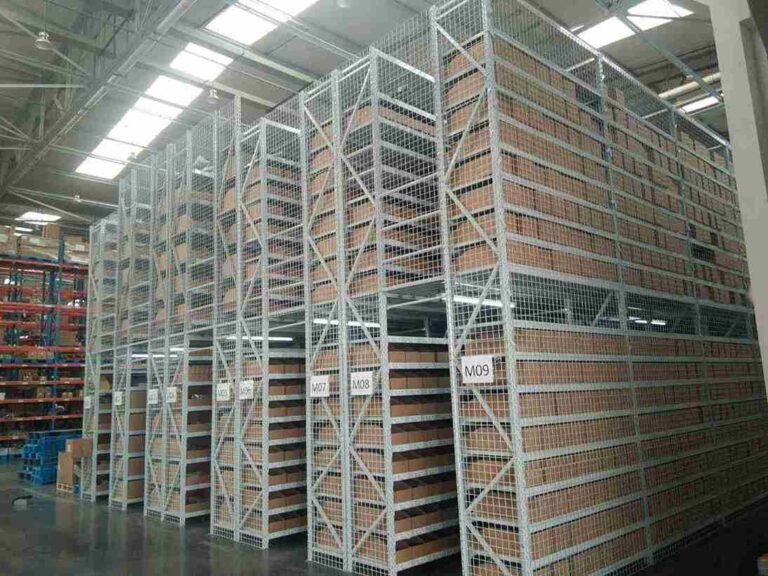
However, the true power of a warehouse layout with narrow aisle racks is realized in three dimensions. These systems are inherently designed for height, commonly reaching 15 meters or more, capitalizing on building clear height that was previously underutilized air. This vertical integration is the key to achieving storage density improvements of 40% to 60% within the same building envelope.
For a manufacturing plant in Thailand or an automotive parts distributor in the UAE, this density directly translates to deferred capital expenditure on facility expansion, a stronger argument for leasing premium industrial space, and a dramatically improved return on asset utilization. Every successful warehouse layout with narrow aisle racks begins with this recognition: the highest yield per square meter is achieved not by expanding outward, but by optimizing upward and inward.
Anatomy of a System: Beyond the Racking Structure
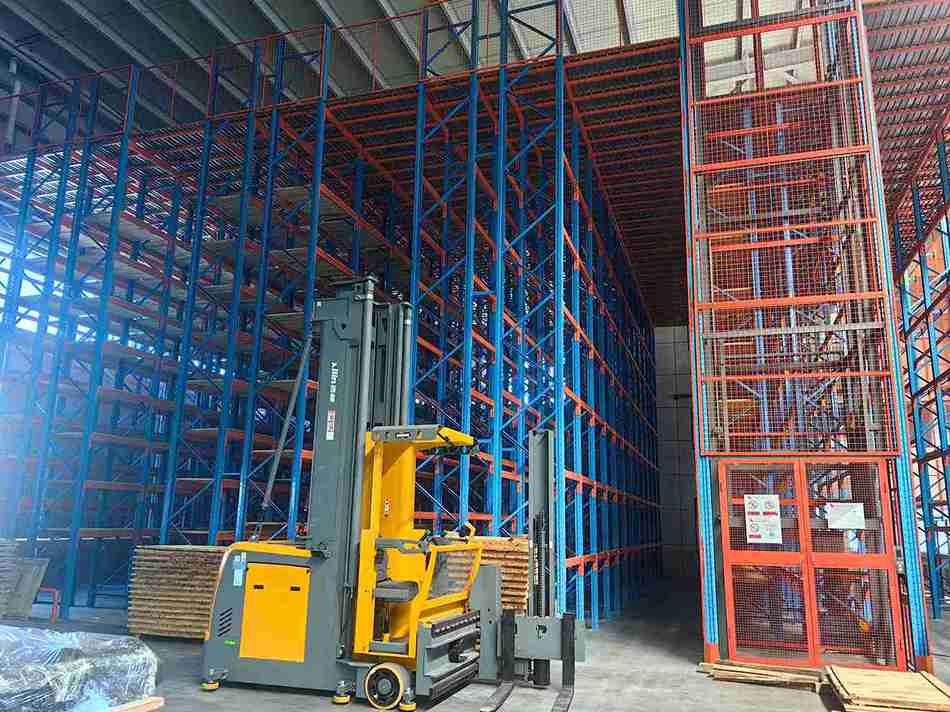
A common misconception is that a warehouse layout with narrow aisle racks is merely standard pallet racking installed closer together. This is a dangerous oversimplification. The system is a cohesive, interdependent ecosystem where each component must be engineered to exacting standards.
The racking itself forms the skeleton. Upright frames for a warehouse layout with narrow aisle racks are subject to unique forces, including potential incidental contact from guided vehicles. They often feature heavier-gauge steel, reinforced column designs, and specialized footplates. Load beams incorporate positive locking mechanisms to prevent accidental dislodgement, a critical safety consideration in high-bay environments. The design must account for precise load distribution, seismic activity relevant to regions like the Pacific Rim or South America, and the dynamic forces imposed during frequent loading and unloading cycles.
The true differentiator in a high-performance warehouse layout with narrow aisle racks is the interface between the storage structure and the handling equipment. For VNA systems, this centers on the guide rail—a steel channel securely anchored to a superlatively flat warehouse floor. This rail is the cornerstone of operational safety and efficiency, allowing turret trucks or automated guided vehicles (AGVs) to travel at higher speeds with millimeter precision, entirely eliminating the lateral drift that causes product and rack damage in unguided environments.
The specification for floor flatness in such a warehouse layout with narrow aisle racks is rigorous, often demanding a tolerance of ±3mm over a 10-meter span. Investment in proper floor preparation is non-negotiable; it ensures system longevity, operator safety, and optimal equipment performance.
The Handling Equipment Matrix: Matching Machine to Mission
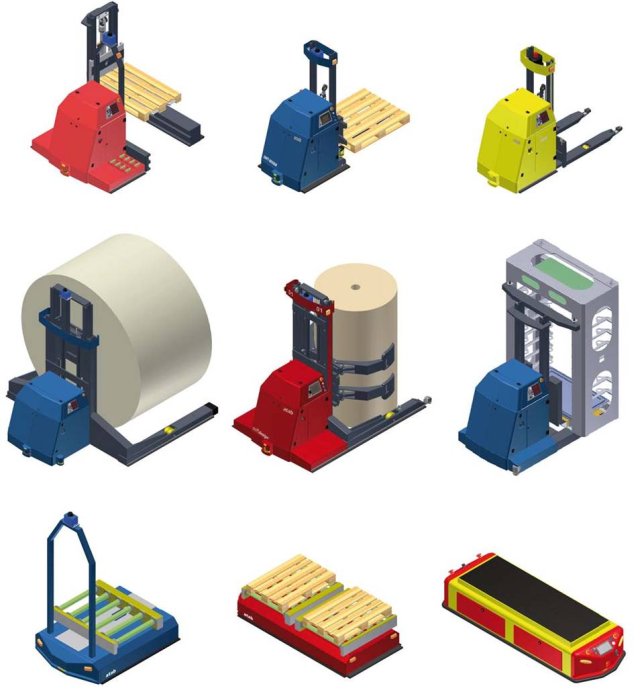
The choice of material handling equipment is what breathes life into the warehouse layout with narrow aisle racks. The selection is not one-size-fits-all but must be meticulously matched to SKU profile, turnover velocity, and desired automation level.
Narrow Aisle Forklifts: Operating in aisles from approximately 2.0 meters, these operator-driven trucks often feature a moving mast or pantograph mechanism. This design allows the forks to traverse laterally while the truck body remains stationary, minimizing the required turning space. They represent an excellent entry point into high-density storage without the need for full guide rail installation.
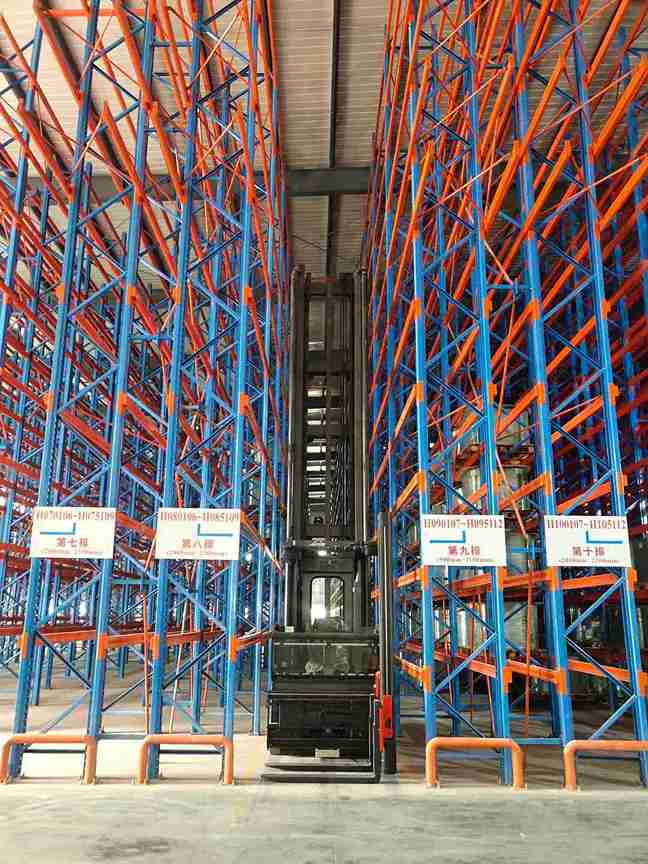
Very Narrow Aisle (VNA) Turret Trucks: The quintessential partner for a high-bay warehouse layout with narrow aisle racks. In these systems, the operator’s compartment elevates with the load. A rotating turret head (180° or 360°) allows pallets to be deposited or retrieved from both sides of the aisle without turning the truck. Their reliance on guide rails enables exceptional stability at heights exceeding 12 meters, making them the workhorse for high-volume, high-variety operations.
Automated VNA and Robotic Solutions: This represents the apex of integration for a warehouse layout with narrow aisle racks. Driverless VNA trucks, or specialized storage and retrieval AGVs, operate on pre-programmed or dynamically optimized paths, directly controlled by the Warehouse Management System (WMS). They deliver unparalleled consistency, labor efficiency, and the ability to operate in aisles as narrow as 1.5 meters, safely and reliably across multiple shifts. Their implementation transforms the warehouse layout with narrow aisle racks into a fully automated storage buffer, seamlessly integrated with production lines or sortation systems.
The Planning Blueprint: A Phased Methodology for Success
The failure of a warehouse layout with narrow aisle racks initiative can almost invariably be traced to inadequate planning. A successful deployment follows a disciplined, data-driven sequence.
Phase 1: Foundational Data Analysis and Profiling
Planning begins with deep data archaeology. Experts analyze the complete SKU portfolio: dimensions, weight, turnover rate (using ABC analysis), and affinity groupings. They audit pallet conditions and types, as a warped pallet can cripple an automated system. They model inbound and outbound flow patterns, peak seasonality, and projected growth. This intelligence informs every subsequent decision, ensuring the final warehouse layout with narrow aisle racks is tailored to the specific material profile and business rhythms of the operation, whether it serves a food processing plant in Vietnam or a mining equipment depot in South Africa.
Phase 2: Computational Modeling and Simulation
Before a single rack is ordered, the entire operation is modeled in advanced simulation software. Multiple iterations of the warehouse layout with narrow aisle racks are tested digitally. Planners run travel time analyses to optimize put-away and picking paths, ensuring fast-moving items are positioned in the “golden zone” for minimal travel. They simulate throughput capacity under peak load to validate equipment counts. They also model safety and compliance scenarios, ensuring the design meets local fire codes regarding flue spaces, sprinkler head coverage, and aisle access—a critical step for regulatory approval in markets like Saudi Arabia or Chile.
Phase 3: Integrated Schematic Development
The culmination of planning is a master schematic that synthesizes all elements. This document specifies the exact orientation of aisles (typically aligned with the building’s long axis for optimal flow and column avoidance), the location of picking zones, replenishment circuits, and integration points with conveyors or production staging areas. It details the electrical infrastructure for charging stations, the network topology for RF and automation controls, and the lighting plan for the dense warehouse layout with narrow aisle racks. This schematic is the definitive blueprint for contractors, suppliers, and internal stakeholders.
The Intelligence Layer: WMS and Automation Integration
The physical infrastructure of a warehouse layout with narrow aisle racks is merely the vessel; the WMS and control systems provide the intelligence. This integration is what transforms a storage area into a responsive logistics asset.
A robust WMS is the central nervous system. In an optimized warehouse layout with narrow aisle racks, the WMS does far more than track inventory. It intelligently assigns put-away locations based on real-time space availability, product turnover, and weight distribution rules. It orchestrates dynamic picking strategies—batch, zone, or wave—dramatically reducing travel time for operators or robots. It continuously analyzes activity data to recommend slotting optimizations, ensuring the storage map evolves with changing demand patterns. For manufacturing support, the WMS can be integrated with the Enterprise Resource Planning (ERP) system to enable direct kitting and line-side replenishment orders, making the warehouse layout with narrow aisle racks a live extension of the production schedule.
Automation integration exists on a spectrum. At its most advanced, the WMS sends direct commands to a fleet of AGVs or robotic shuttles within the warehouse layout with narrow aisle racks. These unmanned vehicles execute storage and retrieval tasks with perfect accuracy, 24 hours a day, feeding goods-to-person stations or automated conveyor merge points. This level of integration maximizes the density and efficiency potential of the warehouse layout with narrow aisle racks, minimizing human intervention in the high-bay storage process and reallocating labor to higher-value tasks.
Quantifying the Investment: A Detailed ROI Construct
The decision to implement a sophisticated warehouse layout with narrow aisle racks must be justified by a clear and compelling financial model. The return on investment (ROI) is derived from both tangible cost savings and strategic value creation.
Capital and Operational Cost Reductions:
Real Estate Savings: The increased storage density directly defers or eliminates the need for facility expansion, a massive capital expense avoidance.
Labor Productivity: A single VNA operator can typically achieve the throughput of multiple conventional forklift drivers due to faster, more direct travel and reduced search times.
Energy Efficiency: A smaller, denser storage footprint requires less lighting and climate control. Modern electric VNA trucks also offer a lower cost per move than internal combustion alternatives.
Damage and Error Elimination: Guided vehicles and system-directed workflows reduce product and rack damage to negligible levels, while the WMS ensures near-perfect inventory accuracy.
Strategic Value and Revenue-Enabling Benefits:
Increased Throughput Capacity: Faster cycle times enable the facility to handle greater volumes, supporting business growth without physical expansion.
Enhanced Scalability: A well-designed warehouse layout with narrow aisle racks can be modularly expanded or reconfigured to accommodate new product lines or channels.
Improved Safety Record: A structured, technology-guided environment typically experiences a significant reduction in workplace incidents, lowering insurance premiums and improving workforce morale.
A thorough financial analysis will model the Total Cost of Ownership (TCO) over a 10-15 year horizon, comparing the integrated warehouse layout with narrow aisle racks against the status quo. Key metrics include cost per pallet position, internal rate of return (IRR), and payback period, which for a well-executed project often falls between 2 to 4 years.
Global Implementation and Adaptation Considerations
Deploying a warehouse layout with narrow aisle racks in Jakarta presents different challenges than in Johannesburg or Bogotá. A globally competent provider adapts the core principles to local realities.
Infrastructure: Plans must account for variable power grid stability, potentially incorporating surge protection and backup systems for critical automation. Local availability of maintenance expertise and spare parts must be factored into the support plan.
Regulatory Environment: Compliance with local building codes, fire safety regulations, and labor laws is essential. Seismic bracing requirements, for instance, will be far more stringent in the Philippines than in Ghana.
Workforce Development: Successful implementation includes comprehensive training programs adapted to local languages and contexts, building in-house competency for both operation and basic maintenance of the warehouse layout with narrow aisle racks system.
Conclusion: The Hallmark of a Modern Industrial Operation
In conclusion, the strategic implementation of a sophisticated warehouse layout with narrow aisle racks is a definitive hallmark of a forward-thinking, efficiency-driven manufacturing or distribution enterprise. It is a complex but immensely rewarding undertaking that synthesizes spatial design, mechanical engineering, and digital intelligence into a single, cohesive asset. More than just storage, it is a critical throughput engine and a strategic lever for cost control and service level improvement.
For organizations competing in the dynamic markets of Asia, Africa, the Middle East, and the Americas, mastering the intricacies of the warehouse layout with narrow aisle racks is not merely an option—it is an operational imperative for sustainable growth and profitability. The journey requires expert guidance, meticulous planning, and a partnership with a provider whose expertise spans the entire ecosystem, from structural engineering to software integration, ensuring the final system delivers on the powerful promise of density, speed, and control.
Frequently Asked Questions (FAQs)
1. How does the presence of building columns within the storage area impact the design of a warehouse layout with narrow aisle racks?
Building columns are a common constraint that must be actively integrated into the planning process. A proficient design for a warehouse layout with narrow aisle racks will treat columns as fixed nodes around which the racking grid is orchestrated. Solutions often involve creating slightly wider modular bays to encase the column, designing specific column-protector racking frames, or strategically positioning the column within a cross-aisle. The key is to minimize the loss of storage positions while maintaining safe clearance for equipment and load handling. Advanced BIM (Building Information Modeling) software is typically used to pre-visualize and optimize this integration during the design phase.
2. Can a warehouse layout with narrow aisle racks effectively handle long, bulky, or non-palletized items common in certain manufacturing sectors?
Absolutely. The principle of a warehouse layout with narrow aisle racks extends beyond standard pallet racking. For long items like timber, tubing, or molding, a cantilever racking system can be configured in a narrow aisle pattern, served by specialized sideloading forklifts or cranes. For large, bulky items, custom-engineered wide-span shelving or mezzanine systems can be designed with narrower access aisles served by compact trucks. The core concept—minimizing non-productive aisle space—remains constant; the storage media and handling equipment are adapted to the load characteristics.
3. What are the critical daily or weekly maintenance checks required to ensure the longevity and safety of a warehouse layout with narrow aisle racks?
Proactive maintenance is vital. Daily checks, typically performed by operators, include inspecting guide rails for debris or damage, checking forklift tire condition and pressure, and verifying that all safety sensors and alarms are functional. Weekly or bi-weekly checks by maintenance staff should involve visually inspecting racking for any signs of impact damage or deflection, verifying the tightness of critical bolt connections on rack frames, and checking the condition of floor anchors. Additionally, a formal, documented rack inspection by a qualified engineer should be conducted at least annually, with more frequent schedules in high-throughput or high-seismic risk environments.
4. How does the lighting requirement differ for a high-bay warehouse layout with narrow aisle racks compared to a conventional setup?
Lighting is both a safety and productivity concern. In a tall warehouse layout with narrow aisle racks, traditional low-bay lighting mounted at ceiling level can create shadows and poor visibility for operators working at height in the racks. The optimal solution often involves a layered approach: efficient LED high-bay lights for general ambient illumination, combined with task lighting integrated directly onto the material handling equipment. This ensures the operator’s immediate work area at any height is well-lit. Furthermore, motion-sensor zoning can be implemented in the warehouse layout with narrow aisle racks to significantly reduce energy consumption, only illuminating aisles that are actively being worked in.
5. For a business with an existing conventional warehouse, what is the typical process and timeline for a phased retrofit into a warehouse layout with narrow aisle racks without completely shutting down operations?
A phased retrofit is a complex but standard practice. The process usually begins with a detailed activity analysis to identify a “pilot zone” that can be isolated. Phase 1 involves installing the new warehouse layout with narrow aisle racks in this zone, along with any necessary floor work and guide rails. Once operational, inventory is gradually transferred into the new zone. Subsequent phases then target the next logical zone, often using the new narrow aisle equipment to help empty the old wide-aisle racks before they are dismantled.
A full retrofit for a medium-sized facility typically takes 12-20 weeks, with careful sequencing and night/weekend work to minimize disruption. Continuous communication and a dynamic storage plan managed by the WMS are crucial to maintaining operations throughout the transition.
If you require perfect CAD drawings and quotes for warehouse racking, please contact us. We can provide you with free warehouse racking planning and design services and quotes. Our email address is: jili@geelyracks.com